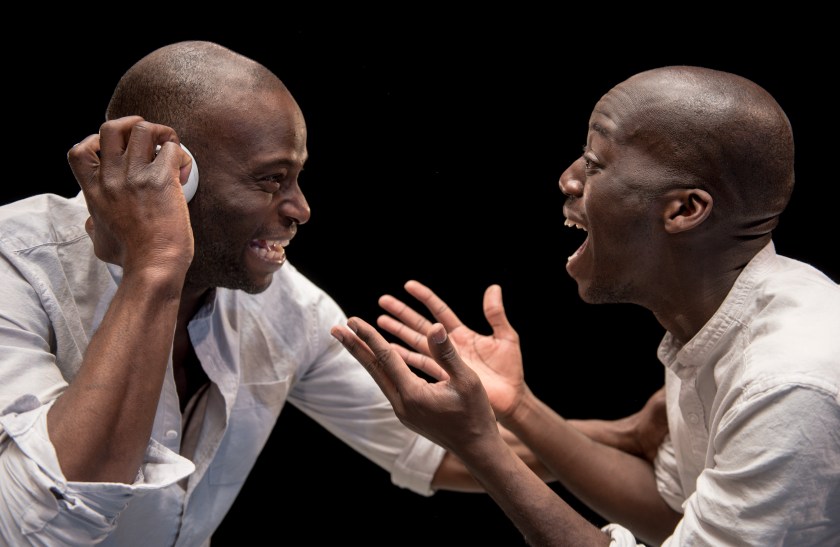
The Country Wife at Southwark Playhouse review ***

william_wycherley_by_sir_peter_lely

The Country Wife

Southwark Playhouse, 17th April 2018

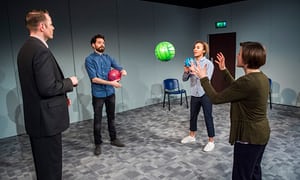
I haven’t seen that many Restoration comedies. In fact if I take the list of notable examples of the genre offered up by Wiki I see it is a grand total of one, in the form of the NT’s Beaux Stratagem from 2015, directed by the versatile Simon Godwin. It was OK but I can’t say I was bowled over. Still anyone with the Tourist’s theatrical pretensions needs to master the form so he leapt at the chance to see this production of William Wycherley’s The Country Wife courtesy of Morphic Graffiti. Especially at the bargain basement price of a tenner. There is no cheaper, or often, better way to see theatre in London than through Southwark Playhouse’s Pay As You Go offer. All Londoners should be compulsorily enrolled for their own cultural good.

Luke Fredericks and Stewart Charlesworth are the brains behind Morphic Graffiti which they set up in 2012. I see that the majority of their well received work to date has been musicals, including a version of the problematic Rodgers and Hammerstein work Carousel at the Arcola. That would explain why this Country Wife has some absolutely marvellous song and dance routines between scenes. The entire cast dances its way through the intricate set changes to a backdrop of abridged jazz-swing versions of pop “classics”. The choreography is in keeping with the 1920s “Bright Young Things” setting, for that is the period Messrs Fredericks and Charlesworth have alighted on to shed new light on Wycherley’s original written in 1675. The idea is that the privileged Bohemians of 1920s London, with their drink and drug excesses, their music and fancy dress parties and their sexual licentiousness, had a lot in common with their, probably, frock and wig wearing ancestors in Charles II’s time. Apparently Charly 2 was notoriously potty-mouthed.

The Restoration saw  a reaction against the puritanism of the Protectorate. The theatre was restored, and frou-frou, baroque-y, Frenchiness was all the rage. Moliere, albeit hyped up, was the inspiration for the Restoration playwrights who satirised, albeit lovingly, etiquette, manners, class and sex. The Country Wife was at the more explicit end of the spectrum with its knob and fanny double entendres and it was banned from performance from 1753, as those miserable Georgians and Tories gained ascendance, until 1924.

Which circles back to the backdrop here. I can see that some of the characters here, the foppish dandy Sparkish, the roue Harry Horner, the horny cougar Lady Fidget and the eponymous country wife looking to widen her horizons as it were, Margery Pinchwife, might fit the Bright Young Things template. In contrast the cuckolds, Pinchwife and Sir Jasper Fidget are the older generation against which the young’uns rebel. But surely the Restoration, and these comedies which prick it, was a time a time of deception and hypocrisy. The look may have been flamboyant but there were presumably social mores which governed public behaviour, even if, in private, anything was up for grabs. In contrast those BYT’s revelled in their visible outrageousness and were flagrant self publicists, Made in Chelsea types but obviously not so dumb as fat Spence, toddler Jamie and Bonky. In short if Harry got horny in the 1920’s in this company, surely he would need no elaborate ruse to get his leg over.

I fear I maybe overthinking this but my point is I am not entirely sure the concept stacked up even if the look, especially Stewart Charlesworth’s set and costumes, movement, Heather Douglas, and sound, Neil Rigg, was appealing. Apparently Luke Fredericks took a few liberties with the text and cut his dramatis personae, I wouldn’t know, but it didn’t do any damage to the plot as far as I could make out. Mind you, even with plays I know well, I will always get familiar with the outline of the plot in advance. The SO thinks this is mad but I reckon if you have a rough idea of what is going on there is more joy to be had from performances, characters, insights, messages, spectacle and the like. And I am notoriously slow on the uptake.

In essence The Country Wife is a bunch of people looking for a shag, with randy Harry Horner, played rather too straight by Eddie Eyre, pretending he is impotent so he can get close to the ladies without arousing suspicion, Pinchwife’s young and “inexperienced” new, yokel wife Margery (a winning Nancy Sullivan) embracing all the City has to offer, and Harry’s droll chum Frank Harcourt (Leo Starr) nabbing the lovely Alithea (Siubhan Harrison) from under the nose of the camp chump Sparkish (Daniel Cane who sets out to, and succeeds, rather too obviously, in stealing the show). Mabel Clements caught the eye doubling up as knowing servant Lucy and vivacious Dainty Fidget, sister in law of Lady F, played by Sarah Lam who seemed to me to most embrace the tenor of the text. Richard Clews as the preposterously misogynistic Pinchwife, Sam Graham as Sir Jasper F and Joshua Hill as Harry’s other wing-man, Dorilant, completed the cast.

Now these plays are famous in part for offering the first proper meaty parts for women (no filth intended0, not dressed up boys, and for making stars of the actors and actresses who starred in them. You’ll have to pick you own way through the sexual politics, guided by the director, to decide if the women here have real agency, and how sympathetic Wycherley is to his three male archetypes, Horner’s libertine lad, Pinchwife’s brutal possessive or Harcourt’s upstanding hunk, but it does seem amenable to various interpretations. Most of all though it has to be funny I guess and this is where, maybe, this production, came a little unstuck. I can’t fault the pace, but what with so much to think about, including lighting from Sam Waddington which highlighted every aside to the audience, I didn’t think the lines were delivered with perhaps as much relish as they deserved.

The regular reader of this blog (hello!) will know that I claim not to like musicals. Based on the music and choreography, if not maybe the play itself, I will certainly look at for Morphic Graffiti’s forays into that genre. Especially if they reel out the proverbial row of tents. They look like they are good a that.


The War Has Not Yet Started at the Southwark Playhouse review ***

the-war-has-not-yet-started-700x455

The War Has Not Yet Started

Southwark Playhouse, 18th January 2018

I don’t really read that much anymore. Which means I take a rather circuitous route to the acquisition of knowledge and satisfaction of curiosity. The page has been replaced by the stage, the museum and gallery, visits, music and my dear friend, Wiki. Books can then fill in the gaps. (Though I must call out the wonderful OUP Very Short Introductions. If I need a way in to something brainy here is where I start. Bite and pocket sized, though a bit variable in tone.)

This means some “stuff” has become more prominent that other “stuff” in my head. Bear in mind the capacity of my head RAM has opened up exponentially now that is is largely free of my work-life specialist subject. I knew a lot about very little. Now I am trying to find out a little about a lot. Which suits me as I am a consummate bullshitter who relies on knowing a tiny bit more than any conversational partner, and a sonorous delivery that bores them into agreeing with me.

One of the things that has crept up on me in the journey has been the modern(ish) history and state of Russia. A bit of Chekhov, too much Shostakovich, a handful of art exhibitions and a couple of conversations, and, to paraphrase Winnie Churchill, the enigma is revealed. Well not revealed but I go from nothing to something. It is a tiny something, but, at the risk of going all epistemological on your ass, it is more than I know about the state of Hounslow, my next door neighbours or our cat.

The point is that the relationship between State, as in the instruments of power, and the individual, has been a fertile one for the Russian/Soviet Artist. In the rapid lurch from backward, pre-revolutionary, feudal autocracy, through Revolution to oligarchical Capitalism, it looks like it has paid to keep things close to your chest.

Which in a roundabout way brings me to TWHNYS. Mikhail Durnenkov is an actor on stage and TV, as well as a playwright, living in Moscow. The Drunks, written with brother Vyacheslav, aired at the RSC a few years ago, in a translation by the marvellous Nina Raine. I didn’t see it but, from the sound of it, it is a satirical comedy, tracing a long line back through to Gogol, that took the unfortunate adventures of an Everyman, a soldier, as a metaphor for modern Russia and its history.

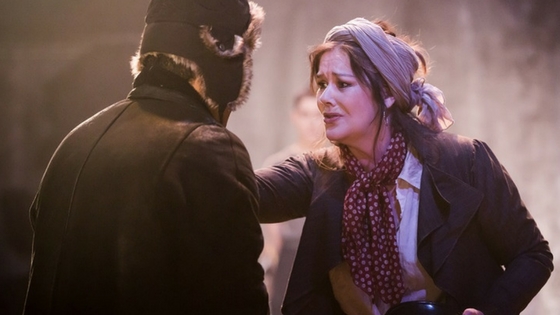
TWHNYS is a more discursive, experimental affair brought to the Southwark Playhouse in a translation by Noah Birksted-Breen, by way of the Theatre Royal Plymouth. Unconnected characters play out 12 seemingly unconnected vignettes, some banal, some more striking, over 80 minutes or so. Apparently they can be played in any order with any number of actors. Here we have three. Sarah Hadland, (Stevie in Miranda, she of the allure!), Mark Quartly, last seem by me as the gymnastic “real” Aerial alongside his real-time holographic doppelganger in the RSC Tempest, and, most strikingly, Hannah Britland. Many of the scenes are set within the family unit or deal with the impact of violence and propaganda. There is black comedy, confusion, menace, little in the way of entry or exit from the scenes and much obfuscation. The scenarios are all recognisable but throughout is an air of mistrust and uncertainty that sort of compels.

It is really tricky to make this sort of writing work and I am not sure how much is lost in translation, not of the language, but from Moscow to London. Whilst much of the contemporary zeitgeist which Mr Durnenkov is trying to capture is universal, it might make just a bit more sense there rather than here. Cultural specificity is a slippery waif and I always try my best to ditch the dangerous fiction of borders when thinking about this sort of entertainment, but I was still struck by how much the mood of the play fitted with what I think I have learnt about the Russian mindset.

Still anxiety is anxiety wherever you live and the cast and director Gordon Anderson, (who has experience of this sort of mood from his League of Gentlemen days), seem to be enjoying it. Andy Purves’s lighting design is noteworthy.

Go see for yourself. I am still making my mind up.


The Here and This and Now at the Southwark Playhouse review ****

4189

The Here and This and Now

Southwark Playhouse, 10th January 2017

OK homo sapiens. Enough with the exceptionalism. There is nothing special about you. Maybe you are more “intelligent” than any species that has inhabited the earth so far but you have only been around for a couple of hundred thousand years. Peanuts. You will likely be just background extinction, likely a consequence of your own selfish, insatiable behaviours. Annoyingly you will take a load more species with you. But your Holocene existence will barely register in earth history terms and you will be soon forgotten. Actually never remembered. And you will have proved pretty rubbish in terms of adapting to your environment for all your boasts if you can’t even manage a million years of existence.

So, whatever dystopian future awaits, no point getting too worked up about it. Worth trying to slow it down a bit but all your technology and institutions won’t prevent the inevitable.

Happy New Year.

Which brings me to THATAN. (I thought the acronym sounded suitably sci-fi and pharmacological, appropriate to the play). Southwark Playhouse has snapped up this and the forthcoming The War Has Not Yet Started from the Theatre Royal Plymouth. Great theatre, great city, great county. And, give or take a couple of flaws, it is well they did. For this latest offering from fashion journalist turned playwright, (and Plymouthian), Glenn Waldron, is, at its best, very, very funny. It kicks off with its four characters, Niall (Simon Darwen), Helen, (Becci Gemmell), Gemma (Tala Gouveia) and Robbie (Andy Rush), at an off-site (or away-day, take your pick, it is still one of modern Western capitalisms most unattractive inventions). It transpires they are sales reps for a pharma company. Niall, the boss, is making a pitch. The script they work from is excruciating but very funny. Newbie Gemma then has a faltering turn, followed by bolshie cynic Robbie, and finally the less assured, turning into hysterical, Helen. Mr Waldron’s observation here is truly acute, and because of this, his satire is bitingly effective. They are selling a useless drug for, prosaically, liver spots with minimal benefits in a desperate, faux-sincere way.

Then the gears switch. First Gemma and Robbie do a “what is life all about” dialogue, with background flirting. Slight but still effective, with its message of savouring the “special moments” in life. And then we roll forward to the 2020’s, post apocalypse, caused by, ta-dah, increased antibiotic resistance which has led to half the population popping its clogs. I won’t spoil the scene. Suffice to say that Mr Waldron gets away with this outrageous leap in tone, because, once again, his writing is laugh out loud funny. And best forget about Bill Paterson’s sonorous contribution at the very end.

The performances are uniformly perfectly pitched, Bob Bailey’s design does just about what it needs to do and Simon Stokes direction shows why his Plymouth stronghold is such a vital hub.

So forgive Glenn Waldron for joining the long list of playwrights wrestling with the “what will wipe us out” schtick and applaud the fact he has, at least, found a new scenario. Forgive the slightly clumsy shift in tone and banish any implausibilities which pop into your head. Just relish the very funny. black comedy that he has served up. And will him to find a way to take the tone he has expertly crafted in the first half of this 80 minute play and inject into another contemporary story. For that might result in something truly magnificent. I can now see I was an utter berk for missing his previous work, Natives, at this very venue. On the strength of this I hope it pops up elsewhere one day soon.

Mother Courage and Her Children at the Southwark Playhouse review ***

first-look-mother-courage-at-southwark-playhouse

Mother Courage and Her Children

Southwark Playhouse, 7th November 2017

Hmmm. I am torn. This was a mixed bag and no mistake.

The good stuff first. Well it is Brecht so there will always be big issues to chew on, although here the anti-war appeal that lies at the heart of the play felt curiously understated. The production does have a ramshackle design from Barney George which I was quite taken by and which seemed to capture the ravages of a long drawn out war on a society. The transverse staging and the constraining of the larger Southwark Playhouse space had some advantages, particularly when it came to observing the best of the cast. Mind you this did put paid to the Brechtian distancing effect. Hannah Chissick’s direction had some nice touches though this seemed to lack an overall coherent vision. I like the folksy song arrangements by Duke Special which are drawn from the 2009 NT production. Tony Kushner’s translation from 2006 is strong on characterisation but seems somehow to play down the “epic” nature of the action, though the production was partly responsible.

Best of all was the swaggering performance of Josie Lawrence as Mother Courage. Whilst there was a part of me that would have liked a more hard-bitten Courage to ram home the war as commercial opportunity message, her more sympathetic spirit paid dividends in the scenes with her “children”, the Chaplain and the Cook. David Shelley and Ben Fox in these latter two roles also turned in strong performances, as did Laura Checkley’s brassy Yvette and, especially Phoebe Vigor’s Kattrin. I was less convinced though by the rest of the cast whose tone seemed uncertain, notably the sons, Swiss Cheese played by Julian Moore-Cook and Eilif played by Jake Philips Head. Don’t get me wrong, the boxes were largely ticked, it just seemed to me that motivation and understanding was sometimes lacking.

This lack of conviction was ultimately why the production was only a qualified success for me. There were some powerful scenes notably when Courage disowns the corpse of Swiss Cheese, when Courage turns down the Cook’s offer to escape to Utrecht and especially at the end when Kattrin is beating the drum to warn the townspeople, but many of the other scenes have less definition, and those that do work rely too much on the sympathy generated by the performers, which risks melodrama, and which Brecht specifically wanted to eschew. This should be far more threatening and dislocating to convey the true horror and to reveal the economic and religious imperatives that underpin war, whether in the Early Modern Age or now, in the throes of Late Capitalism.

An avowedly non-specific staging also risks, as it does here, the distancing effect offered through Brecht’s setting in the Thirty Years War of the early C17 between Catholic and Protestant. We are supposed to be immersed in Brecht’s epic story but also to think long and hard about what he is telling us, and I am not sure we were fully afforded that opportunity. We are allowed to understand why Courage does what she does, because she has to to survive, but we are not supposed to like her.

The transverse staging was complicated by some early scenes which took place partially in a mezzanine which was, literally, a pain in the neck for half the audience. Music, sound and lighting worked with the staging but the lack of space constrained the pattern of movement, (to avoid problematic sightlines),  which had the perverse effect of slowing the momentum at times.

My conclusion. A brave attempt which is worth seeing for Josie Lawrence’s fine, if ultimately flawed, performance and for some of the ingenuity of the creatives in trying to make this work in this space. And because it is Mother Courage and Brecht. But there have been, and there will be, more coherent and biting productions which do more to reveal the layers of Brecht’s art, passion and instruction.


Doubt, A Parable at the Southwark Playhouse review ***

doubt-4-web

Doubt, A Parable

Southwark Playhouse, 26th September 2017

Once again a review of a play whose run is over. Apologies. This revival of Doubt, A Parable, by US playwright JP Shanley, was efficiently directed by Che Walker, but turned out to be a little slighter in form and content than I had expected. Its original premiere on Broadway in 2005 led to 4 Tony Awards in that year and the award of the Pulitzer Prize for drama. A film version from 2008, which I had not seen, sported the combined talents of Meryl Streep, Philip Seymour Hoffman, Amy Adams and Viola Davies.

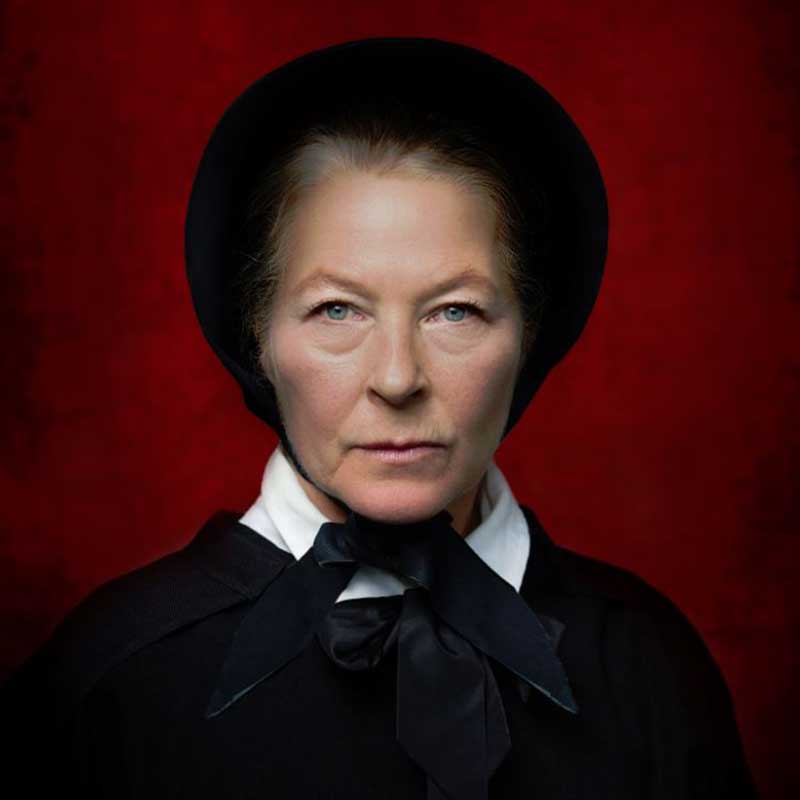
So I had expected big things. And, whilst this is a taut and intelligent exploration of a vital story, which offers scope for fine performances, I was a little disappointed at the strict naturalism of the play, its basic structure and its lack of multiple perspectives. The play is set in St Nicholas Church School in the Bronx in 1964. Father Brendan Flynn played by Jonathan Chambers is an apparently caring and popular progressive parish priest. Arch conservative Sister Aloysius, a suitably flinty Stella Gonet, is the school principal and is concerned that Father Flynn may be abusing his position. She invocates the younger Sister James (a wide eyed Clare Latham) to assist her in confirming her suspicions. They confront Flynn. His denial prompts Aloysius to turn to the mother of Donald Muller, the supposed victim, but she chooses to look the other way. Sister Aloysius refuses to relent and engineers a ruse which eventually pushes Father Flynn out, but through promotion to another school.

We never know whether or not Father Flynn is guilty of the abuse and JP Shanley’s text is meticulous in the way it creates doubt in our minds, as well as the four characters, throughout the 90 minute piece. The confrontations, between the two Sisters, Father Flynn and the Sisters, individually and together, between Sister Aloysius and Mrs Muller, and very well constructed and the language rings true. The sermons that Flynn delivers, on doubt at the outset, and later on gossip, are also sound theatrical devices to advance argument.

Yet it still all felt just a little predictable with characters that were just a little stilted. The tone of the play, exacerbated, by PJ McEvoy’s dark, shadowy set which imagines the space between the school and church buildings, is appropriately stifling but this does make the whole production a little one-paced. Mind you the performances of all four actors were admirable especially Stella Gonet who powerfully rendered Sister Aloysius’s external certainty and internal doubt and Jo Martin (last seen by me in the excellent Rolling Stone at The Orange Tree) who persuaded us why Mrs Muller might be prepared to overlook the possible abuse of her son, who is the only African-American in the school, “in his own interests”.

This a play that is definitely worth seeing as it adroitly explores the issue of abuse within the Catholic Church and it is a fine text, which, as all good theatre should do, embraces ambiguity and interpretation. By leaving us guessing however, to up the dramatic ante, it leaves rather too many loose ends to be truly great I think.

Dessert at the Southwark Playhouse review ***

event_media-banner_lrg

Dessert

Southwark Playhouse, 5th August

Dessert is the first play I have seen from actor/playwright Oliver Cotton and I have to say that overall I enjoyed it. Subtle it ain’t but it makes its points with a deal of humour, and occasionally, an enlightening punch. The title gives an insight: it’s a dinner party, dessert is coming, until a turn of events forces characters and audience to contemplate whether what they get in life is fair: whether they get their “just desserts”.

Hugh Fennell (played with amoral certainty by Michael Simkins) is a very rich self made man, who seems to have made his money buying and selling public companies. (As usual with dramatic accounts of “people in finance” Mr Cotton exhibits a pretty shaking understanding of how modern, neo-liberal mixed economies work which irks me immensely, but, no matter, we have our demon). He and his underwritten wife, Gill, (Alexandra Gilbreath) are entertaining American friends, slimey Wesley Barnes (Stuart Milligan) and Meredith (Teresa Banham). Dinner is served by Roger (a fine Graham Turner), the Fennells’ “man” who from the off shows signs of mental instability. The dinner party sets up a quick debate around provenance in art, price and value via Hugh’s newly acquired “maybe” Giorgione.

Cue the arrival of Eddie Williams (a splendid performance littered with malevolent sarcasm from Stephen Hagan). Now I would hesitate to call the “elite class dinner party interrupted by a stranger (real or imagined) with malicious intent” hackneyed but it is hardly untested. No matter. It works. Eddie is a soldier, leg damaged in Afghanistan, whose newsagent Dad invested life savings (lesson: always diversify your assets) into one of Hugh’s “companies”. It went belly up though Hugh somehow secured a whopping pension as a result. We then have an accident with the aforementioned painting and heated arguments over whether the Fennells and Barnes’s “deserve” their wealth. Some of this is perfunctory but some is insightful and there are a couple of speeches from Eddie which Stephen Hagan invests with real passion. No dumb squaddie cliche here. And the twist by which Eddie plans to exact revenge is sweet.

Under Trevor Nunn’s direction the play trips along and nothing is left uncovered. It is laugh at loud at points. But it is simplistic. That is not to say we need some even-handed defence extolling the virtues of capitalism. Far from it. But once its main point is made the play doesn’t really move on. Still full house at the SP who clearly loved it.

My favourite London theatre of 2016

Right then. I know what you are thinking. Doesn’t this numpty know that it’s June 2017. Bit pointless talking about theatre from last year then. Well yes, you may well have a point. However this blog only started in March 2017 and it’s mine anyway so I can do what I like. And the idea primarily is to help identify some lessons about good stuff to come in future, whether it be from writer, director, cast, other creatives or venue. Anyway I suspect all you theatre obsessives will know where I am coming from anyway.

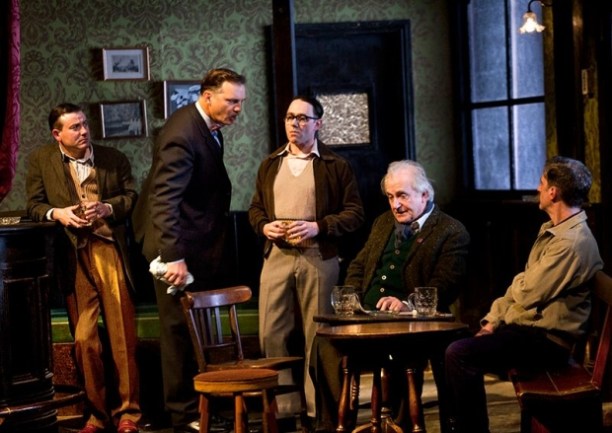
1. Hangmen – Wyndham’s Theatre/Royal Court Theatre
99296

So i know that technically this was from 2015. But we didn’t get to see it until the transfer to the Wyndham’s Theatre having missed the Royal Court run because I am an idiot who failed to book it in time.

It is an extraordinary work. There is no-one who writes for the stage (or film) like Martin McDonagh, though there are echoes to me of the likes of Pinter and Tarantino. It is the combination of fierce intelligence, violence, humour and atmosphere. If you don’t know the plays then you may know his films, notably In Bruges and Seven Psychopaths.

So if this, or the Pillowman, A Behanding in Spokane or any of the five Galway plays from the 1990s, are revived we should pay attention depending on who takes it on. If he makes another film we should also pay attention.

If we are in New York at the beginning of next year then we should see this production of Hangmen at the Linda Gross Theater. Please just go.

We should see what Matthew Dunster, the director, can do with his adaptation of Dickens’ Tale of Two Cities at the Open Air Theatre this summer (his involvement with the Globe has been mixed – I can’t really comment as the Globe is off limits for me as it is too uncomfortable – sorry).

If and when Johnny Flynn stops singing and acting in mini-series (he is in that Einstein thing apparently – you know it is everywhere on the tube), and takes on another stage role we should go – he is mesmeric – and appears only to do top-notch theatre, Propellor Shakespeares, Richard Bean’s The Heretic, Butterworth’s Jerusalem and Rylance’s Globe Twelfth Night (though I didn’t get on with this).

And best of all we should be salivating at the prospect of David Morrissey taking on the role of Mark Antony at the new Bridge Theatre alongside Ben Wishaw, Michelle Fairley and David Calder. With Nick Hytner directing. We had a few magnificent productions of Julius Caesar recently but this has the potential to match them.

Oh and finally if there is one theatre where you should just buy “blind” if you have any interest at all in the subject based on the admittedly thin blurbs they provide just book it. Pick of the current bunch for me of the current season is Anatomy of a Suicide.

2. Yerma – Young Vic Theatre

cw-11513-medium

So if you have any interest in London theatre you are probably all over this. BUT if you haven’t seen it (the performances later this year sold out sharpish) or if you don’t think this serious theatre caper is for you, then I highly recommend you watch it at the cinema through the NT Live thingamabob on 31st August.

There is much to like here. Lorca’s original play, Simon Stone’s radical re-write and direction, Lizzie Clachan’s stark but effective staging, the performances of Maureen Beattie, John MacMillan, Charlotte Randle, Thalissa Teixeira and, especially, Brendan Cowell. But in the end it is all about Billie Piper. You will be hard pressed to ever see a more emotionally involving performance at the theatre. No holding back at all.

My guess is we will have to wait a couple of years before Ms Piper returns to the stage but whatever she does after this and The Effect is likely to be mandatory (I didn’t get through Great Britain, Richard Bean’s satire at the NT though I had a good excuse).

And if we want to see Mr Stone’s magic elsewhere then we need to follow Toneelgroep Amsterdam where he has productions of Medea and an Ibsen mash-up. Will be interesting to see whether either comes to London at any point.

As for the Young Vic well right now the Life of Galileo by Brecht is playing with, drum roll please, Brendan Cowell, in the lead. Tickets still available and I loved it.

3. Uncle Vanya – Almeida Theatre

uncle_vanya_banner

This seemed to sneak under the wire a bit. I thought it was outstanding. Maybe director Robert Icke’s Red Barn at the National Theatre or his version of Schiller’s Mary Stuart with Lia Williams  and Juliet Stevenson garnered more attention, or perhaps everyone was taking a breather after Mr Icke had smashed it out of the park with his Oresteia for the Almeida in 2015. Any way up he is the most exciting director right now in the UK and this cemented that reputation.

Mr Icke himself updated the text and shifted the “action” to rural England. The production took its time and the sense of ennui was attenuated by Hildegard Bechtler’s slowly revolving set. And Paul Rhys as Vanya/John could hardy be bettered with his man-child lost demeanour. The rest of the cast, notably Jessica Brown Findlay, Vanessa Kirby, Hilton McCrae and Tobias Menzies, collectively kept their ends up. The detail of the characterisations was riveting. The individual pyscho-dramas perhaps can more to the fore pushing the social context back a bit but I reckon you can have a bit too much of the “everything’s about to go tits up in Russia and these minor aristos don’t know it” benefit of hindsight in Chekhov anyway. It is always better when you you get more of sarky Anton nailing the “shit just happens” frustrations of life.

So if you are one of the infinitesimally tiny number of regular readers of this blog you will know that I have high hopes for the next couple of productions at the Almeida: Ink by James Graham (writer of This House which may yet turn out to be an instruction manual for the vicissitudes of minority government in the UK) directed by Rupert Goold with Bertie Carvel and Richard Doyle and then Against by Christopher Shinn and directed by Ian Rickson with Ben Wishaw in the lead.

Meanwhile one of Robert Icke’s next projects is an Oedipus with Toneelgroep Amsterdam and with Hans Kesting in the lead. I pray this come to London as Hans Kesting without question is the best stage actor I have seen. OMG.

4. Kings of War – Barbican Theatre
kings-of-war-barbican-922

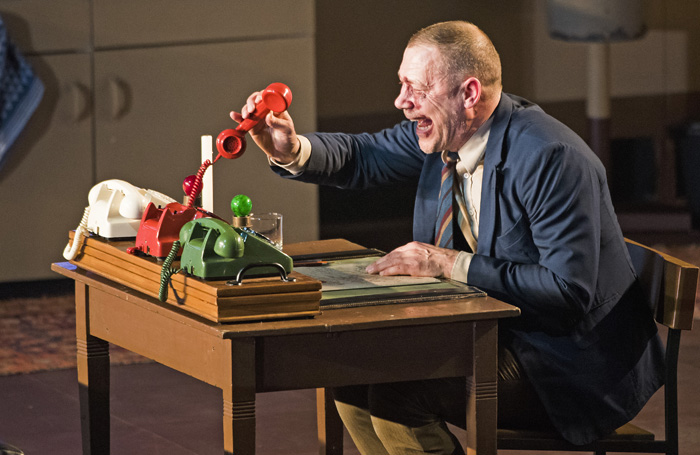
Talking of Hans Kesting here is a picture of him as Richard III in the Toneelgroep Amsterdam’s production of Kings of War at the Barbican. TA premiered this production in 2015 and brought in to London last year. It takes five Shakespeare history plays, Henry V, Henry VI Parts 1, 2 and 3 and Richard III, and mashes them up to extract the best bits in a four and a half hour spectacle that gets to the heart of what political power means.

Is it better than the similarly envisioned Roman Tragedies? (review here – Roman Tragedies at the Barbican review *****). I couldn’t tell you. There are both works of astonishing theatre. There have been a few let downs from TA and its inspirational artistic director Ivo van Hove, notably Obsession, but this showcases what he and his ensemble is capable of. So, as and when, this returns do not miss it.

And Mr van Hove has a number of forthcoming engagements on the London stage with Network coming up later in the year at the National the pick of the bunch.

5. Escaped Alone – Royal Court Theatre

ESCAPED ALONE

I have something of a weakness for unsubstantiated hyperbole. But here goes. Caryl Churchill is the greatest British playwright since Shakespeare. The best theatre plays with ideas and form and creates lasting impressions in the mind which simply cannot be replicated by any other artistic medium. Caryl Churchill does this again and again and again. No hype, no endless interviews explaining what she is doing/has done. Just perfectly formed, intense works that magically appear and seem to have addressed everything worth addressing over the past five decades or so. I just wish I had seen more of them.

Escaped Alone, in under an hour, explored the nightmare of apocalyptic, ecological collapse in a hilariously surrealist way, intertwined with, at turns, the banal and sinister fears and stories of four mature women ostensibly chatting in a back garden. That is my attempt at a summary but it does no justice at all to the ideas and images that just pour out of this play. As always with Caryl Churchill you just marvel at the alchemy of how so much insight into the big questions of humanity flows from these non-naturalistic, but never truly absurd, structures.

So as and when the next new play appears just go. And the same advice applies to any Churchill revival, anywhere. anytime.

6. Oil – Almeida Theatre

oil_website_1470x690

Back to the Almeida for Ella Hickson’s ambitious play Oil, directed by Carrie Cracknell and with the magnificent Anne-Marie Duff in the lead. So I get that the text and the pacing of the production was a little uneven but I didn’t care. Ms Hickson created such a compelling narrative, mixing the geo-political epic with a detailed mother-daughter relationship which hits you on some many levels. I have seen Anne-Marie Duff steal the show in a number of very different plays but she has never been better than in this role. And I doubt there is a better director in Britain today of towering female roles than Ms Cracknell (The Deep Blue Sea, A Doll’s House and Medea are recent examples).

Now it looks like Anne-Marie Duff’s latest outing at the National Theatre, Common, is getting a bit of a pasting. I will be taking a peek shortly so will make up my own mind. She is also pencilled in to a Macbeth next year alongside Rory Kinnear and directed by Rufus Norris. Surely that will be unmissable.

As for Ella Hickson, I would love to see a revival of Boys, and I think that it is only a matter of time before she pens an undisputed contemporary classic. And if anyone knows what Carrie Cracknell is tackling next I would love to know.

We are blessed in this country right now with a generation of outstanding female playwrights and directors but I for one would like to see way more come through. This play shows why.

7. The Rolling Stone – Orange Tree Theatre
the_rolling_stone_1142_484x580_20151215

Royal Court, Almeida and Young Vic all unsurprisingly represented in my top ten list and I have no doubt they will be again this year. As will, I suspect, the Orange Tree which continues to turn out work of the highest quality, whether revivals or new plays. They may not always be my cup of tea but artistic director Paul Miller and his team seem to have an extraordinary knack of identifying and staging rich theatrical material.

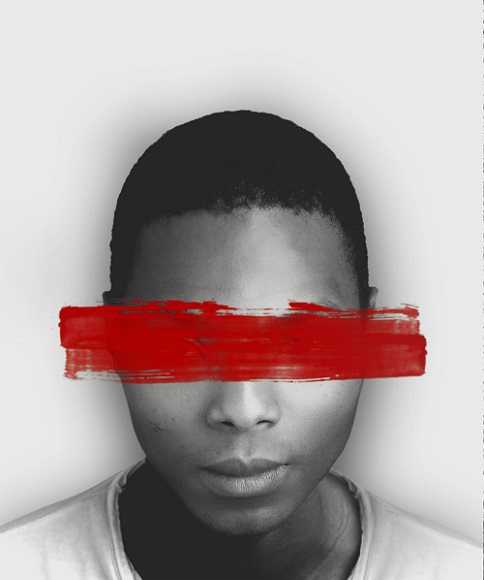
The Rolling Stone by Chris Urch was a winner of the biennial Bruntwood Prize winner in 2013 and premiered at the Royal Exchange Manchester so was hardly a secret. But it was still terrific to see the Orange Tree pick it up for its London premiere and it deservedly won a slew of Offies (the London fringe theatre awards).

It is an examination of the persecution that gay men face in Uganda largely told through the words and actions of one family. It packs an extraordinarily powerful emotional punch and will leave you seething with anger at the actions of church, state and media which combine to pursue a modern witch-hunt.

This is Chris Urch’s second play and I await with interest his next project which I believe is a screenplay for a biopic of the life of Alexander McQueen. And without exception I keep my eye out for the excellent cast, Faith Alabi, Fiston Barek, Jo Martin, Julian Moore-Cook, Faith Omole and Sule Rimi (who has popped up in a number of subsequent productions I have seen and has been uniformly excellent in these).

8. Les Blancs – National Theatre
lesblancs-1280x720-sm

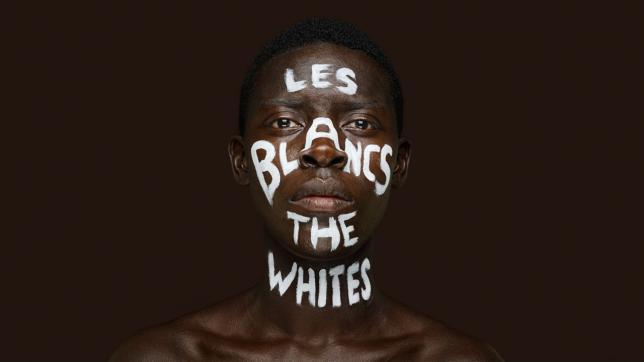
The proper luvvies are in a little bit of a tizzy over Rufus Norris’s stewardship of the National. I admit it has become a bit of a lottery, particularly when it comes to the Olivier stage, but there have been some belting productions in the last couple of years. And for me this was the best of the bunch last year.

Now this probably reflects the fact that I have never seen A Raisin in the Sun, Lorraine Hansberry masterpiece. Following this version of Les Blancs it is now right at the front of the queue of plays that I simply must see. I was bowled over by this version of Les Blancs. It is an immense play which explores post-colonialism in 1960s Africa with an unforgiving eye. There is a lot of grand speechifying to advance the arguments but the didacticism never proceeds to simplistic resolution. I gather Ms Hansberry’s husband, Robert Nemiroff, had a major hand in completing this play after her untimely death. The set, sound, lighting, music and even smell could not have been bettered and for once I think the best seat in the house was upstairs at the back since there was so much to savour.

South African director Yael Farber seems to have presided over a duffer with Salome currently on at the National (I haven’t seen it yet) but her direction in this Les Blancs was sublime. And I don’t know what stage Danny Sapani will next grace (you will have seen him on the telly) but wherever it is I will try to go.

9. Orca – Southwark Playhouse

orca-at-southwark-playhouse-rona-morrison-maggie-carla-langley-fan-and-simon-gregor-joshua1-700x455

This was Matt Grinter’s debut play which won the Paptango new writing prize. I thought it was brilliant. In just 75 minutes Mr Grinter conjures up a place which seems far removed from our modern world and his tale of ritual abuse in a closed community conjures up a real sense of foreboding. I suppose some might label it “folk horror” at a pinch but it was just so much smarter than that label implies. It confronts the reality of the outrages that even today are visited upon women by men who hold power over them.

The setting is a fishing community on an island to the north of Scotland I surmised. An elder sister Maggie played by Rona Morison tries to prevent her younger sister Fan (Carla Langley) from undergoing the same unspecified but clearly dreadful fate which she refused to endure. Their father (Simon Gregor) won’t step in because he cannot face continuing to be shunned by the rest of the tight knit community. The patriarchal head of the community The Father played by Aden Gillett is genuinely one of the most disturbing characters I have ever seen on stage,

I’ll stop there just in case it gets revived but this was a riveting watch under the direction of Alice Hamilton. And the set by Frankie Bradshaw in the smaller space in the Southwark Playhouse (where they put on all the good stuff) was beyond ingenious. I don’t know if I imagined the cold, damp sea air that night, or whether that was all part of the production, but I really felt I was cut off from the rest of the world and not a few yards from the Elephant and Castle.

I await Matt Grinter’s next writing excursion with extreme interest.

10. Julius Caesar – Donmar King’s Cross
julius-ceasar-donmar-warehouse1

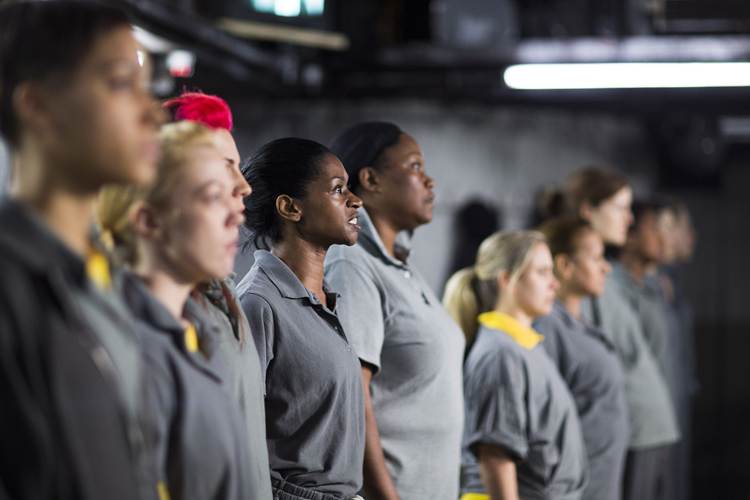
This is what Shakespeare is all about. Phyllida Lloyd and her all female cast led by the redoubtable Harriet Walter added The Tempest to the previous productions of Julius Caesar and Henry IV and set them up in a temporary stage at bargain prices in Kings Cross. All three took the venerable texts and smashed them over your head. Breathtaking.

I pick Julius Caesar solely because it is my favourite of the three plays. And I think the setting of all three plays in a women’s prison achieved most resonance in this play with its themes of conflict and the misuse of power. Directorial concepts in Shakespeare are vital in my view to illuminate the timeless brilliance of the insight but they can fall flat. Not here.

I think Harriet Walter’s Brutus is the best I have seen and I would also, if pushed, single out Jade Anouka’s Mark Antony (to add to her amazing Ariel in The Tempest). She was the only decent contributor to the dreadful Jamie Lloyd Faustus and I await her next major role with interest. The same goes for Sheila Atim who next pitches up in Girl from the North Country at the Old Vic.

Harriet Walter can read the phone directory and I would still go and Phyllida Lloyd could direct a bunch of phone directories and I would still go.

Best of all this Julius Caesar will be in cinemas soon so catch it if you haven’t already seen it.


So there we go. My favourites from last year. Honourable mentions also to Complicite’s Encounter which I finally got to see at the Barbican, Schaubuhne Berlin’s The Forbidden Zone also at the Barbican, Tim Minchin’s Groundhog Day musical at the Old Vic, and Jess and Joe Forever by Zoe Cooper and Blue Heart by the mighty Caryl Churchill both at the Orange Tree.

This year is ramping up to be similarly fine for London theatre with plenty of contenders already. Enjoy.



The Island at the Southwark Playhouse review ****

the-island_-l-r-mark-springer-as-john-and-edward-dede-as-winston-c-joel-fildes

The Island

Southwark Playhouse, 5th June 2017

The Island was written by Athol Fugard, John Kani and Winston Ntshona, whose other major work is Sizwe Bansi is Dead, and first performed, illegally, by the writers to an integrated audience in Cape Town in 1973. It was devised and rehearsed in secret under the threat of government censorship, when even discussion of the conditions in the infamous prison on Robben Island was prohibited. It takes inspiration from a performance of Antigone in 1970 on Robben Island by a group of inmates including Nelson Mandela as Creon.

For these reasons alone you should see this play. For those under 40 (and there were a number at this performance – good on them) I assume that the reality of apartheid is hard to grasp. This play, and the spirited performances delivered by Edward Dede and Mark Springer under the direction of John Terry (of Chipping Norton not Chelsea), is a shocking indictment of this regime, but also a universal reminder of how the state can still repress today. The two actors play John and Winston, who are cell mates on Robben Island, and who are planning to stage their own version of the trial scene from Antigone. It skilfully charts, through reminisces, their three years of shared captivity, their families beyond the prison, the reasons for their incarceration, and the intense friendship, indeed brotherhood, which keeps them defiant despite the injustice they are suffering.

The play opens with fifteen minutes of wordless, and prop-less, acting out of the pointless and back breaking work they are compelled to undertake – shifting sand to each other. They are then forced to run whilst shackled together whilst being beaten. It is uncomfortable to watch – that is the intention – and leaves you to ruminate over why this would ever be done to someone. The two actors make this imaginary pain feel very real. If you are getting fidgety after fifteen minutes of acting try 27 years locked up in this place it seems to say.

Thereafter there are few conscious reminders of their captivity – no guards (the unseen Hodoshe represents their captors and the whole apartheid machinery) or any other characters, and a near completely bare stage. The play instead focuses on what they do for, and say to, each other to keep their spirits strong and cling to the ideals of freedom. The dynamic shifts when John is told his appeal has been successful and will be released. The last part of the play sees the enactment of the scene from Antigone, where Antigone accepts her fate because she has done the right thing and thereby unmasks Creon as a tyrant hiding behind the law, and this is where the real power of the play is unlocked. What was true in Sophocles’s age was true in racist South Africa and is still true today.

Anyway go and see it. If it you find it a bit dour or hard work it might just remind you how free you are. And maybe make you think about the redemptive power of the theatre. And how the bastards in this world will always lose out in the end. And that surely is a good thing.

The Cardinal at the Southwark Playhouse review ***

cardinalweb

The Cardinal

Southwark Playhouse, 16th May 2017

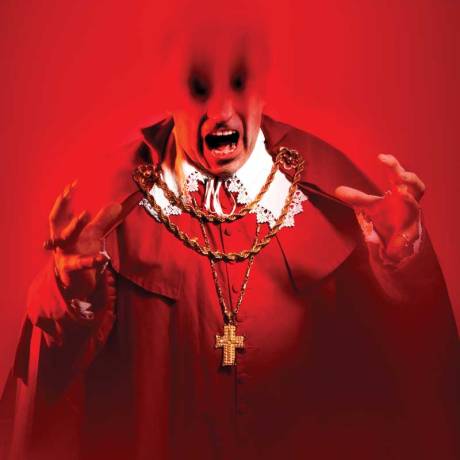
Scary picture huh. Southwark Playhouse is a constant whirr of activity serving up all manner of delights across the theatrical spectrum. I just never know what to expect. I am not so shallow as to buy a ticket on spec based on a bit of blurb and a striking image – actually maybe I am.

So I went into this not really knowing what to expect and came out not entirely sure what I had seen. On the face of it this a classic tale of revenge from 1641 (just before Cromwell’s miserablists closed down the theatres) by a chap named James Shirley – a playwright known more in academic than performing circles. Set in C16 (I’m guessing) Navarre at war with Aragon, our widow and heroine is forced into a proposed marriage with blunt, soldier type who happens to be nephew of scheming cardinal who has the ear of the king. But she wants dashing, handsome type and, by virtue of a curious plot device in the form of a misinterpreted letter is able to get dodgy suitor to set her free so she can marry the pretty bloke. The blunt one/nephew doesn’t take too kindly to this. Cue vengeance and the inevitable corpse pile-up.

So frankly it is not the plot that makes this at all interesting. What is fascinating though is the way our man Shirley seems to be taking the p*ss a little out of the revenge tragedy, Duchess of Malfi anyone, and the quite strikingly direct, acerbic text. It is not at all florid. And furthermore our heroine really does possess agency. Obviously she dies, as they all do, but there is a really interesting exploration of her journey here. Moreover the hypocrisy at the heart of our Cardinal’s religion is given a right slagging.

This apparently reflects the changing status of women pre and post Restoration (and no doubt England’s view of the dodgy Catholic foreigner). Now don’t run away with the idea that there is an undiscovered feminist or humanist text here. It’s just that it was interesting for me to see the preamble to the gore-fest portrayed in this way.

The problem though was that having set this up in the first act, and early into the second act, it then seemed to revert to the very type it had sort of subverted, with our now utterly calculating heroine/widow roping in life partner candidate number 4 to dispatch the eponymous cardinal. As for the Cardinal himself, whilst Stephen Boxer does his level best to play the part in the style of an arch John Hurt (I am sure I am not the first to remark on this), there are times when he sounded a bit more Kenneth Williams’s Thomas Cromwell in Carry on Henry.

The other cast members all performed admirably with what they had but the stand out for me was Nathalie Simpson as the lead Duchess Rosaura. She had stood out as Guideria in Molly Still’s gender mash-up RSC Cymbeline last year and was very convincing here. I also note the contribution of Marcus Griffiths as Alvarez here, though he was better as Cloten in the self-same Cymbeline.

So all in all worth seeing. With some very appealing lines and ideas. And a very fine (and slightly alarming) sword fight. It’s just that the plot sort of collapsed inwards, and this left a bit too much for cast and director to do to persuade me this is a vital link between revenge tragedy and Restoration comedy in the history of British theatre and a scandalously neglected gem. I wonder if some genius director out there might find something else of value in Mr Shirley’s oeuvre given his turn of phrase (though I gather this is considered his best work not least by the man himself).

Still great picture. And Southwark Playhouse still wins the prize for diversity of offer hands down. Which is a really good thing if you want people who don’t look like me to come. Which itself is a really good thing. Though in this particular case this probably is only going to appeal to people just like me.

London theatre update

So a few things to note since the last London theatre update.

Booking opens 5th May (earlier for members of various hues) for the new batch of productions at the National Theatre. I reckon tickets for Follies, the Sondheim musical with a cast of thousands and the pocket rocket Imelda Staunton in the lead, will sell like the proverbial hot cakes. I also have my eye on Mosquitoes, the new play by Lucy Kirkwood (Chimerica, NSFW, The Children) with Olivia Colman off the telly.

Booking for the 4 way RSC Shakespeare Roman plays extravaganza is now open at the Barbican.

The new Bridge Theatre inaugural season is announced and I am so excited. Public booking opens 27th April. I recommend all 3 of the openers. Young Marx with Rory Kinnear as Marx, Oliver Chris as Engels, written by Richard Bean and Clive Colman and directed by Nicholas Hytner himself. The Julius Caesar not only has Ben Wishaw as Brutus but David Morrissey (last seen in the magnificent Hangmen by Martin McDonagh – best play of the last 3 years) as Mark Antony. And there is a new work, Nightfall by Barney Norris, which sounds intriguing (the refurbished Bush Theatre has While We’re Here, another new play by busy Barney, coming up). And the Bridge has lined up future new works by Nina Raine (about Bach yesssssss !!!! with Simon Russell Beale yessssss !!!), whose Consent I have yet to see at the NT, and by Lucy Prebble based on Bizet’s opera Carmen, as well as by Sam Holcroft and Lucinda Coxon.

Against at the Almeida will be booking from mid May.

The Old Vic is set to stage The Divide, the new play by Alan Ayckbourn, set in a future dystopian England, after a run at the Edinburgh Festival. Sounds like a cracker, mind you not too many laughs I am guessing from the blurb. No booking details yet.

I am casting an eye over Little Foot (by South African playwright Craig Higginson) and Doubt, A Parable (JP Shanley which was made into a film I gather) at the Southwark Playhouse (who are also bringing back Kiki’s Delivery Service which is a belter if you have littl’uns).

Everything Between Us (by David Ireland), Food and Mr Gillie look like the best of the bunch in the new Finborough theatre season.

And I have booked 3 of the 5 offerings at the end of July at the Orange Tree where they are letting young directors’, studying at St Mary’s round the corner in Strawberry Hill, loose on early plays by James Graham, Brad Birch, David Ireland, Enda Walsh and Kate Tempest. £7.50 a pop to support aspiring talent. Go on.

Finally I am weighing up the RSC Queen Anne at the Theatre Royal Haymarket in the transfer from Stratford but can’t quite make up my mind though Romola Garai in the lead may tip the balance.

Happy theatre going.