
The Haystack at the Hampstead Theatre review ****

The Haystack

Hampstead Theatre, 31st January 2020

Al Blyth is not your typical playwright. Having studied Econometrics and Mathematical Economics, (disciplines that spend an inordinate amount of time wishing away the presence of us unpredictable humans), he went on to work as a research economist at the Institute for Fiscal Studies, though the urge to dramatize never left him. Mind you I suspect the encouragement of his missus, Sam Holcroft, also a playwright (Rules for Living), helped. Still heartless policy wonking’s loss is our gain and Mr Blyth’s previous life certainly helped shaped The Haystack, his first full length play.

It is a gripper. Easy to say why HT’s new AD, Roxana Silbert, reserved this for her directing debut in her first season. (In fact she had already encountered Al Blyth’s work from her previous tenure at Plaines Plough). AB is, as we all should be, profoundly concerned about the potential for State overreach in our world, but, rather than serving up a ranting polemic to draw attention to this, he has written a thriller anchored in a love story and buddy banter. The setting is GCHQ, (which probably now knows more about you than you do yourself), where a couple of IT geeks, Zef (Enyi Okoronkwo) and Neil (Oliver Johnstone) have been seconded to rustle up some algorithm programmes (or some such) to test the efficacy of the agency’s databases. AB’s point is not that this vast network of information is being used for nefarious purposes, just that the UK, uniquely amongst developed democracies, and thanks to the cobbled together “constitution”, lacks the safeguards to prevent abuse.

We are plunged into the lads’ digital world, brilliantly realised through the kinetic set design of Tom Piper, the lighting of HT regular Rick Fisher, the sound design of the Ringham brothers and the video of Duncan McLean, (a line up more suited to this play is hard to imagine). Gradually it becomes clear to both the no-nonsense boss Hannah (Sarah Woodward) and us the audience that the boys are on to something, but it is when Neil, against Zef’s advice and the rules, starts stalking Cora Preece (Rona Morison) that things really hot up. For bolshie, but somewhat naive, Cora is a Guardian blogger/wannabe journalist, on the rebound from Rob (Oli Higginson), getting her teeth into a story involving Ameera (Sirine Saba), the ex-wife of a really dodgy Saudi businessman type, against the wishes of her seasoned home affairs editor Denise (Lucy Black). Things unsurprisingly turn nasty, as the boys stumble into the story, with much of the story told in flashback or through ingenious use of contiguous conversations (shout to the precise movement mapping of Wayne Parsons).

OK so, even with the pacy direction and invariant dialogue, it does go on a bit, and there are moments of Spooks like cliche, but the twists in the second half, and the multiple issues AB confronts, do ensure we forgive some of the blatancy of the set-up. And Rona Morison, who regular readers will know I have a very high regard for, manages to squeeze out ambiguity in her performance of Cora that simply isn’t there on the page. I can see why some punters might get snide-y about the play, but I was carried along by plot and direction, whilst still thinking about its message.
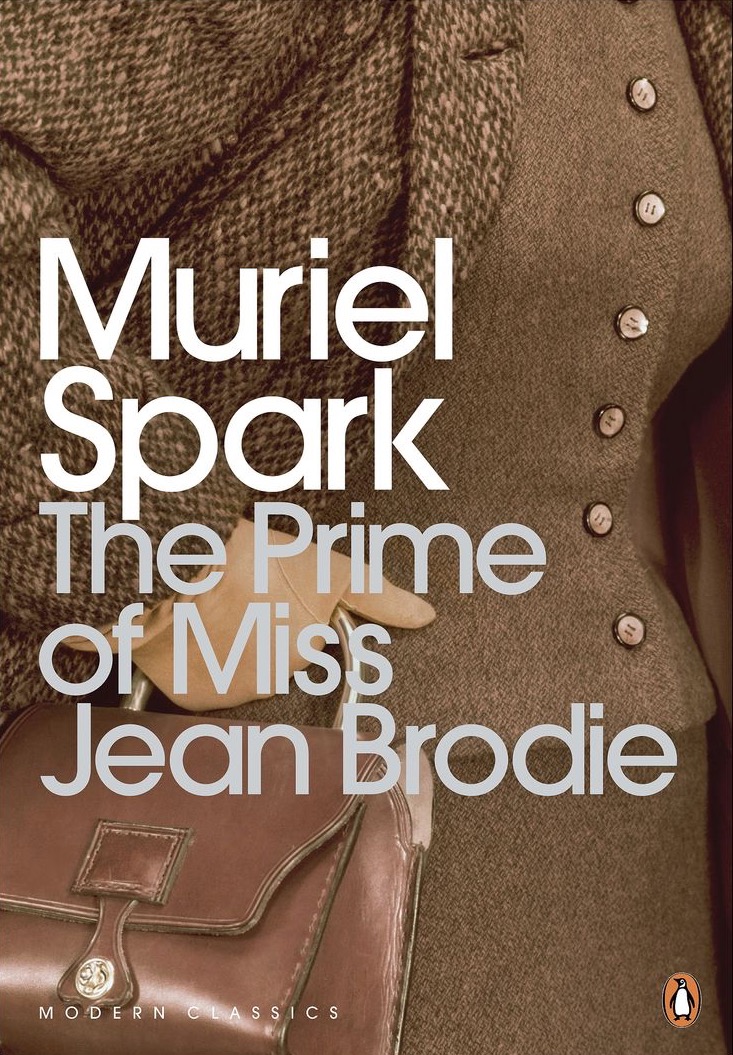
The Prime of Miss Jean Brodie at the Donmar Warehouse review ****

24795636677_646fd86a04_o

The Prime of Miss Jean Brodie

Donmar Warehouse, 19th July 2018

The SO obviously is a big fan of Muriel Spark’s novel. We are both big fans of Ronald Neame’s film version, (only the other day I revisited this director’s magnificently cheesy The Poseidon Adventure), though let’s face it that is largely because Maggie Smith delivers a technicolour Maggie Smith performance. No less than David Harrower, (Knives in Hens, Dark Earth, Blackbird and some classic adaptions), was turning book into text here and Polly Findlay was directing. We have actors of the talent of Angus Wright, Sylvestra Le Touzel and Edward MacLiam and I was particularly keen to see Rona Morison again, who was so good in Orca at the Southwark Playhouse in 2016).

But, more than all of this, the big draw was Lia Williams in the title role. I believe Ms Williams is one of our finest stage actors, most recently seen in the Almeida’s Mary Stuart and Oresteia, (alongside Angus Wright as it happens), and, earlier in her career, Oleanna and Skylight. She is also a mean Pinterite, (if that is the word), and I am looking forward to her directing the opening salvo of plays in the upcoming Pinter season alongside Jamie Lloyd.

Now I had not remembered, from the film, just how ambiguously complex a character Ms Brodie is. An inspiration to the girls, (with Grace Saif, Emma Hindle, Nicola Coughlan, she who brilliantly told a twat of a critic where to get off in his insulting review, and Helena Wilson, all superb alongside Rona Morison’s Sandy), who genuinely wants to help then break free of stifling convention, but also manipulative, desperate, unfulfilled with a nasty undercurrent of fascist sympathy. David Harrower’s adaptation makes all this plain, without any need for histrionics, artfully augmented by Polly Findlay’s methodical direction and Lizzie Clachlan’s pared back design. His subtle inclusion of sub-plots involving Nicola Coughlan’s Joyce Emily, who is spurned by Sandy (and belittled by Miss JB) and goes to fight in the Spanish Civil War, and the framing device of Sandy’s book, worked for me.

Angus Wright as the long suffering, and increasingly frustrated music teacher Mr Lowther, and Edward MacLiam as the more volcanic, and damaged art teacher Teddy Lloyd, were admirable foils to Lia William’s Brodie as they vied for her complex affections. Miss Brodie affects to the aesthetic but real human connection seems to scare her. She provokes rebellion but is actually intellectually conservative. Maybe the guilt of Sandy, as the pupil who betrays Miss Brodie and enters a convent as penitence, (which we see in flash forwards through interviews with Kit Young’s journalist), was a little too forward in Mr Harrower’s adaptation, you know she is Miss Brodie’s nemesis from the off, but it does draw out the darkness in Miss JB’s psyche.

Lia Williams is up against some pretty stiff competition when it comes to theatrical Brodies even if we put Dame Maggie to one side. Vanessa Redgrave, Fiona Shaw and Patricia Hodge, as well as Geraldine McEwan on the telly, have all had a stab. I can’t comment on any of these performances but I can’t imagine they were any better at capturing Miss JB’s dichotomies than this.

With a bit of luck this will end up a run out in the West End. If so I heartily recommend you see it.