

The Favourite, 3rd January 2019
The more theatre I see, the more I am turning into an insufferably superior luvvie. “A play will always trump a film because it is organic, dynamic, viewed from multiple perspectives, energised by audience complicity, palpable, alive, more daring in terms of form and structure” and much other such guff.
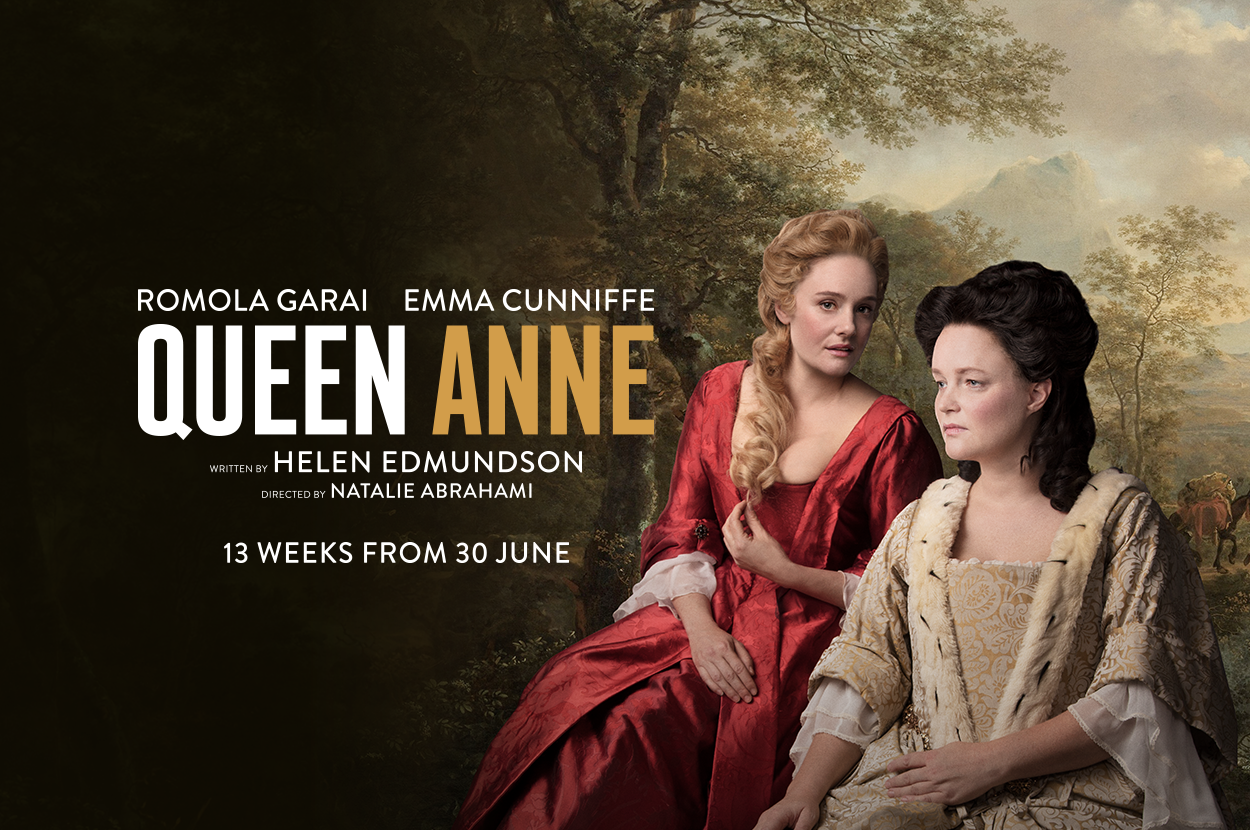
However sometimes I have to accept that the cinematic trumps the theatrical and that is definitely the case for The Favourite. For only a couple of years earlier, writer Helen Edmundson, director Natalie Abrahami, the massed ranks of RSC creatives and a cast led by Romola Garai and Emma Cunniffe served up Queen Anne, a play that, like The Favourite, dramatises the relationship between Anne, Sarah Churchill and interloper Abigail Hill. Except that the play offered a much broader sweep of history, Anne’s accession, the War of the Spanish Succession in Europe between the Grand Alliance and the Spanish and French Catholic monarchies, the rise of the Duke of Marlborough, Sarah’s husband, as well as Lord Godolphin and Anne’s political interventions. It also focusses on the birth of the free press in England at the turn of the C18 and, specifically, the spread of satirical publications. All this in addition to the personal troika.
In contrast The Favourite, whilst referencing the political manoeuvrings between protectionist Whig and free-trade Tory, and the impact of the growing tax burden to finance the war on landowners, is firmly focussed on the relationship between the three principal women. Mark Gatiss gets a look in as Marlborough (Winston Churchill’s ancestor) but not much opportunity to show off. Same goes for James Smith as Godolphin. Both were Tories but they became ever more reliant on Junto Whigs to finance the war.
(As an side I personally continue to sh*t myself about the long term, and increasingly short term, effect of debt on this country. As it happens public debt to GDP ballooned in the years after William III first went cap in hand to the City spivs with the idea of issuing Government bonds. At the peak of the War of Spanish Succession it approached 200%. War tends to do that. Anyway now good old Blighty runs at around 90%, not too far away from our major developed economy neighbours. But when you add in private debt it gets closer to 300% of GDP. There are a bunch of countries with “higher” levels but this reflects their tax friendly approach to issuers of corporate debt. Our debt is built on the backs of consumers.
So for those Brits who now purport to prize “sovereignty at any price” I would venture we are already in more of a pickle than all the Euro economies you take a pop at. But that is not all. Our current account deficit currently runs at 5% or so. Comparable with the likes of Turkey and Argentina. This has to be financed by foreign investors, “the kindness of strangers” as the Governor of the BoE would have it. Who knows what might happen in the next few weeks and months but if we balls this up, sterling depreciation, imported inflation, capital flight and sale of assets is guaranteed. And there may be f*ck all the BoE and Government can do to protect us. Forget about your ten quid for a visa, roaming charges, lorry queues or medicine stockpiling. That’ll be the least of your worries).
Oops I’ve done it again. Back to the script. So Anne, a natural Tory, became increasingly less enamoured of the Junto dominated government, especially when she fell out with Sarah, and the non-Junto Whigs started to break bread with the Tories led by Robert Harley. Cue the terrific Nicholas Hoult for it is he that plays Harley, sumptuously powdered and bewigged, but still brutally Machiavellian. He intrigues with the ambitious Abigail, eventually marrying her to his ally Masham (a virile Joe Alwyn), with the Queen’s approval. Harley wins the political battle, last straw for Sarah, but the Whigs win the battle after Anne’s death when the Hanoverian line is established, the Jacobites are defeated and the Whig supremacy is ushered in. The new money trounces the old.
Anyway I suspect that once the mercurial director Yorgos Lanthimos, in 2009, got his mitts on Deborah Davies’s original script, first written twenty odd years ago, it was always likely that the political context was going to be downplayed. Mr Lanthimos went on to garner deserved critical acclaim for Dogtooth (my favourite of his until, er, this Favourite), The Lobster and The Killing of a Sacred Deer. For those that don’t know, these are not your run of the mill Hollywood blockbusters. So, in many ways, The Favourite it surprisingly in its near naturalism. It is beautifully shot courtesy of cinematographer Robbie Ryan, the costumes (Sandy Powell) and set decoration (Alice Felton) are, as you might expect, exceptional and the locations, mostly Hatfield House, also Hampton Court Palace and the Bodleian’s Divinity School, are all stunners. The soundtrack, without exception, is divine, though amongst all the Purcell, Handel, Vivaldi and Back (WF as well as JS) make sure to listen out for Anna Meredith’s rasping contribution from her string quartet Songs for the M8.
So it looks and sounds wonderful. A period drama with a twist of Peter Greenaway’s Draughtsman Contract. But it is the relationship between the three women that is Mr Lanthimos’s concern and, with a little embellishment and ornamentation, he constructs a drama that the Tourist thinks sheds more light on the workings of power than any dry “historically accurate” portrayal could do. It is a drama, so “historical accuracy” for all the pedants out there is meaningless in this context, and, in any event, history is simply what is left and what is found, and it always changing. I suspect what really winds these punters up is the functional lesbian love triangle but, without that there would be no drama. The power games between the three women seem to echo, and directly, influence the power games between politicians and Crown and State.
Queen Anne, (we never see husband George who was an arse by all accounts), famously lost all 17 of her children and left no heir, hence the invitation to the Germans, 26 years after the invitation to the Dutch. Protestant royal kids eh, never there when you need them. This, unsurprisingly, leaves her sad, needy, physically incapacitated and isolated. Hence her bunnies. And her cake. She has a friend from childhood, Sarah Churchill, but these two chums are beyond dysfunctional. Having opened the door to her, she, Sarah, is in turn is manipulated by impecunious upstart cousin Abigail Hill, who then steps in to manipulate the Queen, literally and emotionally. Except that she, the Queen, whilst vulnerable is also capable of manipulating both, and ultimately pulls rank.
There are external scenes, in the palace gardens, on horseback, to Parliament, but most of the action takes place indoors and specifically in the Queen’s bedchamber and the corridor outside. Genius. Adds to the damaging intensity and claustrophobia of the relationships. As does the roving camera. And the predominantly wide-lens shots. The dialogue is dynamic and contemporary, the humour broad and often incongruous, the tone ambivalent. Your sympathies will constantly oscillate between the characters.
It is probably a comedy, but not one of those “dark” or “black” comedies where you don’t laugh. There are hints of Restoration romp and barbed bitch-fest a la Les Liaisons Dangereuses but then the idiom is right here, right now. It might be a tragedy but who is the heroine? Historical drama? But no-one normally speaks or moves like this in the bog-standard drama. The Madness of King George filtered through an absurdist lens. Maybe, but then it isn’t that absurd. Parallels with the arch Whit Stillman’s Love and Friendship, or the recent ITV Vanity Fair. Yes, but with more filth and camp. Could another director have taken the scrip and budget and churned out a more than passable film. For sure but it wouldn’t be half as much fun or half as original.
All of this reflects Yorgos Lanthimos’s off-kilter, deadpan style but it was never going to work without the three leads stepping up and, crikey, they do. In any other filmic context Emma Stone’s opportunist Abigail would take your breath away. Then along comes Rachel Weisz’s cruel to be kind, then to be cruel, and then back again, Sarah. And then, in probably the least surprising acting triumph of all time, Olivia Colman comes along and chews them up with her Queen Anne. The way all three bring out the conflicts implicit, and explicit, in their relationships is, frankly delicious, but OC takes it to another level.
I have already intimated that IHMO the present shower of Parliamentary sh*te might as well be dissolved to be replaced by a matriarchy comprised of acting Dames. Judi Dench as PM, Maggie Smith as Chancellor, Helen Mirren as Foreign Secretary, Eileen Atkins as Home Secretary, Joan Plowright as Education Secretary, Patricia Routledge at Health, Harriet Walter Justice, Kristin Scott Thomas International Development, Julie Walters Work and Pensions. You get the idea.
Culture Secretary I hear you cry. Easy. Sarah Caroline Olivia Colman. Only a matter of time before she is be-Damed. And surely she could cheer us all up. Telly, film or, too rare, on stage (she was close enough to touch in Mosquitoes), how she manages to get so deep into the emotional core of the characters she has played, even in relatively “lightweight” roles, is astounding. Anyway she now seems to have cornered the market in screen Queens, as it were, and here she is simply magnificent. Whether vomiting up blue cheese, petulantly cutting short a recital, stroking her rabbits (no euphemism), freezing in Parliament, linguistically weaponising cunnilingus (yep that’s what I meant), weeping for her lost child, ecstatically responding to Abigail’s poultice (again no euphemism) or bullying some poor footman, she always convinces, even as we snigger.
I see The Favourite, and Olivia Colman, Emma Stone and Rachel Weisz, are all over t’internet as Oscar candidates. I haven’t seen many of the other films habitually mentioned bar Blackkklansman and Black Panther (note to self: get on to that Roma caper asap). I doubt they will get far. But just maybe Olivia Colman can do the business and the whole world can see how perfect she is. That would be nice.
 At Home He Feels Like A Tourist