Ghost Stories at the Lyric Hammersmith ****

Ghost Stories

Lyric Hammersmith, 18th April 2019

BD, LD, MS and SO joined the Tourist for this.

Here is what we learnt.

A. Don’t see the film version first.

B. If you follow A. You will be sh*tting yourself.

C. if you don’t follow A this is still very, very effective.

I won’t say much. There are three connected stories. It is cleverly written by Jeremy Dyson, (The League of Gentlemen, Funland, Psychobitches amongst others), and Andy Nyman, (versatile actor and Derren Brown collaborator), and brilliantly realised by the creative team of Sean Holmes/Joe Murphy (direction), Jon Bauser (design), James Farncombe (lighting), Nick Manning (sound) and Scott Penrose (special effects), and many more no doubt. The cast here, Garry Cooper, Simon Lipkin, Preston Nyman (yes Andy’s boy) and Richard Sutton, throw themselves into it.

It has been around for nearly a decade now but the Lyric was the theatre that first commissioned it, in fact it was pretty much the first thing Sean Holmes did when he took over. So, if like us, (doh, like you’d see it twice – maybe yes actually), you have never seen it, this seems like the fitting place to go. And, at 20 quid a pop it’s a bargain. And businesslike in duration at just 80 minutes.

So you think you won’t be scared by theatre? Get along to the LH with some mates in the best few weeks and test the proposition.

And, if like me, your youngest lets out an entirely solitary, and very loud, yelp at probably the least scary of the jump-scare moments, you will, also, p*ss yourself laughing.

The Animals and Children Took to the Streets at Lyric Hammersmith review ****

The Animals and Children Took to the Streets

Lyric Hammersmith, 23rd February 2019

This took my eye in large part because of the description of its form in the Lyric blurb and in the many reviews that have followed its progress around the world since 2010 following a commission by Battersea Arts Centre, Malthouse Theatre Melbourne and the University of Chichester. Theatre company 1927, made up of writer/director Suzanne Andrade, film and animation designer Paul Barritt, costume designer Esme Appleton and composer Lillian Henley, had a big hit in 2007 with Between the Devil and the Deep Blue Sea at the Edinburgh Festival. This was the follow up. It combines animation and video design with live music and songs, narration and performance, like a “graphic novel burst into life”. It is, technically and creatively, a tour de force even if the story itself doesn’t quite match up.

Bayou Mansions on Red Herring Street, in the Bayou, is a decrepit tenement block in an imagined city, where the poorest members of society are concentrated and the feral kids run riot. Agnes Eaves and little daughter Evie pitch up with an ambition to change things through the power of Blue Peter-ish craft. A reluctant janitor steps in to help. The kids invade the posh neighbourhood. You can guess the rest. The plot, as in most parables, doesn’t stand up to much scrutiny, and the subversive message, let the kids play again in public spaces, with a few nods at wider social and economic injustice along the way, isn’t really developed. Who cares though when this level of visual and musical invention is on show.

Mr Barritt’s animations are stunning. The aesthetic is 1920’s German Expressionism/Berliner cabaret filtered through 1970s kids cartoons with Tim Burton lurking in the background (in my head at least). The way that the three white-faced performers, Genevieve Dunne, Rowena Lennon and Felicity Sparks, integrate their movement, performance, piano music and costume changes with the moving animation, is occasionally breath-taking. The monologue narration of the caretaker, voiced by James Addie, is similarly seamlessly integrated. There is plenty of dry wit from this, and other characters, and a few (not enough mind) sinister undertones.

This wasn’t full on our visit and there are a few tickets left for the remaining performances. It might be that the Lyric is a little on the ample side capacity-wise for such a show, and I am not entirely sure the younger patrons, and indeed LD who I roped in to coming along, were entirely persuaded, but if you are prepared to take a punt and revel in the craft on show the is well with the £20 or so asking price.

OthelloMacbeth at the Lyric Hammersmith review ***

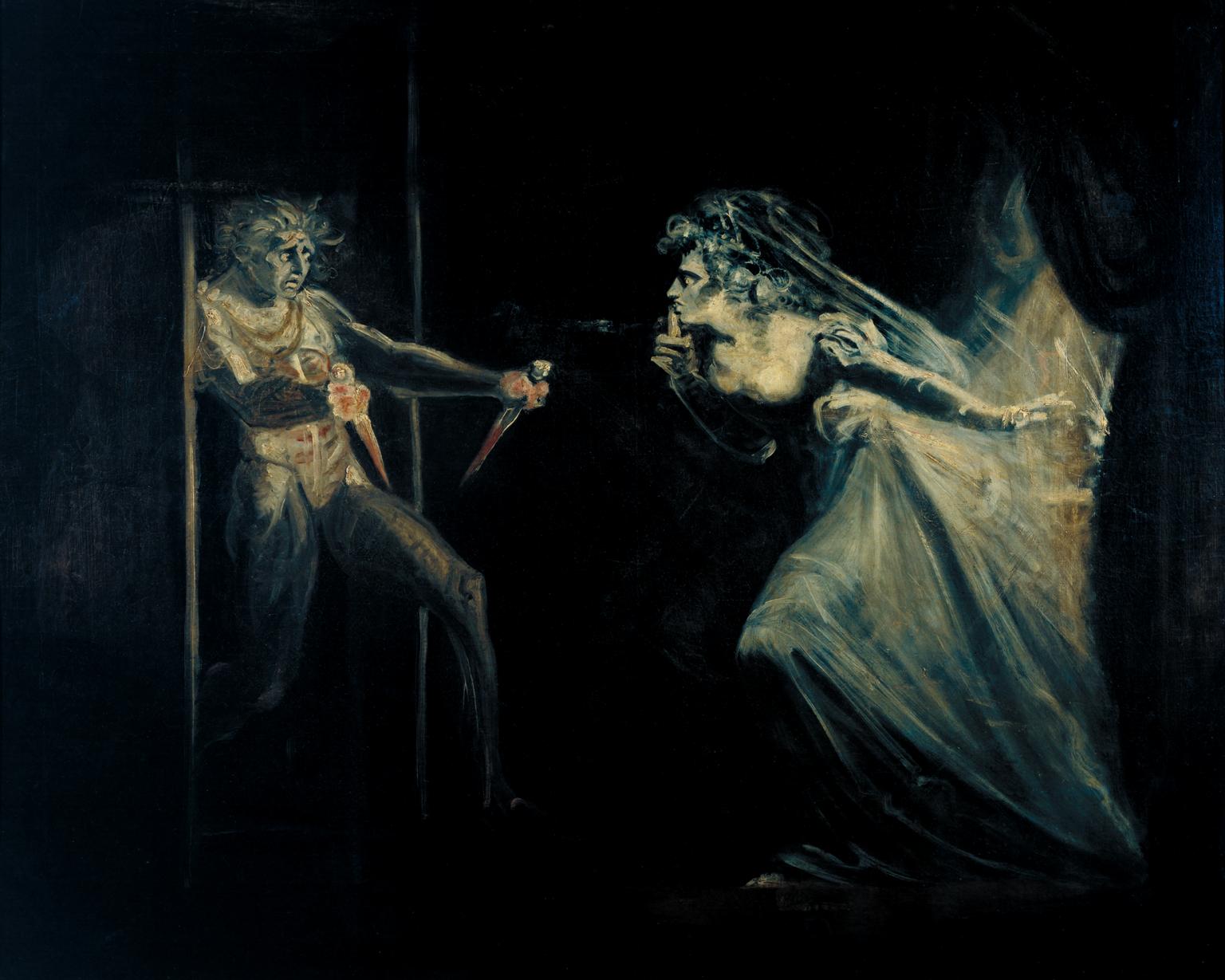
Lady Macbeth Seizing the Daggers ?exhibited 1812 by Henry Fuseli 1741-1825

OthelloMacbeth

Lyric Hammersmith, 8th October 2018

OK so this has its moments. By splicing together Othello and Macbeth, excising out extraneous context, sub-plot and characters, director Jude Christian has largely succeeded in achieving what she set out to do. That is to recast the two famous tragedies from the perspective of the female protagonists, Desdemona, Emilia and Bianca, the Ladies Macbeth and Macduff and, with a twist, the Three Witches. Without messing too much with the main plots. And with some occasionally breathtaking transfer of lines from one play to the other. However it is the Macbeth half that gets the best of the treatment, in large part because it benefits most from Basia Binkowska novel set design as it opens up. And this is definitely not for the purists who relish the verse. (I overhead some grumbling on the way out).

In part this reflected the cuts, in part the slightly uneven verse delivery on show and in part what happens when the psychological insight offered up by Shakespeare’s “roundest” characters is sold short. Samuel Collings as Iago/Macduff and, especially, Ery Nzaramba as Othello/Banquo had the most to lose. On the other hand there was much to learn from Kirsten Foster’s alert Desdemona and Caroline Faber’s measured Lady M, and the Witches, our two/three murdered/abused women from Othello. For this conceit, their revenge, as they unleash Lady M’s “unsex me now” monologue, and strumming on high pitched wires, is both clever and, in part, insightful.

Nagging away at me though is the belief that Shakespeare did offer up multiple vistas into what these women saw and felt whilst still getting on with the business of showing us that ambition, violence and jealousy are intrinsic, if ugly, facets of the human condition. I am not arguing that Shakespeare’s treatment of his female characters should be excused, the body count and violence meted out to them, tells its own story, just that, as in some much of his writing, there is insight and ambiguity when you look for it. And at least he has the excuse of history. The men today who continue to “fridge” women do not. After all Jude Christian in this mash-up, by using WS’s lines, is only highlighting what is already there in the text.

The cur-down version of Othello doesn’t need to tell us why “the Moor” is so hated, nor to have Iago poisoning his and our ears, but without it they come across a bit cartoonish. They are basically wankers from the off. The harsh brushed metal wall, there to mask the Macbeth reveal, only serves to highlight the static staging, and rushed delivery, with very rapid jump–cuts, of the first half of the first play. It does heat up post hanky mind you. Sandy Grierson squeezes a lot out of Cassio as do Kezrena James as Bianca and, especially, Melissa Johns as a blunt no-nonsense Northerner Emilia, who can sense what is coming. But this is maybe more to do with the “air-time” they have relative to standard interpretations rather than the actors really finding something new to say in the characters.

Sandy Grierson’s Macbeth does convince, because we know what to expect, because the call-back is more profound, because his is a fine performance and because the relationship with Caroline Faber’s Lady M stacks up. The early filleting of the text is less distracting, the motives of the power couple are still examined. Ms Faber makes chilling sense of the final Othello speech which falls to her. Even so at the end of the day it is Lady M who hatches the murderous plan, even if the narrative here is revenge for the wrongs of the first half. Once again I think there is more than enough complexity in Lady M as written by the Bard to make Jude Christian’s re-direction superfluous. Watch Judi Dench at work if you don’t believe me.

So a successful exercise on its own terms. I am just not sure that those terms were entirely necessary. New plays by women, telling women’s stories, with women creatives, would be more fruitful I think. (Lela & Co by Cordelia Lynn for example which Jude Christian directed). Or Jude Christian let loose on either one of this plays. Or a Caryl Churchill classic for example. This strand of wilful innovation has dogged the last few years of Sean Holmes’s stewardship of the Lyric. It hasn’t always worked as here. It will be interesting to see who, and what, comes next. It is a lovely theatre, thanks in large part to Mr Holmes’s industry, which deserves the best.


The Plough and the Stars at the Lyric Hammersmith review ***

sean_o27casey_by_reginald_gray

The Plough and the Stars

Lyric Hammersmith, 26th March 2018

One way or another I see a fair amount of theatre. Making up for lost time I guess. Anyway this requires a reasonable degree of organisation. Nothing a small child couldn’t cope with but I do need to be on top of the diary. Very occasionally there is a system error. I say system. Obviously it’s my stupidity. One casualty was the National Theatre’s revival of The Plough and the Stars in summer 2016. It never got into the diary, I failed to check the fail-safe lists and ended up in Sicily en famille before I realised the mistake. Reviews weren’t great, Sicily was, (even if we found ourselves once again on top of a very steep hill despite strict instructions to the booker, me, to avoid this). And I had only paid £15 for the ticket thanks to that nice Mr Dorfman who uses his Travelex fortune to support the NT. Even so it irked me. Still does. It’s always the little things isn’t it?

Anyway that meant postponing my first exposure to the renowned Irish playwright Sean O’Casey until this production, That’s right. No Juno and the Paycock or The Silver Tassie yet, (though I am signed up for the concert performance of Mark-Anthony Turnage’s opera based on the latter at the Barbican in November).

So I have some catching up to do. First impressions? Well I can see why Mr O’Casey’s work might divide opinion. The mixture of trenchant politics, (all sides come in for a walloping from socialist SO’C), comedy filtered through working class Dublin lives that, with hindsight, teeters perilously close to Oirish cliche, and melodramatic tragedy, takes a bit of getting used to. I see from Michael Billington’s review of the 2016 NT production that it took him a bit of time to get into the swing of things that time round. Same thing happened to me in this production. I also, shamefacedly, have to admit my ears had to adjust a bit to the vernacular accents on display, the drift of SO’C’s prose. Yet once it all got going, and subsequently having thought about, and done a bit more work on, the play, I am starting to see where the advocates of SO’C are coming from. (The programme contains a pair of fine articles on the way in which the Easter Rising, and women’s role in Irish independence, have been interpreted over the years). If it is good enough for the mighty Mr Billington, who should be knighted and canonised for his services to the theatre illiterati like me, then it is good enough for me to sit up and take notice.

This production in its original “anniversary” incarnation at the Abbey Theatre Dublin has a very fine Irish cast which has been brought over to West London largely intact. Now it wouldn’t be Sean Holmes, (don’t be deceived by the name – he’s English), as director if there wasn’t a bit of “auteristic” subversion instituted into proceedings and so it is here. Jon Bauser’s set is low budget but ingenious with scaffolding creating the Dublin tenements, or maybe now tower blocks, and graffitied plywood standing as walls. A fair amount of cheap (I assume) lager spills out on to the stage. Paul Keogan’s lighting is similarly severe. Catherine Fay’s costume design is resolutely modern-day, particularly striking when the British soldiers first appear. This means that the setting, 1916 Dublin at the time of the Easter Rising, can echo across subsequent years in the island of Ireland. I see the point. Patriotism, whether derived from a line on a map or a different shade of god, is an ugly f*cker. And it’s always the least advantaged that lost the most.

The everyday humour which fuels the first act in the living room of the Clitheroe’s flat, and in the pub in the second act, is confidently delivered. Remember this is November 1915, the Nationalists including the trade unionist Irish Citizens Army, are organising. The relationship between Ian Lloyd Anderson’s Jack and Kate Stanley Brennan’s Nora is believably tender, and then strained, when Jack is re-recruited to the cause despite Nora’s desperate intervention. On the other hand whilst individually, Niall Buggy’s buffoonish veteran Uncle Peter, Phelim Drew’s lovable drunkard carpenter Fluther Good, Janet Moran’s effervescent charwoman Mrs Gogan, Ciaran O’Brien sanctimonious Marxist Young Covey, are all individually fine performances they don’t always seem to naturally occupy the same space.

This slightly stilted tone continues through into the pub with Nyree Yergainharsian forthright prostitute Rosie Redmond. However, once the fight between Mrs Gogan and Hilda Fay’s bitter Protestant Bessie Burgess breaks out, the tone shifts, for the better in my view. Now the way external events catch up with the individual characters starts to add texture. SO’C’s critique of the “heroic” telling of this passage in Irish history is manifest even if you know very little about it. The compassion of the women in the play is highlighted, especially Bessie Burgess, the best role here. The fear that violent struggle precipitates, as the soldiers break into Bessie’s attic, is palpable.

I think it might just become a much better play in the second half. I can see that the brazen looting, young Moliser’s death from TB, (some convincing coughing on demand from Julie Maguire decked out in tribal footie shirts), Nora’s stillbirth and delirium and Bessie’s sacrifice create a tonal shift into something as bleakly overblown as the first half was comically pigeonholed. Yet is feels more sedulous, certainly in this production.

It is a hard thing to bring out the complexity of ordinary people living on the periphery of historical change. Weaving a drama from this, whilst still setting out to upset just about everyone involved in creating the narrative which idealised this change, is surely doubly difficult. You can see why the play had such an impact when first performed at the Abbey in 1926. I can also see why its status as “canonic” theatre also makes it a tricky piece to get right. This might not have been the perfect production on first viewing but I suspect I will grow to like SO’C with more exposure.

I took the wrong route home, (bus not tube since you ask), which meant that an earnest  young chap, I suspect gently in his cups, politely asked for my programme lying on the seat. He carefully asked my opinion on the play. I was a little sniffy. I now regret that. I do hope he went.

Final aside. Apparently SO’C lived in Totnes. And died in Torquay. I didn’t know that. Seems like there is more to the Tourist’s birthplace than he ever realised. The more you learn the more the more the connections build.

 

Terror at the Lyric Hammersmith review ****

terror-website-image

Terror

Lyric Hammersmith, 19th June 2017

Terror is not your typical piece of theatre. It is a courtroom drama yes, but not in the form of a classic “did he/she or didn’t he/she do it”. Nor is it especially interested in probing the psychological make-up of accused, victim or legal representatives. Instead it is focussed on a classic moral dilemma: which takes precedence, the rule of law and the principles that lie behind it, or the conscience of the individual.

Writer Ferdinand von Schirach sets the stakes pretty high though. The defendant Lars Koch (Ashley Zhangazha) is an exemplary major and fighter pilot in the German air force. He has admitted shooting down a commercial plane which had been hijacked by a terrorist. In doing so 164 people have died but potentially he has saved the lives of 70,000 in a football stadium, the known target of the terrorist. The facts are succinctly laid out by Christian Lauterbach (John Lightbody), the air force officer tasked with co-ordinating any response to this sort of event. Major Koch was expressly ordered not to shoot down the plane but chose to go ahead. The judge (Tanya Moodie), prosecuting (Emma Fielding) and defence (Forbes Masson) counsels lay out the arguments with some eloquence and pull in a few classic examples from ethics and moral philosophy (the trolley problem for example). We also here the testimony of one of the victim’s wives played by Shanaya Rafaat.

We the audience then toddle off to the short interval, have a debate about what we think (as a number of people around me were doing – Billy No Mates here once again had to have a debate inside his head) and then return to press a button to decide if the major is guilty or not guilty.

It is thought provoking stuff but only works as a piece of theatre because of the canniness of the writing. Mr von Schirach’s day job is as a lawyer. I am guessing he is a flipping good lawyer. I have no idea how “accurate” a representation of the German legal system this “trial” is, but I am not sure it matters, so deftly is the dilemma set up. The set design by the very talented Anna Fleische is imposing and the direction by the Lyric’s own Sean Holmes is typically confident. The excellent cast also rises to the occasion. For me though the real hero here is translator David Tushingham. The role of translator is often overlooked but if I admired the economy of the text here this evidently reflects the skill of translator as well as playwright. I note that Mr Tushingham also translated Winter Solstice by Richard Schimmelpfenning which enthralled me at the Orange Tree earlier in the year. He was also dramaturg for the Forbidden Zone, one of Schaubuhne Berlin’s finest exports to these shores.

So if you and some mates are looking for a thought provoking night out, (with plenty of time for some grub and/or a livener or two afterwards as this comes in well under 2 hours even with the break), then you could do worse than secure some tickets for Terror. And after it is all over, check out the Lyric website to see how your audience jury compared to the many previously across the world. I won’t say what I thought.


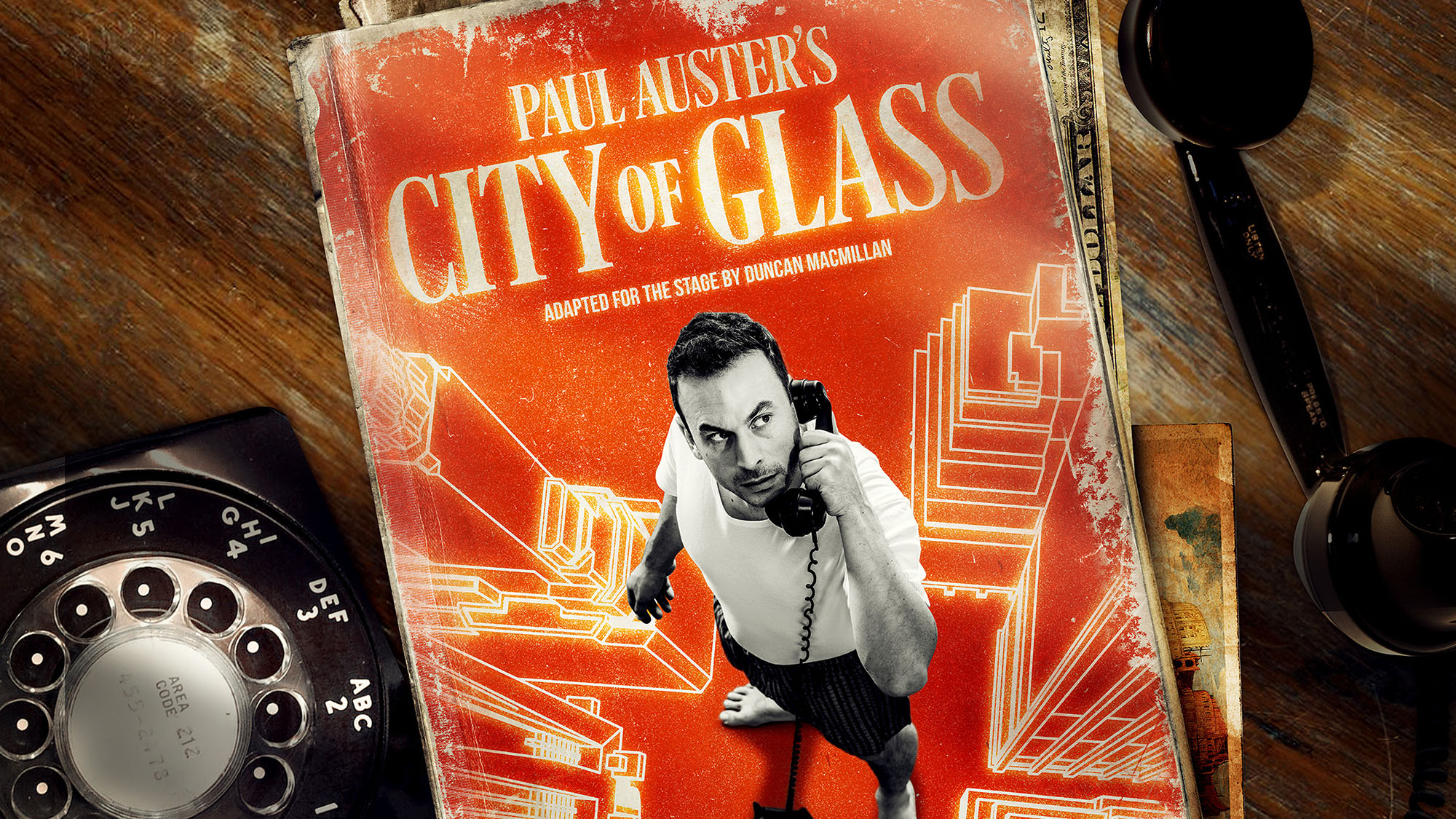
City of Glass at the Lyric Hammersmith review **

city-of-glass-final-image1

City of Glass

Lyric Hammersmith, May 11th 2017

So I remembered too late. I have thumbed copies of Paul Auster’s New York Trilogy so I think I must have read it, or at the very least City of Glass, when it came out in the 1980’s as any young, trendyish, new-to-theworld-of-work-but-still-able-to-go-out, indie man about town type would have done. I may even have professed to like it. But I’m not sure that I actually did. It is, as this adaptation (of orginal novel and a subsequent graphic novel augmentation) reminded me, a bit silly and a bit pleased with itself. No problem with subverting genres and getting all postmodern meta in books but you have to be very careful that you steer well clear of your own back passage or risk the proverbial disappearance.

So, in my view, this incredibly talented team comprised of Duncan MacMillan who did what he could to adapt the book into a suitable work for the stage, a score by Nick Powell, whose music is a vital part of The Ferryman at the Royal Court as we speak, and 59 Productions, including first time director Leo Warner, maybe just picked the wrong starting point. The staging is extraordinary showing just what can be done using cutting edge technology, but this has been employed to so much better effect in other productions by the 59 team (not the least of which was their contribution to the 2012 London Olympics Opening Ceremony).

The opening gambit is promising enough with the telephone call out of the blue to our hero/narrator/writer, Daniel Quinn, (DQ same as Cervantes original meta hero), conjuring up the expectation of a classic noir detective thriller. He then proceeds to find himself drawn into ever more fracturing realities leading him, and us, to question what is real and what is imagined here and ultimately into questioning his own sanity. The production however relies on heavily a narrator to move the “action” such as it is along and to explain “what” is happening, and the characters are more ciphers than individuals with whom we might want to make an emotional investment. The pace is unvarying which only led me to keep on questioning whether this might all have been better left on the pages of the original novel. And as I say the novel itself is, in my view, ultimately an exercise in pretension, though I freely admit my heart and head will always lie with the modernism daddies and not the post-modernist bastard offspring.

So sorry I couldn’t like this, though I recognise the extraordinary technical skill brought to bear on how this looked, and will definitely keep an eye open for 59 Productions next project (hoping they steer clear of Auster). And I continue to think that the Lyric Hammersmith’s ongoing ambition will be rewarded with a home-grown, or bought in, slam dunker at some point and I want to be there when it happens.