Jean-Philippe Rameau (1683-1764) – Le rappel des oiseaux
François Couperin (1668-1733) – Les fauvétes plaintives
Olivier Messiaen (1908-1992) – Le merle noir
Jean-Philippe Rameau – La poule
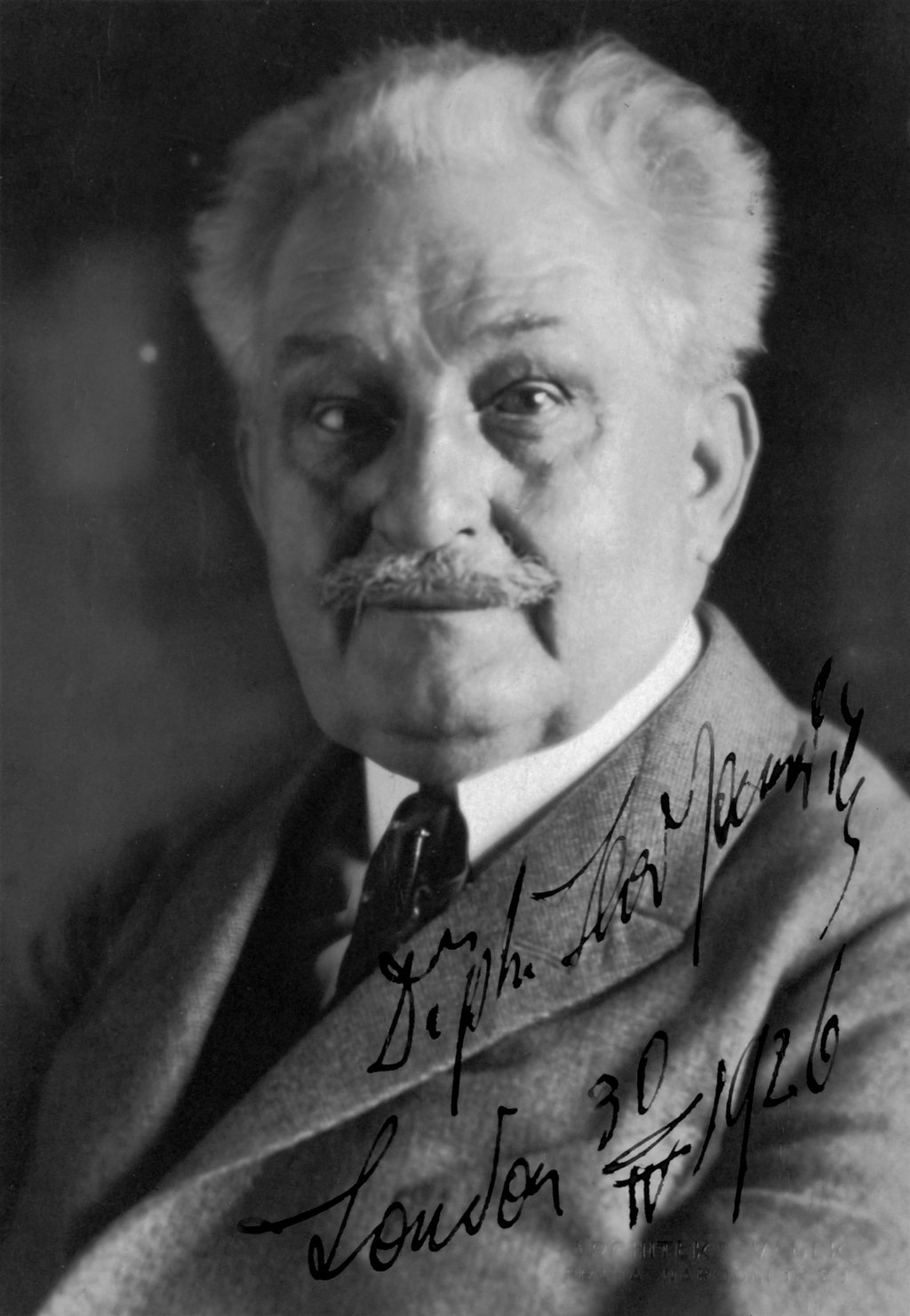
Leoš Janáček (1854-1928) – On an Overgrown Path X. The barn owl has not flown away
Sir Harrison Birtwistle (b. 1934) – Oockooing Bird
Hossein Alizâdeh (b. 1951) – Call of the Birds
Henry Purcell (c.1659-1695) – Ground in C minor ZD221
Philip Glass (b. 1937) – Koyaanisqatsi Prophecies
William Byrd (c.1540-1623) – My Ladye Nevells Booke First Pavane
Philip Glass – Trilogy Sonata Knee Play No. 4 from Einstein on the Beach
Johann Pachelbel (1653-1706) – Ciacona in F minor
I am guessing Johanna McGregor started out interrogating her extensive repertoire for an hour of solo piano pieces connected with birds, then thought, sod it, why doubt I chuck some Purcell, Byrd and Glass into the mix and end with Pachelbel. Good call. This genuinely was a delight from start to finish. Not a single wasted note, even from the composer, Hossein Alizadeh, whose work I had never heard.
Whilst Ms MacGregor dips into the Romantic repertoire, notably Chopin, it is the C20 and Baroque (especially Bach) for which she is most well known. Suits me. If pushed I would say I preferred the Couperin to the Rameau when it came to the battle, though both are so elegant there was no hint of aggression, between the French Baroque masters. The Rameau comes from a suite and is comprised of two related halves. Same structure in the Couperin, which represents warblers, and the second Rameau, hens pecking away in a courtyard that Respighi went on to pinch.
It was the Messaien that enthralled me. This is the second piece from Le Petite esquisses d’oiseaux, and represents the humble blackbird. Bright chords offset its calls and movement in four changing sections. I need a recording. Let’s see what Santa brings.
The cry of the owl is a warning in Czech and other folklore and here its scary screech here precedes a fading chorale, all beefed up with Janacek’s arpeggios and ostinatos.
The Birtwistle was written when he was just 15 and shows he was already heading off into his own world, albeit here still framed in jolly Satie-ism, and maybe, though he had never heard him, Messaien himself.
Iranian musician Hossein Alizâdeh wrote his Call of the Birds for a lute-like instrument, the shurangiz, and a duduk, similar to an oboe. Ms MacGregor has created her own arrangement of its rhythmic drive. I liked it, like a Middle Eastern jig.
Purcell’s C minor ground is an exemplar of the form, the rising arpeggio of the bass line, seven bars long, in the left hand with a “catch” tune suject to variation in the right, before the bass dies. All over in three minutes like a perfect pop song. The Byrd, a Pavane from the divine Lady Nevell’s Book, one of the first written keyboard collections, is a similar structure, a ground with harmony on top, but way more ornamented. He really was a clever fellow and with a surname to match the theme of the first half.
The first Glass is the typical cycle with in a cycle oscillation of PG’s piano work but was originally scored for chamber ensemble and chorus, coming at the end of the art film by Godfrey Reggio that was a big mainstream hit. The five knee plays connect sections of Glass’s opera Einstein on the Beach, at five hours long, it needs some breaks, and originally was performed by violin and voices, (where it works better).
The gentle Pachelbel chaconne, a stepwise structure subject to 21 variations, was followed with a more upbeat encore, a Handel Passacaglia, that fitted the bill.
Bloody West End theatres. The Noel Coward Theatre is by no means the worst offender, and we went early and cheap in terms of booking, which was probably the right strategy, but even this VFM perch was uncomfortable, tight, too hot and with a trek to the bogs which near required a satnav. Still at least the sight-lines were up to snuff, for me, if not so much the SO.
With this story, this cast and this creative team this was never going to fail though even as I occasionally yearned for the comfort of the Lyttleton. If you can’t, or won’t, pay up (£175 for a premium ticket!!) to get along in person then this is definitely worth seeing when it is broadcast live to cinemas on 11th April. It is, even with the back-stage insight and obligatory on-stage video, a surprisingly naturalistic take on the classic Joseph L. Mankiewicz film from 1950. I can see why some of the proper reviews say it is overly focussed on the theme of ageing to the detriment of the other insights into the sourer side of the human condition, and Gillian Anderson wisely reins in her inner Bette Davies, (there is the mighty BD above), as Margo Channing, but this is still a very smart piece of theatre craft where the 2 hour straight through run time never drags.
Highlights? Monica Dolan as Karen Richards. Now Ms Dolan, even if she turned it down to say 30 watts, just can’t help outshining everyone else on stage. Here she is magnificent. In the scenes at the party, captured on live video, when everyone has abandoned the drunk, maudlin Margo, she continues to build her character whilst others are “rhubarbing” – there is no sound in these scenes bit it matters not a whit to our Monica. Or take the scene in the car where Karen reveals how she has betrayed Margo to give Eve her big break. Not entirely convincing in the hands of Celeste Holm in the film but here you feel Karen’s remorse at what she has done, and see in her eyes the consequences that will flow from it. You will most likely have seen Ms Dolan on the telly but if you ever get the chance to see her self penned one-woman play The B*easts, about the sexualisation of modern culture, do not, repeat do not, turn it down.
Who else? Well Rhashan Stone as Lloyd Richards, Karen’s playwright husband who also falls under Eve’s spell, also turns in a winning performance. As does the twinkly-eyed Sheila Reid as Margo’s droll, and jealous, retainer Birdie and a booming Stanley Townsend does ample justice to the critic, and Eve’s eventual Svengali, Addison DeWitt, the part made famous by Oscar winner George Sanders. (I am surprised that the OED definition of the word acerbic doesn’t contain reference to the said Mr DeWitt). Indeed all the supporting actors turn in sparkling performances, Ian Drysdale as Margo’s producer Max Fabian, Julian Ovenden as her boyfriend Bill Sampson, debutant Jessie Mei Li as the vacuous Claudia Caswell, (the part played in the film by another newcomer who went by the stage name of Marilyn Monroe), and even Tsion Habte who plays Phoebe the apparent ingenue who pitches up in Eve’s dressing room at the end to repeat the story. Ms Habte is, of course, Lily James’s understudy as Eve. What price Ivo van Hove gets tempted to play that particular meta-dramatic card and shove her into the limelight.
The set and lighting design of Jan Versweyveld is predictably memorable. Mid- and side-stage panels move up to reveal the back-stage workings, this is, after all a play based on a film about the theatre, in turn based on a play The Wisdom of Eve by Mary Orr, in turn based on her own short story which she based on the real life experience of actress Elizabeth Bergner. The design allows slick set changes to conjure up Margo’s dressing room in the opening scene where super-fan Eve Harrington first sneaks in and tells her sob story, Margo’s glitzy apartment, front of stage at Aged in Wood, the Stork Club, back-stage at the Shubert Theatre where Eve gets her premiere in Footsteps on the Ceiling, Lloyd’s new play, the awards banquet and finally Eve’s own apartment. There is a sickly pink tinge to much of the design which I shall henceforward imagine is the dominant colour in the film, and which nails the forced grandeur of old-school theatre, set in this grand old-school theatre.
The understated period costumes and the score by PJ Harvey, (finally delivering after a few false starts on other plays recently), with on stage pianist Philip Voyzey, and amplified by Tom Gibbons sound design, complete the ensemble. And this being Ivo van Hove each detail has been thought through and there are some divine moments, not least of which is the, admittedly sledgehammer, video “ageing” of Margo on the projected screen. Of course if one or other, or both, of the leads, were to fall short then so would the whole confection, but Gillian Anderson, with her trademark drawl, is as predictably secure as you might imagine as a tragic heroine despite the bantz and the limpid-exterior-masking-steely-interior of Lily James’s sly Eve is the perfect foil.
So great performances, it looks and sounds spot on and no glaring games played with story or text. But, for me, it doesn’t quite scale the heights of the film. Producer Darryl F. Zanuck famously reined in some of the more excessive characterisation in Mankiewicz’s original script, but there is still a hefty dose of melodrama and the sound of tongue pushing against cheek in many of the lines. No-one comes out well and everyone looks after number one first. There is artifice in life as well as art. Anne Baxter’s Eve is recognisably cut from the same cloth as Bette Davies’s Margo. If anyone of these characters pitched up as plus ones at your party, and I include Karen in that, you would probably be looking to wind things up early. Yes the film is about the primacy of youth and looks for women on stage and screen but the message never subsumes the entertainment. The touch is light and, for good or bad, the creators plainly loved their characters. Ivo van Hove’s version, with all the technical wizardry, is decidedly more serious. Maybe too serious. Network at the NT, even if it did miss out some of my favourite bits, was thrilling theatre that eclipsed the film it was based on. This, like other film adaptations by this creative team, does not.
If I may quote from Billers’s review in the Guardian – “this feels more like a Ingmar Bergman movie than a Mankiewicz satire”. The old boy sums it up perfectly as always, especially since it is Bergman that Mr van Hove is continually drawn to as he seeks out films he can react for theatre. (I imagine, based on his brilliant writing, a couple of interviews, his appearance on University Challenge and the fact that he has been theatre critic for nearly 50 years on the world’s greatest newspaper, that the genial Michael Billington is as far removed from Addison DeWitt as it is possible to be. If this were not true the Tourist may well suffer a kind of total psychic collapse).
Even with these caveats, which frankly any half-interested theatre goer familiar with director and film, might reasonably have seem coming well in advance, this is an event and needs seeing. Next up in London, unless I am very much mistaken, from the van Hove factory, is his take on the Janacek song cycle The Diary of One Who Disappeared with added recitals, music and meaning, at the Royal Opera House, and then, hot on its heels, The Damned at the Barbican, based on Visconti’s coruscating 1969 film, in collaboration with Comedie Francaise, which sounds like in is slap bang in the core of van Hove’s curriculum.
Shostakovich – String Quartet No 8 in C minor, Op 110
Beethoven – String Quartet No 7 in F major, Op 59 No 1, “Razumovsky”
You still see some venerable rock (and pop) bands unwisely soldiering on in their 60’s and even 70’s, sometimes with only one original member still in the line-up. Outside of disposable pop the creative force/s, the composer/s if you will, in contemporary popular music are invariably also the performer/s. Not so generally in classical art music, though that isn’t to say that many canonical composers weren’t, or aren’t, also adept performers. Just that composition and performance are more often separated, and that performance is often as important to composition in terms of audience enjoyment or appreciation.
So when rock musicians die, so does the band, if it has managed to get that far without breaking up due to musical differences, substance abuse or fist-fights, in the established rock’n’roll manner. Leaving the audience with a ropey tribute band and recordings to keep the tunes alive.
In the classical world though, with its much longer back catalogue, legacy is the name of the game. And not just in composition. Performers live on. Not just in recordings but also in the name, and sound, of the band. Easy enough to envisage in the context of the orchestra with its link to place and with a constant turnover of personnel. The Royal Danish Orchestra in Copenhagen can trace its lineage back to a bunch of regal trumpeters from 1448 (!), the venerable and still very highly regarded Leipzig Gewandhausorchester to 1743.
The idea that string quartets outlive their members might be a little trickier to get your loaf around though. Yet this is how it works. Members may come and go but the best quartets stick together for life, such is the dedication of performers to their art, and, when one of the four can no longer perform, pearly gates or otherwise, a replacement is drafted in. But this cannot be any old violinist, viola player or cellist. For the sound of a top notch string quartet, is a very particular thing, and continuity, as well as chemistry, needs to be guaranteed.
Now as is normally the case with the development of classical music, form followed technology and demand in bringing the string quartet to the fore. Once modern instruments had been perfected in the C18, notably the viola, (which is tuned a perfect fifth below the violin and an octave above the cello), and with enough patrons who liked the string quartet groove to pay up, composers were all set. As with so much else in classical music it was Papa Haydn who set the ball rolling in the 1750s. His massive output for the ensemble (68 named, 77 or so in total) is still amongst the best ever written IMHO.
The string quartet, in the opinion of the Tourist, is about as “pure” as classical art music gets. Not easy to get right; any paucity of imagination is ruthlessly exposed. Four parts is enough to fashion an argument but not enough to take the foot off the intellectual or aesthetic gas. Plenty of opportunity to vary pitch but only the colour and texture of strings at the composer’s disposal. All of which might explain why not every big name has embraced the genre and why even those that have sometimes don’t always get beyond one effort or a brace.
After Haydn, Mozart obviously churned out a fair few, 23 I think, though they are not all up to snuff. Still as ever with Wolfgang when he nails it he nails it. Then Beethoven with his 16 (and the Grosse Fuge) which, as with the symphonies and piano concertos, have never been bettered. Schubert also walked the talk with his 15 and a few assorted bits and bobs. (Note to Tourist: more work to do on these).
As the fashion for showy-off, Romantic, bullsh*tty bombast gained traction in the C19 so the string quartet took a back seat, but returned with a bang in the C20. For the Tourist’s money the best of the bunch since 1900’ish are Janacek’s pair, Nielsen’s 6, Ravel and, (in a rare thumbs up from me), Debussy’s single shots, Stravinsky’s various musings, and, best of all, Britten’s haunting treble, Bartok’s virtuoso 6 and Shostakovich’s acutely personal 15. Oh and Glass’s 7 (and counting), Reich’s Different Trains, Crumb’s Black Angels, Nyman’s 5, Ligeti’s 2 and Xenakis’s 4. You might have some others to add. Tell me.
The Emerson String Quartet was formed in 1976, and still has two of its founder members in violinists Eugene Drucker and Philip Setzer, alongside the viola of Lawrence Dutton, with cellist Paul Watkins the last in, having joined in 2013. I have recordings of their arrangement of The Art of Fugue and their renowned Bartok cycle. The Bartok is superbly recorded and is very, very precise and very, very intense. This is what they are famous for. Exact and technically brilliant interpretations. Which maybe lack a little emotion. That tends to be my preference but I can understand why others may take a different line (and there are occasions when I would agree).
Anyway this is what the Emersons are famed for. And this is exactly what they delivered at Milton Court. Britten’s Quartet No 3 was pretty much the last thing he composed appearing in the year he died, 1976. With its call-back to the music of his last opera, Death in Venice, in the final passacaglia, and the recitative quotes that precede it, it really is immensely moving. BB was very ill at this time, only able to work in short bursts following a heart bypass operation, and this seems to be reflected in the four condensed movements which precede the final “La Serenissima”. The opening “Duets”, in sonata form, is also haunting and, by virtue of its various permutations of the quartet personnel, as sparse as its title suggests, even when the duets are accompanied. The Ostinato second movement, like the Burlesque fourth movement, is very short, and taken at a fair lick even where it is played pizzicato. The parodic Burlesque could have come from the pen of Shostakovich in one of his more caustic moments, with its weird central spiccato passage. The central Solo is marked very calm with the first violin line, heading higher and higher, seemingly lifted from the mists, and mystery, of Curlew River. Or maybe Aldeburgh Beach, Or Snape. Anyway as with the rise and fall of the Passacaglia it sounds like BB was set to go home. Blub blub.
The Emersons certainly got the measure of BB’s still extraordinary imagination and technique. But it felt a little less haunting than the recording I have from the Endellion Quartet. This was even more true in the Shostakovich. The Eighth was written when DSCH was in a very dark place, contemplating suicide. He went on in his final quartet, 15, to offer up a genuine personal elegy but this comes pretty close. He was supposed to be written a score to accompany a documentary about the bombing of Dresden but, after just a few days, he came up with this, “an ideologically deficient quartet nobody needs”. It was 1960 but DSCH still wasn’t “free” now being forced to join the Party. It has his trademark initial motif in the opening of the Largo on the cello, which is developed, before the main theme from his First Symphony pops up, before this in turn gives way to a repeated rocking motif.
This rocking motif is then pumped up and speeded up to form the basis for the second movement scherzo. This is, even by Dmitry’s high standards, pretty scary stuff. The DSCH motif also crops up again, in contrasting tempi, As it does in the middle movement Allegretto, here transformed into a Waltz which then proceeds to quote his First Cello Concerto. A violin solo links to the first of the final two slow movements. This contains the tune to a Russian song about the victims of fascism, to whom DSCH eventually dedicated the quartet, but which might be aimed at totalitarianism more generally. The final Largo comes full circle with a return to the rocking motif.
The quartet is taken unbroken and with these powerful and dramatic ideas, and stirring emotion, it is easy to see why it is Shostakovich’s most famous and oft-performed quartet. It would be hard to imagine a more expertly crafted and sharp interpretation, these chaps leave nothing to chance, but, as I discovered a couple of weeks later, courtesy of the Brodsky Quartet, it is possible to wring a fair bit more gut-wrenching angst out of the piece. I have recordings by the Borodin Quartet, now in its eighth decade, constantly refreshed by the best of the Moscow Conservatoire, and the original dedicatees for most of DSCH’s quartets, and the English Fitzwilliam Quartet (founded in 1968) who also worked with the composer and were the first to record a complete cycle.
As it turned out it was the Beethoven first Razumovsky which actually showed the Emersons at their very best. Count Razumovsky was an important Russian aristo and diplomat in Naples and then Vienna but his name has gone down in posterity for the three quartets he commissioned from Beethoven in 1806. All are magnificent but the first might just be the best of the bunch. This is altogether jollier music than the two pieces that preceded it, with its intriguing dissonance and implied repeat in the first movement, the rapid passing of the baton from one player to another, underpinned by the one note cello motif in the Allegretto second, the tragic F minor Adagio and then the ebullient finale with its bouncy Russian theme, (as in the other two Razumovsky pieces). The drilled-to-perfection understanding of the Emersons, and the more upbeat tone of the Beethoven was, for me, at least more satisfying.
That is not to say that overall I took very great pleasure in listening to this famous quartet. They are up there with the very best of their peers, some of which I have already mentioned. When it comes to Beethoven I think the Takacs Quartet (founded 1975) might have the edge of those I have heard live, though the Belcea Quartet (1994), who might just be my favourite string band, run them close. As for recordings of the Beethoven quartets have a sniff around the Alban Berg, Quartetto Italiano (for the middle quartets) and unparalleled Vegh (for the mighty last four).
While I am at it, should anyone care, add the Hagen Quartet (1981) to the bucket list when it comes to Mozart, the Quatuor Mosaiques (1987, HIP specialists) for Papa Haydn and the Kronos Quartet (1973), on the rare occasions they leave the US, in contemporary repertoire.
Now this is it what opera is all about. Not just some portly punters, (though a couple of the chaps here were carrying as much timber as me), parking themselves mid-stage and belting out their arias. No here we get a concept, and some, a detailed design to back it up, lashings of action and even more acting, maybe too much, and a score which fits the prose of the libretto. I see it has wound up a few die-hards who would probably be happier with some Puccini-esque love mush but this is the real deal for me.
Now Janacek famously never made his life easy when it came to picking the subject matter for his operas. Infanticide, forest animals, adultery and suicide, the delusion of eternal life, a warrior matriarchy, a meta tragic opera. What a bout a feel-good rom-com eh Leos? Anyway From the House of the Dead is drawn from Dostoevsky’s eponymous novel which Janacek translated and adapted in his own libretto and is set in a Siberian labour camp. It has only one assigned female character, a prostitute, though one of the prisoners is normally a soprano, though not here. There is no narrative arc. It is largely episodic and expositional with the main characters steeping out of the ensemble to describe the crimes that led to their incarceration. There is a play within a play which takes up most of the second act. The music is pretty intense, lots of that special Janacek ostinato rhythm, with not much in the way of quiet reflection. There is no ending or resolution to speak of.
It was Janacek’s last opera and was pretty much complete on his death. But a couple of his students decided it wasn’t and that he can’t possibly have meant what he had left on the page or that an unresolved ending was appropriate so they “enhanced” the score significantly and changed the ending. Sounds like Hollywood today. Anyway all this gloss has been cleared out to produce a score much closer to Janacek’s original intentions., here further refined by John Tyrell’s critical edition. Intentions that require a vast orchestra, here spilling out into the side of the stalls. Chains anyone? The Orchestra of the ROH under the baton of Mark Wigglesworth sounded fantastic. I can’t imagine a better conductor of Janacek’s operas.
This though was all about the director though. Krzysztof Warlikowski doesn’t hold back. The overture, which lays out Janacek’s main ideas, which are subject to subtle variations throughout the three acts, is accompanied by a video projection of French philosopher, and winder-up-in chief -of-reactionary-conservatives, Michel Foucault, theorising on the nature of power, punishment and control in the modern prison system. The curtain rises to a solitary basketball player and a brutal modern prison yard. The athlete turns out to be “Eagle” standing in for the bird that represents freedom in a classic staging. Novel huh? A glass box acts as the governor’s office and, later, as the stage for the play within a play. Throughout the whole ensemble is in movement, offering multiple perspectives on the stories. From my perch in the back of the gods it wasn’t always easy to know who was singing but no matter. I’ll gladly swap a bit of narrative confusion for all this visual content. All thanks to designer Malgorzata Szczesniak.
And it isn’t that tricky to work out what’s going on. Gorjancikov, (I’ll refrain from full names or we’ll be here all day), played by the extraordinary Willard White, now in his 70s, pitches up. He’s a political prisoner and toff so the governor (Alexander Vassiliev), as you do, has him beaten up. Skuratov (Ladislav Elgr) talks about his life in Moscow. Luka (Stefan Margita, who was very impressive) tells how he and a crew killed a prison officer. Gorjancikov befriends young Aljeja (Pascal Charbonneau) and teaches him to read and write. Skuratov prefaces the play within a play by telling how he killed the bloke his girlfriend was forced to marry. The two plays are performed in bawdy fashion. The Prostitute (Allison Cook) gets involved. There is a bit of a dust up. Sapkin (Peter Hoare) describes his interrogation, Siskov (Johan Reuter, another excellent performance, though the tattoos help convince) tells of how he killed his wife because she was still in love with the village w*anker Filka, who, sharp intake, turns out to be Luka, who has, second sharp intake, just dropped dead. Antonic (Graham Clark) says he should still be forgiven, the moral of Janacek’s tale. Everyone, however “evil” can be forgiven, we all have the “spark of God” apparently. Gorjancikov is released. The end.
So, as you can see, not much in the way of plot. Yet the stories, which are elaborated through the play within a play structure, are compelling and the atmosphere of tension, claustrophobia, frustration and violence, and yes a bit of confusion, travelled right up to the back of the amphitheatre. The performances of the cast, inside all this action, are powerful enough to bring life to the characters; best of the bunch is Nicky Spence as Nikita who really can act and sing simultaneously. These are men who have done wrong, really wrong, but Mr Warlikowksi, in his dramatic staging, tellingly makes the point that they are victims, of their own warped masculinity if nothing else, as well, who need help not punishment to the point of death. And he does this by sidestepping the religiosity of the source material.
Loved it. More of Mr Warlikowski and Ms Szczesniak artistic partnership please.
London Symphony Orchestra, Simon Rattle, Isabelle Faust
Barbican Hall, 14th January 2018
Janacek – Overture: From the House of the Dead
Elliott Carter – Instances
Berg – Violin Concerto
Bartok – Concerto for Orchestra
Back to the Barbican for another round with Sir Simon Rattle and the LSO, though this was more familiar ground (for me) compared to the previous outing (Rameau to Mahler: LSO at the Barbican review ***) a few days earlier. And back to my more usual perch. Once again the Hall was pretty much full to the rafters, and, encouragingly, it looked liked a very youthful audience. (Or I am ageing more rapidly than I thought). Anyway, on the subject of age, the thread here was orchestral works written near the end of their lives by these four very different composers. All of which gave a chance for the whole orchestra to shine.
Now the main draw for me here was Isabelle Faust. I think she is probably the best current violinist in the world. Mind you, as is my wont, I have gone all hyperbolic in this claim with little evidence to back this up. So, more exactly, the best violinist I have heard in the past couple of years, based on recordings and her Bach outing last year at the Wigmore Hall (Akademie fur Alte Musik Berlin at the Wigmore Hall review *****).
As it happens I saw a fine rendition of the Berg Violin Concerto performed by another favourite violinist in the elfin form of Patricia Kopatchinskaja last year at the RFH with the LPO under the baton of Vladimir Jurowski. And I recently invested in the benchmark Levine/Mutter recording, (even though I am not entirely convinced by Ms Mutter). Now I am not going to pretend that listening to Berg comes easily to me, but even I can hear that there is a rich depth in his works from the combination of passion, intelligence, serial technique and romanticism, that rewards persistence. I rashly signed up for a performance of Wozzeck at the Frankfurt Oper a couple of years ago in German with German sub-titles (FYI I don’t speak German). Unforgivably I bought the cheapest ticket up in the gods. It is a wonderful auditorium but I could only see half the stage. That was still enough to be transfixed by an outstanding production. But most of all it meant I had no choice but to get lost in the score. Stunning. Add to this the Lulu in 2016 at the ENO directed by William Kentridge, which I confess was beyond me in parts, but was visually spectacular, and I am now well on the road to Bergian conversion. Mind you, what with his long(ish) musical education under Schoenberg, the proscription of his music under the Nazis and his early death, aged 50, after a bizarre insect biting incident, there isn’t too much composition to get your head around.
Now this Violin Concerto isn’t like others in the canon. It’s tricky for sure, and asks a lot of the soloist, but it isn’t showy. Orchestra and soloist have to mesh together. It is pretty much the last piece Berg wrote and is dedicated to the memory of Manon Gropius, the daughter of Alma (Mahler’s widow) and Walter Gropius (Bauhaus founder), who died from polio at 18. Apparently she was a captivating young woman in the manner of her mother.
The two movements are each split into two parts and with the waltz emerging from the material set out in the first movement, and the chorale emerging from the more rhythmic, almost cadenza, in the second movement. This the tempo is reversed in each. I can sort of pick out the established musical structures from within the twelve tone architecture but couldn’t tell you exactly what was going on. Suffice to say this is a dark, brooding, self-absorbed piece for the violinist and Ms Faust seemed to capture this utterly. She seemed lost in music, caught in a trap, to paraphrase Philly’s finest sisters, There are times when the whole edifice becomes just that bit self indulgent but this is where Sir SR’s insistence on picking out the orchestral instrumentation pays dividends. I hadn’t realised how detailed are the parts for harp, clarinet, viola, flute and trumpet were in this piece. I do now.
Which brings me to the Bartok Concerto for Orchestra. Now this is a piece written with the express intention of letting everyone in the band have a solo, like some prog-rock group in its 1970s pomp, It is an obvious, but still inspired, choice to present to an audience in a first season, and, I would hazard a guess, if you are engaged in a bit of musical team-building. I have Rattle’s first, (I think), stab at this when he was a younger at the CBSO, (though the bargain basement Solti/Chicago Symphony Orchestra version tops it). Anyway Sir Simon knows his way around it, and it brilliantly matches his predilection for coloration and deliberation.
I am not going to lie. It blew my socks off. There is just so much to listen to here. The first movement strings and brass, coming out of the undergrowth, with the woodwind, led by a solo oboe, getting their turn in the spotlight. The wonderful second movement scherzo with its contrasting intervals, an eerie disco. Next up an Elegia, exactly as it says, with the strings swirling around and up to be met by bold brass chords and a piccolo sticking its little nose in. The second scherzo quotes, mocks and, ultimately, compliments Shostakovich with tuba and harps getting involved, and the final movement works in classic Bartok folky stuff with a gallop to a rousing chorale at the conclusion.
I reckon we won’t have seen the last of this piece, or of Bartok, from Sir Simon and the LSO and it can probably get even better from here. Hopefully too we will see him rework some of his other C20 repertoire. Some more Stravinsky for sure, but I’d loved to hear his latest takes on Britten’s music for orchestra and, please, some, no all, of the Nielsen symphonies.
Anyway the other two pieces in this concert were tried and trusted composers for Sir Simon, Janacek’s Overture From the House of the Dead didn’t quite get the pulse racing in the way the Bartok did, but still suggested what the LSO is heading towards. (I see the House of the Dead will see a new production at the Royal Opera House in the forthcoming season. That has contemporary relevance written all over it). Sir Simon has always championed Elliott Carter and I can see why. This was another of those short, but inventive, comedy pieces that Carter was turning out in his musically fecund 90s and even into his 100s, but it has a strangely, moving ending.
Can’t wait to see what the Scouse Gandalf will programme with his band for the forthcoming season. Hopefully not too much Mahler, Bruckner, Sibelius please.




 At Home He Feels Like A Tourist