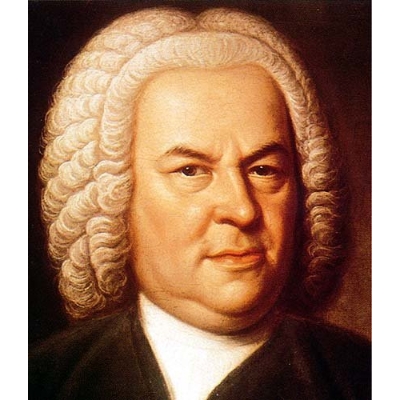
Bach and Telemann: Academy of Ancient Music at Milton Court review *****

maxresdefault

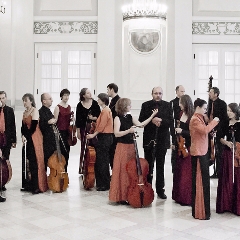
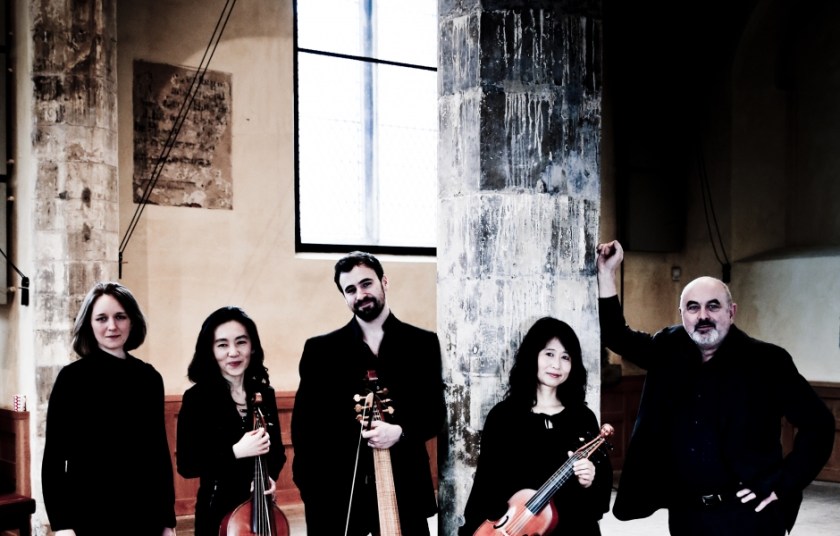
Academy of Ancient Music, Bojan Cicic (director and violin), Rachel Brown (flute and recorder), Rachel Beckett (recorder), Alistair Ross (harpsichord) 

Bach and Telemann: Reversed Fortunes, Milton Court Concert Hall, 7th December 2017

I see I am now close to being a Academy of Ancient Music groupie. Not in a sinister way, that would be very strange. Just that I seem to pitch up to most of their London concerts. Unsurprising given their repertoire I suppose. And what a joy it always is to hear them play. This was no different. And I had a new chum in MSBD to join me.

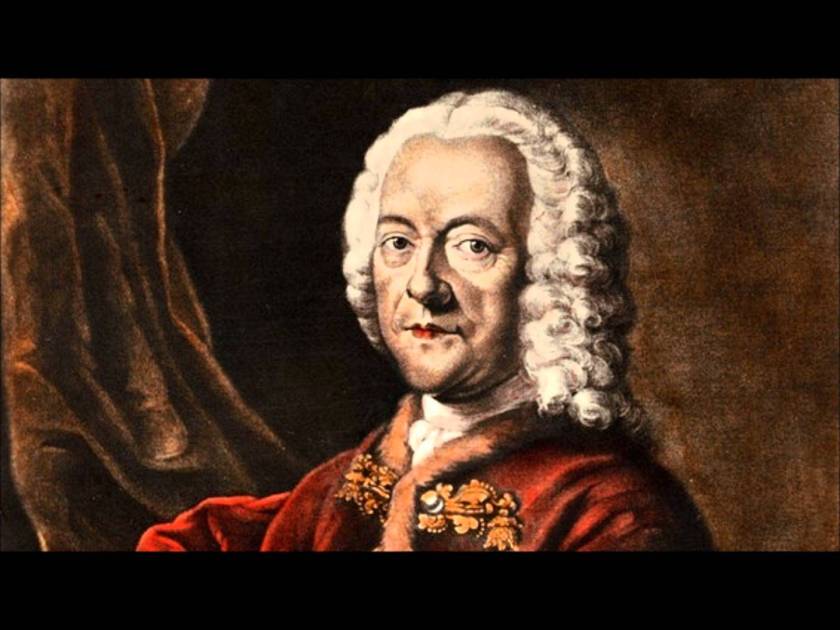
Now the theme here was to contrast the contrasting fortunes of a certain Johann Sebastian Bach and Georg Philipp Telemann. They were mates in the 1720s, 30s and 40s, with GPT becoming CPE Bach’s godfather, and both successively securing the reputation of the Collegium in Leipzig. Back in the day though Telemann (pictured above), with his suave, easy listening modelled on his French contemporaries, was by far the more popular composer, with JSB and his knotty, brainy counterpoint, and strong Lutheran faith, some way behind. As we all know JSB’s music languished for centuries, now some might say his is the daddy of all Western art music. Meanwhile whilst Telemann maintains a cherished place in the baroque world of the Baroque enthusiast, he is not much performed beyond this.

The influence of Vivaldi’s vast concerto output was much greater on JSB, and is clearly visible in the Brandenburg’s especially when played one to a part as here. In particular in the Fifth with its single tutti violin, though it is the solo harpsichord cadenza, the first ever of its type, that is the most memorable part of the concerto. Alistair Ross didn’t hold back once the harpsichord emerged from the string ritornello and his rubato was unleashed. A bit showier than Steven Devine in the last BC5 I heard in SJSS with the OAE. However, I think the Brandenburg 4 here with Rachel Brown and Rachel Beckett on the recorders was the highlight. Once the two Rachels got into the swing of it there was no stopping them, propped up by Bojan Cicic masterful violin playing, and by the end those recorders produced as sweet a sound as you could imagine (not always the case for the period recorder).

Having said that I think the most satisfying piece of the evening was the Telemann Concerto for flute and recorder. He wasn’t the only one to pair the “old” and the “new” wind instruments, Quantz was on to this, but he clearly mastered it. Written in 1712, the Concerto has some very attractive galant homophonic playing from the two instruments looking forward to the Classical. Elsewhere the soloists chase the lines from one to the other against very attractive dances, including nods to the eastern European folk tunes that he studied. The French influence on GPT is more apparent in the Overture suite, (he wrote over two hundred of these), with its simple dance rhythms and story based on Don Quixote. There is plenty of easy on the ear comic effect, (listen out for donkeys), and lots of colour. It is all so pleasant (though if I was critical maybe a tad too pleasant).

So another fine concert from the AAM who really seemed to be enjoying themselves. As I think did MSBD. In fact I know he did as he said so. I shall miss the AAM Messiah in the Barbican Hall and their intriguing Haydn and Dussek programme in April, but will be back here for the 15th February Pergolesi, Corelli and Handel gig, and for the 31st May concert in the Hall with Nicola Benedetti. Unmissable I reckon.

Australian Chamber Orchestra at the Royal Festival Hall review ****

dynamic-b98b42fc-d3b2-53c9-ba00-88eac54e2b7f

Australian Chamber Orchestra, Richard Tognetti (director), Pierre-Laurent Aimard (piano)

Royal Festival Hall, 3rd November 2017

  • Bach The Art of Fugue Contrapunctus 1 to 4
  • Mozart Piano Concerto 15
  • Shostakovich Two Pieces for String Octet
  • Tchaikovsky Souvenir de Florence

There is something truly thrilling about watching a group of string players, some standing, going hell for leather, as one, in a piece written exactly for them. Not to decry the full blown symphonic experience or the intimacy of the quartet but this is a special treat. Normally I see (and hear) this as part of a Baroque programme, normally Italian, or maybe a spot of Bach. Here we had a powerful modern ensemble.

Now we, for I was accompanied by the discerning ear and brain of Mrs TFP, that the wide expanse of the Festival Hall might swallow up the band but we needn’t have worried, as even from our perch astern, the sound was splendid. What was something of a shame is that the Hall was barely half full, a real shame since the ACO under Richard Tognetti, are world class. It was not as if the programme was challenging in any way. Even in the repertoire that we found less appealing, (I favoured the Shostakovich, Mrs TFP the Mozart), namely the Tchaikovsky, the finesse and control of the ACO was astounding. In those passages in the Shostakovich and Tchaikovsky which called for the strings to come together the unanimity of sound and movement (bows moving exactly in unison) was uncanny. Like one instrument.

Now I have heard the Art of Fugue performed by harpsichord, piano, string quartet and viol consort. All different, all fascinating as the simple theme is worked through with increasing complexity across the 13 completed, and 1 unfinished, fugues and, sometimes, the 4 canons. There is probably someone out there who has had a crack at Bach’s masterpiece on the stylophone. (I’d paid good money to see that). I gather that Richard Tognetti, who has led the ACO since 1990 (that presumably explains the discipline of playing on show), can sometimes get a little carried away with his arrangements. Not here. Now admittedly the first 4 of the contrapunctus are easy for even my ears to follow, as the meticulous theme is set out in the first, the dotted rhythm added in the second, turned upside down and filled out in the third and expanded and “sped up” in the fourth (here through the use of pizzicato). So I am not sure how much further they could go with this work, even with their technical mastery, but this was very interesting and flawlessly delivered.

I hate to admit it but the Mozart was beautiful. I don’t know the 15th Piano Concerto but I am well aware of Pierre-Laurent Aimard’s qualities, last heard by me in a majestic Emperor Concerto under Essa Pekka Salonen. You can hear how young Wolfgang, (well not so young by the time he wrote this), created the piano concerto form we know and, usually, love today. There is some lovely woodwind action, lots of sublime tunes and some fiendish piano playing, but all wrapped up in a charming bow. Once again the playing of orchestra and soloist was technically precise, but with no lack of emotion.

Now my prime reason for booking this concert, other than the reputation of the orchestra, was the Shostakovich piece since this, in my experience is rarely performed. Written in 1924, when DSCH was still a student, in memory of his friend Volodiya Kurchavov, there are obvious signs of the composer DSCH would be come. The Prelude is still rooted in the Romantic Russian composers of the late C19 but in the plunging response to the initial theme and with the high accompaniment to the second theme there is more modernity. The Scherzo second piece could easily have dropped out of a DSCH symphony from twenty years later. Sardonic, ghostly, then a comedy march, with all that thrilling dissonance.. A joy to hear and brilliantly executed by the eight musicians.

The Tchaikovsky was the (good) surprise of the evening for here Mr Tognetti’s arrangement of this sextet, for all his strings, really showed just how extraordinary their playing is. Don’t get me wrong, there are still plenty of passages in this near 40 minute piece, that annoy me intensely, it’s all just too show pony, but I did get sucked in I admit. Not sure it is the same Florence that I know and love but all that lushness and heart tugging yearning is hard to fight. And to be fair the ACO’s muscular approach dials down the sentimentality (though not the pony).

There isn’t much about Aussies that makes me jealous (actually that’s a lie, there is) but this orchestra is definitely one of them. I will add them to my list of must see orchestras/ensembles when they come to London alongside the Concertgebouw, Bavarian RSO, Leipzig Gewandhaus, Staatskapelles Berlin and Dresden, Chamber Orchestra of Europe, Spira Mirabliis, Ensemble Intercomtemporain, Orchestre Revolutionnaire et Romantique, Akademie fur Alte Musik Berlin, Les Arts Florissants, Freiburg Baroque, Europa Galante, Budapest Festival Orchestra, Mahler Chamber Orchestra and, vain hope, Lucerne Festival Orchestra. Mind you with the LSO under Rattle we now have the best in the world, fact.


Fretwork at the Wigmore Hall review ****

gothic-web-940x600

Fretwork (Asako Morikawa, Joanna Levine, Sam Stadlen, Emily Ashton, Richard Boothby)

Wigmore Hall, 18th September 2017

JS Bach – The Art of Fugue – Contrapunctus I-XI, XIV

Fretwork are one of those marvellous groups of dedicated adventurers who have brought Early, Renaissance and Baroque music back to life. There was a time when vast swathes of this music was forgotten, unperformed and left to rot. But just as the Modern swept away all that dreadful artistic junk from the Late C18 and C19 (Western art music was a bit more fortunate thanks to Haydn, Mozart and Beethoven) so an ever increasing band of scholars and, from the middle of the last century, performers (first amateur and then professional), revived and extended our knowledge of this music. And at the same time the beat came back.

In fact it seems to me that there are two types of Western classical music listener: those who revel in the bombastic pretensions of the Romantics , where a wall is erected between listener and performers, and those of us who prefer to get our pleasures from “simpler” structures, music with discernible rhythm and pulse.

We are now probably three generations into the rise of Early Music and “period performance”, which has a healthy following in the concert hall and in recordings. All this love and scholarship has also changed the way music is performed and understood across the “classical” spectrum. In contrast to jazz, blues and modern “popular” music, composition and performance are separated in “classical” music. Context and history matter. The how, what, why and when of performance and composition matter. The renaissance of the musical Renaissance has generated a vital third strand in “classical” music, alongside the veneration of the sacred Romantic texts performed by “gifted” performers and the challenge to the layman of “in yer face” contemporary classical.

So thanks to all those who devote their education and lives to bringing this joy and passing it on to the next generation, rather than selling their skills to an investment bank. And to those composers who are writing for these ensembles.

Fretwork is a viol consort founded in 1985 and, as I understand it, only Richard Boothby remains of the original line-up. Their focus is normally on music of a somewhat earlier vintage than JSB (though they will and do extend the viol sound into unexpected places). Indeed JSB didn’t stop tinkering with the Art of Fugue until just before he departed this world. For those that don’t know it, JSB takes a fairly straightforward (but eminently adaptable) theme in D Minor and then sets off counterpointing the bejesus out of it. Fugue, contrapunctus, counterpoint – it all means the same thing. Take the tune in one place, then get everyone else to pick it up whilst messing around with it, then mesh it all together into a satisfying whole. For some Bach’s music is incredibly fiddly, like the architecture of the High Baroque which leaves me cold. But, whilst I hear the fiddly, I also hear the rhythmic whole. And I think lots of other people do. Simple and complex simultaneously. That’s the genius.

Now the Art of Fugue can be played in any number of ways by any number of instruments (though a single harpsichord I gather is the most likely inspiration). Clever old JSB. Never seen or heard modern strings or a modern piano but wrote perfectly for them. By the time it was written the viol was on the way out superseded by the precursors of the stringed family we see today. So it is unlikely the old fella would have expected it to be played by this combination. Flat backs, sloped shoulders, different shaped holes, more strings, different bowing techniques and, importantly frets (hence the band’s name), all conjure up a very different sound-world to a modern string quartet say.

I loved it. Turns out this is a revelatory way to follow all the counterpoint. The viols create alternatively 3 or 4, and occasionally 5 lines, which can all be followed but without detracting from the overall architecture. Whilst maybe less transcendent than a single keyboard version, (played say by Glen Gould, grunts and all), it was probably superior to the string quartet interpretations I have heard. Best of all was the final unfinished fugue, No XIV, with its musical BACH signature. There is a lot of debate apparently around why the old boy didn’t finish it (he started it well before the onset of blindness and anyway could have had an assistant complete it). So usually once the three themes that make it up, including the BACH theme, are introduced and developed it just stops and trails off as written. Here Mr Boothby has, with the ideas of a clearly very bright scholar, finished it off. Whilst I have no idea of the theory that backs it up it made for a very satisfactory ending to an excellent recital.

Fretwork. Check ’em out.

Akademie fur Alte Musik Berlin at the Wigmore Hall review *****

50709-0-m114-510-akademie-fur-alte-musik-berlin-kristof-fischer

Akademie fur Alte Musik Berlin, Isabelle Faust, Bernhard Forck

Wigmore Hall, 29th June 2017

  • JS Bach – Suite No 2 in A Minor BWV 1067a
  • JS Bach – Violin Concerto in E Major BWV 1042
  • JS Bach – Violin Concerto in A Minor BWV 1041
  • CPE Bach – String Symphony in B Minor Wq 182/5
  • JS Bach – Concerto for Two Violins in D Minor BWV 1043

I had never seen the Akademie fur Alte Musik Berlin nor Isabelle Faust before but was aware of their reputations so I was really looking forward to this concert. Well I certainly wasn’t disappointed. This was thrilling stuff. I can safely say these were the best performances of Bach Violin Concertos that I have ever heard (mind you I haven’t heard that many live to be fair).

The opening suite set out the stall. The Akamus was founded in 1982 with many long standing members. It is also boasts a prolific performance schedule. This shared experience shows. The unanimity of the playing was astounding with the whole chamber ensemble moving as one, with every line of Bach’s music audible. A masterclass in amplitude if you like. The A Minor Suite is comprised of six dance movements preceded by an overture and was compelling from the off. There are only relatively brief periods when the solo violin line shines through but this was our introduction to Ms Faust’s ostensibly delicate, but remarkably convincing, playing. It is a mystery to me how someone who appears to barely stroke the strings with the bow creates such grand and convincing phrases.

In the subsequent JS Bach pieces,, the violin of Bernhard Forck was increasingly prominent, both as sympathetic leader, and and as support to Ms Faust. This really was Bach concerto musicianship of the highest order especially in the closing Double Concerto with its majestic fugal opening, sweet slow movement and finale with that three note repeated riff running through The link back to Vivaldi (ritornello is great for dummies like me – all the music I love is repetitive in some way) was highlighted, but the clarity of the playing made it easy to pick out the Bach innovations in each of the violin concertos. I haven’t heard better. 

The CPE Bach piece was new to me and was a fair way from the inoffensive galant style that I had thought was the hallmark of these String symphonies. Not sure I will go out of my way to explore these pieces further but this was more striking than I had anticipated.

I would love to hear more of this ensemble and soloist playing this repertoire. I am even prepared to forgive the couple of frightening perms and suspicious mullet sported by some of the gentleman on show. This will definitely figure in my annual top ten. How sad is that. I am 53. I am not holed up in a musty smelling bedroom. I should have grown out of making lists four decades ago.


Murray Perahia at the Barbican Hall review ***

murray_2540364b

Murray Perahia

Barbican Hall, 11th June 2017

  • J S Bach – French Suite No 6 in E major, BWV 817
  • Schubert – 4 Impromptus Op 142, D 935
  • Mozart – Rondo in A minor, K 511
  • Beethoven -Sonata No 32 in C minor, Op 111

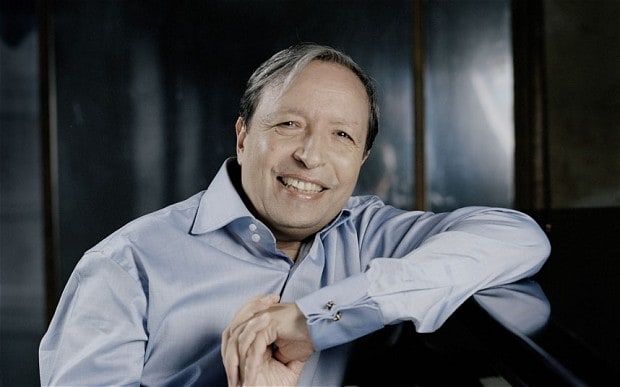
Murray Perahia is a great pianist. No doubt about that. And I am always keen to hear his Beethoven interpretations. However the last few concerts I have seen in London from him have been a mixed bag. The solo recital this time last year was a little underwhelming with a fine Mozart A minor sonata offset by a curiously underpowered Hammerklavier. In contrast his Beethoven Piano Concertos 2 and 4 earlier this year, with the Academy of St Martins in the Fields which he also directed, were marvellous. Another performance of PC No 4 under the mighty Bernard Haitink’s baton was also sensational.

In this concert we had a similarly puzzling evening. The Bach was the best of the bunch, played with great clarity and musicality and with that lovely counterpoint revealed in all its perky glory. I won’t comment on the Schubert – I just don’t really get on with it – but the audience was clearly persuaded. I didn’t know the mournful Mozart Rondo but this was a compelling rendition so I will need to check it out.

The Beethoven, his final sonata, with its curious structure and strange, ethereal musings, took a bit of time to get going. Mr Perahia’s treatment of the Maestoso opening of the first movement was more deliberate than the recordings I know (Pollini and Paul Lewis are my favourites) but by the time we reached the fugal development, which uses the whole keyboard, it was back in the groove. The longer second movement, with its six variations largely in C major, was much more convincing and here I got lost in the beauty of Beethoven’s music. The movement is near 20 minutes in total but always seems timeless to me.

So a fine evening of solo piano music but not quite as engrossing as I had hoped.

Richard Goode at the Royal Festival Hall review ****

richard-goode

Richard Goode

Royal Festival Hall, 31st May 2017

  • JS Bach – Partita No 6 BWV 830
  • Chopin – Nocturne Op 62/1
  • Chopin – Mazurka Op 41/3
  • Chopin – Mazurka Op 41/4
  • Chopin – Mazurka – Op 50/3
  • Chopin – Polonaise-Fantasie Op 61
  • Beethoven – Sonata No 28 Op 101
  • Beethoven – Sonata No 31 Op 110

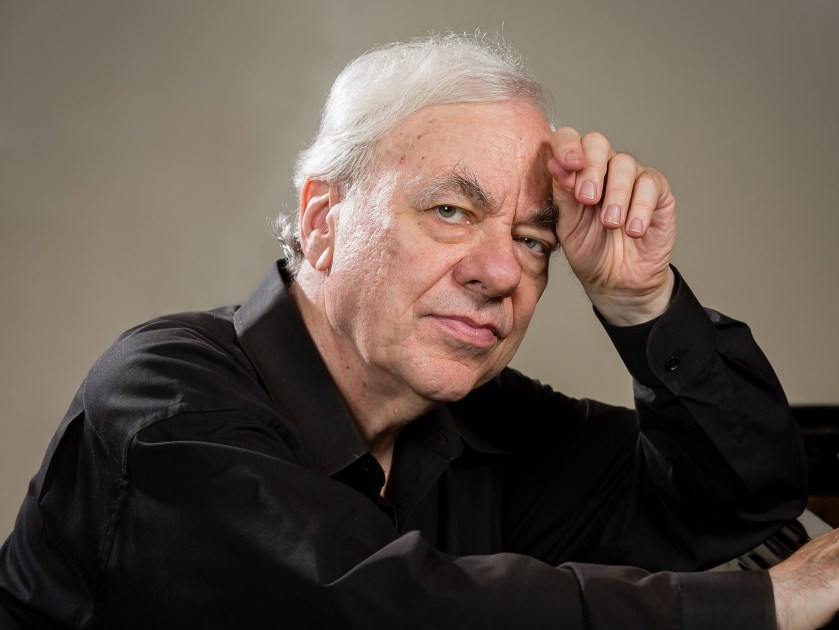
Whilst I do not own any recordings by renowned American pianist Richard Goode, and have not (to my knowledge which is fallible) seen him perform in concert, I was attracted to this programme and by his reputation in this repertoire. This certainly did not disappoint particularly in the Beethoven sonatas.

I know the Bach from a Glen Gould recording. For me no-one comes close to Gould’s musicality in Bach on a modern piano but Mr Goode’s more deliberate counterpoint was still in a pleasure in this delightful work. The first movement toccata is kind of the star of the show with a showy fugal structure at its heart. Then we get the dancey movements but as ever with JSB’s partitas (for whatever instrument) they take the dance base and ask the player to give it a thorough workout with many profound touches.

The mazurkas were a little more impactful for me than the Polonaise-Fantasie as this late work is where Chopin starts to get a little overbearing. I confess I am generally more for the smaller scale, “simpler” Chopin works, but the last of the Op 50 set is a bit more ambitious and actually therefore was a more satisfying listen when sandwiched between the chunkier works of Bach and Beethoven.

The slow movements of both of the late Beethoven sonatas were particularly impressive. The final movement of No 28 is a blinding pice of music with its tonal shifts and the acceleration to the finale. The same structure is employed in No 31 but here the songlike first movements and jaunty scherzo ends with a radiant slowish fugal movement which goes through massively dramatic stops and starts. There are plenty of more immediately attractive middle period sonatas and the big bastards like No 29 Hammerklavier and No 32 (all human life is there) but No 31 might be the best of the bunch because its gets more out of less. Anyway who cares, every note on the piano he ever wrote gets me.


Bach’s Brandenburg Concertos at St John’s Smith Square review ****

orchestra20of20the20age20of20enlightenment201

Orchestra of the Age of Enlightenment: The Brandenburgs

St John’s Smith Square, 2nd May 2017

Bach Brandenburg Concerto No. 1
Bach Brandenburg Concerto No. 3
Bach Brandenburg Concerto No. 5
Bach Brandenburg Concerto No. 4
Bach Brandenburg Concerto No. 6
Bach Brandenburg Concerto No. 2

JS Bach. Tick. Brandenburg Concertos. Tick. Orchestra of the Age of Enlightenment. Tick. St John’s Smith Square. Tick.

What’s not to like. Might as well just stop there. A superb period ensemble with some of Europe’s finest instrumental specialists playing a series of the finest works of the Baroque age.

However, there is always something new to be found in the Brandenburgs and so it was this evening. With excellent harpsichord (Steven Devine) and cello (Luise Buchberger) continuo lines and a bit of double bass action when required from Ceccelia Bruggemeyer, and with one instrument to each part, we could focus on the key contributions of individual players/instruments: in No 1 Huw Daniel on the violino piccolo (yep that’s a tiddly violin), Katharina Spreckelsen on flute and the two horns of Roger Montgomery and Nicholas Benz: in No 5 on the violin of Huw Daniel now standing in for Pavlo Beznosiuk, and its interplay with the flute of Lisa Beznosiuk  and the harpsichord cadenza of Steven Devine: in No 4 Huw Daniel’s violin again and the recorders of Rebecca Miles and Ian Wilson; and in No 6 the same violinist and recorder with the oboe again played by Katharina Spreckelsen and the F trumpet of David Blackadder (how on earth does he do that – its just a tube of old metal with holes in!!). Nos 3 and 6 are the all string affairs but in No 6, Simone Jandl and Max Mandel made a mighty racket on their violas.

Now I confess I can bounce between period (Pinnock, Hogwood) and modern recorded versions of the Brandenburgs (with a special fondness for Benjamin Britten’s conducting) but in concerts period is best (and pretty much the only option these days). And this was properly raw and thrilling. For those who have never heard a period horn, trumpet or recorder, get up close and embrace the vitality and skill. It is a tricky business making these things do what you want but when it all falls into place the energy is palpable. The quality of the instruments, the skill of the players and the depth of the scholarly advance over the last couple of decades means you are now really hearing all these scores as (probably) they were intended. If I had to pick out a couple of faves it would be No 6 with the aforementioned violas offset by the grumbling gambas and the violone (a little double bass) and the oboe/trumpet/recorder combo in No 2. .

The excellent OAE programme (a numpty like me learns a lot from these which do not assume too much but neither are they patronising or just biographical) reminds us that these now ubiquitous works started as a speculative venture by JSB for a customer, the Margrave of Brandenburg (I would love to be a Margrave if  had to be a Continental European aristo), who never bothered to look at them. What a silly Margrave. The reason why the Brandenburgs are so popular and wonderful is because they have all the brilliant, diverse yet condensed musical ideas that JSB excelled at, but they also deliver the tunes and the visceral, show-offy excitement that the best of the Italian baroque supplies.

So I say if you are a newcomer to the classical world (this blog is aimed at you), ignore all those miseries who would have you listening to the endless droning on from the likes of Strauss, Mahler and Bruckner and get down instead with the funky muthas that are JSB and Vivaldi. And if you are anywhere near Manchester or Cheltenham they will be bringing this to you in the next few days.


Bach’s St John Passion at the Barbican Hall review ****

b925c46a-59cb-47dd-9764-aef8ab7a9fee

Britten Sinfonia, Britten Sinfonia Voices

Barbican Hall, 14th April 2017

Britten Sinfonia
Mark Padmore – Evangelist/director
Jacqueline Shave –  leader/director
Simon Russell Beale – speaker
Britten Sinfonia Voices

JS Bach – St John’s Passion

They were a glum looking bunch these great classical composers weren’t they? It is alright for us with our endless, carefully composed, beaming selfies but these poor b*ggers only had one shot at pictorial immortality normally and relied on some hack artist to deliver it. Of course, the real reason they all look grumpy is obviously because it is so tricky to paint a smile. But I find it interesting that a combination of the “genius” theory of artistic accomplishment together with these received pictorial representations so often leads us into divining the temperament of the man (for alas it was always a man) from his music.

Anyway JS does look a bit stern in this picture. I guess he was a pious chap but then that might largely have come with the job. In contrast the St John Passion to me is anything but stern and pious. It is a dramatic story, well told, with no let up in pace (the bigger St Matthew Passion is not necessarily better in my view for clocking in at 3 hours vs the 2 hours here). JSB mixes up the recitative and chorus, the solo arias, the chorales and the musical accompaniment to marvellous effect here.

Now this performance was delivered, as I understand it, with the forces intended by JSB, so a couple of everything, first violins, second violins, violas, cellos, flutes and oboes, augmented by double bass, cor anglais, bassoon, organ continuo and oboe d’amore and viola da gamba. Thus a mix of modern and period instruments. Each of the vocal parts was a single line sung by eleven members of Britten Sinfonia Voices, including its director Eamonn Dougan, alongside Mark Padmore, who is, rightly, considered a pre-eminent singer of the Evangelist role, and whose vision this performance was.

However, I have to say that the Barbican Hall is not the cosiest venue for such an enterprise, which impacted a couple of the arias, and, just occasionally, swallowed Mr Padmore’s recitative. and ensured that some of the more vibrant chorales were a bit murky.

Laid on top of the piece were a couple of readings from the mighty Simon Russell-Beale, of Psalm 22 and an incredibly moving Ash Wednesday by TS Eliot. I doubt there is a man on earth who is better at thundering out this sort of stuff whilst making it look easy – just marvellous – though I guess it will have wound up the purists. And the piece ended, as apparently it did in JSB’s day in Leipzig, with a restorative motet by a chap called Jacob Handl.

Overall then I enjoyed this performance, though my attention did wander a bit. I am persuaded by this stripped back approach with mostly modern instruments when compared to the big guns approach which I have experienced for this, and the St Matthew Passion in the past, but I wonder if a smaller hall and a definitive leader on stage might have just helped clarify things a little.

Still this is just minor grumbling. At the end of the day it is still a beautiful piece of music whichever way you cut it, notably in the chorales at the top of each Part and the run of arias post the Crucifixion. I am looking forward to the next Bach workout.