
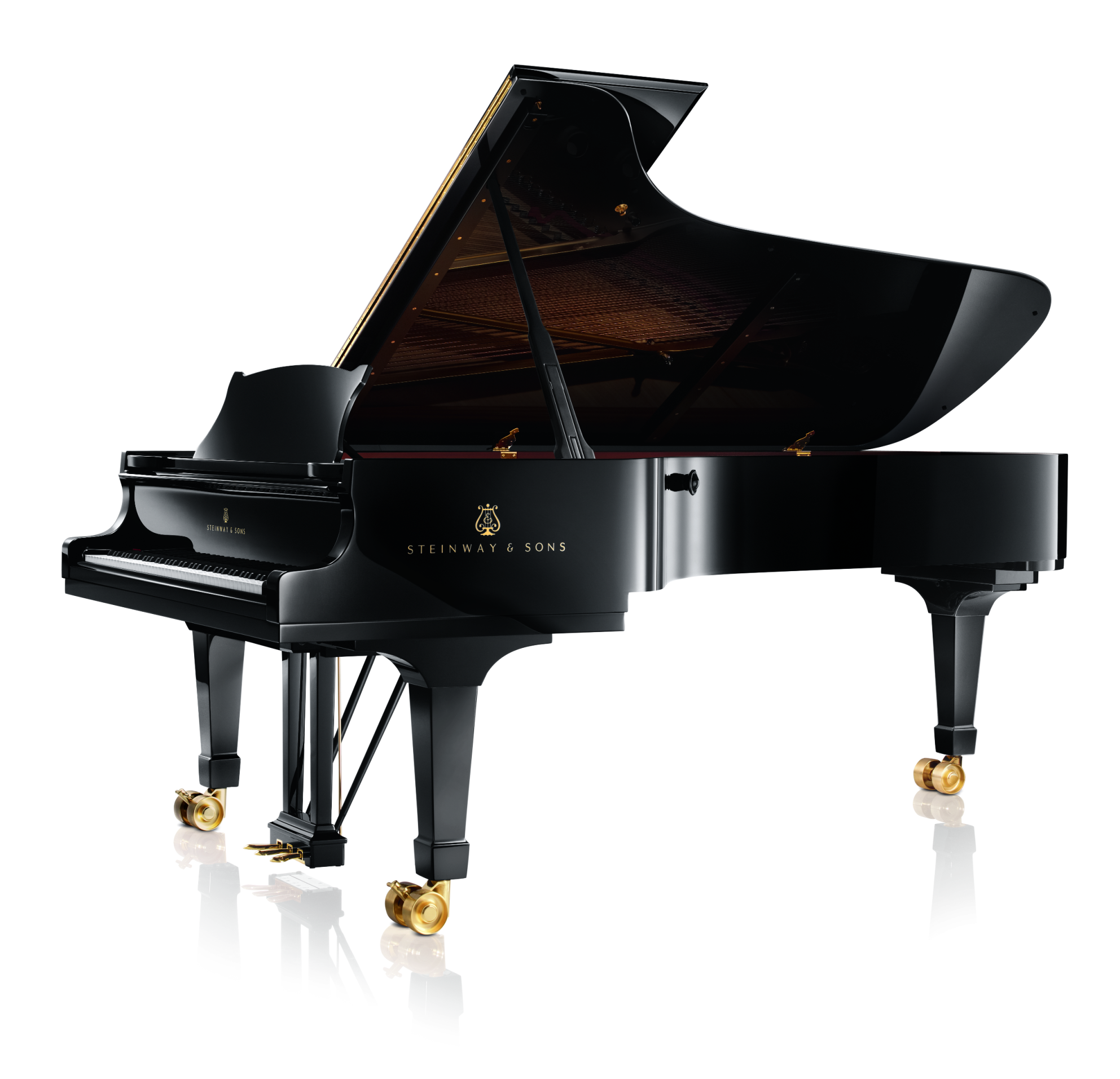
Thomas Ades and the LPO at the Royal Festival Hall review *****

London Philharmonic Orchestra, Thomas Adès (conductor), Kirill Gerstein (piano), Ladies of the London Philharmonic Choir

Royal Festival Hall, 23rd October 2019

  • Sibelius – Nightride and Sunrise, Op 55
  • Thomas Adès – Concerto for piano & orchestra
  • Holst – The Planets, Op 32

An opportunity to break MS into the world of modern/contemporary classical music in the admittedly unthreatening person of the mighty Thomas Ades, here both composer and conductor. Mr Ades is quite possibly my favourite living composer and his take on Beethoven with the Britten Sinfonia provided some of my favourite performances in the last few years. I am pleased to say that my favourite son, whose intellectual curiosity fortunately knows no boundaries. is now a convert. Indeed we both regarded this UK premiere of TA’s 2018 piano concerto, his second after In Seven Days from 2008, as the highlight of the evening, surpassing his predictably astute reading of The Planets.

First up though Sibelius’s sleigh ride inspired tone poem. Now there must have been a time when I thought I liked Sibelius. I have a symphony cycle recording from Simon Rattle and the CBSO and the violin concerto, and I seem to remember both were purchased on the back of live renditions. But now I find him pretty much unlistenable. Big slabs of music where not much happens. Organic yes, nature in all its glory as here, yes, clear themes gently mutated. Night Right and Sunrise is a game of two halves. The chugging sleigh ride rhythms giving way to a restorative chorale. Audience and orchestra deep in concentration, the string players especially in that dotted quaver/semi-quaver repeat, but even TA was unable to help me get it.

Kirill Gerstein, with TA conducting, first performed the piano concerto with the commissioning Boston Symphony Orchestra in March, with performances following in New York, Leipzig, Copenhagen and Cleveland, with Helsinki, Munich, Amsterdam and LA to come. So you can see that this is a “big thing” music wise and will have given TA and KG the opportunity to play with some of the top rank orchestras worldwide. I would be very surprised if this isn’t seen as an instant classic with KG, who plainly loves it, (already performing from memory), being compelled to yield his first mover advantage in the very near future. Hopefully he will get his recording in first as this definitely deserves it.

The first movement, marked Allegramente, jolly, opens with drum rolls and is in sonata form with a march tune between the two themes and an extended cadenza at the end. The second slow movement, Andante gravemente, starts with a melody and countermelody after a chordal intro, and follows this with a lovely second melody idea set against a rising harmony. The final Allegro giojoso restores the merry mood, with a jaunty canon following an opening tumbling theme before a brass clarion heralds a new bouncy boogie with a choral climax. These themes and the call to arms that punctuate them are reworked in many ways but always with soloist, orchestra and conductor flaunting their Gershwinian jazz trousers. Like so much of TA’s music it probably couldn’t exist without Stravinsky, Ravel and Britten, but there is also, more surprisingly as sense of Bartok in the slow movement and Rachmaninov in the finale. But it is Prokofiev that keeps coming to mind especially in the improvisatory piano line with shifting tonality, syncopation, counterpoint, imitation, repetition and light-hearted dissonance all contributing to the buoyant mood. Like a contemporary artist who believes in the enduring value of paint and colour, TA takes inspiration from the best that his forebears have come up with in the last 150 years for this combination and defiantly reworks it. We weren’t the only happy punters.

I love The Planets but recognise that, outside of the big thrills, over familiarity can sometimes dampen the wow factor. Not here though. As with his fresh take on Beethoven, TA, isn’t all driven tempi and flash harry. There are passages of surprisingly muted, dare I say traditional, interpretation, in Mars, in Jupiter, in Uranus. Mind you that’s not to say the LPO, all 109 of them just about crammed on to the RFH stage, didn’t make a heck of a racket in said Mars and Jupiter. Mercury and Uranus showed up TA’s ear for detail amidst the perky Disney bops. However it was in the pulse-y interplay between harp and flute and the strings in Saturn and Neptune that impressed me most.

Top class. MS has asked for another. I will need to tread carefully after this.
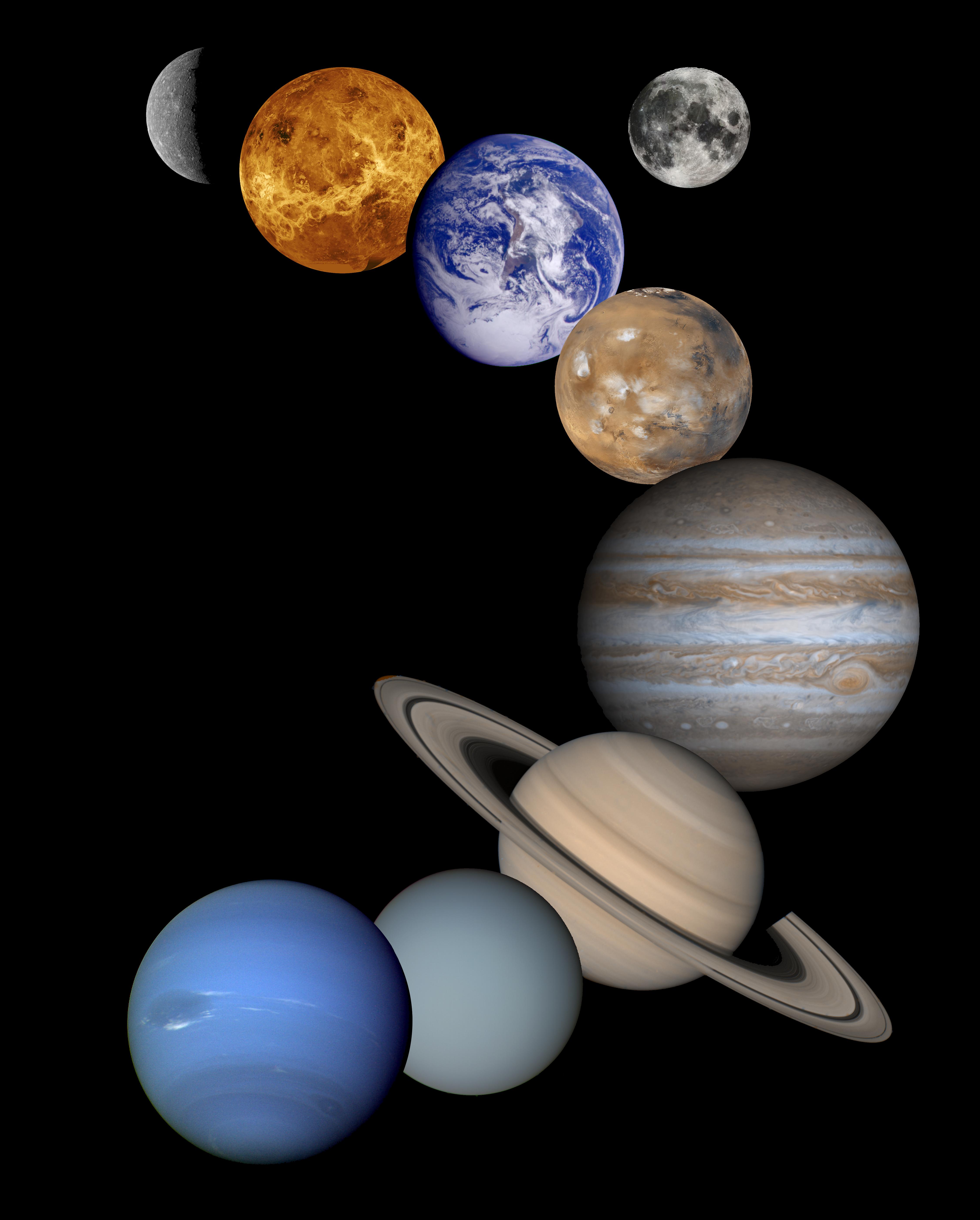
Holst’s The Planets: BBCSO at the Barbican review ****

pia03153

BBC Symphony Orchestra, BBC Symphony Chorus (women’s voices), Professor Brian Cox, Ben Gernon

Barbican Hall, 29th September 2018

I wasn’t quite sure of what the format would be for this performance of Holst’s The Planets. Maybe a quick intro from our most famous and telegenic physicist, then a work-out for the BBCSO under Guest Conductor Ben Gernon, with a few unspecified other repertoire to be tacked on. What I hadn’t bargained for was a full-on lecture preceding each of the seven movements with state-of-the-art slide-show accompaniment showcasing some of the most famous images of our solar system.

It was therefore a very pleasant surprise. The Hall was packed to the rafters and, this being The Planets with a famous bloke off the telly, there was a far more diverse audience than you normally see at the Barbican or the South Bank. And my, my, did I learn a lot. Although I confess I can’t remember it all. The point is that Prof Cox, with his dulcet Manc tones, his child-like enthusiasm and his preposterous hair-cut is just the man to show us how the latest scientific understanding of our solar system, drawn from all that hard- and soft- ware sent out over the last four decades to examine it, both connects to, and contradicts, the more mystical and conjectural view prevalent in the early C20 when Holst wrote his masterpiece.

Holst, with his attachment to English folk-song and Eastern mysticism, was a curious fellow in some ways. Swedish extraction, frail constitution, mates with Vaughan-Williams, teacher at St Pauls Girls School, as fancy as it gets even then, nice gaff looking over the Thames in Barnes, committed socialist. An interest in theosophy, a right rag-tag of funny ideas as far as I can tell, but which had quite a hold over the Western creative community in the inter-war period.

His music is pretty curious as well. Uncertain tonalities, modal expressions, the kind of counterpoint more typical of medieval forms, irregular and often belting rhythms, ear-catching dissonance. It all tumbled out in The Planets, which itself it as big a subject as you can imagine for programmatic music. No surprise that it was such a success when finally completed in 1917, bolstering his career and reputation, and no surprise it is so popular today. Its best ideas might now appear to be a field full of hackneyed war-horses but, if you step back from the familiar, it still has the power to wow especially, I think, in the slower passages. At the time it was as “modern” as Debussy or Stravinsky, and, like them, its influence on “everyday” classical music now, is inescapable. No Planets, no fantasy film scores.

Holts’s starting point was the elemental character of each of the seven planets which is what lies behind astrology, (connected to this theosophy caper apparently). All b*llocks obviously, even at the time, but Holst believed it. And believing in the power of the planets to influence us did give a starting point for Holst to set out what he saw as important facets of the human condition: War (Mars), Peace (Venus), Messenger (Mercury), Jollity (Jupiter), Old Age (Saturn), Magician (Uranus), Mystic (Neptune), Scoff all you like but this nonsense also meant that, on this night, the exact centenary, Prof Cox could then riff on how far we have come in our understanding of what makes up our solar system, and that more existential question, what other life might be, or have been, out there.

The BBCSO, (with the female voices of the choir for the final wordless chorus in Neptune) was on top form and threw itself into the hyped-up interpretation under Ben Gerson. With the movements broken up by Prof Cox’s oration it was important to establish momentum in each of the movements tout suite as it were. After all the whole piece clocks in at just under an hour with only Saturn and Venus getting anywhere near the 10 minute mark. Easy enough to quickly stake your claim on the thunderous toccata of Mars, (here claimed as a wider critique of industrial capitalism and not just the horror of mechanised warfare), the carnival scherzo of Jupiter, the bitonal dance of Mercury or the sardonic fantasy of Uranus. I have to say though that the BBCSO was actually most convincing in the nagging processional of Saturn and the endless hush of Neptune which take more time to overawe.

All up a splendid idea. Of course individually the images, the music and the lecture might have had more lasting impact, but put them all together and a deeper impression was created. It would be nice if we humans could keep our sh*t together long enough to find out if we are not alone.

Britten’s Spring Symphony from the LSO at the Barbican review ***

spring-awakening-1197602_1920

LSO, LSO Chorus, Tiffin Choirs, Sir Simon Rattle, Philip Cobb (trumpet), Gabor Tarkovi (trumpet), Elizabeth Watts, (soprano) Alice Coote (mezzo-soprano), Allan Clayton (tenor)

Barbican Hall, 17th September 2018

  • Harrison Birtwhistle – Donum Simoni MMXVIII
  • Gustav Holst – Egdon Heath
  • Mark-Anthony Turnage – Dispelling the Fears
  • Benjamin Britten – Spring Symphony

Now here was an object lesson in not doing one’s homework. Benjamin Britten’s music was my first introduction to the classical world and remains one of my all time fave composers, (mind you the list is pretty short). However, I am not persuaded by all of his work, including, I remembered just that tiniest bit too late, the Spring Symphony. So always check that the piece you think you are going to hear is exactly that at the time of booking and always, especially if it is a work of substance as here, listen to it before attending. Both rules ignored on this occasion in the most spectacularly cavalier fashion.

Still it was the LSO. Under the baton of Sir Simon with the LSO Chorus and the combined Tiffin Choirs, Girls’, Boys’ and Children’s. (BD sadly, saddled with tone deaf parents, was never a contender for the first of these crews). And, in the Spring Symphony, three excellent soloists, two of who I knew, Alice Coote and Elizabeth Watts, and one only by reputation, Allan Clayton. All the voices were superb, there are some tricky vocal pyrotechnics required in certain of the poetic settings, and the logistical challenges of getting everyone on stage (or just in front) were adroitly handled. At points the Barbican Hall stage was stuffed to the gills. Sir Simon really does need that bigger stage.

The Spring Symphony was commissioned by Russian emigre conductor Serge Koussevitsky, who had earlier sponsored BB’s breakthrough Peter Grimes. As so often, writing it took a lot out of BB, three years from start to finish, on and off. He originally intended to set Latin texts against a symphonic backdrop but, as was BB’s wont, he persuaded himself that English poetry would be bettered suited. When BB sets canonic English poetry on a smaller scale the results can be astonishing, Les Illuminations, the Serenade, the Nocturne, Phaedra and, I reckon, the Cantata misericordium. And obviously the War Requiem shows he was a dab hand with large scale forces. But the Spring Symphony doesn’t quite hang together IMHO, choruses and orchestra sometimes at odds with each other.

It is (just about) discernibly a symphonic structure, a la Mahler, the first part made up of five sections (Spenser, Nashe, Peele, Clare and Milton, with various ideas laid out, the second a slow movement with three settings (Herrick, Vaughan and Auden), the third a scherzo again with three poems (Barnfield, Peele and Blake) set to music and the rousing finale, setting Francis Beaumont and John Fletcher’s Elizabethan paean to the month of May, London, to thee I do present. There is lots of invention, texture and tone throughout, BB avoids throwing the kitchen sink at everything, with many passages of light orchestration, and percussion, harp, certain woodwind and brass, especially trumpets, (a theme throughout the programme), all get a good look in. Since all the poems reference Spring, doh, there are plenty of Spring-ey tunes, but also some darker material; this was a message of hope in the aftermath of War but BB recognised not all was rosy in the European garden. It just isn’t an entirely satisfying whole for me.

Sir Simon has always been a dab hand with BB, even from his days with the CBSO, though this was at the more portentious end of his interpretative spectrum. Still everyone really does seem to be having fun at the LSO and the Chorus now that he as at the helm. So maybe I need to cheer up, raise my game and work a bit harder on this particular piece.

The concert opened with a new brass fanfare from Sir Harrison Birtwhistle, a gift to Sir Simon. It was, literally a blast, with a laugh at the end from the sole tuba. This was followed by an excellent reading of Holst’s Egdon Heath. I have always liked Old Gustav’s second most famous orchestral piece after you know what, (which the BBCSO is trotting out soon accompanied by Prof Brian Cox – interesting). That heady mix of Englishness, Ravellian orchestration and a hint of Eastern mysticism draws you in but it takes a conductor of Sir Simon’s insight to really persuade. It is a bit scary, even from the off, with the growling double basses, I for one wouldn’t want to go anywhere near Hardy’s heath based on this music. An elusive string melody is set alongside a sad processional in the brass and some meandering oboe. It never really lands anywhere despite the echoes of a dance, a simple stepwise, siciliano, and it can appear to go on a bit. Not here though.

Dispelling the Fears written by Mark-Antony Turnage in 1995 creates an atmosphere of urban, rather than rural, unease, led by the two trumpets of the LSO’s principal Philip Cobb and the Berlin Philhamonic’s Gabor Tarkovi. The two played pretty close together for much of the piece, creating some stunning harmonies, especially lower down the register, against the usual MAT cloth of Stravinsky, jazz, a whiff of blues, some earlyish Schoenberg. It is quite furtive, never really breaking out, with constant dissonance emerging from clashing semi-tones. There are a few passages of relative peace but mostly it prods and pokes. Like most of MAT’s work it really works though you are not always initially sure why.

So there we go. The LSO and Sir Simon once again showing off the Best of British. With the slight caveat that this may not actually be the best of the best British composer (with apologies to Purcell and Byrd).