Orchestra of the Age of Enlightenment, Katherine Watson (soprano), Rowan Pierce (soprano), Zoe Brookshaw (soprano), Iestyn Davies (counter-tenor), Katharina Spreckelsen (oboe), Choir of the Age of Enlightenment
Queen Elizabeth Hall, 11th November 2019
Giovanni Battista Pergolesi (1710-1736) – Stabat Mater
Tomaso Giovanni Albinoni (1671-1751) – Oboe Concerto in D minor, Op.9 No.2
Antonio Vivaldi (1678-1741) – Gloria RV 589
Last year a Pergolesi Stabat Mater with BUD from the AAM. This year the OAE take with MSBD and Katherine Watson (braving a cold) and Iestyn Davies in the soloist chairs. I’ve already banged on about Pergolesi before. This is his most famous work. Written just before his early death from TB. More than a hint of the comic opera about its style, which are, largely, his other, authenticated contributions to Baroque musical history, (I have a recording of some of his instrumental offerings). Though certainly not its serious religious subject, a C13 poem depicting Mary’s vigil at the foot of the Cross. Took the European musical world by storm and, on and off, has been a favourite ever since. Immediate, direct and very effective, it is impossible not to be carried along by the lean, melodic strings offset with deliberately nostalgic stile antico effects, (from the time before Monteverdi revolutionised Western music). These include prolonged cadences and delayed resolutions. Feel the pain. Lovely but a couple of times a year is enough for me.
Albinoni was a prolific composer, around 80 operas, 40 chamber cantatas, 60 concertos and 80 sonatas, and was, in his day, as popular as Corelli and Vivaldi. Though not quite as good IMHO. Then again he only really considered himself a violinist and, being a rich toff, didn’t have to work. SO we should applaud his industry. And, in the oboe concertos, he did come up with some of the finest music ever written for the instrument. His Op 9 set contains 4 for solo oboe and 4 for two oboes and this one, No 2 is considered the best of them. It kicks off with an elegant medium paced Allegro, follows with a sublime and generous slow movement, with an aching, bel canto solo line against a rocking string ripieno, (which MSBD was much taken with), and a bouncy, scurrying finale, which again gives the soloist plenty of opportunity to show off. And, when it comes to Baroque oboe, very few can match the OAE’s Katharina Spreckelsen.
Last live listen to Gloria was with MS and MSC at the Cadogan Hall with the ECO, so it has become something of a family affair, (even the SO and BD have grinned, and, to be fair, more than bore it, in the past. Famously AV wrote the Gloria for a full SATB choir. despite their being, at least officially, no blokes in the Ospedale della Pieta, bar carrot top himself. Which means they were drafted in, or perhaps, in the array of talents in the convent, there were females basses or at least voices low enough to take the parts, maybe with the whole pitched an octave higher. The contemporary audience would never have known, the young women being concealed behind a grills at the balconies where they performed. We had the OAE’s dedicated chamber choir, thankfully in full view, a scratch outfit of professionals perfectly matched to the OAE’s beefy sound. This I can listen to more than a couple of times a year.
English Chamber Orchestra, Jessica Cottis (conductor), Ben Johnson (tenor), Ben Goldscheider (horn)
Cadogan Hall, 16th March 2019
Ravel – Le Tombeau de Couperin
Britten – Serenade for Tenor, Horn and Strings, Op.31
Purcell/Britten – Suite of Six Songs from Orpheus Britannicus
Stravinsky – Pulcinella Suite
I love Britten’s Serenade, first performed in 1943. It might be one of my favourite ever pieces of classical music, up there with Beethoven’s Seventh Symphony, Bach’s Violin Sonatas and, I am not ashamed to admit, The Four Seasons. I am not alone. There was a delightful senior in the lift at Cadogan Hall who concurred. But it needs a tenor and, especially, horn player, of the highest rank, to pull it off. The ECO of course has it in its genes, Benjamin Britten having been its first patron and founding musical influence.
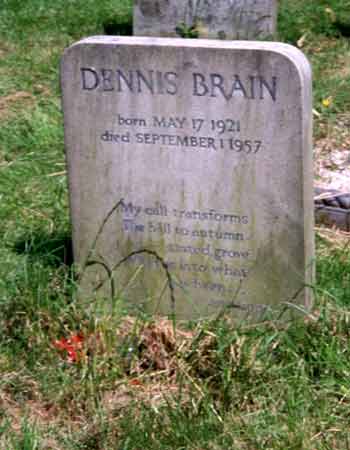
Now there are many fine recordings, (I assume based on the artists involved), but as ever in Britten’s music the best bet is to have the great man conducting and, in this, if not in all, cases, Peter Pears, singing. I can see why the experts reckon the recordings with the mercurial Dennis Brain, for whom the part was written, on horn are definitive, but the first, from 1942 a year after the piece premiered, is a bit period scratchy for my liking, emotional as it is, and the second, a decade later, falls a bit short musically. Dennis Brain might just have been the greatest horn player of the C20 coming from, and there can’t be too many of these, a veritable dynasty of horn players. He died far too young, in rock’n’roll style, by wrapping his sports car round a tree. If he had lived longer who knows what the next generation of modernist composers, the likes of Ligeti and Berio, might have conjured up for him.
As for the Serenade though I actually prefer the later Britten/Pears recording on Decca with the LSO and Barry Tuckwell on horn. More musical, and Pears less comedy toff sounding, even if the horn is a tad less mysterious. I also love the second Bostridge with the BPO and Rattle and their principal horn Czech Radek Baborak. After all Ian Bostridge is surely better than Pears in most of Britten’s supreme vocal music. On that note make sure not to miss his Madwoman in Curlew River with the Britten Sinfonia at Milton Court next March. The staging in 2013 for Britten’s centenary, directed by Netia Jones at St Giles Crippplegate, with players from the BS, and IB in the same role, was extraordinary. One of the best “opera” experiences of the Tourist’s life.
So tenor Ben Johnson and Ben Goldscheider on horn had a lot to live up to. And by and large they did. The Serenade is not performed as often as it should be IMHO which perhaps reflects the combination of small string ensemble, a skilled horn player and a dramatic tenor. Ben Johnson certainly has the flair for the dramatic, he was an ENO Harewood artist, and his clear, if not overwhelming voice, fitted the piece and hall well. Ben Goldscheider, a BBC Young Musician finalist, who is now studying with the aforementioned Radek Baborak, left a deeper impression, adept in the more virtuoso passages and capturing the mystery and thrill of the more striking passages, even if the more lyrical settings lacked a little emotion.
The six movements, (book-ended by solo Prologue and Epilogue for the horn eschewing valves to create natural harmonics), comprise settings of poems by Charles Cotton (Pastoral), Tennyson (Nocturne), Blake (Elegy), a C15 Anonymous Dirge, Ben Jonson (Hymn) and Keats (Sonnet). Serenade literally means “an evening piece” and the poems combine to take us through nightfall from dusk to midnight. The dark heart of the work is the Black “O rose thou art sick” and the scary, pounding march of the Dirge that follows, “This ae night”, but the tunes and, typically with Britten, the atmospheres, by turns haunting, comforting, placid, dancing, of the outer settings, are exquisitely rendered. As usual Britten uses all sorts of clever and arresting techniques, the lilting string chords in the Pastoral, the echoing horn in the Nocturne, the semitone infection in the Elegy shifting the key from major to minor, the vocal repetition in the Dirge against the sinister string Fugue, the hunting horn in the Rondo hymn straight out of Mozart’s playbook and the string sustains in the Sonnet as we drift off to sleep, (not literally of course, and in any event, BG’s off stage Epilogue reprise would soon wake you up).
I see that Australian-British conductor Jessica Cottis played the French horn and trumpet in her youth which perhaps explains her confident way with the Serenade. I intend no offence but, physically, there isn’t much to Ms Cottis, I estimate 3 of her to 1 Tourist. She has a heck of a presence on the podium though. The ECO numbers on the night may only have maxed out in the Stravinsky, but Jessica Cottis teased out plenty of energy and power when required in this and in the rather more phlegmatic Ravel. I see she has had a couple of recent chamber operatic gigs with the Royal Opera House for Mamzer and The Monstrous Child and has appeared as a regular guest conductor after roles as Assistant at the BBC Scottish SO and Sydney SO under Ashkenazy. On the strength of these interpretations if I where looking for fresh musical leadership I would give her a job.
My last exposure to Le tombeau de Couperin was from Angela Hewitt in the solo piano version at the RFH with MSBD and MSBDD. No review on these pages as, thanks to collective misunderstanding, we managed to miss the star turn, Bach’s Partita No 4, which was, to saw the least, bloody annoying. Still the Ravel was superb and MSBDD was particularly chuffed, this being one of his favourite pieces. Now Ravel was a dab hand at lushly orchestrating other composers’ piano works but for his own he was a little more restrained. That isn’t to say that LTDC isn’t brimful of “colour”, that being the standard word to describe Ravel’s gorgeous ideas, just that you can feel the sombre tones which come from the work’s inspiration as a memorial to the close friends Ravel had lost in the Great War. This version of LTDC takes four of the piano’s six movements: the Prelude, where the traces of harpsichord ornamentation, this was after all inspired by the Baroque harpsichord genius Francois Couperin, is most apparent in strings and oboe; the Forlane, a Venetian dance which the Pope at the time had tried to re-introduce to replace the smutty tango, (is there no end to Catholic sex guilt), but which Ravel spices up with some dissonant notes; a courtly Menuet that goes a bit Scottish jig and ends up with a bit of that Ravelian jazz vibe; and finally a Rigaudon which is a medieval Provencal dance with central processional. The whole piece gives woodwind and, especially, brass a good workout which the respective members of the ECO seemed to thoroughly enjoy. I don’t have a recording of this. Clearly I should.
Apparently Henry Purcell composed over 250 songs and vocal works in his short 36 year life with three volumes being published posthumously as Orpheus Britannicus. BB, like so many subsequent British composers, loved HP, as would anyone in their right mind. Indeed they have a lot in common: inventive harmony, matchless word painting and transparent and direct melody in their music for voice. BB, along with Michael Tippett, was instrumental in bringing the near forgotten HP back into the mainstream, in part through settings of songs from the OB volumes. HP had only provided figured bass lines as accompaniment to the vocal parts but that is all BB needed, along with his preferred chamber orchestral forces, to bring the songs to life. Peter Pears, in editing the vocal lines, foregoes any frilly ornamentation and together the lads created some cracking numbers, modest in sound even if the lyrics are a bit British bulldog patriotic. It doesn’t look like they crop up on the Last Night of the Proms. They should. I see that BB himself writing about his and PP’s arrangements hoped to capture “something of that mixture of clarity, brilliance, tenderness and strangeness which shines out in all of Purcell’s music“. Could just as easily have been his own manifesto.
Having literally changed the course of music with those ballets Stravinsky, and Diaghilev as the promoter needed to come up with a new trick after the War. Diaghilev, in yet another inspired move, presented IS with a collection of music by Giovanni Battista Pergolesi, he of the Stabat Mater, (and some criminally ignored operas and unrecorded orchestral pieces), and a book of stories about the stock commedia dell’arte character Pulcinella, or wife-beater and all round yob Mr Punch to us Brits. (BTW Pergolesi, like Purcell died way too young, though he only managed to get to the very rock’n’roll age of 26). From this IS conjured up the ballet Pulcinella which premiered in Paris in 1920 conducted by maestro Ernst Ansermet with choreography by Leonid Massine and designs by some bloke named Pablo Picasso. And so began IS’s neo-classical phase. Oh yessss.
The suite, written in 1922 and subsequently revised, (as IS was wont to do). is scored for chamber orchestra like the full ballet but the vocal parts are dumped and the material is condensed into 8 movements. I have recordings of the full ballet from Abbado and the LSO and Marriner and the ASMF, (unsurprisingly, given its genesis, Baroque specialists love having a go at this). In this performance Jessica Cottis and the ECO trod a nice line between the kind of crisp, HIP influenced, neo-classical Stravinsky now commonplace and the older, lusher, vibrato-ey style, though it didn’t quite make enough off the off-kilter chords and bouncy rhythms, after all most of the movements are based on dances. This is core repertoire for the ECO and it shows.
Next up from the ECO at Cadogan Hall on April 16th a brighter affair, the Mendelssohn VC with some Schubert, Suk and the cinematic Bartok Divertimento, led by the, er, ECO leader Stephanie Gonley and then. on May 22nd, some Mozart, Beethoven and Stravinsky’s Concerto in D, from the other end of his neo-classical period. Looking forward to the former concert but will miss the latter. Clashes with the Stockhausen Donnerstag aus Licht. What have I let myself in for.
Academy of Ancient Music, Christian Curnyn (director and harpsichord), Keri Fuge (soprano), Tim Mead (counter-tenor)
Milton Court Concert Hall, 15th February 2018
Corelli – Concerto grosso Op 6 No 1 in D major
Handel – Cantata HWV 230 “Ah! Che troppo inequali”
Handel – Cantata HWV 82 “Il Duello Amoroso”
Pergolesi – Stabat Mater
As usual after BUD and I had chewed over the big economic, social, philosophical and political questions of the day, and reminded each other just how clever we are, as well as scoffed on some tasty, if evil, fare at the redoubtable Bad Egg in Moorgate, there was minimal time for a preview of the evening’s entertainment. Which meant that BUD got the shock of his life when Tim Mead opened his mouth in the second of the Handel cantatas in the programme. He wasn’t expecting a counter-tenor. Especially from a man who could easily pass as the next James Bond given his rugged good looks and sartorial elegance.
My what a voice though. Now if you are a fully paid up, Baroque, (especially Baroque opera), and, increasingly, Contemporary classical, music enthusiast, you are going to come across a fair few counter-tenors. I think I have heard voices with more power and range than Mr Mead’s but not as much clarity and brilliance. This was apparent in the “Il Duello Amoroso”, a decidedly dodgy tale of unrequited love between a shepherd and a goddess, where the counter-tenor and soprano voices sparred elegantly. It really came to the fore however in Pergolesi’s wham-bam, smash hit Stabat Mater.
Pergolesi didn’t get up to much musically. Dying at 26 from TB didn’t help, and, if I am honest, the bits of his output I’ve heard, (or have recordings of), beyond the Stabat Mater aren’t that memorable. Churning out lightweight, comic operas, for your ADHD aristocratic patrons is not, unsurprisingly, a recipe for a lasting musical legacy. When he hit upon this medieval Latin setting of the Christian staple of Mary lamenting her son’s suffering on the cross, he struck gold though. Just a shame it was only completed a few days before he popped his clogs. Still thanks to Bach, and others, the score was widely disseminated in the C18 and has never gone out of fashion.
That’s because, musically and lyrically, he doesn’t hang around. The 12 verses make a virtue of brevity. None is more than 5 minutes long and the whole comes in at 40 minutes. There is loads of contrast, audible human touches and plainly programmatic twists where text and music are perfectly matched, and the fusion, for that is what it is, of Baroque and early Classical, means it is easy, and very affecting, on the ear. Others have had a stab at setting the Stabat Mater, Vivald and Haydn, come to mind, but this tops the lot.
Obviously the AAM, especially the strings, nailed the score, and gave plenty of space for the two excellent soloists to capture the drama and pathos of the setting. Whether individual aria or in duet both singers seemed to really care about the music and text. Forget the religious mumbo-jumbo, this is the moving story of a Mum’s grief. Best bit. The Fac ut portem Christi mortem from Tim Mead alone. Very moving.
I was less convinced by the Handel. That’s just me and Handel though. It is always a pleasant experience listening to GFH but it never really involves me. Even 4 hours of his operas. I hope to get lifted up and swept along but always end up earthbound. Even, whisper it, in a Messiah. He’s a flash Harry make no mistake, and all those voices, here, there and everywhere, is proper WOW, but it all feels a bit devoid of emotion. A man can only have so much bouncing bass and celebratory trumpet action. Anyway I was happy enough to go with the pleasant enough flow in these two cantatas.
The programme kicked off with Corelli’s Op 6 No 1 Concerto Grosso. You cannot go wrong with that. The 12 Concerto Grossi are like a Corelli greatest hits collection. There will always be some stunning concertante work, the two violins and the darker cello, beefed up by the ripieno players, the rest of the band. This concerto has some brutally fast semiquavers stuff for the solo cello and his violin mates and some lovely lyrical, slower dances to kick off the first couple of movements. There is plenty of room to blag which Bojan Cicic, (he really is a top violinist), Rebecca Livermore and Joseph Crouch took full advantage of. The whole band though seems to delight in playing together. That is why, even if I am not absolutely sure of all the musical ingredients, I will try to see all their London concerts.
I recommend you try to do the same, especially if you are new to the Baroque. And I also heartily recommend you dip into recordings of Pergolesi’s Stabat Mater and Corelli’s Concertos if you haven’t already. You won’t regret it.


 At Home He Feels Like A Tourist