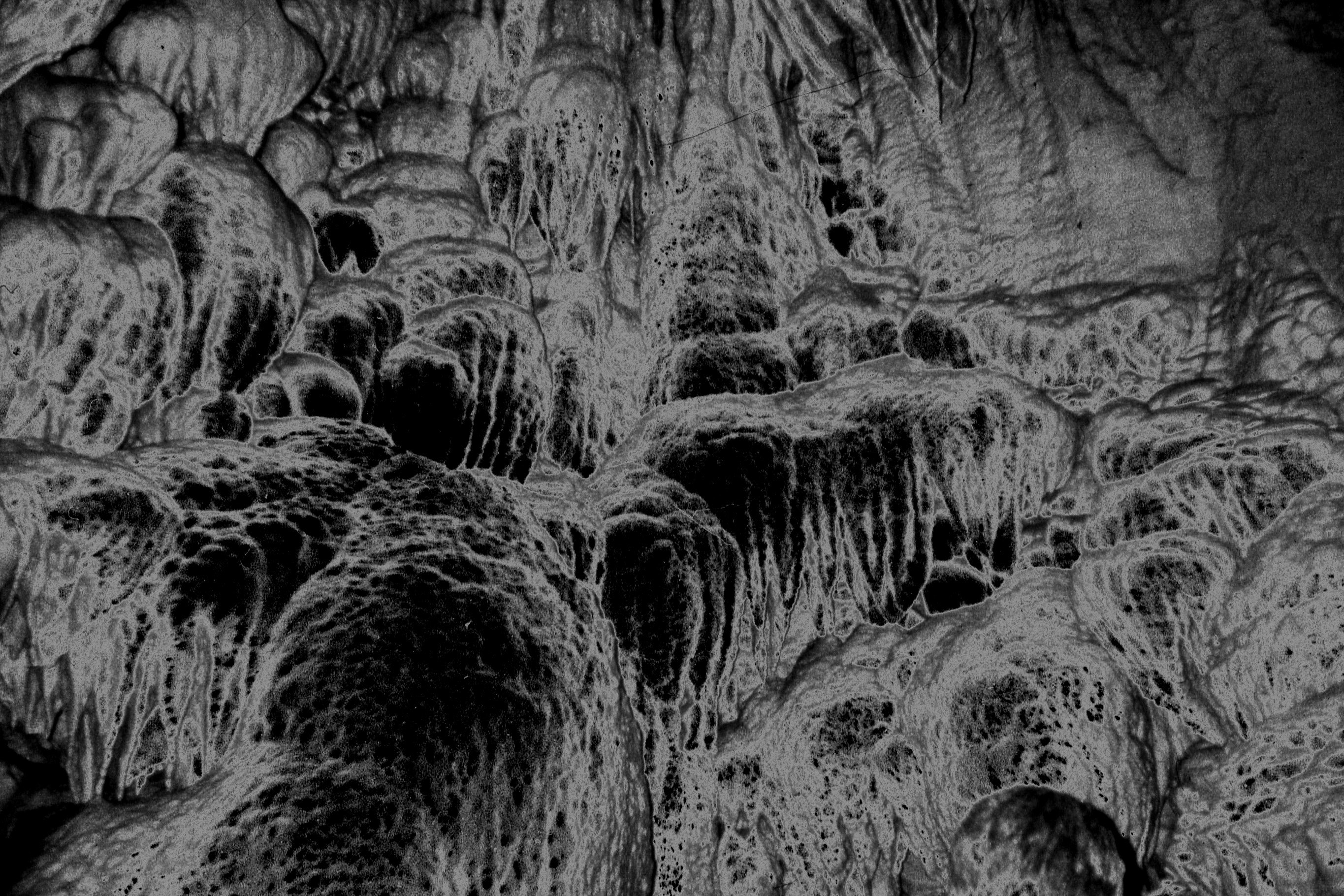
Cave
The Printworks, Surrey Quays, 23rd June 2018
Cave is the second collaboration between composer Tansy Davies and librettist Nick Drake. Their last work, Between Worlds, which took as its subject the Twin Towers on 9/11, was superb. It was an immensely moving and sensitive elegy which focussed on the last conversations with loved ones of just five victims trapped together on one floor watched over by a benign Shaman or spirit, superbly directed by Deborah Warner. The audience I saw it with was floored (even if a couple of jaded critics were a bit sniffy).
I have since heard a few of Ms Davies’s very fine works including the premiere of her Concerto for four horns, entitled Forest. She has a way of finding the right shape, sound or phrase to match the intent and mood of her music, without ever serving up the obvious or banal. There is a rhythmic underpinning which I think reflects her familiarity with popular music genres, especially funk and post-rock. Her music can be muscular, industrial if you will, but, equally, she is capable of great lyricism. In more recent commissions she has been afforded the opportunity to work at a larger scale, but there is still a chamber like intimacy to her work, even when it is belting out in full on forte. In short she has the gift, and, even if contemporary classical music isn’t your bag, in fact maybe especially if contemporary classical music isn’t you bag, I defy you not to hear it.
She is also pretty keen on conveying a message in her music. As is librettist Nick Drake. Cave is set in a world disfigured by ecological catastrophe. A man (Mark Padmore) stumbles into a cave. He probably nibbles on some crazy mushrooms. He remembers his daughter Hannah, played and sung by Elaine Mitchener, and, when young, played by Akilah Mantock at my performance. Her spirits fills the cave. That is pretty much the long and the short of it. There are seven scenes in total beginning with the entry of the audience into The Lost River which runs through the cave.
The Printworks in Surrey Quays used to be where the Evening Standard was printed in the pre-digital era. It is a cavernous industrial space, as I discovered on my pre-prandial hike to the loo just ahead of the opening of the opera, which plays host to a variety of events, united in there “alternative” vibe. Perfect for this work. The audience was lined up along both sides of a very narrow, very long space in Mike Britton’s set, covered with, I think, wood bark. and with the seven members of the London Sinfonietta at one end and vast plastic hanging “doors” at the other. It was largely left to the marvellous lighting of Jack Knowles, who despite looking about 5 years old, has a massively impressive list of credits behind him, to conjure up the required magic, along with a sound design from, usual culprits, Sound Intermedia, as well as the electronics of Tansy Davies and Rolf Wallin.
Even with the principals moving up and down the space there were times when the “action” was a bit “laterally compromised”, especially for those of us pig-headed enough to go right along to the end where the ensemble was positioned. On the other hand this perch did afford a perfect insight into all the moving parts of the score, and, at one key point, the vocal pyrotechnics of Elaine Mitchener. She is not your opera mezzo diva. Thank goodness. Usually to be found in repertoire which is even more boundary-pushing than this, she has an extraordinary range of expression. I was spell-bound. For those of us who are regular listeners to Bach, Britten and Baroque, Mark Padmore needs no introduction at all. Here his singing was predictably exquisite. He also put in an acting shift as the Man plagued by his memories and a world that has literally fallen apart around him. I also suspect this won’t be the last I see of the precocious ten year old Akilah Mantock – no fear at all in what must have seemed a slightly odd role when she went to the audition.
Mr Drake’s other job is a poet. No kidding. The second scene, the Echoes, starts out with the Man hearing Hannah’s voice before he goes into an astonishing quasi aria describing his journey into the cave. This is when we see the connection that Ms Davies and Mr Drake intended to make to some of the very first human impacts on the earth. Apparently they went for a trip to have a peek at cave paintings in Niaux in the Pyrenees, which proved a crucial inspiration. I am not surprised, this is where art and nature recognisably first collided.
Scene three, the Cave of Birds, has the Man describing the onset of ecological catastrophe, and some sort of vision, scene four, The Mirror Cracks, is a “rave of agony” as the Man recalls losing Hannah, who “responds” by singing the last part of his “song” backwards. The Tree of Shadows starts with the Man and Hannah remembering a past holiday and then Hannah going a bit preachy as she describes how she wants to save the world from the havoc wrought by the generations which preceded her. A powerful instrumental interlude (with electronics I think) follows, The Storm, which then gives way to a lullaby shared by the two principals which shows off their superb singing. The final scene The River sees the man leaving the cave, presumably to die, but probably healed.
This is an epic myth, or more exactly a parable, and, in that, I was reminded of Britten’s Church Parables, which I don’t think were a direct inspiration, but, for me, have a similar vibe. The scoring is sparse, under the expert baton of Geoffrey Paterson, with most of the colour coming from the winds and brass, the clarinet/bass clarinet of Timothy Lines, contra bassoon of John Orford and horn of Michael Thompson, contrasted with the prominent harp of Helen Tunstall, set against a sort of continuo from Jonathan Morton’s violin and Enno Senft’s double bass. Elaine Mitchener gets to give a hefty whack to a drum at one point and, as I have said, electronics and some other sound effects (plenty of echo) play a major part. Overall you have no difficulty in musically distinguishing the scenes, there are some breathtaking sounds here and no little drama. I was not entirely convinced about the articulation between music, words and message but that probably says more about my pessimism than the creative talent on show here. It is certainly not the fault of director Lucy Bailey.
I don’t want to get more frightened of, and helpless about, the world around me as I get older, but it seems to be happening nonetheless. It certainly does feel like we humans are accelerating towards our inevitable extinction event despite the apparent gift of consciousness. Mother Earth will get over us I suppose. Anyway it is good that Tansy Davies and Nick Drake are not engulfed by this sort of negativity and prepared to make an ambitious stand of sorts in their art. It is also good that they are not cynical about all things “spiritual”. As this piece is sub-titled, courtesy of modern day environmental shaman and prodigious psychedelic drug-taker Terence McKenna, “Nature loves courage”.
At the end, Ms Davies was zipping by to thank the performers. I briefly thanked her. No doubt she thought I was a nutter so apologies but I felt compelled to offer up my appreciation. Thank you.


 At Home He Feels Like A Tourist