
Royal Philharmonic Orchestra at Cadogan Hall review ****

cadoganhall2

Royal Philharmonic Orchestra, Martyn Brabbins, Jan Mracek

Cadogan Hall, 16th June 2017

  • Berio – Sequenza V for solo trombone
  • Prokofiev – Quintet in G Minor
  • Debussy – Prelude a l’apres-midi d’un faune,
  • Beethoven – Violin Concerto,
  • Shostakovich – Symphony No 5

A welcome innovation from the RPO at its Cadogan Hall home. As a prelude to the main concert a short chamber concert was served up. In this case, an intriguing pairing of one of Berio’s Sequenzas, here for trombone, alongside Prokofiev’s infrequently programmed (at least in my experience) Quintet. The main concert was a triptych of favoured warhorses which can usually tempt me in.

The Berio piece is the usual exploration of musical technique that these sequenzas demand. There is a healthy dose of humorous novelty at work here in the techniques employed and some of the directions in the score, best of all, the fact that the soloist, has to dress up as a clown (I’ll let you look up Berio’s reasons for this!). The Principal Trombone of the RPO, Matthew Gee, didn’t disappoint, either in his rather elegant outfit (shoes and bald bloke wig being the main concessions) or in playing. The piece is fascinating but smartly doesn’t outstay its welcome.

The Prokofiev Quintet is scored for oboe, clarinet, violin, violin and double bass which gives plenty of opportunity for the quirky invention that our Sergei seemed to revel in. The six movements have plenty of dynamic colour and the derivation of the piece, originally a commission for a chamber ballet, is very clear, I was reminded once again that I need to pay more attention to Prokofiev’s chamber music. So I will.

As for the main orchestral pieces, well the Debussy washed over me as it always does so I am afraid I am no real judge of Mr Brabbin’s interpretation nor the RPO’s performance. The Beethoven however took me back to familiar ground and this was a stirring performance by all concerned. Jan Mracek was making his debut with this orchestra having established a growing reputation in his native Czech. His playing is certainly idiomatic of his homeland which made for an interesting contrast with Mr Brabbin’s very deliberate reading. It livened up for finale though I confess I have heard more uplifting endings.

The Shostakovich was the meat course for me though and here Mr Brabbin’s careful phrasing and cool incision paid dividends. This was a performance that really drew out the Mahlerian parallels especially in movements 2 and 3. No irony in the ending here. This was definitively the response to “just criticism” that Shostakovich claimed it was (probably to save his own skin) and could easily be digested by those partial to a bit of C19 romanticism. The pounding Russian rhythms and banal folksy melodies were in evidence but this was more Autumnal middle Europe than Siberian winter. Stalin would have been made up with this first movement. I am not sure this is how I want my DSCH 5 to always sound but it was satisfying to hear this approach given a full airing.


London Symphony Orchestra at the Barbican review ****

dd962845a2824add53af118e7be7a9dcdb84a5b710a55991534227558486c096_dowz

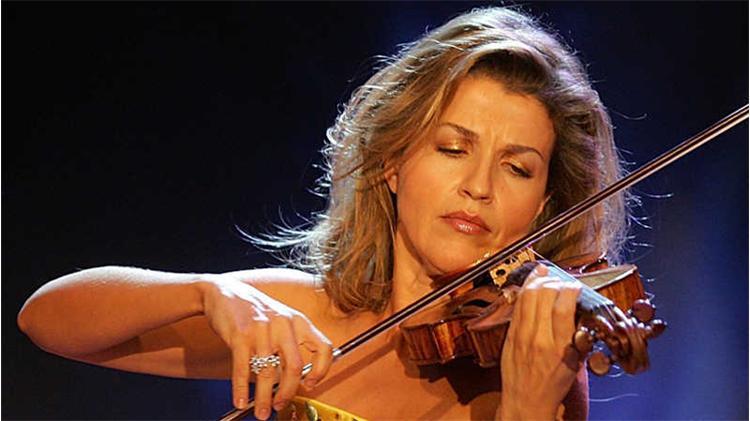
Anne-Sophie Mutter, Sir Mark Elder, London Symphony Orchestra

Barbican Hall, 7th May 2017

Modest Mussorgsky, arr. Rimsky-Korsakov – Prelude to Khovanshchina
Tchaikovsky – Violin Concerto in D major Op.35
Shostakovich – Symphony No.15 in A major Op.141

Who’d be a Russian composer eh. Mussorgsky drinks himself to death at 42 (look at the famous Repin portrait to remind you there is no glamour in this form of self destruction) and p*sses away whatever talent he may had have (one powerfully dramatic opera in Boris Godunov). Tchaikovsky may have taken his own life, or fell victim to cholera, at just 53, and seemed by many accounts to have felt compelled to keep his sexuality a private matter. And Shostakovich lived a life of allusion and inference which kept his true feelings about the society he lived and worked in a mystery.

So you’d be surprised if they produced a jolly night out musically. Well then you might have been surprised. Well maybe only a bit, as some of this did sound exactly as you might have expected given these personal demons. Yet in other ways, these pieces seem to me at least quite a long way from the narratives that are routinely get trotted out to explain the work of these three composers.

So with the Khovanshchina Prelude we have the opening to Mussorgsky’s planned grand historical opera exploring the changes in Russia society in the reign of Peter The Great. Unfortunately it never got finished and Rimsky Korsakov had to step in and tszuj it up a bit and smooth it off. I am afraid that for me it is just a bit of a meandering melody with no great interest. The Tchaikovsky concerto is properly blingy with memorable tunes but gets a little less endearing with each hearing I think. The Shostakovich, on the other hand, gets more interesting for me with each hearing. Four movements, usual proportions, biggish orchestra but balanced. But what he then does with this structure is all over the shop. Lots of single instrument lines, loads of obvious and not so obvious musical quotations, exaggeratedly simple tunes and then complex twelve note themes. The parallels with Nielsen’s 6th Symphony are often drawn which makes sense and which I always love. Who knows what he was thinking but it does seem to me to be some sort of encapsulation of all of his output before set against some sort of commentary on all that he had seen in his life. Anyway its top notch.

So the Shostakovich wqs the main reason for going to this concert (it is the programme that largely drives my choice now that I have a firm handle on the boundaries of what works for me like in the classical music world). However I am also keen to hear as many of the great performers and conductors and this was a chance to knock a couple off the list. I have to say Anne-Sophie Mutter must be the best violinist technically I have ever heard but this almost felt too perfect and furiously methodical. Still I will remember this performance, especially when she turned to the LSO to implore them punp it up, even if I am not sure I really enjoyed it. For the Shostakovich though I can see why Sir Mark Elder is held in such high regard.

So all in all a very fine programme and I will add Sir Mark Elder to the list of must see conductors (when they have the right pieces) which includes Rattle, Haitink, Jurowski, Jansons, Salonen and Chailly.

Hagen Quartet at the Wigmore Hall review ****

hagen20420crop

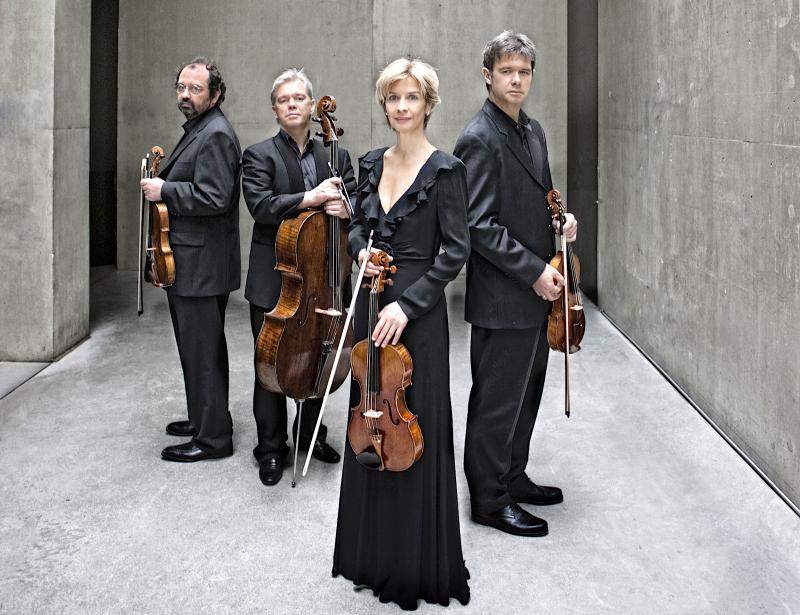
Hagen Quartet

Wigmore Hall, 29th April 2017

Dmitry Shostakovich

  • String Quartet No. 3 in F major Op. 73
  • String Quartet No. 14 in F sharp major Op. 142
  • String Quartet No. 15 in E flat minor Op. 144

To paraphrase a great man about a great band “always different, always the same”. The same is true of DSCH (apart maybe from some of the very early experimental works). An Adagio will be ponderously slow. A Scherzo will be nuttily rapid – as close to heavy metal as it is possible to get in the world of popular classical music. There will be Russian folky tunes (hard to imagine a TV programme on C20 Russia which doesn’t have some DSCH in the background). There will be an ominous march like rhythm, screaming strings, some bizarre jokey interludes. There will be highbrow compositional structures mixed with lowbrow tunes. And there will be the endless search for clues about what he was really saying.

I love it but even I sometimes find myself focussing on the banal and the bombastic rather than the stirring and uplifting that is part and parcel of the Shostakovich experience, sometimes even in the same movement. His music seems to carry more of the personal and political, but this perhaps is a reflection of when and where he was writing, and his own gnomic utterances only served to fuel the interpretative fire. Even his own country wasn’t entirely sure whether to celebrate or condemn for much of his lifetime.

But he gets played. A lot. If you churn out this amount of music at this level of immediacy (no flirting with atonality here), with many more fans than haters ,then you are going to well represented in the concert hall – up there with Haydn and Beethoven when it comes to quartets. And if the 15 symphonies are the “public” works of his art then the 15 string quartets are the “private” offerings. So for once this concert was less a voyage of discovery for me and more an opportunity to try to evaluate what I was hearing. I have some recordings, complete Fitzwilliam and Emerson Quartet versions and assorted Borodin Quartet CDs.

I thoroughly enjoyed these Hagen Quartet interpretations. The only recording I have by them is a complete Mozart cycle; firstly, because it is string quartets, a format which I can easily digest, secondly, because it is Mozart and I know I must try harder with him and thirdly, because it was good value. But it will take a bit of time to get to the bottom of this. I understand that the HQ is made up of 2 brothers and a sister and a mate (at least I assume they are friends!), and that they have been playing together for over 30 years. So that presumably accounts for the extraordinary unison and power in the playing. As I have said there is nothing fancy dan about Dmitry’s melodies, rhythms or musical language so this lack of pussy-footing in the playing is exactly what I want to hear.

On the other hand this approach does mean that there is nothing between us and the music itself, which, when it is good, No 3 Op 73 and, in its own striking way, No 15 Op 144, it is very, very good, but when it is less compelling, No 14 Op 142, well then the doubts emerge.

No 3, along with the crowd pleasing No 8. is a work of great variation and drama, with a perky allegretto opening, a couple of the heavy metal scherzos I referred to above (I love it went a string quartet gets really loud so you feel as well as hear the sound), then the usual miserable adagio (a passacaglia here) and a final movement which contrasts the moods of the first and fourth and has a classic fade to nothing DSCH enigmatic ending.

No 15 on the other hand is made up of six slow movements. Yep you heard me, six of his most desolate (and moving) creations all in the key of E flat minor (the go-to morbid key). The piece is usually taken as his own memoriam as by then he had lung cancer, poliomyelitis in his limbs, his heart was giving up and he was still knocking back the vodka. I would always caution about programmatic readings of compositions but here you have no choice. Along with the other later works (notably the last couple of symphonies) it inspired the next generation of Soviet composers (some who had been taught by DSCH himself). And it is an amazingly powerful piece of music, though I will be honest, most of the allusion and symbolism goes over my head. Yet bizarrely it is not depressing, maybe cathartic, painful certainly, but not depressing.

BTW there is a reference in the programme to DSCH’s instructions to the Beethoven Quartet about how to play the first movement: “Play it so that flies drop dead in mid-air, and the audience starts leaving the hall from sheer boredom”. Listen and you will get the picture.

So finally No 14. I don’t get it. The other two are more “obvious” in their construction, so I am probably not up to the task of decoding No 14, but it is just a tricky listen. The first and last movements seems to meander about to no great purpose and the middle Adagio sometimes gets a bit too syrupy. No doubt those who dislike all of his music will point out that there isn’t much difference between this quartet and the other two but I can’t explain it. I just don’t like it as much.

Which brings me back to my opening remarks. 80% of DSCH listening is something to be proud of, 20% best kept in the bedroom. Mind you what do I know – after all I find myself increasingly enjoying the Sisters of Mercy when they shuffle on to the IPod. Now that really is something to be ashamed of.