
The Tragedy of King Richard the Second at the Almeida Theatre review ****

The Tragedy of King Richard the Second

Almeida Theatre, 9th January 2019

Vain, frivolous, self pitying, introverted. Richard II doesn’t come across too well at the beginning of this play, Shakespeare’s first instalment of his histories that chart the origins of the “War of the Roses” and end with the death of Richard III and accession of Henry VII. Yet by the close of Richard II, acutely aware of his own fate, we see, not a different person, but a man who finally realises how his actions, as well as those of his aristocratic rivals, brought him to where he is. The distinction in Joe Hill-Gibbons’s quick-fire take on his tragedy is that his nemesis, Bolingbroke, who becomes Henry IV, travels in the entirely opposite direction, secure in his right to reclaim his titles, and then the throne, on returning from banishment, he quickly descends into a vacillating arbitrator of facile dispute.

The play highlights the fact that political power often overwhelms those that seek to wield it, as competing interests compromise consensus, a valuable lesson for our troubled times. Kings, and their democratic equivalents, are those that divvy up the prizes, once land, now patronage, to lords and their modern equivalents. These may owe allegiance but they can get mighty uppity if they feel taken for granted or hard done by. The joy, and instruction, of Shakespeare’s history plays, which examine the delicate balance between those that lead and those that keep them there, is that the deadly embrace continues to this day. Only now, we, the hot-polloi, have the right to stick our oar in as well. Apparently the “will of the people”, even if no-one knows what it is, least of all the people, is now the only source of legitimacy. Hmmmm.

In order to get to the heart of this tragedy though the production does take a few liberties with us the audience. First off it starts at the end, kind of, with Simon Russell Beale’s Richard II pronouncing “I have been studying how I may compare/This prison where I live unto the world.” Famous soliloquy dispatched what follows might be, TV drama style, his flashback.

Richard II is written entirely in patterned verse, (as are the first and third parts of Henry VI and the ropey King John), even down to the gardeners who get to comment, memorably, on the state of the country under their warring betters. The verse remains intact through the 100 minutes of the production, (with a few pointed additions), but its rhythms take something of a back seat. Especially in the first half hour or so, when the lines are delivered at breakneck speed. Not a problem for Simon Russell Beale as Richard II or Leo Bill as Bolingbroke (whose lines are deliberately less florid and more direct than Richard’s). However one or two of the less seasoned members of the cast snatched a little, noticeably in the arbitration, tournament and banishment scenes. The rhythm settles down by the time we get to John of Gaunt’s lament (“this sceptred isle …. now bound in with shame … hath made a shameful conquest of itself”; the speech is not about how great we are but how we manage to f*ck it all up, that, and a couple of lines of blatant anti-Semitism). Even then you have to keep your ears open and your wits about you.

There is also, (not unreasonably since, as events pile up, it really works as a conceit, especially when combined with some inspired choreography), a lot of character doubling and more. The Tourist always recommends that Shakespeare is best consumed following a little homework into context and synopsis. A quick Google on the way in is all that is required, as witness BUD who was my guest here, even for those who think they know the plot backwards. Ironing out your Aumerle (here Martins Imhangbe) from your Carlisle (Natalie Klamar) from your York (John Mackay) from your Northumberland (Robin Weaver) always pays dividends. Knowing which aristo is on which side has historically always been a sound real life lesson as it happens: knowing why is a bonus.

Fans of “historical” Shakespeare, whatever that is, are also in for a bit of a shock here. ULTZ’s set is a stark, bare cube, comprised of brushed metal panels riveted together, topped by a frosted glass ceiling. It serves very well as prison cell, less figuratively as castle, garden or jousting field. As a way of showing how power plays out in claustrophobic rooms and crushes those who exercise it, it does the business though thank you very much, and, remember, we might be in the prison of Dickie’s mind anyway.

This set works especially well when combined with James Farncombe’s bold lighting design. JH-G had a huge cast on his last outing and a magnificent recreation of a Soho drinking den at the close of WWII courtesy of Lizzie Clachlan and a fat lot of good that did him. It was awful. Though that was more the play’s fault than his. Here he is on much firmer ground as he was with his excellent Midsummer Night’s Dream and measure for Measure at the Young Vic. His fascination with soil continues, there are buckets of earth, water and blood lined up and neatly notated at the back of the stage. I like to think they symbolised “this England”: they certainly left SRB needing a hot shower post curtain call.

Of the supporting cast I was particularly taken with Saskia Reeves, as I always am, who got to be the argumentative Mowbray, the unfortunate Bushy, (with Martins Imhangbe playing Bagot, his head-losing mate), the other favourite Green, and the Duchess of York, and Joseph Mydell, a composed Gaunt as well as Bolingbroke sidekick Willoughby. Various explicit nobles on both sides are excised from this reading, as is the Queen amongst others, and, should a fill-in be required, out stepped one of the cast from the “chorus”-like crowd. Brutal it may be for purists, but in terms of reinforcing the hurtling momentum, very effective.

Leo Bill once again shows why JH-G has faith in his Shakespearean abilities, but it is Simon Russell Beale who carries the weight of the production on his shoulders. How he ensures that we not only take in but understand the impact of every line he utters is a wonder, especially in the return to England and Flint Castle surrender scenes. Even when he wasn’t dashing out his metaphor and simile strewn lines in double quick time, and wasn’t soaked through covered in mud, this was a cracking performance. The fact that he was, and that we can still savour Shakespeare’s language, and sense the difference between the body politic and the body natural, (the, er, embodiment of the medieval king), shows again why he is now unarguably our greatest living Shakespearean actor.

In this performance Richard’s early, flawed, decision-making seems less vanity or indecisiveness and more high-handed hauteur, the desire just to get the job done regardless of consequences. I’m the king, by divine right, so of course I know what to do. There isn’t much in the way of Christ-like martyrdom here as there was in David Tennant’s guilt-ridden 2013 RSC take or in Ben Whishaw’s petulant Hollow Crown reading. No white robes or flowing mane of hair here. The fact that SRB is “too old”, the real Dickie was in his early thirties for the last two years of his reign when the play is set, and that he, and Leo Bill, look nothing like the generally accepted take on the characters, only adds to the universality of the message.

The early years of the actual Richard’s reign weren’t too jolly for him by all accounts. Acceding to the throne aged just 10, with a bunch of nobles preferring a series of ruling councils to a regency under Uncle John (of Gaunt), the Hundred Years War with France not going England’s way, Scotland and Ireland playing up and labour growing its share of the prosperity pot at the expense of landed capital (the Black Death had led to a sharp spike in agricultural wages). In 1381 the Peasants even had the temerity to Revolt. By now though the young king was throwing his weight around but many of the entitled aristos, (whom we meet in the play), didn’t hold with the company he kept and in 1387 the so called Lords Appellant, (Gloucester, Surrey, Warwick, Bolingbroke and Mowbray), seized control and one by one, tried and disposed of Richard’s favourites.

By 1389 Richard was back in control, with Gaunt’s oversight, and, for a few years, got on with the job. But he never forgot what his opponents had done and, come 1397 he started taking revenge, notably, on Gloucester, his uncle, who he had bumped off. This is often where the play steps off with the King’s bloody guilt informing the four short years before his death, probably by starvation, after Bolingbroke’s usurpation.

Richard was allegedly a good looking lad, see above, who believed absolutely in his divine right to rule at the expense of the uppity Lords. He wasn’t a warrior, rather a man of art and culture, aloof and surrounded by a close knit retinue. As with all the big players in the history plays, our perception of Richard II, is though to some degree shaped by the Bard’s not always favourable publicity (that’s if you have any view at all of course). Via his favourite contemporary historian Raphael Holinshed. There was apparently a time when historians thought Richard was insane: now the wisdom is that he had some sort of personality disorder that contributed to his downfall.

Mind you if you were locked up in solitary confinement you might well lose the plot. There is an extract in the programme taken from Five Unforgettable Stories from Inside Solitary Confinement by Jean Casella and James Ridgeway from Solitary Watch. Solitary Watch tracks the estimated more than 80.000 prisoners in the US system held in solitary confinement on an average day. Here four prisoners eloquently describe their experience. Left me speechless. 80,000. That’s not a typo. Google it.

So another success from the Almeida hit factory, another masterclass from Simon Russell Beale and another validation of Joe Hill-Gibbons radical(ish) way with Shakespeare. BUD, whose first exposure this was to the history plays, agreed. Mind you there isn’t much in this world that he can’t size up within 5 minutes of first introduction.

There is probably a case for JH-G slowing down proceedings just a little, another 15 minutes wouldn’t have been a stretch, just to let the poetry work a bit more magic, give a little more complexity to Bolingbroke and the nobles, and draw out more from the themes. And the stylised, expressionist visual concepts won’t, (and haven’t), pleased everyone. But as a coruscating denunciation of the perennial failure of the political class, you want see much better on a stage even if it was written over 420 years ago.
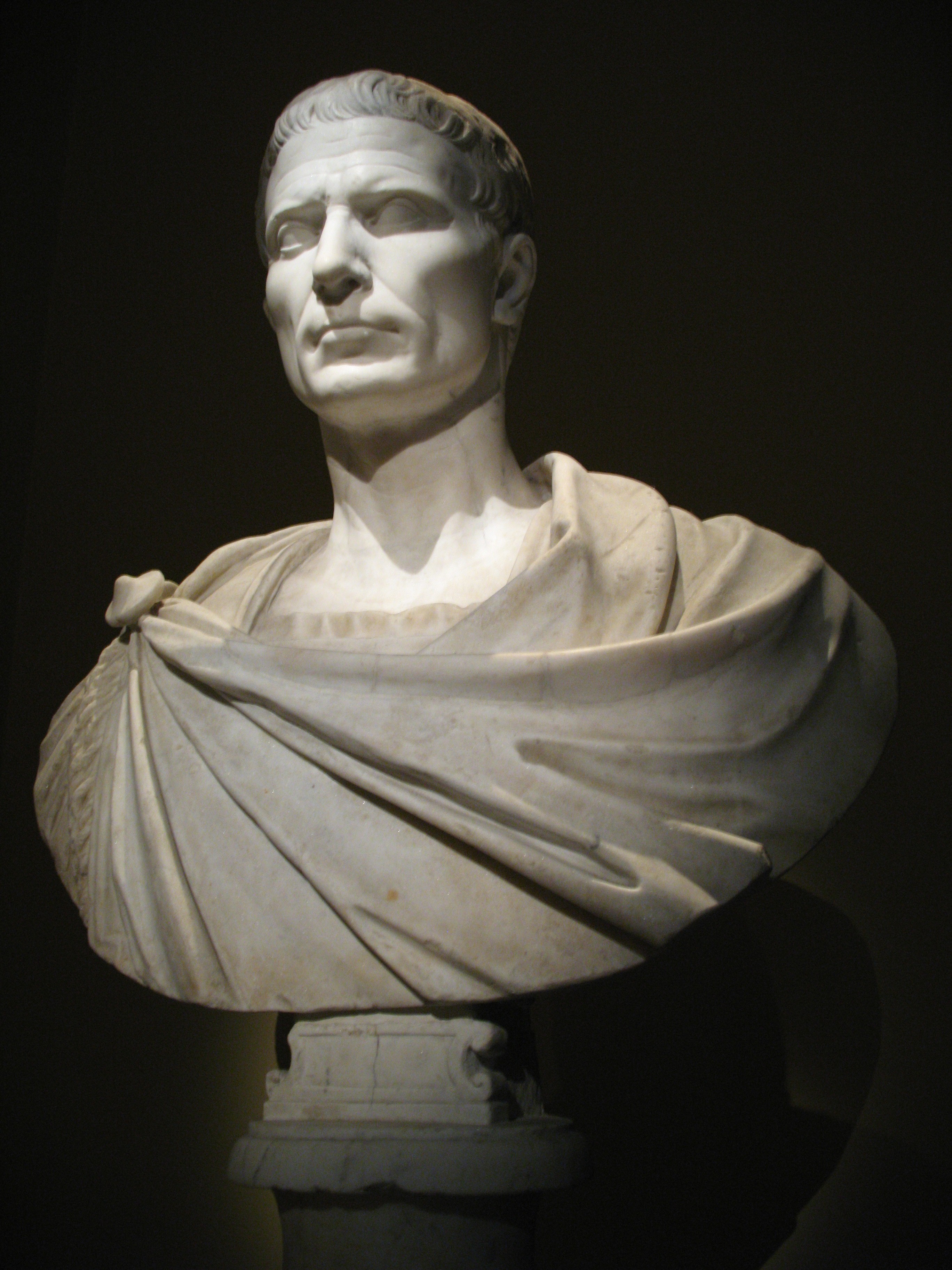

Julius Caesar at the Bridge Theatre *****

0092_-_Wien_-_Kunsthistorisches_Museum_-_Gaius_Julius_Caesar

Julius Caesar

Bridge Theatre, 28th February 2018

I had really, really been looking forward to this. Julius Caesar is one of my favourite Shakespeare plays. Contemporary relevance of course, but Shakespeare always has relevance. My appetite whetted by the excellent RSC production I saw at the Barbican last month, (Julius Caesar at the Barbican Theatre review ****) and by Phyllida Lloyd’s heady all-female interpretation at the Donmar Kings Cross in 2016. Nicholas Hytner in the director’s chair and Ben Whishaw, David Morrissey, Michelle Fairley and David Calder in the four lead roles.

So a little bit of snow wasn’t going to stop me getting there, and dragging the SO along with me. It didn’t disappoint. Best play I have seen so far this year, along with John at the NT: admittedly we are only a couple of months in, with the NT Macbeth having just opened and, I haven’t yet seen Network at the NT. Still this is a cracker. There are plenty of tickets left in the run, though the cheaper seats have largely gone, (it is hard to believe there is a bad seat anywhere in the Bridge), but it is well worth 50 quid or, if you are a fit young’un snap up a promenade ticket and be part of the action.

The transformation into a promenade space from the straight on staging of Young Marx shows just how marvellous the Bridge space is. The promenaders are shepherded around the pit by stewards, a metaphor for the manipulation of the populus as effective as it is obvious. Bunny Christie’s production design is equally blunt but effective, with a series of plinths rising from the floor as and when scenes change. A massive shout out to production manager Kate West, company stage manager Hetti Curtis and the rest of the team at work for this performance and behind the scenes. To make this intricate production succeed, whilst actually enhancing its dynamism, takes real skill. Watch and see, especially, the floor transformed into a battlefield for the final scenes. The stage management team were rewarded with well deserved applause at the end. Bravo.

Even before Caesar (David Calder) appears in front of the crowd with Mark Anthony (David Morrissey) in tow, we have a treat in storm with a some pumped up rock’n’roll for Lupercal courtesy of a street band made up of Abraham Popoola, Fred Fergus, Zachary Hunt and Kit Young. I already have a high regard for Mr Popoola, having seen his vigorous Tobacco Factory Othello alongside Norah Lopez Holden’s Desdemona and Mark Lockyer’s Iago at Wilton’s Music Hall. (Othello at Wilton’s Music Hall review ****). Turns out he can sing a bit too and he puts in a stint as a plotter in the form of a taciturn Trebonius. Fred Fergus doubles up as a slow-witted Lucius and gets a right kicking as Cinna, in that simple but so effective mistaken identity scene. Kit Young is a crafty Octavius.

David Calder’s Caesar ticks all the right boxes: proud, conceited, vainglorious. Here is a man used to getting his own way. His eventual dismissal of Calpurnia’s (an under-utilised Wendy Kweh) qualms about his visit to the Senate is insouciant but still reveals a hint of underlying unease. Our conspirators are a thoughtful bunch. Michelle Fairley as Cassius is neither bluntly straightforward in her entreaties to Brutus not bitter in her abhorrence of Caesar and what he is turning into. Instead she is logical, using force of argument to persuade Brutus to lead the coup. Books, glasses, a desk and Ben Whishaw’s innate demeanour make him a contemplative, but still determined, Brutus. You can easily see why his belief in his own rectitude might come across as priggish arrogance to the crowd. He seems to be going through the motions in his justification speech. Mind you I can see why he might underestimate David Morrissey’s Mark Antony. He comes across as a duplicitous chancer, making up as he goes along. I don’t recall being as struck by his mendaciousness before in the scene with Octavius at the beginning of the battle when he brusquely withdraws the pay-out to the people in Caesar’s will.

I reckon a woman playing Cassius, (and indeed women playing other of the conspirators), will, and should, become the norm. It creates a shift in the dynamic between Cassius and Brutus which can be profitably mined, both in the early conspiracy scenes and in the bust-up and reconciliation ahead of the battle. I am not sure whether the distance I sensed between Brutus and Portia, (Leaphia Darko who I hope to see in a much bigger role), was intended but it created an interesting ingredient. Every Casca should be as pointedly sardonic as the scene-stealing Adjoa Andoh. I know Ms Andoh has had an illustrious stage career but I couldn’t help thinking, for example, how much better the recent RSC production of Antony and Cleopatra would have been with her in the driving seat. The rest of the cast, Mark Penfold as Lepidus, Ligarius and the Soothsayer, Nick Sampson as Cinna, Leila Farzad as the reluctant Decius Brutus, Hannah Stokely as Mellellus Cimber, Sid Sagar and Rose Ede were all on top form.

Nick Hytner directed the first Shakespeare productions that ever made any sense to me; his RSC productions of King Lear and The Tempest with the incomparable John Wood. This was when I first “got Shakespeare”.. He is the master of modern dress, “contemporary” Shakespeare. Early on at the NT he created a Henry V with Adrian Lester which was the antithesis of jingoistic. All the surveillance stuff in Hamlet that Robert Icke loaded up on at the Almeida. Look no further than Hytner’s 2010 version with a bookish Rory Kinnear as the Dane. His Othello at the NT with, surprise, surprise, Adrian Lester and Rory Kinnear, is possibly the best Shakespeare production I have ever seen. His Timon of Athens with Simon Russell Beale kicked into a cocked hat any notion that this is a difficult, unbalanced play.

His visual language is so complete that, even if you don’t catch every line. (let’s face it that is going to happen with Will S, one reason why you can never see too many productions), you still comprehend pretty much everything in front of you. He takes a view for sure, but always in the service of the universal themes that the plays wrestle with. Every single detail is thought through. For anyone who thinks Shakespeare is not for them, Mr Hytner will change your mind.. It helps that his key collaborators in this production, Bruno Poet (lighting), Christine Cunningham (costume), Nick Powell (music), Kate Waters (fight) and, especially here, Paul Arditti (sound) are so expert in bringing his vision to life.

The Trumpian allusions are not overplayed. No need to. We can see the attraction of Caesar to the crowd, but we also see why the conspirators are so alarmed by his lazy demagoguery. The vacuum that is created after the assassination, a visual twist here, is palpable, as the patronising elitist Brutus and the pragmatic Cassius haven’t thought through what happens next. Sounds familiar eh. Which leaves a yawning gap for the opportunist Mark Antony to unleash those war dogs. The failure of the “liberal’ response to populism hangs heavy in the air.

Finally here is my plea to Mr Hytner. Whilst I absolutely get that Messrs Shakespeare, Bean, Bennett, Hodge and McDonagh are, incontrovertibly, the best of writing collaborators, and I see he has the scoop on Nina Raine’s new play, please can you have another crack at Ben Jonson or Marlowe. Maybe you can make sense out of Bartholomew Fair and pull the punters in. There’s a challenge.

P.S. I note that another play that deals with the had-wringing liberal response to populism, albeit in a very, very different way, Roland Schimmelpfennig’s Winter Solstice, still has a few more legs of its tour left, Plymouth, Edinburgh and Scarborough. Highly recommended.

Against at the Almeida Theatre review ****

1470x690_against_nb

Against

Almeida Theatre, 9th September 2017

The more plays I see the more I realise there are many ways to build a work of theatrical drama. You can build the foundations on language and the space around it, You can create powerful, memorable, immediate characters. You can construct a plot of more or less complexity to draw the audience into the narrative. Or you can explore ideas, from the individual mind all the way through to the global. And you can do all of this in a more, or less, naturalistic way. The joy of theatre is that all is possible and that it is a shared and ever changing experience. Which means when it works, (which is not as often as you might think), it knocks all other art forms into the proverbial cocked hat.

Some playwrights (and the directors, actors and the rest of the team that bring these works to life) take these elements, in various combinations, and give them a thorough, muscular work-out. Some are more subtle however. On the basis of Against, as this is the only one of his plays I have seen, Christopher Shinn is one of the latter. In fact he is at the extreme of dramatic subtlety. This is I suspect a very difficult trick to pull off, but in this play I think he largely succeeds.

Luke is a techhie billionaire in Silicon Valley with fingers in rocket science, solar energy and AI pies. Following a “message” from “God” he decides to explore the causes and meaning of violence in contemporary America. His devoted assistant, Sheila, joins him on the journey. He travels across the country visiting the parents of a student who murdered his peers in a shooting spree, the college where this took place, a campus plagued by sexual violence, a prison where he meets the father of a horribly abused child, some remarkably eloquent addicts and an Amazonian type warehouse (as in Amazon the company not the women of legend) owned by a fellow billionaire type. He returns at one point to his childhood home and to mummy. We hear of Luke’s other exploits as his messianic search for knowledge builds into a cultish following. Simultaneously he falls in love with Sheila, and, on his journey of discovery, finds out stuff about himself and his fellow Americans. The relationship between two of the workers at the warehouse is also sketched out to reinforce the power of love.

Now the cynics amongst you are probably already rolling your eyes at the seeming naivety of this set-up. And I accept that Mr Shinn’s dialogue at times would only encourage you in this impression. There is a fair amount of faux philosophising from the characters and there are some surprising shifts in tone and position. I think this put off a number of the proper reviewers. Yet, slowly and surely, Mr Shinn breathes life into the characters and situations, and the gentle meandering rhythm of the drama gives us, the audience, plenty of time to reflect on what we are seeing and hearing. And this is what makes this a worthwhile play to my thinking.

In no particular order the play got me cogitating on the following. How would a powerful entrepreneur, who claimed to have been directed by a “God”, be received in contemporary society? Should Silicon Valley billionaires have such power? How can they influence society with their wealth and their control of digital media and networks? Is our belief in technology to overcome limitations on growth about to get a terminal shock or will we have further great leaps forward? Why is violence so prevalent in today’s society? Is it worse now than historically? Does the media scare us into an unwarranted fear of violence? Why is it always blokes that do bad stuff? Is violence an inherent part of the human condition? Will insights from neuroscience and social psychology help us? Do humans need conflict? How are violence and hate to be squared with our tendency to altruism and love? How do we “turn the other cheek”? Why do people get so angry about the behaviour and identity of others?

Now you might say to yourself, blimey there can’t have been much going on on the stage for the Tourist to drift off and start musing over all this stuff. On the contrary the light touch that Mr Shinn, and director Ian Rickson (who always ensures clarity, most recently in Edward Albee’s Goat), explicitly allowed these thoughts to float around as the scenes progressed. Answers to the questions were not really on offer, beyond a simplistic love trumping hate, but I am not sure that should be seen as a failing. It’s only a play after all. The conclusion, whilst not particularly original (a nod to Chekhov methinks), did sort of make sense in the context of what had gone on before.

Given the structure of the play and the loftiness of the ambition we did need an outstanding performance from our lead, and that is what we got. Man-child Ben Whishaw looks the saviour part and managed to carry off the strange mix of authority and guilessness that I think the character Luke was supposed to possess. He uses his twitching body as much as his voice to portray his inner struggles. There were times though, when even his willingness to suspend his disbelief stretched ours a little too far, but no matter, he is still a tremendous stage actor. Amanda Hale as the partner on the journey had a little less to play with but struck exactly the right note. And the rest of the cast were able to invest the remaining characters with real identities in spite of, or perhaps because of, the somewhat didactic dialogue.

Best of all I didn’t have to make up my own mind about Against. For I was treated to the company of the Captain, who can sniff bullshit out at a range of a couple of miles. And there was enough here to engage the Captain’s mighty intellect. And that my friends is as high a recommendation as you need. Trust me.

PS. One final thing. As the play of ideas swirled round my head I was drawn to remembering a few books I had read which seemed to mark out similar territory to this play.. I don’t read much now, I don’t have the patience and in matters literary I defer to the SO who consumes fiction at demonic pace. But they popped into my head so here you are.

First up Messiah by Gore Vidal. This is more a satire on Christianity but this was the great man flexing his genius in the early 1950’s. For those who don’t know Gore Vidal – put this right. He might just be the greatest author of the second half of the C20.

Next up The Last Temptation of Christ, Nikos Kazantzakis’s novel or probably better still Scorsese’s film. Not an easy watch with its glacial pacing but a powerful piece of cinema. No idea why all the religious types get so wound up about it – I would have thought it captures the dilemmas Christian wrestle with to a tee.

Anyway I see I am getting a bit too zealous about the messianic theme in the play so final thought: Steven Pinker’s The Better Angels of Our Nature: Why Violence has Declined.  Now I confess I only just about getting to grips with this but it seems to squarely take on some of the issues that Mr Shinn’s play is grappling with. And it is a text that straddles the academic world (BD is knee deep in it for her degree) and the “popular science” market And I see that is was endorsed by none other than Messrs Gates and Zuckerberg, which seems sweetly ironic in the context of this play.