

Oxford Philharmonic Orchestra, Marios Papadopoulos (conductor), Anne-Sophie Mutter (violin), Maxim Vengerov (violin), Martha Argerich (piano)
Barbican Hall, 12th January 2019
- JS Bach – Concerto for Two Violins in D minor BWV 1043,
- Robert Schumann – Piano Concerto in A minor Op 54
- Beethoven – Symphony No 3 in E flat major
I cannot tell a lie. I didn’t go to the Oxford Philharmonic’s 20th birthday bash at the Barbican Hall to listen to the orchestra though there were clearly a fair few university types, students, alumni and academic staff, in the packed house, who plainly did. No it was the chance to see three world class soloists strut their stuff, though try as I might I couldn’t find a chum to accompany me.
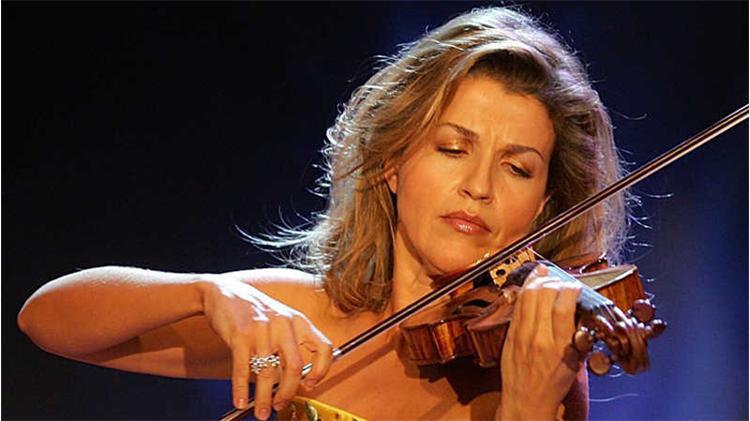
Well they didn’t disappoint. Anne-Sophie Mutter and Maxin Vengerov were, unsurprisingly, electric, and Martha Argerich showed why she is, unarguably, the world’s greatest living pianist. And that in a piece of music, the Schumann Piano Concerto, that remains a mystery to me. It is a very disorientating feeling, being enraptured by an artist’s playing yet not really caring about, or even liking, what she was playing. Quite the opposite with the Bach Double Concerto which is a belter. As is the Beethoven, obviously, though sadly, not here. Too rich and too slow for my taste.
The Bach was, surprisingly, Baroque-like however. Of course these two were never going to abandon the vibrato completely and this was a pretty fulsome band, but there was more than enough motoric chug from the continuo and strings to keep this HIP-ster happy. And when the two of the started riffing off against each other, especially in the sensuous Largo aria-like movement, you’d have to be a particularly humourless period music fanatic not to get carried along. Particularly as the two soloists, with their contrasting sounds, Ms Mutter brighter and sweeter, Mr Vengerov, richer and darker, and the OP players, seemed to be having such a ball. A-SM, what with her mannered interpretations and sergeant major-ish exhortations to the orchestra can seem a bit serious at times, and MV can be too doggedly static. Not here as they belted through the canonic closing Allegro. Easy to see why JSB always had Vivaldi on shuffle.
Now obviously I would rather listen to Martha Argerich playing stuff that does it for me. Bach, Beethoven, Scarlatti, her Chopin and Ravel, some Mozart and her way with the Prokofiev concertos (there is also a bit of Bartok, Stravinsky and Shostakovich in her recorded chamber repertoire I think). But Schumann is pretty close to the top of her favourites and she, because she is close to the divine, gets to choose. Now it seemed to me that in the opening Allegro she had to set Marios Papadopoulos and the OPO on to the same page as her, but once done, the magic started to work. Like I say I don’t understand or care for Schumann’s music but watching and hearing MA weave a reverie in the slower, middle movement and then show her superpower technique at the end of the closing Rondo, even with the orchestra doing its level best to blast her out, was a privilege. How on earth she can play that fast, that accurately and that beautifully is a mystery. Even if you have no truck with this, or any other classical music, I am convinced, if you heard here play live, you would understand. No encore. Shame.
Mr Papadopoulos is no mean pianist himself, especially with Beethoven, but his main musical legacy will be the creation of a top notch orchestra from scratch for Oxford, the town and the University. However on the basis of this Eroica he is resolutely old-school. Now I have a fair few recordings, Harnoncourt, Rattle, Szell, Gardiner, Haitink, Furtwangler and an Abbado (BPO. I mostly listen to the Harnoncourt with the COE, the classic Szell with the Cleveland and the Haitink with the Concertgebouw. So you can see I like my Beethoven, quickish, exact, rigorous and detailed. Not stately, lush, long on vibrato and rubato and all ubermensch-y. The orchestra doesn’t have to be chamber+ sized but it has to have that intent. The best live performance I have ever heard was the Britten Sinfonia’s under Thomas Ades in 2017. (You can still get to hear their 7,8 and 9 in May this year at the Barbican for just £15. The bargain of the decade).
I see a number of proper reviewers liked this “traditional, unidiosyncratic, steady, sturdy, big-boned” interpretation. Not me I am afraid. I began to wonder if it was my own funeral in the Adagio. There is no reason why a performance clocking in at 50 minutes can’t bring a sense of Beethoven’s overall structures. Not here though. I started inventing repeats that weren’t there.
Still it takes all sorts. And, like I said, I came for the soloists and to share in the celebration which was rounded off with a cheesy Happy Birthday medley encore.
 At Home He Feels Like A Tourist