
Two Trains Running at the Royal and Derngate review ***

Two Trains Running

Royal and Derngate Northampton, 12th September 2019

Another instalment in August Wilson’s Pittsburgh cycle though, four in, the Tourist still has some way to go. Two Trains Running premiered in 1990 and is set in the turbulent 1960s – remember each of the ten play series covers one of the decades of the C20 and all bar one (Ma Rainey’s Black Bottom) are set in the Hill District of Pittsburgh.

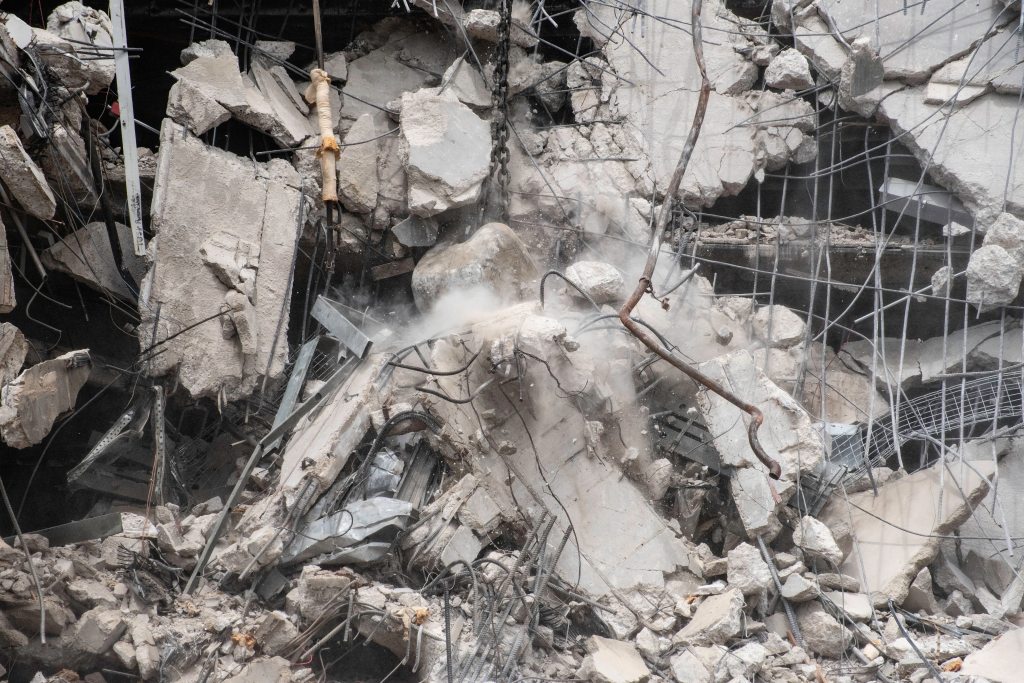
All the action in TTR, well words really, for August Wilson’s plays prize dialogue and character over plot, both their strength and their weakness, takes place in 1969 in the neighbourhood diner owned and run by Memphis Lee (Andrew French). The 1960’s saw the economic decline of the Hill District, once a byword for prosperity and cultural relevance in Black America, accelerate, prompting intervention from the Pittsburgh Urban Development Authority. Vast swathes of the neighbourhood were demolished to be replaced by a white elephant Civic Arena and failed public housing projects. Many residents were displaced and the redevelopment became an object lesson in how not to do “urban renewal“. Memphis’s business has seen better days but now he is holding out for the price he thinks it is worth from the City authorities, not just for the money but also to take a stand for the overlooked and disparaged community. He dreams of returning to his Southern roots from where he and so many others were compelled to escape in earlier, darker, decades. Frankie Bradshaw’s set captures this transition with the beautifully detailed diner sporting a hole in its roof above which is suspended a massive wrecking ball.

Memphis is assisted by cook and waitress Risa (Anita-Joy Uwajeh) who constantly has to push back against her boss’s criticism and the sexist comments and assumptions of the regulars. These include the assured West (Geoff Aymer), the local undertaker whose business is thriving, hustler Wolf (Ray Emmet Brown), who uses the diner’s phone to run a numbers racket, and the stoic Holloway, an unemployed painter and decorator, (Leon Herbert). Most poignant though is Hambone, (the excellent Derek Ezenagu), brought low by his obsession with getting fairly paid by the white butcher customer for work he did twenty years ago. The outside world relentlessly encroaches upon the lives of the company, first when the animated ex-con Sterling (Michael Salami) returns to the Hill looking for work and for Risa, and as the rallies, protesting racial injustice, increase in intensity.

Impossible to fault all the performances or the careful direction of Nancy Medina, who was similarly adept with Dael Orlandersmith’s Yellowman at the Young Vic and, I gather, Inua Ellams’s The Half God of Rainfall at the Kiln. Easy to see why she has won both the Peter Hall Directors Award and the Genesis Future Director Award. The lighting and sound design from other young talents Amy Mae and Ed Lewis was equally accomplished. Which means the somewhat discursive nature of events of stage is down to August Wilson alone. That is not to say that the lyrical dialogue, what and how the characters say, isn’t pitch perfect. Just that there is rather to much of it. Too many layers if you will. This is true of the other plays in the cycle I believe but here the contrast of individual reversals with societal transformation is just a little too carefully wrought.

As a production it matches the high standards previously set by English Touring Theatre. As a play maybe not quite as convincing as the others in the cycle I have seen. Still very keen to see further instalments however and given the resonance of the parts that AW wrote for black actors I expect I won’t be waiting too much longer for just such an opportunity.

Romeo and Juliet at the Barbican review ***

Romeo and Juliet

Barbican Theatre, 8th November 2018

You can stay right next to Juliet’s balcony in Verona. Le Suite de Giulietta. The Tourist, SO, BD and LD can vouch for the lovely decor, the sizeable rooms and the delicious breakfast. The courtyard is closed at night so it is very tranquil and, in the day, it is quite fun watching the crowds do a double take when you exit from the hotel. And Verona itself is a very fine city. 

Now I am not a berk. I know it was a window not a balcony. And that this is a story which Will S nicked from William Painter via Arthur Brooke via numerous Italian medieval raconteurs, including Dante, and then all the way back to Ovid and Xenophon. But even this cranky curmudgeon can get swept along by the definitive tale of young love dashed. Though Shakespeare being Shakespeare there is a lot more too it than that, what with the examination of gang violence, pointless vendettas, family loyalty, sexual freedom the curious nature of Mercutio, the expanding eloquence of Romeo, the precocity of Juliet (she’s supposed to be coming up to 14 remember), the constancy of Benvolio, the comic good-naturedness of the Nurse and the misguided and hare-brained intervention of Friar Laurence.

It’s easy to see why R&J is so popular and has been presented in so many ways. The denouement with our two dead teens is always, or should be, a tearjerker, even as we know the outcome, the idiocy of Friar John – all you had to do was deliver a letter, how hard is that numbnut – is always a reason to shake your fist, the reconciliation of the families, (even as you know it won’t last), always stirs, there are some good, often dirty, jokes and some fine, sweet verse. 

It can endure a lot of textual and/or directorial abuse, (though it is hard to fathom the happy endings of previous centuries), and, even with the sub-plots is a breeze to follow, even without the Friar’s helpful “brief” summary at the end. What it doesn’t like though, in my book, is less than clear delivery of the verse. You need to hear the clever way WS matches language and form to character, you should clock the sonnets, you ought to grasp the filter of metaphor and religion through the language of love, and hate, you should be left to decide for yourself whether the narrative is driven by “fate”, by “chance” or by character “flaws” or “humours” and you need time to ponder on Shakespeare’s preoccupation with, well, time.

In this respect I wasn’t entirely convinced by director Erica Whyman’s gung-ho interpretation. The youthful cast, in the relevant roles, certainly brings to the fore the recklessness of their behaviours, their strutting self-absorption, their need for peer validation, and the brings out the parallels to contemporary knife crime. Bally Gill’s impetuous, swaggering yet still sensitive, Romeo and Karen Fishwick’s animated, “mature beyond her years”, Juliet could live in any city near you right now. They certainly have the chemistry. Charlotte Josephine brings a whole new dimension to Mercutio’s complexity, his/her relationship with Romeo and exaggerated masculinity. To me there was almost a rap like quality to Mercutio’s wilder flights of linguistic fancy. Josh Finan’s Benvolio offered counsel to Romeo which maybe also sprung from a deeper admiration. The gender fluidity in the Houses of Montague and Capulet also extended to Donna Banya’s timid Gregory. 

In the adult roles casting Beth Cordingley as Escalus pays off especially when she spits out “you men, you beasts” and Michael Hodgson is a severe Daddy Capulet who pushes his daughter into disobedience. Ishia Bennison’s Nurse also delivers, offering up her deceptively “simple” verse complete with funny accent. Andrew French’s Friar L relished every syllable. Tom Piper’s set, with oxidised cube, doesn’t really add much, then nor does it detract, (well maybe a bit at the end), and Ayse Tashkiran’s movement seems more in tune with Erica Whyman’s vision than some of the other creatives. As well as time, Will S bangs on about light and dark, night and day, sun and moon/stars, incessantly through the play, and the whole tone lurches to the minor post Mercutio’s slaying by Tybalt, but this contrast didn’t fully emerge. Sophie Cotton’s score similarly veered towards the murky. 

Overall then, in trying to explore the “tragedy of youth” and the intricacy of passion in a fresh and recognisably modern setting, to get to the root of “feelings”, the words sometimes ended up grating. The chopping of text wasn’t always helpful. And the delivery was uneven. I want to believe that this unlikely chain of events really could happen, to see the “if-onlys” as exactly that, and not to watch some swooning melodrama, but I also want to hear and digest exactly what everyone is saying. So big picture, this works, in some of the details, it is a little less cogent.