Albion at the Almeida Theatre review ****

albion_new_1470x690

Albion

Almeida Theatre, 21st October 2017

Now we all know Mike Bartlett is a great writer. If you don’t know his stage work then, if you love your telly in the UK, you will likely have come across his mini-series Doctor Foster. So you will know that he can write a totally gripping story and that he is not averse in taking liberties with plot construction in order to generate a few outrageous WTF moments. Now it helps that this series was blessed with some top-drawer acting talent in Suranne Jones, (up next in a revival of Frozen alongside Jason Watkins and Nina Sosanya at Theatre Royal Haymarket in what looks like casting made in heaven), the chameleonic Bertie Carvel (I would watch anything he does), Adam James (ditto and who is a Mike Bartlett veteran) and the gifted Victoria Hamilton.

And it is Ms Hamilton who takes the leading role of Audrey Walters in Albion. She is, quite simply, brilliant. I will get to the play shortly but just let me wax lyrical about Victoria Hamilton for a bit. Her Audrey is sharp, snappy, curt, brusque, tactless. A seemingly detached mother. A wife who takes her (second) husband for granted. A friend who has no interest in the life of her oldest chum. An alpha businesswoman. Yet she is also very funny, and, as we increasingly find out, vulnerable. At the heart of Mr Bartlett’s rich text it seems that Audrey, in all her contradiction, is all of us, or more specifically, is this country, whatever it might be. I guess the clue was always in the title but Albion is an allegory which takes a substantial domestic family drama as the mechanism to explore issues of national identity, place and heritage. The Brexit convulsions ooze out of the very earth, of which there is plenty on stage, though the accursed word is never mentioned.

It is a bloody marvellous role and an equally marvellous performance. You may have seen Ms Hamilton in other roles on the telly, maybe in costume dramas and the like, and I envy you if you have seen her on the stage, for she is an infrequent board-treader. Her stage reputation is immense though. I can now see why. I have no right to ask, as someone who sits around on his lardy arse most days, but PLEASE PLEASE PLEASE Victoria, come back to the stage soon when this one is over. Mind you if this doesn’t get a West End transfer, I’ll be gobsmacked (though I can see some logistical challenges).

Panegyric over. What about the play? Our Audrey has left her successful “home-stuff” business in the hands of the minions. She has bought a pile she knew from childhood in rural Oxfordshire. and left London behind. It is the garden that matters to her though. It had been created by a certain Mr Weatherbury and was of immense national importance. It has gone to rack and ruin. Audrey wants to sink some of cash into restoring it to its former glory (see where we are going ….), and create a memorial to the dead of the Great War, and, we quickly learn, her son James, who was pointlessly killed in one of the recent wars. With her come her browbeaten, though wryly optimistic, husband Paul (a spot on Nicholas Rowe) and self-absorbed, millenial daughter Zara (an anxious Charlotte Hope) who wants to write and would rather be in London. Audrey inherits a couple of retainers in husband/gardener and wife/housekeeper Matthew (Christopher Fairbank, hard to imagine anyone else better suited to the part) and Cheryl (Margot Leicester, who shows perfect comic timing) but they are getting on a bit so Audrey, somewhat tactlessly, recruits ambitious Polish cleaning entrepreneur Krystyna (Edyta Budnik), and the rather enigmatic local boy Gabriel (a compelling Luke Thallon) to help . Our cast is completed by Anna (Vinette Robinson, who convinces in what is a tricky role), who is James’s grieving girlfriend, Katherine Sanchez (Helen Schlesinger), very successful writer, best friend of Audrey since university and overt “remainer”, and conservative neighbour, Edward (Nigel Betts).

No commentary on what happens next. I insist you see for yourself. There are though some moments of very high drama as the tensions between the characters unfold. Some of these scenes push us to the edge of credulity but, as with Mr Bartlett’s other work, he gets away with it because it is so damnably thrilling. 

Rupert Goold’s direction doesn’t stand in the way of any of this, indeed positively encourages it, and it gives his lighting (Neil Austin), sound (Gregory Clarke) and movement (Rebecca Frecknall) colleagues room to have some real fun. All the action is set in the red garden “room” of Weatherbury’s original design. Miriam Buether’s “thrust” forward design is a cracker. A raised oval lawn with trusty oak tree and seat at the back and with a bed all around which is transformed halfway through. This England indeed. 

If the set up above sounds like a certain Mr Anton Chekhov you’d be right. It unashamedly has Cherry Orchard crawling all over it, and, greedy bugger that he is, he even takes a few feathers out of The Seagull. Why not though? Chekhov being the perfect template for showcasing the intersection of the personal and the political, the delineation of class, the weight of history and the vice of nostalgia. The garden itself is a quintessential metaphor for change. We English have always been good at gardens and don’t we just love ’em. Chekhov meshes comedy, tragedy and banality whilst hurling in a few bombshells. Mr Bartlett does the same.

Into this set-up then is layered a whole series of perspectives of what “we”, have been, are now, and, possibly, are going to be, now “we” have taken this unprecedented step. The short answer, if you were to ask me, is that “we” have been monumentally stupid. Mr Bartlett, as you might expect, is rather less dogmatic, and offers ambiguity (and indeed his greatest nod to Chekhov), at the end. He reminds us that even dear old Blighty is regularly convulsed by clashes between those who welcome the future, and those who cling to the past. Because, in some way or other, we all embrace this dichotomy.

The text swirls with meaning. Perhaps a little too much. This is what holds me back from a full-on JFG 5* review. Direction, staging, performances – all tip top. Garden as metaphor, check. Chekhov as inspiration, check. Formal structure, check. Narrative arc, check. Plot and characters, check. Ideas and meaning, a qualified check. Not the subject, no way, nothing right now more important could appear on a London stage. Just that maybe a few of the threads can could have been pulled a little more tightly together.

Minor criticism. This is still a hefty slab of theatre which captures the zeitgeist. Maybe not quite as immediately remarkable as the last combination of Mike Bartlett and Rupert Goold at this very venue, King Charles III. But it may well turn out to have even greater resonance as, brace yourselves, the impact of this Brexit caper has only just begun.


Against at the Almeida Theatre review ****

1470x690_against_nb

Against

Almeida Theatre, 9th September 2017

The more plays I see the more I realise there are many ways to build a work of theatrical drama. You can build the foundations on language and the space around it, You can create powerful, memorable, immediate characters. You can construct a plot of more or less complexity to draw the audience into the narrative. Or you can explore ideas, from the individual mind all the way through to the global. And you can do all of this in a more, or less, naturalistic way. The joy of theatre is that all is possible and that it is a shared and ever changing experience. Which means when it works, (which is not as often as you might think), it knocks all other art forms into the proverbial cocked hat.

Some playwrights (and the directors, actors and the rest of the team that bring these works to life) take these elements, in various combinations, and give them a thorough, muscular work-out. Some are more subtle however. On the basis of Against, as this is the only one of his plays I have seen, Christopher Shinn is one of the latter. In fact he is at the extreme of dramatic subtlety. This is I suspect a very difficult trick to pull off, but in this play I think he largely succeeds.

Luke is a techhie billionaire in Silicon Valley with fingers in rocket science, solar energy and AI pies. Following a “message” from “God” he decides to explore the causes and meaning of violence in contemporary America. His devoted assistant, Sheila, joins him on the journey. He travels across the country visiting the parents of a student who murdered his peers in a shooting spree, the college where this took place, a campus plagued by sexual violence, a prison where he meets the father of a horribly abused child, some remarkably eloquent addicts and an Amazonian type warehouse (as in Amazon the company not the women of legend) owned by a fellow billionaire type. He returns at one point to his childhood home and to mummy. We hear of Luke’s other exploits as his messianic search for knowledge builds into a cultish following. Simultaneously he falls in love with Sheila, and, on his journey of discovery, finds out stuff about himself and his fellow Americans. The relationship between two of the workers at the warehouse is also sketched out to reinforce the power of love.

Now the cynics amongst you are probably already rolling your eyes at the seeming naivety of this set-up. And I accept that Mr Shinn’s dialogue at times would only encourage you in this impression. There is a fair amount of faux philosophising from the characters and there are some surprising shifts in tone and position. I think this put off a number of the proper reviewers. Yet, slowly and surely, Mr Shinn breathes life into the characters and situations, and the gentle meandering rhythm of the drama gives us, the audience, plenty of time to reflect on what we are seeing and hearing. And this is what makes this a worthwhile play to my thinking.

In no particular order the play got me cogitating on the following. How would a powerful entrepreneur, who claimed to have been directed by a “God”, be received in contemporary society? Should Silicon Valley billionaires have such power? How can they influence society with their wealth and their control of digital media and networks? Is our belief in technology to overcome limitations on growth about to get a terminal shock or will we have further great leaps forward? Why is violence so prevalent in today’s society? Is it worse now than historically? Does the media scare us into an unwarranted fear of violence? Why is it always blokes that do bad stuff? Is violence an inherent part of the human condition? Will insights from neuroscience and social psychology help us? Do humans need conflict? How are violence and hate to be squared with our tendency to altruism and love? How do we “turn the other cheek”? Why do people get so angry about the behaviour and identity of others?

Now you might say to yourself, blimey there can’t have been much going on on the stage for the Tourist to drift off and start musing over all this stuff. On the contrary the light touch that Mr Shinn, and director Ian Rickson (who always ensures clarity, most recently in Edward Albee’s Goat), explicitly allowed these thoughts to float around as the scenes progressed. Answers to the questions were not really on offer, beyond a simplistic love trumping hate, but I am not sure that should be seen as a failing. It’s only a play after all. The conclusion, whilst not particularly original (a nod to Chekhov methinks), did sort of make sense in the context of what had gone on before.

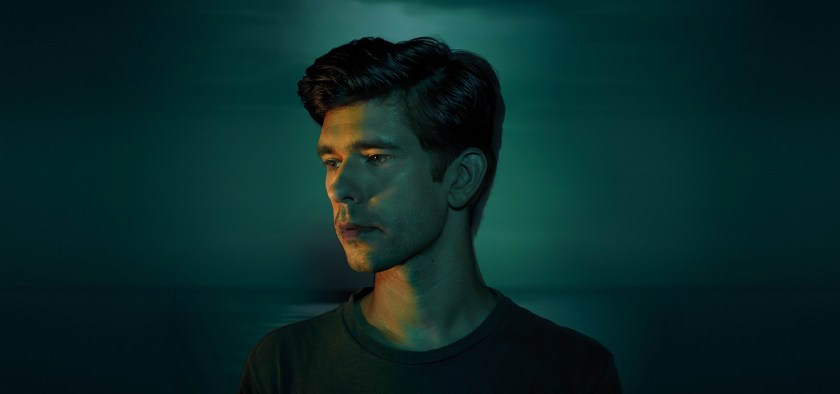
Given the structure of the play and the loftiness of the ambition we did need an outstanding performance from our lead, and that is what we got. Man-child Ben Whishaw looks the saviour part and managed to carry off the strange mix of authority and guilessness that I think the character Luke was supposed to possess. He uses his twitching body as much as his voice to portray his inner struggles. There were times though, when even his willingness to suspend his disbelief stretched ours a little too far, but no matter, he is still a tremendous stage actor. Amanda Hale as the partner on the journey had a little less to play with but struck exactly the right note. And the rest of the cast were able to invest the remaining characters with real identities in spite of, or perhaps because of, the somewhat didactic dialogue.

Best of all I didn’t have to make up my own mind about Against. For I was treated to the company of the Captain, who can sniff bullshit out at a range of a couple of miles. And there was enough here to engage the Captain’s mighty intellect. And that my friends is as high a recommendation as you need. Trust me.

PS. One final thing. As the play of ideas swirled round my head I was drawn to remembering a few books I had read which seemed to mark out similar territory to this play.. I don’t read much now, I don’t have the patience and in matters literary I defer to the SO who consumes fiction at demonic pace. But they popped into my head so here you are.

First up Messiah by Gore Vidal. This is more a satire on Christianity but this was the great man flexing his genius in the early 1950’s. For those who don’t know Gore Vidal – put this right. He might just be the greatest author of the second half of the C20.

Next up The Last Temptation of Christ, Nikos Kazantzakis’s novel or probably better still Scorsese’s film. Not an easy watch with its glacial pacing but a powerful piece of cinema. No idea why all the religious types get so wound up about it – I would have thought it captures the dilemmas Christian wrestle with to a tee.

Anyway I see I am getting a bit too zealous about the messianic theme in the play so final thought: Steven Pinker’s The Better Angels of Our Nature: Why Violence has Declined.  Now I confess I only just about getting to grips with this but it seems to squarely take on some of the issues that Mr Shinn’s play is grappling with. And it is a text that straddles the academic world (BD is knee deep in it for her degree) and the “popular science” market And I see that is was endorsed by none other than Messrs Gates and Zuckerberg, which seems sweetly ironic in the context of this play.


Ink at the Almeida Theatre review *****

tony-turner-bertie-carvel-geoffrey-freshwater-richard-coyle-jack-holden-tim-steed_c-marc-brenner

Ink

Almeida Theatre, 24th July 2017

Recipe for a very satisfying night at the theatre.

  1. Choose your company. I spend the vast majority of my theatre going life flying solo. So it is such a pleasure to be joined by some choice chums. In this case the SO, the Blonde Bombshells, BUD and KCK. Lovely.
  2. Have a bite to eat beforehand. Now having a “pre-theatre supper”, (I f*****g loathe the concept of “supper” and all who refer to it – it is called dinner), is sailing perilously close to the limits of poncey stuckuppery as far as I am concerned. But I have to say plate of delicious comestibles at that Ottolenghi realy did hit the spot even if the price/volume interplay was very suspect. I may go again. What a toff I have become.
  3. Go to the Almeida Theatre. This is starting to get silly. As far as I can see the Almeida under Rupert Goold has not put a foot wrong in the last four years and is now, in my humble opinion, London’s best theatre. Mr Goold is blessed with Robert Icke as a wingman and can call on just about any stage acting heavyweight he fancies. And he and his team are fortunate to be well oiled by the cash of the professional and chattering classes of Islington. But what has been most impressive for me is the string of new works that have been showcased alongside the classics. As proof I give you Hamlet, Mary Stuart, Oil, They Drink it in the Congo, Richard III, Uncle Vanya, Little Eyof, Medea, Oresteia, Bakkhai, Carmen Disruption, Game, King Charles III. 1984 and American Pyscho. All great and, in many cases, outstanding works of theatre. Even the misfires have had something of value.
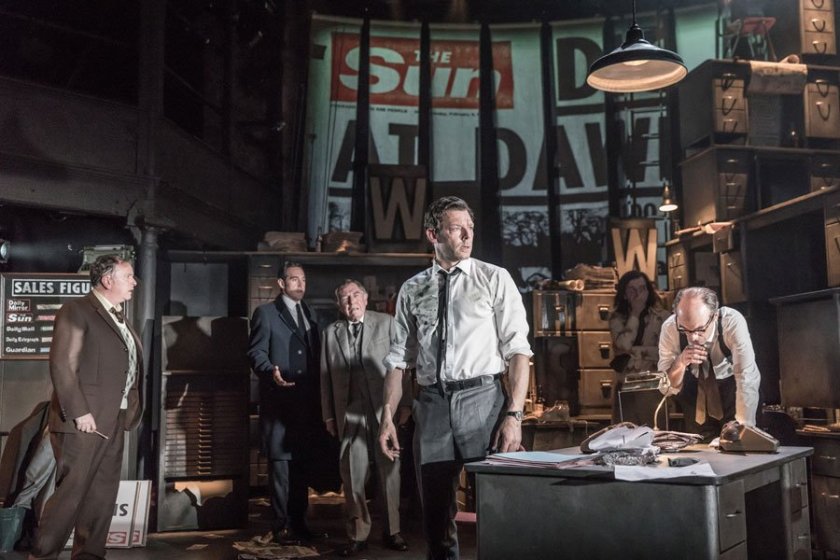
  4. Choose your writer, James Graham. Now it looks to me as if Mr Graham has found his groove and is now busy perfecting it. Dramatising relatively recent socio-political events brings recognition to us, the audience, which means we can ruminate on the parallels with the right now, whilst still being thoroughly entertained. Mr Graham just has the knack of picking and writing a good story. That is not as easy as it sounds. In the case of Ink he has gone one stage further than in This House for me by shining a light on the genesis of the populist tabloid, here the Sun, just at the point when maybe, the power of this particular beast is waning. The story of the first year of the Sun, following Rupert Murdoch’s purchase of the title in 1969, turns out to be theatrical gold. Murdoch’s desire to take on the British establishment and “give the people what they want”. his relationship with editor Larry Lamb, Lamb’s own personal battle with Daily Mirror editor and mentor Hugh Cudlipp, the pulling together of a team of Fleet Street rejects, waifs and strays to create the new style tabloid, the shocking kidnapping and death of Muriel McKay, wife of Murdoch’s lieutenant, the provocation of Page 3: all of this is deftly and pacily explored by Mr Graham in an often acutely amusing way. The motives for recasting journalism and the press in the UK are laid bare: the consequences we know from the intervening decades. Brilliant stuff.
  5. Savour the performances. Unsurprisingly the attention of the critics has focussed on Bertie Carvel’s Murdoch. It’s another bravura performance from an actor who seems to relish “the method” as far as I can see. I thoroughly enjoyed the physicality of his Yank in the Old Vic’s Hairy Ape (which was underrated in my view) and here he captures the awkwardness of Murdoch, his prudishness, his curious accent and his “outsider” psychology perfectly. He is not the caricature demon we “liberal” types need him to be but he is the archetype of “destructive capitalism”. (As an aside I once had a breakfast meeting in Washington. Rupert Murdoch sat down alone on the table next to us. His presence dominated our meeting for the next hour. All he did was eat toast and read the paper but all eyes were on him.) However, if I were Bertie I might have fancied taking on the Lamb role instead. On the other hand Richard Coyle does such a good job there was probably no vacancy. I have seen, and I am sure will see, more virtuoso, scenery chewing, thespianism on stage this year (Lars Erdinger/Greg Hicks in Richard III, Andrew Garfield in Angels in America, Cherry Jones in the Glass Menagerie, Andrew Scott in Hamlet, Brendan Cowell in Life of Galileo, by way of example) but Mr Coyle absolutely nails this from the off. This is a character whose seems compelled to test boundaries. He carries much more of the play than I expected but, even so, this really is an ensemble piece, and that is what makes the “us against the world” dynamic so persuasive.
  6. Take your hat off to Rupert Goold as director. I could be wrong but I reckon that Mr Goold is one of those rare leaders who can control his own ego. What you see on the stage in his productions is what writers, cast, designers and all the other good folk around want to show. I am guessing he guides, he doesn’t dictate. the world needs more leaders like that. My guess is Mr Murdoch would disagree.
  7. Set, Light, Sound, Action.  It is a tabloid in 1969/1970. Activity, headlines, demarcations, flares, eyeliner, dodgy haircuts and dodgy views. You can conjure up a picture in your mind I reckon but what you actually get far surpasses this. Bunny Christie’s set is the antithesis of minimal but so perfectly captures place and time. Some of the movement and dance (yep) is very witty and the scene elucidating the production process is inspired.

All in all a tip, top piece of theatre that I defy anyone not to enjoy. It lifts you up and carries you along from the open and makes you laugh, whilst still getting a little bit vexed about how this instrument of shabby, public discourse could have become so powerful.

So if it were to pop up in a transfer, as so much of the Almeida’s work now does, and you haven’t seen it, don’t hesitate. A proper story. Popular not populist.

Some forthcoming London theatre ideas

image

So we have had a few new season announcements over the past few weeks so here is a wrap up of what I think looks interesting in terms of stuff coming up on various London stages.

To spare you crawling through all this guff here is my top ten, including the best of these recent new season announcements in my view, and some other incumbent recommendations.

  1. The Ferryman at the Gielgud Theatre. So I know the decent seats are exorbitantly priced and this has come in for a bit of “paddywackery” backlash but it is still a towering play and is a must see.
  2. Hamlet at the Harold Pinter Theatre. Ditto. This is just a brilliant Hamlet from Andrew Scott and must be seen whatever you view on Will S.
  3. Network at the National Theatre. Should be a cracker – more details below
  4. Macbeth at the Barbican. In Japanese (with surtitles) but this is a classic production which I am very excited about.
  5. I Am Rachel Corrie at the Young Vic. Erin Doherty in the lead in this revival.
  6. Gundog at the Royal Court Theatre. I have a feeling this will be good.
  7. Albion at the Almeida Theatre. The next hit from the Almeida?
  8. Young Marx at the Bridge Theatre. I have banged on about this before but all is in place for the Bridge’s first offer.
  9. Insignificance at the Arcola Theatre. Revival of Terry Johnson brainy classic.
  10. Poison at the Orange Tree Theatre. I think this will be another triumph of discovery at Paul Miller’s Orange Tree.

More detail below.

Young Vic

New season is up. Best of the bunch for me is a revival of I Am Rachel Corrie based on the eponymous activists diaries with Erin Doherty in the lead. I have said before that I think Ms Doherty will become a stage legend and this should support that idea. The Jungle also caught my eye, with a whole bunch of tip-top creatives weaving stories from the Calais refugee camp. This is the sort of thing the Young Vic excels at. I am also looking forward to Wings with Juliet Stevenson in the lead and the Suppliant Women.

Royal Court Theatre

A whole bunch of goodies in the new season with three takes on the impact of war, Minefield, Bad Roads and Goats, and a US transfer, Grimly Handsome which has already sold out. My money is on My Mum’s a Twat a debut play from Anoushka Warden which RC’s Artistic Director Vicky Featherstone is directing, Girls and Boys, a relationship drama from Dennis Kelly (who writes for the telly) and directed by Lyndsey Turner, and, sounding best of all, Gundog, which has a nice ring of folk horror about it in the blurb. As usual with the RC there is not much to go on but I have a very good feeling about this. Ms Featherstone also directing.

Almeida Theatre

The Almeida can’t put a foot wrong under Rupert Goold with Ink the latest hit (sold out at the Almeida but go see it in the West End Transfer – you won’t regret it). I am booked for all 3 of the new season productions.

Mr Goold himself will direct Albion, Mike Bartlett’s new play. This has “state of the nation” written all over it but Mr Bartlett is a terrific writer so no need to fear. His last outing Wild at the Hampstead was good if not outstanding but this seems to have all the ingredients including a rareish outing for Victoria Hamilton on stage (you will have seen her in numerous period dramas).

Also intriguing is the Twilight Zone a world premiere from Anne Washburn based on, you guessed it, the Twilight Zone TV series from the 60’s. Now I can’t pretend I was bowled over by Ms Washburn’s Mr Burns but you have to admit this sounds quite exciting especially as it will be directed by the reliably controversial opera director Richard Jones.

After all this excitement the last play in the new season is a bit more classical in Tennessee Williams’s Summer and Smoke directed by Rebecca Frecknall (who has taken on this relative rarity before at the Southwark Playhouse) and with Patsy Ferran seemingly perfectly cast in the lead.

Donmar Warehouse

There are still a few tickets left for the new version of Ibsen’s Lady from the Sea and more for the Knives in Hens revival which should show director Yael Farber in her best light after the tricky Salome at the NT. Knives in Hens is a spare, poetic love triangle that gets regular revivals because, er, it is very, very good.

Old Vic 

Tickets now on sale for The Divide the new dystopian drama from the pen of Alan Ayckbourn. It is in two parts and I have no idea how it will pan out. It will be premiered at the Edinburgh Festival so probably worth waiting to see how it is received. It does have my favourite Erin Doherty (see My Name Is Rachel Corrie) above so I have already taken the plunge to get my favourite seats but I might have gone too early.

Arcola Theatre

A slew of interesting stuff in the new season including the Grimeborn opera offerings, but the standout plays for me look like the revivals of Terry Johnson’s Insignificance (his new play Prism is also coming up at the Hampstead Theatre) and Howard Barker’s Judith: A Parting from the Body with Catherine Cusack in the lead.

Orange Tree Theatre

Everything in the new season looks interesting to me including productions of Duncan Macmillan’s Every Brilliant Thing, Elinor Cook’s Out of Love and Brad Birch’s Black Mountain, but I think the UK premiere of Poison by Dutch writer Lot Vekermans may turn out to be the best of the bunch.

National Theatre

I am seeing Angels in America shortly (always seem to end up near the end of the run) so review will follow. Common is still trundling on – I didn’t think it was too bad but others were less forgiving (Common at the National Theatre review ***). No official reviews for Mosquitoes by Lucy Kirkwood which kicked off recently but I am looking forward to this immensely. Unfortunately the run is sold out so queueing on the day is the only way in.

Coming up are Follies, the Sondheim musical with Imelda Staunton belting out the tunes, Oslo, the sold out Broadway transfer which already has a West End transfer, St George and the Dragon, which I would take a punt on as a “modern folk tale” (expect Brexit allusions) written by Rory Mullarkey and directed by Lyndsey Turner, and Beginning, which I am guessing is a relationship drama (I assume with twists) written by David Eldridge and directed by the inestimable Polly Findlay.

My highest hopes are reserved for Network, based on the mid 70s Oscar winning film satire on the media, to be adapted by Lee Hall, directed by Ivo van Hove and with Bryan Cranston in the lead. Now film adaptions and Ivo van Hove disappointed on the last outing (Obsession at the Barbican – Obsession at the Barbican Theatre review ***) but I still would take the risk. This isn’t going to work if it follows the minimal, psychological insight route so I am assuming it will look more like Mr van Hove’s relentlessly busy Shakespearean efforts. There are tickets left for later in the run.

Barbican Theatres

Mr van Hove will also be bringing his Tonnelgroep Amsterdam team to the Barbican for After the Rehearsal/Persona and the main theatre will also show all the RSC Roman Shakespeares transferring from Stratford. I am signed up for the marathon Smile On Us Lord (I hope he/she does) from Russia’s Vakhtangov State Academic Theatre though I recognise this might be a bit hardcore for most. I do think the Ninagawa company’s Macbeth will be worth the £50 though. This is a revival was the production that first brought this innovative visual feast to the “West” so it really is a “once in a lifetime” theatrical experience.


My favourite London theatre of 2016

Right then. I know what you are thinking. Doesn’t this numpty know that it’s June 2017. Bit pointless talking about theatre from last year then. Well yes, you may well have a point. However this blog only started in March 2017 and it’s mine anyway so I can do what I like. And the idea primarily is to help identify some lessons about good stuff to come in future, whether it be from writer, director, cast, other creatives or venue. Anyway I suspect all you theatre obsessives will know where I am coming from anyway.

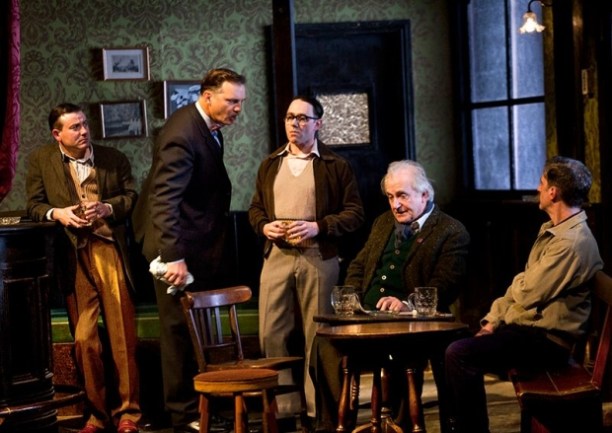
1. Hangmen – Wyndham’s Theatre/Royal Court Theatre
99296

So i know that technically this was from 2015. But we didn’t get to see it until the transfer to the Wyndham’s Theatre having missed the Royal Court run because I am an idiot who failed to book it in time.

It is an extraordinary work. There is no-one who writes for the stage (or film) like Martin McDonagh, though there are echoes to me of the likes of Pinter and Tarantino. It is the combination of fierce intelligence, violence, humour and atmosphere. If you don’t know the plays then you may know his films, notably In Bruges and Seven Psychopaths.

So if this, or the Pillowman, A Behanding in Spokane or any of the five Galway plays from the 1990s, are revived we should pay attention depending on who takes it on. If he makes another film we should also pay attention.

If we are in New York at the beginning of next year then we should see this production of Hangmen at the Linda Gross Theater. Please just go.

We should see what Matthew Dunster, the director, can do with his adaptation of Dickens’ Tale of Two Cities at the Open Air Theatre this summer (his involvement with the Globe has been mixed – I can’t really comment as the Globe is off limits for me as it is too uncomfortable – sorry).

If and when Johnny Flynn stops singing and acting in mini-series (he is in that Einstein thing apparently – you know it is everywhere on the tube), and takes on another stage role we should go – he is mesmeric – and appears only to do top-notch theatre, Propellor Shakespeares, Richard Bean’s The Heretic, Butterworth’s Jerusalem and Rylance’s Globe Twelfth Night (though I didn’t get on with this).

And best of all we should be salivating at the prospect of David Morrissey taking on the role of Mark Antony at the new Bridge Theatre alongside Ben Wishaw, Michelle Fairley and David Calder. With Nick Hytner directing. We had a few magnificent productions of Julius Caesar recently but this has the potential to match them.

Oh and finally if there is one theatre where you should just buy “blind” if you have any interest at all in the subject based on the admittedly thin blurbs they provide just book it. Pick of the current bunch for me of the current season is Anatomy of a Suicide.

2. Yerma – Young Vic Theatre

cw-11513-medium

So if you have any interest in London theatre you are probably all over this. BUT if you haven’t seen it (the performances later this year sold out sharpish) or if you don’t think this serious theatre caper is for you, then I highly recommend you watch it at the cinema through the NT Live thingamabob on 31st August.

There is much to like here. Lorca’s original play, Simon Stone’s radical re-write and direction, Lizzie Clachan’s stark but effective staging, the performances of Maureen Beattie, John MacMillan, Charlotte Randle, Thalissa Teixeira and, especially, Brendan Cowell. But in the end it is all about Billie Piper. You will be hard pressed to ever see a more emotionally involving performance at the theatre. No holding back at all.

My guess is we will have to wait a couple of years before Ms Piper returns to the stage but whatever she does after this and The Effect is likely to be mandatory (I didn’t get through Great Britain, Richard Bean’s satire at the NT though I had a good excuse).

And if we want to see Mr Stone’s magic elsewhere then we need to follow Toneelgroep Amsterdam where he has productions of Medea and an Ibsen mash-up. Will be interesting to see whether either comes to London at any point.

As for the Young Vic well right now the Life of Galileo by Brecht is playing with, drum roll please, Brendan Cowell, in the lead. Tickets still available and I loved it.

3. Uncle Vanya – Almeida Theatre

uncle_vanya_banner

This seemed to sneak under the wire a bit. I thought it was outstanding. Maybe director Robert Icke’s Red Barn at the National Theatre or his version of Schiller’s Mary Stuart with Lia Williams  and Juliet Stevenson garnered more attention, or perhaps everyone was taking a breather after Mr Icke had smashed it out of the park with his Oresteia for the Almeida in 2015. Any way up he is the most exciting director right now in the UK and this cemented that reputation.

Mr Icke himself updated the text and shifted the “action” to rural England. The production took its time and the sense of ennui was attenuated by Hildegard Bechtler’s slowly revolving set. And Paul Rhys as Vanya/John could hardy be bettered with his man-child lost demeanour. The rest of the cast, notably Jessica Brown Findlay, Vanessa Kirby, Hilton McCrae and Tobias Menzies, collectively kept their ends up. The detail of the characterisations was riveting. The individual pyscho-dramas perhaps can more to the fore pushing the social context back a bit but I reckon you can have a bit too much of the “everything’s about to go tits up in Russia and these minor aristos don’t know it” benefit of hindsight in Chekhov anyway. It is always better when you you get more of sarky Anton nailing the “shit just happens” frustrations of life.

So if you are one of the infinitesimally tiny number of regular readers of this blog you will know that I have high hopes for the next couple of productions at the Almeida: Ink by James Graham (writer of This House which may yet turn out to be an instruction manual for the vicissitudes of minority government in the UK) directed by Rupert Goold with Bertie Carvel and Richard Doyle and then Against by Christopher Shinn and directed by Ian Rickson with Ben Wishaw in the lead.

Meanwhile one of Robert Icke’s next projects is an Oedipus with Toneelgroep Amsterdam and with Hans Kesting in the lead. I pray this come to London as Hans Kesting without question is the best stage actor I have seen. OMG.

4. Kings of War – Barbican Theatre
kings-of-war-barbican-922

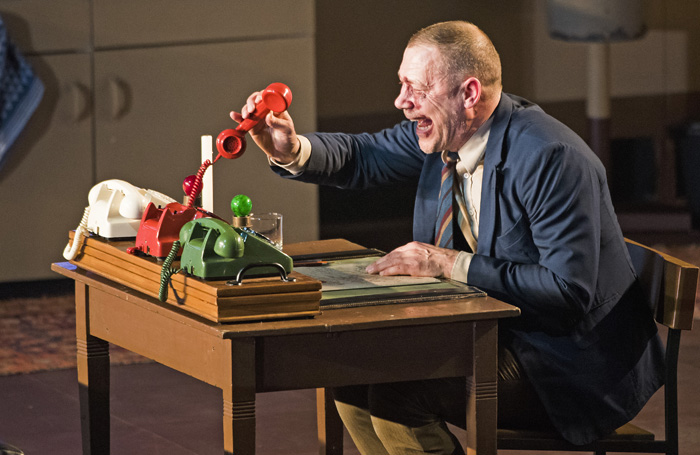
Talking of Hans Kesting here is a picture of him as Richard III in the Toneelgroep Amsterdam’s production of Kings of War at the Barbican. TA premiered this production in 2015 and brought in to London last year. It takes five Shakespeare history plays, Henry V, Henry VI Parts 1, 2 and 3 and Richard III, and mashes them up to extract the best bits in a four and a half hour spectacle that gets to the heart of what political power means.

Is it better than the similarly envisioned Roman Tragedies? (review here – Roman Tragedies at the Barbican review *****). I couldn’t tell you. There are both works of astonishing theatre. There have been a few let downs from TA and its inspirational artistic director Ivo van Hove, notably Obsession, but this showcases what he and his ensemble is capable of. So, as and when, this returns do not miss it.

And Mr van Hove has a number of forthcoming engagements on the London stage with Network coming up later in the year at the National the pick of the bunch.

5. Escaped Alone – Royal Court Theatre

ESCAPED ALONE

I have something of a weakness for unsubstantiated hyperbole. But here goes. Caryl Churchill is the greatest British playwright since Shakespeare. The best theatre plays with ideas and form and creates lasting impressions in the mind which simply cannot be replicated by any other artistic medium. Caryl Churchill does this again and again and again. No hype, no endless interviews explaining what she is doing/has done. Just perfectly formed, intense works that magically appear and seem to have addressed everything worth addressing over the past five decades or so. I just wish I had seen more of them.

Escaped Alone, in under an hour, explored the nightmare of apocalyptic, ecological collapse in a hilariously surrealist way, intertwined with, at turns, the banal and sinister fears and stories of four mature women ostensibly chatting in a back garden. That is my attempt at a summary but it does no justice at all to the ideas and images that just pour out of this play. As always with Caryl Churchill you just marvel at the alchemy of how so much insight into the big questions of humanity flows from these non-naturalistic, but never truly absurd, structures.

So as and when the next new play appears just go. And the same advice applies to any Churchill revival, anywhere. anytime.

6. Oil – Almeida Theatre

oil_website_1470x690

Back to the Almeida for Ella Hickson’s ambitious play Oil, directed by Carrie Cracknell and with the magnificent Anne-Marie Duff in the lead. So I get that the text and the pacing of the production was a little uneven but I didn’t care. Ms Hickson created such a compelling narrative, mixing the geo-political epic with a detailed mother-daughter relationship which hits you on some many levels. I have seen Anne-Marie Duff steal the show in a number of very different plays but she has never been better than in this role. And I doubt there is a better director in Britain today of towering female roles than Ms Cracknell (The Deep Blue Sea, A Doll’s House and Medea are recent examples).

Now it looks like Anne-Marie Duff’s latest outing at the National Theatre, Common, is getting a bit of a pasting. I will be taking a peek shortly so will make up my own mind. She is also pencilled in to a Macbeth next year alongside Rory Kinnear and directed by Rufus Norris. Surely that will be unmissable.

As for Ella Hickson, I would love to see a revival of Boys, and I think that it is only a matter of time before she pens an undisputed contemporary classic. And if anyone knows what Carrie Cracknell is tackling next I would love to know.

We are blessed in this country right now with a generation of outstanding female playwrights and directors but I for one would like to see way more come through. This play shows why.

7. The Rolling Stone – Orange Tree Theatre
the_rolling_stone_1142_484x580_20151215

Royal Court, Almeida and Young Vic all unsurprisingly represented in my top ten list and I have no doubt they will be again this year. As will, I suspect, the Orange Tree which continues to turn out work of the highest quality, whether revivals or new plays. They may not always be my cup of tea but artistic director Paul Miller and his team seem to have an extraordinary knack of identifying and staging rich theatrical material.

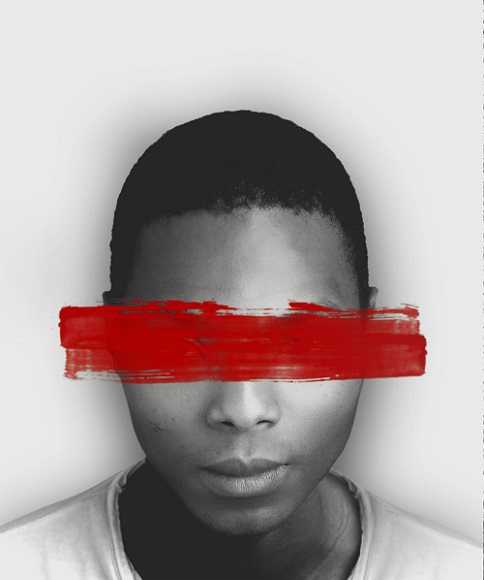
The Rolling Stone by Chris Urch was a winner of the biennial Bruntwood Prize winner in 2013 and premiered at the Royal Exchange Manchester so was hardly a secret. But it was still terrific to see the Orange Tree pick it up for its London premiere and it deservedly won a slew of Offies (the London fringe theatre awards).

It is an examination of the persecution that gay men face in Uganda largely told through the words and actions of one family. It packs an extraordinarily powerful emotional punch and will leave you seething with anger at the actions of church, state and media which combine to pursue a modern witch-hunt.

This is Chris Urch’s second play and I await with interest his next project which I believe is a screenplay for a biopic of the life of Alexander McQueen. And without exception I keep my eye out for the excellent cast, Faith Alabi, Fiston Barek, Jo Martin, Julian Moore-Cook, Faith Omole and Sule Rimi (who has popped up in a number of subsequent productions I have seen and has been uniformly excellent in these).

8. Les Blancs – National Theatre
lesblancs-1280x720-sm

The proper luvvies are in a little bit of a tizzy over Rufus Norris’s stewardship of the National. I admit it has become a bit of a lottery, particularly when it comes to the Olivier stage, but there have been some belting productions in the last couple of years. And for me this was the best of the bunch last year.

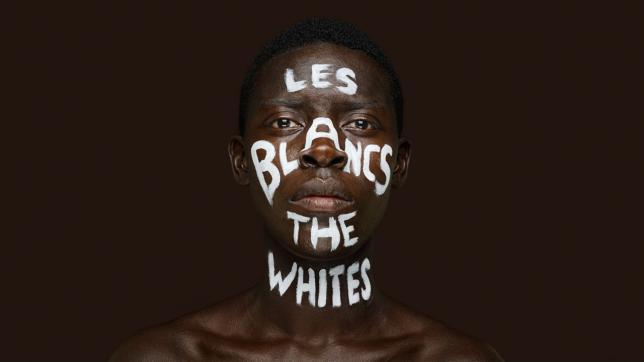
Now this probably reflects the fact that I have never seen A Raisin in the Sun, Lorraine Hansberry masterpiece. Following this version of Les Blancs it is now right at the front of the queue of plays that I simply must see. I was bowled over by this version of Les Blancs. It is an immense play which explores post-colonialism in 1960s Africa with an unforgiving eye. There is a lot of grand speechifying to advance the arguments but the didacticism never proceeds to simplistic resolution. I gather Ms Hansberry’s husband, Robert Nemiroff, had a major hand in completing this play after her untimely death. The set, sound, lighting, music and even smell could not have been bettered and for once I think the best seat in the house was upstairs at the back since there was so much to savour.

South African director Yael Farber seems to have presided over a duffer with Salome currently on at the National (I haven’t seen it yet) but her direction in this Les Blancs was sublime. And I don’t know what stage Danny Sapani will next grace (you will have seen him on the telly) but wherever it is I will try to go.

9. Orca – Southwark Playhouse

orca-at-southwark-playhouse-rona-morrison-maggie-carla-langley-fan-and-simon-gregor-joshua1-700x455

This was Matt Grinter’s debut play which won the Paptango new writing prize. I thought it was brilliant. In just 75 minutes Mr Grinter conjures up a place which seems far removed from our modern world and his tale of ritual abuse in a closed community conjures up a real sense of foreboding. I suppose some might label it “folk horror” at a pinch but it was just so much smarter than that label implies. It confronts the reality of the outrages that even today are visited upon women by men who hold power over them.

The setting is a fishing community on an island to the north of Scotland I surmised. An elder sister Maggie played by Rona Morison tries to prevent her younger sister Fan (Carla Langley) from undergoing the same unspecified but clearly dreadful fate which she refused to endure. Their father (Simon Gregor) won’t step in because he cannot face continuing to be shunned by the rest of the tight knit community. The patriarchal head of the community The Father played by Aden Gillett is genuinely one of the most disturbing characters I have ever seen on stage,

I’ll stop there just in case it gets revived but this was a riveting watch under the direction of Alice Hamilton. And the set by Frankie Bradshaw in the smaller space in the Southwark Playhouse (where they put on all the good stuff) was beyond ingenious. I don’t know if I imagined the cold, damp sea air that night, or whether that was all part of the production, but I really felt I was cut off from the rest of the world and not a few yards from the Elephant and Castle.

I await Matt Grinter’s next writing excursion with extreme interest.

10. Julius Caesar – Donmar King’s Cross
julius-ceasar-donmar-warehouse1

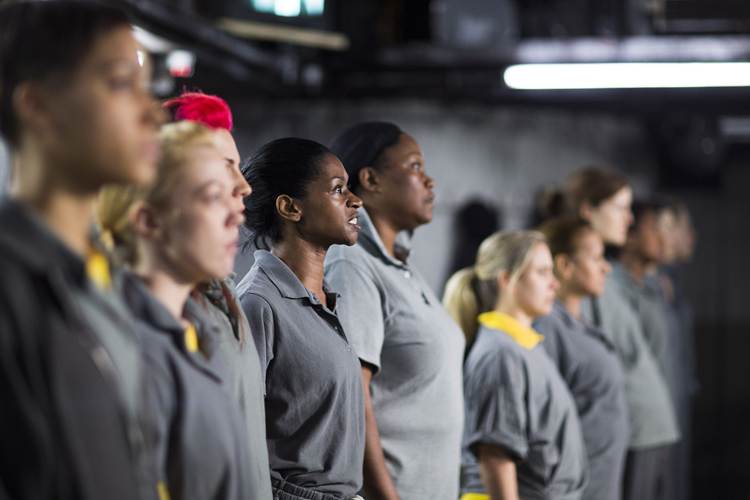
This is what Shakespeare is all about. Phyllida Lloyd and her all female cast led by the redoubtable Harriet Walter added The Tempest to the previous productions of Julius Caesar and Henry IV and set them up in a temporary stage at bargain prices in Kings Cross. All three took the venerable texts and smashed them over your head. Breathtaking.

I pick Julius Caesar solely because it is my favourite of the three plays. And I think the setting of all three plays in a women’s prison achieved most resonance in this play with its themes of conflict and the misuse of power. Directorial concepts in Shakespeare are vital in my view to illuminate the timeless brilliance of the insight but they can fall flat. Not here.

I think Harriet Walter’s Brutus is the best I have seen and I would also, if pushed, single out Jade Anouka’s Mark Antony (to add to her amazing Ariel in The Tempest). She was the only decent contributor to the dreadful Jamie Lloyd Faustus and I await her next major role with interest. The same goes for Sheila Atim who next pitches up in Girl from the North Country at the Old Vic.

Harriet Walter can read the phone directory and I would still go and Phyllida Lloyd could direct a bunch of phone directories and I would still go.

Best of all this Julius Caesar will be in cinemas soon so catch it if you haven’t already seen it.


So there we go. My favourites from last year. Honourable mentions also to Complicite’s Encounter which I finally got to see at the Barbican, Schaubuhne Berlin’s The Forbidden Zone also at the Barbican, Tim Minchin’s Groundhog Day musical at the Old Vic, and Jess and Joe Forever by Zoe Cooper and Blue Heart by the mighty Caryl Churchill both at the Orange Tree.

This year is ramping up to be similarly fine for London theatre with plenty of contenders already. Enjoy.



The Treatment at the Almeida Theatre review ***

cw-15033-medium1

The Treatment

Almeida Theatre, 24th May 2017

I didn’t really get on with this. The premise is interesting, the acting was accomplished (all the leads were new to me) and there were ideas to ponder upon, but I just didn’t find it that involving, either emotionally or intellectually.

I had wanted to see a work by writer Martin Crimp. I had previously only encountered his work through the libretto for George Benjamin’s haunting contemporary opera Written on Skin. So with an Almeida production directed by Lyndsey Turner (Chimerica, Faith Healer, Tipping the Velvet, Hamlet, Posh, Light Shining in Buckinghamshire – all fine productions that I have seen and that she has directed in recent years), and heartened by positive reviews, I had hoped to find a new favourite.

The plot focusses on how Anne’s (Aisling Loftus) story of her odd relationship with husband Simon (Matthew Needham) is appropriated by husband and wife “facilitators” Andrew (Julian Ovenden) and Jennifer (Indira Varma who for me stood out – a character that appears to speak first and then not really think too much afterwards). This is then turned into a film with the help of has-been writer Clifford (Ian Gelder), star actor John (Gary Beadle) and assistant turned starlet Nicky (Ellora Torchia). From this is spun a meditation on the fractured nature of modern urban (specifically New York) existence, the relationship between art and life, the restless superficiality of modern culture and the perversion of attraction.

Mr Crimp is a favourite of the Continental European stage and a go-to translator and the tone of this work shows why. It is mostly naturalistic (with a few curveballs to keep us on our toes – a blind cabbie for example, mirrored by a Gloucesterian eye gouging). For me it evoked that flat, clipped, precise almost vapid style beloved of novelists who worship at the altar of Brett Easton Ellis. Nothing wrong with that but I am not sure I go along with the idea that this play was somehow ahead of its time. For me it was very much of its time, despite I assume some deft updating (exhibit A – the smartphone – the gift that keeps on giving to the social commentator bereft of a commentary).

I normally find myself able to recognise what critics, programme writers and all the creatives say that they can see in terms of ideas, sub-texts and the like, but here I was a little off the pace I think.The satire of how the big bucks movie world takes a “real life” voyeuristic story and then twists it beyond recognition to make it more “real” unerringly hits the target and the delusions of the creatives in this tale are well observed. As a more profound enquiry into the alienation and neuroses which bedevil Western urban existence, I would be more circumspect. In its different way something like Scorsese’s Taxi Driver makes a better fist of nailing these themes I think, though again it is firmly locked in its time.

To be clear I didn’t mentally drift off (a happily rare but sure sign that the play is not for me) nor would I put anyone off who wants to take this in. It was just that it felt a little less than the sum of its parts. Not a no, not a yes, but a maybe.


Some ideas for the culturally inclined in London

london-travel-guide-lede

Here is a very brief round-up, (apparently I can drone on a bit so have tried to be disciplined), of the current and forthcoming major theatre and exhibition events in London that have caught my eye (and ear). I have a list of classical concerts which is still good to go for those that way inclined (Some forthcoming classical music concert ideas (with a bit of nostalgia thrown in) and will take a look at the best of the forthcoming seasons at the two major opera houses in another post.

No particular order and not at all obscure. There should be tickets available for all of these but in some cases you may need to get your finger out.

Hope this helps if, unlike me, you are not over endowed with time.

Theatre

I can vouch for the first four below and the rest are those which I think are likely to be the most likely to turn into “must-sees”.

  • Hamlet – Harold Pinter Theatre – June to September 2017

If you think Shakespeare is not for you then think again. Andrew Scott as our eponymous prince could be chatting to you in the pub it is that easy to follow (mind you, you’d think he was a bit of a nutter) and Robert Icke’s direction is revelatory. Plenty of tickets and whilst it’s not cheap they aren’t gouging your eyes out compared to other West End shows. Here’s what I thought.

Hamlet at the Almeida review *****

  • The Ferryman – Gielgud Theatre – June to October 2017

This will almost certainly be the best play of 2017 and will be an oft revived classic. It is better than writer Jez Butterworth’s previous masterpiece, Jerusalem. Prices are steep but the Gielgud is a theatre where the cheap seats are tolerable. If you see one play this year make this it.

The Ferryman at the Royal Court Theatre review *****

  • Babette’s Feast – Print Room Coronet – to early June 2017

There are a couple of weeks left on this. Probably helps if you know the film or book. I was enchanted though proper reviews less so. Loads of tickets, cheap as chips, not demanding at all, lovely venue.

Babette’s Feast at the Print Room Coronet review ****

  • Othello – Wilton’s Music Hall – to early June 2017

Again just a couple of weeks left here. Once again perfect Shakespeare for those who don’t think it is for them. Big Will’s best play and an outstandingly dynamic production. Another atmospheric venue, though I would say get right up close. A bargain for this much class.

Othello at Wilton’s Music Hall review ****

  • The Tempest – Barbican Theatre – July and August 2017

This is the RSC transfer from Stratford. Simon Russell Beale, our best stage actor, as Prospero. Some fancy dan technology is employed. Reviews generally positive though you always get sniffiness from broadsheets whenever RSC plays a bit fast and loose with big Will. Not cheap but at least at the Barbican you will be comfy (if you don’t go too cheap).

  • Macbeth – Barbican Theatre – 5th to 8th October 2017

More bloody Shakespeare. Literally. On this you are going to have to trust me. Ninagawa is a Japanese theatre company renowned for its revelatory productions. So in Japanese with surtitles. But when these top class international companies come to the Barbican it is usually off the scale awesome. I’ve been waiting years to see them. Enough tickets left at £50 quid a pop but it will sell out I think.

  • The Suppliant Women – Young Vic – 13th to 25th November 2017

Reviews when this was shown at Royal Lyceum in Edinburgh were very good. Aeschylus, so one of them Greeks, updated to shed light on the refugee crisis. Maybe not everyone’s cup of tea, and you can probably wait until closer to opening, but I still think this will turn into a must see.

  • Ink – Almeida Theatre – June to August 2017

Writer James Graham’s last major outing, This House, about politics in 1970s Britain, was hilarious and insightful. This is based on the early life of Rupert Murdoch so expect a similar skewering. Directed by Almeida’s own Rupert Goold with Bertie Carvel the lead (the sh*t of a husband in that Doctor Foster off the telly). I have very high hopes for this,

  • Against – Almeida Theatre – August and September 2017

New play which sounds like it is about some crazy US billionaire taking over the world (I could be hopelessly wrong as Almeida doesn’t tell you much). Written by American wunderkind Chris Shin, directed by master of clarity Ian Rickson, and with Ben Wishaw in the lead. Don’t know how much availability as public booking only opens 25th May, but I would get in quick here and buy blind. Almeida now a lot comfier with the padded seats and still a bargain for what is normally world class theatre.

  • Prism – Hampstead Theatre – September and October 2017

New play from the marvellous Terry Johnson who writes brainy comedy Robert Lindsay in the lead role of a retired cinematographer. I have a feeling there will be more to this than meets the eye (!!) and will buy blind on the public booking opening. Usually around £30 a ticket so if it turns into a hit, as Hampstead productions sometimes do, it is a bargain.

  • Young Marx – The Bridge Theatre – October to December 2017

So this is the opener from the team at the Bridge which is the first large scale commercial theatre to be opened in London for decades. The genius Nick Hytner directs and the play is written by Richard Bean and Clive Coleman. The last time these three came together out popped One Man, Two Guvnors. Rory Kinnear and Oliver Chris (trust me you will know him off the telly) play the young Marx and Engels in London. Hard to think of a set up that could get me more excited but if any part appeals to you I would book now. There are loads of performances so no urgency but, if they have any sense at all, the seats here will be v. comfy with good views as it is all brand new, so taking a punt on a cheap seat will probably turn out well.

  • Julius Caesar – The Bridge Theatre – January to April 2018

Bridge again. Julius Caesar so probably need to know what you are letting yourself in for as solus Roman Shakespeare’s can sometimes frustrate. BUT with David Morrissey, Ben Wishaw, David Calder and Michelle Fairley, it is a super heavyweight cast. Same logic as above – it might be worth booking early and nabbing a cheap seat on the assumption they would be mad not to serve up the best auditorium in London if the venture is to succeed.

  • The Retreat – Park Theatre – November 2017

The Park often puts on stuff that sounds way better than it actually turns out to be, but this looks the pick of its forthcoming intriguing bunch. Written by Sam Bain (Peep Show and Fresh Meat) and directed by Kathy Burke. Comedy about a City high flyer who gives it all up but can’t escape the past. If anything is guaranteed to wheel in the North London 40 and 50 somethings then this is it. No cast announcement yet but I bet they rope some comic into the lead.

  • The Real Thing – The Rose Theatre Kingston – 2nd to 14th October

A co-production with Theatre Royal Bath and Cambridge Arts Theatre of one of Stoppard’s greatest plays. I really want this to be a cracking revival for my local.

Exhibitions

Here is the pick of the forthcoming blockbusters which I hope to get to see. The Jasper Johns and the Cezanne Portraits are the ones I am most excited about.

  • Giacometti – Tate Modern – just opened until 10th September 2017
  • Pink Floyd: Their Mortal Remains – V and A – until 1st October 2017
  • Into the Unknown: A Journey Through Science Fiction – Barbican Art Gallery – from 3rd June 2017
  • Grayson Perry: The Most Popular Art Exhibition Ever! – Serpentine Gallery – from 8th June 2017
  • Jasper Johns: Something Resembling Truth – Royal Academy – from 23rd September 2017
  • Opera: Passion, Power and Politics – V and A – from 30th September 2017
  • Cezanne Portraits – National Portrait Gallery – from 26th October 2017
  • Monochrome: Painting in Black and White – National Gallery – from 30th October 2017
  • Impressionists in London – Tate Britain – from 2nd November 2017
  • Red Star Over Russia – Tate Modern – from 8th November 2017
  • Modigliani – Tate Modern – from 23rd November 2017


London theatre update

So a few things to note since the last London theatre update.

Booking opens 5th May (earlier for members of various hues) for the new batch of productions at the National Theatre. I reckon tickets for Follies, the Sondheim musical with a cast of thousands and the pocket rocket Imelda Staunton in the lead, will sell like the proverbial hot cakes. I also have my eye on Mosquitoes, the new play by Lucy Kirkwood (Chimerica, NSFW, The Children) with Olivia Colman off the telly.

Booking for the 4 way RSC Shakespeare Roman plays extravaganza is now open at the Barbican.

The new Bridge Theatre inaugural season is announced and I am so excited. Public booking opens 27th April. I recommend all 3 of the openers. Young Marx with Rory Kinnear as Marx, Oliver Chris as Engels, written by Richard Bean and Clive Colman and directed by Nicholas Hytner himself. The Julius Caesar not only has Ben Wishaw as Brutus but David Morrissey (last seen in the magnificent Hangmen by Martin McDonagh – best play of the last 3 years) as Mark Antony. And there is a new work, Nightfall by Barney Norris, which sounds intriguing (the refurbished Bush Theatre has While We’re Here, another new play by busy Barney, coming up). And the Bridge has lined up future new works by Nina Raine (about Bach yesssssss !!!! with Simon Russell Beale yessssss !!!), whose Consent I have yet to see at the NT, and by Lucy Prebble based on Bizet’s opera Carmen, as well as by Sam Holcroft and Lucinda Coxon.

Against at the Almeida will be booking from mid May.

The Old Vic is set to stage The Divide, the new play by Alan Ayckbourn, set in a future dystopian England, after a run at the Edinburgh Festival. Sounds like a cracker, mind you not too many laughs I am guessing from the blurb. No booking details yet.

I am casting an eye over Little Foot (by South African playwright Craig Higginson) and Doubt, A Parable (JP Shanley which was made into a film I gather) at the Southwark Playhouse (who are also bringing back Kiki’s Delivery Service which is a belter if you have littl’uns).

Everything Between Us (by David Ireland), Food and Mr Gillie look like the best of the bunch in the new Finborough theatre season.

And I have booked 3 of the 5 offerings at the end of July at the Orange Tree where they are letting young directors’, studying at St Mary’s round the corner in Strawberry Hill, loose on early plays by James Graham, Brad Birch, David Ireland, Enda Walsh and Kate Tempest. £7.50 a pop to support aspiring talent. Go on.

Finally I am weighing up the RSC Queen Anne at the Theatre Royal Haymarket in the transfer from Stratford but can’t quite make up my mind though Romola Garai in the lead may tip the balance.

Happy theatre going.

Hamlet at the Almeida review *****

hamlet_1470x690_version_3

Hamlet

Almeida Theatre, 11th March 2017

“…. but I’ve forgotten what Hamlet is about. 

It’s about a young man called Hamlet. And a girl called Ophelia who goes mad. And a ghost. And a Queen called Gertrude who gets poisoned. And a king called Claudius who gets stabbed. And a young man called Laertes who gets killed in a duel, and an old man called Polonius who gets killed by mistake.

I remember now. Not a Bright Piece …. “

From Henrietta Sees It Through by Joyce Dennys

The SO’s unparalleled reading of first half C20 memoirs turned up the above. A perfect spoiler/summary which tickled me. Hamlet may be the greatest play that big Will ever created but for me it still has some plot development that needs a deft directorial touch as well as, obviously, a believable psychological portrait from the Prince himself. That means a logic to the pile up of corpses, a Hamlet who loves Mummy and Daddy, reasons why Gertrude might love Claudius who therefore cannot just be just a weakling or a tw*t from the off, a Polonius who isn’t a total buffoon, an Ophelia who isn’t off with the fairies, a properly p*ssed off Laertes, good reasons why Hamlet might still have mates whilst his behaviour gets ever more erratic and preferably sotto voce reference to Norway and England.

For me this Hamlet ticked all the boxes and much. much more. I can’t pretend I have seen loads of great actors do their thing here nor can I remember vast swathes of the text. You can read the proper reviews to get all of that. But I can tell you that this is, in my view, about as good as Shakespeare gets.

Casting Andrew Scott as Hamlet if I am honest, probably didn’t require a massive leap of imagination. He looks the part (still sufficiently youthful) and surely was a shoe-in to play an unhinged mind based on previous work (oh alright based on his Moriarty on the telly as that is all I really know).

But OMG as the kids might say. Does he deliver. The conversational delivery meant I could savour almost every line and hear plenty that had not previously registered. There was an inevitability to his behaviour as events unfolded reinforced by the continuous animation in his face and hands . The petulance and narcissism that I want from a Hamlet was abundant. Let’s be honest he can be an annoying little s**t.

The relationships were perfectly pitched. The archness in the scenes with the actors, with Polonius, with Horatio and with the gravedigger were spot on. And the emotional tension created in the scenes with Gertrude, Ophelia and with Claudius (a gun and a dream, maybe – brilliant). And the soliloquies were perfectly delivered (and there are some cracking notes in the programmes about the psychology around voices in the head).

Hard for me to imagine better performances as well from a tactile Juliet Stevenson (Gertrude) especially as realisation turns into self-sacrifice, Jessica Brown Findlay (Ophelia), just edge of seat stuff with the herbs (a phrase your are unlikely to hear again!), Luke Thompson (Laertes), lump in throat in the final scenes with Hamlet, and Peter Wright (Polonius) a proper loving Dad and a vital right hand man. And for me Angus Wright’s (Claudius) more declamatory delivery fitted the nature of a chap who I think is rarely plagued with self doubt unlike his step-son.

The real genius though is director Robert Icke who is at the top of his game here. That’s not to stay he is infallible. Myself and BD (who was a massive Simpsons fan when she was a littlun) didn’t get on with Mr Burns where the concept drowned the characters for me, and whilst The Red Barn at the NT looked amazing I think the story was perhaps ultimately too thin, even as it passed through the hands of David Hare and the eyes of Mr Icke, to support the promise. 1984 though was brilliant, his Mary Stuart was absorbing and, for me, his Uncle Vanya was revelatory (I have not always got on with this), but even this was surpassed by Mr Icke’s Oresteia which was magnificent with the expanded prologue setting up the moral pickles and making the intervention of the gods gripping instead of a bit bonkers.

In this Hamlet the use of video is inspired not hackneyed, in the Ghost scene, in the play close-ups and in the conclusion, all reinforcing the the themes of surveillance and tine passing. The idea of Claudius’ confession as a dream is intriguing as is Ophelia’s breakdown from a wheelchair. There is mordant comedy in the Polonius/Hamlet scene. All in all lots of bang up to date ideas but which all serve a purpose.

Love it, love it, love it. And the good news. It is transferring to the Harold Pinter Theatre apparently. So no excuses now. Get a ticket.