SCO Winds at Wigmore Hall review ****

beethoven

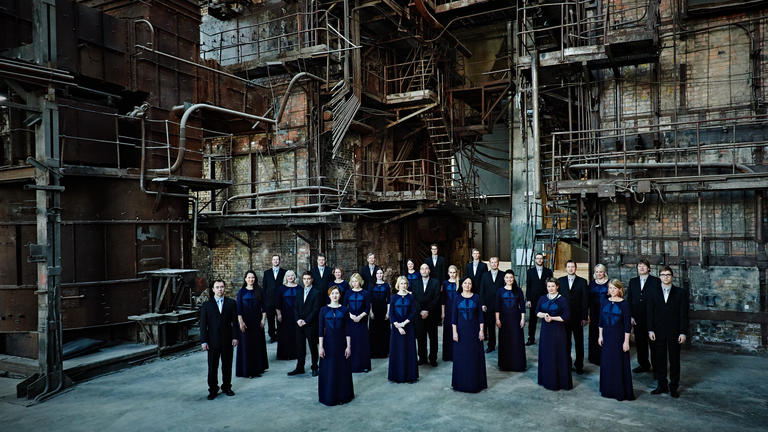
Scottish Chamber Orchestra Wind Soloists

Wigmore Hall, 12th February 2018

  • Beethoven – Sextet in E flat, Op 71
  • Poulenc – Sonata for clarinet and bassoon
  • Beethoven – Octet in E flat, Op 103

A rare opportunity for completists to hear performances of Beethoven’s Sextet and Octet written for wind instruments. Now there is enough wind repertoire, (as it were), to keep a few ensembles ticking over on the side but, generally, if you like this sort of stuff, you have to keep a beady eye open and/or hear student performances. There doesn’t seem to be a widely available recording of these works, (there is one from the Chamber Orchestra of Europe but tricky to track down it seems). So to see the specialists from the Scottish Chamber Orchestra turn up at Wigmore Hall, with a new recording in tow, was an appetising prospect, at least for the Tourist.

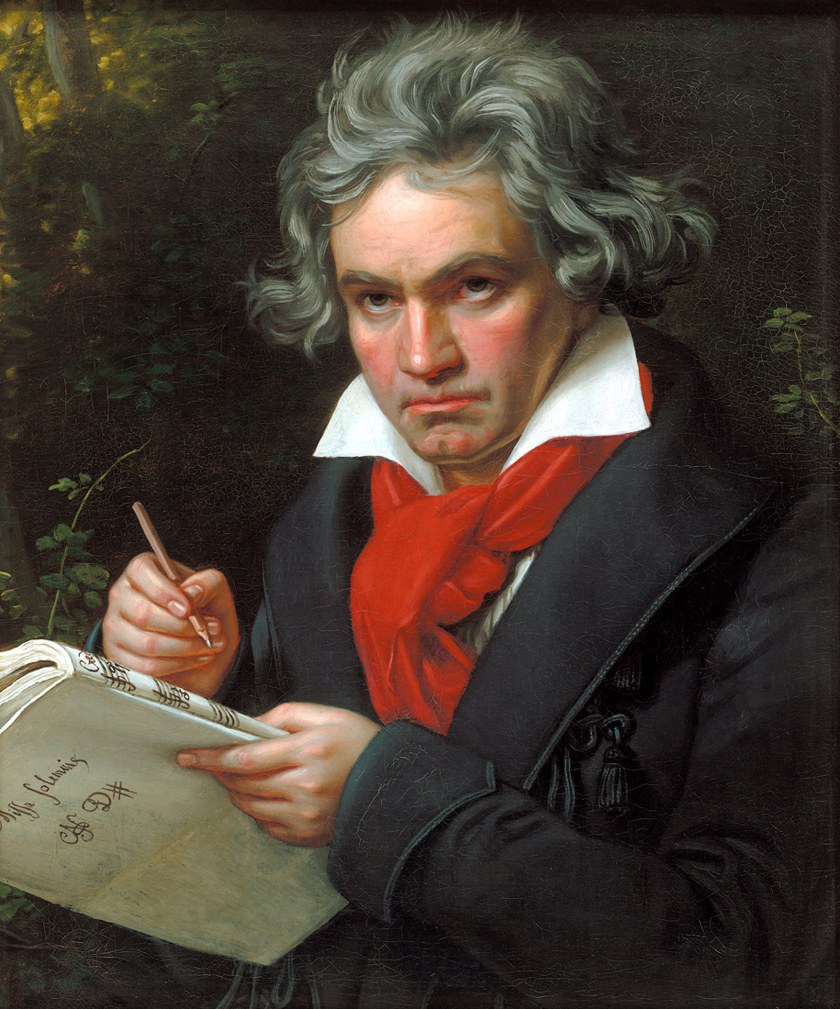
The Sextet may be numbered Op 71 but it is a very early work from 1796 when the grumpy one was just getting going. He dismissed it later on but he was wrong, as, apart from a few dodgy songs, (never quite mastered that surprisingly), he never wrote a dull note. Scored for two each of clarinets, bassoon and horns, it may not approach the beauty and complexity of the Octet but there is more than enough to sink your teeth (or ears) into here. There is a fascinating syncopation early on from the clarinets in the opening Adagio and a simple four note motif from clarinets and bassoons emerges in the ensuing Allegro, with a second theme coming from first clarinet, before development and recapitulation brings in the bassoons and, properly, the horns. The bassoons then do most of the lifting in the lovely Adagio in B flat major, with horns coming in for the following Menuetto. The final movement is a classic(al) Beethoven foot tapping Rondo, with a march like theme with some horn blasts at the end. It’s not rocket science, it obeys all the rules but it is still inventive given the instrumentation. And the band coped admirably with a poorly chap in the audience. halfway through

I am always momentarily intrigued by Poulenc’s music but it never really turns into much more than this I am afraid. I know you are supposed to get fired up by his choral/vocal/operatic works but it all feels a bit of a trial and suffused with Catholic guilt. And the piano stuff is a bit lightweight. He did though deliver some boppy tunes for wind instruments in his chamber works, including this Sonata for Clarinet and Bassoon, here delivered, I think, by Peter Whelan and Maximiliano Martin. Given the two instruments and Poulenc’s style there is nothing very profound going on here and indeed the audience gets to snigger at the end of the second and final movements. There are echoes of Mozartian divertimenti, Stravinsky’s appropriation of the Classical and some jazzy touches. So correct boxes ticked and some interest in the returning downwards lines in first and second movements. And the boys seemed to be having a good time.

Now the Octet really is a fascinating piece. Published as Op 103, (so near the Hammerklavier for example), it was actually written in 1792, before the Sextet and when Ludwig was only 22. Scored for two each of oboe, clarinet, bassoon and horns it might have been started in Bonn when LvB was circling around the Elector of Cologne. It was finished when he was studying under Haydn, though subsequently revised a bit with the last Presto finale replacing the original ending Rondino WoO25, (which might have been nicely squeezed in to this programme – just saying). He even took it and turned it into the String Quintet in E flat Op 4 to get it a proper audience. It is a remarkably assured piece with the sort of invention you expect in much later Beethoven chamber pieces. The opening motif is given a proper working out in the opening Allegro in a myriad of ways, the following Andante is one of those languid, sing-songy Beethoven melodies that insinuates itself effortlessly into your head. Then he writes a Scherzo. It may be labelled a Menuetto but Scherzo it is, with the influence of mentor Haydn apparent but with some uncanny foreshadowing of the kind of barnstormers Ludwig would create later on, albeit still fairly polite. The final rondo gives the horns their time to shine (though they get fulsome opportunity earlier on) and is a properly upbeat ending.

So there you have it. Music written for instruments favoured by German and Austrian courts from a time when Beethoven had to play the game and before he went all serious artist, look-at-me. But even this is so much more than the kind of burbling, bubbling, babbling wind pieces that these toffs at the time loved. A pleasure to hear, made more pleasurable by these expert interpreters. Chalk up another CD sale ladies and gentlemen of the SCO.
Colder Than Here at Guildhall School Milton Court Studio review *****

geograph-2563352-by-Eugene-Birchall

Colder Than Here

Milton Court Studio, 13th February 2018

Another visit to see the final year actors at the Guildhall School take on a fascinating contemporary play. Another excellent production laced with outstanding performances. Even better than the production of Edward Bond’s Saved, (Saved at Guildhall School Milton Court Studio review ****) which I had not expected.

Now playwright Laura Wade is best known to you culture vultures from her play Posh, later remade as the film The Riot Club directed by Lone Scherfig (who is an excellent director BTW). It is a not so thinly veiled parody of the infamous Bullingdon Club at Oxford University, the proving ground for rich, obnoxious toffs and, I fear people, many of your leaders. If you are only a casual theatre-goer put this on your list. I guarantee you will love it. That is why it has been so frequently revived since its Royal Court premiere in 2010.

I can’t vouch for any of Laura Wade’s other work with the exception of her adaptation of Sarah Water’s novel Tipping the Velvet, directed by the wonderful Lyndsey Turner at the Lyric Hammersmith. Now there is no easy way to say this but I did initially fell a little self-conscious when I rocked up to this as a solo, 50 year old fat bloke amongst such a glamorous audience. Once I had relaxed into it however I enjoyed the entertainment. The music-hall setting worked well, the musical arrangements were jolly, there was plenty of eye-catching capers, the cast attacked the text with gusto, especially Sally Messham, (seen recently in the Orange Tree/Paines Plough/Theatre Clywd triple bill), and Laura Davies, (the best actor in Rose Kingston’s recent revival of Rules for Living – Rules For Living review at the Rose Theatre Kingston ***). It was, as others observed, maybe a bit tame and less gritty in tone than Sarah Water’s book but a pleasure nonetheless.

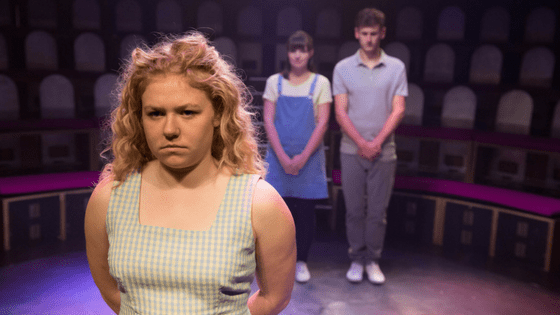
So this then was an opportunity to see one of Ms Wade’s highly regarded earlier plays. And what a fine play it is. Down-to-earth, (no pun intended), Myra has terminal bone cancer. She determines to have a green burial and ropes husband Alec, and two daughters, headstrong Jenna and more measured Harriet, into her plan. As Myra says “you’s got to keep busy if you’re off work with dying”. That’s about it. Yet Laura Wade’s writing is so exact and light of touch that we learn a lot about, and laugh a lot with, this normal family having to deal with death. Frankie Bradshaw’s set is a commonplace front room flanked by copper piping which extends to the video design of K. Yolland. This serves as the backdrop for the six scenes where the family, in various combinations, visits potential natural burial sites.

Myra’s matter-of-fact approach to the end of her life, Alec’s refusal to talk directly about it and his frustrations with bureaucracy, Jenna’s drama-queen, boyfriend troubles and the eventual breakdown of Harriet’s composure, all reveal that their displacement and coping mechanisms are fragile. We can feel the sorrow beneath the comedy but the play never feels sentimental or mawkish.

So plenty for the four actors to get their teeth into. I was particularly impressed by the two sisters played by Phoebe Marshall and Mhairi Gayer. To be fair they probably have the best of the play in the scenes where they visit potential burial sites together. Phoebe Marshall cleverly shows us that Jenna’s truculent exterior is thin disguise for a sweeter interior. Mhairi Gayer, who was outstanding as Anya in the Guildhall’s Cherry Orchard last year (The Cherry Orchard at Milton Court Theatre review ***), was utterly convincing as Harriet. I expect an illustrious career lies ahead of her. Tallulah Bond and Jonny Lavelle had a bit more work to do playing characters twice their age but both delivered admirably. Director Lisa Blair precisely captured the tone of the play.

Now you can see plenty of contemporary and new plays in our great subsidised or, when the reputations justify it, commercial theatres where the whole turns out to be less than the sum of the parts. Ambition trumps execution. So it really was a pleasure to see this very fine, gentle play, which still has much to say, performed with such care and attention. Even down to, with the odd wobble, the West Midlands accents. And all for a tenner. Brilliant.


Saved at Guildhall School Milton Court Studio review ****

bondbw

Saved

Milton Court Studio, 10th February 2018

Now one of the manifold pleasures of being a layabout theatre addict is the ability to pitch up midweek to one of the invariably excellent performances served up by the students at London’s prestigious drama schools. Outstanding talent, likely to go on to glittering careers, matched by similarly gifted technicians and creatives and often guided by big name directors and designers. The auditoria at the Guildhall and RADA are some of the best in London, state of the art, comfortable, with perfect sight lines, and tickets are a bargain.

What’e not to like. Well as one, slightly confused, old boy at one performance I attended remarked afterwards, “they’re a bit young aren’t they”. Even if we accept the literal truth of this it rarely matters, with audaciousness often trumping inexperience. Best of all it often gives the curious theatre-goer a chance to see “classic” plays which maybe don’t often get an airing for one reason or another.

That certainly describes Saved. Edward Bond’s (in)famous 1965 play. The play premiered at the Royal Court Theatre to a private audience, as writer and director, William Gaskell, refused to make the cuts demanded by the Lord Chamberlain’s Office to secure a licence. The Lord Chamberlain decided to prosecute. The theatrical world was outraged, and, despite those involved in the production pleading guilty and getting fined, the absurdity of this censorship eventually helped to hasten the demise of this licensing system in 1968. The play was then immediately revived at the Royal Court, but was rarely performed thereafter, (in large part because Mr Bond rejects most professional requests to perform it), until Sean Holmes, (of course given his pedigree with provocative theatre), took it on in 2011 at the Lyric Hammersmith.

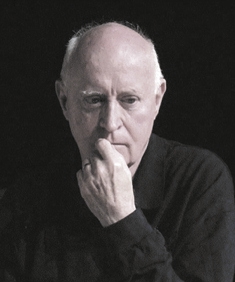
Autodidact Edward Bond, (there he is above), brought all the violence he had seen through the war years, and in his working-class upbringing, to bear on Saved, his second full length play. Indeed violence is the theme that runs through much of his work and his influence on later generations of British playwrights is patent. Saved is set in the South London of the 1960’s, socially, culturally and economically impoverished. This is no “kitchen-sink” period piece though. In some way it could have been written yesterday with a few tweaks to the language, (it being a fairly hackneyed, “gor-blimey”, argot with fairly pedestrian swearing).

Len and Pam hook up. They go boating, where Pam meets Fred, who she falls for even though he is a prize sh*t. Len has moved in with Pam and her parents, Mary and Harry. Theirs is not a happy marriage. Pam has a child by Fred, though neither turn out to be naturally suited to parenthood it’s fair to say. Fred goes fishing, watched by Len. Fred’s mates turn up ,as does Pam with the baby. She leaves the baby. Goading each other on, the gang taunts, and then stones, the baby in its pram. When Pam returns she doesn’t realise her child is dead. Fred is jailed for his part in the crime. When he gets out Pam begs him to come back to her. Len and Mary flirt. There is a huge row. Len fixes a broken chair: offering some hope of redemption at the end.

It may sound like bleak, visceral stuff. The central scene which so offended the critics at the public premiere is brutally shocking. As shocking as I have seen on stage. Violence may permeate contemporary culture, but theatre makes it more “real”. To the gang the baby is no more than a “thing”, such is their poverty of empathy. Despite this extreme, the play seems to me to present some real truths about an alienated society and the psychological damage it inflicts on people. No need to chuck drink, drugs, crime, consumerism, media into the mix. The essence of the relationships, fuelled by anger, resentment, bitterness, jealousy, boredom and frustration, rang true to me without foregrounding these addictions. The violence simmering under the surface of humanity colours each scene, each line, each interaction. The tone is not moralising, hectoring or judgemental. These are delicate, damaged, hopeless people. The final, wordless scene, is almost as affecting as the central, brutal scene.

Edward Bond’s plays were increasingly ignored from the 1980s, in part reflecting his own dissatisfaction with contemporary theatre practice. His most recent plays have been largely confined to the Big Brum company in Birmingham in this country, though his work is more widely performed in Europe, especially France. This is a shame, if that is the right word for drama suffused with violence. I would love to see, Early Morning, the surreal satire that followed Saved, or his other “classic”, Bingo, which puts a violent twist on Shakespeare’s later years. In fact, on the basis of Saved, I would try any of his work now that I have read about it.

He does though allow students to take on his work regularly. Which gave this accomplished cast an opportunity they all grasped with both hands. Toheeb Jimoh as Len had something of the observer about him, complicit in his manipulation by Pam, Fred and Mary. Shalifa Kaddu’s Pam was riveting, initially confident, crushed by Fred’s rejection, finally consumed by anger. I was also extremely impressed by Ellie Rawnsley as Mary, who effortlessly captured the brassy bearing and rancour of a character twice her age. Similarly Alex James-Cox, with very little dialogue until his heart to heart with Len near the end, shows Harry as a careworn, shuffling man clinging to routine to fill the void of his life and marriage. Joe Bolland, who played Fred, was perhaps the most assured. This is a powerful, brilliantly constructed play, make no mistake, and this cast, under experienced director John Haidar, did it real justice.


Stravinsky from the LPO at the Royal Festival Hall review ****

homepage_carousel_stravinsky

London Philharmonic Orchestra, Vladimir Jurowski, Alexander Ghindin (piano)

Royal Festival Hall, 7th February 2018

  • Igor Stravinsky – Scherzo fantastique, Op 3
  • Igor Stravinsky – Funeral Song, Op 5
  • Nikolai Rimsky-Korsakov – Piano Concerto in C sharp minor, Op 30
  • Igor Stravinsky – The Firebird (original version)

My favourite concert of last year was Sir Simon Rattle and the LSO’s take on the three, culture changing Stravinsky ballets. Just stunning. (My favourite classical concerts of 2017).

Suffice to say that whilst Sir SR’s Petrushka and Rite of Spring were, (predictably), barnstorming it was The Firebird which really made me sit up, listen and think. Firstly because it was the original full ballet score which I do not listen to often enough. (I have recordings by Rattle/CBSO, Dutoit/Montreal SO, Abbado/LSO and Salonen/Philharmonia so its not as if I have an excuse). Secondly because he, and the LSO, were able to show how much of even the Firebird looks forward to the subsequent two ballets and the announcement to the world of Stravinsky’s own, revelatory voice, as well as back to mentor Rimsky-Korsakov’s orchestral colouration. And thirdly because it was just so good, even in the more restrained, colourful first half which was glorious.

Now the LPO are engaged on a year long survey of Stravinsky’s orchestral works (Changing Faces: Stravinsky’s Journey) with Vladimir Jurowski and other conductors, (as did Esa-Pekka Salonen and the Philharmonia in 2016), though many of the headline concerts are mixed up with all sorts of other repertoire. The intention is to show just how profound Stravinsky’s influence has been on the direction of classical music, as well as showing how varied were his own influences. To be an artist who is better than all who came before is a miracle. To be an artist who changes the entire direction of his/her art, whilst still acknowledging the past is mind-blowing. That is what the boy Igor did. Composers are still wrestling with his legacy. So you can’t have too much of Igor’s music I reckon. Especially when each time you listen something new pops up.

Still he had to start somewhere and Mr Jurowski and his band chose to kick off this evening with Scherzo fantastique, which along with Fireworks (Op4) and the Symphony in E flat major (Op 1), is the starting point of Stravinsky’s career. The influence of Rimsky-Korsakov, the other nationalist Russians in and around the Five and the folk-art primitivism which was prevalent pre-, (and even post-Revolution), can be clearly heard, of course. There is something more at work here in terms of ideas though, albeit still melodic, not rhythmic and avowedly late Romantic. After dissing all this “juvenilia” Stravinsky in the 1960s did eventually accept that it wasn’t half bad.

Funeral Song is a proper step forward though. This is getting performed all over the place since it was rediscovered in some broom cupboard in St Petersburg in 2015. Indeed this very band and conductor programmed it with their thunderous Shostakovich Eleventh at last year’s Proms (London Philharmonic Orchestra at the Royal Albert Hall review ****). It was composed in 1908 as a tribute to Rimsky-Korsakov and Stravinsky remembered it as being more advanced in terms of chromatic harmony than any of his previous works. He was right on that score (geddit). The idea is that each of the instruments file past the master’s coffin, though often in ear-catching dialogue. It is a much darker piece than the earlier works and when it gets going there is an undeniable Wagnerian bombast to it which he just about gets away with. Anyway the point is that here some of the sound-world of the Firebird is creeping out for the first time.

Before we heard the LPO take on the Firebird we were treated to N R-K’s Piano Concerto, and treat it was. Now it is pretty easy to get sniffy about all these C19 Russian sound painters. I think I might have done. All this folk tune authenticity is exciting on first hearing but I find the novelty soon wears off. Which means I haven’t really bothered with this part of the repertoire. The chances of coming across this concerto were pretty slim as I gather it is rarely performed. It is a compact piece, one movement running to just 14 minutes though with three distinct sections, fast/slow/fast with a slow opener. For me that was its attraction but I can see that, for soloist and maybe audience, there is not enough grand gesture here to take on the canonic piano concertos. Rachmaninov is your best comparator but where Sergei would have spun out these ideas to 45 minutes, N R-K keeps it tight, with essentially just one theme, based, you guessed it, on a folk tune. The tune was sanctioned by the daddy of Russian nationalistic music Mily Balakirev who apparently gave this the thumbs up, though he became more critical of N R-K’s later work, thinking it veered into the “academic” and “Germanic”. There are plenty of flashy cascades a la Lizst which soloist Alexander Ghindin revelled in and the LPO accompaniment, especially from the woodwinds, was very persuasive. Mr Ghindin encored with the Dance russe from Petrushka to give us another take, though this felt a bit heavy-handed to me, (the playing not the linking). Maybe he had a plane to catch.

This was a clever piece to set up Mr Jurowski and the LPO’s take on The Firebird. Now when they get it right, this band and its conductor can match the best I have heard. It doesn’t always work, sometimes the line gets lost a bit, but tonight it did. Here was Stravinsky’s first real masterpiece, the debt to N R-K still audible, but with all the stunning innovation, which took Diaghilev’s breath away on first hearing, highlighted. From those growling double basses in the intro, though the shimmering strings in that magic garden, the riot of woodwind colour as our Bird takes flight, off stage brass action as Ivan bombs da house and monstrous tuba and percussion as Kastchei’s rave takes off, all sections were given a chance to shine. If I had to pick out specific contributions, well, Juliette Bausor’s flute was terrific, as well as David Pyatt and the other horns, the tuba of Lee Tsarmaklis and the piccolos of Stewart McIlwham and Lindsey Ellis.

I see I have signed up to a number of LPO concerts that have a sprinkling of Stravinsky in the mix. Whether they are part of this Changing Faces season is not entirely clear to me. No matter. You can’t get enough Igor after all.


My favourite classical concerts of 2017

623x512xrattle625_2-pagespeed-ic_-clbnppbu_4_0

Right I know it is a bit late in the day but I wanted to make a list of the concerts I enjoyed most from last year. So everything that got a 5* review based on my entirely subjective criteria is ordered below. Top is Sir Simon and the LSO with their Stravinsky ballets. Like it was going to be anything else.

Anyway no preamble. No waffle. Barely any punctuation. Part record, part boast. Comments welcome.

  • LSO, Simon Rattle – Stravinsky, The Firebird (original ballet), Petrushka (1947 version), The Rite of Spring – Barbican Hall – 24th September
  • Colin Currie Group, Synergy Vocals – Reich Tehillim, Drumming – Royal Festival Hall – 5th May
  • Isabelle Faust, Akademie fur Alte Musik Berlin, Bernhard Forck – JS Bach Suite No 2 in A Minor BWV 1067a, Violin Concerto in E Major BWV 1042, Violin Concerto in A Minor BWV 1041, Concerto for Two Violins in D Minor BWV 1043, CPE Bach String Symphony in B Minor W 182/5 – Wigmore Hall – 29th June
  • Jack Quartet – Iannis Xenakis, Ergma for string quartet, Embellie for solo viola, Mikka ‘S’ for solo violin, Kottos for solo cello, Hunem-Iduhey for violin and cello, ST/4 –1, 080262 for string quartet – Wigmore Hall – 25th February
  • Britten Sinfonia, Thomas Ades – Gerald Barry Chevaux de Frise, Beethoven Symphony No 3 in E Flat Major Eroica – Barbican Hall – 6th June 2017
  • Nederlands Kamerkoor,Peter Dijkstra – Sacred and Profane – Britten Hymn to St Cecilia, Gabriel Jackson Ave Regina caelorum, Berio Cries of London, Lars Johan Werle Orpheus, Canzone 126 di Francesca Petraraca, Britten Sacred and Profane – Cadogan Hall – 8th March
  • Tim Gill cello, Fali Pavri piano, Sound Intermedia – Webern 3 kleine Stücke, Op. 11, Messiaen ‘Louange à l’Éternite du Jesus Christ’ (‘Praise to the eternity of Jesus’) from Quartet for the End of Time, Henze Serenade for solo cello, Arvo Pärt Fratres, Xenakis Kottos for solo cello, Jonathan Harvey Ricercare una melodia for solo cello and electronics, Thomas Ades ‘L’eaux’ from Lieux retrouvés, Anna Clyne Paint Box for cello and tape, Harrison Birtwistle Wie Eine Fuga from Bogenstrich – Kings Place – 6th May
  • Britten Sinfonia, Thomas Ades, Mark Stone – Gerald Barry Beethoven, Beethoven Symphonies Nos 1 and 2 – Barbican Hall – 2nd June
  • Academy of Ancient Music, Robert Howarth – Monteverdi Vespers 1610 – Barbican Hall – 23rd June
  • Academy of St Martin-in-the-Fields, Murray Perahia – Beethoven Coriolan Overture, Piano Concertos No 2 in B flat major and No 4 in G major – Barbican – 20th February
  • London Sinfonietta and students, Lucy Shaufer, Kings Place Choir – Luciano Berio, Lepi Yuro, E si fussi pisci, Duetti: Aldo, Naturale, Duetti: Various, Divertimento, Chamber Music, Sequenza II harp, Autre fois, Lied clarinet, Air, Berceuse for Gyorgy Kurtag, Sequenza I flute, Musica Leggera, O King – Kings Place – 4th November
  • Maurizio Pollini – Schoenberg 3 Pieces for piano, Op.11, 6 Little pieces for piano, Op.19, Beethoven, Piano Sonata in C minor, Op.13 (Pathétique), Piano Sonata in F sharp, Op.78 (à Thérèse), Piano Sonata in F minor, Op.57 (Appassionata) – RFH – 14th March
  • Britten Sinfonia, Thomas Ades, Gerald Barry – Beethoven Septet Op 20, Piano Trio Op 70/2. Gerald Barry Five Chorales from the Intelligence Park – Milton Court Concert Hall – 30th May
  • Bavarian Radio Symphony Orchestra, Mariss Jansons, Yefim Bronfman – Beethoven Piano Concerto No 4, Prokofiev Symphony No 5 – Barbican Hall – 24th November
  • Britten Sinfonia, Helen Grime – Purcell Fantasia upon one note, Oliver Knussen, George Benjamin, Colin Matthew, A Purcell Garland, Helen Grime Into the Faded Air, A Cold Spring, Knussen Cantata, Ades Court Studies from The Tempest, Britten Sinfonietta, Stravinsky Dumbarton Oaks – Milton Court Hall – 20th September


Out of Love at the Orange Tree Theatre review ****

review-out-of-love-paines-plough-orange-tree-theatre

Out of Love

Orange Tree Theatre, 6th February 2018

The second of the three co-productions with Paines Plough and Theatre Clywd and, for me, somewhat more persuasive than Black Mountain (Black Mountain at the Orange Tree Theatre review ***), though very different in subject and scope. Mind you, in both cases, out the door at 7, a quick dramatic fix, and back home by 9ish for a cup of tea, is surely the perfect evening. Out of Love is from the pen of Elinor Cook and garnered acclaim last year at Edinburgh with this same creative team and cast.

Now the SO and I were not entirely persuaded by the recent Donmar Warehouse production of Lady From the Sea, which was adapted by Elinor Cook, though, on my part, this is because I like my Ibsen icy. (The Lady from the Sea at the Donmar Warehouse review ***). There is no doubt though that she is a writer who persuasively captures the experience of women. At least I think so, as it is tricky to judge from my perspective as a fat, old, privileged white bloke. I did learn a lot about the two characters, Lorna and Grace, at the heart of this play.

Now telling the story of two friends, throughout their lives, is not revolutionary. Especially when one escapes their roots and one remains. This, after all, lies at the heart of Elena Ferrante’s quartet, (though I accept there is a great deal more here to feast on), which April de Angelis and Melly Still so ingeniously brought to the stage last year (My Brilliant Friend at the Rose Theatre Kingston review ****).

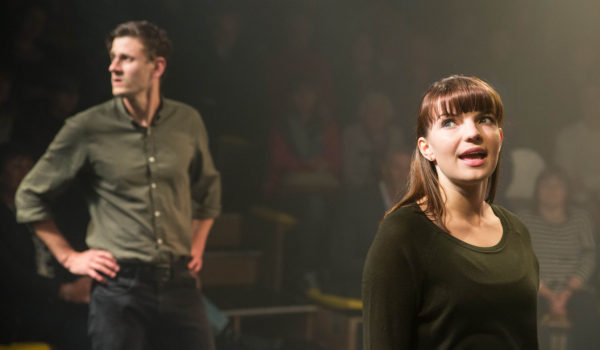
Elinor Cook though has shaken this up though by abandoning strict chronology. Instead we get a series of rapid, kaleidoscopic scenes which chart the women’s relationship with each other, with their parents, with their various partners and, poignantly, with Grace’s child, Martha. Grace is the feistier and more headstrong of the two, Lorna more measured and initially less confident. From the outset, a game of “weddings” in the park, we see that Lorna attracts more male attention, which fuels Grace’s jealously and protectiveness. Lorna has rejected her absent father but resents her stepfather’s attempts to cool the intensity of the friendship. Lorna’s academic success sees her go to university and build a career. Grace falls for local lad Mike and falls pregnant, and cannot follow Lorna’s path. This creates a gap between them that proves difficult to bridge.

Like I say, nothing exceptional in the plot. Yet Elinor Cook’s writing is so exact and so true to life that, together with the dynamic structure, we are fully drawn into the friendship. Katie Elin-Salt is very impressive as Grace, her outward show of gobbiness failing to conceal her wounded vulnerability. Sally Messham matches her showing how Lorna grows in confidence, and independence, as she pushes back against family, partners and, yes, Grace. Hasan Dixon has his work cut out playing the eight, count ’em, incidental male roles, but any marginal audience confusion in the first few minutes soon evaporates. No costume changes, no lighting or sound pyrotechnics, (in contrast to Black Mountain), so we are reliant on text and actors. Oh and some very nifty work from Movement director Jennifer Jackson to demarcate both characters and place.

So a frank, smart, poignant, realistic, if not naturalistic, portrait of a friendship, which creates a deep impressions, actually impressions, over its compact 70 minutes. Definitely worth a visit, there are a couple of weeks left to run, and, if you are anywhere close by, it would be a crime to miss it.


Black Mountain at the Orange Tree Theatre review ***

hasan-dixon-and-katie-elinsalt-in-black-mountain_photo-credit-jonathan-keenan-4-600x350

Black Mountain

Orange Tree Theatre, 5th February 2018

The latest in a long string of ambitious, but not outrageously so, projects from the OT, this time commissioned in conjunction with trusty partners Theatre Clywd and Paines Plough. Three plays, in rep, from OT favourites, Brad Birch, Elinor Cook and Sarah McDonald-Hughes, with a cast of three, Hasan Dixon, Sally Messham and Katie Elin-Salt, directed by James Grieve.

Black Mountain is the third play I have seen from Brad Birch at the OT. Like its predecessors, The Brink and Even Stillness Breathes Slowly Against A Wall (Directors’ Festival at the Orange Tree Theatre review), I was intrigued, engaged but not entirely convinced. Billed as a “tense, psychological thriller about betrayal and forgiveness” it certainly delivers on atmosphere. The intimate OT space was pumped full of dry ice and Peter Small’s lighting, and Dominic Kennedy’s sound, combined to convince me at least that we were holed up in some isolated cottage in the country. For this is where Rebecca (Katie Elin-Salt) and Paul (Hasan Dixon) have retired to to focus on repairing their relationship. Time to be honest and time to listen to each other, which they do, though with limited success. But, guess what, someone else is watching. Helen (Sally Messham) has turned up. Cue a twist or two, and strong strains of something in the woodshed.

Rebecca and Paul are sleeping separately. Any easy intimacy has disappeared. They are wary of each other and recrimination is their default mode of communication. Brad Birch’s dialogue is taut. He certainly captures Paul’s increasing paranoia and the anger that both women feel. Yet this also means that the relationships at the heart of the play don’t quite ring true. The plot, which to be fair, crackles, and the mood of the play, take precedence over the characters.

This is the impression I formed in the other two plays from Mr Birch that I have seen. The Brink presents a teacher who may, or may not, have discovered a bomb under his school. Even Stillness … sees a couple retreat from the world. All located in the world, but at the edge. I see he is currently working on a version of Ibsen’s Enemy of the People and Conrad’s Heart of Darkness. Both sound right up his street. I reckon he should have a crack at an all out Greek style bloodbath. That might be fun.


Nicola Benedetti and the Orchestra of the Age of Enlightenment at the Royal Festival Hall

75984-nicola-benedetti-headshot-6-simon-fowler-resized

The Orchestra of the Age of Enlightenment, Marin Alsop, Nicola Benedetti

Royal Festival Hall, 4th February 2018

  • Beethoven Symphony No 4 in B flat
  • Beethoven – Violin Concerto in D major

“Stardom” in the classical music world is a curious thing. To get there ideally you need to be a child prodigy. Then take a prize at your chosen music school. Get taken under the wing of a teacher and mentor, (more than one ideally), who are maestros from prior generations. Win a competition prize, or finish as a creditable runner-up, and secure a few prestigious gigs. A recording of a Romantic staple which tests the previous best recommendations. Set yourself up with your own festival in the middle of nowhere. Teach the kids and the underprivileged and travel. A lot. And, if you are a woman expect a load of airbrushed photos of you exuding grace, or if a bloke, brooding, ideally with a shock of unkempt hair. Make the cut, and there aren’t that many places available, and you are set up, literally, for life.

Obviously though you need talent and a level of dedication far beyond other jobs/professions/vocations. And even if you get to the top of the tree you are still only going to be appreciated by a minority of the population. Ah, but the pleasure you bring them cannot be measured.

Just occasionally though classical musicians break out into the wider consciousness by virtue of their genius, position and/or symbolism. In this concert I would contend we had two such musicians.

It is hard to overstate the importance of Marin Alsop’s rise to the top of the conducting profession. Recently appointed as Artistic Director for the Vienna Radio Symphony Orchestra, alongside her leadership of the Baltimore and Sao Paolo Symphony Orchestras, she is probably best known to the general public from her two recent stints at the Last Night of the Proms. Here at the South Bank, where she is an Artist in Residence, she was given the award from the Association of British Orchestras, the trade body if you will. Let us hope she continues to inspire women to follow her. (I am looking forward to hearing Mirga Gražinytė-Tyla and the CBSO perform the Rite of Spring and Daphnis and Chole later in the year at the Barbican for example). There is a long way to go. Vienna’s other orchestra, the Philharmonic, didn’t permit women until 20 years ago (though they had a secret woman harpist, bloody hypocrites) and the unacceptable behaviour of certain male conductors is now being revealed. Ms Alsop is proving a powerful and eloquent champion and should be roundly supported for her work and her stance.

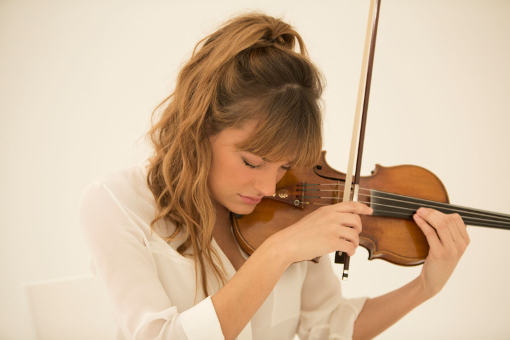
Nicola Benedetti has also proved capable of transcending the usual confines of classical music. Her recordings to date have not fought shy of delivering the popular “compilations” that shifts units. There was a packed house for this concert, and I would venture the majority were here just to see Ms Benedetti. This country is blessed with a rich classical music culture, (though maybe not quite as rich as Central and Eastern Europe), and there are plenty of talented musicians and marvellous composers. But world class soloists are a little thinner on the ground. So it is no wonder that Ms Benedetti, who is still just 30 years old, is so treasured, what with her MBE and Queen’s Medal for Music. Note I am unashamedly claiming her for Britain: she is unequivocally proud to be Scottish.

This was the first time I had heard her play. In a piece I now know well and, obviously, adore. With a band which comprises musicians who are at the top of their period music game. On a period fiddle whose sound I understand. This was Ms Benedetti’s first time with the OAE. (She will be joining the Academy of Ancient Music at the Barbican at the end of May in a programme of Vivaldi and Telemann. BUD and KCK have been signed up). Though not the first time she has played with gut strings. Ballsy then to take on Beethoven, the Daddy of the modern violin concerto, in a period performance.

So I couldn’t tell you what live sound she makes on steel strings, but, on the basis of this, it is probably something special. Here was a sweet, earthy and perfect tone but with a huge dynamic range. Very impressive. Especially in the slow movement Larghetto. And a real treat in the cadenza she has written specially in conjunction with Petr Limonov, what with its jamming with the timpani manned by Adrian Bending, (who also gets his big cameo in the opening and second movements of the Fourth Symphony remember), and its harmonic fantasy culminating in some showy pizzicato. Obviously you wouldn’t turn your back on an old-fashioned, knock ’em out between the eyes rendition, (my favoured recording is the Perlman/Barenboim/BPO which really pumps it up in the last movement), but this was still very satisfying. This is, after all, Beethoven’s least gruff, un-buttoned up orchestral masterpiece, set in its Happy D home key.

I wasn’t quite so persuaded by Marin Alsop’s treatment of the Fourth Symphony. Now I know it is a funny creature, murky and tentative in places, with those stop/starts, and it gets a bad rap compared to the Third and Fifth. But there is still lots to enjoy and explore. The OAE’s brass was in fine fettle but the woodwind was occasionally not quite what I expected and the strings felt a little too polite in the adagio vivace of the first movement, after that mysterious opening, and in the final allegro, which needs that massive contrast into the stalls. Tempi were a little on the slow side for me but then again I get off on John Eliot Gardiner and the Orchestre Revolutionnaire Et Romantique’s Beethoven cycle, especially in this symphony. Here Ms Alsop, as in the Violin Concerto, was most convincing in the slower movement.


John at the National Theatre review *****

4-john-anneika-rose-as-jenny-and-tom-mothersdale-as-elias-c-stephen-cummiskey

John

National Theatre (Dorfman), 6th February 2018

I would be very wary of playwright Annie Baker if I were you. She will bewitch you. Magical powers. That is the only way to explain John. Nothing really dramatic happens, the setting doesn’t change and the words, initially at least, seem quite ordinary. Yet the longer it goes on, (it clocks in at near 3 hours even stripping out a couple of intervals), the more mesmerised the audience becomes. It is “pregnant with possibilities” you see and turns out to be anything but ordinary. Extraordinary in fact. John goes beyond the exaggerated naturalism of Annie Baker’s previous plays into, well, a theatrical place that I have never quite experienced before.

How she wrote it is beyond me. Conjuring up these voices, and then just letting them speak in the moment, reveals a writer of utter confidence who knows exactly what she is about. If she can see and hear the whole thing before putting pen to paper I am in awe. If she makes it up as she goes along, (I know, she almost certainly didn’t), then frankly I am gobsmacked.

Haunting is the word I have seen elsewhere to encapsulate John and it is a good word both to describe the meanings that Ms Baker seeks to explore, the effects she creates and the memories she delivers beyond initial viewing. The very best plays/productions leave you with a series of pictures in your head that can be recalled long afterwards, (doh – that’s how memory works you numbnut), and it is not always the ones that you might immediately expect. John vividly falls into this category.

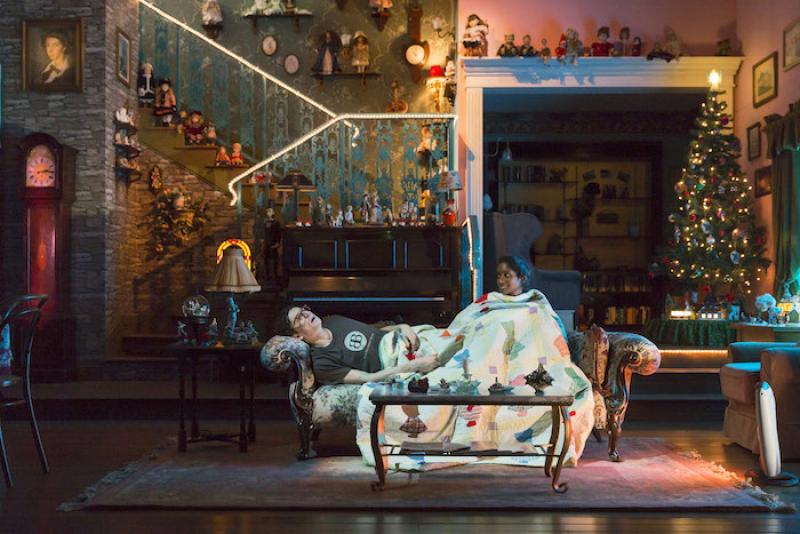
It is the week after Thanksgiving. Jenny (Anneika Rose) and Elias (Tom Mothersdale) arrive at a bed and breakfast in Gettysburg, Pennsylvania run by Mertis (Marylouise Burke). All that follows takes place in the lounge/dining area of the B&B. Chloe Lamford’s set is a thing of wonder and a character in itself. A vintage radio cum juke box seems to be permanently set to Bach. A self-playing piano alarmingly springs to life. The furniture is exactly as you would imagine in a fading but homely B&B. Think dusty chintz. The staircase leads to a handful of unseen bedrooms, (to which Jenny and Elias retreat on occasion), which seem never to be heated. The dining area is, optimistically, named “Paris”. There are knick-knacks a plenty but what is most disturbing are the dolls lining a high shelf. Jenny even recognises one of them as the doll which unsettled her as a child. Peter Mumford’s superb lighting complements the set. The atmosphere which is created is ever so slightly off-kilter from the expected cosy, but still a long way from full-blown, Gothic supernatural.

It was Elias’s idea to come to Gettysburg for a couple of nights after seeing Jenny’s family: she was less sure. (Gettysburg remains the single biggest day, well three days, of slaughter in American history and was the turning point in the Civil War. One for students of semiotics there methinks). Elias is a musician, Jenny writes questions for a TV quiz show. They are three years into their relationship but cracks are appearing. Innocent comments, or texts, can prompt gentle bickering. Moody Elias is always looking to take offence: Jenny predictably counters with textbook passive-aggressiveness. There are silences – Ms Baker really, really understands the importance of silences. Then, just as naturally, they cuddle up on the sofa, (too cold upstairs), with Elias trying to make up “ghost” stories. So, a portrait of an entirely recognisable modern couple, played to perfection by Anneika Rose and Tom Mothersdale.

And so to Mertis, aka Kitty. Marylouise Burke is a veteran of the US stage and this is a remarkable performance. Mertis throughout is sweet, dithery, eccentric, but no cliche. She runs the B&B with second husband George, who is apparently ill and remains unseen. Her blind friend Genevieve, another perfectly pitched performance from June Watson, comes to visit, and, over a few glasses she and Mertis engage Jenny in meaningful conversation, Jenny having stayed behind suffering from menstrual cramps as martyr Elias went off alone to visit the battlefields. Genevieve is a more forthright character than Mertis but both believe they have been accompanied by “watchers” in their lives. This culminates in the idea of love as a haunting, literally in Genevieve case by her ex called, you guessed it, John. Jenny feels something of the same as does Elias when subsequently cornered by Mertis.

This then is what I took to be the central concern of the play. The idea that the uncertainty, loneliness and disappointment of life is what drives the urge to believe in, take comfort from, or be disturbed by, something beyond the immediate and rational. The uncanny stories, (in Act 3 Mertis reads some Lovecraft to Genevieve who then remains in the shadows through Elias and Jenny’s “final” argument), conversations, signs and symbols that abound in the play, as well as the precise naturalism of the lines, are, I think, what Annie Baker has alighted on to force us to think about how this “need” articulates with our interior monologues and our sense of external reality. Alternatively maybe I am just a pseud who thinks too much.

Theatre, at its best, is a shared experience in a way that other art forms cannot replicate. The connection between text and actor, character and actor, audience and actor for sure. But also the connection between members of the audience as text and performance unfold. That was definitely in the air for John. It is subtle but entirely engrossing. It is crammed with detail, and that is just what registered, there was probably loads more that I missed. Oh and did I say it is funny. Because, at times, it really is.

It is no surprise that James Macdonald is the director here. Is there a director working on the UK stage who is more sympathetic to playwrights? I don’t think so. I am pretty sure this will end up being in my top ten plays this year and I will do my level best to see more of Annie Baker’s plays. (I see Circle, Mirror, Transformation is being revived at Home, Manchester shortly).

If you are one of those bellends who feels the need to constantly check your phone then this probably isn’t for you. But if you are at all interested in the possibilities of theatre then you should snap up one of the tickets for the remaining performances, snuggle into a seat at the Dorfman, (not always that easy), and let this evocative play bleed into you.


Estonian Philharmonic Chamber Choir at Milton Court review ****

estonian20chamber20choir2028c2920kaupo20kikkas

Estonian Philharmonic Chamber Choir, Kaspars Putnins (conductor)

Milton Court Concert Hall, 30th January 2018

Arvo Part

  • Solfeggio
  • Summa
  • Magnificat
  • Zwei Beter
  • The Woman With the Alabaster Box
  • Nunc dimittis
  • Dopo la vittoria

Cyrillus Kreek

  • Onnis on inimene (Blessed is the Man)
  • Psalm 104

Jonathan Harvey

  • Plainsongs for Peace and Light
  • The Angels

Veljo Tormis

  • Kutse jaanitulele from Jaanilaulud (St John’s Day Songs for Midsummer Eve)
  • Raua needmine (Curse Upon Iron)

Now I gather that the Estonian people like a sing-song. Choirs are a big deal there and choral singing and national identity are tightly bound together. They even had a Singing Revolution between 1987 and 1991 as they sought independence from the Soviet Union. So this evening was an event and was graced with the presence of no less than Estonia’s Prime Minister Juri Ratas.

Now I am not going to pretend this was the main draw for me. Profound apologies Your Excellency, but what intrigued me was the opportunity to here some of the choral works of the mighty Arvo Part sung by his country men and women. Albeit mostly in Latin, with a German, English and Italian text thrown in for good measure. Now I genuinely believe that the magic of Part’s “holy minimalist” tintinnabuli can work on anyone. I believe I am right in saying he is the most performed living “classical” composer. That doesn’t mean people are whistling Speigel am Speigel on every street corner though. This is still a minority pastime, but I do think there is something in his music, (and the spaces between the notes), which can burrow into the soul of all who come across it. Not that they have souls. That is obviously mumbo-jumbo. Old Arvo might sign up to Orthodox Christianity but not me. But it does something. Even if it is just to clear the head and leave you suspended in the sound for the duration of the piece.

So it was a pleasure to rope in MSBD to the Part party. Now, in retrospect, it might have been better to break him in gently with the usual programmatic device of interspersing Part’s choral works with other contemporary composers who relish the challenge of a choir as well as selected Renaissance masters. Even I have to admit that seven of Part’s choral works back to back can induce a slowing of the heart rate that is difficult to distinguish from slumber.

The opener Solfeggio is particularly interesting. It was originally written in 1964, though I think refined in 1993, which means it actually came before Part announced himself to the world with the bang. crash, wallop of Credo for chorus, orchestra and piano in 1968. This remember was when Part was a paid-up serialist, although Credo for my money is still a cracking piece of music. Solfeggio asks the choir to trot out an ascending C major row in strict serial fashion, singing, would you believe, “do re mi … “, but you’d be hard pressed to tell it apart from the “classic” Part style which emerged in 1977 after the several year hiatus and his personal enlightenment.

Summa is a setting of the Credo from the Latin Mass, though its title conceals its origin,  composed in the pivotal year of 1977. It was, along with Part’s settings of the Magnificat (1989) and Nunc dimitis (2001) for the Anglican evensong, the most entrancing of the evening’s performances. The Estonian Philharmonic Chamber Choir has a bewitching and very exact delivery with clear definition across the parts. This means the intriguing shifts that Part employs here, and the shimmering climaxes, especially in the Nunc, seemed more suited to their style. In contrast the more direct The Woman with the Alabaster Box from 1997, sung in English and which sees adjacent thirds appear under long sustained notes, was less thrilling to me than the Latin texts, which are all based on Part’s “classic” stepwise triads.

Zwei Beter, based on the parable of the Pharisee and the Publican I gather, is a more complex beast, (it’s all relative mind you), with denser harmonies and sung in German. Now one way or another I have recordings of most of Part’s works, (I think some remain unrecorded), but I didn’t know this piece at all. In contrast I am familiar with Dopo la vittoria from 1996 which is also somewhat more “complex” than the Latin texts. Sung in Italian this “piccolo cantata” tells the story of the baptism of Augustine by St Ambrose, (who apparently broke into song whilst doing the necessary), the patron saint of Milan for which city it was written. There is a discernible story with defined sections, including a brisk opening and ending, and some pronounced homophony at crucial, uplifting points. Who said Part all sounds the same.

After the interval we were treated to a pair of psalm settings by Cyrillus Kreek, an Estonian composer from the generation prior to Part, and a man who devoted his life to setting the country’s rich legacy of folk songs into choral arrangements. These songs stem from the wave of Estonian nationalism that stirred in the second half of the C19. These two pieces were very easy on the ear and sung with real conviction by the choir. A pair of works by British composer Jonathan Harvey followed, from the end of his career. Harvey regularly turned to choirs alongside his electronic and chamber pieces. The Angels was set by the Bishop of Winchester to which Harvey adds a hummed accompaniment. Plainsongs is more substantial polyphony with some beautiful, gently dissonant passages across its sixteen parts.

Finally the EPCC treated the audience to two works from Veljo Tormis, who passed away last year, after actually retiring in 2000. Slightly older than Part, but possibly even more renowned in his homeland, with a huge body of choral work to his name. Most of the settings stem from Estonian folk songs and I gather it is fair to say he has inspired multiple generations with his music. He was born during Estonia’s short lived inter-war period of independence, lived through the German and Soviet annexations and the Socialist Republic, and through to independence again. He mixed with all the big names during his musical education in Russia and was “honoured” with his own KGB files.

The first piece belongs to a cycle which describes the important Midsummer celebrations. It starts simply enough but builds into something more sophisticated. The Germanic influence is clear. But this was just a taster for the extraordinary Curse of Iron which followed. Apparently this gets a fair few airings outside Estonia and it isn’t difficult to see why. To the rhythm of a simple drum beat throughout, and with solo bass and tenor parts, Mr Tormis sets a story based on a Finnish epic, but sung in Estonian. It is, like it says, a curse on iron, as you do, and it is very dramatic. A ritual with repeated ostinatos, I have never heard anything like it. Neither had MSBD. Imagine a kind of shamanistic chant which ends up with sopranos warning against nuclear proliferation. Can’t. Well go and hear it then. It’s on I-Player since the concert was recorded for Radio 3.

Estonian Philharmonic Chamber Choir concert recording

A riveting way to end the concert and unsurprisingly the EPCC, and especially their Latvian conductor Kaspars Putnins, were having a ball during it. If I were part of the Estonian guest party I would have found it pretty difficult not to get up and join in. Pride in their country but pride in Europe too methinks. Great stuff.