The Silver Tassie at the Barbican review *****

The Silver Tassie

Barbican Hall, 10th November 2018

  • Mark-Anthony Turnage (composer)
  • Amanda Holden (libretto)
  • Ashley Riches – Harry
  • Sally Matthews – Susie
  • Brindley Sherratt – The Croucher
  • Claire Booth – Mrs Foran
  • Marcus Farnsworth – Teddy
  • Alexander Robin Baker – Barney
  • Louise Alder – Jessie
  • Susan Bickley – Mrs Heegan
  • Mark le Brocq – Sylvester
  • Anthony Gregory – Dr Maxwell/Staff Officer
  • Andre Rupp – Corporal
  • Finchley Children’s Music Group
  • BBC Singers
  • BBC Symphony Orchestra
  • Ryan Wrigglesworth – conductor
  • Kenneth Richardson – stage director

B*gger. B*gger. B*gger. B*gger. B*gger. I never saw Mark-Anthony Turnage’s second full scale opera when it was first performed in early 2000 at the ENO. On the basis of this semi-staged performance from the BBCSO as part of the In Remembrance weekend this was a terrible omission on my part for it is an extraordinary work both musically, and, given the strength of Amanda Holden’s libretto, dramatically. It is intensely powerful and moving even without a full set and staging. It beggars belief that it has not been revived since 2002, (and that it missed out on a run in Dallas thanks to political sensitivities). 

It is constructed as a symphony in four acts, Home, War, Hospital and Dance. Harry Heegan is about to return to the family flat after a football match with his best mate Barney and girlfriend Jessie. Mum and Dad are intensely proud of their son who is about to head off to the war. Next door neighbour Susie joins the party, banging on about God. Mrs Foran from upstairs also turns up escaping abusive husband Teddy. The Silver Tassie, a cup with much significance appears, the men go to war full of optimism. The War act is primarily choral preceded by the mythic Croucher, representing, I think, the war dead and intoning Old Testament-ish doom. An officer complains at the doctors in the Red Cross station. A football game is delayed as the battle begins. The story then switches to the Hospital where an angry Harry is now paralysed, Teddy blinded and Jessie, who refuses to see Harry, is now coupled up with Barney, who saved Harry’s life. The final act sees Harry and Teddy spit out their pain and bitterness at those who still have their futures at the communal dance. 

The opera is based on Sean O’Casey’s eponymous plan and it is therefore we who have to thank for the gripping drama. Whilst it is never made explicit, O’Casey intended that the Heegan family, and the rest of the community, should hail from the East Wall, a working class district of Dublin, adding further pungency to the message of the play (and opera) because, at that time, Ireland was still part of the UK and the republican movement was divided on whether the country should be involved in the war. So as some young men like Harry, Barney and Teddy headed off to war others prepared for insurrection at home. 

O’Casey’s play was rejected by WB Yeats, then head honcho at the Abbey Theatre in Dublin, when it was submitted in 1928, reflecting its political sensitivity. This was after the success of his first three major plays, The Shadow of a Gunman, Juno and the Paycock and The Plough and the Stars. So it premiered at the Apollo in London’s West End. There have been a fair few plays which rail at the futility of war and its consequences on the individuals who fight in it, but I doubt many match the raw power of The Silver Tassie. 

So Amanda Holden, (to be clear not the airhead judge on BGT), and M-AT had something monumental to work with. Even so, and in no way intending to downplay Ms Holden’s contribution which provides M-AT with multiple opportunities to show off his trademark stylistic jagged juxtapositions, it is the score that takes the breath away. M-AT had already shown his dramatic flair in his first opera Greek, and his compositional skill with orchestral pieces such as Three Screaming Popes, Momentum, Drowned Out, Dispelling the Fears and Silent Cities, especially when it came to percussion and brass, but The Silver Tassie is on another level.

The symphonic structure is inspired by mentor Hans Werner Henze’s The Bassarids, with the first act setting out the main ideas and themes, the second the Adagio slow movement, brought to life by the large scale choral scenes (echoing the more Expressionist feel of the act in SO’C’s play), the third a Scherzo and the last act a “dance” finale with “off stage” band. This structure offers rhythmic backbone and plenty of tunes derived from song, (including Robert Burns’s own Silver Tassie), and dance, as well as repeated motifs, which make it easy to follow and show off MA-T’s uncanny ability to capture the emotional interior of the characters. There are episodes of rich orchestral colour but there are also plenty of more economic orchestration.  The score should give the singers plenty of space, but just to make sure the cast were miked, (though M-AT, a couple of rows in front of me, needed to dash up to the sound desk to get the balance right early on).  The second and fourth acts are up there with the best I have ever heard on an opera stage. Even allowing for the fact that this wasn’t an opera stage. 

Sometimes this semi-staging lark can leave singers looking a little awkward unsure of how much to commit to performance versus voice. Costuming can also, sometimes, appear incongruous. Not here though, at east once the first act go going. There were some outstanding vocal performances, notably for me from Sally Matthews and Claire Booth, and Marcus Farnsworth as Teddy was very persuasive. But baritone Ashley Riches as Harry, even from my two perches (side stalls first half, back of circle second), was bloody marvellous not just in his singing but also in the way, pre and post wheelchair, he projected Harry’s exuberance and then his pain into the whole auditorium. 

Now I have nothing to compare it to but, given just how amazing this was, I have to assume that Ryan Wrigglesworth and the BBCSO, and the BBC Singers and Finchley Children’s Music Group (complete with ensemble writhing) got as close as possible to the heart of the music. 

You can listen to it for a couple more weeks on BBC Radio Opera on 3. Do yourself a favour and do so. 

And can I beg the ENO to find a way and time to revive this. With Mr Wrigglesworth on the podium. I will chip in a few quid if it helps. 

Forgotten at the Arcola Theatre review ****

Forgotten

Arcola Theatre, 10th November 2018

I was much taken, if not entirely convinced, by the British East Asian Yellow Earth Theatre company’s version of Tamburlaine at the Arcola 18 months ago. And this co-production, with Moongate, of a new play, Forgotten, by Daniel York Loh, which kicked off at the Theatre Royal Plymouth, sounded like it needed seeing.

Daniel York Loh looks like he is a busy fellow. When he is not writing he is acting, directing films or performing in a folk trio. Busy. Just like this play. It started off as a 5 minute script. It now runs to a couple of hours. Apparently his first draft ran to 300 pages. DYL has a lot to say and he means to say it. Mind you this is a story evidently worth telling. Giving a voice to the 140,000 Chinese labourers who left China to initially assist the French, and then the British, effort in WWI. Largely written out of history.

In trying to cram in as much of his research into these events as he can, the appalling famine and poverty blighting China at the turn into the C20, the hierarchical, violent and patriarchal village society, the volatile political situation and domination by foreign powers, the dream of escape and wealth, the Western view of China, and the Chinese view of the West, and Japan, at the time, the experience of the labourers in France and their shabby treatment, and their legacy, after the War, DYL offers a little too much exposition, a slight overdose of plot and leaves his characters looking a little too one-dimensional. Especially given only a six strong cast, (with some doubling up), the compact Arcola studio space and an experiment in form, namely having his band of villagers putting on a Chinese opera as they embark on their adventure.

So the cast and the creative team, director Kim Pearce, designer Emily Bailey, composer Liz Chi Yen Liew, lighting designer Jessica Hung Han Yun, sound designer Luke Swaffield and movement director Quang Kien Van had their work cut out to make this work.

Work it does though and this I think is largely down to the fact that, weaved into the important history lesson, there is a believable human drama here, especially when the friends get to the Western Front in the second act. The play begins at the end but I’ll keep schtum on that. The cast are performing an opera which tells the tale of a Miraculous Traveller, (I am afraid I know nothing about Chinese classical literature),  paralleling the story of the villagers. When all calms down we are in Horse Shoe Village in Shandong province in 1917 where Old Six (Michael Phong Le) and his wife Second Moon (Rebecca Boey) are struggling to earn enough to feed their young child. Big Dog (Camille Mallet de Chauny) is the village outcast, addicted to opium. Eunuch Lin (Zachary Hing) was castrated in a failed attempt to secure a position in the Emperor’s household. All are subject to the cruel whim of foul-mouthed Headman Zhang (Jon Chew). They agree to be recruited into the Chinese Labour Corps (from 1917 China declared war against Germany and Austria-Hungary) meeting the educated Professor (Leo Wan), and when they get to France, Wild Swan (Jon Chew again, equally potty mouthed) along the way. 

Whilst there are battlefield scenes DYL wisely cuts these with other encounters and other characters, as well as the highly stylised opera, to offer multiple perspectives on the experience of the friends. This shines a little light on the more universal East Asian diaspora myth, “silent”, “hard-working” but largely disregarded and culturally held at arms length. 

A valuable, if slightly awkward epilogue, explains what happened to Shandong province after the war and how the Chinese contribution was, literally, painted over in the now largely Americanised Pantheon de la Guerre. (America has a long history of mocking the contribution of France in global conflict). China was properly shafted at Versailles. Most of the surviving CLC returned home, but a few thousand stayed to build a Chinese community in Paris. The British CLC were given a medal, but it was bronze, not the silver awarded to everyone else who fought. There is a cemetery at Noyelles-sur-Mer on the Somme which honours 842 CLC dead. 

So overall Forgotten is an ambitious play, generously and vigorously told by an excellent British East Asian cast (Leo Wan, in particular, is as good here as he was in Tamburlaine and The Great Wave, and I look forward to seeing Michael Phong Le again). Lucy Bailey’s set is effective, Kim Pearce’s direction manages to maintain the momentum even as the scenes jump around. It may not quite be the finished article but it definitely deserves a wider audience. I spy a couple of harsh reviews in the national press. Ignore them. 

Don Carlos at the Rose Kingston review ****

Don Carlos

Rose Theatre Kingston, 9th November 2018

No one could accuse Friedrich Schiller of holding back in Don Carlos. Goethe inspired Sturm und Drang Romanticism, a Kantian paean to the centrality of personal freedom and democracy, the clash of liberty and tyranny, a stab at the sublime, a (loose) history of a turning point in the Spanish Golden Age, a political thriller chock full of intrigue, an (incestuous) love story, an increasingly intense Renaissance style tragedy lifting directly from Shakespeare, most notably Hamlet and Othello, but also Lear, Julius Caesar and Henry IV, which spills over into melodrama: it is big on passion and big on ideas. Operatic in scope you might say. Which is why Verdi wasn’t the only one who espied its potential. 

It took five years to write, finally published in 1787, which might also explain its meandering nature and abrupt tonal shifts, and, if you were unfortunate enough to sit through the original, ostentatious five acts of blank verse in their entirety you wouldn’t get much change out of seven hours. No one ever has mind you. This is kitchen sink drama. As in Freddy chucked the dramatic kitchen sink at it, not as in a pint-sized slice of domestic realism. 

This production, in a translation by Robert David MacDonald, clocks in at 3 hours. Schiller was largely ignored by the English speaking world for a couple of centuries. One reason why he no longer is, as well as Goethe, Lermentov, Gogol, Goldoni and Racine, is Mr MacDonald. Fluent in 8 languages he was the brains behind the Glasgow Citizens Theatre as well as an accomplished playwright in his own right.

Nor could one accuse Israeli director Gadi Roll, and actor Tom Burke, whose inaugural production as theatre company Ara this is, of holding back. Ara is intended to bring non-naturalistic theatre to the regional masses (though I am not sure the good people of Kingston, half an hour by train away from the South Bank, qualify as regional). They have started with a bang here. This is stripped back minimalist European auteur theatre which prizes style as well as content. Designer Rosanna Vize, who normally offers just a little more, makes do with the bare Rose stage and a few chairs, and modern dress with a vague Golden Age/Matrix flourish (and a lot of shades). The constantly moving lighting rigs in Jonathan Samuels’s design are dramatic and very effective (he worked with Gadi Roll on the Belgrade Coventry productions of The House of Bernarda Alba and Don Juan Comes Back From The War which is where Tom Burke met Mr Roll). The mingling of the private and public spheres.

The actors move around the stage in stylised straight lines. In the first couple of acts, the cast, notably Samuel Valentine as Don Carlos himself and Alexandra Dowling as the Princess of Eboli, (though with the notable exception of Tom Burke himself as the Marquis of Posa, the cool, calm voice of reason perhaps), spit their lines out with machine gun intensity, requiring the audience to keep ears and brains on their toes as it were. And there is a lot of shouting, notably from Darrell D’Silva’s Philip II. It is very, very, very dark most of the time and black is the dominant fashion. A nod to Velasquez, Ribera, Murillo et al?

I loved it. I see that the proper critics were less enamoured. Maybe the novelty of the play itself has worn off for these cynical hacks? The less than dynamic staging, the delivery of the lines and some of the acting didn’t past muster for many of them. Now I admit that the deliberately non-naturalistic choices made by Gadi Roll, in terms of look, movement and speech, did take a bit of getting used to, but necessary adjustment made, actually helped to see through to the core of Schiller’s text and messages and helpfully circumvent the worst of the melodrama. And it wasn’t just me. The SO, attracted by the history, and Mr TFP, an expert on German literature and culture, and a man who has read Schiller in German, agreed with me. I am guessing though that not all of the audience were as persuaded.

Young Don Carlos, the Infante, has the hots for Elizabeth of Valois (Kelly Gough). The only problem is Dad, Philip II, has married her. Dad also doesn’t trust the hot-headed Prince to get stuck into the affairs of government. And big Phil remember ousted his own Dad to seize the throne. When Carlos’s boyhood chum, the Marquis de Posa, returns to Court he confides his love and de Posa agrees to advance his suit if he in turn will help free the rebellious people of Flanders, oppressed by nasty Spain. Carlos asks Phil if he can go to Flanders (more exactly the Spanish Netherlands). Phil refuses and instead sends the Duke of Alba (Vinita Morgan). Cue bust up between the Duke and Don Carlos. There is a note and a key and Carlos ends up in the Queens bedroom with the Princess de Eboli who fancies him and wants to escape the clutches of the randy King. Thwarted she goes to Domingo (Jason Morell) the King’s Confessor. He plots with Alba to bring down the Queen and Carlos. A trap is laid but the suspicious King enlists de Posa to help uncover it. The Marquis’s enlightened ideas start to persuade the King but tyrants will be, albeit pragmatic, tyrants. There are some letters. misunderstandings, arrests, imprisonments, failed murders, accusations, double crossings, realisations, escapes and then, just when everyone least expects it, the Spanish Inquisition arrives (with Tom Burke doubling up as the Grand Inquisitor). To remind us that in C16 Spain it was ultimately the Catholic Church that held, literally, the whip hand. 

Obviously it does get a bit silly but the bare bones of the romantic tragedy are involving and there is a brio to the story which is irresistible. The intellectual set piece between the Marquis and the King, “give men the right to think”, is powerful, affecting stuff, which gets to the heart of the struggle between absolutism and representation, filtered, as it is, through the recognition by Philip that the Marquis, even with his heresies, is the son he really wanted. Especially when you realise that the “real” Don Carlos was an utter f*ckwit. A victim of Hapsburg inbreeding, deformed, mentally unstable even before he underwent a trepanation, he might have blinded all the horses in the Royal stables, and was prone to chucking servants out of windows. Phil eventually locked him up. The despot in Philip is plain to see, but we also see his humanity, and his justifications. And de Posa may have right on his side but boy does he know it and, intoxicated by his own argument, he will manipulate anyone and everyone to get what he wants. 

What next for Ara? This was a pretty bold first move. On the assumption that the style, the look, feel and intent of the company is set, I wonder if they might not be better served, at least in terms of critical response, by reviving a more recent play. We shall see. I hope they continue to aim high though. 

Now a few words on the “gosh, how did that Greek/Jacobean/Restoration/Spanish Golden Age/French classicist/German romantic playwright create something so uncannily relevant to today” trope. It’s not because they could see into the future or were especially politically prescient. It is because we, as human beings, either individually or collectively, haven’t moved on much. We may have smartphones, good teeth and a colossal amount of debt, but the way we interact with each other in the body politic, and the core of our individual psychologies, haven’t changed much in the pitifully tiny amount of time where we have, to the detriment of other species I fear, “ruled” this planet. So if a playwright can nail these truths, whether in the 5th century BCE or yesterday, we will listen. Don Carlos was first staged two years before the French Revolution: by the time he published the final version in 1805 the dream has collapsed into the Reign of Terror and Napoleon was Emperor. Then Schiller popped his clogs. And you think we live in worrying times. 

Having now seen this production, and the Almeida Mary Stuart, I hope to be able to bag another Schiller one day, The Robbers, Intrigue and Love, the Wallenstein Trilogy: all look likely candidates. He makes you work hard for your money, there is a lot, maybe too much, discussion, debate, confrontation and contemplation, but that is what the best dramatists do. And his characters are not just good, bad or indifferent. That is the true test of the playwright, the ability to show us many facets of the human condition, not all of which make sense or stack up. Nuance, ambivalence, enigma, complexity. To be on both sides, and on neither. 

Emerson String Quartet at Milton Court review ****

The Emerson String Quartet

Milton Court Concert Hall, 8th November 2018

  • Britten – String Quartet No 3, Op 94
  • Shostakovich – String Quartet No 8 in C minor, Op 110
  • Beethoven – String Quartet No 7 in F major, Op 59 No 1, “Razumovsky”

You still see some venerable rock (and pop) bands unwisely soldiering on in their 60’s and even 70’s, sometimes with only one original member still in the line-up. Outside of disposable pop the creative force/s, the composer/s if you will, in contemporary popular music are invariably also the performer/s. Not so generally in classical art music, though that isn’t to say that many canonical composers weren’t, or aren’t, also adept performers. Just that composition and performance are more often separated, and that performance is often as important to composition in terms of audience enjoyment or appreciation. 

So when rock musicians die, so does the band, if it has managed to get that far without breaking up due to musical differences, substance abuse or fist-fights, in the established rock’n’roll manner. Leaving the audience with a ropey tribute band and recordings to keep the tunes alive.

In the classical world though, with its much longer back catalogue, legacy is the name of the game. And not just in composition. Performers live on. Not just in recordings but also in the name, and sound, of the band. Easy enough to envisage in the context of the orchestra with its link to place and with a constant turnover of personnel. The Royal Danish Orchestra in Copenhagen can trace its lineage back to a bunch of regal trumpeters from 1448 (!), the venerable and still very highly regarded Leipzig Gewandhausorchester to 1743.

The idea that string quartets outlive their members might be a little trickier to get your loaf around though. Yet this is how it works. Members may come and go but the best quartets stick together for life, such is the dedication of performers to their art, and, when one of the four can no longer perform, pearly gates or otherwise, a replacement is drafted in. But this cannot be any old violinist, viola player or cellist. For the sound of a top notch string quartet, is a very particular thing, and continuity, as well as chemistry, needs to be guaranteed.

Now as is normally the case with the development of classical music, form followed technology and demand in bringing the string quartet to the fore. Once modern instruments had been perfected in the C18, notably the viola, (which is tuned a perfect fifth below the violin and an octave above the cello), and with enough patrons who liked the string quartet groove to pay up, composers were all set. As with so much else in classical music it was Papa Haydn who set the ball rolling in the 1750s. His massive output for the ensemble (68 named, 77 or so in total) is still amongst the best ever written IMHO. 

The string quartet, in the opinion of the Tourist, is about as “pure” as classical art music gets. Not easy to get right; any paucity of imagination is ruthlessly exposed. Four parts is enough to fashion an argument but not enough to take the foot off the intellectual or aesthetic gas. Plenty of opportunity to vary pitch but only the colour and texture of strings at the composer’s disposal. All of which might explain why not every big name has embraced the genre and why even those that have sometimes don’t always get beyond one effort or a brace. 

After Haydn, Mozart obviously churned out a fair few, 23 I think, though they are not all up to snuff. Still as ever with Wolfgang when he nails it he nails it. Then Beethoven with his 16 (and the Grosse Fuge) which, as with the symphonies and piano concertos, have never been bettered. Schubert also walked the talk with his 15 and a few assorted bits and bobs. (Note to Tourist: more work to do on these). 

As the fashion for showy-off, Romantic, bullsh*tty bombast gained traction in the C19 so the string quartet took a back seat, but returned with a bang in the C20. For the Tourist’s money the best of the bunch since 1900’ish are Janacek’s pair, Nielsen’s 6, Ravel and, (in a rare thumbs up from me), Debussy’s single shots, Stravinsky’s various musings, and, best of all, Britten’s haunting treble, Bartok’s virtuoso 6 and Shostakovich’s acutely personal 15. Oh and Glass’s 7 (and counting), Reich’s Different Trains, Crumb’s Black Angels, Nyman’s 5, Ligeti’s 2 and Xenakis’s 4. You might have some others to add. Tell me.

The Emerson String Quartet was formed in 1976, and still has two of its founder members in violinists Eugene Drucker and Philip Setzer, alongside the viola of Lawrence Dutton, with cellist Paul Watkins the last in, having joined in 2013. I have recordings of their arrangement of The Art of Fugue and their renowned Bartok cycle. The Bartok is superbly recorded and is very, very precise and very, very intense. This is what they are famous for. Exact and technically brilliant interpretations. Which maybe lack a little emotion. That tends to be my preference but I can understand why others may take a different line (and there are occasions when I would agree).

Anyway this is what the Emersons are famed for. And this is exactly what they delivered at Milton Court. Britten’s Quartet No 3 was pretty much the last thing he composed appearing in the year he died, 1976. With its call-back to the music of his last opera, Death in Venice, in the final passacaglia, and the recitative quotes that precede it, it really is immensely moving. BB was very ill at this time, only able to work in short bursts following a heart bypass operation, and this seems to be reflected in the four condensed movements which precede the final “La Serenissima”. The opening “Duets”, in sonata form, is also haunting and, by virtue of its various permutations of the quartet personnel, as sparse as its title suggests, even when the duets are accompanied. The Ostinato second movement, like the Burlesque fourth movement, is very short, and taken at a fair lick even where it is played pizzicato. The parodic Burlesque could have come from the pen of Shostakovich in one of his more caustic moments, with its weird central spiccato passage. The central Solo is marked very calm with the first violin line, heading higher and higher, seemingly lifted from the mists, and mystery, of Curlew River. Or maybe Aldeburgh Beach, Or Snape. Anyway as with the rise and fall of the Passacaglia it sounds like BB was set to go home. Blub blub. 

The Emersons certainly got the measure of BB’s still extraordinary imagination and technique. But it felt a little less haunting than the recording I have from the Endellion Quartet. This was even more true in the Shostakovich. The Eighth was written when DSCH was in a very dark place, contemplating suicide. He went on in his final quartet, 15, to offer up a genuine personal elegy but this comes pretty close. He was supposed to be written a score to accompany a documentary about the bombing of Dresden but, after just a few days, he came up with this, “an ideologically deficient quartet nobody needs”. It was 1960 but DSCH still wasn’t “free” now being forced to join the Party. It has his trademark initial motif in the opening of the Largo on the cello, which is developed, before the main theme from his First Symphony pops up, before this in turn gives way to a  repeated rocking motif.

This rocking motif is then pumped up and speeded up to form the basis for the second movement scherzo. This is, even by Dmitry’s high standards, pretty scary stuff. The DSCH motif also crops up again, in contrasting tempi, As it does in the middle movement Allegretto, here transformed into a Waltz which then proceeds to quote his First Cello Concerto. A violin solo links to the first of the final two slow movements. This contains the tune to a Russian song about the victims of fascism, to whom DSCH eventually dedicated the quartet, but which might be aimed at totalitarianism more generally. The final Largo comes full circle with a return to the rocking motif.

The quartet is taken unbroken and with these powerful and dramatic ideas, and stirring emotion, it is easy to see why it is Shostakovich’s most famous and oft-performed quartet. It would be hard to imagine a more expertly crafted and sharp interpretation, these chaps leave nothing to chance, but, as I discovered a couple of weeks later, courtesy of the Brodsky Quartet, it is possible to wring a fair bit more gut-wrenching angst out of the piece. I have recordings by the Borodin Quartet, now in its eighth decade, constantly refreshed by the best of the Moscow Conservatoire, and the original dedicatees for most of DSCH’s quartets, and the English Fitzwilliam Quartet (founded in 1968) who also worked with the composer and were the first to record a complete cycle. 

As it turned out it was the Beethoven first Razumovsky which actually showed the Emersons at their very best. Count Razumovsky was an important Russian aristo and diplomat in Naples and then Vienna but his name has gone down in posterity for the three quartets he commissioned from Beethoven in 1806. All are magnificent but the first might just be the best of the bunch. This is altogether jollier music than the two pieces that preceded it, with its intriguing dissonance and implied repeat in the first movement, the rapid passing of the baton from one player to another, underpinned by the one note cello motif in the Allegretto second, the tragic F minor Adagio and then the ebullient finale with its bouncy Russian theme, (as in the other two Razumovsky pieces). The drilled-to-perfection understanding of the Emersons, and the more upbeat tone of the Beethoven was, for me, at least more satisfying.

That is not to say that overall I took very great pleasure in listening to this famous quartet. They are up there with the very best of their peers, some of which I have already mentioned. When it comes to Beethoven I think the Takacs Quartet (founded 1975) might have the edge of those I have heard live, though the Belcea Quartet (1994), who might just be my favourite string band, run them close. As for recordings of the Beethoven quartets have a sniff around the Alban Berg, Quartetto Italiano (for the middle quartets) and unparalleled Vegh (for the mighty last four).

While I am at it, should anyone care, add the Hagen Quartet (1981) to the bucket list when it comes to Mozart, the Quatuor Mosaiques (1987, HIP specialists) for Papa Haydn and the Kronos Quartet (1973), on the rare occasions they leave the US, in contemporary repertoire. 

Romeo and Juliet at the Barbican review ***

Romeo and Juliet

Barbican Theatre, 8th November 2018

You can stay right next to Juliet’s balcony in Verona. Le Suite de Giulietta. The Tourist, SO, BD and LD can vouch for the lovely decor, the sizeable rooms and the delicious breakfast. The courtyard is closed at night so it is very tranquil and, in the day, it is quite fun watching the crowds do a double take when you exit from the hotel. And Verona itself is a very fine city. 

Now I am not a berk. I know it was a window not a balcony. And that this is a story which Will S nicked from William Painter via Arthur Brooke via numerous Italian medieval raconteurs, including Dante, and then all the way back to Ovid and Xenophon. But even this cranky curmudgeon can get swept along by the definitive tale of young love dashed. Though Shakespeare being Shakespeare there is a lot more too it than that, what with the examination of gang violence, pointless vendettas, family loyalty, sexual freedom the curious nature of Mercutio, the expanding eloquence of Romeo, the precocity of Juliet (she’s supposed to be coming up to 14 remember), the constancy of Benvolio, the comic good-naturedness of the Nurse and the misguided and hare-brained intervention of Friar Laurence.

It’s easy to see why R&J is so popular and has been presented in so many ways. The denouement with our two dead teens is always, or should be, a tearjerker, even as we know the outcome, the idiocy of Friar John – all you had to do was deliver a letter, how hard is that numbnut – is always a reason to shake your fist, the reconciliation of the families, (even as you know it won’t last), always stirs, there are some good, often dirty, jokes and some fine, sweet verse. 

It can endure a lot of textual and/or directorial abuse, (though it is hard to fathom the happy endings of previous centuries), and, even with the sub-plots is a breeze to follow, even without the Friar’s helpful “brief” summary at the end. What it doesn’t like though, in my book, is less than clear delivery of the verse. You need to hear the clever way WS matches language and form to character, you should clock the sonnets, you ought to grasp the filter of metaphor and religion through the language of love, and hate, you should be left to decide for yourself whether the narrative is driven by “fate”, by “chance” or by character “flaws” or “humours” and you need time to ponder on Shakespeare’s preoccupation with, well, time.

In this respect I wasn’t entirely convinced by director Erica Whyman’s gung-ho interpretation. The youthful cast, in the relevant roles, certainly brings to the fore the recklessness of their behaviours, their strutting self-absorption, their need for peer validation, and the brings out the parallels to contemporary knife crime. Bally Gill’s impetuous, swaggering yet still sensitive, Romeo and Karen Fishwick’s animated, “mature beyond her years”, Juliet could live in any city near you right now. They certainly have the chemistry. Charlotte Josephine brings a whole new dimension to Mercutio’s complexity, his/her relationship with Romeo and exaggerated masculinity. To me there was almost a rap like quality to Mercutio’s wilder flights of linguistic fancy. Josh Finan’s Benvolio offered counsel to Romeo which maybe also sprung from a deeper admiration. The gender fluidity in the Houses of Montague and Capulet also extended to Donna Banya’s timid Gregory. 

In the adult roles casting Beth Cordingley as Escalus pays off especially when she spits out “you men, you beasts” and Michael Hodgson is a severe Daddy Capulet who pushes his daughter into disobedience. Ishia Bennison’s Nurse also delivers, offering up her deceptively “simple” verse complete with funny accent. Andrew French’s Friar L relished every syllable. Tom Piper’s set, with oxidised cube, doesn’t really add much, then nor does it detract, (well maybe a bit at the end), and Ayse Tashkiran’s movement seems more in tune with Erica Whyman’s vision than some of the other creatives. As well as time, Will S bangs on about light and dark, night and day, sun and moon/stars, incessantly through the play, and the whole tone lurches to the minor post Mercutio’s slaying by Tybalt, but this contrast didn’t fully emerge. Sophie Cotton’s score similarly veered towards the murky. 

Overall then, in trying to explore the “tragedy of youth” and the intricacy of passion in a fresh and recognisably modern setting, to get to the root of “feelings”, the words sometimes ended up grating. The chopping of text wasn’t always helpful. And the delivery was uneven. I want to believe that this unlikely chain of events really could happen, to see the “if-onlys” as exactly that, and not to watch some swooning melodrama, but I also want to hear and digest exactly what everyone is saying. So big picture, this works, in some of the details, it is a little less cogent. 


The Funeral Director at the Southwark Playhouse review ****

The Funeral Director

Southwark Playhouse, 6th November 2018

The Papatango New Writing Prize, which kicked off in 2009, is the first and only playwriting award which guarantees the winner a full scale professional production, a share of the takings and a commission for a follow up. Whilst I missed last year’s winner Trestle by Stewart Pringle at the SP (my bad), the 2016 winner Orca by Matt Grinter, also at the SP, was one of the best plays I have seen in the past few years, Dawn King’s Foxfinder, which won in 2011, may not have been shown to best effect in its last outing but is still a very fine play, (https://athomehefeelslikeatourist.blog/2018/09/21/foxfinder-at-the-ambassadors-theatre-review/) and the 2012 runner-up Tom Morton-Smith went on to write the marvellous Oppenheimer for the RSC.

So The Funeral Director by Iman Qureshi comes with some pedigree. Which, by and large, it lives up to. It is a little too deliberate, the plot a little too pat in places, but it offers up opportunities for its four strong cast to portray strong, heartfelt emotion in the dilemmas that they face, which Jessica Clark, Tom Morley, Maanuv Thiara and, especially, Aryana Ramkhalawon, seized with relish.

Ayesha has inherited her Mum’s Muslim funeral parlour in the Midlands which she runs with her husband Zeyd. It is not an easy living but the couple get by and seem to be happy in the circumstances, having come together in an arranged marriage in their teens, even if Ayesha is reluctant to acquiesce to Zeyd’s desire for children. Their equilibrium however is disturbed when the visibly distressed Tom turns up at the parlour asking for his partner Ahad, who has committed suicide, to be buried. They turn him away, fearful of the reaction of their community if they agree. Ayesha then bumps into her close childhood schoolfriend Janey who has returned from her career as a lawyer in London to see her ill mother. From these two events, Iman Qureshi explores issues of sexuality in the context of Islamic faith, in what I think was a thought-provoking and sensitive way. 

Its themes are weighty, complex and relevant but the play has its moments of tension as secrets unravel, as well as some sharp comedy, along the way, and a couple of real lump in the throat exchanges. Amy Jane Cook’s set design, ingeniously wedged traversely, in the SP Little space, combines the reception/office (sofa, cushions, flowers) and business (gurney, sink, kafans) areas of the parlour, augmented by Jack Weir’s lighting and the sound design of Max Pappenheim neatly ties in to Ayesha’s unfulfilled singing dreams.

It would be pretty difficult to hide the quandaries that all four characters face inside a more subtle plot so Ms Qureshi wisely doesn’t even try. We can see where the story is headed but, with Hannah Hauer-King’s unmediated direction, and the heart on the sleeve performances, it shouldn’t matter to the audience. Arayana Ramkhalawon does such a fine job at showing Ayesha’s inherent strength that when her facade finally crumbles and she admits her real self it is genuinely moving. Maanuv Thiara’s Zeyd plainly loves Ayesha, is a decent man, and offers argument predicated on reason as well as faith to justify his stance. Initially Jessica Clark’s Janey feels a little too assertive but this is justified by her past. Tom Morley has less opportunity to convince as the bag of nerves, and angry, Tom. 

It is pretty clear to me that Iman Qureshi is more than capable of writing persuasive dialogue for her characters which carefully set out and explore their worlds. Maybe a little more of this and a less of the issue-heavy argument might yield an even more involving result. Mind you what do I know. I haven’t one a prize for anything other than accountancy. Which, literally, suggests the measure of this particular man. 

Chekhov’s First Play at the Battersea Arts Centre review ***

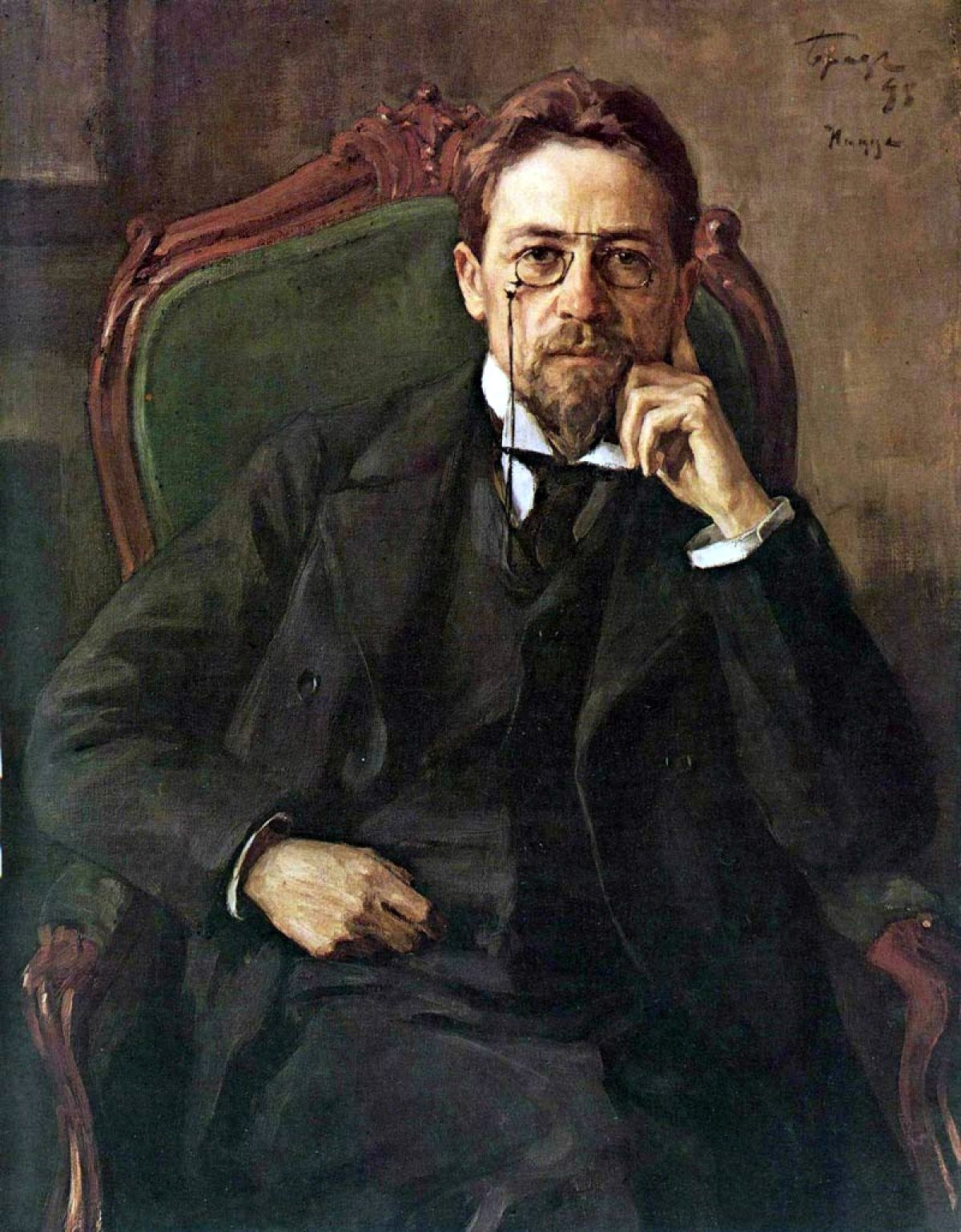
Chekhov_1898_by_Osip_Braz

Chekhov’s First Play

Battersea Arts Centre, 5th November 2018

Some venerable theatre grandees have had a crack a knocking Anton Chekhov’s first play into shape. The venerable Lev Dodin and The Maly Theatre presented a version based on Chekhov’s own text, albeit with nine characters chopped out and a jazz band inserted, which got it down to four hours from Chekhov’s original five hours plus. Based on the Maly Theatre’s latest visit to London I would imagine that was still something of a trial. (Life and Fate at the Theatre Royal Haymarket review ***). As it happens AC wrote it in 1878, aged 19, for Russian acting superstar Maria Yermolova,  diva of the Maly Theatre, but she, not unreasonably, rejected it given its rambling nature and it didn’t get published until 1923.

Chekhov obsessive Michael Frayn conjured up an adaptation in 1984, entitled Wild Honey which has had a few work-outs including at the Hampstead Theatre last year. David Hare similarly produced an adaptation for the Almeida in 2001 and it was this text, Platonov, which formed part of the Young Chekhov trilogy alongside Ivanov, AC’s first “proper” full length play, and The Seagull. the first of the four classics, in the Chichester Festival Theatre production of 2015 which then transferred to the National Theatre.

And it was this, and only this of the three, that I saw, in the spirit of curiosity, in 2016. There was a lot to like, especially in the performances of James McArdle as our eponymous Hamletian hero and Nina Sosanya’s Anna and Olivia Vinall’s Sofya who play his two main love interests, as well as, Jonathan Kent’s keen direction. But I can’t say I was bowled over. This is in part might reflect the fact that I didn’t get to experience the transition towards the multifaceted tragi-comedy of The Seagull via the ripe drama of Ivanov. It might also be that, even stripped down, Platonov in this version is just a bit samey. Our schoolteacher has charisma for sure, a worldly man trapped in a less than worldly place, who thinks a great deal and has the wit and looks to take on his babe magnet mantle. But he is also a bit of a dick, drinks too much and probably deserves what he gets at the hands of Sofya. All the material and characters which populated AC’s later world are present, but not necessarily correct.

This then is the play which Irish company Dead Centre have chosen to present in Chekhov’s last play. Only they have got it down to 90 minutes. And I think I can safely say that AC’s role as one of the daddy’s of naturalism was not in their playbook. This instead is a wild deconstruction, not just of Chekhov, but also of theatre and its practices and, probably, the pursuit of “meaning”. Russians like to talk. So do the Irish. And both are pretty good with theatre suffused with meaning and verging on the absurd.

The audience is presented with headphones on seating which the director of “Chekhov’s First Play”, Bush Moukarzel, (the actual director alongside Ben Kidd), explains in a prologue, whilst toting a gun, will allow him to comment on the unfolding “action”, and the thematic sub-texts,  as our assorted melancholic Russians, sans Platonov himself, take to the stage. Turns out the anhedonic Mr Moukarzel is not happy with the play or the performers though and proceeds to drily tell us so. This comic parody of Chekhov, via a disillusioned auteur, is what I had expected when I signed up and what I had sold to the Captain who had gamely agreed to accompany me.

It didn’t stop there though. Whilst there was plenty to chuckle at in the AC take-down, Dead Centre had, in fact, only just got started. When the director exits, permanently, the show really lets rip, taking potshots not just at Chekhov but at all manner of theatrical conventions, and the cast, and the story, bleeds into the present, at one point referencing the impact of the financial crisis in Ireland and ordering in a Chinese take-away. Platonov, the focus of the “characters” hopes and dreams, finally puts in an appearance, but in a way you least expect, but which itself proves a masterstroke. A wrecking ball, literally, swings in, to demolish the “estate’ to the tune of young Ms Cyrus. The rich landowner turns to manual labour. A doctor knows nothing about medicine. The heiress’s blood is blue. Et cetera, et cetera,

Now I can’t pretend that I fully grasped all of the references and all of the ideas Dead Centre were presenting. No matter. there were enough slack-jawed, WTF moments to keep me transfixed and enough playful returns to the obsessions of AC’s own characters to keep me guessing. I reckon that this, like much devised theatre, might have made more “sense” to the creators than the audience, but wild invention goes a long way here. The Captain, who is the very definition of phlegmatic, professed to enjoy it, and, I suspect, was inwardly chiding me for trying too hard to work out what was “going on”.

Andrew Clancey’s unravelling set, and the sound, lighting, choreography and effects of Jimmy Eadie, Kevin Gleeson, Stephen Dodd, Liv O’Donoghoe and Grace O’Hara, alongside the fully committed cast of Andrew Bennett, Tara Egan-Langley, Clara Simpson, Dylan Tighe, Breffni Holahan and Liam Carney, have give or take, been together on this since its premiere in Dublin in 2015. That explains why the deconstructed mayhem is so precise.

This is an entertainment that will stick in the Tourist’s memory for some time, he suspects. No scrub that. This is something that it will take a long time for him to forget.

Peterloo film review ****

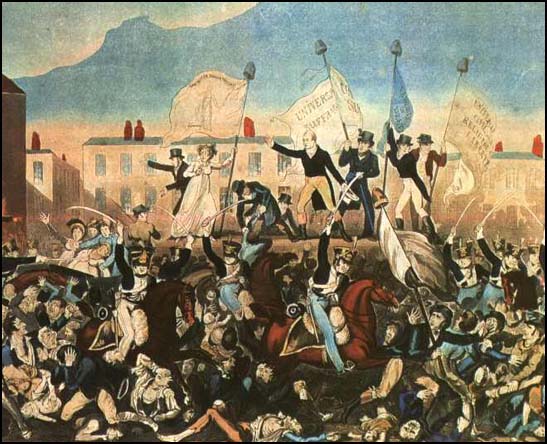
peterloo_carlile

Peterloo, 2nd November 2018

I doubt that there has ever been a more carefully researched, painstakingly assembled or more vividly imagined “history” film than Peterloo. If you like Mike Leigh (I do) you are going to love this. If you like British social, economic and political history (I do) you are going to be very interested in this. If you are concerned about the brutality with which power can crush the legitimate appeals of the ordinary person, (you should be wherever you sit in the system), this is going to stir you. If you understand the power of oratory, (words are what turn ideas into action), then this is going to draw you in. If you like the cast, Rory Kinnear, Maxine Peake, Pearce Quigley, Karl Johnson, Nico Mirallegro, Tim McInnerney, and especially Neil Bell and David Bamber, all stood out for me, but honestly this is a massive assemble of British acting at its best, then you will relish this.

However if you are after a satisfying personal drama, or complex plotting, then you might want to look elsewhere. Which given that this is a film that documents one of the darkest days in British history shouldn’t come as too much of a surprise. (Mind you this wasn’t the only massacre of peaceful protestors in the first half of the C19, more followed in the 1830s, notably in Wales). There is a lot of talking, at the meetings called by the various political radicals and reformers in and around Manchester in 1819, between the founders of the Manchester Guardian and the firebrand liberal orator Henry Hunt who was invited to address the rally in St Peter’s Field, within the family of Joseph (the real life John Lees) which is the emotional centre of the film, between the moreorless vicious magistrates who look to Government to break the sedition and between the Home Secretary and the lackeys who do his business. In this way Mike Leigh shows us why the people of Manchester and their leaders sought reform, of representation, of taxation, of the punitive Corn Laws, and why the authorities became so fearful, and were so consumed with the threat that the radicals posed, that they wilfully sanctioned a cavalry charge by volatile yeomanry and troops into the innocent crowd of 100,000 crammed into a square with minimal exits.. It is also what ensures the universal relevance of the film and the events it portrays. The power of rhetoric and the paranoia of the State are constants in the human condition.

This final scene is as awful as you might imagine but Mr Leigh doesn’t overdo the sound and fury and cleverly links the massacre back t the field at Waterloo which opens the film and which gave the events their sobriquet. As so often with Mr Leigh the film is assembled from linked montages though here many of the scenes are splendidly expansive. The interiors especially, of the powerful and the dispossessed, of Parliament, magistrates houses, pubs, meeting houses, parlours, mills, are richly detailed. The moors around Manchester offer a wild, lyrical contrast to urban industry. I think I saw parts of Lincoln standing in for historic Manchester and, of course, Chatham Dockyard, the period film’s spiritual homeland.

This was the time when “entrepreneurial” capital was looking to the State to underpin its privilege at the expense of labour, the very struggle Engels was to highlight three decades later, when, despite apparent reforms, conditions for the working class had only got worse. Peterloo may have fired up the press in London and no doubt fuelled legislative change but, as the film shows, didn’t cause the mill-owners of Manchester to question their consciences.

Any other director, without the freedom that Mr Leigh has secured, (say thanks to all the producer money here, especially Amazon), would have been forced to compromise. There are one or two occasions when, maybe, just maybe, he might had left some of cinematographer Dick Pope’s stunning assemblies on the cutting room floor, but if he had then he wouldn’t be Mike Leigh and we wouldn’t have this film. And he has ben able to spend his handsome budget to create a film of incredible ambition. In addition to Mr Pope, I would also call out the work of costume designer Jacqueline Durran and her team, the set decoration of Charlotte Watts, composer Garry Yershon’s score and finally, and I might contend most importantly, historian Jacqueline Riding.

If you don’t see it at the cinema make sure to see it at home one day. It is “serious” and it is “important”, so clear the mental decks beforehand but it is richly rewarding and, shot through with humour, it is as entertaining as didactic gets.


LSO at the Barbican: Kodaly, McMillan and Shostakovich review ***

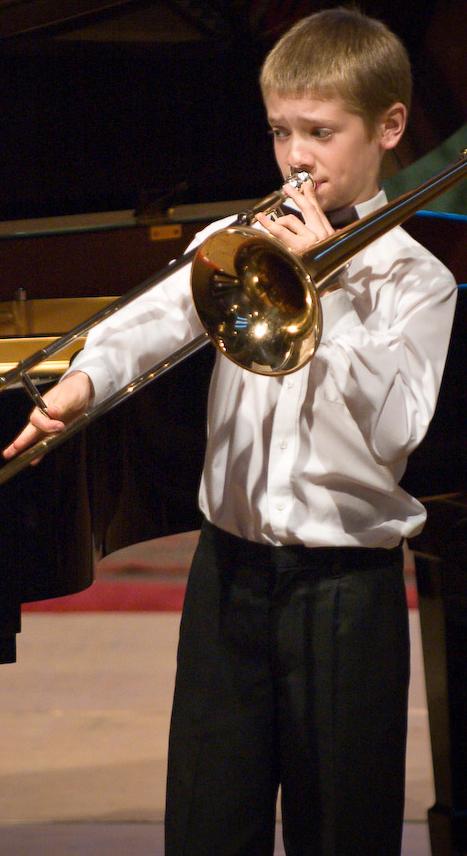
peter_moore_28musician29

London Symphony Orchestra, Gianandrea Noseda (conductor), Peter Moore (trombone)

Barbican Hall, 1st November 2018

  • Zoltan Kodaly – Dances of Galanta
  • James MacMillan – Trombone Concerto
  • Dmitry Shostakovitch – Symphony No 4

Now it might be the fact that I was a bit poorly for this performance that accounts for this lukewarm response. No need for any of you to worry. I am in fine fettle now but whatever bug it was prevented me from seeing the evening devoted to the electronic and chamber work of Iannis Xenakis at Kings Place a couple of days later, which was REALLY BLOODY ANNOYING since I am much taken with the composer and the performers, (London Sinfonietta with cellist Tim Gill who was in the hot seat for solo piece Kottos and Phlegra for 11 musicians). There is nothing quite like the sound world of Xenakis. Give him a whirl. YOLO.

Anyway back to the LSO gig. Now LSO guest conductor Gianandrea Noseda, who is recording a symphony cycle wth the LSO of which this evening will be a part, has a way with Shostakovich, witness his fine account of the Eighth earlier in the year (Beethoven and Shostakovich from the LSO at the Barbican review ****). At least I thought he did. This Fourth was quite a bit less convincing. Not up there with the interpretation of Vladimir Ashkenazy and the Philharmonia also earlier this year (Shostakovich from the Philharmonia and Ashkenazy review ****).

The Fourth is a tricky customer. In complete contrast to the more conformist, (though still painful howl of protest), that is the Fifth, this symphony has DSCH still messing around with his avant-garde roots. That is not to say that it isn’t recognisably his voice, just that it is a long way away from the inventive Stravinskian juvenalia of the First and the awful, garish, empty patriotic posturing of the Second and Third. The Fourth is chock full of brilliant, if eccentric, ideas but isn’t too bothered with the usual rules of symphonic structure. It was written in 1936, when he was 30, the year DSCH got his telling off from Stalin. It was rehearsed but then withdrawn to be finally premiered in 1961 when Stalin and Zhdanov were safely in their graves. It has two massive movements embracing a scherzo, a giant 100 plus orchestra, lots of distorted songs and dances, excesses of aggression and pathos. Mahler removed from the mountains and marched at gun-point into the factory.

It is very tricky for conductor and composer to knit all of the twist and turns, (and musical cul-de-sacs, of which there are many), together and Mr Noseda didn’t quite find his compass on this evening. This, together with my man-flu, meant I drifted in and out a bit through the 70 minutes of performance, despite the volume. Not so with James MacMillan’s Trombone Concerto. This is the first time I have heard any of his music. surprising given that he is a favourite commissionee with British orchestras. This was the UK premiere of this work with Peter Moore, the Co-Principal trombone in the LSO, as the soloist. Now young Mr Moore, just 22, is something of a prodigy, haven’t taken his chair at just 18. His breakthrough came when he won the BBC Young Musician competition aged just 12, and in a few short years he has become a renowned soloist and is a visiting prof at the RCM. There he is above, winning the BBC contest. Awwh sweet.

Now I am no expert on the trombone, (or on any instrument come to think of it), but I have ears so can tell you that Mr Moore knows what he is about trombone-wise. Wind soloists are generally remarkable people as their technical prowess and control reveals just what their instruments are capable of playing. Mr MacMillan’s concerto is a single movement work which alternates between frenetic activity and “ghostly” passages drawn from the seven note theme which is set out at the start. The soloist’s line is set against this through the slower first passage and again, in bursts, as the pace hots up. A “waltz” of sorts follows, then a rush forward punctuated by the three orchestral trombones joining Mr Moore in a blast alongside, of all things, a siren. There might have been a wind machine as well. A slower, more lyrical swell follows then a kind of mad gigue before a jam from the four trombones again.

As ever, all you can do on hearing a piece of contemporary classical music for the first time is see if it grabs you, and this most certainly did. Maybe it was the novelty of hearing what was possible with a trombone, though Daddy Mozart and Brother Haydn, alongside Berio, Xenakis, Turnage and, of course, Christian Lindberg, have all shown me this in other works, or maybe it was just Peter Moore’s amazing skill, but I do think there was enough here to mean I should look into Mr MacMillan’s back, and in future, front catalogue.

The other piece on the menu was Kodaly’s Dances Of Galanta, a kind of augmented string suite, written in 1933 and based on Hungarian dance tunes. It has its fans I gather but I can now say I am not one of them. Having not really connected with Kodaly’s string quartets I think I can safely say that he is not for me even as his mate, Bela Bartok, especially in his 6 string quartets, most certainly is.


Honour at the Park Theatre review ***

bookcase-books-bookshelves-159711.jpg

Honour

Park Theatre 200, 1st October 2018

Never, ever, marry a writer. That’s the main lesson I learnt from Honour. Jessica Murray-Smith’s 2003 play, much revived, which premiered at the NT with Ellen Atkins and Corin Redgrave, tracks the break up of a 32 year marriage when literary heavyweight George falls for calculating younger woman journalist Claudia. He leaves behind bewildered wife Honor, whose successful writing career was cut short when daughter Sophie, who is pretty livid about all of this, came along.

Across its two hours or so there is no doubt that Ms Murray-Smith covers all the bases. George’s priggish self-satisfaction. The hypocritical, “mid-life crisis”, vanity that allows him to fall for Claudia despite mocking a friend who does similar. His blustering erudition. Honor’s sacrifice of career and legacy to “support” George and bring up Sophie. Her shock, bemusement, anger and acceptance of what has happened to her. The generational gap between her and Claudia who has put career ahead of relationship and sees others in the light of what they can do for her. “Some women use loyalty as a way of justifying their sacrifice of themselves”. Claudia’s manifest certainty, at least until it starts to go wrong, as it was inevitably going to do, with George. Sophie’s anger with her Dad and exasperation with her Mum, and the gap in academic success, if not emotional intelligence, between her and Claudia, her near predecessor at Cambridge. The fading of passion in marriage, the value of monogamy, the betrayal of adultery, the idea of honour in love.

Yet the whole thing is curiously bloodless, as if the characters are acting out their reactions to each other and the situation. Which of course they are. But what I mean is the dialogue itself just doesn’t always persuade. This is not because these people lack eloquence and the ability to express themselves. Quite the reverse. They are INTELLECTUALS and that is how they talk. All the time. About everything that happens. Perhaps this is exactly how people of this class and position would behave in this situation. It is hard to connect though especially when a scene is contrived to explain to us the difference between naturalism and realism in drama.

This is nothing to do with the cast however. Producers Tiny Fires have assembled a super quartet, and under director Paul Robinson, I have to think they delivered the lines exactly as intended. If anything Katie Brayben as Claudia, who shows here that she is so much more than a musical star, and Natalie Simpson as Sophie outshone even the venerables Henry Goodman and Imogen Stubbs. I have been fortunate enough to see pretty much every professional stage performance of Ms Simpson (The Cardinal at Southwark Playhouse, as Ophelia in the Simon Godwin Hamlet opposite Paapa Essiedu, as Cordelia in the last RSC Lear, in Melly Still’s very fine RSC Cymbeline and as Juliet in Joe Hill-Gibbons’s Young Vic Measure for Measure). She is going to go a very, very long way.

Liz Cooke simple, blue set, marked with lighting strips and with a natty curl in one corner (the Park 200 has go in-the-round for this production) is intended to evoke a competitive space, a boxing ring. This is a similar conceit to that seen in Mike Bartlett’s Cock at the recent Chichester revival, also a four hander about a love triangle but, I think, far more successful, largely because the dialogue of the protagonists is riddled with uncertainty and rationality of behaviour is in short supply (Cock at the Minerva Theatre review ****).

With actors of this quality on this form, and with its squarely “middle-class” concerns (why is that the elite always insists on calling itself “middle-class”?) and flavours, I think this probably deserves, and may well get, a wider audience. Just make sure you put on your best speaking voice if you go.