The Silver Tassie at the Barbican review *****

The Silver Tassie

Barbican Hall, 10th November 2018

  • Mark-Anthony Turnage (composer)
  • Amanda Holden (libretto)
  • Ashley Riches – Harry
  • Sally Matthews – Susie
  • Brindley Sherratt – The Croucher
  • Claire Booth – Mrs Foran
  • Marcus Farnsworth – Teddy
  • Alexander Robin Baker – Barney
  • Louise Alder – Jessie
  • Susan Bickley – Mrs Heegan
  • Mark le Brocq – Sylvester
  • Anthony Gregory – Dr Maxwell/Staff Officer
  • Andre Rupp – Corporal
  • Finchley Children’s Music Group
  • BBC Singers
  • BBC Symphony Orchestra
  • Ryan Wrigglesworth – conductor
  • Kenneth Richardson – stage director

B*gger. B*gger. B*gger. B*gger. B*gger. I never saw Mark-Anthony Turnage’s second full scale opera when it was first performed in early 2000 at the ENO. On the basis of this semi-staged performance from the BBCSO as part of the In Remembrance weekend this was a terrible omission on my part for it is an extraordinary work both musically, and, given the strength of Amanda Holden’s libretto, dramatically. It is intensely powerful and moving even without a full set and staging. It beggars belief that it has not been revived since 2002, (and that it missed out on a run in Dallas thanks to political sensitivities). 

It is constructed as a symphony in four acts, Home, War, Hospital and Dance. Harry Heegan is about to return to the family flat after a football match with his best mate Barney and girlfriend Jessie. Mum and Dad are intensely proud of their son who is about to head off to the war. Next door neighbour Susie joins the party, banging on about God. Mrs Foran from upstairs also turns up escaping abusive husband Teddy. The Silver Tassie, a cup with much significance appears, the men go to war full of optimism. The War act is primarily choral preceded by the mythic Croucher, representing, I think, the war dead and intoning Old Testament-ish doom. An officer complains at the doctors in the Red Cross station. A football game is delayed as the battle begins. The story then switches to the Hospital where an angry Harry is now paralysed, Teddy blinded and Jessie, who refuses to see Harry, is now coupled up with Barney, who saved Harry’s life. The final act sees Harry and Teddy spit out their pain and bitterness at those who still have their futures at the communal dance. 

The opera is based on Sean O’Casey’s eponymous plan and it is therefore we who have to thank for the gripping drama. Whilst it is never made explicit, O’Casey intended that the Heegan family, and the rest of the community, should hail from the East Wall, a working class district of Dublin, adding further pungency to the message of the play (and opera) because, at that time, Ireland was still part of the UK and the republican movement was divided on whether the country should be involved in the war. So as some young men like Harry, Barney and Teddy headed off to war others prepared for insurrection at home. 

O’Casey’s play was rejected by WB Yeats, then head honcho at the Abbey Theatre in Dublin, when it was submitted in 1928, reflecting its political sensitivity. This was after the success of his first three major plays, The Shadow of a Gunman, Juno and the Paycock and The Plough and the Stars. So it premiered at the Apollo in London’s West End. There have been a fair few plays which rail at the futility of war and its consequences on the individuals who fight in it, but I doubt many match the raw power of The Silver Tassie. 

So Amanda Holden, (to be clear not the airhead judge on BGT), and M-AT had something monumental to work with. Even so, and in no way intending to downplay Ms Holden’s contribution which provides M-AT with multiple opportunities to show off his trademark stylistic jagged juxtapositions, it is the score that takes the breath away. M-AT had already shown his dramatic flair in his first opera Greek, and his compositional skill with orchestral pieces such as Three Screaming Popes, Momentum, Drowned Out, Dispelling the Fears and Silent Cities, especially when it came to percussion and brass, but The Silver Tassie is on another level.

The symphonic structure is inspired by mentor Hans Werner Henze’s The Bassarids, with the first act setting out the main ideas and themes, the second the Adagio slow movement, brought to life by the large scale choral scenes (echoing the more Expressionist feel of the act in SO’C’s play), the third a Scherzo and the last act a “dance” finale with “off stage” band. This structure offers rhythmic backbone and plenty of tunes derived from song, (including Robert Burns’s own Silver Tassie), and dance, as well as repeated motifs, which make it easy to follow and show off MA-T’s uncanny ability to capture the emotional interior of the characters. There are episodes of rich orchestral colour but there are also plenty of more economic orchestration.  The score should give the singers plenty of space, but just to make sure the cast were miked, (though M-AT, a couple of rows in front of me, needed to dash up to the sound desk to get the balance right early on).  The second and fourth acts are up there with the best I have ever heard on an opera stage. Even allowing for the fact that this wasn’t an opera stage. 

Sometimes this semi-staging lark can leave singers looking a little awkward unsure of how much to commit to performance versus voice. Costuming can also, sometimes, appear incongruous. Not here though, at east once the first act go going. There were some outstanding vocal performances, notably for me from Sally Matthews and Claire Booth, and Marcus Farnsworth as Teddy was very persuasive. But baritone Ashley Riches as Harry, even from my two perches (side stalls first half, back of circle second), was bloody marvellous not just in his singing but also in the way, pre and post wheelchair, he projected Harry’s exuberance and then his pain into the whole auditorium. 

Now I have nothing to compare it to but, given just how amazing this was, I have to assume that Ryan Wrigglesworth and the BBCSO, and the BBC Singers and Finchley Children’s Music Group (complete with ensemble writhing) got as close as possible to the heart of the music. 

You can listen to it for a couple more weeks on BBC Radio Opera on 3. Do yourself a favour and do so. 

And can I beg the ENO to find a way and time to revive this. With Mr Wrigglesworth on the podium. I will chip in a few quid if it helps. 

Forgotten at the Arcola Theatre review ****

Forgotten

Arcola Theatre, 10th November 2018

I was much taken, if not entirely convinced, by the British East Asian Yellow Earth Theatre company’s version of Tamburlaine at the Arcola 18 months ago. And this co-production, with Moongate, of a new play, Forgotten, by Daniel York Loh, which kicked off at the Theatre Royal Plymouth, sounded like it needed seeing.

Daniel York Loh looks like he is a busy fellow. When he is not writing he is acting, directing films or performing in a folk trio. Busy. Just like this play. It started off as a 5 minute script. It now runs to a couple of hours. Apparently his first draft ran to 300 pages. DYL has a lot to say and he means to say it. Mind you this is a story evidently worth telling. Giving a voice to the 140,000 Chinese labourers who left China to initially assist the French, and then the British, effort in WWI. Largely written out of history.

In trying to cram in as much of his research into these events as he can, the appalling famine and poverty blighting China at the turn into the C20, the hierarchical, violent and patriarchal village society, the volatile political situation and domination by foreign powers, the dream of escape and wealth, the Western view of China, and the Chinese view of the West, and Japan, at the time, the experience of the labourers in France and their shabby treatment, and their legacy, after the War, DYL offers a little too much exposition, a slight overdose of plot and leaves his characters looking a little too one-dimensional. Especially given only a six strong cast, (with some doubling up), the compact Arcola studio space and an experiment in form, namely having his band of villagers putting on a Chinese opera as they embark on their adventure.

So the cast and the creative team, director Kim Pearce, designer Emily Bailey, composer Liz Chi Yen Liew, lighting designer Jessica Hung Han Yun, sound designer Luke Swaffield and movement director Quang Kien Van had their work cut out to make this work.

Work it does though and this I think is largely down to the fact that, weaved into the important history lesson, there is a believable human drama here, especially when the friends get to the Western Front in the second act. The play begins at the end but I’ll keep schtum on that. The cast are performing an opera which tells the tale of a Miraculous Traveller, (I am afraid I know nothing about Chinese classical literature),  paralleling the story of the villagers. When all calms down we are in Horse Shoe Village in Shandong province in 1917 where Old Six (Michael Phong Le) and his wife Second Moon (Rebecca Boey) are struggling to earn enough to feed their young child. Big Dog (Camille Mallet de Chauny) is the village outcast, addicted to opium. Eunuch Lin (Zachary Hing) was castrated in a failed attempt to secure a position in the Emperor’s household. All are subject to the cruel whim of foul-mouthed Headman Zhang (Jon Chew). They agree to be recruited into the Chinese Labour Corps (from 1917 China declared war against Germany and Austria-Hungary) meeting the educated Professor (Leo Wan), and when they get to France, Wild Swan (Jon Chew again, equally potty mouthed) along the way. 

Whilst there are battlefield scenes DYL wisely cuts these with other encounters and other characters, as well as the highly stylised opera, to offer multiple perspectives on the experience of the friends. This shines a little light on the more universal East Asian diaspora myth, “silent”, “hard-working” but largely disregarded and culturally held at arms length. 

A valuable, if slightly awkward epilogue, explains what happened to Shandong province after the war and how the Chinese contribution was, literally, painted over in the now largely Americanised Pantheon de la Guerre. (America has a long history of mocking the contribution of France in global conflict). China was properly shafted at Versailles. Most of the surviving CLC returned home, but a few thousand stayed to build a Chinese community in Paris. The British CLC were given a medal, but it was bronze, not the silver awarded to everyone else who fought. There is a cemetery at Noyelles-sur-Mer on the Somme which honours 842 CLC dead. 

So overall Forgotten is an ambitious play, generously and vigorously told by an excellent British East Asian cast (Leo Wan, in particular, is as good here as he was in Tamburlaine and The Great Wave, and I look forward to seeing Michael Phong Le again). Lucy Bailey’s set is effective, Kim Pearce’s direction manages to maintain the momentum even as the scenes jump around. It may not quite be the finished article but it definitely deserves a wider audience. I spy a couple of harsh reviews in the national press. Ignore them. 

Henry V at the Tobacco Factory Bristol review *****

geograph-2470375-by-Steve-Daniels

Henry V

Tobacco Factory Theatre, 22nd September 2018

Hello. I feel another bout of hyperbole coming on. It could just be that cumulative exposure is making me realise what the smarter punters and all the luvvies have known for hundreds of years, that nothing comes close to Shakespeare. It could be that my first visit to the Tobacco Factory has revealed a near perfect space, intimate but airy, in the round, with the right vibe of industrial chic, (and a good value curry in Thali next door). It could be that the Shakespeare at the Tobacco Factory company, under retiring founder Andrew Hilton, continues to churn out top quality productions of the Bard, and a few others, as it has done since its founding in 2000. Last year’s Othello set the ball rolling for me (Othello at Wilton’s Music Hall review ****) and I now intend to make a note in the diary for future pilgrimages to Bristol.

However I think the special ingredient in this particular production lies in the direction of Elizabeth Freestone. Ms Freestone is not afraid to offer up a contemporary slant on big Will, which usually works for me. Indeed she is the director behind Jeanie O’Hare’s composition of Queen Margaret at the Royal Exchange Manchester as we speak. Queen Margaret is one of Shakespeare’s best, no question, and I gather the magnificent jade Anouka is doing the business in the title role, though she will need to to get anywhere near the visceral walloping Sophie Okonedo gave the character in The Hollow Crown. (Can’t wait to see ms Okonedo as Cleo at the NT which the critics are loving).

What is patriotism? How to tread the line between the glorification and the senseless horror of war? What makes a “national hero” and how does this get weaved into a nation’s view of itself? How does Henry go from playboy Hal to warrior king? Is he just a cipher, whatever we want him to be? Sincere, scheming or both simultaneously? How to think about Katherine? Simpering pawn or power broker? A lot of good questions to ask at any time but especially when a bunch of utter cocks are playing dangerously fast and loose with our national identity. Once again Shakespeare shows he is the man for all ages when it comes to shedding light on the business of politics.

Lily Arnold’s blissfully simple set, four metal cages filled with stones, is put to work as battlefield and meeting hall, military and political space. A quartet of strip-lights, (recycled from Othello I’ll warrant), megaphone, radio and mic, suitcases and kit-bags, bottles of voddy, clip-boards, melancholic Union Jack and Tricolore. It’s all you really need. Less can so often be more in both the history plays and the tragedies. Go with the standard battle-dress/fatigues of so many modern-dress productions because it just works, but then add some twists to underscore the symbolism. A tutu dress for Mistress Quickly, a sharp suit for Cambridge and the King of France, a T shirt for King Henry, “the Artist formerly known as Prince” – I loved that – and turn Katherine into an imposing skinhead with elegant purple frock-coat suit and DM’s to match.

Cut out superfluous roles, in this interpretation, and double up (most intriguingly Chorus/Burgundy, Canterbury/King of France, Cambridge/Fluellen, York/Bourbon and Nym/Orleans). The armies are interchangeable after all. Lose a few of those pesky Dukes on both sides, Westmoreland, Exeter and York on the English side, with just Cambridge to face the traitorous music, and Bourbon and Orleans, and eventually Burgundy, on the French side. Make Exeter a skilled, female, negotiator. Slim down the English and French armies as well, and lose Queen Isabel and, in a real coup, merge the Dauphin into Katherine (and thus make her relationship with Orleans potentially very weird). And turn the Chorus into a detached, Bristolian, history lecturer.

Start off with a big party night choreographed to Boys Will Be Boys. Make Henry physically and metaphorically begin to stand tall as we move through the battles and make Katherine fight him and the English tooth and nail to the end. Don’t make too much fuss about those tennis balls. Let Henry whizz through the “breach speech”. Turn Katherine’s comedy English/French body part translation into a bitter and furious lament for lover Orleans which scares Henry (and us) witless. See Montjoy humiliated in defeat. Watch Henry only just keep it together after the brutal dispatch of Bardolph then wipe away the tears to receive the patronising French embassy. Ensure maximum ambivalence for our Harry as he wanders the camp for this is surely where the mantle of power is most keenly felt. Believe that Henry is probably bluffing when he threatens the citizens of Harfleur so belligerently.

The comedy relief of Pistol, Nym, Bardolph, Quickly and the Boy doesn’t fare quite as well in this production but their cannon fodder status, even as accident, certainly does. When Exeter reads out the list of the English dead at Agincourt the Boy is “none else of name” but we know his pointless sacrifice. A comparatively modest Harry, as here, makes Pistol’s over the top grandiosity less of a counterpoint. Fluellen is as annoying as ever though.

Now young Ben Hall has a bit of history here having played Henry V at the Guildhall when a student. He obviously has the genes for the theatre being the grandson of Sir Peter, nephew of Edward, (now moving on from Hampstead Theatre), and son of producer Christopher. You probably know him as the bespectacled tutor of Gerry and would be suitor of Margo in The Durrells off the telly, (a Hall family affair of sorts). He left an impression in the recent RSC Coriolanus but here he steps up and given a very interesting performance. Deliberatively tentative and awkward in parts, not entirely conversational but certainly not a master of oratory, with shaved head and red beard, he is believable as soldier if not, even in victory, as king. He spits out the lines too rapidly at the start but as Henry rises to the challenge so his speech becomes more measured, though never entirely, assured, as his disturbing “wooing” of Katharine at the end shows. He is not Olivier’s square-jawed hero, Branagh’s reborn statesman or Lester/Hytner’s war criminal hardman. Ben Hall’s Hal is constantly “wrestling with the moral responsibility of what it means to be a good leader” as Ms Freestone says in the programme. That crown certainly still lies uneasy on that head.

Offering us an androgynous Katherine who is near Henry’s equal in terms of destiny, passion, integrit,y as well as duplicity and xenophobia, with the same hair-cut to boot, is inspired. It is hard to take your eyes off Heledd Gywnn. She prowls the stage with an air of aggressive disdain, coming on all Joan of Arc like, (she popped up a decade, and one play, later). You just know that marriage isn’t going to solve anything at the end.

I was also drawn to the performances of Joanne Howarth as the patient Chorus who at one point is moved to tears, Alice Barclay’s largely composed Exeter, Luke Grant’s York/Bourbon, Zachary Powell’s Nym/Orleans, David Osmond’s verbose Fluellen and Melody Brown’s seasoned Gower. The re-gendering here doesn’t shout out. It just works.

Matthew Graham’s contrasting lighting design and Giles Thomas’s martial though still unobtrusive sound design all contributed to this thoughtful interpretation and experienced movement director Lucy Cullingford, even with this thinned out cast, was at the top of here game. There are some astonishing tableaux in this production, though nothing feels consciously artful. Elizabeth Freestone and Lily Arnold took visual inspiration from the battlefield art of WWI, (go see the Aftermath exhibition on now at Tate Britain for some of the most striking). I can see that and it also reminds us just how after this corner of Northern France has been the host of carnage. (Aftermath at Tate Britain review ****).

For me this is a near perfect production, considered, insightful, innovative and genuinely relevant. The company is drilled to perfection and battle hardy and it looks and moves beautifully. Like I say at the top, it could just be that nobody does it better than Will, but there are many ways to skin the ambiguity of this particular dramatic cat, and it still needs an inspired creative team and cast to bring the verse to life. STF is taking the production on tour so if you are lucky enough to be anywhere near these venues on these dates I implore you to get tickets.

9-13 Oct – Stephen Joseph Theatre Scarborough
16-20 Oct – Dukes Theatre, Lancaster
23-27 Oct – Malvern Theatres
30-3 Nov – Theatre Royal, Bury St Edmunds
6 -10 Nov – Exeter Northcott

Aftermath at Tate Britain review ****

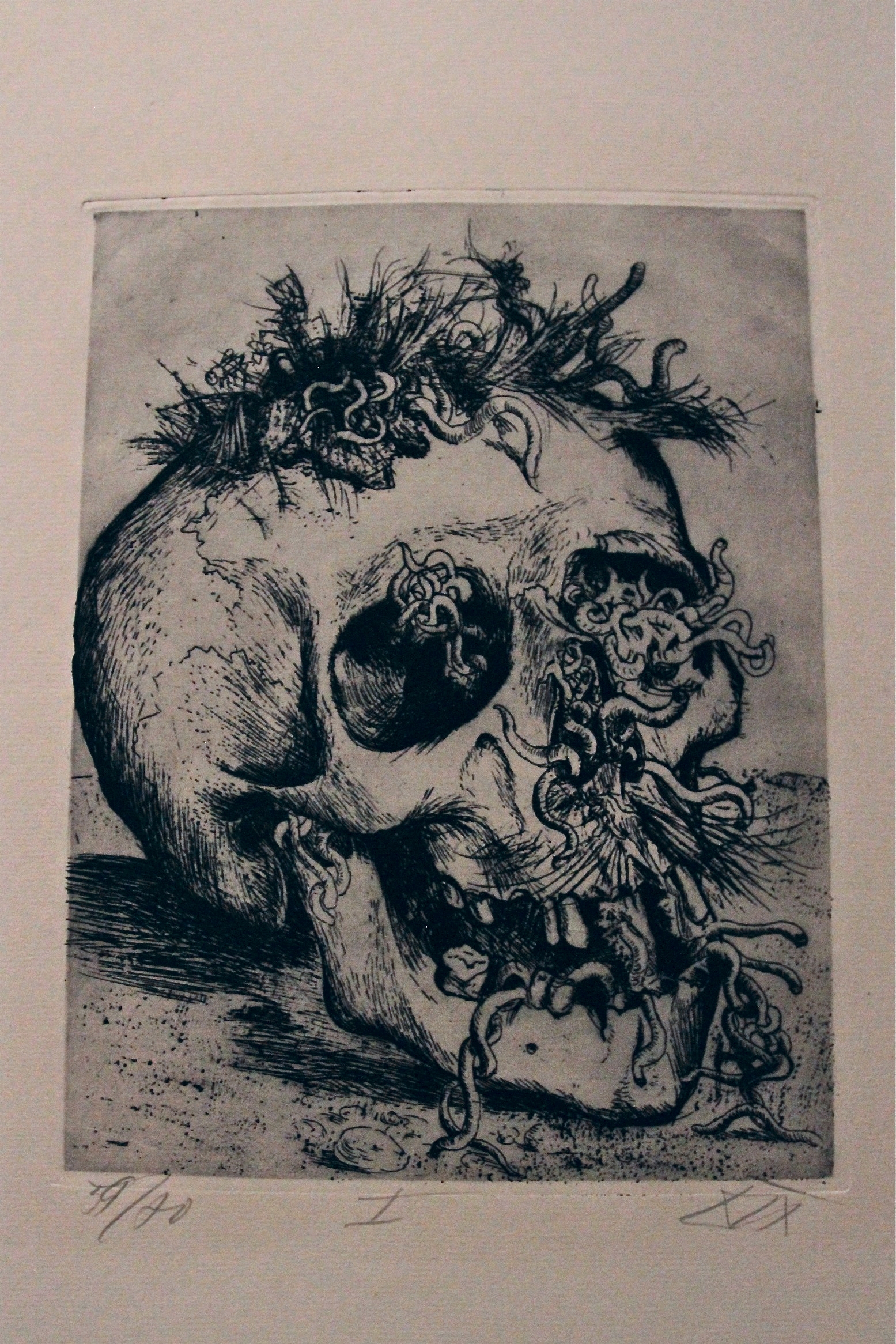
Otto Dix Skull from The War (1924) - http://www.moma.org/collect

Aftermath: Art in the Wake of World War One

Tate Britain, 29th August 2018

Historians abhor teleology these days. It’s a tricky business identifying events that “changed the history of the world”. For us simple layfolk though the First World War must surely mark a defining shift in the human experience. The scale, (over 10 million dead and 20 million wounded worldwide), the use of technology, the commitment of capital, the ideological fallout, the death-knell of empire. Take your pick. Things really changed after that.

We are approaching the centenary of the end of that War. Time to contemplate. And, here, a time to review the interpretation that artists put on this period. Well specifically the period after the war, (the works span 1916 to 1932). A smart idea. There are innumerable works of art that document the war itself, the exhibition kicks off with many of the most striking, but exploring the aftermath allows for insights into the different ways artists responded to the war’s legacy and to the, maybe, new beginnings. It also means the curators, led by Emma Chambers, were able to extend beyond British art and into Europe, primarily Germany and France (London, Paris and Berlin to be more exact). There are some stunning works on show here, a valuable history lesson, and more diversity of message than you might expect. You’d be daft not to take a look. Particularly if you have any interest at all in this period of history. Which, inevitably, you should. Art helps us to remember and understand in a way that words something fail to convey.

Room 1 looks at the devastation wrought by the war. Many of the artists here were participants in the conflict, either as soldiers, or in an official capacity. The polity back home generally didn’t want to know, nor did the authorities want them to see, the full horror of war. The depictions of battlefields, mud, pitted with craters, shorn of vegetation other than twisted tree stumps, eloquently made the point. Before the war many artistic movements, (Futurism, Vorticism), grappled with the impact of fast changing technologies on society. This impulse found its way into their war art.

The experience of war drained their optimism. Some artists could not contain their shock and anger at what they saw and went beyond symbolic representations of death, such as the abandoned helmet, to show actual bodies. The room also contains some fascinating early footage of the devastation in Flanders, filmed from an airship, and, intriguingly, guide books to the battlefields to help those who visited to pay their respects.

The most devastating works of Paul Nash (Wire), CRW Nevinson (Paths of Glory) and, most interesting here, the long neglected and once vilified Irishman William Orpen (Zonnebeke and Blown Up), may be familiar but are still striking, as is Luc-Albert Moreau’s shocking Chemin des Dames Assault. Richard Carline’s painting of a battlefield from the air (Mine Craters At Albert Seen From An Aeroplane) is intriguing but the most prominent works are the two sculptures, Jacob Epstein’s machine man Torso in Metal and Wilhelm Lehmbruck’s The Fallen Man, maybe the most famous loaned artwork here. Lehmbruck never escaped the horror of war: he killed himself in aged 38 in 1919.

This is not an exhibition of specifically war art though and, with so much to choose from both in the Tate’s collection and down the road at the Imperial War Museum, the curators have shown admirable restraint. They make their point though.

Room 2 intelligently moves on to how the WWI has been remembered, specifically through war memorials. Cenotaphs in Paris and London, dedicated to just one of the countless unknown dead, created a focus for remembrance from their inauguration two years after the armistice to this day. No national memorial appeared in Germany until 1931 but, like Britain and France, local memorials were commissioned. These memorials combined the abstract with, often, detailed figurative representations of the men who served. We were struck by Charles Sergeant Jagger’s dramatic, realist figures and by Eric Kennington’s more cubist maquette for the Soissons Memorial. BUD, my accomplice for the afternoon, was also impressed by the monumental lines of Marcel Gromaire’s famous War portrait and I had my first dose of the master Stanley Spencer with Unveiling Cookham War Memorial.

However it is hard not to drawn to Ernst Barlach’s extraordinary angel The Floating One. Barlach’s sculptures, along with Lehmbruck’s, were largely destroyed by the Nazis, who viewed them as “degenerate” but a mould of this piece survived. There is also, in a similar “Expressionist” vein, a sketch for The Parents monument by the genius Kathe Kollwitz (the model for The Floating One we see more of her later in Room 5). Barlach initially supported the Great War: his participation changed this.

Take a good look too at another Orpen painting, To the Unknown British Soldier In France, apparently a coffin draped with a Union Jack at the entrance to the Hall of Mirrors at Versailles, commissioned at the time of the Treat signing. Read its history though. It didn’t start out this way. Lack of respect, censorship, class division. Decide for yourself.

Room 3 offers yet another perspective on the years following the War. In our world, for those of us lucky enough not to live amongst conflict, images of war appear commonplace but the reality of its human impact is still largely concealed. In the 1920s, in Europe, this was not so, as the plight of damaged war veterans, in economies still disordered, was visible to all. The works here are some of the most poignant, and most angry, in the exhibition. In Britain artists were employed to create a medical record of the injuries suffered by the soldiers. The pastel sketches of Henry Tonks from the Hunterian Museum were not originally intended as “art” but they create a powerful impression. In Germany the veterans were the subject of far more explicitly political paintings and drawings from the hands of Otto Dix, George Grosz, Max Beckmann and Kathe Kollwitz.

This is the most powerful art in the exhibition, especially the prints from these artists and Georges Rouault in Room 5. Beckmann’s Hell series of lithographs from 1919, the Der Kreig etchings of Dix from 1924 and Kollwitz’s similarly titled etchings from 1922 and Rouault’s sacred Miserere et Guerre photo-etchings from 1927 demand your attention.

Whilst some of the Dadaist work in Room 4 fails to leap out at me, and the Surrealist painting from the likes of Max Ernst and Andre Masson can be safely ignored in my view, do seek out John Heartfield’s photo-montage, After Twenty Years: Fathers and Sons, and then delve into this astoundingly modern artist’s output (and life) inter- and post- war, but especially from the 1930’s.

In Room 6, “Return to Order”, the curators show how the geometric and mechanised avant-garde forms and processes which dominated Western art before the war gave way to more realism and naturalism and a return to the traditional genres of portraiture, landscape and religion through the late 1920s and early 1930s. This despite the still chaotic economic and political backdrop, Pastoralism and classicism were reborn. I am not entirely convinced by this argument but it does give an opportunity to show off another Spencer, Christ Carrying the Cross, Old Military from Franz Lenk and soothing landscapes from the Nash brothers in sharp contrast to their war paintings.

Room 7, in contrast, shows that all was not necessarily well in inter-war society linking back to the political art of the immediate post war period and highlighting the deep divisions between rich and poor. Artists unsurprisingly sided with the left in the profound idealogical arguments that characterised the period. George Grosz’s Grey Day, which contrasts, once again, a veteran with a privileged capitalist, is one of the best paintings in the exhibitions.

The final room then goes a little bit off-piste by bringing together a diverse collection of responses to the rise of the “New City”. Mind you it does make you think about just how quickly the nascent optimism on show here would be snuffed out again by an even more devastating global conflict.

Overall this is an ambitious, powerful, valuable and often still shocking survey of the artistic response to the “Great War” made especially interesting for me by the rage, fury, sorrow and despair contained in the loans from various collections in Germany, (and the George Economou Collection in Athens). There are more than enough unexpected contributions amongst the big hitters and much genuine, if occasionally, unfocussed insight into the artistic response to the impact of war. If you have any interest at all in this period or subject then I would be mightily surprised if you haven’t already gone, or intend to go. That would be the right thing to do.