
Leopoldstadt at Wyndhams Theatre review ****

Leopoldstadt

Wyndham’s Theatre, 29th January 2020

A new play from the venerable 82 year old Sir Tom Stoppard. Not our greatest living playwright. That is Caryl Churchill, but he does know his way around a text. So booked early, for early in the run and before knowing too much about it.

You will likely know by now that Sir Tom has chosen to delve into his family’s own history and his Jewish heritage for this play, which I can see would be a fitting swansong, if swansong it is. He was born in Czechoslovakia, but escaped to Britain with his family ahead of the Nazi occupation, and was educated in India and then Yorkshire. Whilst he had become aware in the 1990s of the full extent of his roots, (which his mother had chosen to shield him from), as well as the fact that many of his relatives had died in Nazi concentration camps, and he had indicated that he would likely write a play based on this history, he had been ambivalent about making it too personal.

I don’t know how much of the plot, and specifically the key events which punctuate it, are drawn from TS’s own family history, nor indeed how closely the characters resemble his own forebears, (though the character of Leo is surely autobiographical), but there is no doubting his emotional investment in this grand saga. Particularly at the end, in an epilogue which is as moving as anything you might ever see on stage.

We kick off in Vienna in 1899 at a gathering of the Merz and Jakobovicz families at Christmas (and later passover). Bullish businessman Hermann Merz (Adrian Scarborough, on his usual top form) is married to gentile Gretl (Faye Castelow), having, pragmatically, converted to her Catholicism. They have one son Jacob. Hermann’s sister Eva (Alexis Zegerman) is married to obsessive mathematician Ludwig Jakobovicz (Ed Stoppard, yes, he is) who has two sisters, Wilma (Clara Francis), married to Ernst (Aaron Neil), and Hanna (Dorothea Myer-Bennett, continuing the Tourist’s fortunate habit of seeing everything she does on stage), who is married to Kurt (Alexander Newland, who we meet later on). With their various kids, cook Poldi (Sadie Shimmin), parlour maid Hilde (Felicity Davidson), nursemaid Jana (Natalie Law) and all presided over by Grandma Emilia (Caroline Gruber). Thank goodness for the family tree in the programme which the Tourist furtively turned to early doors.

With this many characters, and to set the contextual and didactic balls rolling, and because this is what Sir Tom does best, there is a lot of serious chat going on, as we learn how these well-to-do, educated and largely assimilated Jewish families see themselves, their faith, culture and economy, at a time of great change in Europe’s still premier metropolis. And, inevitably in the first act, bucketloads of exposition. The Merz family doesn’t live in Vienna’s Leopoldstadt district but its status as the centre of Jewish life in the city looms large. The anti-semitism is subtle as well as overt, but its deep historical roots are unmistakeable. Hermann tries and fails to join the jockey club, Ludwig’s hopes of a professorship are far-fetched, and ugly truths are revealed, along with the superb Luke Thallon’s cruel Aryan officer, Fritz.

The play really gets going then after the interval, as we move first to 1924, another family gathering for a circumcision, meeting the cosmopolitan children of the four couples, and then, momentously 1938, and the grandchildren. This is the cue for high drama, for example, the forced repossession of the Merz family home, and eviction, Kristallnacht (vividly realised through Adam Cork’s brilliant sound design), the memory of Pauli (Ilan Galkoff) lost in the WWWi trenches. Then, finally to 1955, when Leo (Luke Thallon), the English emigre son of Nellie (Eleanor Wyld), daughter of Eva and Ludwig, and Nathan (Sebastian Armesto, also doubling), son of Sally (Ayve Leventis), daughter of Wilma and Ernst, are brought together by Nathan’s sister, Rosa (Jenna Augen). This, or something like it, is, I’d like to think, how Sir T first encountered his own history, and planted the seed for Leopoldstadt.

The dialogue is direct, even during the debates on, variously, identity, assimilation, prejudice, Zionism, the recurring history is familiar and there is none of the intellectual trickery that powers Sir T’s back catalogue though there is a bit of heavy lifting from a recurring cat’s cradle metaphor. The family’s beliefs in science, justice and rationality are crushed by the rise of Nazism, but it is the personal loss more than the collective that, eventually strikes home, with Hermann’s descent the most affecting. It is a slow burn mind you, and Patrick Marber’s direction is perhaps a little too respectful. Richard Hudson’s painterly design. together with Neil Austin’s lighting and Brigitte Riefenstuhl’s costumes ooze period detail, but further hinder any opportunity for many of the 26 strong cast (not including the kids) to make a distinct mark.

Still if this is to be Sir T’s last play then why shouldn’t he tell his story his way, given his immense contribution to British and World theatre across his career. At our early viewing (the SO was a more than willing accomplice) the audience was engrossed throughout, if nor utterly captivated, and I suspect many will have been grateful to have had their emotions, perhaps even more than their intellects, engaged. The story of this horror has been told in many ways before, and should continue to be told, but Sir T has found a way to tell it that, whilst not theatrically radical, is profoundly moving, as well as stuffed with learning.

I have no doubt it will be back when we reach the other side, and it is not hard to see it being repurposed for the small screen.
Measure for Measure at the Barbican Theatre review ****

Measure for Measure

Barbican Theatre, 8th January 2020

I like Measure for Measure. I find the weird cocktail of morality play and satirical “comedy” fascinating. No one comes out of it well, not even the ostensibly virtuous Isabella who goes into bat to save brother Claudio from death, but is prepared to sign off on a pretty dodgy deal to further this aim. The stench of corruption infects even the pure. This makes it a very “modern” play I guess, which is why it is getting multiple airings, with much to say, in the right hands, about the complexities of power and desire. Not quite at the top of Will’s oeuvre but certainly in the top ten. Which, for your edification, I set out below.

  1. Othello
  2. Hamlet
  3. Julius Caesar
  4. Much Ado About Nothing
  5. Richard III
  6. Coriolanus
  7. Henry VI, Part I, II, III
  8. Richard II
  9. Measure for Measure
  10. Pericles

What no Lear? Or Dream? Or Romeo and Juliet? Or Tempest? Or Twelfth Night? And Coriolanus included? And, are you mad mate, also Pericles? Well yes I like the latter’s daft fantasy travelogue, even those bits which stem from the unsubtle hand of George Wilkins, and Coriolanus strikes me as the very model of classical tragic hero, not prone to bouts of soul sharing pace Lear, Macbeth or your boy Hamlet. And the list shows pretty clearly that I like history plays. Power, politics, virtue, honour, social as well as individual psychology, the ruler and the ruled, corruption, narcissism, jealousy. These are the things that interest me. The dark side of human nature that Will explored forensically and which make many of these plays relevant to our, or any other, time. Don’t worry though. I am not a weirdo. Much Ado About Nothing is in there.

Of course much depends on the productions I have seen and I think I have been blessed in recent years in the history and “Roman” play departments in particular. Maybe one day I will see a Macbeth or Lear that truly persuades. That’s the thing with Shakespeare. Ultimately malleable, such that creatives and cast can usually find something, language, message, narrative, character, spectacle, in which to delight and illuminate.

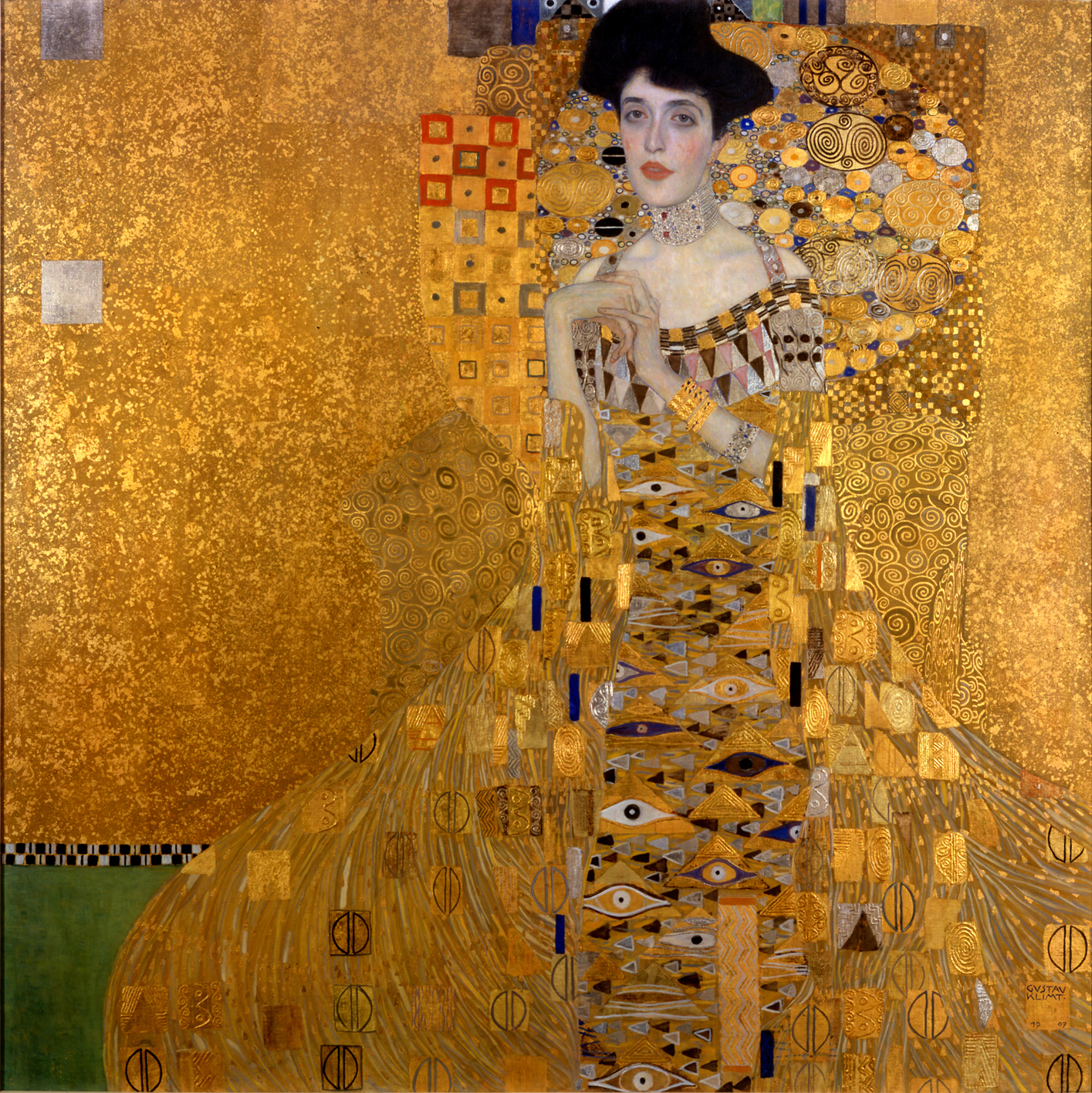
As here. Gregory Doran is probably the most reliable Shakespearean director of our time, useful when you are the big cheese at the RSC. Maybe not the most spectacular of interpreters but always clear in purpose and execution. No gimmickry with this, which I think is his first stab at MFM, unless you count setting the play in fin de siecle Vienna, a point in the city’s history when virtue and corruption, intellect and expedience, reached there apogee, and, arguably laid the ground for what followed, good and bad, very bad, in much of the Western world through the first half of the C20. It is almost as if big Will, with his fictional late C16 fictional Vienna could see what the real city would become three centuries later. (I gather this connection has been made in previous productions).

Otherwise GD, and designer Stephen Brimson Lewis using the set structure common to the season’s productions of As You Like It and The Taming of the Shrew, with added monochrome projections as well as 1900s period costume, don’t muck about with text or cast. Paul Englishby’s score echoes with waltz. Escalus, in the hands of Claire Price, is re-gendered, as is the Provost (very effectively by Amanda Harris), but then again Mistress Overdone is, campily, handed to Graeme Brookes. But there is no wholesale gender politics reinterpretation here. And the text is, I think, complete so that said Overdone, Pompey (David Ajao versed with Afro-Caribbean sonority), Elbow (Michael Patrick) and the major, (Joseph Arkley especially as supercilious Lucio), and minor fops and fop-esses, all get their due, though the wordplay comedy requires our close attention.

RSC veteran Antony Byrne unsurprisingly nails the Duke/Friar, a man convinced of his own righteousness as he is blind to the flaws in his exercise of power, James Cooney is a quietly desperate Claudio and Lucy Phelps excels as the virtuous novice, at least until the scheme to uncover Angelo’s hypocrisy is set in motion, Isabella. But the whole is held in place by a marvellous performance by Sandy Grierson as said self-scourging Angelo, who really gets to the heart of said Angelo’s conflicted nature. Or is he, as here, not really quite as conflicted as he makes out, revelling in the opportunity to root out Vienna’s impurity whilst lusting after the eloquent nun. The ghost of an approving Freud was probably sitting in the gods.

Mr Grierson stood out in Jude Christian patchy OthelloMacbeth at the Lyric, Pity at the Royal Court and in As You Like It (of which more to come) in this RSC season but, unfortunately, I have missed him in the other RSC roles he has played in recent years, and on various stages in his native Scotland. I suggest you ensure you see him next time he treads any accessible boards.

The trick in MFM, assuming no re-interpretation, is having the two main characters in Isabella and Angelo both repelled by sex, but also, somehow, fascinated by the idea of desire, which drives the pivotal argument scenes between them. They are both, literally in joint prayer, holier than thou, at least until Angelo cracks. GD’s clear headed direction, and Lucy Phelps’s and Sandy Grierson’s delivery of the text, expertly unfolds the dichotomy between the sacred and the profane. And there is no hiding from the fact that Angelo, and, through his casual “proposal” at the end, the Duke, even maybe against his preference, are choosing to be rapists.

Lots of detail, well thought through, ambiguity and double binds not brushed away. This is not a problem play. The problem, as ever, is us humans. If you want a contemporary feel-gooder with a happy ending go see Everybody’s Talking About Jamie.