Snowflake at the Kiln Theatre review ****

Snowflake

Kiln Theatre, 28th December 2019

Lucky family. Never know what Dad is going to serve up as their Christmas theatrical treat(s). And always careful to at least try to conceal their disappointment. Having banked the virtual certain success of Mischief Theatre’s Magic Goes Wrong (of which more to come), and comforted by the reviews from its original run in Oxford last year, the Tourist felt confident enough to take a punt on this. And BD had already enjoyed one Snowflake provocation in the form of the second half of the incomparable Stewart Lee’s new show.

Now IMHO Mike Bartlett is incapable of writing bad plays, or indeed screenplays. They may not always come off entirely, as here, but there will always be enough in terms of concept, narrative, character, text, idea, form, to get your teeth into. He doesn’t mind tugging a few strings, emotionally or in terms of argument, or taking a few liberties with construction. Which explains Snowflake’s, appeal, and, slight, downfall.

Andy (Elliot Levey, who has a habit of popping up in all manner of fine work, which, in some cases, is partly down to him) has hired a church hall in Oxfordshire on Christmas Eve. We soon lean that he is rehearsing for a possible meeting with his estranged daughter Maya (Ellen Robertson) who left home after the death of her mother, from whom Andy is still grieving. Mr Bartlett doesn’t make this too easy however devoting the whole first half, over 40 minutes, to a monologue in which Andy reveals his attempts to trace Maya and his own weaknesses and biases. This is not a man possessed of much in the way of self-awareness. Give or take your archetypal Boomer and, as such, far too reminiscent of dear Dad, sparking a lively family debate at the interval, largely between BD and the Tourist refereed by the SO and LD.

We knew the perspective would shift, but the catalyst, the arrival of straight-talking Gen Z’er Natalie, (Amber James, whose career I have been attentively following since the Guildhall, through the RSC), though not straight, was as unequivocal as I have come to expect from this writer. Natalie has come to collect crockery after and Xmas lunch and pretty soon the two are at loggerheads over political and social values, and, especially, identity. Both are typical of their “generation” but neither are cliches, and, on this, and given his gift for the gab, Mike Bartlett is able to hang some fine, credible and funny, dialogue and some spicey argument. And when Maya finally arrives MB, again with open heart, sets up the argument for private and public reconciliation of differences.

Easy enough to pick holes, which we did, but this was for me, if less for the others, a satisfying, shrewd and warming slice of theatre. Claire Lizzimore’s direction was well honed after the first run, rolling with the pronounced ebb and flow of the narrative, and Jeremy Herbert’s community hall set fit the Kiln (remember this was once Foresters Hall) to the manor born. And, whilst Ellen Robertson had a little less on her plate than her colleagues all three served up an acting feast. Ideal Christmas fare then.

Ravens at the Hampstead Theatre review ***

Ravens: Spassky vs Fischer

Hampstead Theatre, 18th December 2019

I can see why Tom Morton-Smith would have alighted on the infamous chess match between Boris Spassky and Bobby Fischer in 1972 in Reykjavik. There are a ton of tomes on the subject and, after all, if it was good enough to spark the imagination of the ABBA boys …..

A proxy for the Cold War, then at its height, the clash between two ideologies, the “chess machine” Spassky up against the “maverick genius” Fischer, maybe the greatest player of all. No wonder the world was enthralled by the contest in a way that chess has never repeated. Added to which was Fischer’s erratic personality, he was never formally diagnosed, but he left the US, dropped out of competitive chess for two decades after winning this World Championship, got into legal scuffles, and devoted much of his time to vicious anti-Semitism.

Plenty of scope for drama then. TM-S’s smash hit Oppenheimer, which the Tourist, annoyingly, never saw, it coinciding with his peak poorly, so please someone revive it soon, similarly dealt with heightened personal drama set against the backdrop of big geo-political stuff. Other earlier plays have also successfully ploughed the same furrow.

So why didn’t it quite lift off then? Well the action is concentrated on the hall in which the match took place and various ante, hotel and other rooms around this. No faulting the way in which Jamie Vartan’s design, Howard Harrison’s lighting, Philip Stewart’s composition and sound, Jack Phelan’s video and, especially, Mike Ashcroft’s movement all combine to bring animation and excitement to the various confrontations, between and within the two “teams”, and between Spassky and Fischer during and outside the game. All overseen by Annabelle Comyn’s rhythmic direction. The two lead performances are also vivid and credible, Ronan Raftery as the self-contained but somehow melancholic Spassky, and, especially, Robert Emms as the aggressive Fischer. He has a lot more “personality” to play with, drawn out in some striking scenes on the telephone to the voice of Henry Kissinger (Solomon Israel) and his Jewish mother Regina (Emma Pallant). The rest of the cast, (wisely opened up a bit gender wise as I am guessing the reality was almost entirely geezer), don’t have too much opportunity to delve into character though Philip Desmueles has a decent crack as the German chess arbiter Lothar Schmid as does Buffy Davis doubling as the US team, bumptious head honcho Fred Cramer and Bobby’s mentor Lina Grumette.

T M-S’s dialogue too is incisive, and light on forced exposition, though it can’t quite escape chess-y banter, and all of the controversies of the match are rehearsed, notably the bizarre requests and counter-requests that tried the patience of the stoical Icelandic organisers and which was borne of mutual paranoia, notably from Bobby. My favourite was the argument over the chairs.

Like I say it is a cracking story. But not quite a cracking play. For the problem is that, however good the staging and the text, this is a tale of repetitions, which diminish in their return to the audience across the near 3 hours of the play. The scenes may differ, and are, to repeat, entertainingly executed, but don’t really move the narrative on. And, of course, we know the ending. Which means the political and psychological context needs to be explored in more depth than here. We get a sense of the financial and ideological stakes, the way in which Fischer’s mind games undermined a Russian team with an eye on their own government’s reaction, (though Spassky was avowedly apolitical,) and an insight into Bobby’s own, damaged, neuroses, but nothing that really surprises, provokes or disturbs.

My guess is that, having focussed on bringing the “facts” to kinetic life, by the time T M-S went looking underneath the play was already “done”. It might have been more interesting to step outside the detail of the match itself and start elsewhere, in flash-back from Bobby’s later life maybe (though I see that is pretty cliched). The imagined scene between Bobby and his Icelandic bodyguard Saemundur Palsson (Gary Shelford), which lends the play its title, is perhaps a pointer to want might have been of TM-S had left the facts behind.

A Kind of People at the Royal Court Theatre review ****

A Kind of People

Royal Court Downstairs, 16th December 2019

Gurpreet Kaur Bhatti was a new playwriting name for me. No longer. A Kind of People takes a not uncommon subject, racism in contemporary Britain, and not uncommon set-ups, a mixed race marriage, friendships, a party, a workplace, and conjures up an insightful and nuanced drama, with (mostly) credible dialogue and (mostly) well-rounded characters. If this sounds like I am damming with faint prose I am not. Getting this type of play just right, without getting preachy or taking too unlikely a turn, is not easy so hats off to both writer, and director Michael Buffong from Tawala.

Given the impact that GKB’s previous plays have had my ignorance of her work extends well beyond remiss. Her first play Behsharam (Sensation) was a great success, Behzti (Dishonour), which included the rape of a young woman in a gurdwara, won the Susan Smith Blackburn Prize in 2005, before being chased off the Birmingham Rep stage by British Sikh protestors. Her next Behud (Beyond Belief) drew on her experiences around Behzti, followed by Londonee, Fourteen, Khandan (Family), Elephant and Dishoom!. As far as I can work out all of this draw on her own life and Sikh heritage whilst A Kind of People expands beyond this.

Nicky (Claire-Louise Cordwell) and Gary (Richie Campbell), childhood sweethearts, now married with three kids, just about managing, are throwing a small party. Gary’s white best mate and work colleague, Mark (Thomas Coombes), is a permanent fixture, Mo (Asif Khan) and Anjum (Manjinder Virk), British Asian friends and neighbours, are a bit better off, Karen (Petra Letang), Gary’s sister and Nicky’s best mate, has just broken up with her partner. Gary’s boss at the electrical engineering company, Victoria (Amy Morgan), pitches up, overdoes it on the prosecco and retires, disgracefully, after a bout of overtly racist behaviour.

All is then forgiven? Not really. And then Gary goes for a promotion, which he doesn’t get despite being well qualified. He blames Victoria. Things unravel from there. See what I mean. No bombshells, disclosures, blasts from the past, or anything else to drive an audience double-take. GKB’s meticulous dialogue explores each character’s motivations and reactions without judgement leaving us to decide who is taking and causing offence and whether the consequences are justified. Maybe there are moments when dialogue to advance the plot, flesh out back stories and build the arguments emerges just a little too artificially, but hey, it’s a play not “real life”.

Fair to say that this production also benefits from two central performances that skilfully mine the ambivalence of the text. The only time I have seen Claire-Louise Cordwell on stage was in the dreadful A Tale of Two Cities at the Open Air Theatre for which she takes no blame. Like her, Richie Campbell is also a TV veteran and the experience of both in gritty screen drama and even soaps shines through. This is well beyond soap cliche however, though I note that GKB cut her teeth on Eastenders and has form with The Archers, but the trick of drawing attention to thorny socio-political tensions through heightened individual dilemmas, bears comparison. (Early on Victoria remarks that the party is “so nice, just like off the telly”). Multiple points of view, uncomfortable truths, flawed but empathetic personalities. Gary is casually sexist, Victoria is, at best, full on white gaze, Anjum explicitly classist when it comes to her son’s education, Mark is jealous and manipulative.

Anna Fleischle’s set switches briskly between the couple’s council flat and the workplace, and the park where the play, poignantly, concludes, in flashback. So that nothing gets in the way of the audience’s, palpable, reactions to the unfolding drama. I would hazard a guess that All Kinds of People is a play that has been allowed time to develop and that GKB has been generous in taking on the advice and suggestions of her various collaborators. Which will have helped make it such a tight, effective and vital story.

Fairview at the Young Vic review ***

Fairview

Young Vic Theatre, 11th December 2019

Fell like a bit of a fraud putting pen to paper on this. For, I confess, I did not completely understand Fairview. African-American playwright Jackie Sibblies Drury won the 2019 Pulitzer Prize for the play. The conceit is ingenious. A birthday dinner for the grandma in a well to do African American family is first dramatised straight, in pointed sit-com fashion, then through the eyes of four candid white “observers” through voice-over and then on stage in various, exaggerated, performative personas.

It is a dazzling formal experiment which skewers the racist assumptions which underpin white America’s loaded, appropriating view of black American culture. Representation trapped by definition in a racist framework. The “white gaze”. It made me think. And it made me uncomfortable. Guilty even. But I don’t know what to do with these feelings. BD tells me to change. To question everything about my privilege. And then? Give it up? Stay away? Engage? Who decides? Who defines? The infinite regress of identity examination. Meanwhile the rich c*nts, of which I am one, go on getting richer. And the world burns.

And, as I say, many of the references, the pointers, the lessons if you will, that the white characters discuss in Act 2 and then garishly visualise in Act 3 are outside of my cultural milieu. Leaving me lost. Tom Scutt’s designs, Nadia Latif’s intricate direction and the fearless performances of Naana Agyei-Ampadu, Donna Banya (especially at the finale), Nicola Hughes and Rhashan Stone, and then David Dawson, Julie Dray, Matthew Needham and Esther Smith, are simultaneously intoxicating and precise. The fourth wall is smashed. And then some. Much like my head after watching this. It needs to be seen.

Three Sisters at the National Theatre review ***

Three Sisters

National Theatre Lyttleton, 9th December 2019

Opportunity partially missed I am afraid. Inua Ellams has come up with a brilliant idea by transporting Chekhov to 1960s Nigeria, specifically during the Biafaran Civil War. Yet his urge to educate and contextualise leaves the dialogue heavy on exposition. And, in deference to the Russian master, his adaptation retains the key elements of AC’s plot, which then leads to a few incongruous shifts in the narrative.

It certainly looks the part with Katrina Lindsay’s mobile set, and especially extensive costumes, along with Peter Mumford’s lighting design, and especially Donato Wharton’s sound design, creating a real sense of time and place. The music, under the direction of Michael Henry, also contributes significantly. The cast is top drawer, with some particular favourites of mine showcasing their talents: Ronke Adekoleuejo (previously The Mountaintop, Cyprus Avenue), Tobi Bamtefa (The Last King of Scotland, Network), Ken Nwosu (An Octoroon, As You Like It, The Alchemist, and Sticks and Stones on the telly recently), Sule Rimi (American Clock, All My Sons, Glass/Kill/Bluebeard/Imp, Sweat, Measure for Measure, Love and Information, The Rolling Stone) and Natalie Simpson (Cymbeline, Hedda Tesman, Honour, The Cardinal). They, and their colleagues, definitely have their moments but in such a broad panorama, with many shifts in pace, action and tone, didn’t really get the opportunity to get under the skin of their characters.

Of course Chekhov’s original play can work in all manner of settings and, as long as translators/adaptors remain true to the tragi-comic timbre, the text can be whatever they want it to be. Inua Ellams’s sisters Onuzo, melancholic but politically aware Lolo (Sarah Niles), restless and resentful Nne Chukwu (Natalie Simpson), who was married at just 12, and initially playful, eventually broken, Udo (Rachael Ofori, who impressed), and brother Dimgba (Tobi Bamtefa), are a long way from where they were brought up, cosmopolitan Lagos, as Igbos returned to the east of the country as war breaks out. Their geographical and psychological separation, and the presence of the Biafran army, fits AC like a glove. Ronke Adekoluejo, as Dimgba’s Yoruba vulgar wife Abosede, adds a bullying edge of superiority to brash comedy, as she takes over the family home. I learnt a lot about modern Nigerian history, the baleful influence once again of the colonising Brits, the coup and counter-coup ahead of Biafra’s declaration of independence in 1967, the ethnic divisions, the war waged through bombing and blockades, the role of women in the war. And I have added Half of a Yellow Sun to my, admittedly thin, holiday reading list. But I didn’t really learn very much about the family, and the attarctions, at the heart of the drama.

Knowing the story made it pretty easy to fill in the gaps and to see how IE had weaved in the key symbols and events in the plot. The birthday party, the fire, here the result of an impressively staged airborne bomb strike, the clock, the photo, the duel. If one were new to Three Sisters I could imagine some of the interactions might have felt a little hazy amidst the spectacle but that didn’t seem to faze the enthusiastic audience at this preview performance. I see that, whilst there are tickets remaining through the rest of the run for the next three weeks (sorry, so far behind), it is been pretty successful and the crowd on our outing, was very enthusiastic, as well as, by NT standards, pretty diverse.

BTW all those dullards taking a pop at Rufus Norris’s tenure at the NT should recognise what he has done to extend the reach of the institution. I appreciate that there is still a way to go but here was a classic play, skilfully adapted by a British-Nigerian artist of immense talent, directed by one of the very best AD’s around right now, Nadia Fall at Theatre Royal Stratford East. Can’t see that would have happened under previous NT regimes. Anything that reduces the proportion of entitled, old, white duffers like me in the NT audience is a good thing.

Though I have to say that, whilst Ms Fall showed her customary energy in the set-piece scenes, and mined the comedy in text and character, even she couldn’t find a way of marrying the big picture events outside the frame and the personal, domestic drama at the core of AC’s masterpiece. Still on the plus side there was none of the sense of ennui that can pervade some productions that are too literal (or, sorry to say, too Russian). I am with those who say that Inua Ellams could have made an even better play by running even further away from the original.

A Day in the Life of Joe Egg at Trafalgar Studios review *****

A Day in the Life of Joe Egg

Trafalgar Studios, 30th November 2019

Not a fan of the Trafalgar Studios which has been asking daft prices for mediocre seating in the last year or so, (though it seems to have eased up a bit now and is nowhere near as egregious as another ATG venue the Playhouse Theatre). So waited this out and finally secured a decent perch at the back (which to be fair is not too much of a problem in this venue, sight-line wise).

Peter Nichols’ most (in)famous play had been on my wish list for a few years. Written in 1967 and first staged at the Citizens Theatre, (also on my theatrical to-do list and mention of which just sparked a 3 hour diversion though the web – focus Tourist focus). The play, which has subsequently been turned into big and small screen versions, tells the story of married couple, stoical Sheila (here played by the marvellous Claire Skinner) and overwought Bri (equally marvellous Toby Stephens) and their daughter Joe, who has cerebral palsy, and is played by less-abled actor Storme Toolis. They are joined by liberal do-gooder Freddie (Clarence Smith), who runs the am-dram group which Sheila has joined, and his heartless younger partner Pam (Lucy Eaton) and then by Bri’s tactless and hidebound mother (effortlessly played by Patricia Hodge).

The caustic play examines the coping mechanisms that Sheila and Bri have created to bolster their failing marriage and to look after Joe, who is confined to a wheelchair and cannot directly communicate. Sheila just gets on with it but Bri is starting to unravel. What makes this such a powerful play is the tone that Peter Nichols adopts; an ironic, almost detached humour with little in the way of sentiment or homily. I can see why some might find Bri in particular, with his black humour and lack of fortitude, a difficult character and might view this approach to disability as somehow inappropriate or capricious. I disagree. The way the couple act and speak is entirely believable and relatable and shows the reality of disability and the love the family needs to stick together.

It is true that in the over 50 years since the play appears attitudes to disability have changed, (though as Storme Toolis observes in the programme less able young people and their families still often struggle to secure the resources they need to improve life quality), and the subject a far less “controversial” source for drama. The private role-play that the couple employ to verbalise and visualise Joe’s emotions and to leaven the routine therefore sounds even more awkward particularly in the hands of Toby Stephens who is, presumably at director Simon Evans’s behest, keen to show up Bri’s desperation and guilt at wishing for Joe’s institutionalisation. The differences between the couples attitudes to Joe, Sheila’s unconditional love compared to Bri’s self pitying are most visible in the direct to audience addresses that Peter Nichols’ uses to reveal their interior thoughts, (about each other and Joe), and to provide back-story.

In the second half, as the views of the other characters on disability, Joe and the couple are gently skewered, the humour becomes more comfortable and the play less raw, though maybe less powerful and humane as a consequence. Whilst the two leads excel the rest of the cast are careful to eschew caricature despite the obvious unease of their characters around Joe, and at the centre of it all is Joe. There is enough drama, and surprise, built into PN’s plot, even if it is unsurprising, and Peter McKintosh’s faithful 1960s room set, out of which Bri and Sheila step, alongside Prema Mehta’s broad lighting and Edward Lewis’s sound, create no serious distractions.

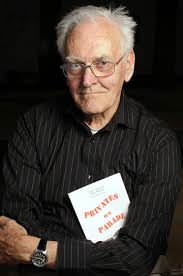
It probably comes as no surprise that Peter Nicholls, with wife Thelma, based the play on their own experience of bringing up disabled daughter, Abigail, who died aged 11. He went on to tackle big issues though the 1970s in other plays, The National Health, Poppy, Passion Play, Blue Murder and Privates on Parade, through formal experimentation (with copious reference, as in ADITLOJE to music hall and vaudeville), and ironic humour. However in 1982 he retired, apparently dissatisfied with the way his work was presented and was seen as unfashionable by many. Yet, based on this and what I have read about these plays, I would think there is an opportunity for contemporary theatre-makers to have a go at revisiting other of his frank, if sometimes unsubtle works, as has been done with Passion Play for example. Prickly and unsettling is not such a bad thing for theatre. PN passed away just before this revival opened but I hope he had a chance to see the justice that was I think done here to his breakthrough play.

The Antipodes at the National Theatre review ****

The Antipodes

National Theatre Dorfman, 23rd November 2019

I’ll tell you what. That Annie Baker backs herself. Here is another long play, near 2 hours straight through, where, visually, nothing much happens, bar a properly weird interlude, and dense with word. And this time it is a story about stories, Yep that’s right. The meta of meta. Six assorted punters (five men and just one woman) are ranged around a glass, conference style table telling each other stories in an attempt to create a story. Mediated by their distracted passive aggressive boss Sandy (the ever wonderful Conleth Hill), with occasional interruptions from his chipper assistant Sarah (Imogen Doel) to take food orders, excuse Sandy’s absences and chivvy the crew, and the voice of mogul “Max” (Andrew Woodall) who is bankrolling the enterprise. And with a note taker, Brian (Bill Milner), who eventually, memorably, gets stuck in.

It looks and feels like a scriptwriter’s meeting but its real purpose is never fully revealed and the rules of engagement are vague. Just see what happens seems to be Sandy’s instruction and from this all sorts of stuff pours out, from personal disclosures and confessionals, jokes, classical myth and allusion, gods, monsters, religious dualism, stories about stories, right through to various creation myths. It is affecting, thoughtful, funny, intriguing. Chloe Lamford’s set, complete with Perrier overload, Natasha Chiver’s garish lighting, Tom Gibbons’s sound, Sasha Milavic Davies’s movement (much use of swivel chairs), all echo the hyper-reality, or do I mean hyper-banality, of Annie Baker’s text, which gradually shifts the apparently mundane into the realms of the extraordinary. No surprise that Ms Lamford and Ms Baker co-direct.

It doesn’t quite scale the heights of profundity that it sets out to achieve, or the genuine grace of predecessor John, and it probably stole 20 minutes of my life more than it should have, but you still couldn’t fault its ambition and verve. In trying our patience, and venturing into the Freudian “uncanny”, it gets right under your skin even if it doesn’t shed too much fresh light on the creation of collective, and self, narrative. But it does cover all the bases, maybe too many, as concept overwhelms even this committed execution. Though with actors of this quality, Fisayo Akinade, Matt Bardock, Arthur Darvill, Hadley Fraser, Stuart McQuarrie and Sinead Matthews as the writers), individual character emerges out of the ensemble.

I guess the point was that whilst the urge to share our truth and humanity, and bring meaning to pointless existence, through stories remains undimmed, our capacity to do so might be fading, (especially as chaos in the outside world seeped into the ill-judged ending). Or maybe not. The vagueness of purpose is all part of the attraction in Annie Baker’s practice, so best just to go with the intractable flow and don’t pull too hard on the individual, intellectual, threads. It won’t be one of my top 10 2019 theatrical events but was still a story that could not be missed.

On Bear Ridge at the Royal Court Theatre review ***

On Bear Ridge

Royal Court Theatre, 21st November 2019

Knockout premise. Some splendid dialogue. Beguiling, complex characters. Inspired design courtesy of Cai Dyfans. Supported by the lighting of Elliot Griggs and sound of Mike Beer, And engaging performances from the outstanding Welsh cast of Rhys Ifans, Rakie Ayola (the first time I had seen her on stage), Sion Daniel Young and Jason Hughes.

So what was it that left me a little underwhelmed by Ed Thomas’s latest play On Bear Ridge, transferring to the RC after opening at Cardiff’s Sherman. I guess it was the age old problem of development and resolution. Having taken so much care to set up a potent setting, (not always the case when it comes to the theatrical post-apocalyptic), and to flesh out generous back stories for devoted couple, irascible butcher John Daniel and calming wife Noni, their slaughterman apprentice Ifan William (Sion Daniel Young) and the Captain, an exhausted, deserting soldier (Jason Hughes), the narrative seems to runs out of steam, even as the, often startling poetry, accumulates. This is a play about nostalgia, memory, loss and glottophagy (look it up), as the couple, holed up in their dilapidated Welsh mountain home, feel the past, and the wider world, slip away from them. Lists of meat cuts, old customers, even John Daniel’s trousers are seized on to fix their history. they reference a dying “Old Language”. It soon becomes clear though that what really holds them together, and Ifan William, is the love of Twm Siencyn, their son and his best friend/lover.

It is not a long play, just over 80 minutes, and, to be fair. never drags, but I wonder if Ed Thomas could not have been more incisive with his text. The Beckettian dialogue he spins is incisive and immersive, earthy and lyrical, fluently invoking time, place and character, but in the absence of evolution in the plot meant this might have worked better at under an hour. No shame in brevity when your facility with language is so adept, though ET has spent most of the last two decades writing for the small screen. Mr Thomas shared direction with RC head honcho Vicky Featherstone so I might reasonably assume that over-writing, not execution, was the cause of my slight misgivings.

I see the Sherman is set to stage another Welsh post apocalypse saga in the form of and adaptation Manon Steffan Ros’ novel Llyfr Glas Nebo. And JJoe Murphy, the incoming AD, is set to direct a new adaptation of An Enemy of the People, from Brad Birch (another doyen of the theatrical Welsh mountain sub-genre with Black Mountain), set in South Wales.

Botticelli in the Fire at Hampstead Theatre review **

Botticelli in the Fire

Hampstead Theatre, 20th November 2019

Us pensioners, well nearly in the case of the Tourist, as well as the real-dealers who haunt the matinees at which he largely frequents, are getting our eyes opened in Roxana Silbert’s first season as AD at the HT. Nothing fusty about the main stage offerings, what with scandal and corruption in China the subject of The King of Hell’s Palace, Cold War by proxy through chess in Ravens on now, and the threat from data capture and surveillance in Haystack to come. And this by Canadian playwright Jordan Tannahill, a queer history set in a Renaissance Florence, plagued by, er, plague, centred on the artist Sandro Botticelli.

It starts well. Dickie Beau as Botticelli, who serves up as committed a performance as you could expect to see on this or any other stage, in skinny jeans and leather jacket, opens with a direct to audience confessional which broadsides the artist’s sybaritic outlook and the challenges his art and his sexuality present in a liberal state lurching towards repression. That is the message and James Cotterill’s costumes, and the artist studio set that soon emerges, do a grand job in bringing a contemporary resonance to that message, though don’t quite fill the space. Best of all this soliloquy is filthily funny. Mr Tannahill introduces Botticelli’s assistant, on Leonardo Da Vinci (a measured Hiran Abeysekera), and debauched bessie the vivacious Poggio Di Chiusi (Stefan Adegbola).

Leonardo of course apprenticed in the workshop of Verrocchio, as did Botticelli briefly, and I am pretty sure Poggio is fictional, but the combination serves the purpose well and reflects the fact that both artists were accused of sodomy when the moral clampdown led by radical Girolamo Savonarola (Howard Ward). Before we get to the pivotal scene, again based on fact, where Botticelli trades some of his work, to be consumed in the Bonfire of the Vanities of 1497, in return for immunity, we meet first Clarice Orsini (Sirine Saba). She is the outspoken wife of political and banking big cheese, and Botticelli’s patron, Lorenzo de Medici (Adetomiwa Edun), who it transpires is Botticelli’s lover, Clarice not Lorenzo, though one can imagine. Ms Saba also playa the Venus in that painting which Lorenzo has commissioned.

Plenty to get your dramatic teeth into you would think. The problem is that Mr Tannahill’s modern vernacular text isn’t really up to the task. His legitimate determination to stick with the hedonistic tone established at the outset and reinforce his queering of history intention means the plot starts to get overwhelmed by the spectacle and the arguments that the characters advance, the purpose of art, sexual freedom, the exercise of political and religious power, the mobilisation of parochial populism against the liberal elite, become perfunctory. I suppose there were clues in the opening address, “this is not just a play, it’s an extravaganza”, and “the historians, I’m sorry, you can all go and fuck yourselves”.

Jordan Tannahill is plainly a talented young man, turning his hand to all many of multi-media collaborations, but a play, particularly one which takes as its starting point a lesson from history, (however this is re-imagined), needs a solid grounding in the text. I loved the look and the performances, performance artist Dickie Beau has bags of stage presence, but even he was unable to demand any sustained emotional or intellectual investment from the audience. Blanche McIntyre’s pliant direction, with help from the lighting and sound designs of Johanna Town and Christopher Shutt, engineers some arresting scenes, a camp dance routine, a choreographed squash game, the burning, but cannot compensate for the sparsity of character and contention. In the end, the play, like its protagonist, is so in love with itself that it doesn’t really look out to see what is going on around it.

Much Ado About Nothing at Wiltons Music Hall review ****

Much Ado About Nothing

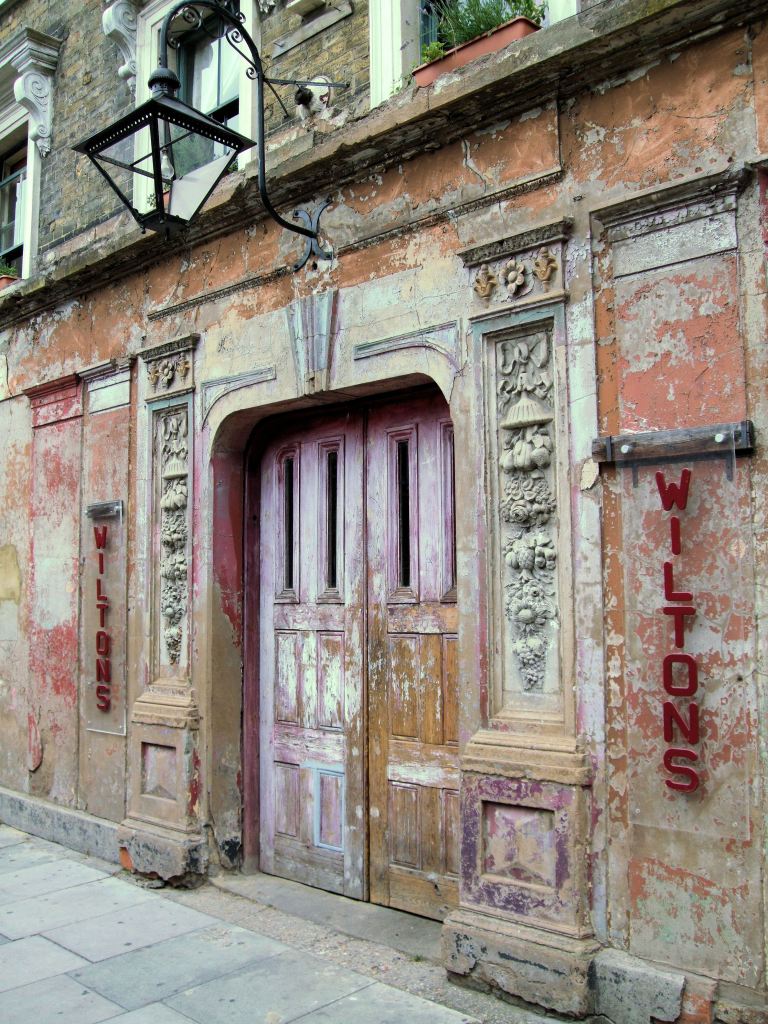
Wilton’s Music Hall, 19th November 2019

The Tourist has been very much taken with previous Shakespeare at the Tobacco Factory productions, Othello and Henry V, both here and on home turf in Bristol. This latest, MAAN, directed by Elizabeth Freestone, as was Henry V, and who will be bringing Stef Smith’s take on A Doll’s House to the Young Vic next year, didn’t quite match these predecessors but still provided an entertaining, if inconsistent, evening of Shakespeare comedy.

At least it did when I snuck downstairs in the second half. I had forgotten just how dire the sound is upstairs at WMH, blighted by reverb, even if there are now some comfy perches. Not a big deal, and for some of the actors no deal at all, but it did mean that I had to strain to hear the lines of, particularly Alice Barclay as Ursula, Dorothea Myer-Bennett as Beatrice and Imran Momen as Claudio. And, in Shakespeare, every word counts, however often ypu may have seen or read the play. In fact the more viewings the richer the language becomes.

Now MAAN is a comedy. And, unlike some of the Bard’s other comedies, it largely sticks to the make the punters laugh script. Even so, in amongst the comic couplings and the gossip, rumour, eavesdropping and misunderstandings, the “noting” of the original title, there are some dark ideas, to do with honour and patriarchal dominance, as Daddy Leonato (Christopher Bianchi) farms out his daughter Hero (Hannah Bristow) to Claudio and doesn’t for a moment consider she might be innocent of the charge of adultery. As ever with WS there is a questioning of gender stereotypes, even as those stereotypes are played out, which is what drives the comedy and is what Ms Freestone alights on in her interpretation through her gender blind casting, notably Georgia Frost (who stood out as she did in Kneehigh’s Dead Dog in a Suitcase), as Don Pedro’s (Zachary Powell) here sister Don Jon, and, less successfully Louise Mai Newberry as Dogberry.

Of course MAAN largely succeeds or fails on the “chemistry” between Beatrice and Benedick and here Ms Myer-Bennett, who it has been my pleasure to see in multiple plays in the last few years, and Geoffrey Lumb, who is a fine, and experienced, Shakespearean, were up for the fight. Verbal sparring only, of course, but sufficiently pointed throughout that at the end, you still sensed they would be chary of each others’ true feelings long after the ceremonies when we had all left Messina. Maybe not quite up to the benchmark set by Lisa Dillon and Edward Bennett in Christopher Luscombe’s RSC version from 2017 but still eminently watchable. Ms M-B’s Beatrice is, by some way, the smartest person in the room, but wields her fierce intelligence deliberately. Underneath the boorish exterior typical of his profession and sex there lurks a sensitive soul in Mr Lumb’s Benedick.

Some of the other relationships in the slimmed down dramatis personae don’t work quite as well. This tender Claudio’s love for his demure Hero persuades, his harsh about-turn later on less so. The soldiers’s banter works, the sibling rivalry between the Don’s seems forced. The party, complete with superhero costumes, clever, excites, the pivot to the disastrous wedding day, feels telegraphed, and the switch back to what is, in fairness, not the most hilarious Watch scene I have ever encountered, seemed to take this audience by surprise.

All in all, whilst there are some splendid passages and performances in the production. all set against Jean Chan’s delightful design, the rhythm of this STF production is just a little too erratic. However, once I was up close, the largely prose dialogue was, without exception (which is not always the case), pin sharp in its delivery. Whilst the look, feel and intention of the production is to present a MAAN for all time, that it works is largely down to this lucid approach.

Minus the echo of course. Won’t make that mistake again.