Cock at the Minerva Theatre review ****

rooster-clipart

Cock

Minerva Theatre, Chichester, 10th October 2018

Another addition to my collection of Mike Bartlett plays. I have professed my admiration for his work on numerous occasions on these pages. You see he just writes gripping drama. Hyper-real, sometimes going a bit over the top, but that is what you pay your money to see. Or at least I think you should. He can range widely across subjects, big and small. And he experiments with form. All in all probably the best of the current generation of British dramatists, of which there is currently a very fine crop. Just need a revival of 13 which I missed on its first outing.

Cock is a comedy which focusses on the machinations of the somewhat weak-willed John (Luke Thallon) as he attempts to choose between his two lovers M (Matthew Needham) and W (Isabella Laughland). It is a sort of companion piece to Bull, written a few years later, about workplace bullying. Both examine the “games that people play” and were kind of inspired by bull-fighting (and cock-fighting) which MB discovered were still very much alive when he visited Mexico City. There are no scene headings or stage directions or props in Cock, only lines between each of the “bouts” between characters (here marked with an electronic “bell”). MB stipulates that there should be “no mime”. He evens leaves out full stops and commas to express natural speech rhythms and inserts blanks to create equivalent pauses. So all your are left with is 2, then 3, then 4 actors circling each other and tumbling out the lines. Just the verbal sparring if you will. Of which there is plenty. It sounds tricksy but it is anything but as MB cannot help putting the right words, at the right time, into his characters. Emotions, as in his other works, are heightened by the formal structure. Everything is clarified.

It transpires that John was pretty young when he moved in with M. M is a bit of an emotional bully but when John wants out after seven years it’s pretty clear M is devastated. Especially when John falls in love with a woman. W doesn’t care that, until now, John has been gay. She pushes John into choosing when M invites them to, what you can probably divine, an “awks” dinner party. Especially when M’s Dad F (Simon Chandler) turns up.

There are plenty of killer comic lines but what MB really nails is the constant, and often brutal, ebb and flow of coercion and pleading that all four employ to get what they want out of the situation. John is agonised by having to decide between M and W, and by implication his sexual identity, bisexual not sitting comfortably, but he is also loving the attention. M is all over the words “emotional blackmail” but he does not want to lose John. W appears more reasonable but she is still determined to “win”. The world has moved on and become more fluid in terms of sexual identity but MB’s play still plainly shows that there are personal costs (and benefits) to be negotiated in all relationships. Monogamy exerts a powerful hold on all of us it seems. I would stab a guess that Cock is the sort of play Pierre de Marivaux would be writing if he were alive today.

This is I think the first time I have been party to Kate Hewitt’s direction. If there is a better way of showing off this play, here in the round, I can’t imagine it. I see she is in the chair for Jesus Hopped The A Train at the Young Vic next year. Excellent. I have espyed the Matthew Needham at the Almeida, and after this he will reprise his role as John (no relation) in Rebecca Frecknall’s production of Summer and Smoke at the Duke of York’s and Luke Thallon stood out in MB’s Albion at the same house and, I gather, in the Young Vic The Inheritance. I’ve only seen Isabella Laughland on the telly. Anyway even a chump like me can see all three actors are destined for even greater things. I can’t imagine Georgia Lowe will get an easier gig than this in terms of design, a red square on the floor in this red auditorium, but it still is the exact right solution.

With Press, his journalism drama, now over, until the next time presumably, I can’t wait for MB’s next work. I loved Press, obvs, most notably because it seemed to wind up many members of the fourth estate because “that’s not how a newspaper works”. Numbnuts. That’s the point. It’s a drama. Which uses your grubby, noble and powerful profession to shine a light on contemporary mores. Not a documentary. Which is also not “real” and constructed. As is your own “reality”. And your stories.
 

OthelloMacbeth at the Lyric Hammersmith review ***

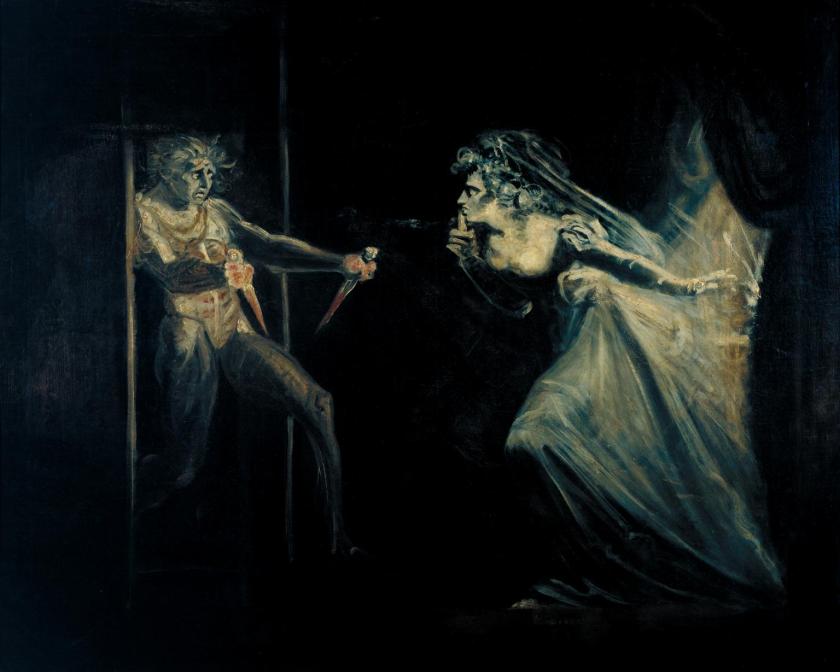
Lady Macbeth Seizing the Daggers ?exhibited 1812 by Henry Fuseli 1741-1825

OthelloMacbeth

Lyric Hammersmith, 8th October 2018

OK so this has its moments. By splicing together Othello and Macbeth, excising out extraneous context, sub-plot and characters, director Jude Christian has largely succeeded in achieving what she set out to do. That is to recast the two famous tragedies from the perspective of the female protagonists, Desdemona, Emilia and Bianca, the Ladies Macbeth and Macduff and, with a twist, the Three Witches. Without messing too much with the main plots. And with some occasionally breathtaking transfer of lines from one play to the other. However it is the Macbeth half that gets the best of the treatment, in large part because it benefits most from Basia Binkowska novel set design as it opens up. And this is definitely not for the purists who relish the verse. (I overhead some grumbling on the way out).

In part this reflected the cuts, in part the slightly uneven verse delivery on show and in part what happens when the psychological insight offered up by Shakespeare’s “roundest” characters is sold short. Samuel Collings as Iago/Macduff and, especially, Ery Nzaramba as Othello/Banquo had the most to lose. On the other hand there was much to learn from Kirsten Foster’s alert Desdemona and Caroline Faber’s measured Lady M, and the Witches, our two/three murdered/abused women from Othello. For this conceit, their revenge, as they unleash Lady M’s “unsex me now” monologue, and strumming on high pitched wires, is both clever and, in part, insightful.

Nagging away at me though is the belief that Shakespeare did offer up multiple vistas into what these women saw and felt whilst still getting on with the business of showing us that ambition, violence and jealousy are intrinsic, if ugly, facets of the human condition. I am not arguing that Shakespeare’s treatment of his female characters should be excused, the body count and violence meted out to them, tells its own story, just that, as in some much of his writing, there is insight and ambiguity when you look for it. And at least he has the excuse of history. The men today who continue to “fridge” women do not. After all Jude Christian in this mash-up, by using WS’s lines, is only highlighting what is already there in the text.

The cur-down version of Othello doesn’t need to tell us why “the Moor” is so hated, nor to have Iago poisoning his and our ears, but without it they come across a bit cartoonish. They are basically wankers from the off. The harsh brushed metal wall, there to mask the Macbeth reveal, only serves to highlight the static staging, and rushed delivery, with very rapid jump–cuts, of the first half of the first play. It does heat up post hanky mind you. Sandy Grierson squeezes a lot out of Cassio as do Kezrena James as Bianca and, especially, Melissa Johns as a blunt no-nonsense Northerner Emilia, who can sense what is coming. But this is maybe more to do with the “air-time” they have relative to standard interpretations rather than the actors really finding something new to say in the characters.

Sandy Grierson’s Macbeth does convince, because we know what to expect, because the call-back is more profound, because his is a fine performance and because the relationship with Caroline Faber’s Lady M stacks up. The early filleting of the text is less distracting, the motives of the power couple are still examined. Ms Faber makes chilling sense of the final Othello speech which falls to her. Even so at the end of the day it is Lady M who hatches the murderous plan, even if the narrative here is revenge for the wrongs of the first half. Once again I think there is more than enough complexity in Lady M as written by the Bard to make Jude Christian’s re-direction superfluous. Watch Judi Dench at work if you don’t believe me.

So a successful exercise on its own terms. I am just not sure that those terms were entirely necessary. New plays by women, telling women’s stories, with women creatives, would be more fruitful I think. (Lela & Co by Cordelia Lynn for example which Jude Christian directed). Or Jude Christian let loose on either one of this plays. Or a Caryl Churchill classic for example. This strand of wilful innovation has dogged the last few years of Sean Holmes’s stewardship of the Lyric. It hasn’t always worked as here. It will be interesting to see who, and what, comes next. It is a lovely theatre, thanks in large part to Mr Holmes’s industry, which deserves the best.


Peer Gynt at the Arcola Theatre review ***

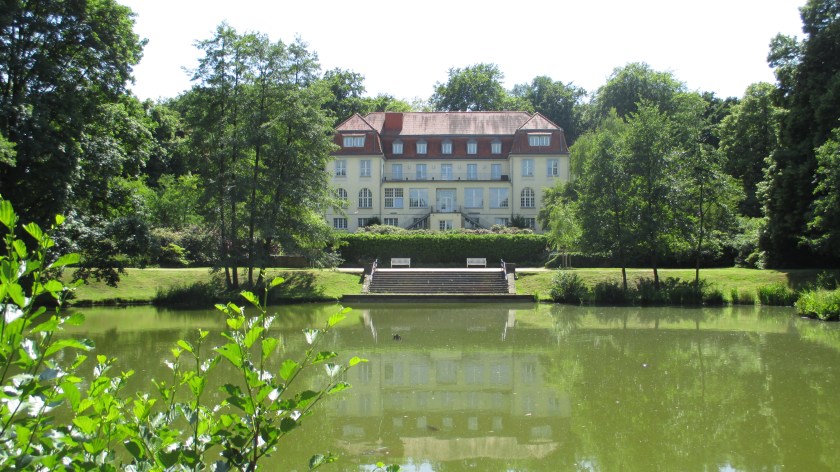
solbad_raffelberg_kurpark_-_theater_an_der_ruhr

Peer Gynt

Arcola Theatre, 5th October 2018

I have never seen Ibsen’s Peer Gynt before. In retrospect a minimalist two hander, a “daring realisation”, by “internationally acclaimed” German company Theater an der Ruhr, might have been a somewhat challenging place to start. Still what doesn’t kill you makes you stronger, or whatever the theatrical equivalent of that maxim happens to be.

And there was much of value to take away from this production. But let’s start with the play. Given that he was the “father of realism”, Peer Gynt is a bit of a departure. A sprawling fantasy in Danish verse about an oddball whose grip on reality is far from secure. It is based on a Norwegian fairy tale, though it contains echoes of HI’s own life, with family members written in. It has elements of a romance, like Will Shakespeare’s last outings with Pericles, The Tempest and Cymbeline, lightly concealed satire on Norwegian insularity, strikingly surreal scenes immediately contrasted with natural, contemporary drama. It tracks the life and, presumed death (it isn’t explicit) of our Peer across 40 scenes which utterly disregard the normal conventions of staged theatre. HI saw it as a lyric poem. I bet he would be surprised at just what a hold it has in the canon.

That’s probably the case because, I gather, there are so many ways for creatives to impose meaning on this “masterpiece”. In fact there is just so much “theatre” that can be thrown at this piece of theatre. Peer is a waster and a drunk early on but he can tell stories. There is a persistent, emotional, and maybe futile for Solvieg, love story. There are trolls, and a half human, half troll baby, always a crowd pleaser. There is much philosophising on the nature of existence and reality. there’s all manner of Freudian interpretation. Peer is the ultimate egotist. Who loves Mummy. There is a swipe at capitalism, laced with overt racism. There is a madhouse. A travelogue. A shipwreck. And, at the end, an overtly Christian reckoning and possible epiphany. He might have been dreaming. Or he might have been extravagantly alive.

So you can see HI packed it in. One way to present this is to assemble a wide cast and let the creative minds loose to do their best, or worst. I hope to see such a production. (I see the NT has commissioned a new, contemporary adaptation by David Hare for 2019. There is a man who can do sprawling). Every year in Vinstra in the middle of Norway they stage a giant production as part of the Peer Gynt festival, this being the place where the chap on which the character might be based hails from. Never been there but will add it to the bucket list along with Borgund Stave Church. I remember my first holiday, a cruise along the Norwegian coastline with 600 post pubescent teens on the SS Uganda. We saw Greig’s house, he of the Peer Gynt suites. And in today’s athomehefeelslikeatourist list of cultural coincidences it was Greig’s Holberg Suite that I had the pleasure of listening to last night.

Enough rambling. So I suppose the other, perhaps trickier way, to stage the play is like this. Minimal props, table. chairs, a bed, two actors dressed in the monochrome suits which spell Lutheran phlegm. With the actors, Roberto Ciulii and Maria Neumann, taking on all the parts, and even sharing the role of Peer himself.  Vital then to know your stuff so I was handsomely rewarded for boning up on the plot beforehand. I highly recommend this strategy for the classics. Here it was a life-saver. Well OK maybe that is an exaggeration, it was only 90 minutes after all. But it certainly made for a much clearer understanding as, whilst the plot is pretty much intact, the dialogue has been ruthlessly sharpened, and even more so in translation to sur-titles.

So I kind of worked out where we were, and what was going on. despite the limited display. Not sure everywhere in the audience was so lucky/prepared. You certainly cannot take your eyes off Roberto Ciulii, the Italian founder of Theater an der Ruhr with Helmut Schafer in 1981, and long time ensemble member Maria Neumann. They are mesmeric. Both are possessed of extraordinarily expressive faces, and Ms Neumann in particular is an amazingly physical and tactile presence. Major and minor changes in intonation and body shape indicate character changes. Dialogue, monologue and narrative intermingle. There are a few jokes. But the stripped back aesthetic, the small space, the absence of visual cues and distraction, together with the barrier of translation, however idiomatic Signor Cuilli’s text, can veer towards the monotonous. Not in a dull way. Just in a way that I suspect re-calibrates the dimensions of the play. Mind you this is what TadR sets out to do. A company that sets out to make theatre that can travel and abhors hierarchy. In a lovely looking building in a park in Mulheim near Duisberg (look see above).

The absence of spectacle does allow a focus on exactly how Peer’s identity is constructed. Is his life defined by what has happened to him, or what he has made happen? Is he, with all his obvious flaws, still to be admired, or is he just a bit of a knob? Is reality out there or just what goes on in our heads? See that’s what happens when you go to North London with other culturally aware trendies to watch modernist German theatre. If you are a real pseud, like someone here, you even buy a German programme for no apparent reason.

So a worthwhile journey for me. And for Peer. Whoever he was.


The Jungle at the Playhouse Theatre review *****

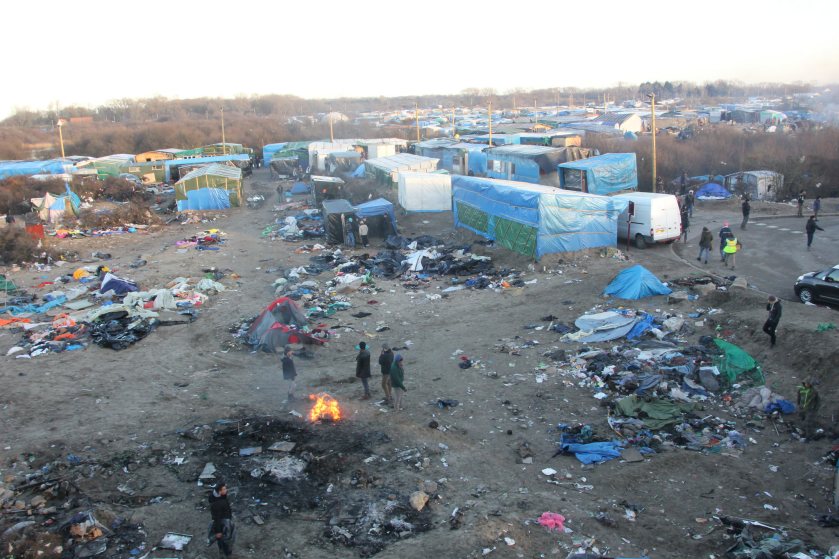
overview_of_calais_jungle

The Jungle

Playhouse Theatre, 4th October 2018

So this was my second attempt to see The Jungle. I had to bail out of the first halfway through as my back wasn’t up to squatting on the floor of the Young Vic. This is not a complaint. Given the subject it is a shameful indictment of just how privileged I am to have come this far in life, and to be this stuffed with entitlement, that I can’t even sit through a couple of hours of theatre without complaining. What a pr*ck.

Given that I couldn’t find a way of getting to see another performance in the Young Vic run I was relieved when this transfer to was announced. This time I was able to secure a more suitable berth in the “Cliffs of Dover” in a Playhouse Theatre transformed by Miriam Buether’s remarkable set. For make no mistake this is a simply marvellous piece of critical theatre. The posters advertising the play highlight the string of 5* reviews. Believe them. There are a few seats left in the remaining weeks. Grab one as I doubt, given the size, and diversity of the cast, that this will be easily staged again in the near future. It is off to St Ann’s Warehouse in Brooklyn so any New Yorkers reading this really have no excuse.

Anyone who vituperatively blathers on about “immigrants” and “asylum seekers” should be made to see this. It probably won’t change their minds, lack of empathy often runs deep, but it might force them to consider, at least for a couple of hours, an alternative, and human, point of view. Joe Murphy and Joe Robertson have written a “history” of the expansion of the refugee camp at Sangatte to over 6000 people, the eponymous Jungle, in the 18 months prior to its clearance by police in October 2016. (Though there are now still a couple of thousand people living rough in the area).

The two Joes set up the Good Chance theatre in the camp. They are now working in Paris. Read about them here. https://www.goodchance.org.uk/. Then give them some money.

This story is largely told through the relationship of two key characters, Syrian wordsmith Safi, who also acts as narrator, and Salar, the de facto leader of the Afghan community and the founder of the restaurant, The Afghan Cafe, the subject of the famous review by AA Gill, which is the setting for the action. Other members of the various communities, a French official and those who came to help, are also lucidly portrayed. In all there are some 23 named roles permanently occupying the “promenade” stage and its various interstices. With the audience seated around them though it often feels like more.

Directors Stephen Daldry, (who only ever deals in theatrical gold now), and Justin Martin have conjured up a riot of movement, sound, dance, music, video, conflict, language and costume, with the help of some of the best in the business (Paul Arditti, Jon Clark and Terry King for instance). The cast is superb. I would pick out Ammar Haj Ahmad as Safi, Ben Turner as Salar, Rachel Redford as idealist teacher Beth, Nahel Tzegai as the calming Helene and Dominic Rowan as the rational Derek, but frankly the whole ensemble is beyond committed.

The thing is though that beyond the production, the activity, the atmosphere of spontaneity, the performance, the polemic, the vital message of hope and despair, there is a bloody fantastic play here. Vivid human emotions are laid bare in just a few lines. The debate between the “optimist” Safi and the “realist” Mahmoud as to how to respond to their situation is electric. The suffering, and salvation, of the Sudanese teenager Okot (John Pfumojena, is humbling. The pride and determination of the camp is palpable. The motives of the volunteers are examined. The conflicts between communities are revealed. Individual journeys are graphically relayed. No-one leaves family, work, culture, community, education, society because they want to nick your hospital bed or school place, people of Britain. They come because the alternative is harassment, dislocation, destitution, torture or worse. Escaping a war zone or failed state is an act of desperation not a punt on economic advancement. And Britain is a destination because we are, (or were), tolerant and we have the language. Those should be reasons to be proud. Not running away and seeking two fingers up to the rest of Europe (and the world).

Throughout the play 6 year old Little Amal (Erin Rushidi I think at the performance I attended) flits wordlessly around the action. Apparently we tried, and try, to prevent these little kids getting to relatives in the UK. Breaks your heart.

The Malady of Death at the Barbican Theatre review ***

ocean-sea-waves-2802

The Malady of Death

Barbican Theatre, 3rd October 2018

I took a bit of persuading (of myself, by myself, this was never going to be an easy sell to any of the usual companions) to pitch up to this. No doubting the pedigree of the creative team. Alice Birch, (Lady Macbeth, Anatomy of a Suicide, Ophelia’s Zimmer, Revolt She Said Revolt Again), adapting Marguerite Duras’ 1982 novella which tells the story of a man who pays a woman to spend weeks with him so that he can “learn” how to love. Directed by Katie Mitchell, no introduction needed. Under the auspices of the legendary Theatre des Bouffes du Nord. And which came to London, via Edinburgh, with some fulsome reviews.

Of course the subject, a “provocative” dissection of the male gaze, complete with nudity, live video and on-stage narration from French acting royalty in the form of Irene Jacob (Au Revoir Les Enfants, The Double Life of Veronique, Three Colours Red), screams controversial. Nick Fletcher was The Man, holed up in a hotel room by the sea, watching pornography, desperate to “feel” something, and motivated, by the “malady of death”, I guess his own empty alienation, to “use” Laetitia Dosch’s The Woman, who has her own childhood trauma to excise. By examining the narrative of the story from both perspectives, literally using the video projection, we get to ponder just who has agency here in an intimate relationship between man and women. Alice Birch has re-written The Woman as a sex worker and single mother, (M. Duras reveals nothing of her background), to open out the correspondence and, as the nights progress, there is a clear shift in power even though She can offer no resistance or make no sound. When she finally does it is to goad and diagnose him.

Now there is no denying that this is an impressive technical achievement as the two camera-people (one man, one woman) and stage managers, as well as the actors, shift balletically through Alex Eales’ set (he also designed the costumes, such as they were). The live video was mixed seamlessly with pre-recorded footage (the sea, flashbacks of the Woman’s childhood) in Ingi Bekk’s design under Grant Gee’s direction. Paul Clark’s composition, Donato Wharton’s sound and Anthony Doran’s detailed lighting all added to the sense of clinically polished auteurship. Unfortunately for me this triumph of style, together with the narration and sur-titles, (the production is in French natch), only served to add distance to this indeterminate story. For such an intense subject it all felt curiously lifeless and maybe just a little, dare I say it, passe. These techniques can illuminate, here they served to obfuscate. Of course this idea of how the Man and the Woman “see” each other in an intimate, here transactional, relationship, is expanded through the use of video. A series of screens and compartments on stage push the audience into making choices about what to watch. At one point The Man using his phone to film the Woman in turn filmed by the cameras. Points made though there feels like there is nowhere else for us to go.

I suppose this inauthenticity, the absence of true emotion, the detachment, the sense of voyeurism, (a parody of art-house porn), exactly reflects what M. Duras was trying to say, but it does make for un-involving theatre. In stark contrast to Alice Birch and Katie Mitchell’s last outing, Anatomy of a Suicide at the Royal Court, one of last year’s best, and most emotionally involving, plays (Anatomy of a Suicide at the Royal Court Theatre review *****). It could be that my own identity leaves me entirely unequipped to understand the narrative here. Certainly worth a look. After all if I don’t challenge myself then how will I be, er, challenged.

The Humans at the Hampstead Theatre review ****

thanksgiving-cornucopia

The Humans

Hampstead Theatre Main Stage, 3rd October 2018

Sometimes it can feel like the whole history of US theatrical drama is one long story of family dysfunctionality. Mind you you can see why. When it works, Miller, O’Neill, Williams, Albee, Shepherd, Wilson, Kushner, to name a few, it is hard to top. The immediacy and thrill of recognition, with the visceral power of the Greeks. Ideally you need some fairly immediate character flaws, a specific social and/or economic milieu and enough humour to leaven the tragedy. Then you can hit the jackpot of “state-of-the-nation” relevance with “deep, psychological” human insight. That’s why playwrights keep plugging away. at the genre

Of course the drawbacks can be obvious. Indulgence seasoned with too much autobiography, bombast, captivity of form and an all round failure to recognise that what you think is a resonantly universal experience may actually be just plain bloody dull to the audience.

The Humans came with some cracking reviews out of NYC, four Tony Awards and full houses through its runs and tour. Edward Hall, who is off to pastures new having transformed the HT, treading a fine line between the popular and the pioneering, says he was desperate to nab this for the HT. Then again he says that about everything he has imported from the US. Here though the Roundabout Theatre production has come hook, line and sinker from Broadway with cast, director, Joe Mantello, and creatives, David Zinn (scenic), Sarah Laux (costume), Justin Townsend (lighting), Fitz Pattton (sound). And I suspect that is what made all the difference.

The Humans starts in the most cliched fashion. The Blake family meets for Thanksgiving. In the recently acquired Chinatown basement duplex flat of voluble, fervent daughter Brigid (Sarah Steele), who is recently married to the assiduous, slightly superior Richard Saad (Arian Moayed). Solicitous Mum Dierdre (Jayne Houdyshell) and decent Dad Erik (Reed Birney) have come to the city from Pennsylvania with wheelchair-bound grandma Fiona “Momo” (Lauren Klein). They are joined by big sister Aimee (Cassie Beck). Cue a round of rapid family banter as the parents bemoan the location of the flat, Grandma’s incapacities are revealed and Aimee’s work pressures highlighted. All robust, knockabout stuff, very witty, but you have heard it a million times. Then slowly, but surely, perspectives begin to shift. In entirely naturalistic fashion we get see the financial, emotional and intellectual pressures and insecurities weighing down on this all-American family, so that, like the best of these sort of plays, it holds up a mirror to contemporary US society. At the same time a faint sense of unease, the uncanny, starts to pervade the flat. Not quite with the same intensity as say, Annie Baker’s John (John at the National Theatre review *****), but, with the building itself burbling and croaking, lights flickering, enough to add a further, if not in my view entirely successful, dimension.

The play is in real time, though the family let a lot of food go to waste (!), and the revelations tumble out in an entirely believable way. Brigid’s creative frustrations and Richard’s never-ending studying. Aimee’s girlfriend troubles, her partner has just left her, and illness is set to curtail her banking career. But it is Mum and Dad’s troubles, and the need to care for grandma, which most bring home the precariousness of life for even “middle” Americans. Depression, dementia, illness, making ends meet, rejection, even bowel problems, get a look in, but this is a play that never feels dour. Nor is it some bash-you-over-the-head polemic. These are still people you very quickly care for and hope that things get better for them. The ups, and downs, and general messiness, of family are adroitly set out. Love, and resilience, might just see them through. Or maybe not, since resolution does not follow revelation.

All this in just 90 minutes. And all thanks to the writing talent of Stephen Karam. It will probably come as no surprise, based on the above, when I tell you that Mr Karam’s last stage outing in 2016, (The Humans dates from 2014), was an adaptation of Chekhov’s Cherry Orchard, and that his was the pen behind the recent screen version of The Seagull, (which got so-so reviews, so has been relegated to my Netflix list). Tragicomedy is his thing, and his ear for the way people who are close actually converse, cross-talking, sniping, apologising, is remarkable. And it is razor-sharp funny.

The performances are outstanding. Timing is impeccable, like clockwork. I guess no great surprise given how long the company have been together on the play but it is still as strong an ensemble as you are ever likely to see. Many of them have worked before with the playwright and Arian Moayed who plays Richard even roomed with Stephen Karam at college apparently. The set, on two levels, joined by a spiral staircase, is sublime, and, with the harsh artificial lighting, conjures up the kind of grim, monochrome, institutional atmosphere that, even when the couple have unpacked, can never truly become a “home”. The six family members are, with some cleverly crafted exceptions, always on stage, there are no breaks or fades here, but the set means we can also see where they are not as it were, the empty rooms, which adds to the sense that of this not being your standard family drama, all crammed into one room.

I am assuming that Stephen’s Karam’s previous full length plays, Speech and Debate, centred on three misfit teenagers, and Sons of the Prophet, a story about a Lebanese- American family (reflecting his own Maronite Christian heritage), haven’t yet crossed the Atlantic. Based on The Humans I think there is a more than fair case for some-one putting that right. Thanks to Edward Hall I have seen a number of excellent plays at Hampstead Theatre from US playwrights in the last couple of years: Dry Powder by Sarah Burgess, Describe The Night by Rajiv Joseph, Gloria by Branden Jacobs-Jenkins and a brace of Tony Kushner’s. And now this.  I do hope his successor carries on the tradition.


An Adventure at the Bush Theatre review ****

world_map

An Adventure

Bush Theatre, 26th September 2018

Now I cannot pretend that, when the lovely people at the Bush moved the matinee performance of An Adventure that I attended forward by an hour, and indicated it had metamorphosed into a three hour plus extravaganza, I wasn’t concerned. And reading the proper reviews, which were variable, but generally pointed to narrative ambition trumping dramatic momentum, didn’t help.

Well I can report that this is, give or take, a wonderful story, superbly, and smartly, told. The Bush is still claiming a 3 hour 15 minute running time but it isn’t, it certainly doesn’t feel anywhere near it, and there are a couple of intervals to catch your breath anyway. If anything I would have liked, whisper it, a bit more. It kicks off with feisty Gudjarati Jyoti, ostensibly 16, interviewing callow Rasik, ostensibly 22, one of the five suitors chosen by her father, on a stormy night on the outskirts of Ahmedabad in post-partition India in 1954. Not best qualified, Rasik doesn’t start his wooing too well but eventually, after a little sparring, Jyoti warms to him and the match is made. It is a cracking opening scene with emotional warmth set against the non-naturalistic set of Rosanna Vize, a golden plinth flanked by Louise Rhodes-Brown’s video designs (which help to anchor time and place throughout). The second scene, on a beach where Rasik, who can’t swim, clings on to Jyoti, is no less powerful and is the metaphor from which the rest of the story unfolds.

We then track the couple through Nairobi, during the fight for Kenyan independence in the late 1950’s, where Rasik goes into business with patriot David and buys him land, to London where the couple arrive in 1968, through the 1970’s, and daughter Sonal, and back to India, for the funeral of Joyti’s mother, where we meet niece Joy, and then finally Nairobi, in the present day. Along the way we see the India diaspora experience unfold, with exposition which generally doesn’t interrupt the flow, entwined with the personal journey of the couple. Home, emigration, immigration, post-colonialism, racism, gender roles, political activism, ageing, parenthood, the tyranny of everyday life, in fact just about everything that matters, is lightly ticked off along the way, but all is coherent.

The first part, (and the finale), in Kenya, is the most pointed in terms of political message, contrasting Kikuyu David’s support for violent Mau-Mau resistance with Rasik’s more pragmatic faith in a peaceful transition. This in turn contrasts with the personal politics of Jyoti who joins a union and campaigns to improve the conditions of British Asian working women in the 1970s. At the same time we see the racism that Rasik endures in his work and the strains that the struggle to get on put on their marriage. We see the next generation in the shape of Sonal looking to move up and on through education and travel encountering Jyoti’s motherly resistance.

This is though more a love story than history lesson and is all the more successful for it. In the final scenes, with the couple in their seventies, Rasik’s sight failing and mobility impaired, they look back and this, frankly, is where it really connected emotionally. I cannot claim to understand the journey of Jyoti and Rasik but I can certainly empathise with the prosaic intimacy of their relationship. For these final scenes Jyoti and Rasik are played by Nila Aalia and Selva Rasalingam, but you can still feel the essence of the characters shaped by the superb Anjana Vasan and Shubham Saraf in the earlier years. Jyoti may be headstrong but her inner strength shines through from the off. Rasik may be less certain, earnest in his youth, irascible in his old age, but they make an entirely believable couple. Writer Vinay Patel based his story on the life of his grandparents which is maybe just why.

Mr Patel’s expansive tale wears its learning pretty lightly. As with his previous work, notably his play True Brits and his TV drama Murdered By My Father, he shows that he has a way with story and character and can conjure up a lot of content from relatively straightforward starting points. An Adventure is more ambitious that his previous works, and maybe this time he has tried to pack a bit too much in to create his odyssey of marriage, but it is still a very entertaining and skilful attempt. I imagine he is a confident young man and I suspect he believes, as do I, that he will get even better from here. Madani Younis is, unsurprisingly, a completely sympathetic directorial presence; you get the feeling writer and director brought the best out of each other from the very start of the project. It will be very interesting to see what Mr Younis brings to the South Bank in his new role.

The cast, including a resolute Martins Imhangbe as David and impressive work from Aysha Kala as Sonal/Joy, is well matched to character, though, for me, Anjana Vasan stood out, as she did Life of Galileo at the Young Vic and Behind the Beautiful Forevers at the NT. Sally Ferguson’s lighting and Ed Clarke’s sound were able to navigate the intimate and expansive as the story demanded.

Six actors and seven characters, (well eight when you include younger daughter Roshni who literally phones in at the end), is not a lot to span this much history and geography. Then again the best way in drama to understand the big stuff is to see its repercussions at the human level. This is where Vinay Patel’s play works. He gets away with shoehorning in maybe just a bit too much of what he wantt to say because the characters are so real and the dialogue, with a few overly dreamy, symbolic interruptions, so apothegmatic. Above all there is that fearless enthusiasm for the power of drama that the best writers convey which makes this, for all its obvious faults, work.

Losing Venice at the Orange Tree Theatre review ***

L0064135 Map of Venice

Losing Venice

Orange Tree Theatre, 24th September 2018

A modicum of research was all that was required to realise that this was going to be a curious, but also intriguing, entertainment. Which is near enough exactly what it was. Jo Clifford’s play was a hit at the Edinburgh fringe when it first appeared in 1985. With its story of a great Empire now in decline, and its scrutiny of strict gender roles in society, it is easy to see why the OT’s Paul Miller was drawn to revive it. The play certainly chimes with key contemporary debates on Brexit and toxic masculinity, and Jo Clifford’s own personal journey makes it more absorbing, but it is, structurally at least, something of an acquired taste.

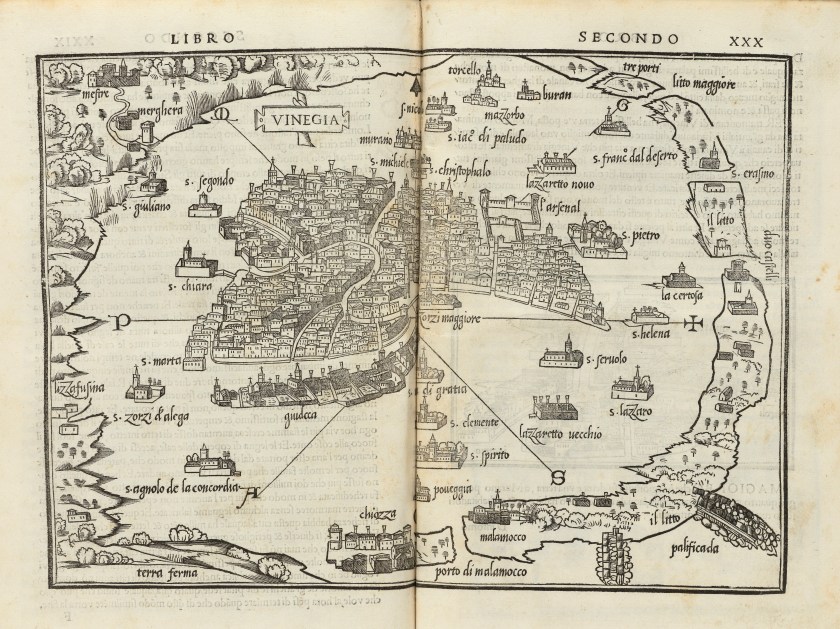
Tim Delap plays the Pedro Tellez Geron (1574-1624) the third Duke of Osuna, a military adventurer, who, after becoming Viceroy of Sicily, and then of Naples, for Golden Age Spain, plotted to conquer Venice. The plot was uncovered and Osuna subsequently fell from favour after Philip III’s death in 1621. Jo Clifford’s play teams the Duke up with Francisco de Quevedo y Villegas, (played by Christopher Logan), a poet and secretary to Queen Ana in the Spanish Court of Felipe II. He put himself about a bit, generally ruffled feathers and was one of the prime exponents of a dramatic writing style at the time known as Conceptismo, characterised by rapid rhythm, directness, simple vocabulary, witty metaphors and word-play. It prized multiple meanings and conceptual intricacies, in stark contrast to the ornateness of rival style at the time of Culteranismo. Both were obsessed with honour, reputation and chastity building on the sort of flummery that had bedevilled the world of secular culture for centuries prior.

Now knowing this, and that Jo Clifford had previously translated some of the greats from Spanish Golden Age theatre such as Calderon de la Barca, and you can begin to understand the structure of Losing Venice. For this to is a story with multiple meanings which moves rapidly across space and time and appears quite stylised. Ms Clifford sought to take a current (in the 1980s) sensibility on politics and gender and fuse it with this ostensibly “true” history with a contemporary (for 1618) dramatic style. Designer Jess Curtis in this revival has highlighted this synthesis with her costumes which mix the Golden Age with a 1980s post-punk, New Romantic look.

The adventures of the strutting Duke and affected Quevodo draw in other parties, servants Pablo (Remus Brooks), Maria (Eleanor Fanyinka), the rejected and oddly coiffed Duchess (Florence Roberts, also a Priest), Secretary (Dan Wheeler who also provides some music), the grouchy King (David Verrey) and the prosaic “Mr and Mrs Doge” (David Verrey and Eleanor Fanyinka again). A key role is that of the Sister here played by Tia Bannon and not, unfortunately given the extra dimension this would have brought, the originally cast Josh-Susan Enright. Not that Ms Bannon didn’t try to fully commit, as did her colleagues, to the play. It is just that it is so striking in tone that I wasn’t entirely clear just how “inside” the characters Paul Miller wished them to be. The knowing, and sometimes farcical, tone, the sense that the performers, indeed the whole play, was “looking into” the events as a metaphor or lesson for something else, the decline of Empire and the desire of boys to always go fighting, didn’t completely take over, such that it could just be read as a rapid, and somewhat bitty, and increasingly odd, history play, (where I would guess most of the audience didn’t know the history).

Still once you adjusted to this idiosyncratic form there was stuff to savour and it didn’t drag on, even giving us an interval to ponder what was going on. The Duke doesn’t really do consequences, is locked in the past, sees everything as a contest and takes vanity to extremes. His fading libido is conjoined with that of his country. All in all a prize dickhead not unlike a few of our current crop of deluded politicians. Quevedo’s pen may be mightier than his sword but his fine words don’t necessarily resonate with his master and there are a whole heap of unbuttered parsnips here. The women and servants look on with various degrees of exasperation. Eleanor Mayinka stands out as the sympathetic Maria but maybe just because she is the most sincere character in the play.

So this might be a play whose novelty has played out, or it might be a play that was over-praised in the first place. Or maybe it is, as my Mum would have said, “too clever for its own good”. Or maybe it is a production where the normally very reliable Paul Miller couldn’t quite make up his mind. Or rather where he couldn’t quite pin down this slippery, and odd, fish. Or maybe, for once, the OT space was a hindrance not a help. I think it might be a little bit of all of these things but offsetting this is a spark of invention and bravado that I, for one, am always happy to see. Even if it didn’t quite come off, I can safely say I haven’t ever seen anything like it. And that it itself is no small praise. A counter to the excess of lazy literalism which pollutes the body politic is surely no bad thing.

Touching the Void at Bristol Old Vic review *****

siula_grande

Touching the Void

Bristol Old Vic, 22nd September 2018

The Tourist had a terrific visit to Bristol recently. Shakespeare at the Tobacco Factory’s marvellous Henry V (Henry V at the Tobacco Factory Bristol review *****), the Georgian House, another fine cathedral ticked off, an accidental preview of the refurbished space at the Old Vic and then this, a reminder of just how powerful theatre can be when filtered through the imaginations of first, its creators, and then second, us the audience.

Mind you mountaineer Joe Simpson’s extraordinary, mythic, true-life story of survival after being left for dead on Suila Grande in the Peruvian Andes by his climbing parter Simon Yates could hardly be more dramatic. You may well know it from Mr Simpson’s own mesmerising account in his 1988 book, Touching the Void, or from the feted docudrama from 2003 directed by Kevin MacDonald, with Brendan Mackey, Nicholas Aaron and Ollie Ryall. I also recall a separate TV documentary but I may be getting confused. If you don’t know the story I am not about reveal details here: that would be vexatious. Whilst the Old Vic run is over the production will tour to the joint producing houses of the Royal and Derngate Northampton and Royal Lyceum Edinburgh, and then on to Hong Kong, Perth and Inverness. I would be stunned if it doesn’t get further run-outs thereafter.

For this is brilliant theatre. I can see why some might of thought it a bit nuts to stage it, not only because of the prior, superb treatments, but also because of its subject. How to bring the mountain to the Old Vic deep proscenium? This is after all the oldest continually operating theatre in the English speaking world built in 1764. The Theatre Royal auditorium interior is a thing of beauty in paint and wood, matched only by the Theatre des Bouffes de Nord in Paris IMHO. The new public space based on my quick peek is only going to add to its architectural wonder.

So what have Tom Morris, the AD of BOV and director here, and designer Ti Green, opted to show us here? Well a few tables, chairs and a sign to symbolise a pub in Scotland and a bar in Switzerland. And an immense rotating metal frame, a skein filled with opaque white paper which gradually gets perforated. All of which turn into mountain ranges. Not literally. Don’t be silly. But add in climbing gear, tents, a video backdrop, superb lighting and composition/sound courtesy of Chris Davey and Jon Nicholls and, I swear, we are transported. It is one of the best realisations I have ever seen in a theatre.

However, even with craft of this imagination, that would still not be enough. Which is where the writer David Greig, the AD of the Royal Lyceum, adds his genius. Mr Greig’s original work for Traverse, NT Scotland and Paines Plough is testament to his skill but his adaptions may just be even better. I can vouch for The Suppliant Women which came to the Young Vic last year (The Suppliant Women at the Young Vic review ****), Creditors, Tintin in Tibet, and trustees who rate his contributions to Charlie and the Chocolate Factory. It is not just the ability to think through how the story can be converted into this thrilling visual spectacle, to show us where and how this happened, but also how to recast the main characters to offer us a insight into why this happened. This is after all a first person narrative where the main character is largely alone.

David Greig’s masterstroke is to incorporate Joe Simpson’s older sister, Sarah, into the narrative. (Sarah is a constant, goading presence in Joe Simpson’s autobiography The Game of Ghosts. Poignantly she died a couple of years ago.). At the outset she is angry at what seems to be Joe’s pointless sacrifice, we rewind to see her meeting Simon with Joe and being bitten herself by the climbing bug. And it is Sarah who is cajoling Joe, the spirit in his fractured mind, during the darkest hours of his escape. Monologue is turned into internal, and then here, external dialogue Add to this the contrast offered by the wry commentary from Richard, the hippyish Geordie who is recruited early on to man the base camp during the “alpine style” assault on Suila Grande.

Patrick McNamee, maybe because of, rather than in spite of, a couple of musical interludes and some remarkably insensitive dialogue, I guess this was Richard, is on top form and Fiona Hampton as the fierce, bolshie, brother-loving, Sarah is outstanding. Edward Hayter has to be more subtle to capture the more taciturn Simon, especially when he is forced to make his momentous decision and the anguish which follows. This role is a huge ask physically, though it pales a little beside that of Josh Williams as Joe. I don’t recall having seen an actor have to commit so much energy to a performance. Hanging off ropes, hopping across rocks, flying down an icy slope. Frostbitten, dehydrated, hypothermic, He really looked like he was knackered and in agony, partly I reckon because he probably was! On top of this he also has to convey the mental agonies that Joe faced in his ordeal as well as offering us, like Edward Hayter’s Simon, some idea of what drives these seemingly unremarkable blokes to take on such challenges. These fellas it seems have a rather different, more direct and maybe more rational, take on risk than the likes of you or I it seems.

So we have humour, suspense, tension, horror, exposition, explanation, psychological insight, metaphor, tricks of perspective and memory, energy, physicality, music (Boney M can be a motivator), Blimey it even feels really cold and dark at times. And if you have ever wondered what a movement director gets paid for, Sasha Milavic Davies (as in the Suppliant Women mentioned above) shows you, and then some.

This is theatre at its inventive best. It gets to the heart of the “what would I have done” question. I do hope many more people get to see it. If you are one of the lucky people close by to the theatres mentioned above do not hesitate and drag as many of your friends along as you can. I guarantee they will not be disappointed. It is hard to think of anything more gripping than a story of someone who “comes back from the dead”. To provoke our imagination into being there with him by using his imagination to create some-one being there with him is just exceptional.

Henry V at the Tobacco Factory Bristol review *****

geograph-2470375-by-Steve-Daniels

Henry V

Tobacco Factory Theatre, 22nd September 2018

Hello. I feel another bout of hyperbole coming on. It could just be that cumulative exposure is making me realise what the smarter punters and all the luvvies have known for hundreds of years, that nothing comes close to Shakespeare. It could be that my first visit to the Tobacco Factory has revealed a near perfect space, intimate but airy, in the round, with the right vibe of industrial chic, (and a good value curry in Thali next door). It could be that the Shakespeare at the Tobacco Factory company, under retiring founder Andrew Hilton, continues to churn out top quality productions of the Bard, and a few others, as it has done since its founding in 2000. Last year’s Othello set the ball rolling for me (Othello at Wilton’s Music Hall review ****) and I now intend to make a note in the diary for future pilgrimages to Bristol.

However I think the special ingredient in this particular production lies in the direction of Elizabeth Freestone. Ms Freestone is not afraid to offer up a contemporary slant on big Will, which usually works for me. Indeed she is the director behind Jeanie O’Hare’s composition of Queen Margaret at the Royal Exchange Manchester as we speak. Queen Margaret is one of Shakespeare’s best, no question, and I gather the magnificent jade Anouka is doing the business in the title role, though she will need to to get anywhere near the visceral walloping Sophie Okonedo gave the character in The Hollow Crown. (Can’t wait to see ms Okonedo as Cleo at the NT which the critics are loving).

What is patriotism? How to tread the line between the glorification and the senseless horror of war? What makes a “national hero” and how does this get weaved into a nation’s view of itself? How does Henry go from playboy Hal to warrior king? Is he just a cipher, whatever we want him to be? Sincere, scheming or both simultaneously? How to think about Katherine? Simpering pawn or power broker? A lot of good questions to ask at any time but especially when a bunch of utter cocks are playing dangerously fast and loose with our national identity. Once again Shakespeare shows he is the man for all ages when it comes to shedding light on the business of politics.

Lily Arnold’s blissfully simple set, four metal cages filled with stones, is put to work as battlefield and meeting hall, military and political space. A quartet of strip-lights, (recycled from Othello I’ll warrant), megaphone, radio and mic, suitcases and kit-bags, bottles of voddy, clip-boards, melancholic Union Jack and Tricolore. It’s all you really need. Less can so often be more in both the history plays and the tragedies. Go with the standard battle-dress/fatigues of so many modern-dress productions because it just works, but then add some twists to underscore the symbolism. A tutu dress for Mistress Quickly, a sharp suit for Cambridge and the King of France, a T shirt for King Henry, “the Artist formerly known as Prince” – I loved that – and turn Katherine into an imposing skinhead with elegant purple frock-coat suit and DM’s to match.

Cut out superfluous roles, in this interpretation, and double up (most intriguingly Chorus/Burgundy, Canterbury/King of France, Cambridge/Fluellen, York/Bourbon and Nym/Orleans). The armies are interchangeable after all. Lose a few of those pesky Dukes on both sides, Westmoreland, Exeter and York on the English side, with just Cambridge to face the traitorous music, and Bourbon and Orleans, and eventually Burgundy, on the French side. Make Exeter a skilled, female, negotiator. Slim down the English and French armies as well, and lose Queen Isabel and, in a real coup, merge the Dauphin into Katherine (and thus make her relationship with Orleans potentially very weird). And turn the Chorus into a detached, Bristolian, history lecturer.

Start off with a big party night choreographed to Boys Will Be Boys. Make Henry physically and metaphorically begin to stand tall as we move through the battles and make Katherine fight him and the English tooth and nail to the end. Don’t make too much fuss about those tennis balls. Let Henry whizz through the “breach speech”. Turn Katherine’s comedy English/French body part translation into a bitter and furious lament for lover Orleans which scares Henry (and us) witless. See Montjoy humiliated in defeat. Watch Henry only just keep it together after the brutal dispatch of Bardolph then wipe away the tears to receive the patronising French embassy. Ensure maximum ambivalence for our Harry as he wanders the camp for this is surely where the mantle of power is most keenly felt. Believe that Henry is probably bluffing when he threatens the citizens of Harfleur so belligerently.

The comedy relief of Pistol, Nym, Bardolph, Quickly and the Boy doesn’t fare quite as well in this production but their cannon fodder status, even as accident, certainly does. When Exeter reads out the list of the English dead at Agincourt the Boy is “none else of name” but we know his pointless sacrifice. A comparatively modest Harry, as here, makes Pistol’s over the top grandiosity less of a counterpoint. Fluellen is as annoying as ever though.

Now young Ben Hall has a bit of history here having played Henry V at the Guildhall when a student. He obviously has the genes for the theatre being the grandson of Sir Peter, nephew of Edward, (now moving on from Hampstead Theatre), and son of producer Christopher. You probably know him as the bespectacled tutor of Gerry and would be suitor of Margo in The Durrells off the telly, (a Hall family affair of sorts). He left an impression in the recent RSC Coriolanus but here he steps up and given a very interesting performance. Deliberatively tentative and awkward in parts, not entirely conversational but certainly not a master of oratory, with shaved head and red beard, he is believable as soldier if not, even in victory, as king. He spits out the lines too rapidly at the start but as Henry rises to the challenge so his speech becomes more measured, though never entirely, assured, as his disturbing “wooing” of Katharine at the end shows. He is not Olivier’s square-jawed hero, Branagh’s reborn statesman or Lester/Hytner’s war criminal hardman. Ben Hall’s Hal is constantly “wrestling with the moral responsibility of what it means to be a good leader” as Ms Freestone says in the programme. That crown certainly still lies uneasy on that head.

Offering us an androgynous Katherine who is near Henry’s equal in terms of destiny, passion, integrit,y as well as duplicity and xenophobia, with the same hair-cut to boot, is inspired. It is hard to take your eyes off Heledd Gywnn. She prowls the stage with an air of aggressive disdain, coming on all Joan of Arc like, (she popped up a decade, and one play, later). You just know that marriage isn’t going to solve anything at the end.

I was also drawn to the performances of Joanne Howarth as the patient Chorus who at one point is moved to tears, Alice Barclay’s largely composed Exeter, Luke Grant’s York/Bourbon, Zachary Powell’s Nym/Orleans, David Osmond’s verbose Fluellen and Melody Brown’s seasoned Gower. The re-gendering here doesn’t shout out. It just works.

Matthew Graham’s contrasting lighting design and Giles Thomas’s martial though still unobtrusive sound design all contributed to this thoughtful interpretation and experienced movement director Lucy Cullingford, even with this thinned out cast, was at the top of here game. There are some astonishing tableaux in this production, though nothing feels consciously artful. Elizabeth Freestone and Lily Arnold took visual inspiration from the battlefield art of WWI, (go see the Aftermath exhibition on now at Tate Britain for some of the most striking). I can see that and it also reminds us just how after this corner of Northern France has been the host of carnage. (Aftermath at Tate Britain review ****).

For me this is a near perfect production, considered, insightful, innovative and genuinely relevant. The company is drilled to perfection and battle hardy and it looks and moves beautifully. Like I say at the top, it could just be that nobody does it better than Will, but there are many ways to skin the ambiguity of this particular dramatic cat, and it still needs an inspired creative team and cast to bring the verse to life. STF is taking the production on tour so if you are lucky enough to be anywhere near these venues on these dates I implore you to get tickets.

9-13 Oct – Stephen Joseph Theatre Scarborough
16-20 Oct – Dukes Theatre, Lancaster
23-27 Oct – Malvern Theatres
30-3 Nov – Theatre Royal, Bury St Edmunds
6 -10 Nov – Exeter Northcott