Modern Couples at the Barbican Art Gallery review ****

Modern Couples: Art, Intimacy and the Avant-Garde

Barbican Art Gallery, 15th November 2018

Here’s another smart bit of curating from the team at the Barbican, in collaboration with the Centre Pompidou-Metz here led by Jane Alison. Track the history of modernism in art – not just painting, but sculpture, photography, design, print, literature and architecture, with a nod to the commercial where appropriate – through the couples which created it. 

The net has been cast wide, both in terms of the number of artists involved, 46 partnerships in total, the themes that are explored, including love, sex, passion, politics, collaboration, abstraction, communication, and the nature of the relationships, straight, gay, bi, polyamorous, homoerotic, controlling, liberating, disturbing, equal, unequal, conventional, unconventional. 

With a few exceptions there isn’t a great deal of material here to map each couple but the quantity, and the clear and direct tone, display and messaging, makes up for that. The private connections are fascinating in themselves but also shed a lot of light on how art and artists have changed society since the turn of the C20.

There are a fair few relationships that you might expect to appear, the Bloomsbury Group permutations, Frieda Kahlo and Diego Rivera, Georgia O’Keefe and Alfred Stieglitz, Ben Nicholson and Winifred Nicholson and then Barbara Hepworth, Alma Mahler and Gustav and Oskar Kokoschka (who really couldn’t let go), Jean Arp and Sophie Tauber, Lucia Moholy and Laszlo Moholy-Nagy, the Delauneys. And then there are a few which I didn’t anticipate. The Aaltos, Gustav Klimt and designer and businesswoman Emilie Floge, Nancy Cunard and Henry Crowder. 

It is hard not to be drawn into the stories of those women artists whose contributions, the exhibition argues, may not have been justly recognised in the shadow of their more “famous” partners, Camille Claudel and Rodin, Maria Martins and Duchamp and, arguably, Dorothea Tanning and Leonora Carrington with Max Ernst. The fate of Dora Maar, Picasso’s early muse, and Unica Zurn, the “inspiration” for Hans Bellmer, will likely disturb. A lot of these fellas don’t come across well here. 

Most interesting for me. The intense friendship between Lorca and Dali. The portraits of Romaine Brooks, (her lifelong partner, and oft-subject was the writer Natalie Barney), entirely new too me, Lee Miller, during her years with Man Ray and Roland Penrose, she is a cast-iron genius though here, as elsewhere, the submission is unsettling, and, best of all the extraordinary creative partnership of constructivists Varvara Stepanova and Alexander Rodchenko. Now they were the future, and looking at their work, they still are. And as far as I can see they were genuinely equal with no hint of the f*cked up sadism of the surrealist fringe. There they are above in the 1920’s looking pretty cool. 

Well worth a look. It may end up being more biography than art and it is probably fair to say, like most of the Barbican’s exhibitions, it is designed for the slighter, and maybe outre, attention span, but, let’s be honest that is sometimes what the head, and feet, requires. Don’t expect to be bowled over by amazing art, but do expect to learn something. Tie it in with something else – it’s not like there isn’t plenty going on at the Barbican. 

Romeo and Juliet at the Barbican review ***

Romeo and Juliet

Barbican Theatre, 8th November 2018

You can stay right next to Juliet’s balcony in Verona. Le Suite de Giulietta. The Tourist, SO, BD and LD can vouch for the lovely decor, the sizeable rooms and the delicious breakfast. The courtyard is closed at night so it is very tranquil and, in the day, it is quite fun watching the crowds do a double take when you exit from the hotel. And Verona itself is a very fine city. 

Now I am not a berk. I know it was a window not a balcony. And that this is a story which Will S nicked from William Painter via Arthur Brooke via numerous Italian medieval raconteurs, including Dante, and then all the way back to Ovid and Xenophon. But even this cranky curmudgeon can get swept along by the definitive tale of young love dashed. Though Shakespeare being Shakespeare there is a lot more too it than that, what with the examination of gang violence, pointless vendettas, family loyalty, sexual freedom the curious nature of Mercutio, the expanding eloquence of Romeo, the precocity of Juliet (she’s supposed to be coming up to 14 remember), the constancy of Benvolio, the comic good-naturedness of the Nurse and the misguided and hare-brained intervention of Friar Laurence.

It’s easy to see why R&J is so popular and has been presented in so many ways. The denouement with our two dead teens is always, or should be, a tearjerker, even as we know the outcome, the idiocy of Friar John – all you had to do was deliver a letter, how hard is that numbnut – is always a reason to shake your fist, the reconciliation of the families, (even as you know it won’t last), always stirs, there are some good, often dirty, jokes and some fine, sweet verse. 

It can endure a lot of textual and/or directorial abuse, (though it is hard to fathom the happy endings of previous centuries), and, even with the sub-plots is a breeze to follow, even without the Friar’s helpful “brief” summary at the end. What it doesn’t like though, in my book, is less than clear delivery of the verse. You need to hear the clever way WS matches language and form to character, you should clock the sonnets, you ought to grasp the filter of metaphor and religion through the language of love, and hate, you should be left to decide for yourself whether the narrative is driven by “fate”, by “chance” or by character “flaws” or “humours” and you need time to ponder on Shakespeare’s preoccupation with, well, time.

In this respect I wasn’t entirely convinced by director Erica Whyman’s gung-ho interpretation. The youthful cast, in the relevant roles, certainly brings to the fore the recklessness of their behaviours, their strutting self-absorption, their need for peer validation, and the brings out the parallels to contemporary knife crime. Bally Gill’s impetuous, swaggering yet still sensitive, Romeo and Karen Fishwick’s animated, “mature beyond her years”, Juliet could live in any city near you right now. They certainly have the chemistry. Charlotte Josephine brings a whole new dimension to Mercutio’s complexity, his/her relationship with Romeo and exaggerated masculinity. To me there was almost a rap like quality to Mercutio’s wilder flights of linguistic fancy. Josh Finan’s Benvolio offered counsel to Romeo which maybe also sprung from a deeper admiration. The gender fluidity in the Houses of Montague and Capulet also extended to Donna Banya’s timid Gregory. 

In the adult roles casting Beth Cordingley as Escalus pays off especially when she spits out “you men, you beasts” and Michael Hodgson is a severe Daddy Capulet who pushes his daughter into disobedience. Ishia Bennison’s Nurse also delivers, offering up her deceptively “simple” verse complete with funny accent. Andrew French’s Friar L relished every syllable. Tom Piper’s set, with oxidised cube, doesn’t really add much, then nor does it detract, (well maybe a bit at the end), and Ayse Tashkiran’s movement seems more in tune with Erica Whyman’s vision than some of the other creatives. As well as time, Will S bangs on about light and dark, night and day, sun and moon/stars, incessantly through the play, and the whole tone lurches to the minor post Mercutio’s slaying by Tybalt, but this contrast didn’t fully emerge. Sophie Cotton’s score similarly veered towards the murky. 

Overall then, in trying to explore the “tragedy of youth” and the intricacy of passion in a fresh and recognisably modern setting, to get to the root of “feelings”, the words sometimes ended up grating. The chopping of text wasn’t always helpful. And the delivery was uneven. I want to believe that this unlikely chain of events really could happen, to see the “if-onlys” as exactly that, and not to watch some swooning melodrama, but I also want to hear and digest exactly what everyone is saying. So big picture, this works, in some of the details, it is a little less cogent. 


The Funeral Director at the Southwark Playhouse review ****

The Funeral Director

Southwark Playhouse, 6th November 2018

The Papatango New Writing Prize, which kicked off in 2009, is the first and only playwriting award which guarantees the winner a full scale professional production, a share of the takings and a commission for a follow up. Whilst I missed last year’s winner Trestle by Stewart Pringle at the SP (my bad), the 2016 winner Orca by Matt Grinter, also at the SP, was one of the best plays I have seen in the past few years, Dawn King’s Foxfinder, which won in 2011, may not have been shown to best effect in its last outing but is still a very fine play, (https://athomehefeelslikeatourist.blog/2018/09/21/foxfinder-at-the-ambassadors-theatre-review/) and the 2012 runner-up Tom Morton-Smith went on to write the marvellous Oppenheimer for the RSC.

So The Funeral Director by Iman Qureshi comes with some pedigree. Which, by and large, it lives up to. It is a little too deliberate, the plot a little too pat in places, but it offers up opportunities for its four strong cast to portray strong, heartfelt emotion in the dilemmas that they face, which Jessica Clark, Tom Morley, Maanuv Thiara and, especially, Aryana Ramkhalawon, seized with relish.

Ayesha has inherited her Mum’s Muslim funeral parlour in the Midlands which she runs with her husband Zeyd. It is not an easy living but the couple get by and seem to be happy in the circumstances, having come together in an arranged marriage in their teens, even if Ayesha is reluctant to acquiesce to Zeyd’s desire for children. Their equilibrium however is disturbed when the visibly distressed Tom turns up at the parlour asking for his partner Ahad, who has committed suicide, to be buried. They turn him away, fearful of the reaction of their community if they agree. Ayesha then bumps into her close childhood schoolfriend Janey who has returned from her career as a lawyer in London to see her ill mother. From these two events, Iman Qureshi explores issues of sexuality in the context of Islamic faith, in what I think was a thought-provoking and sensitive way. 

Its themes are weighty, complex and relevant but the play has its moments of tension as secrets unravel, as well as some sharp comedy, along the way, and a couple of real lump in the throat exchanges. Amy Jane Cook’s set design, ingeniously wedged traversely, in the SP Little space, combines the reception/office (sofa, cushions, flowers) and business (gurney, sink, kafans) areas of the parlour, augmented by Jack Weir’s lighting and the sound design of Max Pappenheim neatly ties in to Ayesha’s unfulfilled singing dreams.

It would be pretty difficult to hide the quandaries that all four characters face inside a more subtle plot so Ms Qureshi wisely doesn’t even try. We can see where the story is headed but, with Hannah Hauer-King’s unmediated direction, and the heart on the sleeve performances, it shouldn’t matter to the audience. Arayana Ramkhalawon does such a fine job at showing Ayesha’s inherent strength that when her facade finally crumbles and she admits her real self it is genuinely moving. Maanuv Thiara’s Zeyd plainly loves Ayesha, is a decent man, and offers argument predicated on reason as well as faith to justify his stance. Initially Jessica Clark’s Janey feels a little too assertive but this is justified by her past. Tom Morley has less opportunity to convince as the bag of nerves, and angry, Tom. 

It is pretty clear to me that Iman Qureshi is more than capable of writing persuasive dialogue for her characters which carefully set out and explore their worlds. Maybe a little more of this and a less of the issue-heavy argument might yield an even more involving result. Mind you what do I know. I haven’t one a prize for anything other than accountancy. Which, literally, suggests the measure of this particular man. 

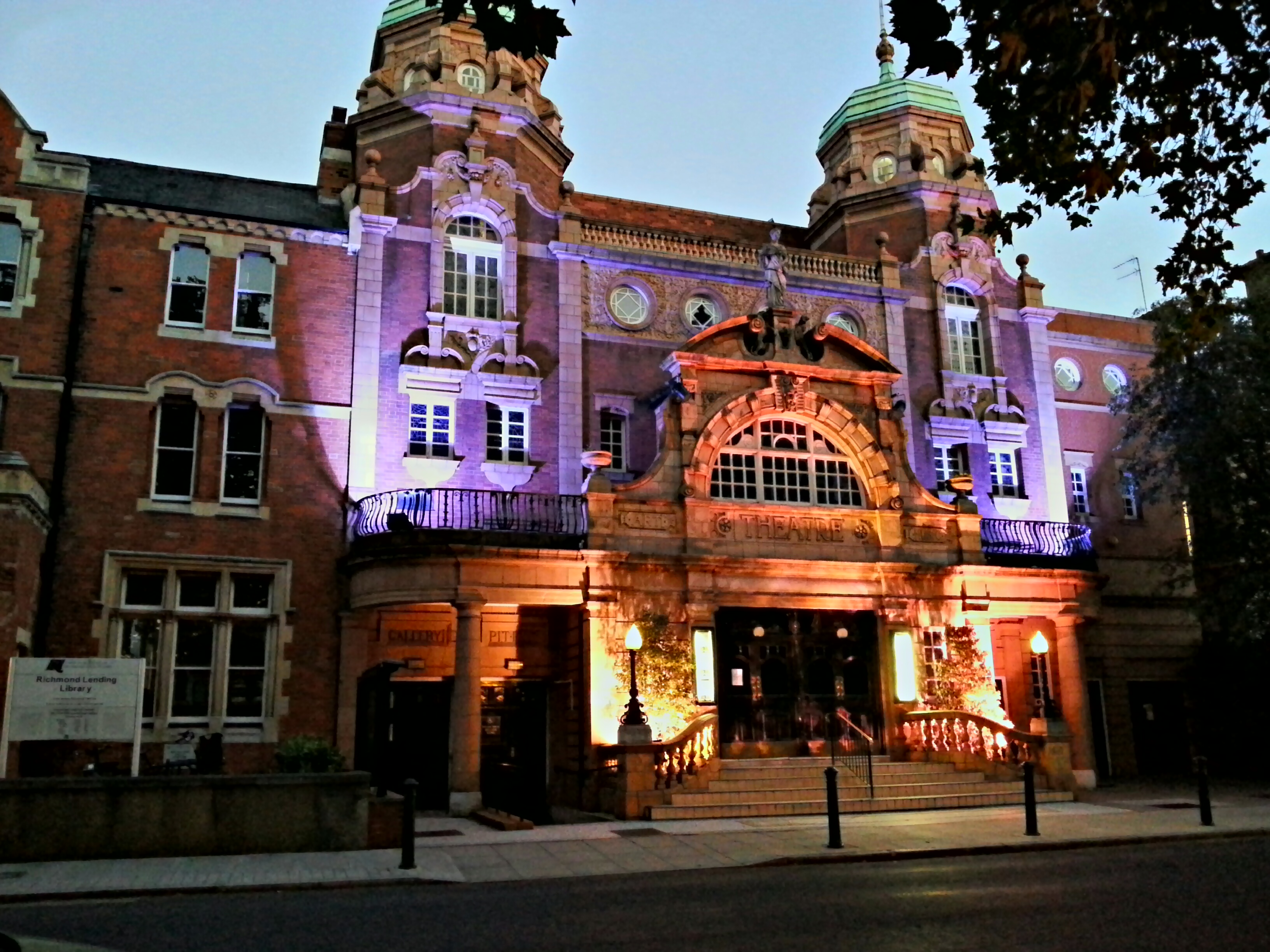
The Habit of Art at Richmond Theatre review *****

richmond_theatre_2013-09-23_20-19-48

The Habit of Art

Richmond Theatre, 19th October 2018

There are a handful of plays that I regret not seeing when they first appeared. Not those I wish I had seen, That would be a very long list and cover those periods where I was not putting the required viewing effort in, being too consumed by work and/or drink. No I mean those where I toyed with the idea of going but didn’t get round to it one way or another. The Habit of Art is definitely one of those. I can see why some might get irritated by the voice of Alan Bennett. Not his actual voice of course. Surely everyone loves that unmistakable broad Yorkshire drone. No I mean his theatrical voice with its now ever-present risk of self-parody.

The Habit of Art, from 2009, along with The History Boys (2004), The Lady in the Van (1999) and The Madness Of George III (1991) must all surely rank somewhere near the top of the pile of great British plays written in the last three decades for all the pervasiveness of the last three.  The Habit of Art “imagines” a meeting between WH Auden and Benjamin Britten in 1973 as a departure for an investigation not just into their specific art and lives but into art and theatre as a universal. Right up my street. And best of all for me at least, Benjamin Britten, for all his flaws, which are far from concealed here, is one of my favourite composers.

My only concern then, perhaps, was the cast. The NT run saw Alex Jennings, near full time Alan Bennett impersonator, take on the role of BB with the sorely missed Richard Griffiths as WHA having stepped in for the indisposed Michael Gambon, which I gather was more than fortuitous. You can take your pick as to your favourite Richard Griffiths role: in Potter, as Hector in The History Boys or as Henry Crabbe. I have two words for you though: Uncle Monty. As for Alex Jennings. Is there nothing this man cannot play? There are literally no duff roles or performances on his CV. The last thing I saw him in on the telly was Unforgotten Series 3. As chilling sociopath doctor Tim Finch. Sh*tting ‘eck as AB might say.

Anyway Matthew Kelly as WHA and David Yelland as BB, and indeed Philip Franks as director of this production, Nick Hytner (who else) having directed first time round, had big boots to fill then. And fill them they did. And then some. This is the first ever revival and I can report that it is really very. very good. And don’t just take my word for it. TMBOAD can vouch for it as well, my viewing partner on this evening, and he is one of the cleverest people I know. Ditto some elegant and cultured Richmond ladies of my acquaintance. The production, in addition to Richmond, has popped up in York, Brighton, Salisbury, Oxford, Guildford and Ipswich. It is in Liverpool as we speak and goes on to Cambridge, Coventry, Salford, Southend and Malvern. Residents, you would be mugs to miss it.

Richmond Theatre doesn’t always get the best of touring productions but here they struck gold. The Original Theatre Company, led by Alistair Whatley and Tom Hackney similarly didn’t quite hit the nail on the head with their last outing, Torben Bett’s Monogamy (Monogamy at the Park Theatre review ***) but on this outing I should look out for their next production at the Park. Richmond also hosts pre West End fare. I can’t think of anything more suited to the West End than this brainy, but not too brainy triumph.

Anyway what about the play. Well as I should have pointed out Messrs Yelland and Kelly don’t actually play BB and WHA. For the players are actually Fitz (Kelly), Henry (Yelland), Donald (John Wark) and Tim (Benjamin Chandler), who are rehearsing a play called Caliban’s Day. The play is set in WHA’s rooms in Christ Church Oxford on the set (keep up) of said play with Company Stage Manager Kay (Veronica Roberts) and her Assistant SM George (Alexandra Guelff) keeping the luvvies, and precious playwright Neil (Robert Mountford) ticking over.

Neil’s play draws it’s title from WHA’s contention that The Tempest was incomplete and requires an epilogue. In the play Donald, playing Humphrey Carpenter, the real-life biographer of WHA and BB amongst others, has come to interview the somewhat impatient WHA (played by Fitz), who it transpires, confuses him with the time-limited rent-boy Stuart, played by Tim, that he has procured. Donald also though steps out to narrate proceedings. Henry as BB arrives to join the set-up. He has been auditioning boys to play the part of Tadzio in BB’s Death in Venice, but wants to discuss his concerns over its plot with WHA, despite them not having met since their falling out 25 years earlier in America after WHA wrote the libretto for the somewhat derided Paul Bunyan. WHA though assumes that BB wants him to replace Myfanwy Piper as librettist for Death in Venice. After his father-in-law was Thomas Mann, the author of Death in Venice.

Neil’s play however, as I said, is in rehearsal so we have Kay kicking things off before Neil arrives and her and George standing in for various minor roles. notably two cleaners. The actors constantly bounce in and out of character, though never confusingly, and this is what allows us to see into them as individuals, as well as into the process of acting and performing. At the same time the play itself and the discussions between the actors. Neil, Kay and George, about what it is saying and why, offers multiple insights into BB and WHA, their art and the society in which they practiced their art. Alan Bennett doesn’t hold back from showing what it meant to be a gay artist through the middle of the C20 nor the paedophiliac controversy that surrounded BB.

Now normally with this much learning on show, play within a play meta-ness, theatrical self-referencing, in fact all round arty-farty pretentiousness, you would be a) rightly very wary and b) waiting for the whole thing to unravel . Not here though and not with Alan Bennett pulling the strings. It is very, very funny, (this time the smut isn’t laboured), but also very, very sincere. It dazzles with just how much intellectual and emotional ground it covers yet never fails to entertain. Even if some of the references pass you by, they did me, the perspicacity of the insight into the “cast” will not. And being a play about an “event” it moves from A to B.

I have seen Matthew Kelly, “tonight Matthew”, on stage in recent years in Richard Bean’s Toast, and for about 20 minutes before rain stopped play (ha, ha), at the Open Air in Pride and Prejudice. He makes for an excellent Fitz, fruity and cantankerous, but still vulnerable, qualities that segue into WHA but with the intellectual spotlight switched on to full intimidating beam. An actor playing an actor playing a man who relished playing the role of artist. David Yelland’s Henry,  like BB, is more tentative, more restrained, who then takes on the needy, sickly and child-like BB and his “obsession” with innocence corrupted. Their debate about Britten’s obsessions in his art, as well as Auden’s creative regrets, are what drew me in the most but I am sure you will find your own point(s) of contact.

Robert Mountford shows us Neil’s exasperation with actors who wish to distort his precious script. Veronica Roberts expertly shows us how much, in this case, maternal nourishment is required to bring a play into being but also shows us how Kay rues her own missed opportunities. John Wark gets to reveal, at one point with surreal humour, just what happens when an actor tries too hard to look for meaning in character.

It is hard to imagine a more appropriate set that Adrian Linford’s rehearsal space, with rough cut scenery and busy props, fitting into a classic proscenium stage, which Frank Matcham’s Richmond Theatre jewel (there she is) perfectly frames in a nod to the play itself. Philip Franks’s direction makes everything perfectly clear, no mean challenge as you might surmise from the above.

By some margin my favourite Bennet play. Mind you next up Mark Gatiss and Adrian Scarborough in The Madness of George III. This is showing live at cinemas but I see there are more than a few tickets left at the Playhouse. So students of Nottingham University. amongst others, save your beer money and go see this instead.



Cock at the Minerva Theatre review ****

rooster-clipart

Cock

Minerva Theatre, Chichester, 10th October 2018

Another addition to my collection of Mike Bartlett plays. I have professed my admiration for his work on numerous occasions on these pages. You see he just writes gripping drama. Hyper-real, sometimes going a bit over the top, but that is what you pay your money to see. Or at least I think you should. He can range widely across subjects, big and small. And he experiments with form. All in all probably the best of the current generation of British dramatists, of which there is currently a very fine crop. Just need a revival of 13 which I missed on its first outing.

Cock is a comedy which focusses on the machinations of the somewhat weak-willed John (Luke Thallon) as he attempts to choose between his two lovers M (Matthew Needham) and W (Isabella Laughland). It is a sort of companion piece to Bull, written a few years later, about workplace bullying. Both examine the “games that people play” and were kind of inspired by bull-fighting (and cock-fighting) which MB discovered were still very much alive when he visited Mexico City. There are no scene headings or stage directions or props in Cock, only lines between each of the “bouts” between characters (here marked with an electronic “bell”). MB stipulates that there should be “no mime”. He evens leaves out full stops and commas to express natural speech rhythms and inserts blanks to create equivalent pauses. So all your are left with is 2, then 3, then 4 actors circling each other and tumbling out the lines. Just the verbal sparring if you will. Of which there is plenty. It sounds tricksy but it is anything but as MB cannot help putting the right words, at the right time, into his characters. Emotions, as in his other works, are heightened by the formal structure. Everything is clarified.

It transpires that John was pretty young when he moved in with M. M is a bit of an emotional bully but when John wants out after seven years it’s pretty clear M is devastated. Especially when John falls in love with a woman. W doesn’t care that, until now, John has been gay. She pushes John into choosing when M invites them to, what you can probably divine, an “awks” dinner party. Especially when M’s Dad F (Simon Chandler) turns up.

There are plenty of killer comic lines but what MB really nails is the constant, and often brutal, ebb and flow of coercion and pleading that all four employ to get what they want out of the situation. John is agonised by having to decide between M and W, and by implication his sexual identity, bisexual not sitting comfortably, but he is also loving the attention. M is all over the words “emotional blackmail” but he does not want to lose John. W appears more reasonable but she is still determined to “win”. The world has moved on and become more fluid in terms of sexual identity but MB’s play still plainly shows that there are personal costs (and benefits) to be negotiated in all relationships. Monogamy exerts a powerful hold on all of us it seems. I would stab a guess that Cock is the sort of play Pierre de Marivaux would be writing if he were alive today.

This is I think the first time I have been party to Kate Hewitt’s direction. If there is a better way of showing off this play, here in the round, I can’t imagine it. I see she is in the chair for Jesus Hopped The A Train at the Young Vic next year. Excellent. I have espyed the Matthew Needham at the Almeida, and after this he will reprise his role as John (no relation) in Rebecca Frecknall’s production of Summer and Smoke at the Duke of York’s and Luke Thallon stood out in MB’s Albion at the same house and, I gather, in the Young Vic The Inheritance. I’ve only seen Isabella Laughland on the telly. Anyway even a chump like me can see all three actors are destined for even greater things. I can’t imagine Georgia Lowe will get an easier gig than this in terms of design, a red square on the floor in this red auditorium, but it still is the exact right solution.

With Press, his journalism drama, now over, until the next time presumably, I can’t wait for MB’s next work. I loved Press, obvs, most notably because it seemed to wind up many members of the fourth estate because “that’s not how a newspaper works”. Numbnuts. That’s the point. It’s a drama. Which uses your grubby, noble and powerful profession to shine a light on contemporary mores. Not a documentary. Which is also not “real” and constructed. As is your own “reality”. And your stories.