The Remains of the Day at the Yvonne Arnaud Theatre review *****

The Remains of the Day

Yvonne Arnaud Theatre, Guildford, 13th April 2019

Right all you good citizens of Derby, Salisbury, Cambridge and Bristol. There is still time for you to book tickets to see this excellent adaptation of Kazuo Ishiguro’s celebrated novel The Remains of the Day. A very well crafted script by Barney Norris, (just the fellow to write pensive studies of “Englishness” based on his previous work), in an excellent production from one of our premier touring companies Out of Joint, thoughtfully directed by Christopher Haydon, (latterly of the Gate Theatre), with a pair of sparkling central performances from Stephen Boxer and Niamh Cusack.

Now the Tourist has never been much good at reading. Nothing ever seems to sink in without repeated exposure. Especially with fiction. And especially with fiction he read in his youth. A vague recollection of the big picture, a few specific episodes and a general “I like that author”. Not like the SO who can trot out plot, character, meaning, style, context, like an A* student even for things she read decades ago. Maybe this low level intimidation is what stops the Tourist picking up a book except when on hols. That and spending too much time at the theatre and writing this stupid f*cking blog.

Anyway you probably. like the Tourist. know this work more from the 1993 Merchant-Ivory film with Anthony Hopkins and Emma Thompson as Stevens and Kenton, both quietly upstaged by Peter Vaughan as Stevens Senior. Nominated for 8 Oscars, won none. Mind you that was the year the Academy rewarded Spielberg for Schindler’s List. Fair dos. I see that one Harold Pinter wrote an original screenplay for the film when Mike Nichols was slated to direct. Bits of Harold’s work made it to the end but he removed himself from the credits. Might have been a very different film with him and Mr Nichols in the driving seat.

Instead I remember the central, unrequited, relationship between the stiff Hopkins and the droll Thompson, the look and feel of the thing, (Merchant-Ivory being allowed to film in any toff’s house at the time such was their fame), and the almost elegiac take on the history under examination, the 1950’s and the 1930’s. Yes the politics were there but not as sharply delineated as in this play. Class, deference, knowing one’s place, belief in the wisdom of the elite, are common to both treatments but I was far more struck in this treatment by the desire of many in the aristocratic class in the 1930’s to broker a deal with Hitler, to appease, than I was in the film. And specifically the reasons why, the guilt at having inflicted so much economic misery on Germany post First World War, as well as the memory of the human carnage of that war, and, of course their anti-semitism, which motivated them to pursue this course.

It may just be that, like my reading of the book, I just don’t remember the film very well. Which is salient given that The Remains of the Day is a memory book/film/play. Or maybe more specifically a memory of a history, personal and political, book/film/play. To solve the “problem” of butler Stevens remembering the events at Darlington Hall in the run up to the Second World War, (as he undertakes the road trip in 1958 to pay the visit to the ex-housekeeper, Miss Kenton, prompted by her letter), the film makes generous use of flashbacks. And a cast of thousands.

Well maybe not quite but tons of extras and actors of the calibre of James Fox, Christopher Reeve, Hugh Grant, Michael Lonsdale and Tim Pigott-Smith to fill all the named characters, (trust me, a lot of people found their way to Darlington Hall). Even the minor parts are filled by the likes of Ben Chaplin, Patrick Godfrey, Peter Eyre, Pip Torrens and, the go-to actor for Germans in British films, Wolf Kahler. Blimey even a young Lena Headey, Cersei in you know what, gets a look in. Basically if you could do plummy or gor-blimey, and you weren’t engaged elsewhere, you got a part in the film.

No such technology of budget for Out of Joint and Messrs Haydon and Norris. So a fair bit of character pruning, some adroit exposition to incorporate those written out, and extensive doubling. But this is not just any old “exit Act 1, turn up as someone else in Act 2 with new costume and wig” stagecraft. This is seamlessly executed, on stage choreography, a hat, a coat, a pipe, to turn a cast the cast of 8 into the staff and guests of pre war Darlington Hall and the locals Stevens meets on his pint-sized odyssey of self-discovery. This means that the ghosts of the past are always present. Very clever and very easy to follow.

Stevens devotion to duty even in the face of the shocking demand by Lord Darlington to sack the two Jewish maids, Kenton teasing Stevens about his book, Stevens carrying on his duties even as his father dies and Mme Dupont, (a gender change to accommodate the casting pyrotechnics), whinges about her feet, Reginald’s increasing awareness of what his godfather is up to, Stevens disowning the past in his conversations with Dr Carlisle, the mocking Stevens is forced to undergo from “Sir David” the composite collaborator with Lord D, the radical conservatism, or conservative radicalism, espoused by everyman Morgan in the pub and, of course, the extraordinarily moving scenes between Kenton, or Mrs Benn later on, and Stevens, as the happiness they might might have had slips through their fingers. You flipping noodle Stevens.

All of these scenes are memorable, providing plenty of minor key drama, but the best things about the play are the performances of Mr Boxer and Ms Cusack. I’ll stick my neck out here and say that for me, and remember this is based on my faulty memory, they capture the essence of Stevens and Kenton more that Hopkins and Thompson in the film. The ten year age gap between these actors seems more convincing than the 20 years of the film. Mr Boxer seems to me to bring out more of the interior life of Stevens, the way he buries the emotions that he plainly has in the cause of maintaining the dignified exterior he believes is required of him, the way he is puzzled by, but still craves, Miss Kenton’s attention. Ms Cusack seems more playful as Kenton, holding back the regret until the very end. the structure of the play lends more prominence to the conversations in the pub and the way this changes Stevens’s perspective.

The directness of the political dilemma, and its flawed morality, is far more pointed here than in the film. And the reliability of Steven’s recollection is more nuanced as in the book, (yes I took a quick peep again whilst writing this). In fact generally Mr Norris seems to capture the essence of the book in a, er, more reliable way that the period-drama aesthetic of the film does.

The rest of the cast step up. Miles Richardson captures the naivety, in life as well as politics, of Lord Darlington and the middle class bonhomie of Dr Carlisle. Sadie Shimmin offers us an uncomplicated pub host in Mrs Taylor alongside the hauteur of fascist sympathiser Mme Dupont. Edward Franklin warms to his task as the bespectacled, conscientious godson Reginald, (drawn from the film not the book), Patrick Toomey is the arrogant American politician Lewis (and, I think Farraday, Steven’s current employer) and Pip Donaghy marks out Stevens Senior decline. Top marks to Stephen Critchlow though as he he shifts from Morgan to the real “villain” of the piece the anti-semitic Sir David.

I see a lot of plays but this is one of the more satisfying I have seen so far this year. “Knowing” the content helps of course, and, from a personal geographical perspective a hop to Guildford, and the fine design and accumulated history of the Yvonne Arnaud Theatre, was no inconvenience. I get that Out of Joint rightly values its touring credentials and I am grateful to the Royal and Derngate, (on my list to visit), and the Oxford Playhouse for co-commissioning Barney Norris’s script. But I am stunned that this hasn’t secured, as far as I know, secured a berth in London.

The familiar story, the quality of the acting, the script and the production, (Lily Arnold’s set is another stand-out as is Elena Pena’s sound design), the themes it explores and their contemporary echoes – the dangers of passivity and nostalgia – all would suggest to me that this would pack them in in a mid sized West End venue. There is plenty for the customary theatre demographic to enjoy, (they certainly did on this Saturday afternoon), but, with the right tone, I reckon some younger folk could be persuaded. I know that Out of Joint’s last major production, Rita, Sue and Bob Too, had a false start, understandably, before eventually gathering plaudits as the Royal Court but most of the rest of their historical efforts have popped up in the capital. This, whilst still posing some thorny questions, looks to be a far more commercial proposition than many of those predecessors.

Barney Norris plainly says that “the play must be unlike the book or the film or it shouldn’t exist” in the programme. Fair dos. But, whilst its structure and perspective match his manifesto, there is more than enough of both earlier manifestations to justify your attendance should you know them.

Over to you nice people at ATG.


The Magic Flute at the ENO review *****

The Magic Flute

English National Opera, 28th March 2019

I’ve said it before and I’ll say it again. When opera works there is no other art form to touch. But when it doesn’t it can be mystifyingly dull. What’s more it can be the very same opera which is both of these things.

Take The Magic Flute. It is an undeniably daft opera. Its message is the triumph of the light and reason offered by the Enlightenment over the dark forces of Empress Maria Theresa’s absolutist Habsburg regime and the obscurantist Catholic Church. I understand that the Freemasons here are the good guys, even when they don’t appear to be, (though I gather the current mode de jour is to play down Mozart’s funny handshake connections), and that the Queen of the Night, even if she can hold a note (high F6 apparently), is not ideal mother-in-law material.

But even armed with sub-textual knowledge, insight into plot and familiarity with the score, (though that isn’t necessary though, this being Mozart, undeniably the greatest ever composer for dramatic voice), it can still it can still come across as upper class pantomime and take an age to get through. Unless of course it is directed by the genius that is Simon McBurney. There he is above in The Encounter. Mr McBurney OBE is the Artistic Director and a co-founder of Complicite. Complicite might just be the most important, and certainly the most innovative, theatre company in the UK. And therefore maybe the world. I say this secure in the knowledge that I have only seen a handful of their productions but when you see what they do you will know too. Which is what happened to BUD on the evening we went to see this Magic Flute. Mr McBurney has an eclectic list of film and TV, and directing, credits, so you are bound to have seen him somewhere, but it is his work with Complicite, extending far beyond direction and performance, given the vast array of associates involved in the company, that makes him special.

Now the Tourist, given his only rudimentary understanding of opera as an art form, and especially his inability to grasp the basics of musical constructions, find it tricky to opine on the subject. Moreover by rejecting pretty much all of C19 opera, (the bel canto of Rossini, Donizetti and Bellini, the pompous melodrama of Verdi, the sentimental, pot-boiler manipulation of Puccini, the meandering bombast of Wagner – I’ve tried it all and I can’t be doing with it), and seeing it as drama with music, not music and tunes to which the drama is stitched on, I appreciate I am drastically narrowing the field. There is plenty to like musically from the Baroque but you need to get on with gods, monsters and Classical Greece plot wise, and some of then don’t half go on a bit, (I am looking at you Mr Handel). There aren’t actually that many C20 operas that have stood the test of time and get a regular airing. All this means then that the Tourist, especially since he isn’t going to drop £200 for a decent view at the Royal Opera House, or worse still some poncey gaff like Glyndebourne, on the off chance he might be converted, is condemned to see a lot of Mozart, Britten and contemporary opera. Which suits him but doesn’t really qualify him to write about it, even to himself. And he has never seen a Gluck opera, nor Fielio and suspects he might put up with any old nonsense story if Vivaldi’s music backed it up.

Which is why he has failed to document some of his more recent brushes with Mozart. But, with this Flute, once again with BUD as Sancho Panza to the Tourist’s Don Quixote, some clear patterns, worthy of comment, have emerged. Cases in point. We saw the Die Zauberflute at the Royal Opera House in October 2017. Nice perch. Stalls Circle to the side, nose to nose with the pit, though the rear of half of the stage was cut off. Sur-titles on a little screen on the ledge in front. So a strong showing musically, and in terms of the acting from the cast, but less impact from the set and from the libretto. Lesson one then. Having to look down at the translation doesn’t help. Which brings me to the wider, and contentious, claim. For me opera is better in English. Not because I can understand every word that is sung but because I might, particularly if the translation of the libretto captures the meaning, spirit and musicality of the original. As evidence I offer up Jeremy Sams genius offering for The Marriage of Figaro in the Fiona Shaw ENO production. You can berate me as much as you like but, if the singing, and sur-titles, make a connection, (in so far as that is possible when some soprano is going balls-out coloratura on what feels like the twentieth reprise of her showcase aria’s first verse), then the Tourist can start to find a way into the drama. Anathema to the purist but there it is. As for this ENO Flute, Simon Jeffrey’s pithy translation certainly did the trick.

Lesson two. Now I couldn’t tell you why but clearly some opera singers are better than others. Stronger, more powerful, more resonant, more accurate. a wider range, a better understanding of language, breath control, squillo, tessitura, rubato, vibrato, etc, etc. The ROH Flute definitely had the edge on the singing front, even with a “second string” cast when compared to this ENO Flute, (with the exception of Lucy Crowe’s Pamina). The ovation accorded to Greek soprano Christina Poulitsi after she nailed Der Holle Rache was something and well deserved. Goodness knows how excited the punters will have been after Sabine Devieilhe, the dastardly Queen for the other performances and the critic’s darling, squeaked her damndest. Yet, in terms of performance I preferred the ENO version because the singing, and for that matter the musical interpretation from the ENO Orchestra, fitted the drama more satisfyingly than the ROH production.

Which brings me to lesson number three, the most important of all. In opera the director really matters. That is, of course, also true in straight theatre but in opera, where there are so many interpretative decisions to be taken and where spectacle matters, the vision the director brings, can, in the Tourist’s limited experience, may a huge difference, particularly in drawing out the universal themes and creating a “look” that resonants with a modern audience in works that were written a few hundred years ago. Now there are some that are going to prefer their opera unsullied by the hand of the Regieoper. I certainly get that if the creative mind goes on to wild a bender the result can be a mess. On the other hand seeing something that emphasises the drama, the theatre of opera, and imposes some meaning, or at least insight, is more interesting to me than a straight, “period” interpretation, whatever that might be.

Not that David McVicar’s “classic” 2003 ROH production, revived for the sixth time by Thomas Guthrie, with design from John MacFarlane and lighting from Paule Constable, comes straight out unvarnished from 1791. But it does emphasise the “pantomime” and “set-piece” look, feel and structure of what I imagine to be Mozart’s, and his librettist Emmanuel Schikaneder’s, original Singspiel vision. Magic, fable, predictable comic turns from the boy Papageno, starry night skies, Masonic temples, swathes of primary colours, sharply delineated light and dark, some immense puppetry, a spiritual journey. All present and correct but it did jog on a bit and there wasn’t really a thread that held the whole together. The cast was sometimes overwhelmed by the scale of the set and the dramaturgy a little stolid. The daft story, and the aforementioned clash of philosophies, were showcased but nothing really connected.

Now in contrast Mr McBurney’s ENO version was a revelation. In part because he utilises the whole arsenal of typical Complicite aural and visual tricks, video projection, here with on-stage digital blackboard, on-stage Foley artist, a tilting, floating stage, fluttering birds simulated through sheaves of paper, orchestra players incorporated into the action on stage and singers descending into the raised pit and auditorium, to create a spectacle that highlights the artifice and wit of the theatrical experience, but also in the “magical” plot and in Mozart’s spectacular score. It is entertaining for sure but when it needs to make a point, the book-shelf to symbolise Sarastro’s Temple for example, it does. And, as if to directly address one of the banes of the Tourist opera attending life, there is constant on stage movement. No member of the cast is parked. to sing or otherwise.

The three ladies (Susanna Hurrell, Samantha Price and Katie Stevenson) taking snaps of the unconscious Tamino (a properly hunky Rupert Charlesworth) on their phones, the three alarmingly old looking boy spirits (Guillermo Fernandez-Aguayo Martin, Richard Wolfson, and Nat Fukui), Julia Bauer’s Queen of the Night careering around in her wheelchair, the video snake, the “boardroom” table, the coup de theatre trials by fire and water with video backdrop covering the entire width of the stage, a genuine Prosperian “philosopher king” Sarastro, (bass Brindley Sheratt was compelling), and a genuinely strong and courageous Pamina (Lucy Crowe is both the best singer and actor I have ever seen on an opera stage, though appreciate experience is limited), a gentleman of the road Papageno, (Thomas Oliemans) and come to think of it Papagena (Rowan Pierce), with the ability to translate frankly p*ss poor comedy into real pathos, a greasy, lank-haired Monostatos (Daniel Norman) who is pure creep. And a magic flute which literally takes centre stage. Mr McBurney has thought about how it all fits together, about the story he wants to tell, and then worked on every detail to make us believe that this symbolic, numerological gibberish is really saying something to us.

It is as well that Mr McBurney’s creative collaborators were up to executing the vision. At this performance Chris Hopkins took the baton from young Ben Gernon. Sounded fine to me. I have no doubt that chief amongst all this invention was associate and movement director Josie Daxter who has worked with SMcB on his other opera A Dog’s Heart and A Rake’s Progress in Amsterdam. And there there was the set design of Michael Levine, the costumes of Nicky Gillibrand, the lighting design of Mike Gunning, (based on the original work of Jean Kalman), the video of Finn Ross, the sound of Gareth Fry and the aforementioned on stage artists Ben Thompson and Ruth Sullivan.

Now just in case you opera buffs were thinking the Tourist is some sort of lightweight with a toddler-esque attention span that delights in directors upending operatic tradition I offer up a recent visit to the Royal Opera House and Cost Fan Tutte. Overall this was a fine night out with the SO, BUD and KCK for company with much to enjoy. Admittedly in a cheap (for a reason) box which restricted the view but still. It was Mozart, a fine, if not perfectly matched, cast highlighted by Thomas Allen’s Don Alfonso and Serena Gamberoni’s Despina alongside the menage a quatre of Paolo Fanale (Fernando), Gyula Orendt (Guglielmo), Salome Jicia (Fiordiligi) and Serena Malfi (Dorabella), and a barnstorming performance in the pianoforte continuo from conductor Stefano Montanari who amped up the tempi to good effect.

However Julia Burbach’s direction of this revival of German Regie Jan Philipp Gloger’s original production didn’t really work for me. I had seen the original at the cinema and was mystified by some of its conceits then. Same here live. I get the notion that it is daft to believe that our funny lovers, even when the lads are dressed up as “east” Europeans, wouldn’t recognise each other, but it is equally daft to presume that they are all deliberately playing along to rediscover love and something about themselves. So we enter Don Alfonso’s School for Lovers, after a performance of the opera has ended, the scenes are played out in a rehearsal of the opera itself, with stagehands milling about and putting up each of Ben Bauer’s inconsistent designs ahead of each scene, there is plenty of implied guff about defining and reclaiming identity and the sexist title is repurposed to include us all rather that just the “women who are like that” with a simple replacement of an “e” by an “i” – tutti you see. All is artifice, all is deceit, and that includes you audience.

I get the idea. The problem is the plot and libretto. There is no way round it. This story and the words da Ponte sets to Mozart’s glorious sounds to tell it are sexist claptrap. So the gap between what Herr Gloger wants us to understand is the message and what we hear (or more exactly, read in translation) just gets wider and wider. Nothing wrong with director’s manipulating and mining sacred texts to resonate with contemporary audiences and to repurpose the arguments and nothing wrong with exploring the dissonance between what was acceptable then and what is acceptable now but there has to be some internal logic and clarity in what we see and hear that doesn’t require a download of the programme notes in advance to understand.

And the performers have to be convinced by the director’s vision that no-one here is convinced by what they are doing or singing. I don’t think they were, with perhaps the exception of Serena Malfi. So neither was I. Better to recognise the reality of the first, misogynist, take on the opera, and then start to tease out the ironies that might exist in da Ponte’s texts and Mozart’s music. It might not entirely paper over the ugly stereotypes at the heart of the “comedy”, nor the fact that it does go on a bit, but there is plenty to work with in the right hands, as with Shakespeare’s more cloth-eared passages, and, failing this, there is always the music and the farce.

Right that’s the state of play in the Tourist’s head Mozart opera wise. Until the next time when he will likely entirely reverse his opinions.

Betrayal at the Harold Pinter Theatre review *****

Betrayal

Harold Pinter Theatre, 1st April 2019

The Tourist never had a great deal of confidence in his ability in his chosen career. Unfortunate in a world where self-belief is everything, even in the face of overwhelming evidence that it was misplaced. Still many of those he had cause to interact with seemed to disagree for which he is eternally grateful.

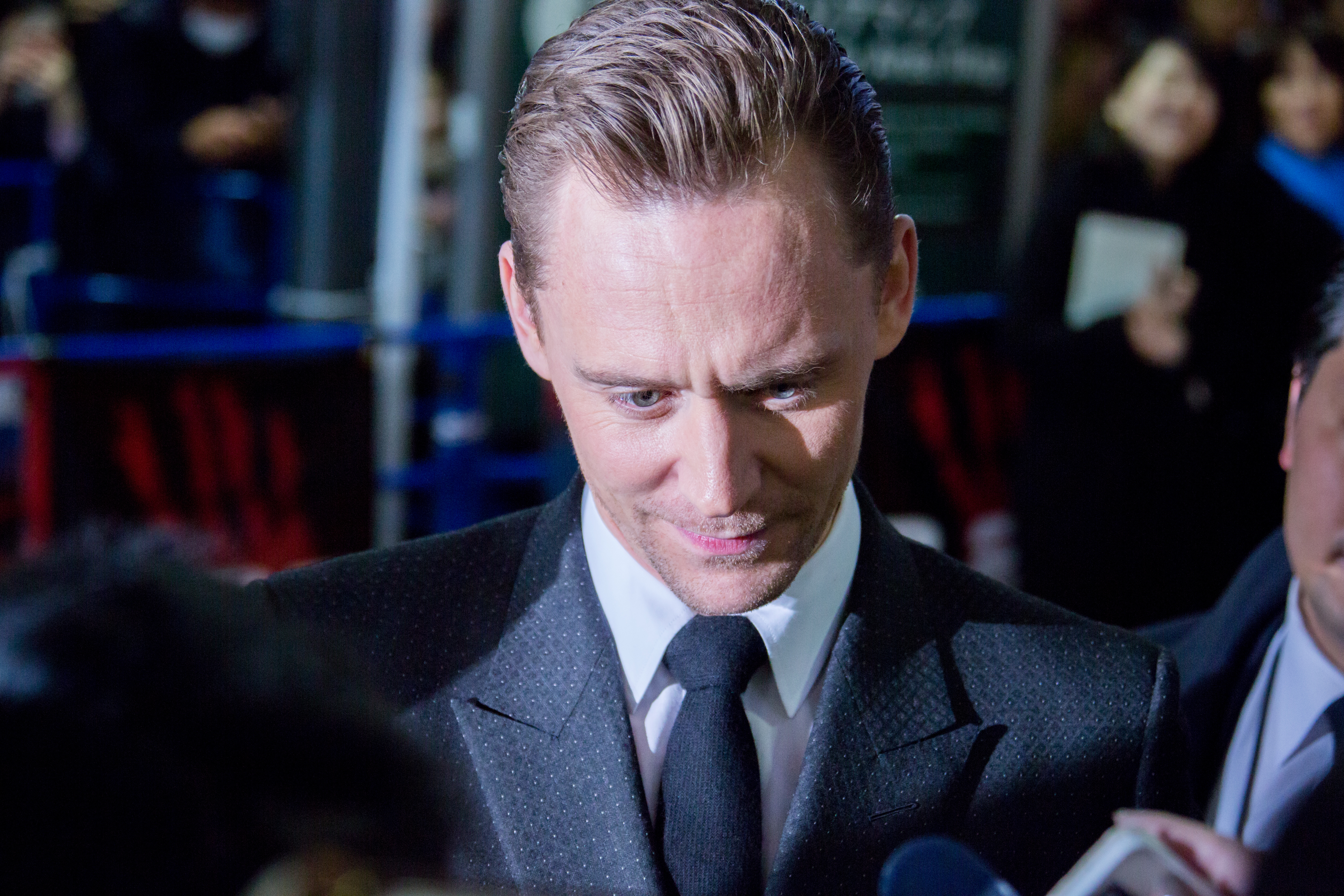
I would be surprised if Tom Hiddleston has this problem. With good reason. He is a mighty fine actor. And I think he knows it. And he is a gorgeous looking fella. And I see he went out with Susannah Fielding, herself a brilliant stage actor, to wit her turns in American Psycho, The Merchant of Venice, The Beaux Stratagem and Bull, and, most recently giving Steve Coogan lessons in comic timing in the uneven, though still often brilliant, This Time with Alan Partridge.

Until now I had only seen TH on stage in Cheek By Jowl’s The Changeling years ago, missing his award winning outings in Cymbeline, Othello, Coriolanus and the limited edition RADA Hamlet. And since I can’t be doing with all that super-hero gibberish the only film I know him from is Ben Wheatley’s adaptation of JG Ballard’s novel High Rise, which is the very definition of pretentious, art-house cinema. Obviously I quite liked it. So it is his TV roles in Wallander, The Hollow Crown and The Night Manager which I know best. He shines. And it is not like he isn’t up against some pretty stiff competition here.

So we come to Betrayal, the conclusion of Jamie Lloyd’s stupendous Pinter season. At first glance taking the role of the cuckold publisher Robert, rather than literary agent Jerry, his mate who has the affair with his wife Emma, seems a surprising decision. Yet he doesn’t even have to open his mouth, just lurking at the back of Soutra Gilmour’s revolve set, for this to immediately make sense. I have said before that there have been a handful of actors in this season who just seem get Harold Pinter’s language. By which I mean they turn it into something natural whilst still retaining that rhythm, whether it is passive or aggressive, that makes it unique to him. Tamsin Greig, Rupert Graves, Al Weaver, Brid Brennan, Tracy-Ann Oberman, Danny Dyer, John Heffernan, Ron Cook. Not always who you might expect but these where the ones who nailed it. To which we can now add Tom H. But Mr H also captures an inner emotional rhythm which makes him very, very special.

It helps that Betrayal, beyond its “going back in time” conceit, is one of HP’s least tricksy plays, indeed it can almost be delivered as the kind of naturalistic melodramas that HP first appeared in as an actor. And that Charlie Cox, an actor whose work is entirely new to me, and Zawe Ashton, who I remember from Jamie Lloyd’s persuasive, if sometimes wayward, production of Genet’s The Maids at Trafalgar Studios, are similarly impressive. And that Jamie Lloyd has pretty much turned himself into the best director of HP since HP himself, (The Homecoming at Trafalgar Studios still ranks as his best). I expect a definitive Caretaker to appear in the not too distinct future given the box office success here.

Betrayal, as I am sure you know, first appeared in 1978, with the affair which it dramatises beginning in 1968 when the play ends, and ending in 1977 when the play begins, with scenes from 1975, 1974, 1971, and proceeding chronologically within the other pivotal year of 1973. I am sure you also know that it is loosely based on HP’s own affair in the 1960’s with TV presenter Joan Bakewell. HP was simultaneously working on his great, unfinished, paean to Proust, a very clear influence. The structure means we already know the what, so that HP can focus on the how, and, especially get to the core of the deceptions to learn the why, of the betrayals. With the sparse plain set, few props and having all three actors always on stage the tripartite relationship is emphasised. What they know and don’t know. What they hide from each other and from themselves. The hurt they cause each other. The victories, defeats and compromises, for there is calculation here entwined with the passions. The key moments, the memories, of the affair, the marriage and the friendship, leap out with uncanny resonance from Mr Lloyd’s minimalist treatment. Robert’s attempts to intimidate Jerry in the restaurant scene and the pain when he finds out on the holiday in Venice, the best single scene of this entire season. Jerry’s needy, self-centredness. Emma’s ill-fated desire for both men. The dependence of the men on each other and on Emma. The truculence of the end of the affair the as mundane mechanics of break up are thrashed out.

As in the rest of the season Jon Clark’s lighting and the Ringham brother’s sound is impeccably delivered. Yet if I had to pick one thing that elevated this Betrayal into something very, very special it is the on stage movement of the three actors – the invisible link between them made visible. The silences are made part of the language and therefore the drama. That’s where Jamie Lloyd has the edge.

One example. The scene where TH is sitting on a chair cuddling Robert and Emma’s child. Whilst she and Jerry are languishing in bed on a stolen afternoon in the flat in Kilburn. Old TH managed to conjure up real tears in the Venice scene but this scene nearly had the Tourist blubbing. In Pinter. WTF.

What next for Tom Hiddleston. Other than the twenty fifth incarnation of this Loki bloke. I can’t wait.

Bodies at the Southwark Playhouse review ****

Bodies

Southwark Playhouse, 26th February 2019

Two’s Company is a theatre company which set out to explore plays written at the time of the Great War but has subsequently gone on to stage the English premiere of Hemingway’s only play and some Pinter productions. Here it has revived one of the most successful of James Saunders’s plays which originally premiered at the Orange Tree Richmond in 1977 before transferring to Hampstead Theatre and the West End. This is the first revival in 20 years or so.

James Saunders (1925-2004) was initially a champion of the Theatre of the Absurd, and even in his later work, (he wrote some 70 plays in all), he sought to push theatrical boundaries. He was closely associated firstly with the Questors Theatre in Ealing, (now one of the largest independent amateur theatres in Europe), and subsequently the Orange Tree.

Now I am not quite sure what attracted the prurient me to this intricate tale of wife-swapping in 1970s West London. Actually that snide observation does play and production a massive disservice. This really is a stealthily constructed portrait of marriage which has universal lessons beyond its central conceit.

Anne, on the surface the archetypal bored housewife, and Mervyn, frazzled and erudite English (head) teacher, are the embittered Ealing couple whose barbed conversation is fuelled by Scotch. So far, so Who’s Afraid of Virginia Woolf. They meet younger couple Helen and David, something in marketing, and become bessies. However we join them a decade after they initially befriended, Helen and David having returned to the seething maelstrom that is Esher from the US. We discover that they left after the couples swapped, the casual affair of Anne and David countered by Helen’s more calculated seduction of Mervyn, and then returned to, their partners, all those years ago. Helen and David have undergone some fairly intensive therapy to overcome the emotional impact, whilst Anne and Mervyn have simply buried it and their other “neuroses”. The therapy in question was a actual thing, Erhard Seminars Training, which the programme explains, went well beyond the usual hippyish 1970s mumbo-jumbo into some fairly aggressive group interventions. Worked for some apparently, though the organisation was dogged by accusations of brainwashing, bullying and extortion.

Anyway it has turned David, and Helen on the surface, into models of emotional stoicism and patronising rejectors of consumerism. Mervyn though is having none of that and, niceties dispatched, starts to pick away, at hypocrisies past and present, culminating in a full-on, pissed-up, stripped-bare (not literally but it might have worked) diatribe. These are all well-read people, they read on stage, which makes their opening expositional monologues, and subsequent conversation and interaction, all the more articulate. James Saunders clearly had a gift for provocative dialogue and the lucid four hander set-up is the perfect vehicle to show this off, especially when contrasted with an off-stage sub-plot of Simpson, a troubled, poetry obsessed, student of Mervyn’s.

Out of the mouths of his morally compromised characters Mr Saunders seems to conjure up rafts of argument that never feel too forced or contrived. Indulgent, middle-class philosophising under pressure can become tiresome in some playwright’s hands. Not here. I’ll admit that the absence of interruption feels a little less than naturalistic at first but is explained by Anne’s hauteur and the younger couple’s therapy. This leaves Mervyn as the apoplectic centrepiece and Tim Welton certainly lets it all come out in his closing heft of a monologue, an impassioned defence of human frailty. Annabel Mullion as Anne may not be gifted with quite the same knockout lines but when she gets her chance she offers a masterclass in waspish scorn from her chaise longue. Peter Prentice’s David, complete with black polo-neck, exudes the priggish certainty of the spiritual convert, and Alix Dunmore cleverly reveals the doubt under the surface of the willowy Helen.

Alex Marker’s set is a faithful Abigail’s Party like reconstruction of a 1970s lounge split by a jagged line, (and some sort of Atomium caper), to symbolise the fissures in the relationships. Costumes (Emily Stuart) and lighting (Neill Brinkworth) all expertly capture the 70s vibe and Tricia Thorn’s delicate direction doesn’t even attempt to distract from this excellent text.

I’ll admit that there were a couple of brief longuers across the two hours or so, but nothing to trouble the Tourist’s lardy bum on the Southwark Little’s ungenerous benches. The Tourist has sat through a few “lost classics” in the past few years that were nothing of the sort. This was, give or take, the real deal. It would be interesting to see more of James Saunders work though I doubt it will happen. (I also see that he was responsible for the script of Bloomers, the sit-com which starred the much-missed Richard Beckinsale of Rising damp and Porridge fame, before his untimely death. Never saw it. Mind you it sounds like it was infected by bog-standard 1970s misogyny).

Ovid’s Metamorphoses at the Vaults Festival review *****

Ovid’s Metamorphoses

Pants on Fire, Vaults Festival, 23rd February

Seven years in to the Vaults Festival and finally the Tourist takes the plunge. If there is a cutting edge to avoid you can be sure the Tourist finds it. It is not even as if the Waterloo location is inconvenient. It could hardly be more accessible. Still better late than never.

Last year the Festival, which I read somewhere is now the biggest outside Edinburgh, attracted some 70,000 punters over 8 weeks. This year there are over 400 shows from around 2000 artists and performers. You pay £15 or so for an hour or so’s entertainment. The organisers get 30% of the take to cover costs, the artists 70%. That, I am assured, is way more attractive for the creative that the usual economic model. So everyone’s a winner.

Especially when the hour, or in this case, 80 minutes or so is of the quality of Pants on Fire’s Ovid’s Metamorphoses. Now I could bullshit you and pretend I have read Ovid’s magnum opus, basically a history of the world from the creation to the deification of Julius Caesar, part mythic, part factual, in the form of a narrative poem made up of 12,000 lines over 15 books and incorporating over 250 myths. I haven’t. But, such is the pervasive nature of these myths in Western culture, I am, like any reasonably aware culture vulture, au fait with most of the stories.

And that is all you need to enjoy this show. The selected stories are, adroitly, set in Britain during WWII. Think period uniforms. Each of the chosen myths, (I would have been happy to watch the cast of seven take on the entire 15 books, but I guess they, and we, had homes to go to), takes the form of a sketch if you will, with narration, performance, on stage music, various props and enterprising video, lighting and sound design. There is even some puppetry and animation. Whilst the Crescent may be the biggest of the various venues across the Festival this is still a tiny stage so the creative team, led by director Peter Bramley, had to be pretty ingenious to fit it all together. The four panels centre stage which served as backdrop and screens seemed to be in constant motion. Favourite setting? The Underground as the Underworld. Genius. Favourite transformation? Io complete with tin can hooves and gas mask. Double genius. Favourite scene? Narcissus as Hollywood idle with Echo as usherette. Triple genius.

Now I can’t pretend I clocked all of the stories on show but the following were all name-checked. The Creation, Sirens, Gorgons, Apollo, Daphne, Io, Mercury, Cadmus, Diana, Semele, Bacchus, Tiresias, Narcissus, Echo, Cupid, Icarus, Salmacis, Hermaphroditus, Perseus, Arachne, Marsyas, Medusa, Jason, the Minotaur, Hercules, Orpheus, Eurydice, Midas, Achilles, Ajax and Ulysses. At least I think they were. I might have got confused with Unmythable from Out of Chaos that I saw a week or so later, equally as entertaining. Anyway the point is that Metamorphoses is innovative, imaginative and above all very, very funny. I gather that Ovid’s poem ticks the form box marked epic but also takes in the elegiac, tragic and pastoral along the way. It is certainly keen to mock and subvert its own pretension; it is properly “meta” in the modern argot. This is wryly captured in Pants on Fire’s routines. As is the theme of metamorphosis or transformation from one form to another, and the power of love, Amor, to upset various narrative apple carts.

Pants on Fire was founded by AD Peter Bramley, who trained with Jacques Lecoq, in 2004, alongside Heather Winstanley who devised the visuals and produced Ovid’s Metamorphoses. Lucy Eggers composed the original music for OM, the Andrews Sisters style chorus numbers being one of the highlights. Whilst POF have created a number of shows it is this that has garnered awards and toured extensively following its debut in 2010 (at the dear old Greenwich Theatre and then Edinburgh). It is easy to see why. (I do like the sound of their Splice mind you, an hour long theatrical tour through the history of cinema). They are currently working on creating a festival of one person, performance “shorts”. Sounds good.

The cast here included Beth Lockhart who is the other principal of Pants on Fire along with Adam Boakes, Max Gallagher, Sindre Kaurang, Chloe Levis, Bridget Mylecharane and Rosie Ward. A splendid ensemble largely drawn from Rose Buford College where Peter Bramley teaches movement. There were moments when the timing went awry and accents wobbled but frankly that is all part of the improvisational charm.

Theatre is about transformation and can be transformative. Ovid was ploughing the same furrow. Certainly one of the best hour’s entertainments I have seen in this or any other year. It will be back. Don’t miss it.

The Lady From The Sea at the Print Room Coronet review ****

The Lady From The Sea

Print Room Coronet, 20th February 2019

Hummed and hawed about this one. Never been entirely sure about TLFTS when compared to other Ibsen’s, was not bowled over by it’s last London outing at the Donmar, couldn’t get the cheap Wednesday seat option (that is a steal) and was trepidatious about the billed mix of Norwegian and English creatives. On the other hand the last time the Norwegians came over, in the form of the National Theatre of Norway, to this very stage with their Little Eyolf (which I do care for) it was, by all accounts, a success, and the Print Room under AD Anda Winters can usually be relied upon to deliver a thought-provoking, if sometimes obtuse, evening’s entertainment.

And so it turned out. The combination of modern idiom English and Norwegian text, and British and Norwegian acting “styles” was both captivating and illuminating, as it drew out the differences between . Now as I am sure you all know Ibsen, after some chap name of Shakespeare, is the most performed dramatist worldwide (though, as with all such claims, the Tourist is dubious as to how this was proved. Remember people, always question). However, Norway had no theatre company dedicated to Henrik’s works, a la the RSC, though there is a successful biennial Ibsen festival sponsored by the National Theatre in Oslo . Which is why, in 2016, AD Kare Conradi, set up the NIC, to sponsor both new productions and to work with other theatre-makers internationally on the work of the master. The company is bi-lingual by design and targets those who might otherwise not get to see HI. This is their first in-house production. Good on ’em.

Wangel (Adrian Rawlins) is the English doctor who has ended up in the provincial Norwegian seaside with daughters Bolette (Marina Bye) and Hilde (Molly Windsor). His new wife Elida is played by Norwegian acting royalty, Pia Tjelta, who was in the Little Eyolf last year, and Kare Conradi himself plays the returning schoolteacher and family friend Arnholm. The Stranger, the object of Elida’s obsession is, obvs, Norwegian in the form of veteran Oystein Roger. Our sickly, would-be artist Lyngstrand is however English, played by Edward Ashley.

Elida likes the sea. Elida is miserable. Elida and Wangel lost their son as a baby. Elida and Wangel’s marriage is under pressure. Arnholm arrives to help. Arnholm falls for Bolette who longs to escape. Lyngstrand is a bit of a ninny but mopes sound after feisty Hilde who feels rejected by step-mum. The seaman Stranger who Elida loved and lost returns to take her back. Only when Wangel accepts she is free to decide her own destiny does she elect to stay and put the marriage back together. Without the symbolism its a belting story about the “choices” that we make. With the symbolism, as long as it is not overwrought (and this is where I sometimes get fidgety), it could be, I would imagine, intoxicating.

That isn’t quite the case here but it is still engrossing stuff. Mari Vatne Kjeldstadli’s (she also acts as dramaturg) new version, based on the translation of May-Brit Akerholt, is mercifully purposeful stuff, a text located in the right here, right now, which still just about manages to dreamier elements and finds the comedy. Pia Tjelta takes a nice line through Elida’s frustration with the present borne out of her idealised past. The final scene with Adrian Rawlin’s Wangel, when the penny finally drops for him, was as convincing, (and a little bit moving), as good as it gets. Kare Conradi’s captured the threat that underpins the bargain that Arnholm offers Bolette. Molly Windsor has been lauded for her performance in TV drama, Three Girls. It was easy to see why in this her stage debut. Her petulant Hilde was particularly effective as she dragged the damp Lyngstrand around the houses, physically and metaphorically, and in her interaction with Elida, notably in the “reconciliation” at the end.

No messing with Erlend Bierland’s set. Beach backed by beach-house backed by mountain view. And, a la mode, a fish tank. This is some way up the Norwegian coast. Lovely when the sun comes out. Not so perky during the long dark seasons. I need to imagine the whiff of sea, sand, engine oil and disappointment which I got here, though maybe a more nuanced lighting design (Simon Bennison) might have added more texture. Nils Petter Molvaer’s composition and sound lent a mildly brooding air when required.

So a production that uses a bi-lingual text and cast to emphasis difference and which, subtly, but insistently, marks out Ibsen’s photo-feminist message of self-determination. It sometimes came across as a little uneven but then again Ibsen wouldn’t be Ibsen without the messy stuff of life.

Keep: Daniel Kitson at Battersea Arts Centre review *****

Keep, Daniel Kitson

Battersea Arts Centre, 20th January 2019

Beckett, Pinter, Stoppard, Kitson. I know, I know. He is only a stand-up comedian. So comparing him to these master explorers of the absurdity of the human condition is, to say the least, stretching it a bit. However, as those of us who have become addicted to his “story shows”, (I don’t think DK would like to think he has “fans”), as well as his “stand up”, in recent years. he is a very clever fellow, as are the chaps above, he is very funny and he delivers startling insights. Yes the conceits that underpin the structures of these stories can be as pretentious as they are inventive, and once set-up it is usually pretty easy to see where they will end up, (though the pay-off here is still worth the wait), and yes the man himself, or rather his persona, and his repeated tropes can be annoying, but when he hits it no-one comes close. And that includes many great dramatists who search for tragic-comic perfection.

In Keep he hits it. No question. The preamble, where he gives the audience a chance to excuse itself, as he describes what is coming, the threat, to read out a list of everything he owns, the diversions and repetitions which follow, the self reference, self reverence and self revelation, (now’s who’s being pretentious), the gentle provocations, the playful aphorisms, all are present and correct and all beautifully delivered. Maybe by the end the various layers become a bit too meta, and maybe, as DK himself admits the metaphor of stuff in filing cabinet for mind and self is a bit too creaky, and could be applied by anyone to anyone, but frankly I don’t care as no-one else comes close to being able to create this kind of work.

Don’t worry, there are plenty of laughs. And for those who appear to think it is too long I suggest they need to work on their attention spans. I would have taken another couple of hours no problem. Of course it meanders and digresses, it’s Kitson FFS, but, certainly not in the performances I saw, without considered effect. Love, loneliness, hope, regret, memory, agency, language, he has covered this territory before, but these are the staples of many of the modern dramatic greats including those mentioned above.

And all this for £12. It’s gone now. Don’t miss the next one.

The Double Dealer at the Orange Tree review ****

The Double Dealer

Orange Tree Theatre, 7th January 2019

Now everyone know’s that Restoration comedy is a tricky customer. What with the humour built on misogyny, that’s if it is funny at all. The satire of a social class few of us recognise. Texts are so thick, built on repartee, wordplay, punning and double entendre. Plots and sub-plots are labyrinthine. Intrigues, trysts, disguise, mistaken identity, off stage shenanigans, eavesdropping, knob gags, duplicity, comeuppances. Characters are stock: rakes, roues, ingenues, cuckolds, randy older women, buffoons. The debt to French and Spanish contemporaries, Jacobean classics, commedia dell’arte and the Roman foundations of Plautus and chums, is obvious even if it is firmly of its time.

I’ve swerved a few in my time, including recently the Donmar Way of the World, which sounded a bit too full-on. There was a Simon Godwin Beaux Stratagem at the NT a few years ago which had its moments and the “Bright Young Things” Country Wife last year from Morphic Graffiti was diverting in parts but I am still waiting to be shown the “real thing”. Director Selina Cadell, who is a veteran of the Restoration, (you know what I mean), as both actor and, increasingly, director, (Love for Love at the RSC, Way of the World at Theatre Royal, Northampton, The Rivals at the Arcola, in addition to a Stravinsky Rake’s Progress at Wilton’s), offers valuable insight in the programme. To make the comedy work actors need to trust the text and stop their natural, modern tendency to interpret and emote.

I can see the sense of that and also the idea that we the audience shouldn’t worry too much about trying to unravel the plot. To that end, in this Double Dealer, William Congreve’s 1694 less successful follow up to his hit debut The Old Bachelor, Selina Cadell and Eliza Thompson have offered up a short prologue telling us to do exactly that. So, with that in mind, I settled in, though, given the string of less than enthusiastic reviews, expectations were low.

So I was more than a little surprised when I found myself starting to enjoy the proceedings. Not to the point of being converted to the Restoration cause but certainly enough to justify 4*, admittedly on the Tourist’s extremely flawed, subjective and overly generous ranking system. (I reason that all involved have gone to the effort so it is only reasonable for me to be generous in my appreciation. And the hard laws of cognitive dissonance mean I am hardly likely to admit I ballsed up by booking to see something in the first place).

This is not to say that the plot isn’t convoluted. Earnest young Mellefont (Lloyd Everitt), heir and nephew to Lord Touchwood (Jonathan Coy) can’t wait to marry Cynthia (Zoe Waiter) who is the daughter by a former wife of Sir Paul Plyant (Simon Chandler). Sir Paul is also the brother of Lady Touchwood (also Zoe Waites) who just happens to have the hots for young Mellefont. Lady T, rejected by said Mellefont, gets the hump and resolves to ruin his reputation. She recruits the rakish Maskwell (Edward MacLiam), the Double Dealer of the title, and Lady T’s former lover, into her plot. As it happens the villain Maskwell is actually in love with the virtuous Cynthia. So Maskwell attempts to persuade Sir Paul P that his missus, the randy Lady P (Jenny Rainsford), is getting it on with Mellefont, and Lord T that Mellefont also has designs on his wife. Into this fray are plunged Mellefont’s mate Careless (Dharmesh Patel), Lord Froth (Paul Reid) and his pretentious wife Lady Froth (Hannah Stokely) who responds to the advances of coxcomb Brisk (Jonathan Broadbent), who also plays a chaplain as the trysts pile up and the plots unravel.

Easy really. Seriously though, a quick scan of Wiki, as you might prior to a Shakespeare, Marlowe or Jonson play, a shifty glance at your programme as the various punters run on and off in the first few minutes, and it becomes pretty easy to follow. So I am not sure that constitutes a fair criticism. The constant entrances and exits do get a little repetitive but so it can in Shakespeare history plays and there ain’t a lot of options space-wise at the OT, that is normally one of its joys. The reasons for the doubling of Lady Touchwood and Cynthia remain a mystery but Zoe Waites offers more than sufficient distinction between the two, in some ways rather to the detriment of her colourless Cynthia. And, when we get to the scene where Cynthia eavesdrops on Lady T’s intrigues, we witness the rather daft sight of her rolling on her side to signify who is speaking. Still at least she didn’t have one of those split down the middle costumes on.

Lloyd Everett gives more definition to Mellefont but the the star turn by a country mile is Jenny Rainsford’s Lady Plyant, who is hilarious, both in the delivery of her lines and her movement. Hannah Stokely also gets real laughs out of Lady Froth and Edward MacLiam gradually, though not entirely, fleshes Maskwell out beyond the pantomime. The rest of the cast is solid if not always spectacular. As an aside I think this might have been my first full house in terms of the ten strong cast. All seen in the last couple of years in other productions. Madeleine Girling’s set did the job as did Rosalind Ebbutt’s costume’s and Vince Herbert’s lighting though I couldn’t escape the feeling, (very rare at the OT where less is normally defiantly more), that more space and more money would have helped.

BUT what I can say is that this was a production which persuaded me that Restoration Comedy can be not just something I, (and I suspect most audiences), should enjoy, but something that I could enjoy, and in fact something that I would enjoy. If there were an entire cast operating at the same level as, say, Jenny Rainsford here, so that every line, every exchange, every character trait, every situation, registered then it could be very bright and very witty. If this were overlaid with more expansive visual cues, the entertainment could be further enhanced. Not to the exclusion of the text but in support thereof. And if the differences between the characters are fully defined by movement, costume and through variations in the rhythm of dialogue and action then the plot should be less of a hurdle.

Even the most perfect production might have its work cut out to bring relevancy to the social satire or to contemporise the sexual politics. Congreve’s play dates from the period of the second wave of Restoration comedy from 1690 through the turn of the C18 which broadened out the interaction between social classes beyond the purely aristocratic subjects of the original craze from 1660 to 1680. Even so it is still essentially a bunch of toffs running around stunting innuendos the Carry On script writers might have rejected. Easy to see why the stuffy Victorians took umbrage and the plays fell out of fashion.

This is the first production of the Double Dealer in London for a few decades. It’s not perfect. The tension between the pantomimic and the dramatic is never really resolved. There is precious little weight to the characters. The space constrains, even though the play is nominally set in the “gallery” of Lord T’s house over the three hours of the (unabridged) play. Yet, despite this, the Tourist sniggered a fair bit and emerged in quite a perky mood. Which is not always the case post theatricals. And, armed with a greater understanding of the genre, hoping, one day, to chalk up a 5* Restoration comedy.

https://athomehefeelslikeatourist.blog/2018/04/27/the-country-wife-at-southwark-playhouse-review/

The Favourite film review *****

The Favourite, 3rd January 2019

The more theatre I see, the more I am turning into an insufferably superior luvvie. “A play will always trump a film because it is organic, dynamic, viewed from multiple perspectives, energised by audience complicity, palpable, alive, more daring in terms of form and structure” and much other such guff.

However sometimes I have to accept that the cinematic trumps the theatrical and that is definitely the case for The Favourite. For only a couple of years earlier, writer Helen Edmundson, director Natalie Abrahami, the massed ranks of RSC creatives and a cast led by Romola Garai and Emma Cunniffe served up Queen Anne, a play that, like The Favourite, dramatises the relationship between Anne, Sarah Churchill and interloper Abigail Hill. Except that the play offered a much broader sweep of history, Anne’s accession, the War of the Spanish Succession in Europe between the Grand Alliance and the Spanish and French Catholic monarchies, the rise of the Duke of Marlborough, Sarah’s husband, as well as Lord Godolphin and Anne’s political interventions. It also focusses on the birth of the free press in England at the turn of the C18 and, specifically, the spread of satirical publications. All this in addition to the personal troika.

In contrast The Favourite, whilst referencing the political manoeuvrings between protectionist Whig and free-trade Tory, and the impact of the growing tax burden to finance the war on landowners, is firmly focussed on the relationship between the three principal women. Mark Gatiss gets a look in as Marlborough (Winston Churchill’s ancestor) but not much opportunity to show off. Same goes for James Smith as Godolphin. Both were Tories but they became ever more reliant on Junto Whigs to finance the war.

(As an side I personally continue to sh*t myself about the long term, and increasingly short term, effect of debt on this country. As it happens public debt to GDP ballooned in the years after William III first went cap in hand to the City spivs with the idea of issuing Government bonds. At the peak of the War of Spanish Succession it approached 200%. War tends to do that. Anyway now good old Blighty runs at around 90%, not too far away from our major developed economy neighbours. But when you add in private debt it gets closer to 300% of GDP. There are a bunch of countries with “higher” levels but this reflects their tax friendly approach to issuers of corporate debt. Our debt is built on the backs of consumers.

So for those Brits who now purport to prize “sovereignty at any price” I would venture we are already in more of a pickle than all the Euro economies you take a pop at. But that is not all. Our current account deficit currently runs at 5% or so. Comparable with the likes of Turkey and Argentina. This has to be financed by foreign investors, “the kindness of strangers” as the Governor of the BoE would have it. Who knows what might happen in the next few weeks and months but if we balls this up, sterling depreciation, imported inflation, capital flight and sale of assets is guaranteed. And there may be f*ck all the BoE and Government can do to protect us. Forget about your ten quid for a visa, roaming charges, lorry queues or medicine stockpiling. That’ll be the least of your worries).

Oops I’ve done it again. Back to the script. So Anne, a natural Tory, became increasingly less enamoured of the Junto dominated government, especially when she fell out with Sarah, and the non-Junto Whigs started to break bread with the Tories led by Robert Harley. Cue the terrific Nicholas Hoult for it is he that plays Harley, sumptuously powdered and bewigged, but still brutally Machiavellian. He intrigues with the ambitious Abigail, eventually marrying her to his ally Masham (a virile Joe Alwyn), with the Queen’s approval. Harley wins the political battle, last straw for Sarah, but the Whigs win the battle after Anne’s death when the Hanoverian line is established, the Jacobites are defeated and the Whig supremacy is ushered in. The new money trounces the old.

Anyway I suspect that once the mercurial director Yorgos Lanthimos, in 2009, got his mitts on Deborah Davies’s original script, first written twenty odd years ago, it was always likely that the political context was going to be downplayed. Mr Lanthimos went on to garner deserved critical acclaim for Dogtooth (my favourite of his until, er, this Favourite), The Lobster and The Killing of a Sacred Deer. For those that don’t know, these are not your run of the mill Hollywood blockbusters. So, in many ways, The Favourite it surprisingly in its near naturalism. It is beautifully shot courtesy of cinematographer Robbie Ryan, the costumes (Sandy Powell) and set decoration (Alice Felton) are, as you might expect, exceptional and the locations, mostly Hatfield House, also Hampton Court Palace and the Bodleian’s Divinity School, are all stunners. The soundtrack, without exception, is divine, though amongst all the Purcell, Handel, Vivaldi and Back (WF as well as JS) make sure to listen out for Anna Meredith’s rasping contribution from her string quartet Songs for the M8.

So it looks and sounds wonderful. A period drama with a twist of Peter Greenaway’s Draughtsman Contract. But it is the relationship between the three women that is Mr Lanthimos’s concern and, with a little embellishment and ornamentation, he constructs a drama that the Tourist thinks sheds more light on the workings of power than any dry “historically accurate” portrayal could do. It is a drama, so “historical accuracy” for all the pedants out there is meaningless in this context, and, in any event, history is simply what is left and what is found, and it always changing. I suspect what really winds these punters up is the functional lesbian love triangle but, without that there would be no drama. The power games between the three women seem to echo, and directly, influence the power games between politicians and Crown and State.

Queen Anne, (we never see husband George who was an arse by all accounts), famously lost all 17 of her children and left no heir, hence the invitation to the Germans, 26 years after the invitation to the Dutch. Protestant royal kids eh, never there when you need them. This, unsurprisingly, leaves her sad, needy, physically incapacitated and isolated. Hence her bunnies. And her cake. She has a friend from childhood, Sarah Churchill, but these two chums are beyond dysfunctional. Having opened the door to her, she, Sarah, is in turn is manipulated by impecunious upstart cousin Abigail Hill, who then steps in to manipulate the Queen, literally and emotionally. Except that she, the Queen, whilst vulnerable is also capable of manipulating both, and ultimately pulls rank.

There are external scenes, in the palace gardens, on horseback, to Parliament, but most of the action takes place indoors and specifically in the Queen’s bedchamber and the corridor outside. Genius. Adds to the damaging intensity and claustrophobia of the relationships. As does the roving camera. And the predominantly wide-lens shots. The dialogue is dynamic and contemporary, the humour broad and often incongruous, the tone ambivalent. Your sympathies will constantly oscillate between the characters.

It is probably a comedy, but not one of those “dark” or “black” comedies where you don’t laugh. There are hints of Restoration romp and barbed bitch-fest a la Les Liaisons Dangereuses but then the idiom is right here, right now. It might be a tragedy but who is the heroine? Historical drama? But no-one normally speaks or moves like this in the bog-standard drama. The Madness of King George filtered through an absurdist lens. Maybe, but then it isn’t that absurd. Parallels with the arch Whit Stillman’s Love and Friendship, or the recent ITV Vanity Fair. Yes, but with more filth and camp. Could another director have taken the scrip and budget and churned out a more than passable film. For sure but it wouldn’t be half as much fun or half as original.

All of this reflects Yorgos Lanthimos’s off-kilter, deadpan style but it was never going to work without the three leads stepping up and, crikey, they do. In any other filmic context Emma Stone’s opportunist Abigail would take your breath away. Then along comes Rachel Weisz’s cruel to be kind, then to be cruel, and then back again, Sarah. And then, in probably the least surprising acting triumph of all time, Olivia Colman comes along and chews them up with her Queen Anne. The way all three bring out the conflicts implicit, and explicit, in their relationships is, frankly delicious, but OC takes it to another level.

I have already intimated that IHMO the present shower of Parliamentary sh*te might as well be dissolved to be replaced by a matriarchy comprised of acting Dames. Judi Dench as PM, Maggie Smith as Chancellor, Helen Mirren as Foreign Secretary, Eileen Atkins as Home Secretary, Joan Plowright as Education Secretary, Patricia Routledge at Health, Harriet Walter Justice, Kristin Scott Thomas International Development, Julie Walters Work and Pensions. You get the idea.

Culture Secretary I hear you cry. Easy. Sarah Caroline Olivia Colman. Only a matter of time before she is be-Damed. And surely she could cheer us all up. Telly, film or, too rare, on stage (she was close enough to touch in Mosquitoes), how she manages to get so deep into the emotional core of the characters she has played, even in relatively “lightweight” roles, is astounding. Anyway she now seems to have cornered the market in screen Queens, as it were, and here she is simply magnificent. Whether vomiting up blue cheese, petulantly cutting short a recital, stroking her rabbits (no euphemism), freezing in Parliament, linguistically weaponising cunnilingus (yep that’s what I meant), weeping for her lost child, ecstatically responding to Abigail’s poultice (again no euphemism) or bullying some poor footman, she always convinces, even as we snigger.

I see The Favourite, and Olivia Colman, Emma Stone and Rachel Weisz, are all over t’internet as Oscar candidates. I haven’t seen many of the other films habitually mentioned bar Blackkklansman and Black Panther (note to self: get on to that Roma caper asap). I doubt they will get far. But just maybe Olivia Colman can do the business and the whole world can see how perfect she is. That would be nice.

Company at the Gielgud theatre review ****

Company

Gielgud Theatre, 29th November 2018

Regular readers will know that the Tourist doesn’t like musicals. However, with Company now ranking alongside Follies, Caroline, Or Change, Groundhog Day, Gypsy, Girl From the North Country, Junkyard and White Teeth, the list of exceptions to the rule is growing alarmingly long. Looks like I may need to revise my opinion. Maybe I just don’t like crap musicals. Or, in a witlessly circular way, just musicals I don’t like.

Company, as you can read at great length elsewhere, is very far from being crap. It’s Sondheim for a start. With a twist as the, artistically and commercially, gifted Marianne Elliott (Angels in America, Curious Incident, War Horse) has inverted the story casting Bobbie (Rosalie Craig, there she is) as a single, female thirty-something mulling the “attractions’ of a life of domestic, married bliss. All done with the blessing and assistance of Lord Sir Stephen S, (well he would be if he were British), who is notoriously, and rightly, possessive about his work. And a trademark, stunning multi-neon, multi-light box design a la Curious Incident from Bunny Christie that could even accommodate a bigger stage.

Now there were still one or two moments when the Tourist’s anti-musical radar started twitching. A fair few of the c(C)ompany dance routines were a little too slick, with choreographed “leaning in” and the suspicion of jazz hands. The camp quotient meter lurched close to the red on occasions. Some of the dialogue seemed a little workaday in places. I am probably alone in failing to understand why Patti LuPone, playing Joanne, is a legend, or maybe the cliche of hard-bitten Broadway broad is just not my bag.

But the music, here played by a bad-ass band under musical supervisor and conductor Joel Fram, with its motifs, repetitions, parodies, consistent surprises, and the lyrics, intelligent, arch, acerbic, funny, thoughtful, wistful, put it into a different league from the fluffy, zero to hero, musical norm. It’s not Chekhov, but unlike what I think of as most musicals, it does ring true to life. It doesn’t have a plot or chronology to speak of, rehearsing Bobbie’s central dilemma over and over again, with different partners and different couples, it doesn’t resolve and it certainly isn’t any sort of “genre”. In fact I can see why, in its garish expressionism, why some punters think this production is all actually going on inside Bobbie’s head.

SS, together with book-writer George Furth, set their musical in the New York of 1970, and built it around nine linked scenes that Furth had previously created for a play. “The increasing difficulty of making emotional connections in an increasingly dehumanised society”. That was how SS described the theme at that time. Marianne Elliot has stuck with the setting, but by inverting the gender of the protagonist, (and many of the gender roles in the couples who come together to give her a surprise 35th birthday party), she brings it bang up to date. Mind you, given extended single-dom, Tinder and the quest for on-line perfection, maybe the world has moved closer to the theme. Don’t ask me, this sort of caper is miles outside of my comfort zone, but Company still struck chords, and not just musically, ta-dah. Anyway throwing the so-called “biological clock” into the mix is a master-stroke. The personal is still political.

There are some absolutely stunning set pieces, in part due to illusionist Chris Fisher, lighting design of Neil Austin and choreography and dance routines of Liam Steel and Sam Davies. Bobbie’s Tardis of an apartment, the street and subway scenes, Another Hundred People, the party games, Company and What Would I Do Without You, the daily routine of living together and the imagined future, (this is where the babies come in), in instrumental Tick Tock with the procession of Bobby body doubles, Jamie’s (Jonathan Bailey, brilliant, again) altar-jilting of Paul (Alex Gaumond), Getting Married Today, the barbershop trio of You Could Drive A Person Crazy (the three boyfriends now being PJ, Andy and Theo),

That’s All I Can Remember. Oh hang that’s not a song that’s just a remark. Whatever. Not knowing the songs or the story, such as it is, means I am not a particularly reliable correspondent but I can assure you that you can believe the positive reviews.

Now Rosalie Craig can sing. And she can dance. But best of all she can act, as the Tourist knows from her turns as Rosalind in the Polly Findlay NT As You Like It alongside Patsy Ferran, and as Polly in the NT Threepenny Opera. Here she plays Bobbie as a wry, detached, almost observer, of her own life, (is it a dream?), occasionally breaking out into a more impassioned soliloquy, firstly in Marry Me A Little and then, most vehemently, in the finale Being Alive. She humours her friends, accepting their foibles, justifications and disappointments and accepting with good humour their attempts to couple her up. but you always sense her reticence in embracing an unknown future when compared to her spirited past and predictable present. Her red dress, and forgive me for the crass and cliched observation, her flame-red hair, make her the focus of attention even when the action is flowing around her. Bobbie’s ambivalence towards coupledom is always present.

Whilst I may not have been entirely convinced by Joanne as performed I see exactly why the character is necessary. With Bobby now as Bobbie, the forceful and intelligent, if somewhat embittered, older woman serves as both guardian and warning. Gavin Spokes, (I wondered where I has seen him last – as the unfortunate Major Ingram in James Graham’s Quiz), as Harry gives Mel Giedroyc, as wife Sarah, a run for her money in the hamming it up stakes. Both are very funny. I was also struck by Jennifer Saayeng’s uneasy Jenny, Ashley Campbell’s conflicted Peter and Daisy Maywood’s haughty Susan but this really is a fine ensemble.

From what I read Company always wows audiences and critics when it is performed, from its first run through many major revivals. It’s easy to see why. If it wasn’t for that Hamilton caper this Elliott/Harper production would sweep up all the musical awards for 2018. I wonder, when it gets its next major UK or US outing (for it is off, of course, to Broadway next year), whether anyone would dare return to Bobby.

Plenty of seats left for the remainder of the now extended run to end March. The prices they are charging for the best seats are in the category of “you’re sh*tting me” but for once it might be worth it and, if you want to, or have to, go cheaper, the Gielgud is not the worst of the West End theatres for sight-lines and legroom. Whatever you do through, don’t miss it. Even if, like me, you hate musicals!!!