Rembrandt’s Light at the Dulwich Picture Gallery (and others) review *****

Rembrandt’s Light

Dulwich Picture Gallery, 17th January 2020

The Tourist has been a bit remiss in keeping up the records on art exhibitions over the last few months so in addition to the above he will offer a few thoughts on other visits.

Rembrandt‘s Light first. The DPG exhibition space is bijou. Just four rooms. Which means you have to time your visit to get a good look. Left this late in the run but not too late but was still worried it might be busy. No need to worry. Late in the day worked.

It’s Rembrandt. With a twist as the rooms imagine the kind of light that the old, (and young with plenty of early/mid work on show,) boy was trying to capture. Like some sort of modern designer/cinematographer. Hence the drafting in of one Peter Suschitzy, a cinematographer on shite like Star Wars to light the show. Daft idea no? Still doesn’t matter. It’s Rembrandt. And by cobbling together loans from the great Rembrandt collections, including the likes of the Louvre and the Rijksmuseum, these 35 often still breathtaking paintings, and a fair few drawings and prints, show just what RHvR could create from one light source and often simple subjects.

So if you ignore all the stupid effects and dispense with an audio guide, (why do I need to listen to someone chirruping on when I should be looking and seeing, information can come later, or before), you’ll be reet. No need to filter these marvels through contemporary reception. If a punter wants to turn art into a flat, lifeless, colourless thumbprint on a phone let ’em I say. Though why they feel the need is a mystery to me. But if you want the hair-raising thrill of imaging just how RHvR fight multiple ways to shine a light on darkness, metaphorically as well as figuratively, then stand and stare.

The portraits at the end, (though I was floored by the Portrait of Catrina Hooghsaet from a private collection – lucky bastard), some of which will be very familiar to Londoners, and the earlier works (and School of) are a little less diverting. However the core of the exhibition, either side of the fake candlelight octagon, (and excluding the mess the concept made of Christ and Mary Magdalene at the Tomb from the Queen’s collection), play a blinder, largely with more intimate works than the blockbusters left at home in Amsterdam. The Flight into Egypt (see above), The Denial of St Peter, The Presentation in the Temple, the studio room etchings and drawings, many just student exercises, Philomen and Baucis, The Entombment, present drama where the biblical sources barely matter. Who’s that there lurking in the darkness? What’s going on in their minds? What happens next?

But mostly you wonder how this complicated man could churn out this sublime stuff for money and why pretty much no-one frankly has been able to match him since.

What else then? In reverse order.

The Bridget Riley retrospective (****) at the over-lit Hayward gallery was proof that less is more when it comes to the impact of the work of the eye-boggling Op Art pioneer. I much preferred the early, monochrome dotty and “folding” checkerboard works, recently revisited with the latest, (she is still had at work aged 88), limited colour palette but was also quite partial to the candy stripes and parallelograms. The Goldsmiths student drawings and life studies, and the later, private, portraits, were new to me but the plans and sketches felt like padding. I might have preferred a little more information on the how and why of her work; the response to nature and her lifelong fascination with how we perceive and see, though the debt to Georges Seurat was acknowledged. And maybe a little bit of science: after all experimental neuroscience and psychology now offer explanations for her magic which weren’t really there in the 1960s when she found her practice. Having said that the way she messes with eyes and brain, rightly, continues to delight pretty much any and every punter who encounters her work. Perhaps explaining her popularity; this was her third retrospective in this very space.

Lucien Freud‘s Self-Portraits (****) at the Royal Academy highlighted both the honesty and the cruelty the great painter brought to his depictions of the human form. The early work reveals the egoist presenting a front to the world – plainly this was a geezer who loved himself. The game-changing addition of Cremnitz white to his palette to create the full fat flesh in which he revealed. The room of often disturbing portraits of friends and family where he lurks in the background, often in reflection. Through to the final, famous, aged nude self portrait where finally he turns his unflinching eye truly back on himself. Seems to me he channeled a fair bit of Grandad Sigmund’s nonsensical methods and conclusions into his work. There is confrontation in every painting: artist and subject, subject and observer and, thereby, artist and observer, this latter being the relationship that most intrigues. It seems he wants to exert control over us but ultimately he cannot, in the same way that however hard he looks, (his sittings were notoriously punishing), he cannot truly capture what he sees.

I like to think that Anselm Kiefer would be the life and soul of the party, a witty raconteur, putting everyone at ease. If you are familiar with his work you might see this as optimistic. AK is the artistic conscience of Germany, now 74, but still constantly returning to its past and particularly the horrors of Nazism and the Holocaust. The monumental scale of his works, the materials, straw, ash, clay, lead and shellac, the objects, names, signatures, myths and symbols, the themes of decay and destruction, the absence of humanity, all point to his provocation and engagement with his birth country’s history. And, in this latest exhibition at the White Cube Bermondsey, Superstrings, Runes, The Norns, Gordian Knot (****), apparently the devastation that we have wrought on the earth itself. The blasted landscapes are thick with paints, emulsions, acrylics, oils and, of course, shellac, then overlaid with wire, twigs and branches, as well as metal runes, axes and, another AK constant, burnt books. The vitrines which make up superstrings are full to bursting with coiled tubes overlaid with equations in AK’s trademark script. As scary, as sinister and as insistent as all his previous work.

Kathe Kollwitz was an artist who confronted war, as well as poverty and the role of women, not as abstract history but as immediate reality. The small, but perfectly formed, Portrait of an Artist (*****) exhibition at the British Museum (after a UK tour), showcased 48 of her most important prints, woodcuts and lithographs, drawn primarily from the BM archives and elsewhere. Self portraits, premonitions of war, maternal grief, working class protest, all subjects stir powerful emotion but also mastery of line and form.

Elsewhere, Bomberg and the Old Masters at the National Gallery had minimal new to me works on show by IMHO the best British artist of the C20, Leonardo: Experience a Masterpiece at the NG was a joke, I have no idea why anyone would like William Blake‘s (Tate Britain) childish illustrations and Nam June Paik‘s (Tate Modern) admittedly prescient artistic investigation into technology from the 1960s onwards left me nonplussed. The Clash collection of memorabilia at the London Museum was, like so many of these music surveys, just pointless nostalgia.

We (BD and I) didn’t really devote enough time to Olafur Eliasson: In Real Life (****) at Tate Modern, it was pretty busy, but message and invention overwhelm, even if it all feels just a bit too Instagram slick. I dragged the family around Kew Gardens one evening in September last year to see Dale Chihully‘s (****) beautiful organic glass sculpture. I was mightily impressed, SO, BD and LD less so. Bloody annoying traipse around the west end of the park when all the action was concentrated around the Palm House.

Which just leaves the massive Antony Gormley (*****) retrospective at the Royal Academy. I know, I know. There is nothing subtle about AG’s work or “brand” but it is undeniably effective, even if its meanings are often frustratingly unspecific. Coming at the end of an already dark November day, to peer at the utterly flat, and silent, expanse of briney water which filled one room, called Host, was worth the entrance fee alone. It triggers something in collective memory and experience though fuck knows what he is trying to say with it. Same with Iron Baby nestling in the courtyard. Thrusted iron shell men modelled on AG himself, famous from multiple public art installations globally, coming at you from all angles, defying gravity. AG’s body reduced to arrangements of cubes. The imprint in toast. A bunch of rubbish drawings and body imprints. A complex coil of aluminium tube, 8km in total filling one room and a mega-skein of horizontal and vertical steel poles, enclosing, of course, a figure in an empty cube, in another. A metal tunnel that the Tourist was never going to enter in a month of Sundays. Sculpture as engineering to signal an eternal, and inoffensive, spirituality. AG as Everyman. Easy enough to pick holes in but just, er, WOW.
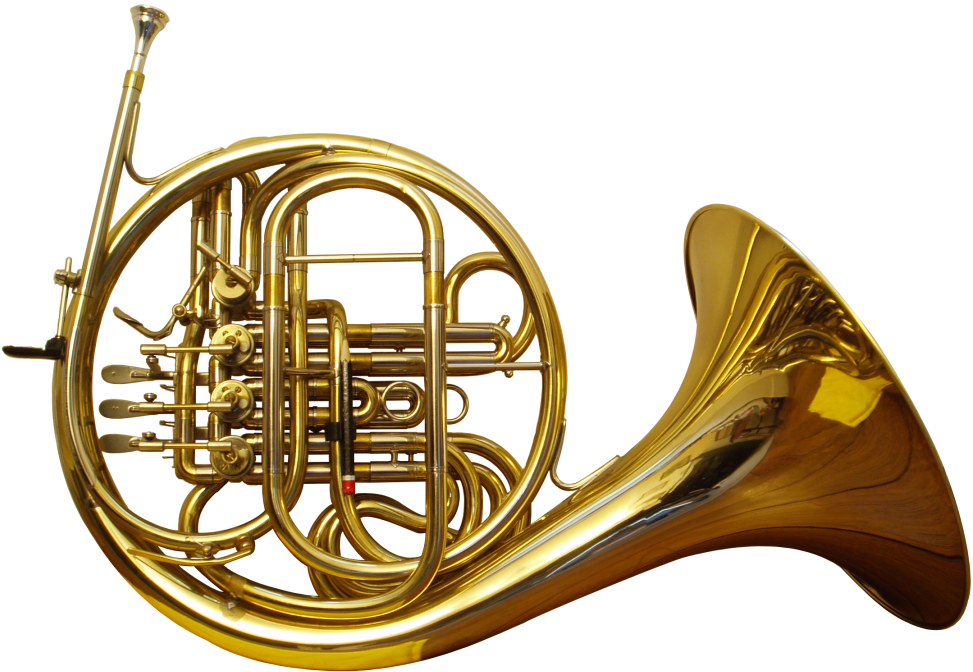
Horn Calls: Philharmonia Orchestra at the Royal Festival Hall review *****

Philharmonia Orchestra, Esa-Pekka Salonen (conductor), Richard Watkins (horn), Allan Clayton (tenor)

Royal Festival Hall, 16th January 2020

  • Carl Maria von Weber – Overture Der Freischütz
  • Mark-Anthony Turnage – Horn Concerto (Towards Alba)
  • Benjamin Britten – Serenade for tenor, horn & strings
  • Richard Strauss – Till Eulenspiegels lustige Streiche

Broke the golden rule. It is bad enough that I inflict this shite upon you and join all the other narcissists clogging up the Interweb and generally adding to the carbon burden. But I had resolved not to comment on anything that I had not sat all the way through. Notes for my own consumption but never yours. Here though I felt compelled to announce just how marvellous a concert this was. Despite walking out after the Britten Serenade and thereby avoiding the Strauss. Which, as it happens, I have heard live a couple of times and loathed. Another bloke in the lift on the way down adopted the same strategy. Why sully the perfect?

For I cannot imagine much better that this take on one of BB’s most sublime, and rightly popular, compositions. Comparable with the composers own versions surely. I might have guessed that Allan Clayton’s tenor is the perfect instrument for the work but how good is that Richard Watkins. He used to be principal horn for the PO, so he was surrounded by plenty of mates and presumably was attuned to Esa-Pekka’s no messing, forceful take on the work, even if he left before the Finnish maestro came to London. (Apparently E-P S, to add to his many talents, is a dab hand himself on the horn). He now works as a soloist fronting the London Winds and is a member of the Nash Ensemble. Every note was delivered exactly as I imagined BB composed it for the mercurial talent of Dennis Brain, the orchestra’s first principal player. The horn, let’s face it, when it enters its expanded harmonic world, is about the most thrilling, note for note, instrument in the orchestra. Obvs you can have too much of a good thing, but not here.

Which makes Mark-A T’s achievement in this world premiere of his own Horn Concerto that much more remarkable. He has always created contemporary classic music of real immediacy, but here, commissioned by Richard Watkins himself, he channels the German romantic horn tradition, of which Weber was a part, through the horn tributes of the English composing generation prior to him, Tippett, Colin Matthews, Oliver Knussen, and of course Britten himself, whilst still keeping his trademark jazzy syncopations and Stravinskian rhythms. BB’s piece, doh, is a paean to the night, setting those exquisite English texts through the ages, to faultless musical ideas, concentrated and not as flashy as some of his stuff. M-A T, in contrast, is all about the sunrise and the coming day. Alba in olde English meant “a call to the end of the night and beginning of the day”.

The so titled brief opening movement has lots of chirpy orchestral lines bouncing off the horn but, never thickens or overwhelms. The slow second movement is inspired by a late Larkin poem, Aubade, a morning serenade, in which the fear of mortality engendered by sleepless nights is banished by the light and the normality of the working day. The horn is the lyrical and bluesy expressive voice set against some beautiful, lower resister, string writing, punctuated with sustained low pedal points. The finale is also drawn from a poem, John Donne’s The Sun Rising, exactly the poet you want to mirror BB’s own choices, and does exactly what it says on the tin. M-A T offers up dense, chromatic, contrapuntal chords over which the horn soars.

Can’t remember the Weber and, like I say, no interest in the Strauss. But this was sublime and I expect Towards Alba to provide plenty of work for Mr Watkins, and others, in years to come. A fitting tribute maybe to another brilliant exponent of the French horn, Australian Barry Tuckwell, who sadly passed away on this very evening. I see Messrs Watkins and Clayton have recorded BB’s Serenade with the Aldeburgh Strings. Time to buy I think and set alongside BB’s own recording which featured Mr Tuckwell on peerless form and Peter Pears, later on his career, was marginally less the mannered English toff.

The Strange Tale of Charlie Chaplin and Stan Laurel at Wilton’s Music Hall review ****

The Strange Tale of Charlie Chaplin and Stan Laurel

Wilton’s Music Hall, 16th January 2020

I was much taken with one of Told By An Idiot’s previous productions Napoleon Disrobed, which featured its co-founder and AD Paul Hunter alongside Ayesha Antoine, whose career unsurprisingly has gone fro strength to strength after she starting out in soaps, and was directed by the shape-shifting wonder that is Kathryn Hunter. For TSTOCCAS Paul Hunter similarly spins a yarn from an alternative history, this time inspired by the chance, and brief, meeting between Charlie Chaplin and Stan Laurel in 1910 on a passenger ship bound for New York as part of Fred Karno’s music hall troupe. Subsequently for two years Stan acted as Charlie’s understudy, though he, Chaplin, barely acknowledged this.

In homage to the silent movie era the action is largely silent, with on stage piano accompaniment from Sara Alexander, (to a score from talented jazz composer Zoe Rahman which even manages to squeeze in a hip-hop routine), who is also roped in to the action as Charlie’s Mum, alongside the diminutive Amalia Vitale who plans Charlie, Jerome Marsh-Reid who plays a lanky Stan, as well as a few supporting roles, Nick Haverson who plays impressario Fred Karno as well as Oliver Hardy, Charlie’s Dad and others. Ionna Curelea’s set, an ingenious children’s playground ship/theatre/hotel that works vertically as much as it does horizontally and fills the Wilton’s stage, is the backdrop for a jaw-dropping display of perfectly choreographed physical theatre. Much credit to physical comedy consultant, master of mime Jos Hauben, and dance choreographer Nuna Sandy. OK so the time, past, future and present jumbled up, and character shifts, even with video (Dom Baker) and lighting (Aideen Malone) cues, are a little tricky to follow but I guess that Paul Hunter, who also directs, has reasoned that the visual comic entertainment is enough to draw us in until the narrative becomes clear. In this he is right.

PH’s mission is to create fantasy out of fact, though with less profound consequences than, say, a certain numpty POTUS, which explains the central scene where Chaplin accidentally bops Stan on the head with a frying pan and disposes of the body overboard, which provides some of the most impressive of many pratfalls and slapstick(s). The more poignant side of early comedy is not left untouched notably in the scenes detailing Charlie’s Victorian London childhood, complete with drunken parents and midnight flits. When even the stamina of three actors plus pianist is not enough to fill the drama an audience member is roped in for piano duty. And, in maybe the funniest episode, Amalia Vitale, who nails Chaplin’s mannerisms, persuades another punter to join her on stage for a swim. All secured through charm alone and without saying a word.

90 minutes is probably as long as the cast can physically deliver and the show might benefit from excising a handful of ideas and scenes but if you really want to see sustained theatrical invention, every mime trick in the book is rolled out, and have more than a chuckle or two, (and thereby distract from multiple Ends of the World angst), then this is I can heartily recommend. I see the tour continues to Northampton and Exeter at the end of this month.

As You Like It at the Barbican Theatre review ***

As You Like It

Barbican Theatre, 15th January 2020

As You Like It? Not really like this. Mind you I have yet to see a production of the play that really bowled me over. The NT production from 2016 directed by Polly Findlay looked great, office chairs becoming the Forest of Arden, and reminded us of the immense talent of Rosalie Craig and Patsy Ferran, but didn’t quite do it for me and I have a vague recollection of a previous RSC outing with Niamh Cusack as Rosalind and David Tennant as Touchstone. So maybe it is the play that doesn’t quite persuade.

I get that Will’s exploration of gender roles, sexuality and the rules of attraction still intrigues and resonates. And I get that, as a paean to the joy of love, and specifically the slippery notion of “love at first sight” there isn’t much better in the Shakespeare, or any other, canon. And it has a couple of pukka roles for women. As a generally miserable f*cker I can’t help but be attracted to eeyore Jaques and there are plenty of laughs, though they don’t always land from the lips of the sketchier supporting characters and some are just too knowing. What I don’t really buy is the whole pastoral, simpler life vibe, the magical forest is more convincing in AMND, and, absent Rosalind and Celia, I have never been convinced by many of the relationships, courtly and common, of which there are too many to really round out character. The banishments, and reconciliations, of Fred and Duke Senior, and the du Bois boys (here Leo Wan and Aaron Thiara), isn’t properly explained or resolved. The songs are a bit ropey. The prose and verse inversion and switching can be distracting and adds to the bitty, “a string of chance encounters”, quality of the play.

There are however plenty of other WS plays where similar criticisms might be levelled. But plot, character, language, message and spectacle, or some combination thereof normally finds a way to lift you up and into the world of breathless, nothing else matters, concentration that is the magic of the Bard. So maybe as I say I just need the right production of AYLI.

Here Kimberley Sykes, the brains behind the RSC Dido from 2017 which the Tourist annoyingly overlooked, has offered up a timeless Arden, supported by Stephen Brimson Lewis’s design, which focuses on the key connections, between the excellent Lucy Phelps’s confident Rosalind, her forthright bessie coz Sophie Khan Levy and a gentle, though ardent, Orlando in the form of David Ajao. Sophie Stanton, as a detached, almost inert, female Jaques, was polished, and Sandy Grierson, once again, stood out with his grotesquely camp Touchstone.. A whole bunch of gender switching for the other roles left the characters even less defined than normal, and, whilst it was not difficult for an actor of Antony Byrne’s quality to pull off the roles of both Dukes, I am not sure I got the point in a play already stuffed with mistaken identities.

There were a lot of nice visual touches, but there were also times when the cast seemed to be keen to move on to the next scene, lines a bit too hurried, and some of the blocking felt a little unconnected on the roomy Barbican stage. And then there was the lighting, designed, as were the costumes, by Bretta Gerecke, which was often the wrong side of insistent. And then there was the audience participation. And a giant puppet of Hymen, god of marriage, looming over Lucy Phelps as she delivers her, slightly desperate, epilogue at the end.

prisoner of the state at the Barbican review ****

BBC Symphony Orchestra, Ilan Volkov (conductor), Elkhanah Pulitzer (director), Julie Mathevet, Jarrett Ott, Alan Oke, Davóne Tines, BBC Singers

Barbican Hall, 11th January 2020

In which American contemporary composer David Lang, co-founder alongside Julia Wolfe and Michael Gordon and probably best known for his Pulitzer prize winning the little match girl passion, offers up his update of Beethoven’s only opera Fidelio, (in its various, protracted, incarnations). And yes he does title his compositions in lower-case.

Mr Lang has come up with some striking and novel ideas in the past to inspire his largely vocal body of work. Comic strips, disappearances, Bach, Death, search engines, the crowd at Highbury, national anthems, autopsies, Glen Gould and broken musical instruments. The whiff of the conceptual, which I like. POTS however focuses on the big themes at the heart of LvB’s opera, liberty, justice, freedom, heroism, sacrifice, as well as the central love story, but jettisons all of the comic padding, glorious as it easy musically if not always dramatically, and compacts the story down to just under an hour. Like a best bits, reworked in the immediate, post-minimalist style, though still with plenty of punch, that characterises the music of DL and his compatriots.

The lead characters become Every-Men, and Women, with Leonara now the Assistant, who inveigles her way into the prion where hubby Florestan is now the Prisoner, watched over by the Jailor and the Governor, as well as assorted guards, and a prisoser chorus which features throughout. This permits a more timeless vibe, for all the prisoners of the state, then and now, highlighted in DL’s own idiomatic and very direct libretto, which borrows from other, relevant texts (Machiavelli, Bentham, Rousseau, Hannah Arendt, and a list of English prisoners about to be carted off to Australia) . OK so maybe the simplification, at least musically, with a regular rhythmic ostinato ebb and flow of build-up arias and big choruses, verges on the repetitive, but there is no denying its emotional impact. Even if at times. especially in the final climax, the sound got a bit messy. DL certainly knows how to handle a chorus.

I have to confess that I do not know Fidelio as well as I should given my firm conviction that Beethoven was the greatest music maker of all time. A couple of productions seen on telly/laptop and a couple of listens through, with less than complete concentration, is plainly insufficient. Failed to secure a ticket for this season’s ROH production from Tobias Kratzer so a cinema viewing will have to suffice. Which means I couldn’t tell you how David Lang has re-interpreted LvB’s key set pieces though I gather they are largely present and correct if concentrated.

The singspiel style opera was semi-staged, as intended by DL, under the direction of Elkhanah Pulitzer, with a simple set design from Matt Saunders to simulate the prison, complete with lighting from Thom Weaver, projections from Yuki Izumihara and costumes from Maline Casta. I could see it working effectively as quasi-oratorio given its simple, though winning, harmonic language and direct story-telling. After all the original is more about ideas and character than convincing narrative The (amplified) vocal parts prioritise power and clarity over intricacy, which favoured the bass-baritone of Davone Tines as the Jailor and elfin soprano Julie Mathevet who convinced as the heroic, disguised, Assistant/Wife. The contrast between the defiant idealist Prisoner, baritone Jarrett Ott, and Alan Okie’s rich tenor as the authoritarian Governor was also effective, though the latter backed down pretty quickly when it cane to the pivotal rescue scene. Mind you at least this avoided the cringey, sexist ending of Beethoven’s original as the townspeople bang on about wifely virtue rather than freedom from tyranny.

This cast, with the the exception of Davone Tines, performed at the premiere of the work by the New York Philharmonic, and it will also be getting airings at co-commisioners, in Rotterdam, Barcelona, Bochum and Bruges. I have no doubt that the BBCSO and BBC Singers (here assisted by some enthusiastic students from the Guildhall) will have more than held their own against the other ensembles during the tour of the work. Once again I was struck by the authority and commitment that the oh so versatile BBCSO brought to the work.

Measure for Measure at the Barbican Theatre review ****

Measure for Measure

Barbican Theatre, 8th January 2020

I like Measure for Measure. I find the weird cocktail of morality play and satirical “comedy” fascinating. No one comes out of it well, not even the ostensibly virtuous Isabella who goes into bat to save brother Claudio from death, but is prepared to sign off on a pretty dodgy deal to further this aim. The stench of corruption infects even the pure. This makes it a very “modern” play I guess, which is why it is getting multiple airings, with much to say, in the right hands, about the complexities of power and desire. Not quite at the top of Will’s oeuvre but certainly in the top ten. Which, for your edification, I set out below.

  1. Othello
  2. Hamlet
  3. Julius Caesar
  4. Much Ado About Nothing
  5. Richard III
  6. Coriolanus
  7. Henry VI, Part I, II, III
  8. Richard II
  9. Measure for Measure
  10. Pericles

What no Lear? Or Dream? Or Romeo and Juliet? Or Tempest? Or Twelfth Night? And Coriolanus included? And, are you mad mate, also Pericles? Well yes I like the latter’s daft fantasy travelogue, even those bits which stem from the unsubtle hand of George Wilkins, and Coriolanus strikes me as the very model of classical tragic hero, not prone to bouts of soul sharing pace Lear, Macbeth or your boy Hamlet. And the list shows pretty clearly that I like history plays. Power, politics, virtue, honour, social as well as individual psychology, the ruler and the ruled, corruption, narcissism, jealousy. These are the things that interest me. The dark side of human nature that Will explored forensically and which make many of these plays relevant to our, or any other, time. Don’t worry though. I am not a weirdo. Much Ado About Nothing is in there.

Of course much depends on the productions I have seen and I think I have been blessed in recent years in the history and “Roman” play departments in particular. Maybe one day I will see a Macbeth or Lear that truly persuades. That’s the thing with Shakespeare. Ultimately malleable, such that creatives and cast can usually find something, language, message, narrative, character, spectacle, in which to delight and illuminate.

As here. Gregory Doran is probably the most reliable Shakespearean director of our time, useful when you are the big cheese at the RSC. Maybe not the most spectacular of interpreters but always clear in purpose and execution. No gimmickry with this, which I think is his first stab at MFM, unless you count setting the play in fin de siecle Vienna, a point in the city’s history when virtue and corruption, intellect and expedience, reached there apogee, and, arguably laid the ground for what followed, good and bad, very bad, in much of the Western world through the first half of the C20. It is almost as if big Will, with his fictional late C16 fictional Vienna could see what the real city would become three centuries later. (I gather this connection has been made in previous productions).

Otherwise GD, and designer Stephen Brimson Lewis using the set structure common to the season’s productions of As You Like It and The Taming of the Shrew, with added monochrome projections as well as 1900s period costume, don’t muck about with text or cast. Paul Englishby’s score echoes with waltz. Escalus, in the hands of Claire Price, is re-gendered, as is the Provost (very effectively by Amanda Harris), but then again Mistress Overdone is, campily, handed to Graeme Brookes. But there is no wholesale gender politics reinterpretation here. And the text is, I think, complete so that said Overdone, Pompey (David Ajao versed with Afro-Caribbean sonority), Elbow (Michael Patrick) and the major, (Joseph Arkley especially as supercilious Lucio), and minor fops and fop-esses, all get their due, though the wordplay comedy requires our close attention.

RSC veteran Antony Byrne unsurprisingly nails the Duke/Friar, a man convinced of his own righteousness as he is blind to the flaws in his exercise of power, James Cooney is a quietly desperate Claudio and Lucy Phelps excels as the virtuous novice, at least until the scheme to uncover Angelo’s hypocrisy is set in motion, Isabella. But the whole is held in place by a marvellous performance by Sandy Grierson as said self-scourging Angelo, who really gets to the heart of said Angelo’s conflicted nature. Or is he, as here, not really quite as conflicted as he makes out, revelling in the opportunity to root out Vienna’s impurity whilst lusting after the eloquent nun. The ghost of an approving Freud was probably sitting in the gods.

Mr Grierson stood out in Jude Christian patchy OthelloMacbeth at the Lyric, Pity at the Royal Court and in As You Like It (of which more to come) in this RSC season but, unfortunately, I have missed him in the other RSC roles he has played in recent years, and on various stages in his native Scotland. I suggest you ensure you see him next time he treads any accessible boards.

The trick in MFM, assuming no re-interpretation, is having the two main characters in Isabella and Angelo both repelled by sex, but also, somehow, fascinated by the idea of desire, which drives the pivotal argument scenes between them. They are both, literally in joint prayer, holier than thou, at least until Angelo cracks. GD’s clear headed direction, and Lucy Phelps’s and Sandy Grierson’s delivery of the text, expertly unfolds the dichotomy between the sacred and the profane. And there is no hiding from the fact that Angelo, and, through his casual “proposal” at the end, the Duke, even maybe against his preference, are choosing to be rapists.

Lots of detail, well thought through, ambiguity and double binds not brushed away. This is not a problem play. The problem, as ever, is us humans. If you want a contemporary feel-gooder with a happy ending go see Everybody’s Talking About Jamie.

The Duchess of Malfi at the Almeida Theatre ****

The Duchess of Malfi

Almeida Theatre, 2nd Jan 2020

No question Almeida Associate Director Rebecca Frecknall is talented. Her Summer and Smoke, the dreamy Three Sisters here last year and now this. And for those, like the Tourist, who get a little antsy about her intemperate use of de jour theatrical tropes, then, I gather, she played it entirely naturalistically for Chris Bush’s Steel in the Crucible Studio recently .(LD, despite now having gone all Sheff native still hasn’t been – you try your best, eh, and what thanks do you get).

The glass box set courtesy of Chloe Lamford, a regular in Continental European art theatres, as well as display cabinets stage left and right, memento mori, housing anachronistic props. And yes this being a tragedy the walls get smeared with blood, though this is black not red, so pervasive is the corruption. Simple, well tailored, monochrome modern dress, with a woeful disregard for footwear, from Nicky Gillibrand. Stark lighting designed by Jack Knowles. Pulsing soundscape from George Dennis. Title projection to bookmark each act of John Webster’s tragedy. Microphones. Slow motion when it gets hyper-dramatic. Which it does. At the end. Soundtracked with the passus duriusculus ground bass of Dido’s Lament,

All present and correct. Yet all serves as an ideal foil to the excellent central performances, most notably of Lydia Wilson as The Duchess and Leo Bill as the conflicted betrayer Bosola. The Duchess of Malfi can be, and is now usually, as here, read, as a proto-feminist tract, as our heroine, despite her wealth is destroyed by her brothers, Ferdinand (Jack Riddiford) and The Cardinal (Michael Marcus) who object to her marriage to, and children with, “lowly” steward Antonio (Khalid Abdalla). In outline the plot reads like textbook macabre revenge tragedy: in practice there is plenty of room for ambiguity and exploration within Webster’s poetry. John Ford’s Tis Pity She’s A Whore, written a decade or so later, is a similarly impartial, elaborate dive into human nature, when done well, as it was in Cheek By Jowl’s adaptation which first introduced the Tourist to the talent of Ms Wilson who played the incestuous Arabella. Obviously she is a big deal on the telly and it is easy to see why.

We (the SO got the gig) were lucky enough to be close enough to see her full range of expression, verbal and non-verbal, in a role full of “say one thing, mean another” moments. Antonio doesn’t stand a chance in the seduction scene, her quest for normality despite her position, as reasonable as it is unattainable, and the showdowns with the brothers are electric. Leo Bill’s duality is revealed more explicitly through monologue as he wrestles with his conscience after taking the cash to spy on the Duchess and her secret hubby. Jack Riddiford also pulls off the difficult act of being full on nutter, with a barely concealed sister love, that we still feel sorry for. Like a Roman Roy gone very bad, without the wisecracks. Especially when, contrary to Webster’s text, his dead sister comes back to haunt in the final act.

It is tricky for the rest of the cast to match these three characters and performances, though Khalid Abdalla’s diffident Antonio, Michael Marcus’s bullying Cardinal, Ioanna Kimbook’s confidant and maid Cariola and Shalini Peiris’s vulgar Julia, (both brutally murdered and both spectrally joining the Duchess), all support the increasingly tense psycho-drama. The staging and direction maybe suffers through lack of context, religion and its hypocrisy are key drivers in Webster’s play, and there are times when a bit more pace might have been injected, but overall this is another hit for both Almeida and Ms Frecknall. Proving that, with a bit of nip, tuck, and redirection, a Jacobean gore-fest can have as much to say about patriarchal control of female sexuality as the latest monologue at the Vaults. It is the Duchess’s daughter, not son, who here inherits. Though what legacy we ask.

The Almeida remains London’s most accomplished theatre and I have high hopes for Beth Steel’s new play The House of Shades. It spans five years over the last six decades so maybe this time we might be treated to a dose of naturalism. We’ll see.

The Taming of the Shrew at the Barbican review ***

The Taming of the Shrew

Barbican Theatre, 2nd January 2020

What to do with Taming of the Shrew. Pretend the framing device with Sly deceived by Milord gets you off the hook. Not sure audiences buy that. Mine the text very carefully and add detail through direction which undermines the misogyny. That takes real skill. Ironically play up the “comedy”, and cast Kate and Petrucio’s final lines as a “show” to mask them coming together, and hope the audience keeps up. Play it straight, as nasty as you dare, even venturing into dark psycho-sexual territory, and hope the audience sees that Will S, as we surely must assume, him otherwise being the unparalleled oracle of the human condition, meant for us to recoil at both the story and our reaction to it. (Though remember John Fletcher, Shakespeare’s successor with The King’s Men felt compelled to write a now rarely performed response to Shrew, The Woman’s Prize, in which Petruchio’s second wife “tames” him). That can work but don’t be surprised if modern, as contemporary opinion did, criticises.

Or change gender as here? One of the best versions of the play that I saw was Edward Hall’s all male version for Propellor. Sly (Vince Leigh) became Petruchio, the misogyny is initially ridiculed in a genuinely funny production, but then becomes more menacing, punky Kate (Dan Wheeler) continually fights back making his/her final submission even uglier. The point being that Sly will continue the cycle of male violence outside the play.

In this RSC production directed by Justin Audibert, not for the first time, the genders are reversed, with Claire Price now a swaggering, derring-do Petruchia, and, names unchanged, Joseph Arkley the very pliant Katherine, the object of her undoubted affection, and James Cooney his more attractive and preening brother, Bianco. Padua becomes a matriarchy, pronouns are judiciously changed, gags retained, but it still doesn’t properly scrutinise the dominance/gaslighting power plays at the heart of the action. We already know what is wrong with or without role reversal.

Elsewhere though the inversion adds sheen, notably the wooing of Bianco by the salacious Gremia (Sophie Stanton complete with comedy glide pace Mark Rylance’s Olivia), the inept Lucentia (Emily Johnstone) aided by her capable sidekick/double Trania (Laura Elsworthy) and Hortensia (Amelia Donkor). The deceptions, rivalries and put downs all entertain. Amanda Harris as Mum Baptista, Amy Trigg as Lucentia’s other servant Biondella and Melody Brown as Vincentia, Lucentia’s mum all have fun with the roles.

The production looks terrific thanks to Stephen Brimston Lewis’s set (here seen to best effect when compared to the other RSC productions in the season) and Hannah Clark’s costumes. Composer Ruth Chan gets away with her “rock Renaissance” vibe. And Alice Cridland’s marshalling of wigs, hair and make-up mightily impressed. But none of this really solves for the fact that simply reversing and softening the genders and positing a social order that doesn’t, nor ever did, exist, can’t magic away the central offence. Which, in itself, is a lesson.

Snowflake at the Kiln Theatre review ****

Snowflake

Kiln Theatre, 28th December 2019

Lucky family. Never know what Dad is going to serve up as their Christmas theatrical treat(s). And always careful to at least try to conceal their disappointment. Having banked the virtual certain success of Mischief Theatre’s Magic Goes Wrong (of which more to come), and comforted by the reviews from its original run in Oxford last year, the Tourist felt confident enough to take a punt on this. And BD had already enjoyed one Snowflake provocation in the form of the second half of the incomparable Stewart Lee’s new show.

Now IMHO Mike Bartlett is incapable of writing bad plays, or indeed screenplays. They may not always come off entirely, as here, but there will always be enough in terms of concept, narrative, character, text, idea, form, to get your teeth into. He doesn’t mind tugging a few strings, emotionally or in terms of argument, or taking a few liberties with construction. Which explains Snowflake’s, appeal, and, slight, downfall.

Andy (Elliot Levey, who has a habit of popping up in all manner of fine work, which, in some cases, is partly down to him) has hired a church hall in Oxfordshire on Christmas Eve. We soon lean that he is rehearsing for a possible meeting with his estranged daughter Maya (Ellen Robertson) who left home after the death of her mother, from whom Andy is still grieving. Mr Bartlett doesn’t make this too easy however devoting the whole first half, over 40 minutes, to a monologue in which Andy reveals his attempts to trace Maya and his own weaknesses and biases. This is not a man possessed of much in the way of self-awareness. Give or take your archetypal Boomer and, as such, far too reminiscent of dear Dad, sparking a lively family debate at the interval, largely between BD and the Tourist refereed by the SO and LD.

We knew the perspective would shift, but the catalyst, the arrival of straight-talking Gen Z’er Natalie, (Amber James, whose career I have been attentively following since the Guildhall, through the RSC), though not straight, was as unequivocal as I have come to expect from this writer. Natalie has come to collect crockery after and Xmas lunch and pretty soon the two are at loggerheads over political and social values, and, especially, identity. Both are typical of their “generation” but neither are cliches, and, on this, and given his gift for the gab, Mike Bartlett is able to hang some fine, credible and funny, dialogue and some spicey argument. And when Maya finally arrives MB, again with open heart, sets up the argument for private and public reconciliation of differences.

Easy enough to pick holes, which we did, but this was for me, if less for the others, a satisfying, shrewd and warming slice of theatre. Claire Lizzimore’s direction was well honed after the first run, rolling with the pronounced ebb and flow of the narrative, and Jeremy Herbert’s community hall set fit the Kiln (remember this was once Foresters Hall) to the manor born. And, whilst Ellen Robertson had a little less on her plate than her colleagues all three served up an acting feast. Ideal Christmas fare then.

Stravinsky’s The Soldier’s Tale at the Wigmore Hall review ***

Isabelle Faust (violin), Wies de Boevé (double bass), Lorenzo Coppola (clarinet), Javier Zafra (bassoon), Reinhold Friedrich (trumpet), Jörgen van Rijen (trombone), Raymond Curfs (drums), Dominique Horwitz (narrator)

Wigmore Hall, 23rd December 2019

  • Bartok – Solo Violin Sonata BB124
  • Stravinsky – The Soldier’s Tale

Curious confection this. Cut off from Russian royalties on the ballets, Stravinsky was short of a few bob whilst living in Switzerland during WWI, especially with first wife Katya poorly, so he teamed up with the similarly impecunious writer Charles-Ferdinand Ramuz to create L’Histoire du Soldat, a small scale music-theatrical work, to be “read, played and danced” which would be cheap to stage and could be toured anywhere. The boys turned to a Russian tale of a soldier who goes AWOL and, Faust style, sells his soul to the devil. Plenty of contemporary resonance, and a suitable format, for the gruelling post war years.

IS had yet to hear a note of the jazz music emerging from the US but, armed with a few sheets of music brought to him by Ernst Ansermet, he resolved to incorporate the new rhythmic style into the score and to reflect its sound in his choice of instrumentation with a combination of high and low pitches from each family: violin and double bass, clarinet and bassoon, trumpet and trombone as well as a wide range of percussion. It’s not that jazzy but is definitely a precursor to all the bouncy, syncopated grooves that IS was to serve up in the next decade. It doesn’t do too much by way of variation however, reprising a few key themes, and, this being my first sustained listen, is a bit same-y, even with the shifts in time signatures.

And the spoken parts, especially here where there was no dancer to distract, tend to dominate. Which gave a lot of leeway to Dominique Horwitz, who narrated, as well as taking on the roles of soldier and devil. Now M. Horwitz is apparently a bit of an expert when it comes to this piece, as well as in the likes of Brecht, Weill and Brel. And his day job as actor means he throws himself into the character of the soldier, marching and jogging on the spot, brooding over his keepsakes, rescuing a princess and having run-ins with Beelzebub in his various guises. Whilst the text here was in English and M. Horwitz can cary a speech I wish I had actually had the story in front of me as I didn’t really find a way into it. And maybe M. Horowitz could have toned down the funny voices.

Couldn’t fault the musician’s performances though. This, after all, was a crack team led by the amazing Isabelle Faust, as she showed again in her interpretation of Bela Bartok’s 1944 solo violin sonata. Written in the year before he died, ill and short of money, to a commission by Yehudi Menuhin, it isn’t, as you might have guessed, the easiest piece in the solo violin repertoire. Bartok and Menuhin took a bit of time to hit it off and YM was initially perturbed by the difficulty of the score, notably some fearsome double-stopping, but with familiarity and the implacability of BB when it came to any changes, eventually brought him round.

It kicks off with a Chaconne in homage to Bach’s writing fo solo violin, though here mediated through the prism of C20 modernism and BB’s beloved Hungarian folk tunes. The second movement is a thrillingly tricky fugue, with complex counterpoint, angular, jagged, with extreme dynamics, like the vey best of Bartok’s writing. The slow movement in contrast is serene, easy on the ear compared to what has gone before, before the rush of the Presto finale. Like most Bartok it takes a bit of listening too, and getting into the listening zone (when nothing else matters but the music) takes a bit longer than for my other favourite B’s, Bach, Beethoven and Britten. And just maybe it took Isabelle Faust just a little bit longer than normal to find her groove.