Red at the Wyndham’s Theatre review *****

SONY DSC

Red

Wyndham’s Theatre, 21st June 2018

The original production of John Logan’s play Red at the Donmar Warehouse in 2009 with Alfred Molina and Eddie Redmayne passed me by. More fool me. So I was looking forward to catching this revival directed by Michael Grandage, (who directed the original), with Alfred Enoch now playing fictional assistant Ken alongside Alfred Molina once again as Mark Rothko. It went directly to Broadway after the Donmar, and has popped up over 30 locations since, but this was the first revival in the UK.

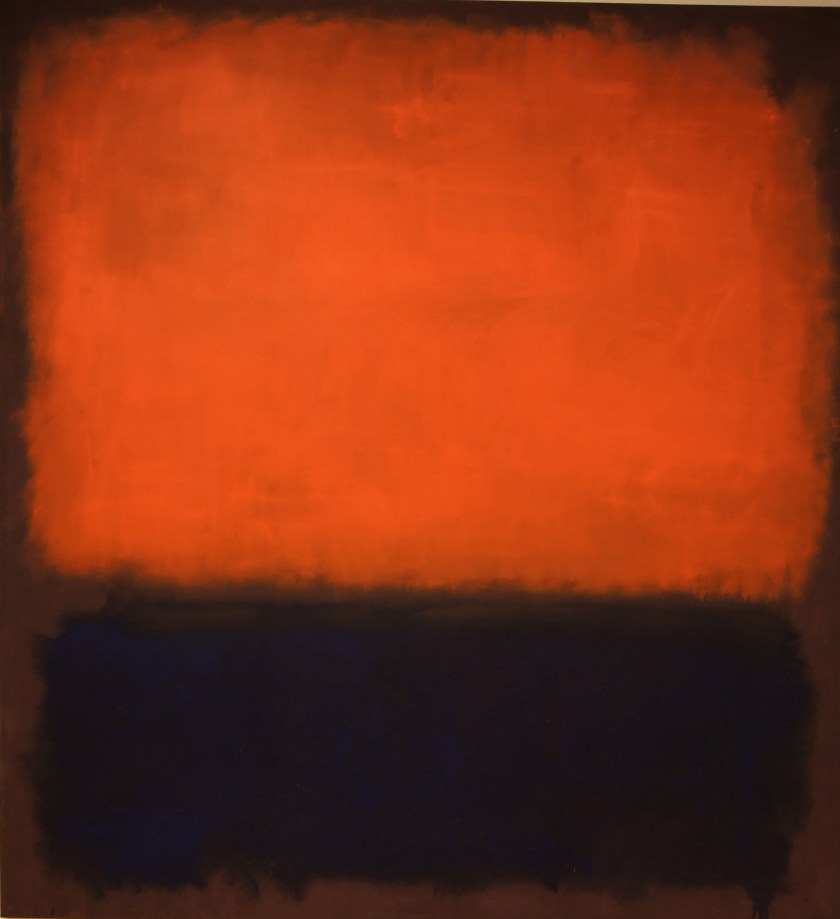
Red isn’t a complicated set up. Ken pitches up to “interview” for the job. Rothko takes a shine to him. Their relationship develops. It is really just a device to explore the nature of art and artists in general, as well as specific, terms. Rothko wasn’t a jolly chap by all accounts but he thought long and hard, perhaps a little too long and hard, about what he did. The play focusses on the months in 1959 when Rothko had taken on the commission to create a series of panels, like a Renaissance great, to hang in the restaurant of the Four Season hotel in the Seagram building in New York, a commission he eventually refused to complete.

I have been fortunate/unfortunate enough to eat a couple of times in the restaurant. It is a cathedral to late C20 neo-liberal capitalism. It doesn’t need any paintings. It is certainly not a place for quiet contemplation. Apparently Rothko was partly inspired by the vestibule of Michelangelo’s Laurentian Library in Florence on a visit to Europe in 1959, another “f*ck you” little people, we’re the elite” OTT mausoleum. Apparently on an earlier trip in 1950 he was bowled over by Fra Angelico’s supreme frescoes at San Marco. I know which I prefer.

The set from Michael Grandage’s regular collaborator, Christopher Oram, complemented by the masterly lighting of Neil Austin, is a triumph. It imagines the studio in the Bowery where Rothko created the Seagram murals with representations of some of the 40 or so canvases/studies that Rothko created, three different series, in dark reds and browns, to meet the commission. We are afforded an insight into Rothko’s materials and (secret) process; in one marvellous scene we see real physicality as Molina and Enoch prepare a canvas with a wash. The activity provides a counterfoil to the initially one-sided, but increasingly argumentative, as Ken’s confidence grows, dialogue examining Rothko’s own frustrations with the Seagram commission itself and with the reaction of society to his own art.

Rothko was born Markus Yakovlevich Rothkowitz in 1903 in Latvia of Russian-jewish descent and came to America with his family in 1913. His father died shortly afterwards and Rothko questioned his religion. He was brought up in Portland, Oregon and initially set out to be a union organiser given his strong socialist beliefs. Fiercely intelligent, he gained a scholarship to Yale but dropped out, moved to New York and became an artist and enrolled at a design school where he was taught by Arshile Gorky and Max Weber. Initially he was influenced by German Expressionism, turning out some well regarded early work, though needing to teach at the Brooklyn Jewish to supplement his income. In the early 1930’s he entered a circle of artists, (including Alfred Gottlieb and Barnett Newman), who surrounded Milton Avery and took trips to paint in Massachusetts. In 1934 he had his first solo show which revealed his skill with deep colour, founded a movement called The Ten, exhibited in Paris and New York and worked with the Works Progress Administration alongside the likes of Pollock and de Kooning.

Rothko’s singular way with colour was emerging in his figurative work but he also experimented with surrealism and paintings drawn from mythology. The influence of Europe was still strong even as the modernists in the US took aim against the specifically “American” art of the inter war years.  He separated from wife Edith for a short period in 1937 and took up US citizenship in 1938 and changed his name, fearing the wave of anti semitism might lead to deportation.

Rothko’s tireless search for an intellectual, cultural and philosophical framework for his art eventually led him to that other tormented soul Nietzsche, notably the Birth of Tragedy, which spurred a series of works drawn from Classical and Judaeo-Christian mythology. Following a less than successful exhibition at Macy’s department store in 1942 Rothko penned the following which about sums up the direction he was about to take. “We favor the simple expression of the complex thought. We are for the large shape because it has the impact of the unequivocal. We wish to reassert the picture plane. We are for flat forms because they destroy illusion and reveal truth.”

After separating from his wife again and a period of depression Rothko went to California and struck up a friendship with Clyfford Still who would become a clear influence on his work. I have a deep suspicion of much US Abstract Expressionism but Clyfford Still’s monumental slabs of bright colour, punctuated by jagged lines, and drawn from the landscape of his native North Dakota, are arresting and extremely beautiful. A return to New York, and another not entirely successful exhibition at the Guggenheim, saw Rothko move closer to pure abstraction which properly appeared from 1946 in the so called “multiform” paintings; blocks of colour devoid of human form, landscape or symbol. More essays, an obsession with Henri Matisse’s Red Studio and finally, in 1949, an exhibition of works which defined the Rothko style from there on in,  and now a cornerstone of modern Western art. The two or three blocks of complementary, coalescing, contrasting colours flickering and shifting with the light, though initially the tones were often quite bright; greens, blues alongside yellows and oranges.

Rothko’s popularity, and the value of his work, spiralled but he became increasingly protective of his art, and one might argue, overly grandiose in his claims for it. He asked viewers to examine the works from up close to intensify the “spiritual experience”. The colours got darker maybe mirroring the increasing darkness in the artist’s own pysche Cliche or not Rothko certainly walked the talk of the tortured artist, as did Pollock in his own way. His politics left him uneasy with the trappings of commercial success (Fortune magazine singled out his work for “investment), though he still reportedly liked the money. He got lumped in with his Abstract Expressionist peers, much to his chagrin, fell out with Barnett Newman and Clyfford Still, who accused him of being a sell out, went through loads of assistants and became a father with second wife Mell. As his fame grew so did his alienation. Here was an artist who might have been happier to work in cloistered obscurity. Or would he?

That is were Red the play picks up the story. Now if I tell you that vast swathes of the potted bio above are referenced in the play, largely by Rothko himself, you will probably realise that you are in for a bit of a lecture here. However, by having Rothko pour it all out to Ken, himself an aspiring artist, though he never plucks up the courage to show his work to Rothko, it doesn’t feel ponderously didactic. It probably helps if you have a rough idea of what Rothko was about, and a smattering of art history, but it is by no means essential. the play stands as terrific entertainment even without that.

Which frankly in large part is down to Alfred Molina’s amazing performance. He just is Mark Rothko. I say this secure in the knowledge that I have no idea what Mr Rothko was like but, thanks to the illusion of theatre, I, and I would be willing to guess all the audiences that have seen this, believe that this is Rothko. Which means all of the references to his own life and art, to the history of art and to the relationship between art, society and economy, fall naturally out of the discussions with Ken. Above all you accept that MR didn’t go in for small talk, (which reminds me there is no little humour on show to leaven proceedings), and, for all his intellectual certainty there was something something lacking emotionally. in the man. An intellectual prize fighter, spoiling for a fight, but desperate for attention. Apollo and Dionysius. Which explains why he lets Ken stick around for a bit.

Rothko went on to even greater fame after pulling the plug on the Seagram murals, (some of which now hang in the special room at the centre of Tate Modern). Other mural projects followed culminating in the slightly preposterous conceit of the Rothko Chapel in Texas. However he was overtaken by Pop Art in the 1960’s, a movement he despised, but which is, in the play, championed by Ken.

A heart condition, fags, booze, bad diet, separation from second wife, smaller paintings and a Marat style suicide and an argument over his estate. There is probably another play here. 836 paintings, spread around public and private collections, including in his Latvian birthplace, books, posters, postcards, snapchats, there are few artists whose work is so well known. I always want to sneer and walk away whenever I see a late Rothko, (I haven’t seen enough of his earlier incarnations to make a judgment), but I never can. They cast a spell and, cliche alert again, invite contemplation. Such is the power of colour, paint, form and tone and Rothko’s special technique.

The play lasts just 90 minutes yet the Wyndham’s and MGC folk are asking you to shelve out full West End prices. Is this good value? I’ll leave you to decide but it is a superb play and better than most anything else in the West End right now. A Russian oligarch paid near US$ 200m for a 1951 Rothko painting a few years back. Presumably he thought he got value for money. Mind you he is the same fellow he recently sold the ropey Leonardo for US$ 450m and appears to have been conned by his dealer. Look him up. Quite a character.
The Flight of the Conchords at the O2 Arena review ****

flight_of_the_conchords

The Flight of the Conchords

The O2 Arena, 20th June 2018

Father and Son
Deana and Ian
The Most Beautiful Girl (in the Room)
Inner City Pressure
Bowie
Chips and Dips
Albi The Racist Dragon
1353 (Woo a Lady)
The Ballad of Stana
Bus Driver’s Song
Mutha’uckas / Hurt Feelings
The Seagull
Back on the Road
Carol Brown
Shady Rachel
Robots

Dairy products, meat, wood, locations for hobbits and rugby teams. New Zealand’s most valuable exports? Nope. The Flight of the Conchords, surely. Only joking. New Zealand has an extraordinarily rich cultural life from what I can see and landscapes of immense beauty, Sadly I suspect I will never get there.

So for the moment I will have to be content with Bret and Jermaine. Originally we intended to go en famille. BD’s loss, (poncing around at some uni bash), was MS’s gain. LD might not quite have the compulsion of the rest of us but has had enough exposure to the classic tunes to mean that it was pretty easy for her to get into the swing of the evening.

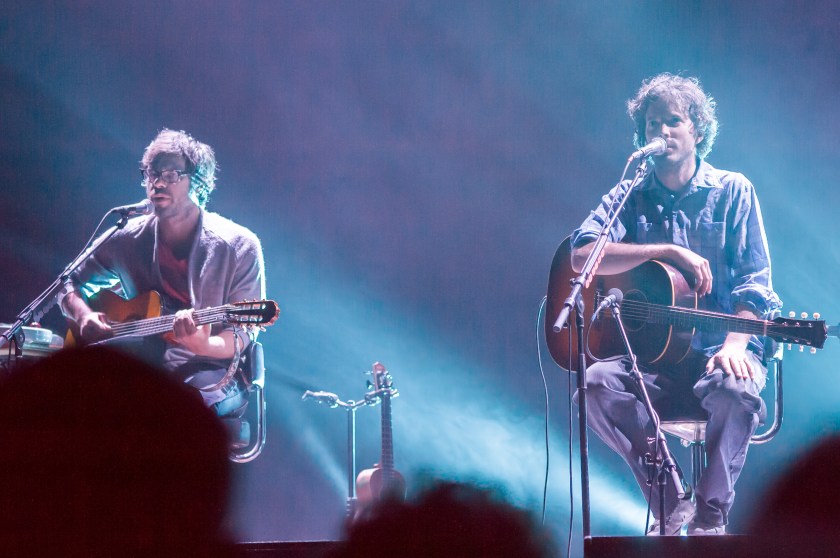
Over the last few years I have been constantly surprised by how few of my friends and acquaintances have caught the Conchords bug and, indeed, how many have never even heard of the boys. Clearly though filling this many large venues, (and the pre-tour at the Soho Theatre), even after the accident to Bret’s hand, suggests there are plenty of fans 10 years after the original HBO show and 15 years after storming the Edinburgh Fringe.

No need to preach to the converted then. You were probably there. On the night we went the boys took their time coming on, and by virtue of my miserliness, and a big of bad luck on the open for the original dates, we were about as far away as it was possible to be in the O2 which, as everyone knows, is A VERY BAD IDEA. But I figured we’d be so happy anyway that it wouldn’t matter too much if we relied on the screen to see the boys.

Of course they were brilliant (including Nigel on cello aka the New Zealand Symphony Orchestra). Of course the banter, less knowing and much looser than of old, was hilarious. Of course the classics were a joy even when they ballsed them up (deliberately?). But the best thing about the whole evening were the new songs. Especially the meta The Seagull, piano ballad Father and Son, country rock The Ballad of Stana and the hilarious madrigal 1353 (Woo A Lady). The reviews let us know what was coming but a song that might have been written especially for MS was the highlight of our evening.

There is not much point going on. If you don’t know “the fourth most popular folk parody duo in New Zealand”, or if you’ve had a look and don’t get it, then no matter. Your loss. For some of us this is still about as funny as funny gets.


Isabelle Faust and Kristian Bezuidenhout at St Luke’s Old St review *****

finsbury_st_lukes_1

Isabelle Faust (violin), Kristian Bezuidenhout (harpsichord)

LSO St Luke’s Old St

JS Bach

  • Sonata no 3 for violin and harpsichord in E major BWV 1016
  • Partita no 2 for solo violin in D minor BWV 1004
  • Sonata no 1 for violin and harpsichord in B minor BWV 1014
  • Toccata for harpsichord in D minor BWV 913
  • Sonata no 6 for violin and harpsichord in G major BWV 1019

The second instalment in Isabelle Faust and Kristian Bezuidenhout’s rendition of the six JSB violin sonatas BMV 1014-1019 following on from the Wigmore Hall in April. (Isabelle Faust and Kristian Bezuidenhout at Wigmore Hall review ****). Once again they allowed themselves a solo each, but this time some more JSB, in keeping with the Bach Weekend theme, which also celebrated the 75th birthday of the venerable Sir John Eliot Gardiner.

This time I was joined by Bach groupie MSBD. Early start. 11am on a Saturday. I wish every day started this way though.

At times JSB is truly sublime. More so that any other composer. You might find it in the cantatas, others in the masses or passions, or maybe the keyboard, instrumental ensemble works or the cello suites. Not for one moment could I disagree with you but, for me, the apotheosis of JSB’s genius lies in the violin sonatas and partitas, solo and accompanied. Great art induces a state of rapture. Not the nonsense exclusive coach trip into the sky that some befuddled Christians cling on to, but the state of grace, individual or collective, that you can feel inside your whole being when dancing in a club, or breathless and motionless in the theatre, or when your ear sends pure sound to your brain at a concert or when you get lost in a painting. It doesn’t happen much, just as well as that might overwhelm, but it is part of what makes life worth living. I appreciate that this might be a terribly old-fashioned way to think about art but I dare you to tell me I am wrong.

Anyway it happened here. In the final movement of the Partita. The immense Ciaconna. Amongst Bach’s finest creations as the programme says. They’re not wrong. It gets me most times but here, OMG, Isabelle Faust, her violin, St Luke’s, my ears, my brain, the audience, and of course, old JSB all came together as one. This old buffer did his best to hold back a tear. It is so simple, just a basic four bar pattern, (apparently “the harmonisation of a descending tetrachord” – thanks again programme notes). But JSB is able to do so much with it including a huge mood shift about two thirds of the way in. This is when you might just believe that JSB reconciles himself to the early death of first wife Maria – he was to meet Anna just a year later.

The accompanied sonatas came close to their solo cousins. I have banged on before about just how expressive Isabelle Faust is when it comes Baroque violin. She’s pretty handy too when it comes to the rest of the canon. Listen to her recordings of the Beethoven, Bartok and Berg concertos if you don’t believe me. She can even persuade me with her historically-informed interpretations of that Mozart chap. But Bach is where she enters a different realm. She applies an astringent, almost abstract, rigour which just blows me away. And KB, who has a gentler conversation with his harpsichord, is the perfect accompanist. IF doesn’t muck it up with unnecessary and unwarranted vibrato, and both the left and right hand lines for KB are clear and not jangly. This leaves plenty of room for the sonatas to breathe and, in the superb space that is St Luke’s, with the sun streaming in from outside ….. well you can see where I’m coming from.

JSB continued to revisit and buff up the six sonatas throughout his life. Maybe that’s why the old boy perfected his art here. In the early decades of the C18 the trio texture was considered the compositional ideal for chamber music, creating a perfect synthesis of linear counterpoint, full-sounding harmony and cantabile melody, (thanks once more programme notes). Put this trio principle into the hands of the man who got closer to the ideal of perfect harmony than anyone else in the history of Western music, with the melodies driven by the finest of instruments the violin, then obvs it was going to work. JSB created trio works for flute, viola da gamba (which I like) and organ but they don’t come close.

Listen to No 1, BMW 1014. It kicks off with a 5 part texture with double stopping and a 3 part effect on the harpsichord. The two quick movements, (the first 5 sonatas stick to the old skool sonate di chiesa four movement set up with No 6 breaking free into 5 movements), have each of the three lines chipping in together, the perfect realisation of the trio principle with the third movement switching to violin and harpsichord right hand weaving around a left hand bass. No 3 BMW 1016 kicks off with a slow movement where both players can show off their skills, followed by a bouncy fugue, a powerful lament in C sharp minor before rounding off with an extraordinary gallop where the violinist can really show off. No 6 BMW 1019, is very different, with a central solo harpsichord movement flanked by two jolly giant Allegro opener/closers (real faves) and two slow, simple (-ish) shuffles in a kind of canonic form.

Other than the aforementioned divine Ciaconna the Partita No 2 consists of 4 dance movements, an Allemanda, a Corrente, a Sarabanda (which foreshadows the Ciaconna) and a Giga. We have Leopold, Prince of Anhalt-Kothen’s Calvinism to thank for JSB’s discovery of all things boogie as he wasn’t confined to elaborate Church music in the Prince’s employment. (We also have the genius Antonio Vivaldi to thank for the twin graces of rhythm and repetition that underpin JSB’s unique ear for inventive sonority).

Other than the Sarabanda thsee dance movements are all monophonic in structure so easy to understand and have a dominant rhythm from which the violin goes off on ever more exciting harmonic excursions. It was a massive hit when first published and performed and remains so to this day. It really is very easy to see (and hear) why. You do not need to have any interest or understanding of classical music to get this. You just need ears and a pulse. So whatever your musical bag, I implore you to listen to it. IT WILL MAKE YOUR LIFE BETTER. I promise.

KB had a little less time to shine though not by much as he picked the most extensive of the six toccatas, BMW 910-916. The D minor 913 was composed when JSB was just 20 as he went AWOL from his job and walked the 450kms to Lubeck to hear Dieterich Buxtehude play. So next time you complain about how tricky it is to get to the Barbican think on JSB’s devotion. It opens with a typical Baroque improvisation, (typical for others that is), followed by a couple of JSB trademark fugues linked by a bridge which shifts tempo and ending with a tierce de Picardie, a major chord at the end of a minor key piece, which JSB was partial too. After the Partita and the first two sonatas this harpsichord piece shifted the mood before the final, jolliest, No 6 sonata. Smart programming and smart playing, (I only know these toccatas from the never surpassed Glen Gould on piano).

So there you have it. This will definitely be a top 10 2018 concert for me and I am pretty sure for MSBD, though I have lined up a few more for his delectation. And I wonder if, by the end of my musical education, I end up realising that no-one topped Bach. It is beginning to feel that way.


Venetian Baroque: Academy of Ancient Music at St Luke’s Old St review ****

venetia_-_porcacchi_tomaso_-_1620

Academy of Ancient Music, Bojan Cicic (violin), Persephone Gibbs (violin), Sarah McMahon (cello), Alistair Ross (harpsichord), William Cater (theorbo)

LSO St Luke’s Old St, 15th June 2018

  • Dario Castello – Sonatas No 10 a 3 Book Two, No 1 a 2 Book One, Sonata No 1 for violin (Book Two), Sonata No 2 for violin (Book Two), Sonata No 12 a 3 (Book Two)
  • Tarquinio Merula – Ciaconna
  • Michelangelo Rossi – Toccata No 7 for harpsichord
  • Giovanni Girolamo Kapsberger – Toccata and Ballo for theorbo
  • Francesco Tunrini – Sonata a 3 “il Corisino”

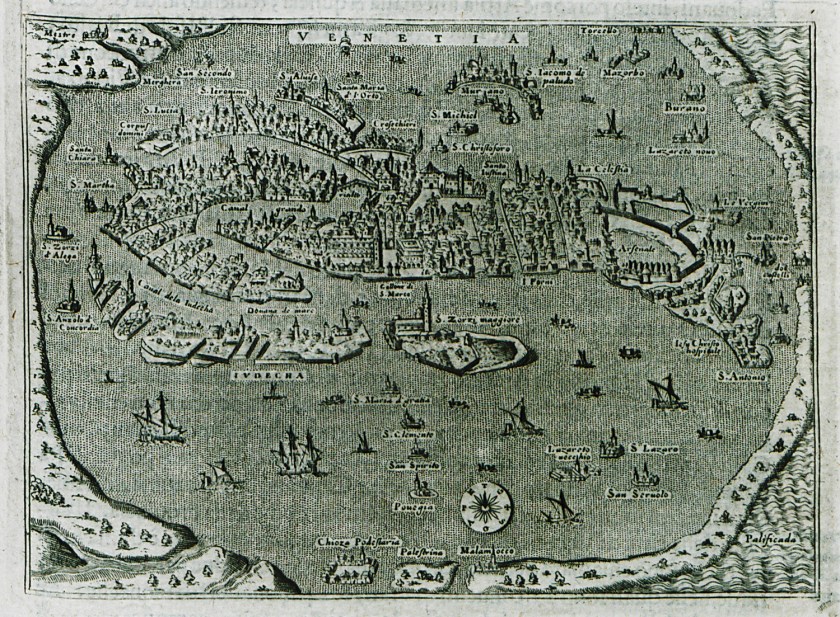
Venice in the early C17 was the hot place for music in the West. The Republic might have begun its long slow decline, having picked fights with the Ottoman Empire and the Vatican, amongst others, but there were plenty of punters who had made big bucks and were looking to spend it. It was certainly a big-time, sexy, funky, party town. Carnival was big business. Public opera, with that genius Claudio Monteverdi in the vanguard, was taking hold. New instrumental ensembles were being tried out. Exquisite brass was set alongside double and triple, or more, choirs in churches, following on from Gabrieli’s innovations in the previous century. (Even the guards telling the snaking hordes of tourists in St Mark’s Basilica to shut up sound musical thanks to the stunning acoustic). The best performers, composers and instrument makers gathered there.

This was the music members of the AAM sought to highlight in this BBC lunchtime concert, built around the sonatas of Dario Castello, which, to an extent, defined the form. He was born around 1590 and died around 1658, though his best known work comes from the 1620s. He was the leader of a wind ensemble, cornetts, sackbutts, shawns, bagpipes and so on, and might have had a job in St Mark’s. His two books of sonate concertate comprise 29 pieces, (five were played here), that alternate retro polyphonic sections with cutting edge, (by 1620s standards), expressive recitative, the stile concitato,  a la Monteverdi. Instruments are specified, including continuo, musicians are expected to be on their game. This simultaneous looking backwards and forwards is what makes this music fascinating if not entirely satisfying.

In addition to the Castello we had a chaconne, a simple bass riff with increasingly inventive variations, dead easy for the Baroque initiate to grasp, from one Tarquinio Merula, a harpsichord Toccata from Michelangelo Rossi, an unusual Toccata and Ballo for theorbo from Giovanni Girolamo Kapsberger and a concluding trio sonata from Francesco Turini.

Merula never worked in Venice, (he had positions in Cremona and Bergamo)  but he knew the drill. He was an argumentative chap by reputation but he helped set the tone for the dance vibes of the later Baroque. Rossi came from Genoa, worked in Rome, wrote madrigals and operas, and, despite being a violinist, a book of 20 toccatas, which embrace some dramatic chromaticism and choppy tonality as here. Now you don’t often see a theorbo solo even if you are a paid up member of the Baroque club. The theorbo is that giant-sized lute that the player rests, like a loving parent, on his/her knee. GG Kasperger came to Rome by way of Vienna and was, in terms of theorbo virtuosity, the Charlie Mingus of his day. Turini was also born outside of Italy and published madrigals including some early instrumental sonatas.

I probably don’t need to tell you how very fine the members of the AAM were in this very rarely performed repertoire. Their excitement in exploring the, shall we say, backwaters, of the Venetian School was palpable. Bojan Cicic, as leader of the AAM, has appeared a few times before on this blog, as has Alistair Ross on the harpsichord. William Cater was as eloquent in his explanation of the theorbo piece as he was in its playing, but I was particularly taken by Persephone Gibbs’s playing in the second solo violin sonata of Castello. Great first name. Even better surname. And she leads a Baroque orchestra based in Devon. No relation though. She has talent after all.


Monet and Architecture at the National Gallery review *****

RouenCathedral_Monet_1894

Monet and Architecture

National Gallery, 14th June 2018

I am not the biggest fan of Monet’s later, post-Giverny work. Loved the actual garden, the white suits, the pipe, the spectacular beard, the repetition and the joy. But the colours make me queasy and the smudginess is disorientating. I know that is what his eye could see but it still unsettles me. And then there is that general “pretty-pretty” thing about Impressionism, and the way it is has been confiscated by the cultural imagination, that puts my back up.

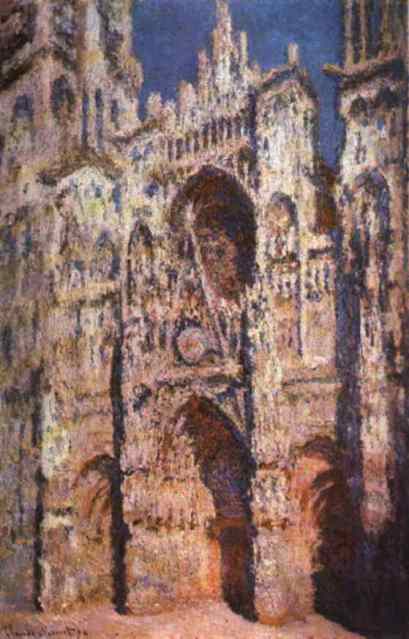
The earlier stuff though does the business and pop a building in, or some other expression of the built environment, and I am a buyer. It offered up another set of shapes, beyond the natural, for our Claude to explore, and provided anchors for the eye. And later on, in Rouen, or London, or Venice, new textures. And when you see room upon room of paintings of such beauty it is, cliche-alert, breath-taking. This exhibition is an aesthetic delight. No need to think about context, concept, history, method, material, technique, message, or anything else for that matter. Let there be light as some other important old fella with a big white beard might have said.

That’s it. Just go. And be happy. I’ve nothing else to say.

Act and Terminal 3 at the Print Room Coronet review ***

lars_noren

Act, Terminal 3

The Print Room, Coronet, 13th June 2018

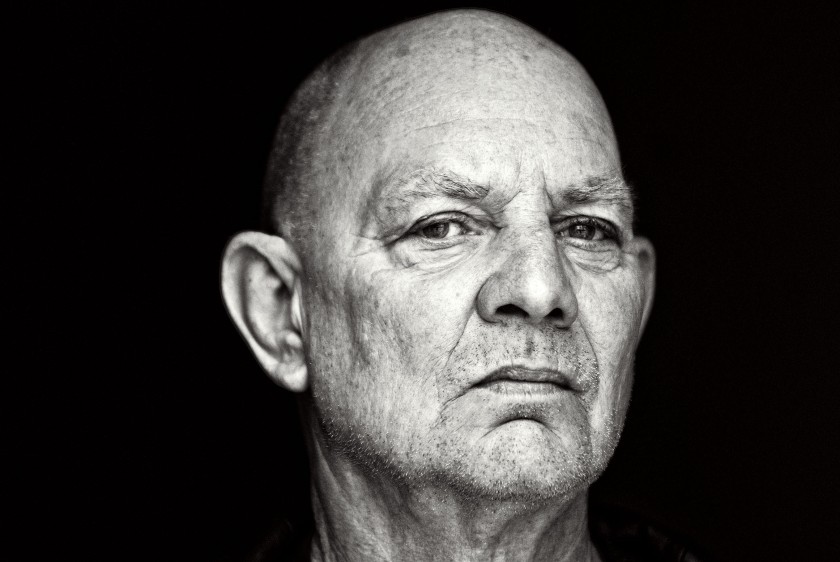
Lars Noren is considered by many of those who purport to know about these things to be Sweden’s greatest living playwright. He certainly looks the part. His writing is oft compared to Beckett and Pinter. The Print Room is a terrific space. The intimacy of fringe with, if you are careful, a comfortable enough perch and an atmospheric bar. And a bargain on Wednesday night. As a dedicated Scandi-phile I was well up for this.

Mind you I had read enough to realise this wasn’t set to be an evening of Cooney-ish farce. Once again I invite you to look at our Mr Noren above, This was going to be spikey, elusive, provocative, an air of brooding unease pervading the whole, in short proper European “art-theatre”. No conventional narrative of course. Past, present and futures unclear. Cast having to work extra hard to earn their corn (which they all did, admirably). Well it certainly lived up to the billing. Which was both good and bad.

Act sets out to explore the “symbiotic” relationship between State and Terrorist and was originally located in West Germany in the 1970s and the incarceration of Ulrike Meinhof. Director Anthony Nielsen has chosen to re-imagine the play in a near future USA post a Second Civil War where “red” secessionist states have been occupied by an authoritarian, left-leaning government. Interesting, a la mode, but ultimately unnecessary in my view, and not immediately obvious from the dialogue. G, venomously played by Barnaby Power, albeit with an improbable Southern drawl, is a doctor for the regime, holed up in some makeshift hospital/prison full of symbolic Americana. Temi Wilkey is M, the enemy of the state set to undergo further (?) examination/interrogation. They may have had a past encounter. There is little in the way of argument or context in their exchanges which are more along the lines of a psychological arm-wrestle as each takes their own experiences and beliefs to alternately cajole and belittle the other. I guess the overriding aim is, Foucault-like, to show the inter-dependence of captive and captor, and there are some arresting lines, as it were, but it was frustratingly opaque.

Terminal 3, again some 45 minutes or so, was a little more straightforward, but not by much. Two couples emerge either side of a screen centre stage courtesy of designer Laura Hopkins, imposingly lit by Nigel Edwards, and with buckets of dry ice. It transpires that Man and Woman (of course Mr Noren doesn’t dilute his art with names), Barnaby Power and Hannah Young have come to a hospital chapel of sorts to identify the body of their dead son. In contrast He and She (!), Robert Stocks and Temi Wilkey, are in a hospital as She is about to give birth. At least I think that was the set-up. This then becomes the stepping off point for a dense exploration of the impact of the beginning and end of life on the two couples. Mr Nielson’s direction, as the couples seem disorientated by their situations, fumbling in near darkness towards the end, (terminal ?), was unyieldingly gnomic.

So puzzling, inaccessible, provocative. Yes. And maybe just a bit daft. Yep, maybe. But here’s the thing. Like so many of these more challenging theatrical experiences it does stay in the memory, and sometimes for longer than more straightforwardly enjoyable entertainments. I have a recollection that none other than the mighty Caryl Churchill once said that she aimed to create a few lasting impressions in the audience for her plays. Anything more not being possible given the nature of memory. She might not have said this though given she doesn’t say much and my memory is fallible, or do I mean malleable. You get the idea. Not saying these two short plays really qualify but, by making me search for meaning, they might persist.

Leave Taking at the Bush Theatre review *****

black_trumpeter_at_henry_viii27s_tournament

Leave Taking

Bush Theatre, 13th June 2018

I confess I had never heard of Winsome Pinnock’s 1987 play Leave Taking until this season’s announcement for the Bush. Shocking for someone who considers themselves to be a theatre obsessive. I still have so much to learn.

Still theatre is always the best way to confront ignorance and so it proved here. Leave Taking deals, amongst many other things, with the Black British experience, and specifically the experience of those whose heritage is rooted in Jamaica. In that regard it foreshadowed, and inspired, Natasha Gordon’s excellent Nine Night at the National Theatre recently (Nine Night at the National Theatre review *****) and, like Nine Night, it used comedy to telling effect to entertain and to make its points about the dissonant experiences of first, and subsequent, generation British-Jamaicans. Unlike Nine Night however, it was not overstuffed with plot-lines and the story was confined to, effectively, one family. It might just be, therefore, a stronger play. Definitely a must see – if not this time at the next revival, for there will surely be one.

(BTW Nine Night is transferring to Trafalgar Studios for December and January and must be seen if you haven’t already).

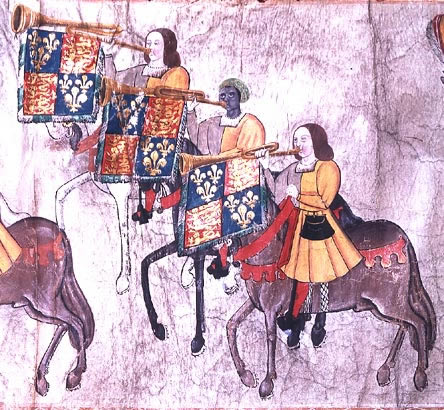
Also before I start warbling on about the Leave Taking I would also highlight the excellent BBC documentary Black and British: A Forgotten History. I guess it will pop up on I Player one day. If so take a look. You will learn a lot. Black Britons have been part of our shared history since Roman times. The picture above, featuring a black trumpeter is from an illuminated manuscript from 1511.

Enid (Sarah Niles), having emigrated from Jamaica, is a single parent living in North London with her daughters, the studious Viv (Nicholle Cherrie) and the restless Del (Seraphina Beh). Brod (Wil Johnson), Enid’s brother-in-law, (her husband abandoned his family long ago), is a frequent visitor. The play opens with Enid taking the girls to see Mai (Adjoa Andoh), the local Obeah Woman, in her somewhat untidy flat. Enid is looking for help with Del who she fears may get into trouble. Mai isn’t much interested in helping but does make a connection with Del. Brod pays a visit to the family flat and talks of the old days in Jamaica. Del returns from a night out. Brod and Enid have a history. Enid talks a call from her sister whose pleas for financial help annoy Enid. Viv tells her mum she doesn’t want to go to university. Del leaves home and moves in with Mai. Enid comes to see Mai. Brod gets drunk and goes to Mai’s place. Del and Mai have a heart-to-heart. Enid comes round.

Now I admit that it all sounds fairly uneventful when described in such stark terms. Nothing could be further from the truth. There are few plays that I have ever seen that get right inside all of its characters, and not just the main protagonists, with such accuracy, using such volitional dialogue. That is not to say that the dialogue isn’t very rich, and very funny, just that Winsome Pinnock had no need to “force” anything out of the mouths of the five characters to tell her story and make her arguments. The eight scenes are so entirely realistic, and naturalistic, that when director Madani Younis felt the urge to play around a bit, with a bit of dripping water and stage puddles, the audience was, rightly, nonplussed. No need for metaphor when the writing speaks for itself.

However fine the play is, it still needed a cast to match and everyone here was on sparkling form. I adore seeing Adjoa Andoh on stage. In Nick Hytner’s recent Julius Caesar at the Bridge she near stole the show, against formidable competition, as a painfully, sardonic Casca. In her hands, Mai was prickly, found of her stout, and her powers uncertain, but her implacable inner strength offered Enid, and Viv, in very different ways, succour. Wil Johnson, with his nostalgic reminiscences of his early years in Jamaica, showed how Brod had never reconciled himself to his new home and offered a clear, and moving, reason why he stayed.

Seraphina Beh was excellent before on this very stage in James Fritz’s Parliament Square (Parliament Square at the Bush Theatre review *****) and she repeated the trick here revealing the self-doubt that lay beneath Dels rebellious exterior. Nicholle Cherrie had less overt opportunity to flesh out Viv, (since Leave Taking is drawn in part from Winsome Pinnock’s own North London upbringing I assume this is the character closest to her young self), but still showed us the frustration that can stunt the older, sensible, more bookish sibling.

However Enid is the plum part here and Sarah Niles grabbed it with both hands. I don’t think Enid has buried her heritage, just been forced to sidestep it whilst she gets on with the tough business of bringing up two children, by herself, in a country that was, and is, ambivalent about her presence. In the first couple of productions of Leave Taking at Liverpool Everyman and the Lyric Hammersmith Enid was played by Ellen Thomas. You might know her from her numerous TV, especially soap opera, roles. She is a first-rate stage actor as well, as her performance in Bonnie Greer’s uneven take on The Cherry Orchard at Theatre Royal Stratford a couple of years ago. I would like to have seen her play Edith. It is not as if the theatrical canon is overrun with roles for strong, black, mature women. Indeed the NT revival of Leave Taking in 1995 (the last before this apparently) was the first play by a back woman on our national stage and the first time a black women writer and director worked together there. It is getting better I guess but given the power of this play, and Nine Night, I for one would like to see a lot more.

You would think that honesty was an easy quality for a playwright and a play to conjure up. You’d be wrong. It’s all an illusion, a story, so showing real people grappling with real life in such an eloquent, witty and emotionally powerful way, and with no formal shenanigans, is only rarely delivered in my experience. This play is as fresh and relevant as the day it was written and definitely ranks as a “modern classic” in my book.


The Two Noble Kinsman at the Globe Theatre review ****

globe_theatre_innenraum

The Two Noble Kinsman

Globe Theatre, 12th June 2018

I am not too keen on the Globe. Actually that is putting it mildly. I really don’t like it. For the simple reason that it is so bloody uncomfortable. I know that is the point. Sam Wanamaker’s vision of a re-creation of Shakespeare’s original entertainment house would hardly work with plush seats and perfect sight-lines but it does’t stop my bum from numbing, my back from aching, my knees from cracking and my attention from being distracted by the shuffling of the even more unfortunate folk in the Yard and the roar of the planes overhead. Which means, however good the production, and however atmospheric the mood created, (and it certainly can be atmospheric), I am normally too unsettled to totally commit. My fault for being a fat, whingeing curmudgeon.

There are times though when I get tempted and this was one of them. I had never see “tragicomedy/romance/pastoral” The Two Noble Kinsmen before and the prospect of Barrie Rutter directing, and taking a scalpel to the preposterously over-written text, was just too inviting. I also reasoned, correctly, that it wouldn’t be packed to the rafters given this was not Shakespeare’s finest hour. TTNK was written in conjunction with John Fletcher, first performed in 1613/14 and first published in 1634, so it didn’t appear in Heminges and Condell’s First Folio. Probably because they didn’t have a decent text to hand and they didn’t deem it worthy given the co-authorship. Shame. Maybe then it wouldn’t get such a bad press, along wth Pericles, and maybe then we would also have a version of the lost Cardenio (based on the Don Quixote legend) to savour.

The mash up of Chaucer’s Kings Tale, via Greek tragedy, latin epic, English masque, and Italian romance is daft, no doubt about that, but no more so than some of Big Will’s other “comedies”. Well maybe not, but the tale of firm friends, Palamon, (who also appears briefly in Johnson’s Bartholomew Fair), and Arcite, fighting over the object of their affection, Emilia, really does have its moments. By this time Will S was no longer a sure-fire hit-maker and Fletcher may well have been drafted in to stop him going all Tempest-y introspective again. Fletcher’s contribution brings the knockabout comedy stemming from the infatuation of the (unnamed) Jailer’s daughter for Palamon and the Midsummer Night’s Dream style rustics entertainment. Indeed there is plenty that is lifted from the Dream, unsurprising given that was also inspired by A Knights Tale: the regal presence of Theseus and Hippolyta, lovers who have made less than ideal choices and another trip to that Athenian wood. Shakespeare’s verse had by now become quite knotty in parts so, in some way, the recognisable comedy makes it easier to digest and this is what Mr Rutter alights on as he sharpens up the text to the benefit of the plot.

Post prologue, we begin with the three mourning Queens, (here played by Sue Devaney, Melissa James and Kat Rose-Martin), who have come to Athens to plead to Theseus (Jude Akuwudike) and Hippolyta (Moyo Akande) to help avenge the deaths of their husbands at the hands of King Creon of Thebes (who won’t give them a proper burial – he has form on that front). Theseus in Dream always strikes me as just a way of getting from A to B plot wise, (though obviously the actor gets compensated in the form of altar ego Oberon), but here there was a bit more opportunity for Jude Akuwidike to actually direct proceedings which he seized admirably. Moyo Akande was an imperious Hippolyta helped by her gorgeous costumes, (Jessica Worrall’s designs here were marvellous  and all credit to the makers – Sarah Campbell, Rose Chandler, Charles Hanrahan, Aislinn Luton, Phil Reynolds and Janie Stephenson). I don’t know if the height difference between Moyo Akande and Ellora Torchia as Emilia, her fictional sister, is deliberate or just an outcome but it does provide, as with the casting of Francesca Mills as the Jailer’s Daughter, and that between the three Queens, further texture, (if not the deliberate, slightly sour, humour of Hermia and Helena’s confrontation in Dream).

Anyway Theseus goes to war and Creon’s nephews, Palamon and Arcite,  are captured. I read a review which said Paul Stocker and Bryan Dick, (last seen by me in a state of inspired confusion in Great Apes at the Arcola), played the firm friends like a couple of gap year hooray-henry’s, which is wittily accurate. That is not to downplay their performances, just that when the opportunity to ham it up a bit was presented, as when they first clap eyes on Emilia through the cell window, or when they meet again in the wood to resume the bickering, they grab it with both hands. Very funny.

Arcite is set free, banished but literally wrestles his way into a position as Emila’s bodyguard, as you do. Palamon too is sprung from clinkey but this time with the help of the Jailer’s Daughter who has fallen for him. Palamon and Arcite decide to fight it out for the hand of Emilia. The Jailer’s Daughter goes bonkers, Ophelia-like. The yokels, led by the Quince-like Schoolmaster (Jos Vantyler) put on their performance, “aided” by the mad woman, and here decked out in full Green Man, morris dancing English pastoral mode. With baboon. Apparently not the only play of the era that called for this particular primate. The official tournament between the two lads, decreed by Theseus, follows, with everyone asking the Gods to intervene, which, via various twists of fate, they do.

As ever in Shakespeare love at first sight is the standard modus operandi, (unless, of course it isn’t as in Much Ado). In TTNK though the love plots are unadorned, no mistaken identities, (well OK maybe one utterly transparent one), servants intervening or pretty sonnets. We end with two marriages but they are peremptory. Emilia is indifferent to the point of blase about which man she gets and the Jailer’s Daughter rewards the persistence, and dodgy impression, of the Wooer (here Jon Trenchard) after the Doctor’s unusual prescription.

All in all TTNK has the air of a partially successful comeback album. It is surprising just how good it is, in the right directorial hands, and a lot of the magic is still there, the band never having it lost it, but it is a little too indulgent, the main songwriter is a bit too preoccupied, and may just be mocking his own legacy, it is a bit too loose and you wouldn’t want to listen to it as often as the “classic albums”. It even has a subtle callback to the early years (big Will’s first ever pressing, Two Gentleman of Verona). Not quite done just for the money but with a strong sense of “take it or leave it”.

Barrie Rutter, very wisely, seeks to play up the comedy and dial down any tragedy. Jacobean comedy by now had become a little more sophisticated when compared to WS’s earlier comedies which, in the main exchanges between the “courtly” posher characters, encourages a more knowing air. This does mean that by the time we get to the end we don’t really care about the death of Arcite. It also places a little less weight on the gay sub-text of Palamon and Arcite’s friendship and when Emilia is graphically remembering her friend Favina. The two male characters, like Demetrius and Lysander in Dream are pretty similar though here the performances and build of our two created some distinction. The exchanges between Emilia and Hippolyta and Hippolyta and Theseus are similarly “flat”.

All this means that the undoubted star of the show is the Jailer’s Daughter who has plenty of opportunity to shine and shine she does here. Francesca Mills is a wonderful actress and this performance makes a strong case for adding the Jailer’s Daughter to the list of “rounded” comic A-listers in Shakespeare’s roster. OK so maybe not up there with Falstaff and Malvolio but the equal of Bottom surely. Ms Mills has natural comic timing, amazing energy and was able to convey the Daughter’s “love-sickness” convincingly and sympathetically. Her diction, through the perfectly judged “northern” accent was natural and clear, and she conveyed real passion, not the sometimes rather pathetic attachment of other Shakespeare women.

Mr Rutter has ensured that music plays a big part in this production enlisting the skills of genius folk composer Eliza Carthy, choreographer Ewan Wardrop and a band led by Andy Moore who get properly involved. He has also cast Matt Henry as Pirithous, Theseus’s bosom buddy, who is, by trade, a scion of musical theatre and it shows, as he provides the backbone to key musical interludes. The final ensemble set piece is properly, joyously, foot-tapping to the point where I forgot my aches and pains and left the Globe smiling.

Which, I can assure you, doesn’t always happen.


Tallis Scholars and Peter Philips at Cadogan Hall review ****

thomas_tallis

The Tallis Scholars, Peter Phillips (director)

Cadogan Hall, 7th June 2018

  • Robert White – Domine, quis habitabit
  • John Sheppard – Missa Cantate
  • John Sutton – Salve regina
  • Robert White – Magnificat
  • Thomas Tallis – Spem in alium

I just cast my eye over an article in the Guardian purporting to list the best albums of 2018 so far. The Guardian has been my newspaper of choice since my teens. In a world of (too) fierce tribal-like identities it pays to read something you agree with. Or does it? Whatever, it is a reasonable bet that this list encompasses exactly the sort of contemporary music I should be listening to. I hadn’t heard any of it. I was aware of a few of the artists listed and I wouldn’t say I am completely immune to the music of today though the path I cut through it is both random and infrequent. But all of this was a mystery to me.

Now three decades ago I would have been all over this list like one of the cheap suits I own. And that millennial equivalent me would probably have scoffed at the very notion of Renaissance polyphony. Yet here I am, years later, near wetting myself at the prospect of listening to an expanded Tallis Scholars under their renowned leader Peter Phillips, perform Thomas Tallis’s Spem in alium. As I suspect was the majority of the full house at Cadogan Hall.

So I say to my younger self, and any readers who are still in the prime of their cultural life, make damn sure you listen to this masterpiece as soon as you can. You could always try Janet Cardiff’s sound art installation, which takes a recording of Spem in alium, and puts in through 40 carefully positioned speakers, if it swings by you. Extraordinary. It might be in MOMA as we speak. Anyway add it to you cultural bucket list. And in return I promise to seek out a couple of the modern beat combo recommendations from the list referenced above and try to like them.

Now if you are Mr Phillips, and you have secured more than a couple of dozen fine voices to add to the 16 or so permanent members of the Tallis Scholars, you are not going to pass up the opportunity to programme some other, much rarer, large scale vocal works. Specifically here pieces from the Tudor period in England. Now we know a fair bit about Thomas Tallis’s (1505-1585) music, (if not his life), as we do his erstwhile pupil, William Byrd (1543-1623), because these two managed to snaffle a monopoly on publishing and printing music, sacred and profane, from Elizabeth I. This despite them both being (careful) Catholics. Control printing and you control prosperity, printing being as big a deal in the C15 and C16 century as t’internet is now. The other composers on this programme though were less fortunate, despite being as talented, surviving copies of their music being far rarer.

That is what makes this polyphonic vocal music so fascinating beyond the beauty of the modal scales, the harmonies and the thick, rich interweaved textures. It is the history behind it. The when, why and how it was created and the when, why and how it was preserved, and in some cases, rediscovered and brought to a new level of appreciation, in part through recordings as well as performance, in the last few decades.

For a vast swathe of this music was destroyed pretty much as soon as it was created. If it was Latin and liturgical then odds were some bell-end or other would shred or burn it in the Reformation, as one bunch of religious nutjobs asserted their half-arsed fantasies over another.

Thus the richest source of sacred music from the early Tudor period is contained in just three illuminated manuscripts, the Eton Choirbook, and the later Lambeth and Caius Choirbooks. The Eton Choirbook dates from 1500 or so, is incomplete, with 64 surviving works from 24 different composers. It tracks the development of polyphonic music in England from the five voice, non-imitative textures where contrast comes from voices dropping in and out, to the beginnings of imitation ,(a voice singing the same line a bit later), underpinned with cantus firmus techniques, (a sort of plainchant anchor normally from the tenor part), and the attractive dissonances conjured up by frequent false relations, (a chromatic contradiction apparently, two voices singing a different note simultaneously). The latest pieces in the Choirbook dump the cantus firmus, up the imitation and generally get more complicated and florid, “parodic” is the technical term, aping what was going on in the Low Countries, Italy and France. You see, dear Brexiters, even in the late 1400s England was being influenced by those funny furriners.

The earliest piece in the concert then was from this Choirbook, John Sutton’s setting of Salve regina, the liturgical highpoint of the Virgin Mary craze which, amongst many other things, is what makes Catholicism so weird. This is all we have of Sutton, and all we know is he was a Fellow at Magdalen College Oxford in 1478 and at Eton the following year. It is for seven voices, here doubled, and swirls around in very pleasing fashion, highly melismatic,  with points where all the voices mass together.

It wasn’t quite as powerful as the two pieces by Robert White (1535-1574) however. White was appointed to the post of organist and master of the choristers at Westminster Abbey no less, at the tender age of 32. Unfortunately he only managed another few years falling victim, as so many did, to one of the many outbreaks of plague in London. The first motet here, Domine, quis habitabit is a later Tudor psalm setting which White was particularly drawn to and involves three pairs of voices (again doubled here) delivering waves of imitative polyphony. The second White piece, a Magnificat, was an altogether grander affair which looks back to earlier styles. It is underpinned by long drawn-out plainchant divided amongst the voices, interspersed with long runs of melismatic melody. Apparently White employs gymel, the bifurcation of parts to add further texture. Who knew. Anyway I was much taken with this, probably my favourite other than the Tallis.

I was also mightily impressed by the Missa Cantate from John Shepperd (1515-1558). He is another chap about whom we know very little though PP and the Tallis Scholars have put some scholarship in to find out what they can. This work probably dates from the mid 1550s. The source for this “festal mass” is unclear but Shepperd clearly felt confident enough to revive the form with Mary on the throne and Catholic musical fol-de-rol back in favour. It is in six parts divided (doubled) into high and low sections which finally come together in the Gloria. It is very ornamental, with indulgent melisma stretching out the text so that you really get your money’s worth. The high parts divide at certain points to create the polyphonic wall of sound which we (in the hall) know and love especially in the Credo. Apparently Shepperd marked the score with the instruction “Sing!”. They certainly did. It merited the substantial applause prior to the interval.

The Tallis Scholars like their contemporaries the Sixteen are so good at what they do that you sometimes forget how difficult this all is to get right. I imagine hours of rehearsal and study are required to knock this into shape especially these rarer pieces. With Spem in alium though it is impossible to be so complacent as an audience member. as the  40 singers shuffle on you become aware just how tricky an undertaking this is. I count just 31 words in the Latin text and it clocks in at around 10 minutes. It kicks off by introducing the 8 choirs of 5 parts (SATBB) one by one, shifting motifs around the space through imitation before reaching the massive culmination. Then it reverses back through the choirs before the second coming together and then antiphonal pairs of choirs are created. How they all keep it together is a mystery and you are acutely aware that if this unravelled just slightly then the whole thing would go t*its up pretty sharpish with no hope of recovery. There nothing you can do but surrender to the cluster of swirling sound punctuate by moments of immense drama such as the silence and then key change post respice (look). Or you could try and focus on a few individuals and try to pick out their lines. Good luck though the flatter Cadogan Hall acoustic actually made that a little easier.

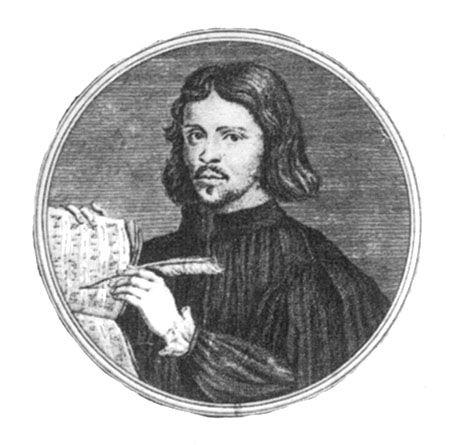
Now Tommy Tallis (that might be him above) wasn’t the only Renaissance man to conjure up a 40 part smash hit. Apparently an Italian fella called Alessandro Stroggio came on tour to London with his equivalent a few years earlier commissioned by the Medicis. When Tallis presented his effort to the Duke of Norfolk in 1570’ish, he apparently took off his gold chain and presented it to TT so overwhelmed was he. This could be nonsense though since the Norfolk was about to be executed by Lizzie I as a persistent Catholic plotter. Despite having lost all their titles and possessions on a couple of occasions and a few lurches in terms of inheritance the Norfolk title is still top dog in terms of the English aristocracy and still Catholic.

Spem in alium was sufficiently famous though to be used at the investitures of the Prince of Wales in 1610 and 1616 from when the first surviving manuscripts date. Every contemporary Renaissance vocal group has had a poke at recording it but I am happy enough with the recording by this very ensemble.

Since all 40 of the singers had turned up for work it seemed a shame not to let them off the leash again and so we were treated to an encore, the 12 part Regina Coeli by Nicolas Gombert. Not strictly Tudor but still a prime example of what was going on in the Low Countries at the time before the Italians took over led by Palestrina. Gombert, along with Adrian Willaert, was the master of the dense, highly imitative, almost contrapuntal, style, and here the shifts between voice groups, especially in the lower registers, were thrilling. No idea about the text but very happy to hear this.

Now I wasn’t going to keep this treat all to myself so BUD was happy to attend, and I spied a couple of other chums in attendance. For a certain poncey metropolitan elite type attendance here was mandatory. Like I say at the top though I really would  entreat you to find a way to hear this. It won’t change your life, it’s just music after all, but it will marginally enhance it.

LSO play Ravel and Mussorgsky at the Barbican review ***

mussorgsky_repin

London Symphony Orchestra, Gianandrea Noseda, Yefim Bronfman (piano)

Barbican Hall, 3rd June 2018

  • Ravel – Rapsodie Espagnole
  • Beethoven – Piano Concerto No 3
  • Mussorgsky arranged Ravel – Pictures at an Exhibition

It has been a few years since I have heard Pictures at an Exhibition live, and I have thoroughly enjoyed Mr Noseda’s way with Shostakovich and Beethoven recently, so I reasoned now was the time to reacquaint myself. Moreover Mr Bronfman’s account of the PC 4 last year, admittedly under the exacting eye and ear of Mariss Jansons and the Bavarian RSO, was pleasurable enough if not earth-shattering (Bavarian Radio Symphony Orchestra at the Barbican review *****). And I thought it right to risk another chapter in my ongoing love/hate relationship with Ravel.

The Rapsodie espagnole is a pastiche, of sorts, of Spanish music, in contrast to the rather more rooted offerings of the likes of de Falla, Albeniz and Granados, though Ravel is not the only French composer to have been seduced by all that sultry dance. Indeed when this was composed, in 1907, Maurice was immersed in all things Iberian what with his opera L’heure espagnole and the songs of the Vocalise-Etude. And his particular favourite was that familiar habanera rhythm – which turned into, amongst other things, the cha cha cha we now today. Mind you his mum was Spanish and he was born just over the border in the Pyrenees so it was in the genes/memes.

This was Ravel’s breakthrough orchestra piece and actually pretty much his only full force work that didn’t start in another form or from the piano. Whilst it isn’t based on any specific Spanish melodies there is no doubting where you are. Ravel, of course, was the master of musical and emotional coloration. Yet he doesn’t always surprise. When he does, for me mainly in the chamber, piano and piano concerto works, he can dazzle. When he doesn’t, often as not for me in the vocal works, he can be just a bit too diddly to no purpose. Not as diddly as Debussy who mostly really tries my patience, but still a triumph of style over substance.

Overall, given the material, this was reasonably enjoyable though I wouldn’t seek it out. There is a distinct descending four note ostinato motif that recurs through three of the four sections, with the Habanera being the exception. This helps it all hang together. The LSO was on top of the score, of course, but Mr Noseda’s reading felt a little forced, but not unpleasantly so, until the final Feria where the band cut loose.

This spilled over into the Beethoven where the quiet string theme that opens the C minor concerto shuffled into, rather than glided into, the room to set up the extended orchestral intro of the Allegro. Last time round in Beethoven I felt Mr Bronfman’s precise, delicate playing meant he got a bit bullied by the orchestra. I feared a repeat. As it turned out he was given enough room to breathe and the LSO, especially in the woodwind and lower strings, was on top form, with the Largo the standout. I have heard more convincing overall interpretations, and a bit more whoosh in the Rondo, but this was satisfying enough.

Hendrix, Morrison, Cobain, Vicious, Bonham, Curtis, Johnson, Buckley (x2), Cooke, Gaye, Coltrane, Parker, Parsons, Bolan, Tosh, Lynott, Nelson (PR). Some of my musical “heroes’ who died of unnatural causes, often with a fair bit more left to give, But if you want real rock’n’roll, nearly a century before any of these punters were doing their thing, then Modest Mussorgsky is your man. Obviously, like so many of the above, he was a f*cking idiot to waste his talent mashed up on booze, but, having chosen this course, and he did choose it seeking artistic freedom in this “bohemian life”, he got properly stuck in. Which meant he failed to complete vast swathes of work and didn’t get much beyond the piano and a bunch of songs and the completed opera Boris Godunov. He was a rubbish musician barely caring or knowing about structure or texture but boy could he capture a mood. and in BG he basically captures the essence of Russia.

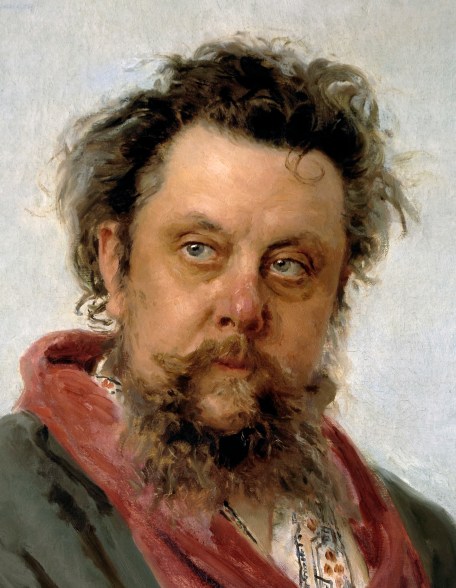
Anyway there he is above in close up, in Repin’s famous portrait from 1881, which appeared in the marvellous Russia and the Arts collection at the National Portrait Gallery a couple of years ago. He looks a bit rough for sure. Worse still when you realise he was just 42 and died a few weeks later.

Easy to see what the colourist Ravel, as many others have done subsequently, was smitten with MM’s big ideas and couldn’t resist the temptation to smooth off the rough edges. The original piano suite of Pictures at an Exhibition was inspired by a posthumous retrospective of the work of artist Victor Hartmann, MMs mate who died aged 39. Mind you MM’s musical images, as you might expect, went way beyond whatever Hartmann envisioned, but the concept of the exhibition, with the repeated Promenade being us the viewer, holds the whole thing together and adds an ironic, detached air to the bombast. On the piano it doesn’t entirely work but in Ravel’s hands something magical emerges. Ravel used Rimsky-Korsakov’s edition of the piano original so a few changes were made but you get the feeling that MM would have been happy with the result even if he may not have known how Ravel got there.

It might all be very familiar but it the right hands, and the LSO and Gianandrea were the right hands, it can still be thrilling. Bydio, Baba-Yage and the Great Gate of Kiev didn’t disappoint. Boom. If you are a classical virgin and want to find a way into live performance there is no better way. You won’t stay there as you move on, and you may end up thinking it is all a bit daft, but the hairs on the back of your neck will still stand on end whenever you return to it.

Rock’n’roll. Sort of.