The Prime of Miss Jean Brodie at the Donmar Warehouse review ****

24795636677_646fd86a04_o

The Prime of Miss Jean Brodie

Donmar Warehouse, 19th July 2018

The SO obviously is a big fan of Muriel Spark’s novel. We are both big fans of Ronald Neame’s film version, (only the other day I revisited this director’s magnificently cheesy The Poseidon Adventure), though let’s face it that is largely because Maggie Smith delivers a technicolour Maggie Smith performance. No less than David Harrower, (Knives in Hens, Dark Earth, Blackbird and some classic adaptions), was turning book into text here and Polly Findlay was directing. We have actors of the talent of Angus Wright, Sylvestra Le Touzel and Edward MacLiam and I was particularly keen to see Rona Morison again, who was so good in Orca at the Southwark Playhouse in 2016).

But, more than all of this, the big draw was Lia Williams in the title role. I believe Ms Williams is one of our finest stage actors, most recently seen in the Almeida’s Mary Stuart and Oresteia, (alongside Angus Wright as it happens), and, earlier in her career, Oleanna and Skylight. She is also a mean Pinterite, (if that is the word), and I am looking forward to her directing the opening salvo of plays in the upcoming Pinter season alongside Jamie Lloyd.

Now I had not remembered, from the film, just how ambiguously complex a character Ms Brodie is. An inspiration to the girls, (with Grace Saif, Emma Hindle, Nicola Coughlan, she who brilliantly told a twat of a critic where to get off in his insulting review, and Helena Wilson, all superb alongside Rona Morison’s Sandy), who genuinely wants to help then break free of stifling convention, but also manipulative, desperate, unfulfilled with a nasty undercurrent of fascist sympathy. David Harrower’s adaptation makes all this plain, without any need for histrionics, artfully augmented by Polly Findlay’s methodical direction and Lizzie Clachlan’s pared back design. His subtle inclusion of sub-plots involving Nicola Coughlan’s Joyce Emily, who is spurned by Sandy (and belittled by Miss JB) and goes to fight in the Spanish Civil War, and the framing device of Sandy’s book, worked for me.

Angus Wright as the long suffering, and increasingly frustrated music teacher Mr Lowther, and Edward MacLiam as the more volcanic, and damaged art teacher Teddy Lloyd, were admirable foils to Lia William’s Brodie as they vied for her complex affections. Miss Brodie affects to the aesthetic but real human connection seems to scare her. She provokes rebellion but is actually intellectually conservative. Maybe the guilt of Sandy, as the pupil who betrays Miss Brodie and enters a convent as penitence, (which we see in flash forwards through interviews with Kit Young’s journalist), was a little too forward in Mr Harrower’s adaptation, you know she is Miss Brodie’s nemesis from the off, but it does draw out the darkness in Miss JB’s psyche.

Lia Williams is up against some pretty stiff competition when it comes to theatrical Brodies even if we put Dame Maggie to one side. Vanessa Redgrave, Fiona Shaw and Patricia Hodge, as well as Geraldine McEwan on the telly, have all had a stab. I can’t comment on any of these performances but I can’t imagine they were any better at capturing Miss JB’s dichotomies than this.

With a bit of luck this will end up a run out in the West End. If so I heartily recommend you see it.


For King and Country at the Southwark Playhouse review ***

poppy_stock_1_by_sassy_stock-d4r019g

For King and Country

Southwark Playhouse, 17th July 2018

You get all sorts of theatre at the Southwark Playhouse. Bold, experimental stuff, new works, revivals, youth theatre, musicals. classics. You name it, someone will put it on. It doesn’t always fly, but very rarely does it disappoint. That would be my overall take on For King and Country. The play was written by John Wilson and premiered in 1964 with a cast including Richard Briers, Leonard Rossiter and John Hurt. All greatly missed. It is based on part of the novel Return to the Wood by one JL Hodson, (nope me neither), and was quickly made into a very successful film with Leo McKern, Dirk Bogarde and Tom Courtney, (who at least thankfully is still showing his immense acting talent on screen). I haven’t seen the film, at least I don’t think I have.

There is nothing tricksy about this story. A proper, straight up and drama which is nonetheless very moving. 306 men in the British army were executed for cowardice in WWI. It is thought that many of them suffered from shell-shock, or, more correctly, post-traumatic stress disorder. The play tells the (fictional) story of one of them. Private Hamp, (a fine performance here from Adam Lawrence), has, almost absent-mindedly, wandered back from the front line at Passchendaele in an attempt to return home to London. He is captured by the military police and put on trial for cowardice and desertion. The increasingly sympathetic Lieutenant Hargreaves, played by Lloyd Everitt, does his level best to defend him. The President of the Court (Peter Ellis, all stiff upper lip) isn’t going to be swayed by the appeals of the youthful Padre (Eugene Simon), wrestling with his faith, placing more weight on the testimony of the weak-willed Medical Officer O’Sullivan (Andrew Cullum) who told Hemp to pull himself together and prescribed useless laxatives. Both the medical officer and Hemp’s CO Lieutenant Webb (Henry Proffit, suitably obnoxious), fear the consequences on the “morale” of the troops if they accept that Hemp’s behaviour requires sympathy and treatment, not condemnation, and are keen to sacrifice him as an example to others. However the Court can see that mercy is required.

A courtroom drama, a set-up guaranteed, from our contemporary perspective, to make the blood boil with anger at the cruelty of the military machine, and a plot which holds sufficient suspense such that, whilst fearing the worse in terms of outcome, you hope for the best. Yet what really makes the play interesting is the character of Hemp himself. Hargreaves, and another officer, Lieutenant Midgeley (Fergal Coghlan) do everything they can to explain Hemp’s behaviour, but he is passive, preferring to place his faith in Hargreaves oratorical skills. We see something of the class divide between the officers and the rank and file and we also learn that Hemp, a volunteer, is the last of his company alive, a friend was blown up by a shell in a foxhole and that his wife has left him back home.

Director Paul Tomlinson doesn’t do any funny stuff, the play neither requires nor deserves it, and designer Jacqueline Gunn has come up with a convincing set. The production comes courtesy of the Dilated Theatre Company, under AD Alexander Neal, which focusses on the political, plays by the likes of Barrie Keefe for example. All up then a fine play, diligently performed, even if it didn’t push any theatrical boundaries. It takes a bit longer than it should to get going but the second half definitely draws you in.

Finally remember that it took until 2006 before these 306 “deserters” were finally granted posthumous pardons, and only then thanks to the efforts of the family of Private Henry Farr and after a long legal battle. FFS. You have to wonder at idiocy of the Establishment sometimes.


Directors’ Festival at the Orange Tree Theatre 2018 review

jvudn7az

Directors’ Festival 2018

Katie Johnstone ****

Precious Little Talent ****

In the Night-Time (Before the Sun Rises) ****

Right it was a brilliant idea last year. It was a brilliant idea this year. And it will be a brilliant idea next year (Directors’ Festival at the Orange Tree Theatre review). As part of their MA’s at the nearby St Mary’s University, (in close conjunction with the OT itself), let three talented young directors loose on some superb short contemporary plays written by three equally talented young playwrights. Let us la-di-dah local culture vultures and a bunch of the directors’ fellow students and mates enjoy the results. And charge just a few quid for the proceeds. The Orange Tree now is getting close to Almeida-like levels of consistency, it is a superb space to see intimate two and three handers like these and the works, whether new, recent or revival, are so well chosen that you wonder why others can’t seem to beat them to the punch.

Anyway here was a new play (Katie Johnstone) from the prolific pen of Luke Barnes who writes for and about you young-uns, a revival of the second published play from the brilliant Ella Hickson (Precious Little Talent), she of Oil and The Writer fame, written in 2012, and a production of Nina Segal’s first play (In the Night-Time) which premiered at the Gate in 2016. Unsurprisingly these are all very fine works. Perhaps also unsurprisingly given the quality of last years’ productions they are all amazingly well directed by, respectively, Samson Hawkins, Dominique Chapman and Evangeline Cullingworth. I can’t be sure, in the absence of scripts, just how much they had to work with in terms of the look, feel and pace of each of the plays but I have to say, in every case, these were as inventive and as dramatic solutions to the limitations that the OT space imposes that I could wish to see, or indeed have seen.

Samson Hawkins is AD of his own company, tomfool, and assisted on the recent OT production of Romeo and Juliet and appears to be joining the team at the Oxford Playhouse. Dominique Chapman assisted on Joe Whtie’s excellent debut play at the OT, Mayfly (Mayfly at the Orange Tree Theatre review *****) and is freelance and works at the Globe. Evangeline Cullingworth assisted on Humble Boy and is associated with the Royal Court and the Gate. On the strength of these three shows I expect them all to go far. They all worked with set designer Eleanor Bull and OT lighting and sound regulars Stuart Burgess and Anna Clock to deliver equally dynamic productions and to allow their talented casts to shine.

I am not sure if this was intended but it seemed to me that all three plays were linked in that they all dealt with the crushing of youthful dreams in one way or another.

The eponymous Katie Johnstone is determined not to end up stacking shelves in Tesco alongside Mum and her bessie, and taking up with any old local lad. She wants to get to college and start her own business. Exams, and not knowing what sort of business, are no barrier to her dreams. In the end she can’t escape but Georgia May Hughes, on her main stage debut, shows us a feisty and powerful young woman whose humanity shows through even when her hopes and dreams are dashed. Kristin Atherton who caught my eye in the RSC Rome season is very good as Mum and friend Janet and Reuben Johnson also shines as all the male characters and, especially, as the fox, a recurring and intelligently used symbolic presence. There is a real energy to the production and it packs a lot into just over an hour.

Precious Little Talent tells the story of fervent young American student Sam and somewhat mordant British expat Joey meeting in New York in 2008 just after the election of Obama. This is a night to remember for both of them though their memories don’t quite coincide it transpires. We see that Sam also helps look after his neighbour George who has dementia. It turns out that George is Joey’s Dad. Sam’s crush on Joey never fades and he comes to London to try to persuade her to come back to New York and give up on her going-nowhere jobs and life. There’s a lot more to it than that, as you might expect from the pen of Ella Hickson, as it explores the relationships between each of the three principals, contrasting Sam’s optimism with Joey’s disillusionment, the fracturing of the father/daughter bond and the frustrations of George’s illness. Not a line is wasted and Matt Jessup and Rebecca Collingwood are outstanding as the two young’ers with Simon Shepherd, (you will know him off the telly), lending George an air of deliberate pathos.

Nina Segal’s In the Night-Time is a more experimental play which follows one young couple’s sleepless night with their newborn baby. This is the jumping off point for a fantasia of words and movement telling the story of their relationship to this point, their hopes, fears, dreams, frustrations, all amplified by their extreme tiredness and centred on the child they have together brought into the world.. It is far from naturalistic but still manage to convey just how scary those first few days are with baby number one, (though the SO and MSMM would both fairly point out that I was f*ck all use all those years ago). Ms Cullingworth asks a lot of her actors and Man (Ziggy Heath) and, especially, Woman (Anna Leong Brophy) don’t hold back, pulling us, the audience, into their story. There is also some nifty work from the stage management team pushing prop after prop through the centre staged cot. It didn’t all come off but when it worked it packed a powerful emotional and dramatic punch.

I reckon all three of these productions would merit a further outing and I intend to watch the future careers of these directors, and the less experienced cast members here, with close interest. Put this in your diary for next year. You won’t regret it.

One for Sorrow at the Royal Court Theatre ****

magpie-846146_1920

One For Sorrow

Royal Court Theatre, 5th July 2018

Sometimes I wonder why I bother with this blog. It takes me so long to get round to seeing and commenting on anything that any post here is worse than useless to the unlucky reader who inadvertently stumbles across it. And all it ever does is recycle far more learned opinions from more talented commentators and bloggers. I can’t be doing with social media so no-one gets to hear about it anyway. I could pretend I like it that way but that would be untrue: my ego needs as much stroking as the next man or woman. I’m just a bit intimidated by this new world of immediate communication.

Sometimes, as here with One for Sorrow, I even momentarily forget what is is that I have seen. Which, in essence, is why I keep going. For there is no better way to learn than writing stuff down and learning through consuming culture is where I am at. So here we go again.

The premise for One for Sorrow was intriguing if not entirely novel – young, privileged, “middle-class”, idealist type invites “victim” of attack in London into the family home despite the misgivings of her liberal family – and playwright Cordelia Lynn was, by all accounts, someone worth listening too. The Royal Court certainly believes in her talent. And I can confirm that, broadly, they are right (no surprise there), and that the play delivers on its promise, even if it does get a little stuck in a cul-de-sac plot-wise towards the end.

Irfan Shamji, who stole the show in Joe White’s excellent debut play Mayfly at the Orange Tree (Mayfly at the Orange Tree Theatre review *****), plays the stranger John. The scene is set with his breathless voiceover as we sit in total darkness. He has a gentle, yet intense, presence that convinces you that he might just be the perpetrator, rather than the victim, of the atrocities that have descended on the capital. Pearl Chanda captures elder daughter Imogen’s air of stubborn righteousness, but also her desire to test her own, and her family’s, commitment to the politics of tolerance. When John turns up after responding to Imogen’s social media invitation to help he is understandably agitated and disheveled but his defensiveness, rucksack and refusal to remove his coat, sow the first seeds of doubt in the family. The sublime Sarah Woodward and the unshowy Neil Dudgeon are perfectly cast as Guardianista parents Emma and Bill, and Kitty Archer, as the breezily self-absorbed, excitable younger daughter Chloe, on her stage debut, also turns in a fine performance to complete the quintet. Ms Lynn has a way of pinpointing not just what this family would say if such an existential threat were posed to them but exactly how they would say it. Shades of Pinter, whose estate commissioned this play.

As the scale of the terror outside becomes apparent, up to and including gunshots on the surrounding streets, and a direct personal connection is unveiled, the tensions within the family, catalysed by John, ratchet up, and the gulf between what they say and how they act, widens. John’s sympathies, and his engineering knowledge, create greater uncertainty and, to Imogen’s disgust, the rest of the family turns on him. The problem is that, in order to maintain the suspense, “is he or isn’t he”, the plot does go round in circles somewhat and the arguments become a little over-extended. However with writing, acting and directing, from the ever reliable James MacDonald, of this quality it is pretty easy to forgive the meandering momentum in the second half.

The culture of fear (and fascination) of terrorist violence, the hypocrisy of the “liberal elite” (that’s me), the impetuosity of youth, the hollowness of hashtag activism, all are eloquently exposed. The title comes from a story Imogen tells about a trapped magpie in the house, bird symbolism being de riguer in London theatre recently. I was reminded of Winter Solstice, the superb play by Roland Schimmelpfenning, which, taking different subject matter also skewered the crisis of liberalism in Western society.

It was a warm day outside, (state the bleedin’ obvious why don’t you Tourist), so I can’t be sure if a dial turn on the air-con, or deliberation, accounted for the streaks of moisture that emerged on the walls of Laura Hopkin’s efficient set but it certainly helped add to the unsettling tenor of the play, alongside Max Pappenheim’s dynamic sound design.

Ms Lynn has the dramatic knack, no doubt about that. I suspect there is much more to come from her pen. She also writes opera librettos apparently and is a mean pianist. She’s only 29.

The Turn of the Screw at the Open Air Theatre review *****

britten_-_the_turn_of_the_screw_twelve-tone_theme_tetrachords

The Turn of the Screw

Regent’s Park Open Air Theatre, ENO, 29th June 2018

Benjamin Britten. The Turn of the Screw. Members of the ENO Orchestra conducted by up and coming talent Toby Purser. Timothy Sheader directing. A Soutra Gilmour set. At the Open Air Theatre. On a beautiful late June evening. In the company of the SO, (who loves her Henry James and surprised herself by enjoying Deborah Warner’s staging of Death in Venice in 2013 at the ENO), BUD and KCK. Of course I was going to love this.

One of the aims here was to extend young BUD’s operatic education beyond Mozart. As he remarked here, not a lot of tunes.. Not sure I agree but there is no doubt in my mind that Britten’s music became darker through time, cleverer, from an already very high base, more progressive and less conservative, whilst never embracing the fearsome avant-garde, and richer, even as textures got sparser. The tonality is tempered with lots of (lovely)  dissonance.

I think TTOTS occupies a key place in the development of all of Britten’s art. It was composed in 1954, just after Gloriana, and three years after Billy Budd. In the same year Britten composed his Canticle No III, Still Falls the Rain for tenor piano and, Britten’s favourite, horn. This is recognisably BB, like a trip-hop version of the Serenade Op 31, but this, and the Winter Words song cycle from 1953, seem more melancholic than the warmer equivalents before the war. Britten himself said that his music was forever changed by the WWII, as was true for pretty much all Western art, notably by a visit to Belsen, but I don’t think this really becomes apparent until the mid 1950’s.

Anyway TTOTS is definitely an example of the “less is more” BB where surface effect is toned down a little, (though not jettisoned entirely, there are plenty of ravishing musical ideas here), in the service of greater structural and emotional depth. And structurally this is a score of genius as a tightly wound serial “screw” theme and set of 15 variations built on a different semitone, opens each scene, ratcheting up the tension. So, you see BUD, there is a “tune”, you just hear it in a different way.

Which I think is why it is such an effective piece of musical theatre, an opinion with which BUD heartily conferred. TTOTS is apparently BB’s most performed opera. And probably the most performed opera in English. And, after your man Puccini, probably the most performed opera from the C20. Certainly the most performed of those operas written since the war. In part this reflects its chamber structure. With just 13 instrumentalists and a cast of 7, this is no big budget affair. As was intended. However I also think it reflects near perfect synthesis of story, libretto and music. All three offer a sufficient challenge to an audience but in no way is this intimidating. It always takes a bit of time to get swept up into a Britten opera, but swept up you will be, even if it isn’t the massive, warming, rush of Mozart.

In retrospect it was pretty much a nailed on certainty that BB and Myfanwy Piper would alight on Henry James’s novella. BB, and his various librettists, always started with an artistic inspiration. Usually the story revolved around an “outsider” estranged from the society around him. There’s usually some sort of spiritual dimension. And, nailed on, there will be some sort of uneasy “corruption of the innocent” theme. TTOTS has all of the requisite elements in spades. Better than this though is the ambiguity embedded in the story. What really happened at Bly? What was, or is, the nature of the relationship between Miles and Flora, Miss Jessel and Peter Quint? Who, and what, can we see? Who, and what, do the characters really see? After all only the Governess apparently sees the ghosts in HJ’s original. Is this all in the Governess’s mind then? How are we being manipulated? Strange to think then that the story came to HJ via none other than the future Archbishop of Canterbury in 1895.

Myfanwy Piper’s text reads like a poetic, musical impression of Henry James’s book but it picks its highpoint carefully. On to this BB’s score is perfectly stitched. In the book, told through the first person narrative of the Governess, it is up to you to imagine what happens. In my estimation, and those way smarter than me, its psychological depth and disturbing themes, take it beyond your bog standard gothic ghost story. In the innumerable film and TV versions, the ghosts can be made to seem like the extensions of everyday reality that HJ intended (I think), thanks to the trickery of the camera, but you all get one view, one take on the story. In a version for stage as here, (or notably The Innocents or the 2013 Almeida take), Quint and the Governess are undeniably corporeal, (any design team which could escape that mortal fact would get my money, no question), especially if they are going to sing, and the children are going to sing to them, and scenes unfold where the Governess is not present. So the mystery and ambivalence has to come from the music. And I cannot imagine anyone better than Britten at facilitating this.

But BB and MP take things a lot further. Take Miles’s famous Malo song that is repeated by the Governess at the end. Haunting for sure with viola, horn and harp. Malo in Latin could either mean “bad”, “to prefer” or an apple, symbol of innocence. “I would rather be… in an apple tree … than a naughty boy … in adversity”. The Latin words recited in the lesson prior to this contain all sorts of sexual references. Miles wanting “his own kind” and reflecting on his “queer life”. Mrs Gross’s line about Quint being “free with everyone” allowed to linger in the Regent’s Park air. Blimey. This is how the opera adds a new dimension contrasting the order and convention that the Governess clings to with the liberty that Quint offers whilst not seeking to mask the implication of abuse.

So, as you can see, I am a fan of this opera. What about the production then. Sandra Gilmour has imagined the remote country house of Bly as a large, dilapidated conservatory fronted by overgrown grass and a jetty leading to the “lake” and into the audience. It was amazing. Timothy Sheader, after a decade at Regents Park, now knows exactly how to use the unique space to best effect. TTOFTS was pushed out to an 8pm start to ensure sunset and early twilight matched the change in dramatic mood in the story and provided a perfect backdrop for lighting designer Jon Clark to show off his skills. Quint and Jessel make entrances from within the audience. Even the parakeets flew over on cue, “the birds fly home to these great trees”, at our performance. The debacle of last years Tale of Two Cities is entirely forgiven. The pacing was sublime and the musicianship top notch, especially, the viola of Rebecca Chambers, the clarinet of Barnaby Robson, the horn of John Thurgood and the harp of Alison Martin. Putting the orchestra inside the conservatory, behind a panel of ancient glass, thus lending them a ghostly quality, was a genius touch.

On this evening ENO Harewood Artists Elgan Llyr Thomas played Peter Quint with William Morgan taking the Prologue. Mr Thomas’s tenor voice is clear and direct, through the melismas especially, and fitted the space. I was a little less sure about his wig and beard combo. Anita Watson was a suitably unhinged Governess, for me she was convinced this was really happening, and Elin Pritchard a very disturbing, steampunky Miss Jessel. Janis Kelly, who has in her time played Flora. Miss Jessel and the Governess, now played a protective Mrs Gross. Daniel Alexander Sidhorn’s precociousness made for an arresting Miles though I have to say Elen Wilmer’s Flora was, for me, the more impressive voice. As an actor though Master Sidhorn is the real deal. Simultaneously vulnerable and malign.

Indeed Elen matched the elder Elin in look and movement creating a “bond” between Flora and Miss Jessel as disturbing in its way as that between Miles and Quint, an unexpected bonus. Mind you when Miles dons his purple shirt to match Quint’s and when he takes over from Quint on the piano, (young Sidhorn is either a mighty fine  pianist or an even better “piano mimer”), the audience was bolt upright in their collective seats. And, on top of all of this, Mr Sheader really messed with our heads with a provocatively erotic scene as the Governess, “lost in my labyrinth”, asleep, is joined silently by Quint and Miss Jessel, or more specifically her hair, with Flora’s symbolic dolly and with Miles’s symbolic jack-in-the-box. Oh and did I say Miss Jessel is pregnant here.

One final thing. It’s outside. Which means a little technology is required to keep the volume stable as it were for both ensemble and singers. Which meant every word, with a couple of exceptions when Anita Watson’s soprano heads off to the higher registers, was crystal clear. Didn’t stop me consulting the libretto on occasion but what it did mean is that, for maybe the first time ever, I could savour every word of the libretto, to set alongside this stunning score and this tremendous production. This is what theatre, and opera, should all be about.



Monogamy at the Park Theatre review ***

torben_betts-2

Monogamy

Park Theatre 200, 28th June 2018

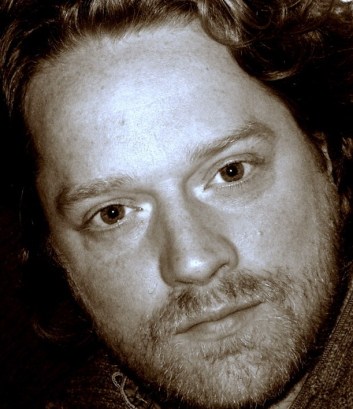
This was a curious confection. Playwright Torben Betts (there his is above) has, by all accounts, made a very creditable stab exploring the comic social realism so expertly, and prolifically, mined by his one time mentor Alan Ayckbourn. Here is another to follow the likes of Invincible and Muswell Hill (also set in a kitchen). I hadn’t seen any of his work before, other than his adaption of Chekhov’s Seagull at the Open Air Theatre, which displayed his sympathy for the Russian master.

With Janie Dee in the title role, so superb in the NT’s Follies, as Caroline, a celebrity TV chef whose “perfect” life starts to unravel, this sounded interesting. Which, in some ways, it was. The problem is that it couldn’t quite make up its mind what it wanted to be or say. Nothing wrong with flipping between comedy and tragedy, this is after all, what the mighty Chekhov and all his subsequent acolytes have strived to perfect. The British middle class family, and specifically the British middle class marriage, is a perfect dramatic target and is guaranteed to put knowing bums on theatrical seats. (Remember the phrase “middle class” in this, and most other, contexts doesn’t actually mean those in the middle. It means those at the top who assuage their guilt, and give themselves room to complain about their entitled lot, by pretending they are in the middle. I should know. I am one of them).

In Monogamy though the comedy, whilst often very witty was just too broad, veering into farce. The satire was just too obvious, the targets too cliched. The tragedy too contrived. I am pretty sure this technicolour effect was what Mr Betts set out to achieve, assisted by Alistair Whatley’s direction,  but it left me a little muddled despite some satisfying individual elements.

The play opens with the effortlessly capable Caroline rehearsing in the kitchen of her house which, temporarily is doubling up as her TV show kitchen. After the show her new PA, the coked-up Amanda, very amusingly played by Genevieve Gaunt with sub-Russell Brand verbal strangles, breezes in and announces the tabloids have got pics of Caroline pouring herself out of a bar after a big night out. It is wine o’clock though and Caroline, glass in hand, starts preparing for a party to celebrate son Leo’s Cambridge graduation. Leo (Jack Archer) is brooding, indulgently left-wing, gay and looking for his parents approval/spoiling for a fight as he comes out. We discover that builder Graeme (Jack Sandle), polishing up the house for sale, is having an affair with Caroline. As if this wasn’t enough the second act sees the return of the utterly over the top husband Mike return from his round of golf, (played with blustering, red-faced, apoplectic aplomb by Patrick Ryecart), and the arrival of Sally, (an under-utilised Charlie Brooks), bent on revenge for her husband’s infidelity. And the action ratchets up from there to a blackly comic conclusion, a knife standing in for the Chekhovian gun.

So you can see. Sit-comish staples, farcical energy, a hotch-potch of targets. Mike is a banker. And a philanderer. Obviously. Caroline is a Christian. Improbably., and her faith offers no protection from the demolition of family and fame. Sally is depressed, conveyed with real pathos by Charlie Brooks, but drowned by the rest of the shenanigans. Salt of the earth type Graeme turns out to have not so hidden depths of compassion. Amanda thinks they are all w*nkers, a fair enough assessment in the circumstances though she is the very embodiment of annoying. Though it may not be her fault as, McGuffin alert, her Mum has just died. Leo and Daddy make up, sort of.

It is genuinely hard not to like much of the detail and the performances, and I for one would be happy to acquire the kitchen conjured up in James Perkins’s set, but all together it overwhelms to the point of underwhelming if you see what I mean. I am pretty sure Torben Betts will hit the theatrical jackpot (and he can write other, more serious fare). This just doesn’t quite cohere. Having said that I gather it is set to tour in 2019, after a mini-tour prior to the run at the Park, and I would certainly look out for it if it comes near you.


Machinal at the Almeida Theatre review ****

machinal-1928-setting-cell

Machinal

Almeida Theatre, 27th June 2018

I always like to do as much reading as I can before seeing a play. Reviews, synopses, articles, cross referencing creatives to previous work. You get the idea. The SO however will have none of that, preferring to go in cold and then see what she makes of it. And so it was with Machinal at the Almeida. Which made it a great deal more fun for me when I asked her after we came out to guess when it was written. She guessed the 1980s and was taken aback when I told her that Sophie Treadwell wrote this, her most famous and provocative play, in 1928.

For the most striking thing about the play is its modernity. It has an Expressionist structure, with nine scenes (“episodes”) and 29 characters telling the story of A Young Woman, (named Helen Jones we learn at the end), from her dull office job as a stenographer who lives with her Mother, through to her trial and execution after she murders her Husband, George H. Jones. It is inspired by the notorious real-life case of Ruth Snyder, but Sophie Treadwell significantly changes the facts of that case to portray the Young Woman as, in part, a victim of the mores of the patriarchal society she lived in. This is what has made the play relevant to later generations as this woman’s story could have been told yesterday. The rhythm of the dialogue, the choice of scenes, the motivations of the character,s all display a formal invention that was apparently not so apparent in most of Ms Treadwell’s other, more prosaic, plays (there are 39 in total). Her prime concern though in these plays, and in her short stories and journalism (which also took in sport, theatre and WWI), is the place of women in contemporary society, specifically in the domestic and economic spheres, the role of journalism and questions of race, all of which are addressed here.

Interest in her work waned after her death but has increased over the last three decades or so with major revivals of Machinal. It is easy to see why for this is a startling play. Not just in the story, which is gripping enough, and in the message, a powerful indictment, but in the way in which Ms Treadwell structured the play. I have to think there must be valuable creative opportunity in the rest of her dramatic oeuvre based on this.

No surprise to see this play paired in this Almeida spring/summer season with Ella Hickson’s brilliant The Writer (The Writer at the Almeida Theatre review *****). They both subvert dramatic form in order to express controlled fury at the way women’s desires and creativity are crushed by the expectations of men. And both remember to deliver their ideas in a thrillingly entertaining way.

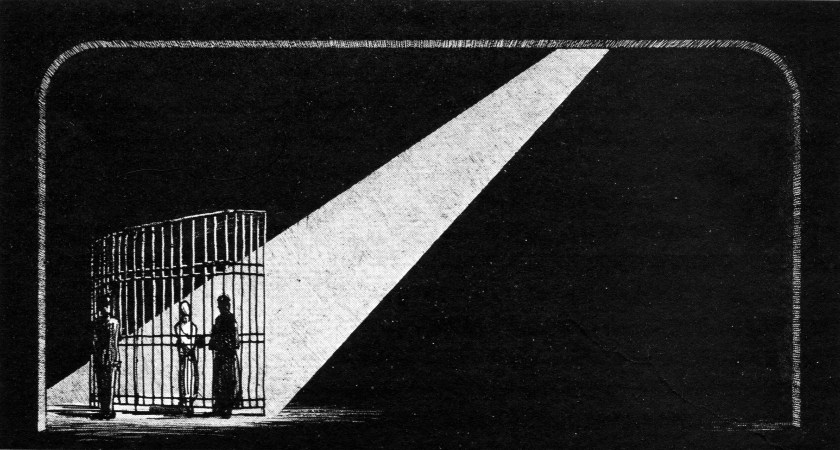
Director Natalie Abrahami locates this production at the opening in a recognisably late 1920’s America but thereafter adds timeless twists to reinforce how little has changed. Miriam Buether’s set is framed, (in a way similar to The Twilight Zone on this stage), so that each scene is viewed through a window as it were, which, in turn, is reflected by a mirror angled above the stage. This creates a suitably claustrophobic atmosphere and allows for some dramatic contrasts between each scene, (and some extraordinarily quick work by the stage management team at the Almeida led here by Kate McDowell who could give a Formula 1 pit stop crew a run for their money). The opening scene, rows of typewriters and desks, is a tour de force as the Young Woman’s colleagues gossip and bicker as she is hauled up before the boss who eventually becomes her Husband.

The rapid fire dialogue is matched by the superb sound design of the Ringham brothers and lighting of young Jack Knowles, (together these might just be my favourite sound and lighting team especially when it comes to more uninhibited shows). All this sound and rhythm is written into Sophie Treadwell’s text which is astoundingly modernist. Subsequent scenes, at home with Mother, as the Young Woman talks herself into the doomed marriage, in the hotel room on the honeymoon night, especially queasy, in the bar where the Young Woman, helping out a colleague on a double “date’ begins her ill-fated affair with a Man, through to the courtroom scenes and the execution, are also brilliantly realised. There is so much that the Almeida gets right which makes it the best theatre in London right now, but the quality and imagination of the design is always just amazing.

Emily Berrington is spot on as the Young Woman. She is simultaneously the author of her own fate, (the real life Ruth Snyder was the instigator of her husband’s murder egging on her lover), with agency, but also sometimes apparently meek, helpless, naive, accepting, submissive even. She is disgusted by her work and husband but, when offered a way out of the trap, she seizes it, albeit with tragic consequences. The murder is not shown. It is simply the consequence of her escape from the inexorable social and economic forces that weigh down on her. She falls in love, real passion, but, here too, she is eventually disappointed and disillusioned.

Denise Black as her caustic Mother, husband long gone, is from a generation with absolutely no opportunity and sees an “economic” marriage as her daughter’s only path. Jonathan Livingstone as the smothering Husband sees her as a trophy and baby-maker with no interest in her thoughts, ideas or well-being. The Doctor, (Andrew Lewis), in the hospital where she gives birth to the daughter she doesn’t want is a patronising tosser. Her lover (Dwane Walcott) offers excitement, a path to an imagined new life, but you know his interest in her is transient, and he soon takes her for granted too.

Machinal means mechanical or automatic in French and this is what Sophie Treadwell seeks to reveal, the trapped automaton. The art of the 1910s and 1920s was preoccupied with the rapid social and economic change brought on by the rise of the machine. Yet this crushing imperative is contrasted by a series of emotional monologues delivered by the Young Woman which describe her resistance and which only theatre can proffer. I was struck by the resemblance to Alice Birch’s outstanding Anatomy of a Suicide shown at the Royal Court Downstairs directed by Katie Mitchell. Another breathtakingly original, formally experimental, superbly staged dissection of female entrapment with a tragic, repeated, outcome. That too didn’t need swathes of expositional dialogue to get the story across, just rapid, vivid exchanges. Yet that was written in 2015 not 1928.

So another hit for the Almeida. Next up is Dance Nation which is probably not for me but I can’t wait to see what Rupert Goold and the team have up their sleeve for the autumn/winter season.


Genesis Inc at the Hampstead Theatre review **

sperm-956480_1920

Genesis Inc.

Hampstead Theatre Upstairs, 25th June 2018

Sometimes less is more. A lesson that writer Jemma Kennedy and director Laurie Sansom here chose to, if not ignore, certainly bypass. Made even more frustrating because, at the kernel of this play, and in its execution, are some very good ideas. I applaud the ambition of the creative team at the Hampstead Theatre under Edward Hall, and the variety of the offerings, but it does mean that, just occasionally, there is a misfire amongst the hits and the deserved West End transfers. Some of my favourite productions over the last couple of years, (Gloria, Prism, The Firm, Dry Powder, The Phlebotomist and Describe the Night), have shown at the HT, both Upstairs and Downstairs, and often I have enjoyed them more than the critics. Sadly Genesis Inc. was not one of them.

Jemma Kennedy, who is also a screenwriter, has based her first major commission for the stage, (I believe), on her own experience of IVF treatment. She has also chosen to write a comedy. So far, so good. There is a vital personal and political story to be told about the commercialisation of reproduction and fertility in an ageing capitalist society and the dilemmas this creates. She has well-structured arguments to present, and, with distressed couple Jeff (Oliver Alvin-Wilson) and Serena (Rita Arya), and prospective single parent banker Bridget (Laura Howard), sympathetic, and sufficiently complex, characters to present those arguments. Harry Enfield plays Dr Marshall, the medical entrepreneur behind the fertility clinic that the three of them turn to. There are some pointed exchanges, sharp observation and some very funny lines,

But Ms Kennedy cannot then resist the temptation to add complication through additional characters and formal invention. And this is where the play goes awry. Bridget has a gay, impecunious, teacher friend/housemate/ex, Miles, played by Arthur Darvill who does a musical turn and falls for the priest, Father Scales (Arthur Wilson), at the school he rocks up in. He needs money to get on the property ladder so decides to sell his sperm for a few quid. Serena’s Mum, and dead Great-GrandMum, (played by Shobu Kapoor), poke their noses in. There is a sub-plot involving a social worker and salt of the earth victim of domestic violence played by the wonderful Claire Perkins, who also plays the childless alpha-female boss at the investment bank she works in. They, of course, get to IPO Dr Marshall’s clinic. Karl Marx and Susan Sontag are wheeled in. There is even a biblical scene involving Old Testament Abraham, wife Sarah, (90 years old when she conceived if you believe the big book), concubine Hagar and son Ishmael, and even, as you can probably guess by now, God himself. And maybe more startling, Serena’s ovary and vagina get to say a few words

All this is thrown in to allow Jemma Kennedy to make important points about the way in which women and their fertility has been treated through history and how the patriarchy and capitalism have degraded reproduction. This scattergun approach, taking aim at so many different targets, leads to some odd tonal shifts though, especially in the fantasy scenes, and especially at the end, and results in a distractingly complex set from Jess Curtis and some awkward on stage prop-shifting and costume-changing, (there are 42 named roles!).

It was a more than a little frustrating because there was so much in the basic premise, the satire of the moral framework which supports this unsavoury industry, which seems to trade on hope through unsubstantiated claims. Ms Kennedy is a smart enough writer I think to have made some of her points, and still got the laughs, within the context of the narrower personal stories. Harry Enfield is still an awkward stage presence, as he was in Once In A Lifetime at the Young Vic, but here his charm, alongside comic SA accent, masking a more ruthless commercial streak, seemed to work. Kirsty Besterman, as his officious assistant and sales jockey, had some choice lines. The stress that the IVF treatment put on the relationship between Jeff and Serena was well observed as was Bridget’s struggle to balance her desire for a child, by freezing her eggs, with career and demand for a relationship. Arthur Darvill has an unsteady naivety which matched his character and gamely rose to the challenges he was posed.

I can certainly see why the idea of stripping out the sub-plots and fantasy sequences would not have been an option for Ms Kennedy or director Laurie Sansom. The ambition to emulate the dense intellectual and theatrical experience of say an Angels in America, (cited by Edward Hall in the programme), is laudable but it didn’t really come off. And, by over-egging the pudding, I was left dissatisfied with the whole. Intrigued yes, entertained at times, made to think for sure, but just that bit uncomfortable that everyone involved was straining too hard to pull this off.


Sea Wall at the Old Vic Theatre review

OLYMPUS DIGITAL CAMERA

Sea Wall

Old Vic Theatre, 23rd June 2018

I might have told this story before. My memory is failing. A few years ago the SO, BD and LD went to see Groundhog Day at the Old Vic. Terrific film and terrific musical. Made more terrific by the presence of Ben Wishaw and Andrew Scott in the audience just in front of us. Topping that LD got a pic of herself with them at the interval thanks to the SO’s no-nonsense lack of star-struckedness. Made our days though I was too scared to talk to them. If I had it might have gone … “I hope your Hamlet Mr Scott is as good as yours Mr Wishaw” or some equally bone-headed guff.

Anyway it turns out that Mr Scott’s Hamlet at the Almeida was even better than Mr Wishaw’s. Some achievement that. Don’t listen to those who say his style was too “conversational” or that he dumb-downed the verse for the hoi-polloi, (aided and abetted by some suspiciously “European auteur” style direction from Robert Icke). Those are the sort of snobs who would keep you all from the exquisite joy that is Shakespeare and have you all bored rigid for four hours with men in doublets and tights at the Globe.

Sea Wall was written especially for Mr Scott by Simon Stephens, who, on his day, is as fine a dramatist as any alive today. It is apparently the favourite of his play. It was commissioned by Josie Rourke in 2008 when she was AD at the Bush and has subsequently popped up in Edinburgh, Dublin and at the NT under the auspices of Paines Plough and the director here, George Perrin. It is only 30 minutes long, that was the brief, and Mr Stephens had only 3 weeks to write it. This left no time for fannying about so, after catching a glimpse of an incident whilst on holiday in France which forms the denouement of the monologue, he just got on with it. Which explains its immediacy and power I suspect.

At first there is just a hint that Mr Scott is showboating here as he breaks down the barrier between actor, character and text. Given the prices some of the audience will have paid, (not this skinflint), and the hype surrounding the play and his performance, there was a faint air of “so what” for the first few minutes. Then somewhere in the story the spell is cast so that by the end Mr Scott had, forgive the cliche, the entire packed Old Vic crowd eating out of the palm of his hand. The monologue, when perfectly realised as here, can be the most perfect form of theatre. It is just story telling after all and in this simple family tragedy Simon Stephens is able to squeeze in all of his favourite themes, science, faith, mortality, twists of fate, compassion, exploration, fatherhood, Chekhov, grief, the possibility of redemption, all in one perfectly tight bundle. Delivered by a man who, for all the world, looks like he is watching the story unfold alongside us, as observer and observed. Other actors have performed the part of Alex but at the end of the day this is Scott’s voice in the text.

There is a short film version and hopefully he will get to play it again. Meanwhile this family at least awaits his next move, TV, film or stage, with bated breath.


Cave at the Printworks review ****

background-black-and-white-cave-366313

Cave

The Printworks, Surrey Quays, 23rd June 2018

Cave is the second collaboration between composer Tansy Davies and librettist Nick Drake. Their last work, Between Worlds, which took as its subject the Twin Towers on 9/11, was superb. It was an immensely moving and sensitive elegy which focussed on the last conversations with loved ones of just five victims trapped together on one floor watched over by a benign Shaman or spirit, superbly directed by Deborah Warner. The audience I saw it with was floored (even if a couple of jaded critics were a bit sniffy).

I have since heard a few of Ms Davies’s very fine works including the premiere of her Concerto for four horns, entitled Forest. She has a way of finding the right shape, sound or phrase to match the intent and mood of her music, without ever serving up the obvious or banal. There is a rhythmic underpinning which I think reflects her familiarity with popular music genres, especially funk and post-rock. Her music can be muscular, industrial if you will, but, equally, she is capable of great lyricism. In more recent commissions she has been afforded the opportunity to work at a larger scale, but there is still a chamber like intimacy to her work, even when it is belting out in full on forte. In short she has the gift, and, even if contemporary classical music isn’t your bag, in fact maybe especially if contemporary classical music isn’t you bag, I defy you not to hear it.

She is also pretty keen on conveying a message in her music. As is librettist Nick Drake. Cave is set in a world disfigured by ecological catastrophe. A man (Mark Padmore) stumbles into a cave. He probably nibbles on some crazy mushrooms. He remembers his daughter Hannah, played and sung by Elaine Mitchener, and, when young, played by Akilah Mantock at my performance. Her spirits fills the cave. That is pretty much the long and the short of it. There are seven scenes in total beginning with the entry of the audience into The Lost River which runs through the cave.

The Printworks in Surrey Quays used to be where the Evening Standard was printed in the pre-digital era. It is a cavernous industrial space, as I discovered on my pre-prandial hike to the loo just ahead of the opening of the opera, which plays host to a variety of events, united in there “alternative” vibe. Perfect for this work. The audience was lined up along both sides of a very narrow, very long space in Mike Britton’s set, covered with, I think, wood bark. and with the seven members of the London Sinfonietta at one end and vast plastic hanging “doors” at the other. It was largely left to the marvellous lighting of Jack Knowles, who despite looking about 5 years old, has a massively impressive list of credits behind him, to conjure up the required magic, along with a sound design from, usual culprits, Sound Intermedia, as well as the electronics of Tansy Davies and Rolf Wallin.

Even with the principals moving up and down the space there were times when the “action” was a bit “laterally compromised”, especially for those of us pig-headed enough to go right along to the end where the ensemble was positioned. On the other hand this perch did afford a perfect insight into all the moving parts of the score, and, at one key point, the vocal pyrotechnics of Elaine Mitchener. She is not your opera mezzo diva. Thank goodness. Usually to be found in repertoire which is even more boundary-pushing than this, she has an extraordinary range of expression. I was spell-bound. For those of us who are regular listeners to Bach, Britten and Baroque, Mark Padmore needs no introduction at all. Here his singing was predictably exquisite. He also put in an acting shift as the Man plagued by his memories and a world that has literally fallen apart around him. I also suspect this won’t be the last I see of the precocious ten year old Akilah Mantock – no fear at all in what must have seemed a slightly odd role when she went to the audition.

Mr Drake’s other job is a poet. No kidding. The second scene, the Echoes, starts out with the Man hearing Hannah’s voice before he goes into an astonishing quasi aria describing his journey into the cave. This is when we see the connection that Ms Davies and Mr Drake intended to make to some of the very first human impacts on the earth. Apparently they went for a trip to have a peek at cave paintings in Niaux in the Pyrenees, which proved a crucial inspiration. I am not surprised, this is where art and nature recognisably first collided.

Scene three, the Cave of Birds, has the Man describing the onset of ecological catastrophe, and some sort of vision, scene four, The Mirror Cracks, is a “rave of agony” as the Man recalls losing Hannah, who “responds” by singing the last part of his “song” backwards. The Tree of Shadows starts with the Man and Hannah remembering a past holiday and then Hannah going a bit preachy as she describes how she wants to save the world from the havoc wrought by the generations which preceded her. A powerful instrumental interlude (with electronics I think) follows, The Storm, which then gives way to a lullaby shared by the two principals which shows off their superb singing. The final scene The River sees the man leaving the cave, presumably to die, but probably healed.

This is an epic myth, or more exactly a parable, and, in that, I was reminded of Britten’s Church Parables, which I don’t think were a direct inspiration, but, for me, have a similar vibe. The scoring is sparse, under the expert baton of Geoffrey Paterson, with most of the colour coming from the winds and brass, the clarinet/bass clarinet of Timothy Lines, contra bassoon of John Orford and horn of Michael Thompson, contrasted with the prominent harp of Helen Tunstall, set against a sort of continuo from Jonathan Morton’s violin and Enno Senft’s double bass. Elaine Mitchener gets to give a hefty whack to a drum at one point and, as I have said, electronics and some other sound effects (plenty of echo) play a major part. Overall you have no difficulty in musically distinguishing the scenes, there are some breathtaking sounds here and no little drama. I was not entirely convinced about the articulation between music, words and message but that probably says more about my pessimism than the creative talent on show here. It is certainly not the fault of director Lucy Bailey.

I don’t want to get more frightened of, and helpless about, the world around me as I get older, but it seems to be happening nonetheless. It certainly does feel like we humans are accelerating towards our inevitable extinction event despite the apparent gift of consciousness. Mother Earth will get over us I suppose. Anyway it is good that Tansy Davies and Nick Drake are not engulfed by this sort of negativity and prepared to make an ambitious stand of sorts in their art. It is also good that they are not cynical about all things “spiritual”. As this piece is sub-titled, courtesy of modern day environmental shaman and prodigious psychedelic drug-taker Terence McKenna, “Nature loves courage”.

At the end, Ms Davies was zipping by to thank the performers. I briefly thanked her. No doubt she thought I was a nutter so apologies but I felt compelled to offer up my appreciation. Thank you.