
Leopoldstadt at Wyndhams Theatre review ****

Leopoldstadt

Wyndham’s Theatre, 29th January 2020

A new play from the venerable 82 year old Sir Tom Stoppard. Not our greatest living playwright. That is Caryl Churchill, but he does know his way around a text. So booked early, for early in the run and before knowing too much about it.

You will likely know by now that Sir Tom has chosen to delve into his family’s own history and his Jewish heritage for this play, which I can see would be a fitting swansong, if swansong it is. He was born in Czechoslovakia, but escaped to Britain with his family ahead of the Nazi occupation, and was educated in India and then Yorkshire. Whilst he had become aware in the 1990s of the full extent of his roots, (which his mother had chosen to shield him from), as well as the fact that many of his relatives had died in Nazi concentration camps, and he had indicated that he would likely write a play based on this history, he had been ambivalent about making it too personal.

I don’t know how much of the plot, and specifically the key events which punctuate it, are drawn from TS’s own family history, nor indeed how closely the characters resemble his own forebears, (though the character of Leo is surely autobiographical), but there is no doubting his emotional investment in this grand saga. Particularly at the end, in an epilogue which is as moving as anything you might ever see on stage.

We kick off in Vienna in 1899 at a gathering of the Merz and Jakobovicz families at Christmas (and later passover). Bullish businessman Hermann Merz (Adrian Scarborough, on his usual top form) is married to gentile Gretl (Faye Castelow), having, pragmatically, converted to her Catholicism. They have one son Jacob. Hermann’s sister Eva (Alexis Zegerman) is married to obsessive mathematician Ludwig Jakobovicz (Ed Stoppard, yes, he is) who has two sisters, Wilma (Clara Francis), married to Ernst (Aaron Neil), and Hanna (Dorothea Myer-Bennett, continuing the Tourist’s fortunate habit of seeing everything she does on stage), who is married to Kurt (Alexander Newland, who we meet later on). With their various kids, cook Poldi (Sadie Shimmin), parlour maid Hilde (Felicity Davidson), nursemaid Jana (Natalie Law) and all presided over by Grandma Emilia (Caroline Gruber). Thank goodness for the family tree in the programme which the Tourist furtively turned to early doors.

With this many characters, and to set the contextual and didactic balls rolling, and because this is what Sir Tom does best, there is a lot of serious chat going on, as we learn how these well-to-do, educated and largely assimilated Jewish families see themselves, their faith, culture and economy, at a time of great change in Europe’s still premier metropolis. And, inevitably in the first act, bucketloads of exposition. The Merz family doesn’t live in Vienna’s Leopoldstadt district but its status as the centre of Jewish life in the city looms large. The anti-semitism is subtle as well as overt, but its deep historical roots are unmistakeable. Hermann tries and fails to join the jockey club, Ludwig’s hopes of a professorship are far-fetched, and ugly truths are revealed, along with the superb Luke Thallon’s cruel Aryan officer, Fritz.

The play really gets going then after the interval, as we move first to 1924, another family gathering for a circumcision, meeting the cosmopolitan children of the four couples, and then, momentously 1938, and the grandchildren. This is the cue for high drama, for example, the forced repossession of the Merz family home, and eviction, Kristallnacht (vividly realised through Adam Cork’s brilliant sound design), the memory of Pauli (Ilan Galkoff) lost in the WWWi trenches. Then, finally to 1955, when Leo (Luke Thallon), the English emigre son of Nellie (Eleanor Wyld), daughter of Eva and Ludwig, and Nathan (Sebastian Armesto, also doubling), son of Sally (Ayve Leventis), daughter of Wilma and Ernst, are brought together by Nathan’s sister, Rosa (Jenna Augen). This, or something like it, is, I’d like to think, how Sir T first encountered his own history, and planted the seed for Leopoldstadt.

The dialogue is direct, even during the debates on, variously, identity, assimilation, prejudice, Zionism, the recurring history is familiar and there is none of the intellectual trickery that powers Sir T’s back catalogue though there is a bit of heavy lifting from a recurring cat’s cradle metaphor. The family’s beliefs in science, justice and rationality are crushed by the rise of Nazism, but it is the personal loss more than the collective that, eventually strikes home, with Hermann’s descent the most affecting. It is a slow burn mind you, and Patrick Marber’s direction is perhaps a little too respectful. Richard Hudson’s painterly design. together with Neil Austin’s lighting and Brigitte Riefenstuhl’s costumes ooze period detail, but further hinder any opportunity for many of the 26 strong cast (not including the kids) to make a distinct mark.

Still if this is to be Sir T’s last play then why shouldn’t he tell his story his way, given his immense contribution to British and World theatre across his career. At our early viewing (the SO was a more than willing accomplice) the audience was engrossed throughout, if nor utterly captivated, and I suspect many will have been grateful to have had their emotions, perhaps even more than their intellects, engaged. The story of this horror has been told in many ways before, and should continue to be told, but Sir T has found a way to tell it that, whilst not theatrically radical, is profoundly moving, as well as stuffed with learning.

I have no doubt it will be back when we reach the other side, and it is not hard to see it being repurposed for the small screen.
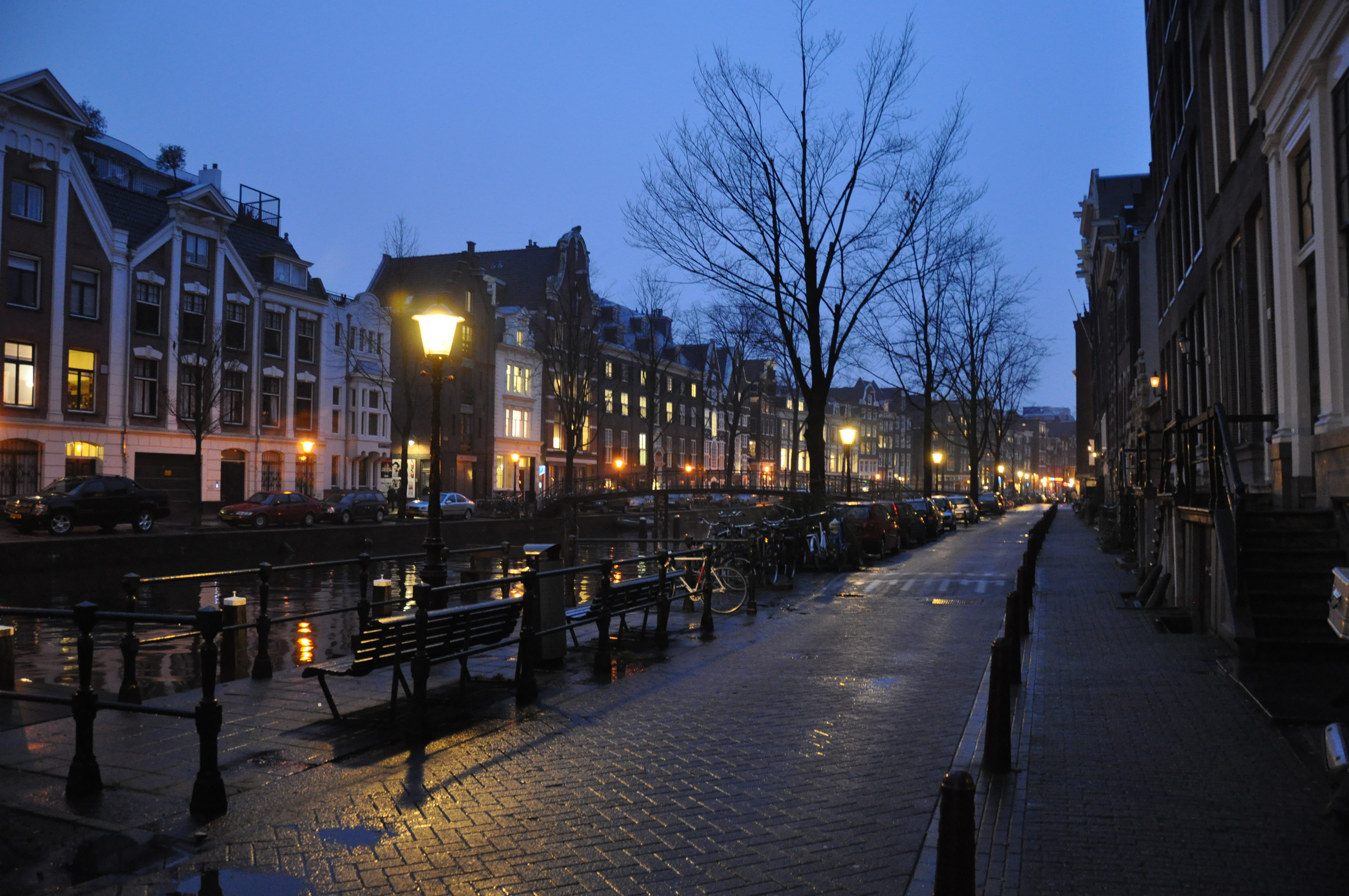
Amsterdam at the Orange Tree Theatre review ***

Amsterdam

Orange Tree Theatre, 5th October 2019

The UK premiere of Israeli playwright Maya Arad Yasur’s “strikingly original, audacious thriller”. Hmm. Striking yes. Original. I guess so. Audacious thriller. Not so sure. It is a fascinating story with a powerful message but its formal construction serves to distract and obfuscate rather than illuminate.

An Israeli violinist, living in Amsterdam, and about to give birth, receives an unpaid gas bill dating from 1945. From this premise the cast of four, deliberately diverse, tell the story of how this came to happen ranging across time, place and character. They start off bickering about where to start, interrupt, and comment on, each other, fracture and distort their narratives and regularly interrupt to ring a bell to amplify or translate. It takes time to adjust to the structure and the script is packed with details, repetitions, overtones and undertones, which can make events hard to follow.

Maya Arad Yasur (through Eran Edry’s translation) makes sure we understand the complexity and self-fabrication of narrative through her conceit and highlights the corrosive effect of hostility to the “other” but the expansion into contemporary conflict has the perverse effect of blunting the central historical fact. Over 75% of the Jewish population in the Netherlands was murdered by the Nazis and once the war was over, those returning home were forced to pay the utility bills of their wartime occupiers. The unnamed violinist’s own investigation, and disturbing discovery, and her personal journey as immigrant and mother to be, strike me as more than enough to make the point. Especially when the “scenes”, the arrival of the €1700 bill, the blithe response of the bureaucrat, the paranoiac unease in the supermarket, the birth anxiety, the “discussions” with her agent and the hairdresser, emerge through the conceptual fog. Dramatisation would have equally served as provocation and testament. We might then have been better able to see more clearly what she could see in a “foreign” place haunted by history.

I am all for experimentation and can’t fault the performances of Daniel Abelson, Fiston Barek, Michal Horowicz and Hara Yannas but, at the end of the day, this was harder work than I wanted it to be. Director Matthew Xia, as the new head honcho of the Actors Touring Company, who co-produced this with the OT and Theatre Royal Plymouth, is obviously a true believer in the power of the work though his previous engagements, Blood Knot here, Wish List at the Royal Court and the revival of Blue/Orange at the Young Vic, show his is equally at home in more naturalistic forms. Here though he opts to exaggerate the already contrived structure with lurches in tone and pace, simple staging (designed by Naomi Kuyck-Cohen) with dissonant props and constant motion (Jennifer Jackson).

The production will run in Plymouth in February next year before moving on to Salisbury, Glasgow, Manchester, Oxford, Coventry, Leeds, Birmingham, Newcastle and Bath. On balance? You should see it.

Europe at the Donmar Warehouse review ****

Europe

Donmar Warehouse, 6th August 2019

I have been mightily impressed with the two adaptations by David Greig, the AD of Edinburgh’s Royal Lyceum Theatre, that I have seen to date. The Suppliant Women, based on Aeschylus’s The Suppliants, which came to the Young Vic a couple of years ago, benefited from an excellent professional and amateur cast, some superb movement/choreography courtesy of Sasha Milavic Davies and music from percussionist Ben Burton and double aulos-ist (is that a thing) Callum Armstrong, but it was Mr Greig’s rhythmic text which powered the whole thing on. As for his skill in bringing Joe Simpson’s mountaineering epic, Touching the Void, to the stage, (which also features stunning movement work courtesy of Ms Davies), well I strongly suggest you make up your own mind and snap up a ticket for the transfer to London at the Duke of York’s. It was one of my top ten plays of 2018 at its original run in Bristol for good reason.

I am also set to see DG’s latest adaptation, Solaris, based on the 1961 novel by Polish writer Stanislaw Lem, made into a brilliant film by master Andrei Tarkovsky in 1972 and then subsequently sharpened up by Steven Soderbergh in 2002. If you like your science fiction to be all crash, bang, wallop, dispense-with-plot-and-character, CGI-fest, then this is not for you. It’s claustrophobia always felt like a good fit for the theatre to me and from the sound of the reviews from the current run in Edinburgh so it has proved, Can’t wait. And I should also probably consider seeing the Old Vic’s musical version of Bill Forsyth’s Local Hero next year where DG will write the book, though the involvement of one Mark Knopfler in the music department worries me. (In the Tourist’s post-punk musical heyday of the late 1970’s and early 1980’s, Dire Straits were the enemy of taste, no question).

Sadly though I had never seen any of DG’s original plays. I see there have been relatively recent revivals of Midsummer and The Strange Undoing of Prudencia Hart, and I would hope that one day soon the likes of The Events and Dunsinane reappear based on the reactions to their original outings. For the moment though I will make do with Europe, DG’s first ever play from 1994, and this marvellous revival at the Donmar Warehouse which Michael Longhurst choose to direct as the opener in his first season as the new AD at the Donmar. Big boots to metaphorically fill after Josie Rourke but with this production, Branden Jacob-Jenkins’s Appropriate and the revival of Caryl Churchill’s Far Away to come, he seems to be firmly on the right track.

Now if you had told me that the prophetic Europe was written in the 1930’s, or yesterday, I would have a) been very surprised since I don’t know you and b) even more surprised that you were actually reading this blog. But, limp jokes aside, I wouldn’t have been at all surprised, (an impression shared in the proper reviews). It is set in a mittel-European border town, a place, we sense, with a rich history, but now left-behind, chiefly known for “soup and lightbulbs”. Specifically we are taken to a railway station where young Adele (Faye Marsay) dreams of escape from her life and job as assistant to officious station-master Fret (Ron Cook). Adele is married to Berlin (Billy Howle who spends most of his time whinging and drinking with his jobless mates, the realist Billy (Stephen Wight) and proto-fascist Horse (Theo Barklem-Bigggs). Refugees from former Yugoslavia, Sava (Kevork Malikyan), and his daughter Katia (Natalia Tena), pitch up at the railway station one night. And stay. Initially to the consternation of Fret. But, after the train service is closed, he and Sava strike up a friendship and protest and Adele starts to break down Katia’s many emotional barriers. The three men however turn against the incomers and, when he returns from his travels, their childhood friend, the spivvish Morocco (Shane Zaza).

The story plays out, Brecht like, over twenty, titled, episodes. But Chloe Lamford’s scrupulous set, Tom Visser’s lighting and Ian Dickinson’s superb sound are anything but Brechtian. Even so Mr Longhurst’s direction still manages to draw out the thick metaphor in DG’s text, creating a universal out of this fascinating particular. This may be 1994, but Europe has seen this many times before, including right now, and, shamefully, will likely see it all again even, as it will, peace and tolerance triumph. (Always remember the bad guys know they are doing wrong: that is why they spend so much time and effort trying to deny and hide it). I gather Mr Greig has dealt with the themes of the cultural, personal and political differences between us, and specifically the fiction of borders and the plight of refugees, before but I wonder if he has done so as eloquently as here. I would like to find out if anyone fancies reviving his work.

That this Donmar production is so persuasive is also down to the excellent cast. Now normally when the Tourist says all the actors are tip-top he doesn’t really mean it. There are often stand-outs. He is just too polite to draw attention to them. Here though the entire ensemble shines. I am a huge fan of Ron Cook and here he matched his performances in Faith Healer, The Children and The Homecoming. I don’t think I had seen Turkish actor Kevork Malikyan before, other than in the best forgotten At Tale of Two Cities in Regent’s Park, but here he lends Sava immense dignity in the face of crushing adversity. Similarly I only know Natalia Tena from her turn as a Wildling in you know what, and that LD has a soft spot for her Potter role. Here she revealed a woman whose life experience leaves affection and trust as luxuries she simply cannot afford. I remember Faye Marsay and Shane Zaza from John Tiffany’s exemplary revival of Jim Cartwright’s road at the Royal Court a couple of years ago and Billy Howle I also remember from his performance as Galileo’s student in the Young Vic Life of Galileo. Both Theo Barklem-Biggs and Stephen Wight have familiar faces through TV roles but, on these performances I would like to see them on stage again.

The big, wide, “globalised” world is a scary place. But then again so, often, is home. Whether to stay or go feels like a question far too many have to grapple with. Europe with a mix of aggression, humour, tenderness and intelligence examines this dilemma through pointed narrative and character.

BTW is you want to see how a bitter tw*t at the other end of the humanity spectrum saw the play read the Spectator review. All the tired cliches and preposterous exaggeration. It must be hard work being this p*ssed off about everything all the time. Apparently “most borders are the product of geography”. Not history, politics or economics then. Unintentionally hilarious. I promise you I know a bit about this and I can assure you my academic specialism doesn’t wield that much power. Remember don’t let the idiocracy grind you down good people.