Rosencrantz and Guildenstern are Dead at the Old Vic review ****

rosencrantz-guildenstern-are-dead-11849

Rosencrantz and Guildenstern Are Dead

The Old Vic Theatre, 27th March 2017

Sorry I have come a bit late to the party here both in seeing this and then setting down a few thoughts. I am still a Stoppard virgin so you must treat me gently and this is the first time I have seen this.

So how did I fare? Well much like Travesties a few weeks earlier I was left breathless and in awe of Mr Stoppard’s dazzling intellect and wit. I reckon a few more of his plays and a few more years and I might crack this but for now baby steps. When this came on to the scene 50 years ago it must have been a revelation for its early audiences. My near contemporary arrival in the world left less of a mark – still my mum was probably pleased to see me.

To interrogate the nature of how we see events and construct meaning, to question the role of chance, to ask why we make the choices that we do and to examine notions of free will and mortality, and to do this in the context of a play itself that is genuinely full of laughs (not just knowing sniggers) and a plot of sorts that moves forward, and is based on possibly the most famous play ever which itself deals with not dissimilar questions – it’s a miracle of sorts that the whole thing doesn’t just collapse under its own contradictions and ambition.

Now that doesn’t mean there weren’t a few “whoosh over the head” moments for me and it can be hard work to keep up even with the Hamletian anchor. Stoppard properly f*cks about with your head. But for me it yields a theatrical pleasure from all the hard work that is not replicated elsewhere. To think perchance to laugh.

I can’t imagine any improvements to David Leveaux’s production and Daniel Radcliffe and Joshua McGuire seem a perfect match as our hapless heroes. McGuire in particular, who carries more than I realised of the text, is very strong and you can practically hear his brain whirring through the gears as tries to solve the puzzles that he and his chum have to face. And David Haig, who teetered perilously close to annoying in Blue/Orange at the Young Vic with his singular bluster, was just right I think as the Player.

So whilst I may have started with an air of cultural obligation in seeing these two Stoppard plays in recent weeks I come out persuaded and look forward to the next adventure. If you agree, all well and good but if you don’t I completely understand. It might pass the Pete and Bernie’s Philosophical SteakHouse pretension test for me – but I suspect there are a whole bunch of people who secretly hold fast to an “emperor’s new clothes” view and I can see why.

Still packed houses at the Old Vic for properly ambitious theatre must be a good thing. Next up Woyzeck.



The Japanese House exhibition at the Barbican review ***

japanese_house_pack_cover_hr_large

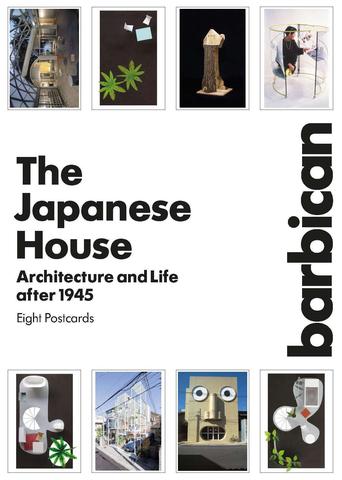
The Japanese House: Architecture and Life after 1945

Barbican Art Gallery, 27th March 2017

Bit of a mixed bag/curate’s egg here. There are some undeniably interesting insights in this exhibition but I was less enamoured of the set piece external and internal installations accommodated within the fabric of the Barbican’s gallery space (which is not a great favourite of mine – it lacks natural light and always feels a bit half-hearted compared to the Hall and Theatre). These installations just felt a bit gimmicky.

What the exhibition does convey is the extraordinary imagination that generations of post WWII architects have brought to Japanese domestic architecture when faced with limitations of space, capital or materials. There are some beautiful solutions, largely delicate and transitory, whether as built projects or simply paper ideas. Resolving the relationship between the interior and exterior is a particular skill on show with many of the houses deliberately putting the interior on show whilst others resolutely turn their backs on the outside world. And many of them are just so dinky.

There is an interesting video tracing the development of rapid build, affordable housing by way of example through the period under review and some excerpts from the domestic films by the post war Japanese masters including Yasujiro Ozu reminding me of another rich seam of cinema that I need to explore. Watching Tokyo Story again recently left me and the SO speechless – a must do for anyone and everyone.

So if you are an architectural buff or a denizen of Japanese culture worth popping along. For the more casual observer there s probably only just enough on show to justify the trip, and it promises maybe a little more than it actually delivers.


Ugly Lies the Bone at the National Theatre review ****

ugly-lies-the-bone-1280x720-sfw

Ugly Lies the Bone

National Theatre, 28th March 2017

Tricky one this. It was by no means perfect, a little too thinly drawn for me, but there was so much to applaud that I think it worthy of a strong positive review.

The playwright, Lindsay Ferrentino is entirely new to me, but the string of awards, the intriguing content and the imprimatur of the NT, was enough to sucker me in. The play focuses on Jess, played by a massive favourite of mine Kate Fleetwood (her performance in Medea at the Almeida, directed I recall by hubby Rupert Goold, and written by a Kate Atkinson in full-on spleen venting mode, was a cracker), who returns ravaged physically and mentally from tours in Afghanistan to her native Space Coast Florida. She undergoes a pioneering virtual reality therapy, which gives set designer Es Devlin and her video, lighting and sound colleagues carte blanche to pump up the pyrotechnics, and boy do they seize the opportunity, whilst rebuilding relationships with sister (Olivia Darnley), an old flame (Ralf Little), sister’s maybe dodgy boyfriend (Kris Marshall) and eventually mother.

The text is direct but funny, Ms Fleetwood draws out Jess’s p*ssed-offedness with the world brilliantly, the supporting cast are uniformly excellent and Indhu Rubasingham’s direction (how is that Tricycle refurb going?) is clear as a bell. The reliance of Jess’s hometown on the NASA space programme is also well articulated to mirror Jess’s personal demons. So all good. I just wanted a little bit more. The technical pyrotechnics were a bit guilty of overshadowing the personal dramas, and the urge to maintain a lightish touch and neatish resolutions, left me liking the characters more than caring for them. Smaller stage, more lines, less fancy-dan stuff might have served it better.

Anyway definitely worth seeing though (on for a few more weeks and plenty of tickets) and I hope to see more of Ms Ferrentino’s work.

Balm in Gilead at the Guildhall School review ***

milton-court_04

Balm in Gilead

Silk Street Theatre, 27th March 2017

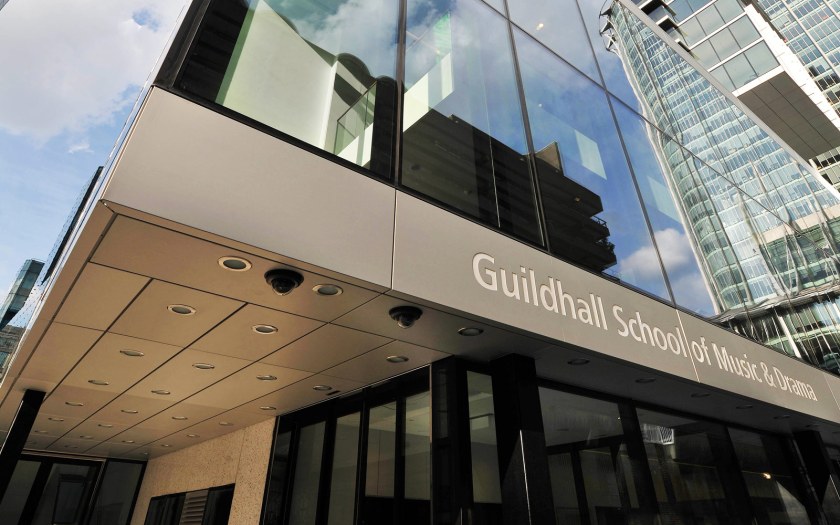
Less a review, more a plug for the terrific music, drama and opera on offer to you, the London public, from the massively talented students (and teachers) at the Guildhall School on the Barbican site. There’s all manner of free stuff and for no more than £10-20 there are plays and operas of the highest quality.

Balm in Gilead was the last play I saw there. Written in the mid 1960s by Lanford Wilson who I didn’t know before this, the play is set in a contemporary New York cafe frequented by assorted prostitutes, addicts and petty criminals. Think Taxi Driver without the Travis nutjob. There are many stories on show but the key narrative is the relationship between Joe, a drug dealer who is in too deep, and Darlene a recent, and naive, arrival in the City.

There are all manner of formal devices employed here. A large cast of largely unsympathetic characters, though sympathetically played, a lot of overlapping dialogue, simultaneous scenes, a fugal song at the beginning and end to highlight the vicious circle in which the characters are trapped, cutaways where characters amplify the plot. The set design was masterful allowing these formal devices to take wing and the cast uniformly strong in putting the case for what I suspect can be a tricky play to convince an audience.

So what else has caught my eye at the School. Well the student’s contribution to the recent Philip Glass days in the Milton Court Concert Hall (which has one of the best acoustics in London I think) was outstanding. Myself and MS thoroughly enjoyed the Tale of Januarie, a new opera by Julian Philips and Stephen Plaice. On the face of it an opera, written in Middle English, based on a bit of Chaucer, with a dense and powerful score, is not an easy sell, but it was pretty much packed out and the kids absolutely nailed it. In the Milton Court Theatre I have also enjoyed a Crucible which exceeded most of the “professional” productions i have seen (this is one of my favourite plays) and a Top Girls (another favourite) which was similarly outstanding. I also had good reports of the recent Great Expectations from TB and partner.

So if you are interested in the future of culture and a cheapskate like me, don’t hesitate to get along to the School’s performances. In the new season I am drawn to The Wager, a contemporary Chinese opera co-produced with the Shanghai Opera, and the Gershwin musical Crazy for You.

Graduation – film review *****

bacalaureat-2

Graduation, 12th April 2017

I haven’t seen too many films at the cinema this year and have so far resisted the temptation to offer up an opinion on any of them, in large part because they had been and gone before I kicked off this blog. (For what it’s worth I was drawn into Silence but ultimately not satisfied, really enjoyed Manchester by the Se, especially Casey Affleck’s performance, was very annoyed by Jackie, just loved Toni Erdmann, admired Moonlight, was gripped by Elle, but this was largely because Isabelle Huppert was Isabelle Huppert, and think the passage of time might see Get Out start to grate on me).

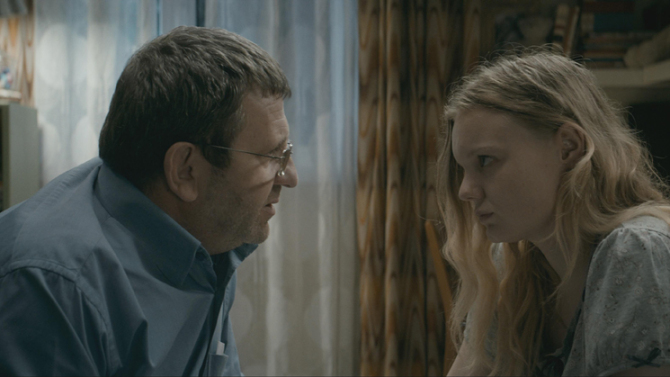
However, Graduation is by some margin the best of them, indeed I would venture one of the most intelligent films I have seen in the past couple of years, (which marked a serious return to cinema going). I am no expert on things cinematic so had no knowledge of the Romanian director Cristian Mungiu, nor of his renowned compatriots who make up the cast.

You can read the proper reviews to get the drift but it cleverly manages to be thoroughly absorbing, and gently stomach turning, as it lays bear the moral dilemmas its protagonists face and the shabby compromises that feel are required to resolve them. A proper tragedy then. Adrian Titieni is compelling as a surgeon who wants his daughter to secure a scholarship to go to Cambridge University to study psychology. His relationship with his apparently depressed wife however is falling apart and he is in a relationship with an ex-patient. The assault of his daughter acts as the catalyst for a string of backscratching negotiations and deceits in order ostensibly to ensure her future is not imperilled.

This allows Mungiu to explore the father’s ethical and moral limits and his unclear past, the disillusionment of a generation which returned to Romania post the fall of communism, the pressures to do the right thing in a society plagued by low-level, endemic corruption and the clash between parental love and a young adult’s right to self determination. The film is shot in a naturalistic way, though with some interesting perspectives, and the music of Handel is a persistent counterpoint. The characters are rapidly sketched but then deepen through the film and are utterly believable. The low key progression of events to an enigmatic conclusion,whilst all the while threatening a more dramatic twist, resembles the films of Michael Haneke, which is a massive compliment in my book.

Anyway, please try to see it if you have any interest at all in proper cinema. In fact if I had a favour to call in from you or a way of bribing you then that is exactly what I would ask you to do.


Wolfgang Tillmans at Tate Modern review ****

4.tif

Wolfgang Tillmans: 2017

Tate Modern, 9th March 2017

Oh my giddy aunt. What to make of this. I am slowly clambering my way up the shaky but intriguing edifice that is contemporary art. I have a rough map in my head but still have a long way to go and need to put a lot more hours in. So that means soaking up anything that the smart people at the Tate can throw at me. After all if it never makes its way into a trophy national gallery show then it’s not art is it. But if everything was like this then the journey would be pure pleasure and no pain.

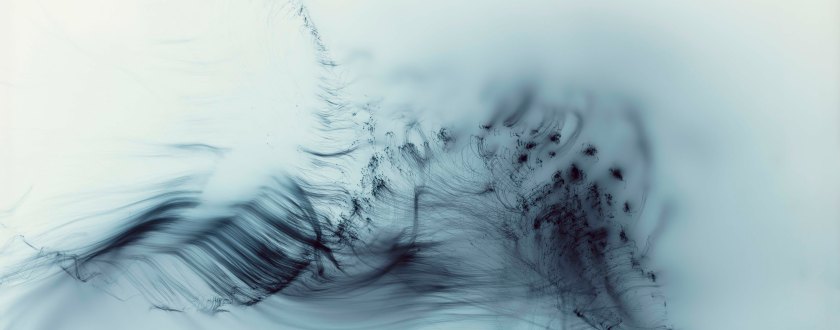
I knew nothing of Mr Tillmans before this exhibition. Well maybe I had seen one or two of the spectral images where he had arsed about with the photographic production process (don’t ask me how) like Exhibit A above. But my oh my, does he get about. Different angles and perspectives, lots of close ups, street scenes, night scenes, landscapes, seascapes, still lives, portraits, self-portraits, fashion shoots, adverts, studio manipulation, the studio itself, colour fields, colour fields in a box. It seems that everything which has been fair game to the fine, the decorative and the commercial artistic worlds in the past and present can be appropriated by Mr T. And all this work is displayed in all manner of ways to further the assault. The OED should probably create an addendum for its definition of prolific.

However, in the hands of a halfwits like me, and, no offence intended, maybe you, this plethora of photos would just be so much garbage. The world is not short of digital images but it is short of this man’s. It is just endlessly fascinating and thought provoking with a host of strikingly attractive images many of which leap far beyond my aesthetic hurdle. Waves, a deconstructed (literally) digital printer, car headlights, lobster claws, fungi, pears, an arsehole and a pair of bollocks in alarming proximity, a pair of jeans in a box. Just some of the stuff I can remember.

And then there is all the material with a political or moral perspective. No empty one-note sloganising here (well maybe a bit), but some developed ideas and provocations drawn from many sources. I particularly liked the room which juxtaposied newspaper and other media stories about key geopolitical events with extracts and lists from psychological and neuroscience journals outlining frontier research on cognition, behaviour and heuristics.

Oh to have the eye and brain of Mr T. Mind you, whilst I am a keen advocate of the elevated audio experience, (though in practice am addicted to my old style I Pod and newer MP3 kit), I have to draw the line at his taste in music. If you have state of the art kit then playing late 80s electronic, white funk/reggae reclusives Colourbox on it is a big mistake, (they were the worst band on 4AD and that is saying something). And a portrait of Morrissey only adds fuel to this particular lapse-in-musical-taste fire.

Still forgive and forget eh major when there is just so much life on show here. You kids with your constant screen tapping and minimal attention spans will love it. Seriously though, and switching off the curmudgeonly, misanthropic pose for a moment, it really will appeal to anyway with a interest in life. So that’s everybody. You look around. So does he. He is just better at knowing how and when to record and extend the experience than you are. So that you can then breathe it all in. The perfect synthesis of high and low art. And a lot of joy in the mundane and a child-like glee in his making process. Not unlike the Rauschenberg retrospective which was next door and just wound up.

Highly recommended and on until mid June.


Tamburlaine at the Arcola Theatre review ***

c6-tgghwyaafl_y

Tamburlaine

Arcola Theatre, 6th April 2017

In many ways this was a brave piece of theatre. Tamburlaine, in two parts, was Christopher Marlowe’s first performed solo play, written in his early 20s, and which changed the course of English drama and massively influenced all the big boys of Elizabethan/Jacobean drama including our Will. Blank verse with lots of tasty, hyperbolic flourish, big themes, heaps of action, proper heroes and villains. No wonder the punters loved him.

And obviously he, Marlowe,  was proper rock n roll – drink and baccy, gluttony, fighting, sexy times across the spectrum, heresy/atheism, conning, spying. Lust for life indeed. And this play is about the life and works of Mongol leader Timur (recast as Scythian), which mostly consisted of trying to conquer the entire known world, and who was also, I suspect, pretty rock n roll as well, and not a man plagued by self-doubt.

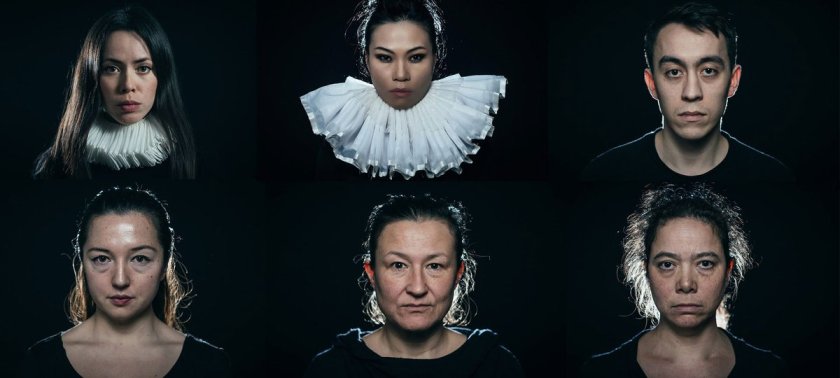
So no half measures here. Yellow Earth Theatre is a British East Asian company which has risen to the challenge in conjunction with young director Ng Choon Ping, who has adapted the plays to strip them back to a manageable couple of hours. In the Arcola’s smaller space with just a light wall, a few well chosen props and the taiko percussion of Joji Hirota, they do an admirable job of bringing the play to life. Given the streamlining of the text, the doubling/tripling/quadrupling of some of some characters and the abrupt shifts in location there are times when the action teeters towards a kind of hyped up, declamatory travelogue (Persia, Scythia, Egypt, Turkey, Africa, even Blighty gets a mention), but for the most part the cast does a great job in telling the story and particularly delivering the verse.

The production does capture the interplay between the personal and the geo-political and the tragedy of ambition. It also smartly draws out the innate conflict between differing world-views, Christian, Muslim and Judaism, and how these world-views serve the interests of power. This is not a play that goes easy on religion, and reminds us to beware not to underestimate a man on a mission, in this case being the “scourge of god” – the contemporary parallels are obvious. And it explores the inevitable disappointment of succession in dynastic family (always a potboiler though the solution to a workshy son here might strike some as rather drastic). Hard to single out from a uniformly strong cast but Lourdes Faberes as the eponymous, fearsome tyrant, and Leo Wan in multiple roles, caught my eye.

So all in all a fine effort which might have been better served by more resource. Anyway, Yellow Earth are now firmly on my radar. This is off on a tour to Oxford, Colchester and Birmingham in the next couple of weeks so definitely worth a look.

As an aside when I was a sad, friendless, little tween I had an unhealthy obsession with the rise of the Mongol Empire. It you are/were similar I highly recommend you seek out the film Mongol: The Rise to Power of Genghis Khan, a co-production led by a Russia directing team which explores the early life of its subject. Very satisfying.


The American Dream at the British Museum review ****

american20dream_304_280

The American Dream: pop to the present

British Museum, 31st March 2017

So where can you see a stunning survey of pretty much all the major artists, across all the major movements of modern and contemporary art, in the US over the last seven or so decades. The British Museum that’s where. I realise the element of surprise in my rhetoric may have been somewhat diluted by the titles above but you get the idea. This exhibition is focussed solely on printmaking, but given that has proved a vital medium for so many key artists over this period, and given that The British Museum has a few gems in this medium tucked away and begged gems from elsewhere, it means they can mount a humdinger.

It takes in the pop of Andy Warhol, Clas Oldenburg and Roy Lichtenstein, through the gods that are Jasper Johns, Jim Dine, Robert Rauschenberg, then iconic Ed Ruscha works, a bit of Bruce Nauman, some key Abstract Impressionists (not so much my cup of tea), marvellous pure Abstraction and Minimalism (Josef Albers, Donald Judd, Sol LeWit, Richard Serra), a dose of the photorealism of Chuck Close, Richard Estes and Alex Katz and then more contemporary works (many new to me with Kiki Smith the absolute stand-out).

Clearly as there is no paint or sculpture involved you only get a part of the story but prints are so immediately accessible and so easy to comprehend that you won’t feel the absence. There are maybe more straight lines here than with a survey through paint. But for me that is no bad thing as I like straight lines and it stops those loudmouthed later abstract impressionists taking over the whole shebang. Moreover the curators have smartly brought to the fore the key studios and collaborators who made the screen-printed works possible. Showing the techniques involved in the making of this art was, for this learner at least, a masterstroke.

If I had to single out just a few things for you attention, and to highlight why you should go along, then it would be Jasper Johns’s flags, alphabets and targets – just keep staring – Rauschenberg’s Stoned Moon series, 1969 and 1970 literally there in front of you, Jim Dine’s everyday curiosities, Ed Ruscha’s gas stations (you’ve seen the images before trust me) and his “droplet” prints (which I have wanted to see), Donald Judd’s squares and Sol LeWit’s lines and, as I say above, all of Kiki Smith’s works. I know I should try to be more critical but it’s tough to do so with something that has been as well put together as this exhibition.

There’s a lovely catalogue, a bargain at £15, if you wave your Art Pass you get in half-price, and remember the BM opens late on a Friday, so no jostling with bored students.

The British Museum boffins are on a roll. The South Africa exhibition prior to this was another smart piece of curating, Sicily last year was outstanding (my favourite exhibition of the year – and fortuitous preparation for an expedition to Palermo, Cefalu and Monreale en famille) and the Celts in 2015 put up a good fight too. Less enamoured of the Sunken Cities exhibition but still worth seeing.

Stewart Lee: Content Provider review *****

stewart-lee

Stewart Lee: Content Provider

G Live Guildford, 10th March 2017

There are only a few stand up comedians I would pay money to see (or even go for free for that matter). The vast majority of the observational comedy types off the telly cannot sustainably make me laugh or think over a couple of hours and I don’t put enough effort in to find out about the “lesser lights” of the comedy world. Moreover comedy is the one genre where I need a chum to go with, that’s the nature of this live experience. Finally I prioritise theatre, art and classical music performance over books, film, comedy, dance, opera and people chatting about stuff. There’s only so much time.

However, with Stewart Lee and Daniel Kitson at the cerebral, reflexive end of the spectrum and Tim Vine and Milton Jones at the punning end I have more than enough to keep me happy.

And Stewart Lee is by some way the funniest man alive or ever. It’s probably to do with content (same age, sameish world view), delivery (mocking, occasionally vicious) and technique (he is just really good at his job). In this year’s show he sets his sights for a tiny bit on Brexit and Trump (in a smart repeat), the value of his own material (I confess I probably laughed the most at the economics of his DVD sales – that’s the accountant in me), bondage in days gone by (historicism as a device to mock the youth in hyper-consumerist capitalism) and narcissism generally (always a target for scorn from those of us who deny or are embarrassed by our own attention seeking behaviours). Sometimes direct, sometimes in collusion with the audience (or parts thereof), always the deconstruction. Who else would use Caspar David Friedrich’s Wanderer to frame a show – a figure looking away from his apparent audience? Oh and the reference to a post-laughs show – brilliant.

The astounding thing is you kind of know what you are going to get in theory with Mr Lee but you go in completely blind to the practice (praxis?) of how it will be delivered. And he just keeps on toying with you even when you have see him enough times to be wary and to think you know what’s coming next. Much like The Fall I would say. His favourite band. And mine. Or like a comedy version of the Frankfurt School (look it up).

Oh and once or twice he genuinely laughed at his own jokes. Which was quite nice. Maybe he is starting to age gracefully. I hope not.

Anyway if you know then you will be going/have gone to see this. If you don’t then it is easy enough to find out if you will like him on t’internet. If you are tempted you will not regret it. The SO came along for the first time – “yes he was pretty funny” – trust me that is as ringing an endorsement as it is possible to get.

Next year’s show will also get five stars as will the year after that, and the show after that.

A Midsummer Night’s Dream at the Young Vic review ****

midsummer-nights-dream-young-vic-153-700x455

A Midsummer Night’s Dream

Young Vic Theatre, 29th March 2017

Earthy. That pretty much sums it up. I don’t generally hunt out productions of the Dream. It isn’t my favourite Shakespeare and I am not sure what surprises cast and director can generally bring to the table.

However once again (as with his Measure to Measure last year also at the Young Vic) director Joe Hill-Gibbons proved me wrong as I hoped he would. Thing is he has an idea/s and he runs with it/them. Obviously fairy dust Dreams are just plain silly. But if you are going down the darker route then follow through on it. This production certainly did that.

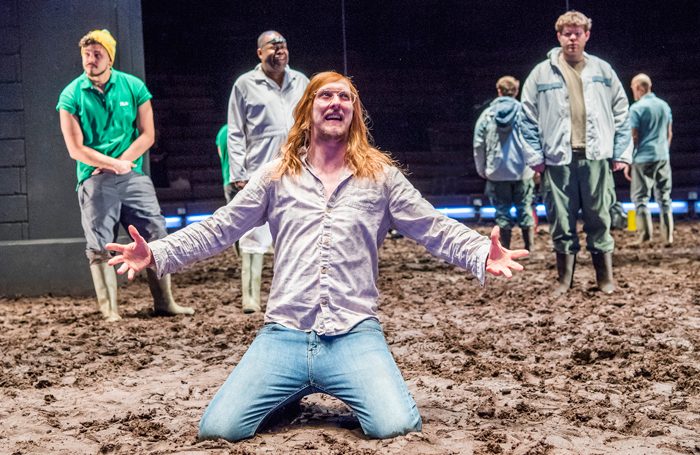
Having the cast stuck in a stage full of mud definitely brought the story back to earth. Having the 20 odd cast all on stage throughout the 2 hours also anchored events as they drifted in and out of the action. The fighting couples had real venom. Bottom and Titania had a proper canoodle. Theseus/Oberon and Hippolyta/Titania had a weariness in their spats. Our Puck was just doing his job, not always with puckish enthusiasm. So like I say firmly rooted in the real world which then means the dreams are properly located in the Freudian and not the fairy, with all the attendant sex and violence impulses. Little but effective flourishes, Bottom’s tights for ears, man boobs and a bottle for a c*ck, Puck’s string vest, a properly compact Hermia. A bit of text tightening and rearrangement and some quality performances and this was delightfully clear. And the mechanicals were rightly kept in check. Funny enough but without distracting.

So a great success for me though I can see why it might wind others up something rotten. There were a bunch of school kids there at the matinee I attended. Well behaved but going in bored. Now I am not saying they were converted but this was clear enough to begin to draw many of them in. And that’s the acid test.

Wouldn’t want to single any of the cast out (all 4 lovers were great) but Leo Bill was a quality Bottom and I am a big fan of Anastasia Hille (in the Barbican Hamlet and NT The Effect previously). Lloyd Hutchison also captured the Puck/Egeus that the director I think demanded to a tee.

So I await with great interest Mr Hill-Gibbins next assignment.