Philippe Herreweghe and Philharmonia at the Royal Festival Hall review ****

Philharmonia Orchestra, Philippe Herreweghe (conductor),
Bertrand Chamayou (piano)

Royal Festival Hall, 21st February 2019

  • JS Bach – Orchestral Suite No.3 in D
  • Mozart – Piano Concerto No.23 in A, K.488
  • Mozart – Symphony No.41 (Jupiter) 

A rare opportunity to hear modern instruments tackle some core Baroque and Classical orchestral repertoire in an HIP style, which, when it works, can a thrilling musical experience. But here the Philharmonia was under the baton of not just any old conductor but one of the founding fathers of historically informed performance in the guise of Belgian maestro, and Jonathan Pryce look-a-like, Philippe Herreweghe.

Mr Herreweghe is the Artistic Director of the renowned Collegium Vocale Gent which he founded in 1970 whilst studying at the music conservatory in his native Ghent. It didn’t take long before the HIP world stood up and took notice of PH’s authentic and enthusiastic way with the Baroque, especially Bach, and recordings, for example of the Bach cantatas, with the likes of Nikolaus Harnoncourt and Gustav Leonhardt, soon followed. In 1977 PH also founded the La Chapelle Royale to focus on the French Baroque, the likes of Lully and Charpentier, and he has subsequently branched out into other eras and other ensembles (he is principal conductor of the Royal Flemish Philharmonic), but it is his JS Bach interpretations which garner most praise. Generally, if he is the conductor on a recommended recording, you can safely take the plunge. If it is a Bach recording you would be daft not to.

BTW for those Brits who have never been to Ghent – more fool you. Leave St Pancras mid morning and you can still be there for lunch. Easy stroll around the centre taking in a couple of Gothic church crackers, a Belfry (with lift), a C10 castle, the Graslei medieval houses lining the canal – boat trip mandatory, a couple of supernatural art galleries (MSK if, like the Tourist you are drawn to early Flemish and first half of the C20, and the Contemporary Art Museum), two vouchsafed decent hotels (Marriott and Pillows Grand Reylof), some very tidy trough (with a fair few Michelin stars scattered throughout), lashings of great beer and, best of all, the greatest painting ever, the Van Eyck boys’ Adoration of the Lamb. Busy, but not as nuts as Bruges. The city is gearing up for a van Eyck celebration next year. So off you trot.

Now the Collegium Vocale Gent is a regular, if not frequent, visitor to London. They are over for a Bach B Minor Mass on 14th June at the Barbican. There are still plenty of tickets left. So go on, treat yourself. I also see they are taking the Glass opera, Einstein on the Beach, on a tour around the Low Countries. Crikey.

Prior to that though PH put a stripped back PO, and an excellent young French pianist in the shape of Bertrand Chamayou, through its paces. In fact prior to that a string quartet led by PO violinist Adrian Varela offered a free concert of Bach transcriptions (two Bach chorals, BMV 269 and 86, two Art of Fugue Contrapuntuses, is that the plural?), Stravinsky’s Concertino and the suite Punta del Este, from Argentinian, Aster Piazzolla, which was as good as it sounds.

Only four orchestral suites by JSB survive, in contrast to the 100 or more from composition whirlwind Telemann. They likely date from the Cothen years, written for Prince Leopold, and are some of the funkiest grooves the old boy ever laid down. They all begin with a lengthy overture followed by a series of dance movements; so French in structure if not always in sound. The overture of No 3 itself is French style, a slow stately D major opening, then a rapid, dotty fugue before a short reprise. Number three augments strings and woodwinds with timpani and three trumpets, which gives the first idea an Handelian majesty which suits the modern orchestra. JSB wastes no time shifting to the running semiquavers of the fugue which follows. You may well know the overture. If you don’t you will know the Air which follows, “On a G string”. It may be ubiquitous but it is still special. No Bach, no symphonic slow movements. The Gavotte, a courtly knees up, which follows is in two parts. Things heat up in the scrabbling Bouree which follows, but it is the final Gigue which takes us back to the jollity of the opening, trumpets blazing.

Now your man PH doesn’t hang around. Brisk is the usually ascribed epithet. Suits me. But with no dawdling or vibrato to hide behind this called for precision from the PO. Which they delivered. This sharp, clean sound, with steel in the 44 (yep count ’em) strings (literally), controlled wind (if you get my meaning) and hard stick timpani (oh dear), with the perpetual motion of Bach’s invention, is what really got me excited. Getting the balance right with such a full orchestra was always going to be tricky but PH and the PO, for the most part, were on to that.

I was a little less convinced by the Mozart PC. Not Bertrand Chamayou’s subtle and supple playing, proper Classical (not his normal specialism), but more in the drive of the orchestra. They didn’t quite match up in the jolly opening Allegro and in the closing, vivacious sonata-rondo. By the time BC joined the orchestra in the opening they had built up a head of stem that he was hard pressed to match, and things got a bit too racey by the end of the concerto, where WAM launches more than a few surprises. In the beautiful, dreamy F sharp minor Adagio, pretty much all piano and the only passage ever in this key from Wolfgang A, we could hear just how fine a pianist BC is, at least when it comes to delicate emotion. WAM wrote PC’s 22, 23 and 24 in a hurry to drum up some cash. They are, IMHO, his best 3 in the form, with the operatic 23 probably edging 24 to the top spot.

Mozart also churned out the last 3 symphonies in a matter of weeks. Still hard to credit. Jupiter is, of course, the best. And the final movement is the best of the four. The two themes of the opening Allegro jockey for supremacy with more than a whiff of Don Giovanni-esque irony. The Andante takes a simple theme and turns into into something altogether more knowing and the Menuet and Trio elevates that Classical staple to new heights. But that last movement, up there with Beethoven’s best, and therefore the best ever, is something else entirely. Four notes, upside down, inside out, round about, in fact very which way but loose, then twisted around another four themes similarly pushed and pulled, then all weaved together in celestial, head-banging perfection (I know, I know, it’s just music, but f*ck me, what music). Easy enough to make a hash of by going balls-out bluster. Not here though showing how “flexible HIP” is now, really, the only sensible option with Mozart. Even with repeats PH brought this in under the half-hour. I have a Norrington recording with LCP, again with all the repeats, which tops 35 minutes and he is no slouch.

Regular readers will know that I can’t be doing with the staples of the Romantic repertoire. This though pays the wages of the PO and its peers. They barely get near Bach, or even Mozart, at least in an orchestral context. Perhaps that is why they look pleased as punch at the end of this. Happy days. And for those of you who like a little more Romantic in your lives, albeit the early variety, PH is back with the PO in November to show off some Beethoven and Schubert.

Steve Reich: London Sinfonietta at the Royal Festival Hall review ****

London Sinfonietta, Synergy Vocals, Micaela Haslam, Andrew Gourlay (conductor), Sound Intermedia

Royal Festival Hall, 12th February in 2019

Steve Reich

  • Clapping Music
  • Runner for Large Ensemble
  • Music for 18 Musicians

Is it possible to have too much of a good thing? The good thing, in this case, being the minimalist music of Steve Reich. There are those music lovers for whom just a few minutes sets their teeth on edge I gather. Not me though. Repetition, repetition, repetition. That’s what I crave. Except that it isn’t really repetitive. It is just structured sound. Built on rhythm. Which evolves. As has Mr Reich’s music. Perfectly demonstrated in this programme.

SR composed Clapping Music in 1972 as an antidote to all the paraphernalia and kit that the Steve Reich Ensemble required to perform his major compositions at that time, (as witnessed by Music for 18 Musicians after the interval). Two performers and their hands. One part fixed, the other repeatedly moving from unison to one beat ahead then back again. Clever clogs. SR, and the two performers here, David Hockings and Tim Palmer. Looks easy? Try it with the help of the app. It isn’t.

Runner for Large Ensemble, of winds, percussion, pianos and strings, is a relatively recent work, from 2016, and comprises five sections played without a pause. The tempo remains broadly constant but note durations vary from sixteenths to eighths to a standard Ghanian bell pattern, (Ghana being the source of many of SR’s works), and then reversed. It ends in the wind section with pulses played for as long as the players can sustain. It is not a long work, 15 minutes or so, and has a little less melodic interest that much of what we might term “late period” Reich (though here’s hoping with having many more compositions to come). This is as close to High Baroque as minimalism gets. I loved it.

Though I could listen to SR’s music all day. As it now seems could half of London. Programmes of Reich and Glass’s music, at least the large scale works, now sell out and audiences are no longer comprised of solitary, rather dubious looking, fifty-something blokes (hello Tourist), but the hip and trendy creative twenty-somethings from East London.

I have blathered on before on this blog about Music for 18 Musicians so I’lll keep this short. This was a turning point for SR as pulse and rhythm of the works from the 1960’s and early 1970s (Piano Phase, Violin Phase, Drumming) was augmented by expanded ideas around structure and, especially, harmony, and electronic intervention was curtailed. The movement between chords is still restricted, but, over the piece, there are repeated cycles of 11 chords, each held for two “breaths” from the voices and wind section(clarinets) which the strings follow. The 4 pianos and the mallet instruments deliver a regular rhythmic pulse, and, as the chords are stretched out, small “pieces” in arch form are built on top to create harmony and changes in instrumentation. The effect is like early polyphonic voice compositions with a cantus firmus overlaid with instrumental “melismas”. The sections are divided by cues from the mettalophone who becomes a sort of director and the modulations within chords are marshalled by the bass clarinet. here Timothy Lines. (Andrew Gourlay only conducted Runner).

All clear. It takes a few listens to get the picture and even then it is easy to get lost in the apparent repetition but it helps to get the map in mind. Then the choreography of sound (and movement as percussionists shift position), the way the focus and texture of the sound shifts across the ensemble, becomes clearer, and moves beyond the “hypnotic wash”. Understanding the process reveals the beauty. At least that’s what I think. Synergy Vocals lead by Michaela Haslam are the world’s experts in Reich’s work and the London Sinfonietta has form in Reich too, and together they were, mostly faultless in delivering the seamless ebbe and flow of the music.

Piano trio and percussion at the Wigmore Hall review ***

Sergey Khachatryan (violin), Alisa Weilerstein (cello), Inon Barnatan (piano), Colin Currie (percussion), Owen Gunnell (percussion), Sam Walton (percussion)

Wigmore Hall, 11th February 2019

  • Ludwig van Beethoven – Piano Trio in D Op. 70 No. 1 ‘Ghost’
  • Arnold Schoenberg – Verklärte Nacht Op. 4 (arr. Eduard Steuermann for piano trio)
  • Rolf Wallin – Realismos Mágicos
  • Dmitry Shostakovich – Symphony No. 15 in A Op. 141 (arr. Victor Derevianko for piano trio and percussion)

OK so this didn’t quite go to plan. I was intrigued by the classical supergroup combination, the composers and the arrangements, but probably should have put a little more effort in to checking in advance whether I liked said arrangements. Always do your homework Tourist.

The Ghost was a success, as you might expect from this glittering trio of soloists and because it is Beethoven, thus being immune to criticism. I find that this pivotal work can either be taken with a Classical tilt, building on the master Haydn, or with a more forceful attitude, presaging the muscular Beethoven still to come. (Remember LvB previous contributions to the piano trio form were the three that formed his Op 1) This trio opted for the former with sometimes glittering results. The Ghost owes its name to the supernatural melodies of its slow movement. Apparently LvB was working on a possible opera based on Macbeth which perhaps explains the mood. It is the light and shade of the Allegro first movement and the full sonata form of the Presto finale which also explain its popularity with performers, including our friends here, alongside its “Archduke” Op 70 cousin.

Verklarte Nacht seems to follow me around like a drunken dinner party guest who will not accept that it is time for beddy-byes. I hoped that this cut-down version of the string quartet, from Schoenberg groupie Edward Steuermann, with the piano talking four of the string lines and violin and cello flying solo concertante style, might dilute the syrupy sweetness of the original. Afraid not, despite the best efforts of our musicians. It still sounds like knock off Wagner to my ears. And that is not a good thing. There are apparently five sections and a coda. Search me.

The Rolf Wallins virtuoso marimba piece, Realismos Mágicos, was a chance for Colin Currie to show off, just because he can. And he did, in some style. It is inspired by 11 short stories from Gabriel Garcia Marquez, hence the title.

So to Shostakovich 15. The symphonic version is sparse,enigmatic, suffused with DSCH’s own mortality, which is percussion and string heavy. So in theory this arrangement, for piano trio and various tuned, (xylophone and glockenspiel), and untuned, percussion should have worked. Unfortunately it doesn’t. Shostakovich needs woodwind and brass like a sandwich needs cheese and pickle (chez Tourist). I can see why the arranger, pianist Victor Derevianko, thought this would make sense after playing it through, for the censors, on the keyboard in 1971, and why DSCH agreed to the idea. And, with these fine musicians, there were clearly going to be passages that convinced; in the first movement, where the percussion is used to set up the quirky, black comedy, symbolised by the William Tell extract, and the finale, where uncertainly builds to repeated climaxes before the clockwork countdown to unremarkable oblivion. Where it disappoints, compared to the orchestral original, is in the slow movement and scherzo. A crowded Wigmore stage also condensed the sound which the Hall’s acoustic couldn’t quite

Definitely then a “it’s not you, it’s me” evening. Or maybe a soon to be forgotten one night stand. Either way I am sorry.

Peter Eotvos and the Philharmonia at the Royal Festival Hall review ***

Philharmonia Orchestra, Peter Eötvös (conductor), Iveta Apkalna (organ), László Fassang (Hammond organ)

Royal Festival Hall, 7th February 2019

  • Arnold Schoenberg – Accompaniment to an Imaginary Film Scene, Op. 34
  • Bela Bartok – Dance Suite
  • Igor Stravinsky – Symphony in Three Movements
  • Peter Eotvos – Multiversum

A sort of panic purchase this. It is a bit of a faff to use credit for returned tickets at the South Bank. Forgot that a chunk of said credit was about to expire and had already booked most of the concerts I was keen to see. So a bit of fat finger fact finding on the phone ahead of a booked concert and this was the result. Which I promptly forgot about until it popped up in the diary. Still you can’t go wrong with a bit of Bartok and Stravinsky right, and the Eotvos piece (a UK premiere) look like a lark.

Well up to a point. As it turns out Multiversum was a thing to behold but the rest of the programme was less convincing.

What with his Blue Reiter and Expressionist mates, his own daubing and his atmospheric, serialist diddling, Schoenberg was a shoe-in for a film score commission but when it came in 1929, purist that he was, he turned it down and itself wrote this, for an “imaginary” film. It is made up of three moods, Threatening Danger, Fear and Catastrophe and is as dull as everything else I have heard by Schoenberg, whether it be late Romantic gushing, atonal, tonal, or twelve tone. Maybe one day I’ll get it but not so far.

I’ve said before that Bartok’s music is equally fascinating and baffling for me. The Dance Suite manages to be both at the same time. He was commissioned by the Budapest municipality to come up with something which could restore some pride in a Hungary battered by the WWI peace settlement. It’s six movements work as a kind of musical memento mori for the Hungary of history with folk dance music with distinct Hungarian, Romanian and Arabic characters. Like all of Bartok he doesn’t hang around ideas wise so just when you have got your head around one melody he is on to the next one. There are some punchy passages notably in the second Allegro molto (which seems to end with “The Hills Are Alive” !!), the proceeding Allegro vivace and the short, spooky Comodo. The Finale is a suite all by itself. Played the right way, as in the recording I have by the Chicago SO under Solti it is up there with the best of the Stravinsky ballets and Ravel’s most atmospheric works. Here it felt a bit underwhelming.

Things perked up with the Stravinsky, which I have always felt has an air of Shostakovich about it, despite the fact that IS thought DSCH was an appalling hack. The Symphony in Three Movements is really just three, admittedly brilliant and imaginative, movements, written at different times, which IS cobbled together. The Overture: Allegro is as exciting as anything he ever wrote with its motoric string march proceeded by a woodwind and piano scamper. IS was at the height of his fame in New York at the end of WWII and his ballet music was even sampled by Disney. This movement could have fallen straight out of The Rite of Spring albeit with a neo-classical lilt. The Andante: Interlude, L’istesso tempo is led by the harp and was originally intended for a film, The Song of Bernadette. It too has a balletic feel. The finale, Con Moto, was tacked on ahead of the 1945 premiere and comprises a lolloping march, woodwind burble and more keyboard accompaniment. I have heard more urgent and involving performances but Mr Eotvos drove the Philharmonia a little harder than in the prior two pieces to good effect.

Now the composer says the Multiversum was written to channel his interest in “string theory, gravitational waves and the relationships between multiple universes”. Uh oh. I have nothing about contemporary composers describing what prompted and inspired them, and programmatic music has a long history, but sometimes …….. Anyway there are certainly passages in Multiversum where Mr Eotvos goes a little bit B movie, sci-fi on our collective arses, (though thankfully no ondes martenot or electronica), but, cumulatively, across its 35 minutes it does leave a monumental impression. This is largely down to the innovative combination of pipe organ and Hammond organ and the way the orchestra, which is not vast, is placed and combined.

The 20 strong string section was positioned to the audience left, woodwinds to the right, with brass and percussion scattered through the back of the stage. The Hammond organ allows for various pulse-y, lengthened effects, while the main pipe organ, in step-wise motion, generates the throb that sits behind the soundscapes. Together they do say “cosmos” even if at times it was more film score than the mind being stuff of, say, Ligeti or Xenakis.

There are three movements, Expansion, Multiversum and Time and Space, with a kind of Bach-ian construction – Prelude, Toccata, Chorale- though I couldn’t work out much in the way of themes or ideas. There were though some undeniably impressive passages, with inventive harmonies and waves of repetition, and I would happily listen to the piece again, but the influences of Mr Eotvos’s Hungarian heritage, and years spent with Stockhausen and Boulez, were not immediately apparent. He seemed to be having a lot of fun though as did the two soloists and the PO. Iveta Apkalna, dressed in a long, Gothic frock coat, certainly added drama on the RFH’s mighty organ, (her own baby is the brand spanking new Klais organ in the Elbphilharmonie), and Laszlo Fassang showed why he has the market in “classical” Hammond organ sewn up.


Hungariana: Casals Quartet and Tamara Stefanovich at Milton Court review ****

Casals Quartet, Tamara Stefanovich (piano), Gerald McBurney (creative director), Amelia Kosminsky (video designer)

Hungaria, Milton Court Concert Hall, and 3rd February 2019

Gyorgy Kurtag

  • Six moments musicaux Op 44
  • Jatekok excerpts

Bela Bartok

  • 14 Bagatelles Op 6
  • String Quartet No 3
  • Three Burlesques Op 8c

Gyorgy Ligeti

  • Etudes excerpts
  • Musica ricercata VI-XI
  • String Quartet No 1 Metamorphoses nocturnes

One day. Three concerts. Showcasing the chamber music of the three most renowned Hungarian composers of the C20 (OK, well maybe that is a little harsh on Zoltan Kodaly). In fact, outside of some chap by the name of Franz Lizst, probably the three most famous Hungarian composers of all time. Except that European history being what it is all three of them were actually born in Romania, in its various incarnations. But their shared musical heritage, rooted to various degrees in folk music, is defiantly and definitely Hungarian. To perform the music, a Spanish quartet, albeit one with great affinity with the repertoire, and a Serbian pianist, though again one with proven expertise in all three composers.

A confession. I missed the first concert. Late-ish flight back the previous evening (Bologna since you ask – not humble-bragging but the Tourist highly recommends La Dotta/Grassa/Rossa, as well as nearby Ferrara and Ravenna. Be thankful he hasn’t the energy to start blogging on these trips or the vanity to Instagram). Anyway a bit tired to get to the Barbican by 11am so the first 5 parts of Ligeti’s Musica ricercata were missed, as were various excerpts from Kurtag’s Jatekok piano works, his 12 Microludes and Bartok’s String Quartet no 1. Most annoying (to miss) in retrospect were the Microludes, 12 tiny string quartet pieces in homage to Kurtag’s mate Mihaly Andras. Still, no worries, as, on the strength of Six moments musicaux, which was Kurtag’s fourth string quartet, I have a CD of his entire output for the form winging its way to me.

For I was very taken with Six moments musicaux, a title lifted from Schubert (and Rachmaninov). Written in 2005 the, er, six short pieces differ in character both between, and within, themselves. All are, as is characteristic with GK, very short. The first, Invocatio has loud, hard rhythms, an announcement, encasing a pianissimo melody and a chorale. Footfalls is a slow, broken waltz, the title taken from a late Beckett play. Then a Capriccio, a duel with obstinate lines and then a memoriam, a sort of passacaglia dedicated to Hungarian pianist George Sebak. This, like the finale, was based on two of the Jatekok piano pieces. The finale, titled Les Adieux, tilts at Beethoven but is subtitled in the manner of Janacek and is a lament of sorts. The penultimate is a “study in harmonics” based on birdsong a la Messaien.

George Kurtag was notoriously slow to get in to his compositional stride, writing just 9 small-scale works in the 1960s and early 1970s. In 1973 though he was commissioned to write some children’s piano pieces, which became the first 4 volumes of Jatokek (“Games”), and since then he hasn’t stopped, and there are now several hundred of these piano pieces alongside all his other work. All tiny, for solo or duo piano, their titles range across ideas, emotions, images, dedications, gestures, and together these fragments encompass the range of his musical imagination. If I am honest, even with the love and care lavished on them by Tamara Stefanovich, the combined effect was a bit stupefying, not in a bad way, just that, in the absence of titles or breaks, it was tricky to keep up. I will need to revisit.

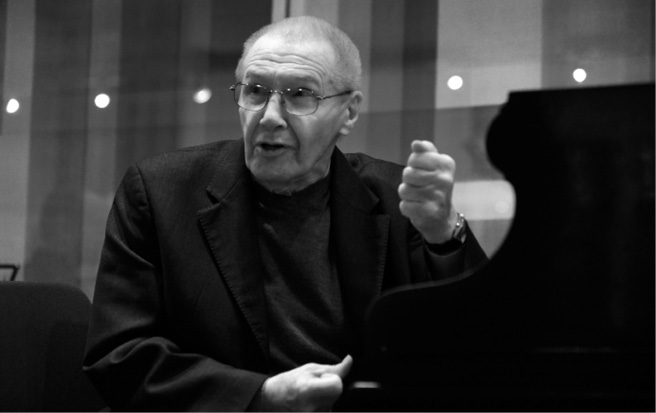
Indeed I will need to explore all of GK’s oeuvre. The idea of reducing music to fragments appeals (Flowers We Are, Mere Flowers, from the eighth volume of Jatokek, is just 7 notes long), but, based on these pieces, this is music with emotional heft despite its brevity, and not just an academic exercise. GK (pictured above) is an expert teacher, especially in chamber music, and the echoes of his own favourites, Bach, Beethoven, Schubert, Schumann, Webern and, of course, Bartok are easy to pick out. Of course it helps that GK adores the music of his friend and mentor Gyorgy Ligeti, who similarly, though I would contend, at a somewhat more elevated level, was to take the language and structure of music and turn it into something truly astounding. GK is still with us, now 93, though he was a little frail to attend the premiere of his opera, Fin de partie at La Scala last November, which is based on Beckett’s Endgame (which Ligeti first introduced him to).

In these two concerts we were treated to Tamara Stefanovich’s rendition of a handful of the Etudes (2, 8, 11, 3, 5, 15 and 10) and the second half of the Musica ricercata. The Etudes proved a fertile laboratory for Ligeti’s genius, mixing his early affinity for Hungarian folk sounds, (following in the footsteps of Bartok), his love of Debussy’s re-invention of piano music and purpose, his experiments with fractal patterns, his investigation of non-Western tonality and his fascination with Conlon Nancarrow’s complex cross-rhythms. Most of the etudes involve some, albeit very different variation on each hand playing at different speeds. If you have never heard, or claim never to want to hear, any “modern” classic music listen to the Etudes. You will change your mind. Guaranteed.

TS is a powerful advocate for the work, maybe not quite as powerful as her friend and collaborator, Pierre-Laurent Aimard, who performed the Etudes in their entirety last year at the QEH Ligeti weekender, but brings more Debussyian grace. Musica ricercata is more rule-based composition, not serialist, but a suite intended to progress from just two notes to a full-blown High Baroque fugue. It was written in the early 1950’s in Budapest, where it could not be played given the Soviet musical mindset, and, when GL moved to the West he saw it as too simple, until 1969 when the adventure of Boulez and Stockhausen was no longer de rigeur. I am still listening and learning, (some helpful programme notes here courtesy of Paul Griffiths), so can’t explain the music musically as it were, but, like the Etudes I know I like it. A few more years and I might even understand these works.

The highlight of the day though was Ligeti’s First String Quartet however, “Metamorphoses nocturnes”. The Ligeti quartets are putting ever more frequent appearances in the quartet repertoire and the Casals turned in an excellent rendition, near matching the Arditti recording I have. GL took this early piece with him when he left Hungary in 1956 after the Soviet crackdown, and it was premiered in Vienna in 1958. However, like the Musica ricercata, it was deemed a little too “prehistoric” in Ligeti’s words, to warrant dispersion, until its first recording in the 1970s. By then the world was ripe for the interplay of the folk rhythms and trademark Ligetian polyphony, colours and enquiry. The eight sections generate a variety of moods, atmospheric, macabre, dance, humour, with a motif, G-A-G sharp-A sharp, threaded throughout. It is brilliant.

What to do with Bela Bartok? It seems that every time I hear a performance of Bartok’s work, whether orchestral, chamber or solo, (or choral as with Cantata profana performed recently by the LSO, alongside Ligeti’s Lontano), that gets the juices flowing, it is immediately followed by a performance that perplexes. Here the String Quartet No 3, which to be fair I have heard a few times before courtesy of the Emerson recording, challenged and fascinated, whereas the piano pieces, the 14 Bagatelles and Three Burlesques just confused me. Oh well, I guess I just keep trying.

Now sometimes these “immersive” days can feel a bit cobbled together. Not here though as creative director Gerard McBurney introduced each piece with appropriate extracts from the writings of the composers themselves, reinforcing the links between them and their homeland, and the words of contemporary poets, such as Endre Ady and Attila Joszef, in Hungarian as well as translated. Moreover the video backdrop created by Amelia Kosminsky, a mature final year student at the Guildhall, was stunning. She had discovered a treasure trove of amateur monochrome photographs from Hungary throughout the C20, the Fortepan archive, which she combined superbly to match music and text. If I am honest sometimes these designs can just be bloody distracting. Not here though.

Oxford Philharmonic Orchestra at the Barbican review ****

Oxford Philharmonic Orchestra, Marios Papadopoulos (conductor), Anne-Sophie Mutter (violin), Maxim Vengerov (violin), Martha Argerich (piano)

Barbican Hall, 12th January 2019

  • JS Bach – Concerto for Two Violins in D minor BWV 1043,
  • Robert Schumann – Piano Concerto in A minor Op 54
  • Beethoven – Symphony No 3 in E flat major

I cannot tell a lie. I didn’t go to the Oxford Philharmonic’s 20th birthday bash at the Barbican Hall to listen to the orchestra though there were clearly a fair few university types, students, alumni and academic staff, in the packed house, who plainly did. No it was the chance to see three world class soloists strut their stuff, though try as I might I couldn’t find a chum to accompany me.

Well they didn’t disappoint. Anne-Sophie Mutter and Maxin Vengerov were, unsurprisingly, electric, and Martha Argerich showed why she is, unarguably, the world’s greatest living pianist. And that in a piece of music, the Schumann Piano Concerto, that remains a mystery to me. It is a very disorientating feeling, being enraptured by an artist’s playing yet not really caring about, or even liking, what she was playing. Quite the opposite with the Bach Double Concerto which is a belter. As is the Beethoven, obviously, though sadly, not here. Too rich and too slow for my taste.

The Bach was, surprisingly, Baroque-like however. Of course these two were never going to abandon the vibrato completely and this was a pretty fulsome band, but there was more than enough motoric chug from the continuo and strings to keep this HIP-ster happy. And when the two of the started riffing off against each other, especially in the sensuous Largo aria-like movement, you’d have to be a particularly humourless period music fanatic not to get carried along. Particularly as the two soloists, with their contrasting sounds, Ms Mutter brighter and sweeter, Mr Vengerov, richer and darker, and the OP players, seemed to be having such a ball. A-SM, what with her mannered interpretations and sergeant major-ish exhortations to the orchestra can seem a bit serious at times, and MV can be too doggedly static. Not here as they belted through the canonic closing Allegro. Easy to see why JSB always had Vivaldi on shuffle.

Now obviously I would rather listen to Martha Argerich playing stuff that does it for me. Bach, Beethoven, Scarlatti, her Chopin and Ravel, some Mozart and her way with the Prokofiev concertos (there is also a bit of Bartok, Stravinsky and Shostakovich in her recorded chamber repertoire I think). But Schumann is pretty close to the top of her favourites and she, because she is close to the divine, gets to choose. Now it seemed to me that in the opening Allegro she had to set Marios Papadopoulos and the OPO on to the same page as her, but once done, the magic started to work. Like I say I don’t understand or care for Schumann’s music but watching and hearing MA weave a reverie in the slower, middle movement and then show her superpower technique at the end of the closing Rondo, even with the orchestra doing its level best to blast her out, was a privilege. How on earth she can play that fast, that accurately and that beautifully is a mystery. Even if you have no truck with this, or any other classical music, I am convinced, if you heard here play live, you would understand. No encore. Shame.

Mr Papadopoulos is no mean pianist himself, especially with Beethoven, but his main musical legacy will be the creation of a top notch orchestra from scratch for Oxford, the town and the University. However on the basis of this Eroica he is resolutely old-school. Now I have a fair few recordings, Harnoncourt, Rattle, Szell, Gardiner, Haitink, Furtwangler and an Abbado (BPO. I mostly listen to the Harnoncourt with the COE, the classic Szell with the Cleveland and the Haitink with the Concertgebouw. So you can see I like my Beethoven, quickish, exact, rigorous and detailed. Not stately, lush, long on vibrato and rubato and all ubermensch-y. The orchestra doesn’t have to be chamber+ sized but it has to have that intent. The best live performance I have ever heard was the Britten Sinfonia’s under Thomas Ades in 2017. (You can still get to hear their 7,8 and 9 in May this year at the Barbican for just £15. The bargain of the decade).

I see a number of proper reviewers liked this “traditional, unidiosyncratic, steady, sturdy, big-boned” interpretation. Not me I am afraid. I began to wonder if it was my own funeral in the Adagio. There is no reason why a performance clocking in at 50 minutes can’t bring a sense of Beethoven’s overall structures. Not here though. I started inventing repeats that weren’t there.

Still it takes all sorts. And, like I said, I came for the soloists and to share in the celebration which was rounded off with a cheesy Happy Birthday medley encore.

The LSO and Barbara Hannigan at the Barbican review ****

London Symphony Orchestra, Sir Simon Rattle, Barbara Hannigan (soprano)

Barbican Hall, 10th January 2019

  • Sibelius – Symphony No 7 in C major, Op 105
  • Hans Abrahamsen – let me tell you
  • Nielsen – Symphony No 4 “Inextinguishable”, Op 29

I am pretty sure that Simon Rattle’s Sibelius cycle with the CBSO from 1991 was one of the first classical music CDs that I bought, (there was a bit of vinyl prior to this and I have never been what you might call an early adopter). So there was a time when I liked, or thought I should like, the Sibelius symphonies and Sir Simon’s way with them. No longer I am afraid. I can get the ebb and flow, the organic construction, the elemental, the river and sea analogies, but I just start to zone out after a while and it all turns into a bit of a drone. Maybe Sir Simon’s now generally heavier readings, deliberate pacing and eye for detail overwhelmed the piece but it did nothing for me.

What a confession to have to make. I understand that the Seventh Symphony, completed in 1924, was itself something of a mould breaker what with its one unbroken movement, its constantly shifting tempi and its dogged reliance on C major and minor. And the fact that he wrote it when p*ssed up to his eyeballs. He went on to compose the tone poem Tapiola and an arrangement of the Tempest suite and a few chamber pieces, and destroyed the manuscript of an Eighth Symphony, but by 1929 he was done, publishing nothing for the next three decades, although I gather he tried, (as well as knocking up some tunes for his Mason mates). Retirement, after a lifetime of excess, was clearly good for him since he got to the ripe old age of 91. I can see why the Finns are so proud of him but I am with those who hear the radical conservative in his music rather than the conservative radical.

Danish composer Hans Abrahamsen’s song cycle, let me tell you, from 2012-13, was composed with Barbara Hannigan’s voice in mind. He wasn’t the first contemporary composer to do this and he won’t be the last. For her soprano is a most extraordinary instrument. The piece is divided into three parts with seven sections in all and the text, created by Paul Griffiths from his novella of the same title, is drawn entirely from the 483 words that Ophelia delivers in Hamlet, though with very changed meanings and tones. This Ophelia speaks of memory, of music, or love and she doesn’t end up face down in a pond, hair artfully arranged amongst petals. The music of Mr Abrahamsen is (micro)-tonal and largely consonant, but he does slice it up in unusual ways harmonically, whilst still offering a clear, if shifting, pulse behind the glittering, glassy melody textures, driven by percussion and high strings. As most informed commentators have said, it is wintry music, no question. Now I can’t pretend the music leapt out at me on first hearing but it did create a solicitous backdrop for that voice and there is no doubt I will be listening again.

Whether she is singing Britten, Berg, George Benjamin, Gerard Barry, Ligeti, or any number of other modern and contemporary composers it has not yet been my pleasure to hear, she is utterly beguiling and totally convincing. Her soprano is light and clear, but immensely powerful, and she can act. I had another look at Lessons in Love and Violence, this time courtesy of the BBC broadcast, and this time therefore up close rather than the dolls-house view from the ROH amphitheatre of the live view. Firstly a reminder that it is a very, very good opera and secondly there are times when, as Queen Isabel, Ms Hannigan, IMHO, is up there with the best of stage actors, whilst still managing to sing exquisitely, with meaning, to the back of the auditorium.

In this piece HA has served up all manner of opportunity for BH to show off that emotional connection, with suspensions, tremolos, swoops and soars, mournful ululations, floating high notes, even Monteverdian rebounds or, to use the technical term, “stile concitato”. It was a big success when to first appeared, the recording with Andriss Nelsons and the Bavarian RSO went down a storm, and the audience lapped it up at the Proms a couple of years ago. Easy to see why HA, BH, Sir Simon and the LSO fully deserved the applause.

The Nielsen was an altogether jollier affair than the Sibelius (Danes being, in the Tourist’s experience, somewhat more upbeat company than Finns). And for me, Rattle’s deliberate way, and the LSO’s accurate playing, served this much better than the Sibelius. Nielsen, as we all know, liked to chuck it about a bit and here in the Fourth with his defiant sub-title and programmatic exhortation – “in case all the world were to be devastated by fire, flood or volcanoes and all things were destroyed and dead, nature would still begin to breed new life again….” – he starts as he means to go on.

I can see why some might not take to the Nielsen’s progressive tonalities, awkward, clashing sonorities, his shifting themes, big, bold rhythms and mix of C19 and C20 musical languages. For me he is, in contrast to Sibelius, the conservative radical. Tonalities don’t always comfortably agree with each other, but always resolve in some way. I like the way all the ideas jostle for space, and there are many interesting and unusual textures and colours, which often bear an uncanny resemblance to the work of composers from earlier and later decades. One foot in the past and one in the future. If you started with Brahms and Grieg, mashed it up with a hefty squirt of Mahler, a dash of Shostakovich, put it in an oven marked Bartok and Schoenberg, whilst still remaining in a kitchen built by polyphony and Bach, you might have the recipe.

He went through a wobbly phase through the turn of the century, listen to the Second Symphony, and he certainly played up to the stereotype of the troubled Nordic creative. Whilst recognised in his lifetime, it took some a much longer before his distinctive voice was recognised internationally, if not in Denmark, where his songs remain part of the country’s fabric.

The symphony has four defined movements, but these are unbroken, and it takes a few listens to realise that themes that emerge in each of the movements do, in fact, share material. The opening Allegro opens with a stirring crossing of woodwind and strings and from which emerges a hopeful woodwind whistle in E major, which returns in the final movement. After numerous dramatic rises and falls the climax of this movement also anticipates the final resolve. The Poco Allegretto which follows is an impish folk tune, subject to various treatments. The Poco Adagio starts with descending strings set against an intermittent timpani thud, turns a bit darkly pastoral, before building to another foretaste of the climax. The final Allegro starts with scurrying strings, before some Hollywood gush, some chaotic martial cross rhythms, a calmer phase before the message of hope, if we can just endure, is hammered home.

The Fourth was written in 1916. Nielsen had gone into WWI a proud nationalist like Sibelius and so many artists and intellectual across Europe. It didn’t take him long, amidst the carnage of industrialised slaughter, to change his mind. This was his response. “Music is life, and like it, inextinguishable”. A fair motto to also attach to the composition from his countryman a century later.

My top ten concerts and opera of 2018

Just a list so I don’t forget.

1. A Midsummer Night’s Dream – English National Opera – 4th March

Not quite a war-horse of a production but Robert Carsen’s version of Britten’s Shakespearean opera looks, sounds and, well, is just wonderful.

2. Ligeti in Wonderland – South Bank – 11th, 12th and 13th May

Gyorgy Ligeti. Now bitten and no longer shy. If there is one second half of the C20 “modernist” composer every classical music buff should embrace Ligeti is that man.

3. Beethoven Cycle and Gerard Barry – Britten Sinfonia, Thomas Ades – Barbican – 22nd and 24th May

This is how Beethoven should sound. Do not miss the last instalments in the cycle this May.

4. Isabelle Faust, Kristian Bezuidenhout (harpsichord) – JS Bach
Sonatas and Partitas – Wigmore Hall and LSO St Luke’s – 9th April and 16th June

And this is how JSB should sound.

5. Opera – The Turn of the Screw – ENO – Open Air Theatre Regents Park – 29th June

Even the parakeets came in on cue in this magical, and disturbing, evening.

6. Greek – Grimeborn – The Kantanti Ensemble – Arcola Theatre – 13th August

Mark-Anthony Turnage’s breakthrough opera is still a thrill.

7. The Silver Tassie – BBCSO – Barbican Hall – 10th November

And this was a graphic reminder of why his mature masterpiece must be revived on an opera house stage.

8. BBC Prom 68 – Berlin Philharmoniker, Kirill Petrenko – Beethoven Symphony No 7 – Royal Albert Hall – 2nd September

Crikey. I only went for this. If Mr Petrenko keeps going on like this he might just become the greatest ever.

9. Brodsky Quartet – In Time of War – Kings Place – 18th November

A stunning Shostakovich 8th Quartet and then George Crumb’s jaw-dropping Black Angels.

10. Venice Baroque Orchestra, Avi Avital (mandolin) – Vivaldi (mostly) – Wigmore Hall – 22nd December

As rock’n’roll as the Wigmore is ever going to get.

Venice Baroque Orchestra and Avi Avital at Wigmore Hall review *****

Venice Baroque Orchestra, Avi Avital (mandolin)

Wigmore Hall, 22nd December 2018

  • Francesco Geminiani Concerto Grosso in D minor after Corelli’s ‘La Follia’ Op. 5 No. 12
  • Vivaldi – Concerto in D for lute and strings RV93
  • Vivaldi – Sinfonia in G RV146
  • Vivaldi – Concerto in A minor Op. 3 No. 6 RV356
  • Vivaldi – Concerto in D minor for strings RV127
  • Vivaldi – Mandolin Concerto in C RV425
  • Giovanni Paisiello – Mandolin Concerto in E flat
  • Vivaldi – Concerto in G minor for mandolin, strings and basso continuo ‘Summer’ from The Four Seasons RV315

Saturday before Christmas. Family loafing about in front of screens or head in a book. Not the Tourist though. Two plays down and on to hear one of the finest Baroque ensembles anywhere rock out with some kick-ass Vivaldi and a couple of his lesser known contemporaries. With one of the world’s finest mandolin player (mandolinist?), Israeli Avi Avital, as soloist.

However before I got there, an errand to run. Tracking down specified cosmetics for BD and LD courtesy of Father Christmas. From Selfridges. On the Saturday before Christmas. I thought everyone did their shopping on-line now. And that retailers where watching sales plummet as the Great British public collectively sh*ts itself ahead of the March madness. Or that we had reached peak stuff.

Apparently not. I was scared. I am not much of a bricks and mortars man even on a quiet Tuesday morning. This though was positively Dantean, Especially when I got to the specified concession to discover that every woman in London under the age of 25 had come to the purchasing party. In trying to track down the appropriate shade of eye shadow I was man-handled, or should that be woman-jostled, on multiple occasions. Sensing my fear a patient sales assistant took pity on me and, in an instance, she briskly completed my elementary task. For the briefest of moments I was overtaken by an excess of Christmas spirit smiling at all those around me. Seeing fear on the faces of the throng, as they sized up the scruffy, fat, ageing weirdo grinning inanely at them, I then realised it was time to scarper. Out I waddled, weaving between the happy shoppers, scuttling along Oxford Street, round the corner, through the phalanx of black Range Rovers, (if you cannot, will not or you are proscribed from using public transport why on earth do you need to be carted around in these malevolent gas guzzlers), until finally reaching the comparative calm of Wigmore Street. Tempted to let out a cry of Freedom!!! Braveheart style but the Tourist realises that might unsettle the real tourists.

Two lessons dear reader. Financialised, neo-liberal capitalism edges ever closer to eating itself in an orgy of debt-filled consumerism and the Scrooge-like greying Tourist is now happier in the company of the genteel Wigmore Hall audience that the massed ranks of the crazed hit-polloi on a retail mission.

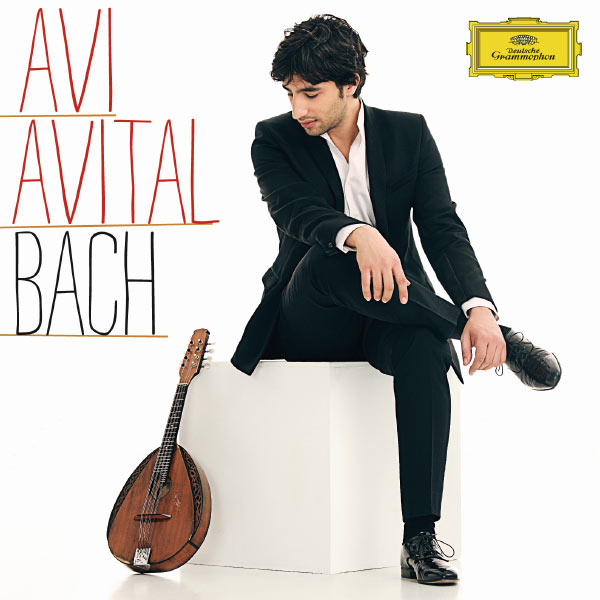
Though it turns out that the Wigmore Hall denizens are less genteel that you might imagine. For when Avi Avital came on the crowd when apeshit. OK maybe I exaggerate but ladies, and gentlemen, of a certain age definitely came out in a hot flush. For he is a good looking boy as you can see from the above, tousled-haired, tall, dark, handsome and when he gets going on his mandolin, channeling his inner rock god, it was as if Jimmy Page was back on stage at Madison Square Gardens circa 1973. OK minus the lighting rigs, dry ice, Catherine wheels, hummingbird jacket and Boeing jet round the back. Oh and he was sat on a chair somewhat curtailing the head-bang. Still there is no doubt he is a captivating performer who justified the delirious (by classical music audience standards) reaction.

Now the remaining (discovered) mandolin repertoire in the Western classical tradition, or at least that which the modern punters will pay to hear, is a little thin on the ground. (Though it is not a problem found in folk, especially, bluegrass, music). Which, perforce, limits the number of professional players. The lute, the precursor of the mandolin family, has a long and proud history in Renaissance and Baroque music, but the mandolin didn’t really take off as a solo instrument until the middle of the C18 when, most likely, the Neapolitan Vinaccia family came up with the eight stringed (in two courses) baby we know today. With strings of steel so the little fella could be heard, and then some, above the orchestra. The world has countless things of beauty to be grateful for from Italy. Not least most Western musical instruments.

Cue a burst of activity from Vivaldi and other Italian Baroque giants for the mandolin. But not much else. Beethoven had a fondness for the instrument, Mozart slipped it into Don Giovanni and a few other notables since have smuggled it into their opus list. There was a notable revival in Italy led by Rafaelle Calace in the mid C20 and the instrument has a fair following in Japanese classical music, I guess because of the sound similarity with the koto. I also see that Ligeti found a place for it in Le grande macabre: mind you he found a place for just about everything in that extraordinary masterpiece

All this means that adapting works originally scored for other instruments is par for the mandolin course. As here with Mr Avital’s own arrangement of Summer from The Four Seasons. (AA preceded this with a little patter about how he confused “Summer” with “Winter” when he was a nipper. OK so it wasn’t full on scathing Bill Hicks but it was worth a chuckle especially when you have shared that confusion).

Now I am guessing, that is if you care at all, that you either fall into the camp that believes, like the Tourist, that Vivaldi was a genius able to weave magic from short, simple repetitive musical ideas, or that he was a flashy journeyman who wrote the same arpeggio-laden riffs over and over again. Well Bach was with me even if Stravinsky wasn’t. To get the best out of AV though you need a specialist band that knows its stuff. The Venice Baroque Orchestra, along with the Concerto Italiano, Europa Galanta and Il Giardino Armonico is that band. Founder harpsichordist Andrea Marcon may have taken a back seat now but this ensemble still contains some of the very best Baroque specialists in Italy and a couple of jokers in lutenist Ivano Zanenghi and leader here, violinist Gianpiero Zanocco.

The difference is their ability to created complex harmonies, expansive dynamics and varied tempi from the apparently simple notes on the pages. Whilst, especially in the basso continuo, but also in the ripeno, tirelessly banging out thumping motoric rhythms. Vivaldi, and his Italian Baroque chums, may have worked to the principle that less is more when it comes to the length of their works but even so there is no let up, for player or listener, when the burn kicks in. Try it if you don’t believe me. Find a bog standard Four Seasons from 30 years ago churned out at a chugging medium pace by a modern orchestra that was probably rehearsing some interminable Bruckner that very afternoon, and compare it with the VBO’s “period everything” Sony recording with Giuliano Carmignola on the fiddle. See what I mean? The latter will blow your socks off, the former will likely see you popping the kettle on.

VIVALDI IS NOT BACKGROUND MUSIC AND SHOULD ON NO ACCOUNT BE PLAYED IN THE CAR. SLAP ON THE AFOREMENTIONED DISC. TURN IT UP VERRY LOUD. AND DANCE.

Giovanni Paisiello is primarily known for his operas including a setting of The Barber of Seville twenty odd years before Rossini seized his moment. He also banged out reams of scared music and a few keyboard concertos. His Mandolin Concerto was not signed but is generally accredited to him. AA really let fly here bouncing off his chair own a final flourish. Francesco Geminiani was one of the many Italian musicians who came to London in the first half of the C18 armed with an education from the master Corelli who served as the basis, with added string parts, for the Concerto grossi played here.

Vivaldi’s RV 425, the C major concerto written specifically for the mandolin, was probably the evening’s highlight. The strings, bar a few bars from the cello, play pizzicato throughout the final movement. Amazing. RV 93, pinched from the original lute, was another joy. RV 356, from L’estro armonico, was originally scored for violin so AA has substituted tremolos to replicate the long violin sustains. What a clever fellow. Of course this, as with the Winter, is always going to sound better on the violin but AA seems to me to make as good a case as is possible for his purloining.

Wonderful concert. Last entrant in my top 10 of the year. And as it turned out the highpoint before a somewhat fraught Christmas. Ho hum.

Handel’s Messiah at the Barbican review ****

Britten Sinfonia, Britten Sinfonia Voices

Handel’s Messiah, Barbican Hall, 19th December 2018

Jacqueline Shave (violin/director), Sophie Bevan (soprano), Iestyn Davies (countertenor), Allen Clayton (tenor), Roderick Williams (baritone)

Christmas on the way. Full house at the Barbican. MSBD as wingman. Messiah. A quartet of outstanding soloists. The Britten Sinfonia Voices. The Britten Sinfonia. And the very wonderful Jacqueline Shave leading the band.

It is of course impossible not to delight in the Messiah. At least that is the received wisdom. Yet, like so much Handel, I was worried it might, well, go on a bit. For this my friends was amazingly the first ever time I had seen and heard a live performance, Which given its Baroque lineage, its status as a Christmas fixture and its frequency of performance, especially by amateur choirs, is something of a surprise even to me. I suspect its appeal to a certain sort of Englishman (and woman), of which there were plenty on show at this performance, explains part of my reticence. The type that stands for the Hallelujah chorus, showing up our shared sheepish enthusiasm for imagined tradition. (And look what a mess that has got us into). It might also be my fear (not too strong a word) of really large scale choral performance. You know, where it all just becomes and aural blur.

So I figured the best way to get over this likely unfounded prejudice was to see an appropriately scaled performance, from an orchestra, choir and soloists at the top of their game, and in the company of MSBD, whose enthusiasm and all round gracious affability knows no bounds.

Well I can report that divvying up the Christ story (with the lead actor written out as it happens) into three sections and loads of parts (I think 54 in total), arias, recitative and chorus, plus the overture and pastoral symphony instrumental, makes for a much lighter affair, with more contrast and texture, than I had expected. Of course you will already know that no doubt, but for the uninitiated, this HIP style of performance, on modern instruments, is definitely the way in. You are probably familiar with the big numbers, the aforementioned Hallelujah chorus (we are suckers for anything fugal), “I know that my redeemer liveth” for soprano, “The trumpet shall sound for bass” as well as the choruses “Surely he hath borne our grief”, “Worthy is the Lamb” and the final Amen with its OTT dramatic pause before the end. Yet to be fair to old GFH is is rammed with good tunes. Pretty much throughout.

GFH never had a problem finding good tunes. he just had a bit of a problem in stopping them. At least that is my limited experience of the operas. other oratorios and assorted vocal extracts I have heard. And it wasn’t just in the vocal music. Those organ concerti can grind on a bit. I prefer those works when the format keeps it short, sweet and long on variation. The Concerti Grossi, bits of the Latin music and some of the trio sonatas. But frankly the old boy churned out, and recycled, so much stuff that I reckon, like your man Vivaldi, it is impossible to really know where you are in any of it, so best to just let it flow.

Messiah benefits from the fact that GFH only had 24 days to turn it around. I don’t hold with all that “genius in direct group chat with God” theory of inspiration, though I can see why the original 700 strong audience at the Musick Hall in Dublin (there it is above), might have felt that way. Sometimes, whatever your skill, you are just on it. And he certainly was here. Though infamously his librettist, who sort of commissioned him, Charles Jennens, didn’t think that much of his score. Bit rich coming from a man whose text, cobbled together from bits of the St James’s Bible and Coverdale Salter, is the very definition of fruity and defiantly non-linear (though to be fair this gave GFH a chance to properly ham up his own music). Anyway the fact that GFH had to take the rich outpouring of ideas and get them down without overworking or extending them was to his, and ultimately our, advantage. And for once he didn’t, or couldn’t, nick tunes from other composers, as he was wont to do. No shame in doing that then as there isn’t now.

Of course Messiah is just an opera without sets or costumes. With a plot we likely know inside out. By 1742 GFH’s actual operas were out of fashion. The public who now turned up and paid to hear music couldn’t be doing with this expensive and drawn out entertainment. (My theory is that the royals and aristos who generally funded opera and similar such entertainments in the C17 were, like the rich have done since time immemorial, mostly just showing off and couldn’t be arsed to watch what they paid for). So the resourceful Handel yet again, a few decades late, simply nicked an idea from Italy, fitted his music to English and served it up to us Protestant Brits (and the Irish) under our then German ruler. Interesting that Jennens became GFH’s bessie and advocate, publishing all his later scores, as he originally opposed the Act of Settlement that brought the Hanoverian line to England.

And he didn’t just nick the idea of the oratorio from Italy. Some of the tunes here are lifted from Italian madrigals that he had previously written, which, together with Jenner’s eclectic libretto, explains why it doesn’t really feel that sacred. And that ultimately is its genius and what probably explains its enduring appeal.

I have said before that the Britten Sinfonia is on the way to being my favourite band, probably because of the repertoire they tackle but also because their ethos, no principal conductor or director, means they can’t. and won’t, get away with just dialling in a performance or grumpily going through the motions with a parachuted in conductor. I get the impression they choose who they work with, and what they work on. And if, as here under Jacqueline Shave, the leadership comes from one of their own, then so much the better. This means the energy they bring to performance, the direct connection with the audience and the texture they create through interpretation is second to none. Now having a professional choir of the calibre of the BS Voices under Eamonn Dougan has opened up even more opportunities.

Now GFH’s original manuscript score is for 2 trumpets, timpani, 2 oboes, 2 violins, viola, and basso continuo (cello, double bass, and harpsichord). The might have proved just a little too hair-shirt for the Barbican Hall so on this evening the BS sported the bassoon of Sarah Burnett, another cello alongside Catherine Dearnley, and another viola alongside Clare Finnimore, and a full 13 violins. Which is still, given the standard Baroque practice leaving later copyists to specify the appropriate instrumentation, as perfectly minimal a band as the work requires. With the 21 strong choir we were treated to absolute clarity with none of the blaring out using huge orchestras and choirs that started at the end of the C18 and continued through the C19. Apparently in 1857 at the Crystal Palace there was a performance with an orchestra 500 strong and a chorus of 2000. And that was not the record. Nuts.

For the bizarre thing is that the beauty of GFH’s invention lies in its restraint. His tunes are always pretty simple to understand, that is what makes them wonderful, and Messiah has a conveyor belt of terrific ideas. But GFH doesn’t feel the need to overdo with the orchestra, often surprisingly spare, and holding back, for example the trumpets and timpani until near the end. The music thus fits the text like a glove and the absence of a defining tonal scheme means that GFH can go where he will with the key to match the “emotion” in the words.

Having the soloists at either side of the stage, walking to the centre for their turns, was at first a little distracting but the payoff, each singer able to “tell”their part of the story and allowing us to focus solely on them and their voices, quickly became apparent. Now I am not smart enough to work out why, in choral works, any particular soloist is more convincing than another, it is a gut feeling, but normally there are one o0f two that stand out. Not here though. All four genuinely wowed. I remember Sophie Bevan from her performance in The Exterminating Angel. Here she had lifted time in the spotlight (not literally, this isn’t Broadway) but the was sublime. I could listen to Iestyn Davies’s countertenor all day, which trust me a few decades ago is not a phrase I thought I would ever write. He probably gets the best of the Messiah arias but even so he didn’t rest easy, ramping up the emotion. Like Mr Davies, I had heard Roderick Williams rich and dramatic baritone pretty recently, in the ENO War Requiem. Wonderful. And hearing the phrasing and virtuosity of Allen Clayton in this, rather than the recent LSO Spring Symphony, which I didn’t really get on with, was a joy.

So, I admit, I get it. Britten Sinfonia under Stephen Layton with Polyphony and two of these soloists now on order.