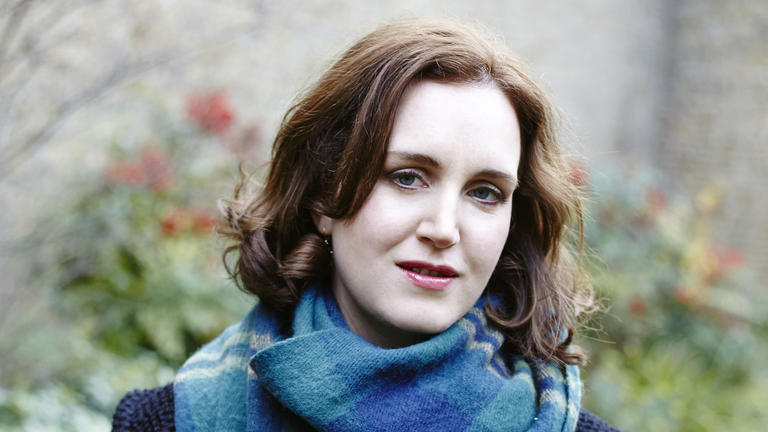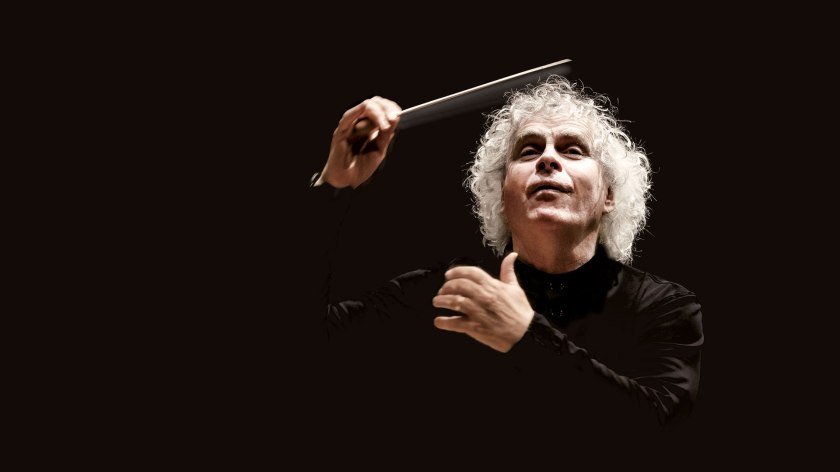
The Cardinall’s Musick at St John’s Square review ****

The Cardinall’s Musick // Andrew Marwood - London Wednesday 5

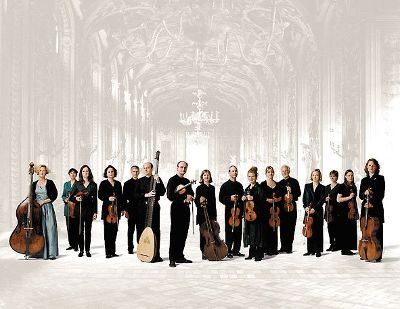
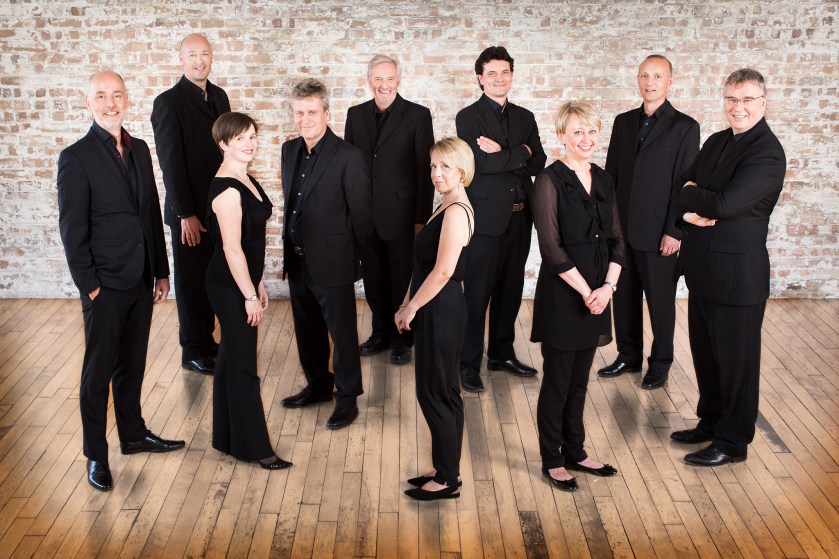
The Cardinall’s Musick, War and Peace

St John’s Smith Square, 19th November 2017

  • William Byrd – Kyrie from Mass for five voices
  • William Byrd – Ad Dominum cum tribularer
  • Benjamin Britten – Advance Democracy
  • James MacMillan – When you see the millions of the mouthless dead
  • Orlando Gibbons – O Lord in thy wrath
  • James MacMillan – A Child’s prayer
  • William Byrd – Agnus Dei from Mass for five voices
  • William Byrd – Kyrie from Mass for four voices
  • Philippe de Monte – Super flumina Babylonis
  • William Byrd – Quomodo cantabimus
  • James MacMillan – Emitte lucem tuam
  • Arvo Pärt – Da pacem
  • James MacMillan – Christus vincit
  • William Byrd – Agnus Dei from Mass for four voices
  • William Byrd – Peccavi super numerum

Sitting in Thomas Archer’s fine Baroque masterpiece church, rapt audience, listening to one of the UK’s finest ensemble interpreters of C16 and C17 British vocal music, here singing a diverse set of texts from composers past and present framed by extracts from William Byrd’s finest works, the Masses for four and five voices. And all to remember the fallen of past conflicts.

The Britten piece is packed with drama and I see nothing wrong with the pungent warning against Fascism in the text. As ever with the James MacMillan’s work the directness and invention wins you over but I have to say A child’s prayer, written in memory of the victims of Dunblane, pulls you right up with its repeated dirge of “Welcome”. Even by Part’s standards Da pacem is sparse but still so powerful. The biggest surprise of this excellent evening however was the Philippe de Monte motet which apparently stuck a chord with the nominally recusant Byrd. And the concluding five part Byrd motet, Peccavi super mumerum, which was new to me, left me pinned to my seat.

Don’t go through your life without William Byrd. I should probably stop there. So I will.

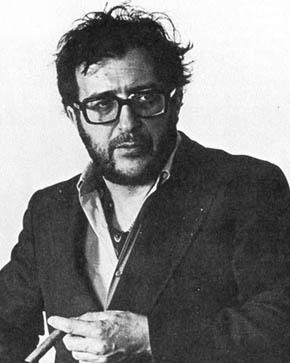
Luciano Berio: London Sinfonietta at Kings Place review *****

luciano_berio

Luciano Berio: Theatre of the World

London Sinfonietta, Kings Place Choir, Jonathan Cross (presenter), John Woolrich (curator)

Kings Place, 4th November

  • Lucy Schaufer – mezzo-soprano
    Michael Cox – flute
    Darragh Morgan – violin
    Paul Silverthorne – viola
    Timothy Lines – clarinet
    Lucy Wakeford – harp
  • Young violinists from Waltham Forest Music Service and the Kurumba Youth Orchestra
    London Sinfonietta

Luciano Berio

  • Lepi Yuro
  • E si fussi pisci for solo viola and for choir
  • Duetti: Aldo
  • Naturale
  • Duetti: Various
  • Divertimento
  • Chamber Music for clarinet, cello, harp and mezzo-soprano
  • Sequenza II for harp
  • Autre fois
  • Lied for clarinet
  • Air arr John Woolrich
  • Berceuse for Gyorgy Kurtag
  • Sequenza I for flute
  • Musica Leggera
  • O King
  • Chants Parallelles

Many years ago, maybe 30 or so, I heard a piece by Luciano Berio in a mixed programme at the Barbican. The ticket was free, courtesy of FF, and I cannot, for the life of me, remember the other pieces, the performers or the name of the Berio work. But I remember being completely blown away by the music, making a firm mental note that it was by Berio and that I should explore his music further.

Of course I didn’t. Modern classical music was just too tricky to grasp and I had a life to get on with. But there must have been the germ of something there. Now that I am older, and maybe wiser, I am beginning to understand that this was not a one-off novelty experience. There was something about Berio’s music that had left a mark. There seem to a handful of other modernist classical composers who similarly create a connection for me and I am still working my way through other candidates. Outside of the minimalists and a handful of contemporary names, Berio, along with Iannis Xenakis, Gyorgy Ligeti and Krzysztof Penderecki are the chaps that float my boat. There may be more.

So I am actively seeking out performances, live and recorded, of these lads. Heaven knows why they stand out but I think I am drawn to the fact that they all seem to engage with the musical past in some way, they pump up the rhythm, they can create extraordinary sound worlds (if you can’t hum it best to get wowed I find) and they favour dramatic and dynamic contrasts. No doubt if you know what you are talking about when it comes to music you would be able to offer me more comprehensive explanations (feel free to do so – I would be very grateful). There is still a lot of modern and contemporary classical music that leaves me absolutely baffled so there must be something going on in my head with these particular composers.

Here was a marvellous opportunity to enjoy a variety of Berio’s small scale output as part of the Turning Points series at Kings Place curated by British composer John Woolrich with the London Sinfonietta, who excel in modern works and premiered many of Berio’s pieces in the 1970s and 1980s. Now Mr Berio didn’t seem to suffer from any form of “composer’s block”. Prolific doesn’t begin to describe it. He composed for all manner of instrumental forces, including electronics and tape, and was particularly adept with the human voice, as well as strings, piano and flute Their are many large scale works, Coro and Sinfonia are maybe the most well known, but there is also a wide range of chamber and solo pieces which left Mr Woolrich with a serious curating challenge. One which I think he responded to with aplomb.

If there is one thing that characterises Berio’s oeuvre it is the way he incorporates the music of the past into the music of his present (the second half of the C20 to be exact). The references can be direct in terms of source material, (he arranged the work of diverse composers from Monteverdi to Mahler), or indirect in terms of fragments, quotes and styles. He saw this as transcription rather than collage but the effect, for the non-musical listener like me, is like a comfort blanket which anchors the “avant-grade” in the familiar.

Folk music played a large part in his framework and this concert kicked off with Lepi Yuro, a classic Croatian folk song scored here for viola. That was followed by a famous Sicilian folk song, E si fussi pisci, set first for solo viola and then, in its more usual format, for mixed chorus, with some suitably fishy impersonations at its conclusion. This choral arrangement was one of the very last pieces Berio composed. Nothing challenging here at all.

We then moved on to one of Berio’s short 34 duetti (1983) for two violins. These were originally written as teaching pieces to introduce the techniques of contemporary music to students, with one half of the duet given a much higher level of technical difficulty than its partner. Each was dedicated to a performer. composer or musicologist and, through time, they increased in sophistication as Berio took a playful view on the history of violin composition and just what it was possible to do with the instrument. The first piece was dedicated to Aldo Bennici, one of Berio’s favourite champions and a multiple dedicatee. After Naturale we were treated to ten more of the Duetti with Darragh Morgan, the LS’s lead violin, charmingly accompanied by young members of the Waltham Forest Music Service and Kurumba Youth Orchestra. Bartok, Stravinsky, Boulez and Berio’s Italian contemporary and sidekick in his electronic adventures, Bruno Maderna, were all name-checked.

Naturale from 1985 takes a recording of a raw and passionate Sicilian folk singer, Peppino Celano, belting out street vendor cries, (if you get the chance listen to Berio’s Cries of London for six unaccompanied voices which is just amazing), and frames it with an extremely expressive viola playing material transcribed from folk songs as well various percussion effects from marimba, rototoms and tam-tam. It is a extremely affecting and the most substantial piece on show in the programme. 

Next up was Divertimento, an early piece from 1946 (revised in the mid 1980s) composed for string trio, before he went to the US and discovered serialism, and which pays homage to Stravinsky and Bartok. This was followed by the first of the two Sequenzas on show, this being No II for harp with No I for solo flute following later on in the programme. Berio’s 18 Sequenzas are amongst the most well known and performed of his compositions and are staples of the solo repertoire for the instruments they showcase. In each case they exploit, with Berio’s trademark humour and musical knowledge, the full gamut of playing possibility with extended techniques piled up high. Watching Lucky Wakeford thumping the side of her harp or picking up the very highest registers was a joy. Berio wanted to show just what was possible beyond pretty glissando for the harp and he surely does. This was also true for the more commonly encountered Sequenza for flute played by Michael Cox which was another highlight of the evening.

Autre fois from 1971, scored for harp, flute and clarinet, is a miniature subtitled Berceuse Canonique pour Igor Stravinsky, which tells you pretty much everything you need to know about its mood and structure. This was followed by Lied for solo clarinet (here played by Timothy Lines) which, as the title suggests, sounds like a mournful song. The orchestral version of Air dates from 1969 but the following year it was recast for soprano and piano quartet. Our mezzo-soprano for this evening was Lucy Shaufer who was in fine voice. Remember Mr Berio’s works for voice comprise some of the finest contemporary pieces for mezzo-soprano given his muse was the American Cathy Berberian whom he married in 1950 and whose professional partnership extended well beyond their divorce in 1964. 

Air was followed by Berceuse per Gyorgy Kurtag, another short piece written in 1998 and dedicated to the redoubtable Hungarian master of the very small. This was followed by Musica Leggara (1974) for flute, viola and cello, (and I gather a tambourine if required), dedicated to a certain Godfreddo Petrassi, which is a spiky canon and not I think the “light music” of the title. Another joke maybe. The concert ended with  one of Mr Berio’s most famous vocal pieces, O King, written in 1968 for mezzo soprano and here strings and woodwinds. This was later incorporated into Sinfonia, possibly Berio’s most influential work. This was written to commemorate the death of Martin Luther King and, as you might expect, packs a powerful emotional punch as the civil rights leader’s name gradually emerges from the soprano’s voice line, If you could pick one work that gets to the heart of Berio’s music this might be it.

i was, annoyingly unable to stick around for the post concert discussion, (I know this sort of thing smacks of obsessive nerdiness but you can learn a lot), but the insight into Berio from the interviews showing in the other Hall at Kings Place was very welcome. He didn’t sound like he was the easiest chap to get on with but the reminisces did show just how broad were his influences and how much he influenced. His role as a teacher and mentor and his fascination with the business of making music, with sound itself, was also emphasised.

And we got to listen to Chants Paralleles, one of his ground-breaking electronic works from 1975. Now a lot of this sort of thing is just so much electronic bubble and squeak in my very limited experience but once again, somehow, Berio makes it vital and intriguing.

There you have it. I am a fan. Give him a whirl. You never know you might like it

And hats off to Kings Place for these Turning Points events. There is a bit of cheesy novelty involved in some of them but this can be overlooked given the learning on offer. The concert on 24th March 2018, from the London Sinfonietta again, which brings together some classic chamber works from the early C20, and links this to space-time and Einstein, (if every playwright on the London stage seems to be intent on shoehorning in brain-bending science, why not music?), looks interesting. As does the OAE’s contrasting of Haydn’s first and last symphonies on the 12th May.

I don’t suppose the bigwigs at the Wigmore Hall are quaking in their boots but Kings Place has emerged as a worthy foil to the grand old dame of Wigmore Street.



Australian Chamber Orchestra at the Royal Festival Hall review ****

dynamic-b98b42fc-d3b2-53c9-ba00-88eac54e2b7f

Australian Chamber Orchestra, Richard Tognetti (director), Pierre-Laurent Aimard (piano)

Royal Festival Hall, 3rd November 2017

  • Bach The Art of Fugue Contrapunctus 1 to 4
  • Mozart Piano Concerto 15
  • Shostakovich Two Pieces for String Octet
  • Tchaikovsky Souvenir de Florence

There is something truly thrilling about watching a group of string players, some standing, going hell for leather, as one, in a piece written exactly for them. Not to decry the full blown symphonic experience or the intimacy of the quartet but this is a special treat. Normally I see (and hear) this as part of a Baroque programme, normally Italian, or maybe a spot of Bach. Here we had a powerful modern ensemble.

Now we, for I was accompanied by the discerning ear and brain of Mrs TFP, that the wide expanse of the Festival Hall might swallow up the band but we needn’t have worried, as even from our perch astern, the sound was splendid. What was something of a shame is that the Hall was barely half full, a real shame since the ACO under Richard Tognetti, are world class. It was not as if the programme was challenging in any way. Even in the repertoire that we found less appealing, (I favoured the Shostakovich, Mrs TFP the Mozart), namely the Tchaikovsky, the finesse and control of the ACO was astounding. In those passages in the Shostakovich and Tchaikovsky which called for the strings to come together the unanimity of sound and movement (bows moving exactly in unison) was uncanny. Like one instrument.

Now I have heard the Art of Fugue performed by harpsichord, piano, string quartet and viol consort. All different, all fascinating as the simple theme is worked through with increasing complexity across the 13 completed, and 1 unfinished, fugues and, sometimes, the 4 canons. There is probably someone out there who has had a crack at Bach’s masterpiece on the stylophone. (I’d paid good money to see that). I gather that Richard Tognetti, who has led the ACO since 1990 (that presumably explains the discipline of playing on show), can sometimes get a little carried away with his arrangements. Not here. Now admittedly the first 4 of the contrapunctus are easy for even my ears to follow, as the meticulous theme is set out in the first, the dotted rhythm added in the second, turned upside down and filled out in the third and expanded and “sped up” in the fourth (here through the use of pizzicato). So I am not sure how much further they could go with this work, even with their technical mastery, but this was very interesting and flawlessly delivered.

I hate to admit it but the Mozart was beautiful. I don’t know the 15th Piano Concerto but I am well aware of Pierre-Laurent Aimard’s qualities, last heard by me in a majestic Emperor Concerto under Essa Pekka Salonen. You can hear how young Wolfgang, (well not so young by the time he wrote this), created the piano concerto form we know and, usually, love today. There is some lovely woodwind action, lots of sublime tunes and some fiendish piano playing, but all wrapped up in a charming bow. Once again the playing of orchestra and soloist was technically precise, but with no lack of emotion.

Now my prime reason for booking this concert, other than the reputation of the orchestra, was the Shostakovich piece since this, in my experience is rarely performed. Written in 1924, when DSCH was still a student, in memory of his friend Volodiya Kurchavov, there are obvious signs of the composer DSCH would be come. The Prelude is still rooted in the Romantic Russian composers of the late C19 but in the plunging response to the initial theme and with the high accompaniment to the second theme there is more modernity. The Scherzo second piece could easily have dropped out of a DSCH symphony from twenty years later. Sardonic, ghostly, then a comedy march, with all that thrilling dissonance.. A joy to hear and brilliantly executed by the eight musicians.

The Tchaikovsky was the (good) surprise of the evening for here Mr Tognetti’s arrangement of this sextet, for all his strings, really showed just how extraordinary their playing is. Don’t get me wrong, there are still plenty of passages in this near 40 minute piece, that annoy me intensely, it’s all just too show pony, but I did get sucked in I admit. Not sure it is the same Florence that I know and love but all that lushness and heart tugging yearning is hard to fight. And to be fair the ACO’s muscular approach dials down the sentimentality (though not the pony).

There isn’t much about Aussies that makes me jealous (actually that’s a lie, there is) but this orchestra is definitely one of them. I will add them to my list of must see orchestras/ensembles when they come to London alongside the Concertgebouw, Bavarian RSO, Leipzig Gewandhaus, Staatskapelles Berlin and Dresden, Chamber Orchestra of Europe, Spira Mirabliis, Ensemble Intercomtemporain, Orchestre Revolutionnaire et Romantique, Akademie fur Alte Musik Berlin, Les Arts Florissants, Freiburg Baroque, Europa Galante, Budapest Festival Orchestra, Mahler Chamber Orchestra and, vain hope, Lucerne Festival Orchestra. Mind you with the LSO under Rattle we now have the best in the world, fact.


Beethoven and Shostakovich: LPO at the Royal Festival Hall review ***

barnatan-1-gallery

London Philharmonic Orchestra, Andres Orozco-Estrada, Inon Barnatan

Royal Festival Hall, 27th October 2017

  • Beethoven – Piano Concerto No 5 “Emperor”
  • Shostakovich – Symphony No 7 “Leningrad”

Off to the Festival Hall for a couple of big beasts of the repertoire (or at least the repertoire I like). Yet I have to say that, in both cases, the interpretations were a little too polite and not quite the emotional body slams they can and should be.

This was the first time I had heard the LPO under the baton of guest conductor Andres Orozco-Estrada and the first time I had heard soloist Inon Barnatan. There is no point fiddling about in the first movement of the Emperor. Beethoven cuts to the chase pretty quick with a marchy rhythm with a little melodic twist and the two note theme which gets played with in the development. It is all pomp and show and Mr Barnatan with his bright expressive playing had the measure of the beast. The adagio and dancey rondo allegro require a greater connection with the orchestra, notably woodwinds, which was satisfactorily wrought but without real fireworks for me. Still much to admire.

On to the Shostakovich. Now even by DS’s “tombstone” symphony standards this is an absolute monster. You all know the story of its genesis. Written as the Nazi forces encircled the city, with DS pitching in as a fireman, premiered in Kuibyshev in March 1942, score smuggled out for performance in London and then New York, and apparently defiant testament to the heroism of the Soviet people, this is music as history. I know that there is a case for this to be a “requiem” for those who died at the hands of their own Government as well as the invader. But to me it sounds like a straight programmatic account of the war in the East with the ominous drum roll of the first movement giving way to the ghostly dance of the scherzo, the extended despair of the slow movement and the victory march of the finale (albeit tinged with pain for all those lost to the carnage).

Now it does go on a bit. It is easy enough to build tension in the first movement with the trite rat a tat tat of the side drum building to a climactic racket and the scherzo does its stuff as all DS’s scherzos do. But keeping the whole edifice alive through the outer parts of the third movement and first half of the final movement (both clock in at 20 minutes) is tricky and needs a bit of sludge and shaken up tempi I reckon. Percussion, brass and woodwind ticked the boxes but the strings were just a bit too Mahlerian for me.

Overall then I had hoped for a little bit more. Any rendition of the 7th is going to have some, shall we say, opportunities for lapses of concentration, and maybe I needed to try harder, but I have heard better. Mind you the young fella next to me was even more underwhelmed. Having bragged to his mates/colleagues before the piece, and during the inordinately long pause/hubbub after the first movement, he promptly dropped off until the applause kicked in. Maybe not the best choice after a long day at work but hopefully he caught up on his zzzz’s.


“Italy in England”, Academy of Ancient Music at Milton Court review ****

mi0002869560

Academy of Ancient Music, Bojan Cicic (director and violin), Frank de Bruine (oboe)

Italy in England: When Handel Met Corelli, Milton Court Concert Hall, 19th October 2017

  • Corelli – Concerto Grosso in D major Op. 6 No. 4
  • Handel – Concerto for Oboe No. 3 in G minor
  • Geminiani – Concerto Grosso Op. 5 No. 3 (after Corelli)
  • Sammartini – Sinfonia in G major
  • Avison – Concerto Grosso in D minor No 3 ‘The garden of harmony’ (after Scarlatti)
  • Sammartini – Concerto for Oboe in E flat major
  • Handel – Concerto Grosso Op. 6 No. 5

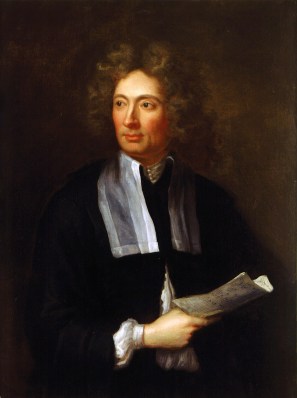
We don’t know too much about Arcangelo Corelli (1653-1713). From the late 1670’s through to his death though he was a big noise in Rome, heralding a great leap forward in violin playing and an instrumental (ha ha) influence on the sonata and concerto form. Unless you are a Baroque nutjob, (there are more of them than you might think), you may only be peripherally aware of him. Yet you will certainly have heard snatches of his most famous composition the Op 6 12 Concerto grossi. Odds are if you hear Baroque music on a telly or film soundtrack, (and it isn’t Vivaldi Four Seasons or a blast of Handel), then it will be Corelli.

If you are just an occasional dipper-in to the Baroque canon, or just fancy some nice background stuff, get your hands on a recording of his Op 6. You won’t regret it. Here he is. Poodle wig and all. Fine looking fellow.

arcangelo_corelli2c_portrait_by_hugh_howard_28169729

By the late C17 Italy was the bees knees for all things musical, (as it had been in art for a couple of centuries), albeit with stiff competition from the French. Europe was stuffed with on trend Italian musicians and performers. Printed music was now ubiquitous assuming you mixed in the right circles. This concert from the consistently brilliant Academy of Ancient Music under its new(ish) leader Bojan Cicic sought to show how the the Italian Concerto grosso form, perfected by Corelli, and here his compatriots Geminiani and the Sammartini brothers, influenced composers in England, especially the mighty GF Handel. Both Geminiani and the elder Sammartini, Giuseppe, an oboist, ended up living in London, jus as Handel did. Handel had travelled to Italy from 1706 through to 1710  to learn from both Corelli and the other great master (of the keyboard especially) Scarlatti.

The Concerto grosso, as its probably not too complicated to surmise, is a piece of music where a small group of soloists, maybe a couple of violins and another instrument, called the concertino, pass the ideas between themselves and a larger orchestra, the ripieno. Simples. Mind you this is the Baroque so the orchestra is still pretty tiny by later standards. It is the forerunner of the single instrument concerto with orchestra we see today and which developed in the later Classical period. Vivaldi set the ball rolling with his acres of beautiful single violin (and other single instrument) concerti though the musical patterns are similar to his mates elsewhere in Italy.

Here, in addition to the violin led concerti on show from Corelli himself (the very jolly No 4), Geminiani, based on material from one of Corelli’s works, and Handel (No 5 from his own Op 6), we also had the same from Charles Avison, new to me, but I gather a big favourite of the cogniscenti. This was based on some of Scarlatti’s harpsichord sonatas and was really absorbing. The oboe of Frank de Bruine joined the AAM in two other concerti and we had a sinfonia from the younger Sammartini Giovanni, a form that would develop further into the Classical period. Like the Avison I really enjoyed this and will investigate further.

Now I deft anyone now to get perked up by these pieces. They are dramatic, with vibrant rhythms, the typical motoric underpinning from cello and double bass, the continuo underpinning of the harpsichord, and the immediately catchy tunes from the other strings. It is dead easy to follow, the movements are short and sweet and the tempi unwaveringly fast-slow-fast.

The playing of the experienced AAM was pretty much faultless. We even had a moment of high drama (sort of) as Frank de Bruine had to simultaneously play and re-order his music in the Sammartini piece. I could listen to hours of this stuff, especially in this hall. Can’t wait for the next fix.

The Judas Passion at St John’s Smith Square review ***

sally_beamish_288x257

Orchestra of the Age of the Enlightenment, Nicholas McGegan, Brenden Gunnell, Roderick Williams, Mary Bevan, Choir of the OAE

St John’s Smith Square, 25th September 2017

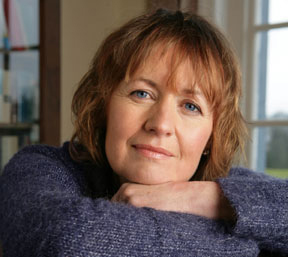
The Judas Passion is a new work commissioned by the OAE and the Philharmonia Baroque Orchestra San Francisco, and was composed by Sally Beamish with a libretto by David Harsent. Now I had not heard any of Ms Beamish’s works before, though she is an eminent modern British composer, but this felt like an “event”, so I decided that my presence lurking in the back was required. The convenience of an hour long piece starting at 7pm was also an attraction.

Now new Passions to match the heights reached by JS Bach are few on the ground. Commissions of liturgal works are perforce limited and few composers are likely to have the desire or the belief to engage in such an exercise. Which is a shame because when they do, as with Penderecki’s St Luke Passion or, better still, Part’s Passio, it can bring forth transcendent music. And this from a committed atheist.

The Judas Passion was doubly interesting because of the way librettist David Harsent (a poet who has written libretto’s for Sir Harrison Birtwhistle’s major operas) chose to set out the Passion story. It is told from Judas’s perspective and shows him not as the customary dastardly villain but as a man who is chosen, and forgiven, by Christ to act as he did. The simple, but very affecting libretto, explores this idea with single parts for Judas (American tenor Brendan Gunnell), Jesus (baritone Roderick WIlliams) and Mary Magdalene (soprano Mary Bevan) who acts as a sort of narrator. The disciples create the chorus as well as a part for an interchangeable God/Devil to emphasise the duality of Judas’s motives.

All round the singing was very fine, but I was particularly struck by Mary Bevan who lent a melancholy to her lines which was fitting. She is playing the lead in Coraline, Mark-Antony Turnage’s new opera, which is on my to see list. The score is terse which fits the drama and largely taken at a moderate pace with a couple of more energetic episodes. The tone is deliberately Baroque (with harpsichord and lute alongside strings, flutes, natural horns and occasional trumpets) with many canonic and fugal nods to JS Bach and a barrage of more or less interesting percussive effects. The singers were lightly choreographed by stage director Peter Thomson (with not a lot of stage to play with) which definitely heightened the performance for me.

I am not sure how the score would stand up as a recording or in a large concert hall. However, as a chamber “opera”, redolent of Britten’s Church Parables, with costume and movement, I think it would be extremely effective. Words, music and action together tell an involving story, with a bold perspective which draws on more than just the Biblical gospels. A true Passion I suppose.

Fretwork at the Wigmore Hall review ****

gothic-web-940x600

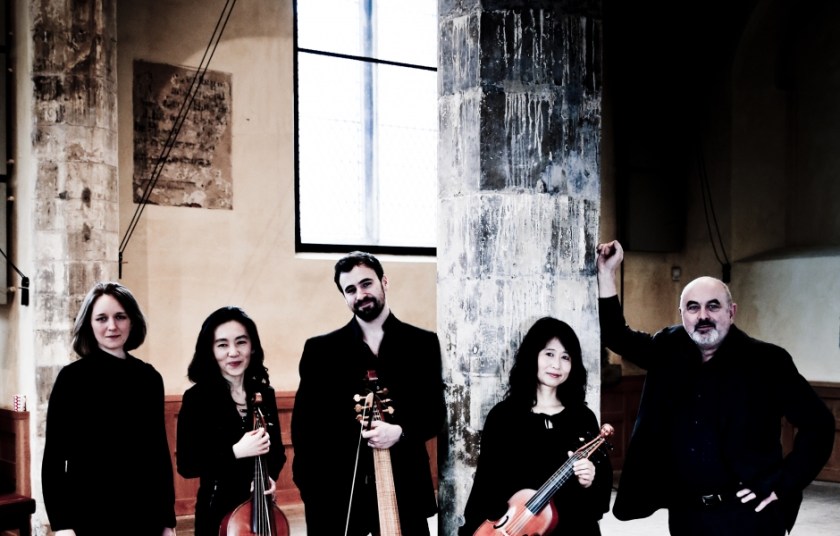
Fretwork (Asako Morikawa, Joanna Levine, Sam Stadlen, Emily Ashton, Richard Boothby)

Wigmore Hall, 18th September 2017

JS Bach – The Art of Fugue – Contrapunctus I-XI, XIV

Fretwork are one of those marvellous groups of dedicated adventurers who have brought Early, Renaissance and Baroque music back to life. There was a time when vast swathes of this music was forgotten, unperformed and left to rot. But just as the Modern swept away all that dreadful artistic junk from the Late C18 and C19 (Western art music was a bit more fortunate thanks to Haydn, Mozart and Beethoven) so an ever increasing band of scholars and, from the middle of the last century, performers (first amateur and then professional), revived and extended our knowledge of this music. And at the same time the beat came back.

In fact it seems to me that there are two types of Western classical music listener: those who revel in the bombastic pretensions of the Romantics , where a wall is erected between listener and performers, and those of us who prefer to get our pleasures from “simpler” structures, music with discernible rhythm and pulse.

We are now probably three generations into the rise of Early Music and “period performance”, which has a healthy following in the concert hall and in recordings. All this love and scholarship has also changed the way music is performed and understood across the “classical” spectrum. In contrast to jazz, blues and modern “popular” music, composition and performance are separated in “classical” music. Context and history matter. The how, what, why and when of performance and composition matter. The renaissance of the musical Renaissance has generated a vital third strand in “classical” music, alongside the veneration of the sacred Romantic texts performed by “gifted” performers and the challenge to the layman of “in yer face” contemporary classical.

So thanks to all those who devote their education and lives to bringing this joy and passing it on to the next generation, rather than selling their skills to an investment bank. And to those composers who are writing for these ensembles.

Fretwork is a viol consort founded in 1985 and, as I understand it, only Richard Boothby remains of the original line-up. Their focus is normally on music of a somewhat earlier vintage than JSB (though they will and do extend the viol sound into unexpected places). Indeed JSB didn’t stop tinkering with the Art of Fugue until just before he departed this world. For those that don’t know it, JSB takes a fairly straightforward (but eminently adaptable) theme in D Minor and then sets off counterpointing the bejesus out of it. Fugue, contrapunctus, counterpoint – it all means the same thing. Take the tune in one place, then get everyone else to pick it up whilst messing around with it, then mesh it all together into a satisfying whole. For some Bach’s music is incredibly fiddly, like the architecture of the High Baroque which leaves me cold. But, whilst I hear the fiddly, I also hear the rhythmic whole. And I think lots of other people do. Simple and complex simultaneously. That’s the genius.

Now the Art of Fugue can be played in any number of ways by any number of instruments (though a single harpsichord I gather is the most likely inspiration). Clever old JSB. Never seen or heard modern strings or a modern piano but wrote perfectly for them. By the time it was written the viol was on the way out superseded by the precursors of the stringed family we see today. So it is unlikely the old fella would have expected it to be played by this combination. Flat backs, sloped shoulders, different shaped holes, more strings, different bowing techniques and, importantly frets (hence the band’s name), all conjure up a very different sound-world to a modern string quartet say.

I loved it. Turns out this is a revelatory way to follow all the counterpoint. The viols create alternatively 3 or 4, and occasionally 5 lines, which can all be followed but without detracting from the overall architecture. Whilst maybe less transcendent than a single keyboard version, (played say by Glen Gould, grunts and all), it was probably superior to the string quartet interpretations I have heard. Best of all was the final unfinished fugue, No XIV, with its musical BACH signature. There is a lot of debate apparently around why the old boy didn’t finish it (he started it well before the onset of blindness and anyway could have had an assistant complete it). So usually once the three themes that make it up, including the BACH theme, are introduced and developed it just stops and trails off as written. Here Mr Boothby has, with the ideas of a clearly very bright scholar, finished it off. Whilst I have no idea of the theory that backs it up it made for a very satisfactory ending to an excellent recital.

Fretwork. Check ’em out.

Britten Sinfonia at Milton Court review *****

helen20grime20option202_0

Britten Sinfonia, Helen Grime

This is Rattle, Milton Court Hall, 20th September 2017

  • Purcell – Fantasia Upon One Note
  • Oliver Knussen, George Benjamin, Colin Matthews – A Purcell Garland
  • Helen Grime – Into the Faded Air
  • Oliver Knussen – Cantata
  • Helen Grime – A Cold Spring
  • Thomas Ades – Court Studies from “The Tempest”
  • Benjamin Britten – Sinfonietta
  • Igor Stravinsky – Dumbarton Oaks Concerto

Composer Helen Grime must be in seventh heaven having been chosen by Sir Simon Rattle to curate this concert and to open his first concert as Music Director of the LSO with her Fanfare. I had not heard any of her works before but on the strength of these two pieces, particularly the string sextet, Into the Faded Air, Sir Simon’s faith in her is more than justified. The other curators, Sir Harrison Birtwhistle, Oliver Knussen and Thomas Ades, drew their programmes from a similar creative wellspring, though Sir Harrison’s was suitably idiosyncratic, but Ms Grime’s offering held the most interest for me. The four composers span the decades of contemporary British classical music and show clear influences, one upon another. I note Helen Grime is also the resident composer at the Wigmore Hall.

The Purcell is, unsurprisingly, an imaginative piece, with one of the 5 parts held in middle C throughout (hello Terry Riley), allegedly so that Charles II could join in. A Purcell Garland was commissioned by the Aldeburgh Festival in 1995 for his tercentenary, with three British masters arranging and invigorating Purcell fantasias for a mixed chamber group. Oliver Knussen’s fantasia directly echoes Purcell’s as the note playfully shifts around the ensemble, George Benjamin’s piece uses a celeste alongside clarinet and the two strings to create haunting textures and Colin Matthews takes an unfinished fantasia and extends it, mixing modern and baroque to great effect (this was my favourite sequence, Mr Matthews being especially adept with this instrumental combination).

We then had Helen Grime’s string sextet Into the Faded Air from 2007, made up of a short pair of opposing trios in the first movement, followed by a slow viola duet, a spiky, pizzicato driven third movement and a mournful chorale to conclude. Shades of Stravinsky certainly and Bartok for me. I really liked this piece.

I was less persuaded by Knussen’s “cantata” for solo oboe which has ten very short linked episodes searching for the high C resolution. Helen Grime’s A Cold Spring is another immediately appealing piece with a dance for a pair of clarinets, followed by an introspective horn “concerto”, and ending with a Stravinskian climax for the whole group. The Thomas Ades Studies take from material from his opera The Tempest and are scored for clarinet, violin, cello and piano. In just 8 minutes it sketches out the four shipwrecked aristos from the play and is brimful of energy and contrasts. Now I love Thomas Ades work as composer and performer and this was no exception.

Britten’s Sinfonietta for chamber orchestra from 1932 was his first numbered work, composed in just 3 weeks when he was a student at the RCM. I had forgotten just how clever this was – like a who’s who of composers from the previous three decades – but still recognisably his work. Whilst the first two movements have a pastoral, English feel about them to my ears, the final movement Tarantello bears the closest resemblance to Stravinsky. And Stravinsky’s “Dumbarton Oaks” Concerto in E-flat is where we ended. This was commissioned in 1939, just before Stravinsky fled to the US, for a certain Mrs Bliss, and blissful she must have been on receiving this. It takes Brandenburg 3 as a jumping off point and then frankly matches the genius of Bach. Igor Stravinsky. What a clever fellow. Still casting a long shadow over all art music today.

As usual the Britten Sinfonia, under their remarkable leader Jacqueline Shave, were on top form. They are utterly compelling under Thomas Ades in his ongoing Beethoven cycle (please try to see/hear this), but it is in contemporary music where they are without peers in this country. It is not easy to make this music immediately accessible, even to those of us laypeople that want to hear it, but the Britten Sinfonia do so effortlessly. Bravo.

Stravinsky from Rattle and the LSO at the Barbican review *****

orig_59ae8c22d00135-63398832

London Symphony Orchestra, Sir Simon Rattle

Barbican Hall, 24th September 2017

  • Igor Stravinsky – The Firebird (original ballet)
  • Igor Stravinsky – Petrushka (1947 version)
  • Igor Stravinsky – The Rite of Spring

So here is is. The second coming. Sir Simon Rattle kicks off his tenure at the helm of the LSO. I missed the opening concert of British composers (annoying) and the Damnation of Faust (no interest) but this was always going to be a must see so I booked as soon as it opened.

Now it has been perfectly possible to see Sir Simon in London with the LSO, (for example, a Mahler 6 and the Ligeti Grande Macabre earlier this year), and other bands, (a Haydn Seasons and the late Mozart symphonies both with the OAE stick in the memory), but this was the first opportunity to gauge what will be possible for orchestra and conductor to achieve now they have quality together.

So it was an expectant mood in the hall as the Scouse Gandalf took to the podium (no need for scores – it is all in his head), after a few words with a clearly pleased as punch Lord Mayor. And then all hell broke loose. This was simply breathtaking. For long periods I was sitting stock still (and I am a terrible fidgeter) either open-mouthed in astonishment or grinning to myself like the proverbial cat from Cheshire.

Now I like the boy Stravinsky. And the more I get to grips with his compositions the more pleasure (and intellectual stimulation) I get. But it is hard to beat these three ballet scores.

Sir Simon chose to deliver the complete Firebird ballet. This means there is more of the still late Romantic colouration and chromaticism before we get to the Kashchei mad disco bits which presage The Rite of Spring. This means the debt to mentor Rimsky-Korsakov and the stench of Imperial Russia (give ’em fairy tales instead of food) hangs heavy in the air. Tchaikovsky and the rest of the Five are also on show. As usual Sir Simon was not interested in galloping through the first half of the exotic first tableau, to make sure every ounce of orchestral magic was received and understood by the audience. Which meant that by the time we got to the stunning apotheosis we were begging for release. Oooh. You just knew Igor, after this first lucky break, was going to take this to the next level.

Which is what he did. For Petrushka we got the 1947 streamlining though this is the standard nowadays. Here we start to get the big repeated rhythms and motifs which are what took the world of Western classical music by the scruff of the neck and turned it into a new direction. The late C19 structure is sort of still visible but in a kind of ironic way. The thrust towards Modernism and the age of machines is starting to take over though with rapid changes of direction, repetitions, major keys piled up and loads of banging tunes. And at the centre was the LSO’s own pianist master, Philip Moore.

A well earned break and we got to Sir Simon’s Rite of Spring. What a racket. In a brilliant way. The orchestra throughout was using every available inch of the Barbican stage with 60 odd strings on show and more brass than Yorkshire. And in the giant rhythmic climaxes they all got a look in. My ears were pounding and I was at the back of the circle. Heaven knows what it must have been like for the captives at the front of the stage. I have heard some marvellous Rite of Springs, (in my view, I cannot vouch for the ear of the professional), but this topped the lot. You can see why everyone got so enervated at the first performance in 1913. I was tempted to jump out of my seat at the end of Dance of the Earth and yell “go on my son”.

Now the LSO is top notch. We know that. Best in the world. Maybe. Best in my world. Definitely. But I have never heard them sound like this. Under Valery Gergiev, sometimes with interpretations that seem to be dialled in a couple of hours before a concert, they looked, and sounded, frustrated. Not here. They were having a blast. I have never seen an orchestra looking so happy. Every single section sounded faultless to me bar a couple of overly-enthusiastic brass fanfares. Yet is was the woodwind which stood out. And when the strings where belting out as one, like some giant single instrument, or capturing a pianissimo so quiet time was suspended, it just felt good to be alive.

So all in all a genuinely memorable evening. I cannot wait for the next from this marriage made in musical heaven. Unfortunately a fair slice of Sir Simon’s standard repertoire is not entirely to my taste but there should be enough from the C20 and contemporary commissions and from Classical masters. Indeed in January he will take the LSO back to the Baroque in part (Handel and Rameau) alongside Mahler’s Ruckert Lieder (with the lady wife singing – his, not mine) and Schubert’s Unfinished Symphony. There is also a very attractive C20 programme with Janacek, Carter, Berg’s Violin Concerto, with the marvellous Isabelle Faust, and Bartok’s Concerto for Orchestra. And there is plenty of Mahler, as well as Tippet, Bernstein and Strauss for those attuned to that sort of thing. Bring it on.

London Philharmonic Orchestra at the Royal Albert Hall review ****

dmitri-shostakovich-1233767711-editorial-long-form-0

London Philharmonic Orchestra, Vladimir Jurowski, Alina Ibragimova (violin)

Prom 71, Royal Albert Hall, 6th September 2017

  • Igor Stravinsky – Funeral Song,
  • Igor Stravinsky – Song of the Volga Boatmen,
  • Sergei Prokofiev – Violin Concert No 1 in D Major
  • Benjamin Britten – Russian Funeral
  • Dmitri Shostakovich – Symphony No 11 in G Minor “the Year 1905”

What with one thing and another, but mostly my stupidity at missing the booking opening, I only made it to one RAH Prom this year and missed out on two or three that I really wanted to hear/see. Never mind BBC Radio 3 came to the rescue with their recordings. BTW I WILL PERSONALLY KICK SHIT OUT OF ANY POLITICIAN WHO HAS THE TEMERITY TO FUCK ABOUT WITH THE BBC. I can’t move quickly but I am a big lad so you don’t want to get in my way. Understood. Just joking. I think.

Moving swiftly on. The main reason for picking this Prom was the opportunity to hear the LPO with personal favourites Vladimir Jurowski (a man who seems to conduct with his shoulders and head as much as his hands and eyes, riveting from my choir perch), and the meticulous violinist Alina Ibragimova, having a crack at some hardcore C20 Russian repertoire. And specifically Shostakovich 11 which gets an outing now and then but not regularly enough to miss. Having said that I still can’t decide how much I like it.

Before the main event we had some early works from clever clogs Stravinsky. The score for Funeral Song, Op 5, was only recently rediscovered and is a memorial to teacher and mentor Rimsky-Korsakov. The latter’s influences are fairly clear, (we must thank N R-K for Stravinsky’s mastery of orchestral colours), but, for me,, the louder voice was Wagner, not a good thing to my ears. This was followed by Stravinsky’s arrangement of the Song of the Volga Boatmen, which is a rousing, if very short, ditty which served as the original Russian anthem post 1917 Revolution.

I don’t know if I will ever “get” Prokofiev. I have heard some convincing performances of his works recently, the Quintet and Martha Argerich playing the Piano Concerto No 3 (mind you I reckon Martha could leave you open mouthed in admiration playing Happy Birthday on the spoons). And the piano sonatas I remember seeing performed have been interesting. But there may be too many ideas in the music for me. My ears and brain crave repetition and structure. There is enough rhythm in Prokofiev but there is a lot of flitting about. So I may not be up to it. Still I will keep trying. This Violin Concerto created the same confusion for me. Ms Ibragimova puts line and detail into her performances and really convinces. There were passages of real interest, even when it all got a bit too lyrical, and there were such clever twists and one blinding fast passage, but once again it was just too “bitty”. Sorry. Moreover, whilst I was close enough to hear the violin clearly even with my ropey ears, I suspect the gallery punters might have been working a bit harder.

In contrast to Prokofiev Britten is dead easy for me to understand. Russian Funeral is the only piece he wrote for brass band and it is an open, Mahlerian march bookending a disquieting scherzo. The march is taken from a Russian funeral song (which appears again in the DSCH symphony), hence the title, and the whole thing reflects Britten’s anti-war stance. I loved it.

Now the main event. It is a heck of a slab. An unbroken hour, four movements, slow, faster, slow, fastish. It is based on four revolutionary songs and takes the events of the failed 1905 uprising. The programme is pretty clear, The Palace Square in winter as the revolutionaries march to petition the Tsar. The fighting starts, the Imperial Guard opens fire and the assembly is brutally quashed. We then mourn the thousand dead and finally look forward to when the proletariat will succeed in throwing off the yoke of their oppressors. Now there are some absolutely belting tunes in all of this, but it is a long, drawn out affair. This is one of the DSCH symphonies that drifts towards the cinematic which is fine except we have no pictures for the eyes so the ears get a bit of an overload. And the contrast between the icy despairing chords of the Adagios and the martial drumming of the Allegro movements is a bit overwrought. As ever with DSCH you can sometimes have too much of a good thing.

Having said that it certainly clears out the passages and conjures up an epic vision of the struggle. There isn’t very much of the sardonic or sarcastic audible here, or if there is, it is well hidden, so I can see why this went down a treat with the big boys in the Party when it was served up in 1957 as part of the 40 year celebrations. DSCH did make a few veiled comments pointing to what wad happened in 1956 in Hungary but it didn’t leap out. But then the old chap never did give much away. From the perspective of the centenary of the Revolution though it does feel a bit odd especially when you know what DSCH delvers when he nails it. Can’t fault the playing though and Mr Jurowski wisely gave as much room as was needed to the expansive phrases. No point rushing this edifice as it isn’t going to make much of a difference. And when needed he and the band turned it up to 11, indeed right at the end when the bells come in, we were treated to a 12 on the Tufnel scale.

When all is said and done, and despite the shortcomings, No 11 is still an extraordinary wall of sound and the LPO nailed it. Thanks lads and lasses.