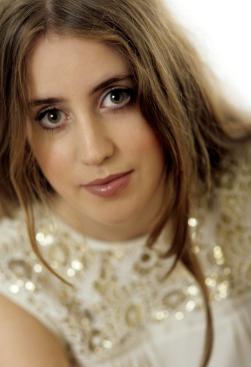
Isabelle Faust and Kristian Bezuidenhout at Wigmore Hall review ****

H.I.F.Biber

Isabelle Faust (violin), Kristian Bezuidenhout (harpsichord)

Wigmore Hall, 9th April 2018

  • JS Bach – Violin Sonatas 4, 5 and 2, BWV 1017, 1018 and 1015,
  • Johan Jacob Froberger Suite No 12 in C minor for harpsichord,
  • Biber – Violin Sonata No 5 in E minor, Mystery Sonatas Passacaglia in G minor “Guardian Angel”

JS Bach tick. Heinrich Ignaz Franz von Biber tick. Not just the Passacaglia from the Mystery Sonatas, which seems to appear on every Baroque violinists concert programmes right now, but one from the “other” 1681 set of sonatas. And then this chap Froberger which also turned into a qualified tick. All from the violin of Isabelle Faust, always a resounding tick, and harpsichord of Kristian Bezuidenhout, likewise.

This partnership has recently recorded the Bach Violin sonatas using some top draw instruments and the reviews are very positive. On the strength of this performance I have bought the CD. I am also signed up, in tandem with MSBD, for the second instalment of the other sonatas at St Luke’s on 16th June. I see there are a few tickets left. Snap ’em up I say.

The first couple of minutes of the opening Sonata No 4 weren’t perfect, harpsichord right hand just a bit forceful compared to left and the violin, but balance was quickly achieved and from there on we, and they, never looked back. These works are not right at the top of the Bach instrumental pile, crowded out by the solo works and the concertos and suites, but, IMHO, there is no reason why they shouldn’t be. And this sublime partnership is making that case convincingly. Son CPE certainly thought they were amongst Dad’s best works, They are not revolutionary in structure adhering to the familiar baroque sonata di chiesa pattern of four slow-fast-slow-fast movements, but they are some of the first to have a fully written out keyboard part rather than a bassline with some indications of harmonies to be filled in above it. This means the right hand can match the melodies of the violin whilst the left hand trots out the bassline. This gives the texture of a trio sonata which is most clearly heard in No 4.

No 4 kicks off with a lilting siciliano, follows with a three line fugue, then an adagio with triplets in the keyboard right hand alongside a dotted violin rhythm, then another fugue with some syncopation and cross-rhythms. No 5 starts with a largo where the violin gradually adds melody to the three part invention of the keyboard, unrelated at first and then conjoined, like a cantata aria apparently. The fast movements are fugues again, the second slow movement, arpeggios from keyboard with double stopping accompaniment from violin. No 2 is strictly 3 part, beginning with another gentle dance imitating the contemporary ‘galant” manner, followed by another fugue which sandwiches some flashy violin, then a canon, then another fugue. Now I confess I am not entirely sure what all this means but once I have recording in hand, or ear, I will try to work it out. That is the fun of art music; you know you like it, you can then spend years working out why you do and what it is.

Now apparently our man Froberger was the leading keyboard composer of the mid C17, born in Stuttgart, and working for 20 years as an organists for the Hapsburg emperors in gilded Vienna, though like all these chaps he got about a bit. Free movement across Europe you see. His compositions unite the Italian, German and French traditions, the French broken style still be based on lute technique (and a bit dull to my ears). This is one of his suites based on dances grouped by key, here C. It begins with an allemande in the form of a lament, then cheers up a bit with gigue, courante and sarabande. Still can’t quite remember the differences but this passed the time pleasantly enough. Seems JJ Froberger was a bit of a noodle forbidding publication of his compositions in his lifetime. The right to be forgotten, though now he must be a wet dream for Baroque keyboard scholars.

In contrast the Biber sonata was, yet again, a revelation. This is part of a set of 8, published in 1681, and is a barnstormer with extreme upper register shrills, very fast runs and bonkers double stopping. The work is continuous starting with a fantasia-like intro, then into an exquisite set of variations over a ground bass, then a show off presto and ending with another beautiful set of variations. Maybe this fellow isn’t quite up there with JSB and Vivaldi but he is in the vicinity and it’s a mystery to me why he isn’t more popular. A CD of this set of sonatas has literally just dropped through the letter box. I’m on it.

Biber didn’t tour much, despite his astounding technique, preferring to publish his ground breaking works for violinists and let the punters work it out for themselves. I like the sound of that. He spent most of his working life in Salzburg, after doing a runner from an employer in Bohemia. I suspect you would be hard pressed to find a bar of chocolate with his mug on it in Salzburg though unlike you know who. He married well and his surviving kids were musically gifted. In addition to the violin pieces apparently he also wrote plenty of large scale sacred music, though I haven’t seen any being performed, maybe they are a bit too labour intensive. I will find out and let you know.

Needless to say Ms Faust’s rendition of this sonata was electric, in atmosphere not technology of course. Biber may have been ahead of his time, until the Italians overtook him, but he wasn’t that advanced. I really hope she programmes more of these solo violin pieces in future and that some promoters will be brave enough to let one of the sublime baroque violinists performing today to have a crack at the Mystery Sonatas in full.
Beethoven and Shostakovich from the LSO at the Barbican review ****

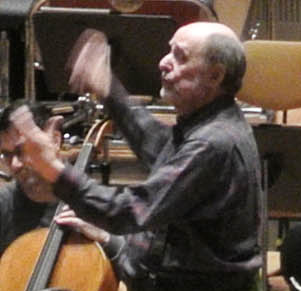
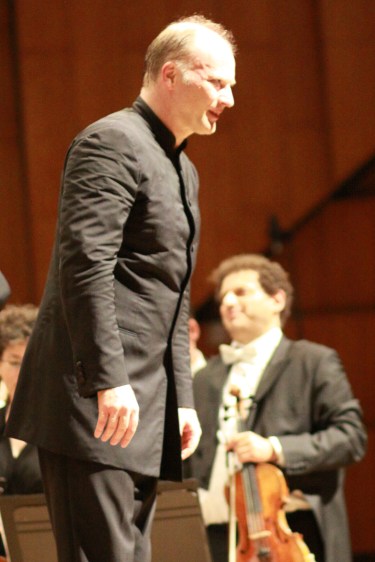
nosedajpg

London Symphony Orchestra, Gianandrea Noseda, Nikolai Lugansky (piano)

Barbican Hall, 8th April 2018

  • Beethoven – Piano Concerto No 4 in G major, Op 58
  • Shostakovich  – Symphony No 8 in C minor, Op 65

I could be imagining it but the LSO seems to be notching up a gear, from its already high level, each time I hear it. You would never get to hear Shostakovich under Sir Simon Rattle’s baton but here we had one of their two Principal Guest Conductors, in the shape of the inestimable Gianandrea Noseda, tackling DSCH’s mighty gloom-fest No 8, and delivering as good a rendition as you are likely to hear. In recent years, if I wanted to hear convincing performances of DSCH symphonies I would probably look elsewhere, to the LPO and Vladimir Jurowski maybe, though the last time I heard them take on No 8, at the Proms in 2015, it wasn’t perfect.

It is all about nailing that epic first movement. I say movement but let’s be honest it is pretty much a symphony in itself. Weighing in at a few minutes short of half an hour, depending on tempi, it winds up, through marches, to an immense tutti, strings blazing, drums rolling, and most of the woodwind and brass involved, before subsiding back to the immense adagio recapitulation of the second theme, with woodwind solos, that DSCH excelled at and which seem to cross all 11 of Russia’s time zones. And, it the conductor and orchestra aren’t careful to establish the line, it can feel like several hours. The tunes themselves aren’t complicated, the key “fate” motif is laid out right at the start, before the two lyrical themes are developed, and it is the fate motif to which orchestra returns before the fabulous cor anglais solo. Time for the LSO’s Christine Pendrill to shine which she did. Her woodwind colleagues also get there time in the sun in the later movements, notably the picccolo of Patricia Moynihan, the bassoon of Rachel Gough and the bass clarinet of Renaud Guy-Rousseau.

Having come out the other end of this movement. DSCH then slaps you, first with one of his textbook sardonic, militarised marches, and then with a moto perpetuo with screams that reeks of the battlefield, (think planes buzzing overhead) and contains the second of the symphonies massive tutti climaxes. The following slow passacaglia movement reworks the fate motif through brass, strings and, memorably, into the bass, before we get some relief in the concluding C major rondo kicked off by the bassoon solo. Even here though we get a repeat of the howling tutti before bass clarinet takes us to some sort of rest with alternate pizzicato and sustaining high strings (the fate motif inverted). As in the first movement, this final allegretto has plenty of action for snare and bass drums and trumpet calls.

DSCH claimed the symphony was, overall, uplifting and life affirming, pointing to the brighter, dancey, folk rhythms in that finale. He must have been taking the p*ss, as so often, given the extreme violence and suffering which characterises the previous movements. This was written over 10 weeks in 1943. Those punters who were expecting a sequel to the story of patriotic resistance apparently laid out in its predecessor, the Leningrad, were sorely disappointed. The Nazis were on the back foot now in Russia but, in retrospect, Dmitry was never going to big up Stalin and the leadership for saving Mother Russia. Its ambiguities are barely concealed, and, when DSCH was once again pilloried for his pessimism in 1948, it was singled out for special criticism.

Yet, for me, all of these middle symphonies wrestle with the same dilemmas. They are just music, so we must be careful not to get sucked too far into the “what did DSCH really mean” cottage industry, but, if we accept that context had an impact then it seems right to believe, that these symphonies, warts and all, are warnings against the depths to which humanity can sink whatever the ideological backdrop. This is not a symphony to set alongside other C minor tragedy to triumph belters, Beethoven 5, Mahler 2, Bruckner 8, it is too brutal overall and the light at the end of the tunnel isn’t bright enough, even with the ocassional tender passages, but I do think it is DCSH’s best, alongside 5 and 10.

Mr Noseda and the LSO are engaged in recording a DSCH symphony cycle. Not sure if this will form part of it but it would be a fitting contribution, assuming the engineers master the Barbican sound. My benchmark recording, as it so often is, is from the maestro Haitink with the Concertgebouw. This performance matched it.

I am afraid I wasn’t as convinced by Nikolai Lugansky’s rendering of Beethoven Fourth Piano Concerto. Mr Lugansky is highly regarded, seen as sympathetic to the music and unshowy, but he is keen on his tinkly rubato, whereas I like my Beethoven direct and muscular. This was too Romantic and insufficiently Classical if you take my meaning. Noseda and the LSO offered up a perfectly apposite support, especially in the strings, but yielded too much to the piano in the second movement, and especially, concluding in the rondo, so it all went a bit arpeggio crazy. Mr Lugansky encored with some Mendelssohn which didn’t help my mood

Still it’s Beethoven and it wasn’t that annoying. And given the quality of the Shostakovich it was a minor irritant. Gianandrea Noseda and the LSO tackle No 10 next. My favourite. Can’t wait.


Laura van der Heijden and Petr Limonov at Wigmore Hall review ***

cello-2820987_1920

Laura van der Heijden (cello), Petr Limonov (piano)

Wigmore Hall, 2nd April 2018

  • Britten – Cello Sonata in C major, Op 65
  • Shostakovich – Cello Sonata in D minor Op 40

21st December 1960. Britten and Shostakovich are sharing a box at the Festival Hall. That’s right the two greatest composers of the twentieth century, well maybe the two greatest after a chap called Stravinsky, are both in a box listening to Mstislav Rostropovich playing Dmitri’s First Cello Concerto. I’d like to have been there. Anyway Mstislav persuades Britten to compose a sonata just for him a year later which, at this concert, is set alongside Shostakovich’s own contribution to the form, written in 1934, as he broke away from his early, modernist days, and, unlike his Cello Concertos, not dedicated to Mr Rostropovich.

The admiration and regard that BB and DSCH had for each other is well known but their musical connections, beyond the broad commitment to tonality, is not always clear. Despite the time between these two works I was struck by how this comparison of the two sonatas pointed up their similarities.

Britten begins with a Dialogo, an exchange of single notes and short phrases between the two instruments, which eventually  reveals two themes, a choppy, pleading line for cello and a soothing rise and fall for piano, developed and recapitulated. Next a jerky scherzo, with cello entirely pizzicato, which keeps running off over the horizon. It could be Bartok, or course, but it could have just as easily come from a mid period DSCH quartet. The central Elegia similarly could have seeped out of one of those interminable Largos in any DSCH symphony. Simple but hugely effective. As for the Marcia which follows, well you might be forgiven for thinking this is a parody of a DSCH parody, as the cello troops haphazardly wobble off in entirely the wrong direction thanks to the incompetent piano general, ending up in no man’s land. Then the final Moto Perpetuo, a classic Britten device, but again redolent of DSCH’s chamber scherzos, if a bit more inventive, with a big tutti flourish at the end.

And guess what. The Shostakovich sonata’s final movement incorporates a very similar moto perpetuo. Let’s not get ahead of ourself though. DSCH begins with a restrained opening, with a tiny bit of irritation, that parlays into about the most lyrical second theme you could imagine from this prickliest of composers. Hard to believe this was written at a time when wife Nina had left him for a bit after he confessed to an affair. (I have often wondered what scientist Nina saw in this acidic, direct, conflicted, alcoholic, man-child obsessive. Beyond his musical genius of course. Still the SO is still with the Tourist, without even the defence of talent, so no accounting for taste).

Anyway there is no evidence of DSCH’s rebellious youth or the cacaphonies that got him deep in the shit with Joe Stalin a couple of years later. (Though remember it took a couple of years before the Politburo woke up to the fact that Lady Macbeth of the Mtensk District was seditious formalism. That’s the problem with authoritarian artistic taste. It’s a bit backward).

Halfway in to this monster first movement, just as we might be tiring of DSCH’s impression of Brahms, he hits us with something more rhythmic and darker with cello pizzicato and some plodding from piano, which keeps recurring.

In the second movement we are back to familiar territory with a scherzo in the form of a brisk, marchy waltz. In the middle some fancy cello glissando and legato melody from piano, before the two reverse. Vintage DSCH. The slow movement is also recognisably DSCH though with a recurring squeaky cello motif like someone pretending to cry. It’s odd hearing DSCH do a kind of faux-Romantic sadness in contrast to those immense journeys of genuine human suffering elsewhere in his work.

Back to D minor in the last movement, where a rondo is alternated with contrasting episodes including the aforementioned moto perpetuo for piano. It’s not heroic, but nor is it sarcastic in tone, and for me is one of DSCH’s finest chamber music moments. It’s inventiveness echoes ….. one Benjamin Britten.

So, with the exception maybe of parts of the first movement in the Shostakovich sonata, two very fine pieces of music. I have recordings of the BB by, natch, Mr Rostropovich and BB himself, and the Shostakovich, a cheapo Naxos by Dmitry Yablonsky and Ekaterina Saranceva. There are both excellent and I fear, quite a bit more involving than the performances of Laura van der Heijden and Petr Limonov. These were considered and accurate but I think I may have been spoilt by the recordings. Anyway, given these are not always at the top of the recital agenda, I highly recommend seeking them out when they do appear, especially when together.


Tallis Scholars at St Johns Smith Square review ****

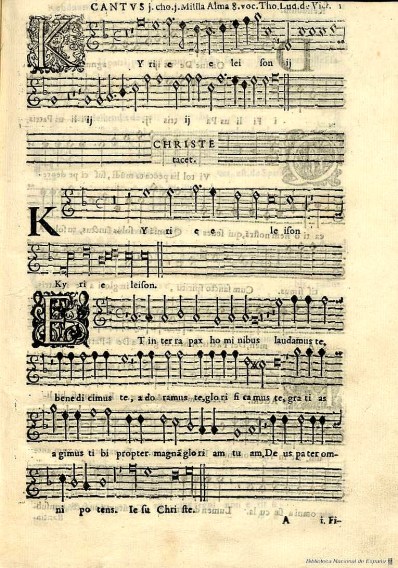
missa_alma_redemptoris_28luis_de_victoria29

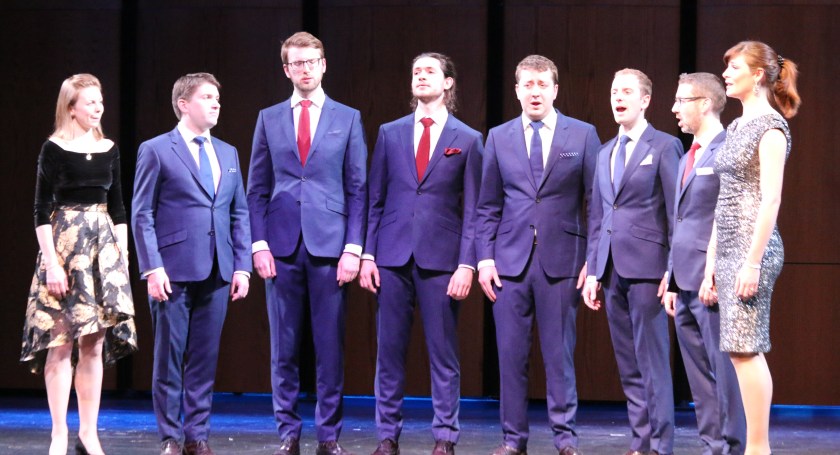
The Tallis Scholars, Peter Phillips (director)

St John’s Smith Square, 31st March 2018

Tomas Luis de Victoria (1548-1611)

  • Surrexit pastor bonus
  • Vidi speciosam
  • Magnificat for double choir
  • Missa pro defunctis Requiem

Francisco Guerrero (1528-1599)

  • Tota pulchra es
  • Hei mihi, Domine

Alonso Lobo (1555 -1617)

  • Versa est in luctum

Having dipped a toe into Early and Renaissance vocal music the Tourist probably finds himself listening to more than the average man on the street to Christian devotional music and Latin texts. This despite him being an avowed atheist and useless at languages. There is next to no cognitive dissonance arising from this set of circumstance, however, but he can now see;

  1. how the C16 and earlier man/woman on the street might get taken in by all the mumbo-jumbo given the power and beauty of the music (and art) that the Church offered (remember there were precious little other aural or visual stimuli to be had – no Candy Crush or Instagram in those days) and,
  2. how pointless it was setting it in a language said man/woman couldn’t understand leaving the door open for the Reformation to shake up the Catholic Church.

It has taken a bit of time but the Tourist has finally discovered the work of one Tomas Luis de Victoria thanks to the influence of some wise teachers. Snapped up a 10 CD disc by Ensemble Plus Ultra, a Gramophone Award Winner, for a bargain £30 after facing off the Amazon machine. I will likely die before I ever really get to grips with this music, (as for so much else), but there will be so much pleasure in the journey. Ensemble Plus Ultra are another in the long line of British early music vocal ensembles who, I expect, will have been inspired by the original wave of scholars and performers from the 1960s and 1970s, including our director for this evening, Peter Phillips, one of the grandaddies of the whole movement.

Now TVic was a big noise in C17 Spain, and along with Palestrina, based in Rome, and Orlando di Lasso, born in Mons in present day Belgium, but who worked all over Europe, was a major force in the Counter-Reformation when the Catholic church bit back. TVic was a performer and, helpfully, a priest but thankfully for us focussed on churning out compositions rather than taking confessions. I gather a fair bit is known about him, he worked in Rome for a spell before Philip II of Spain, the most important bloke in the world then with Spain at the height of its power, gave him the job of Chaplain to his sister, the Dowager Empress Maria in Madrid. This was Spain’s artistic Golden Age and these composers were a proud part of it.

I defy you note to be immediately drawn in by TVic’s grooves. The music is much more direct and “churchy”, with more affective melodies, than some of his European peers and predecessors. He is the master of manipulating, dividing and receding choirs. The polyphony is less complex than, say, Palestrina with more homophony, (everyone belting out the same text), but he creates some surprising textures and dissonances and a lot of melodic contrasts. He wasn’t averse to a bit of word-painting even though he only ever wrote sacred music.

The Surrexit pastor bonus is an Easter motet which is typical of TVic’s style, set for six voices which he combines in all manner of ways in just 3 minutes. It kicks off with dramatic soprano and the higher registers swirl around the lower basses. The Vidi speciosam is similarly scored and uses a popular Old Testament setting, (which also formed the basis for a TVic Mass). It starts off in a fairly restrained way but gradually builds out so that at times it feels like the whole of Wembley Stadium is in the room. TVic churned out 18 versions of the Magnificat but this one, Primi Toni, for two four part choirs, is entirely polyphonic with no plainchant intervals, though it is easy to hear the chant it comes from. There are a fair few effects along the way.

Francisco Guerrero was born and died in Seville, and spent most of his working life in Spain, but when he did venture abroad he packed a lot in, what with being attacked by pirates twice when coming back from the Holy Land, and landing up in debtor’s prison. Unlike TVic he wrote secular pieces in addition to motets and masses, though he also kept it homophonic and had a flair for drama. The first motet here, Toto pulchra es, is drawn from the same source as the Vidi speciosam and is similarly an paean of praise to the Virgin Mary, who was guaranteed to work the church fellas up into a right lather at that time. The second piece, Hei mihi, Domine is rather different with sharp contrasts and syncopated rhythms conjuring up a more impassioned plea for mercy in this Matins for the Dead.

Alonso Lobo was Guerrero’s sidekick at Seville Cathedral and took over when the old boy went walkabout. This chart-topping motet, Versa est in luctum, was written for Philip II’s funeral, and it shows with full-on “oh woe is us” grief-stricken passages from the book of Job apparently. It is his best known number. He had a spell in Toledo, (a city everyone must go to once in their life), and, in his life, was rated equally with TVic and Palestrina.

The meat of the concert was TVic’s Mass written on the death of his beloved employer Dowager Empress Maria. There are a fair few TVic masses, and I have only just started to get to grips with them, but if you need somewhere to start this might be it. TVic had 16 voices at his disposal when writing the piece and he took full advantage with six parts. It is a Mass for the Dead, a Requiem, based on the ancient plainchant melody, which becomes an immense structure in TVic’s hands. He also throws in a Versa est in luctum a la the Lobo motet and a lesson, Taedet animam meam, to serve up a near 50 minute funeral celebration for that is how it feels in spite of the subject. Old Dowager Maria may have shuffled off this mortal coil but in the afterlife she had loads to look forward to based on this music.

Obviously the Tallis Scholars under PP were perfect. They create a big sound but you are always aware of where the music comes from and what its point is and there’s no fancy grandstanding. It is hard sometimes in these concerts not to give in completely to the wall of sound and float off, but the Scholars in tandem with the composers, especially TVic provide enough contrast and drama to bring you back inside the music, its structure and its story.

Rachel Podger and VOCES8 at Kings Place review ****

voces8_17feb2017

Rachel Podger, VOCES8 – A Guardian Angel

Kings Place, 28th March 2018

  • Orlando Gibbons – Drop, drop slow tears
  • Plainchant – Pater Noster
  • Heinrich Ignaz Franz Biber – Rosary Sonata No 16 Passacaglia “A Guardian Angel”
  • Jonathan Dove – into thy hands
  • Nicola Matteis – Passaggio rotto, Fantasia, Movimento incognito (from Other Ayrs, Preludes, Allemandes, Sarabandes
  • Mendelssohn – Denn er hat seinen engeln befohlen uber dir
  • Rachmaninov – Bogoroditse Dyevo
  • Tallis – O nata lux
  • James Macmillan – Domine non secundum peccata nostra
  • Thomas Tomkins – When David heard
  • Bach – Partita for flute in A minor BWV 1013
  • Monteverdi – Adoramus te. Christe
  • Orlando Gibbons – Hosanna to the Son of David
  • Giovanni Gabrielli – Angelus Domini descendit
  • Owain Park – Antiphon for the Angels

Blimey. It took almost as long to write out the programme as to listen to some of these pieces.

What do we have here then? Well the undisputed queen of the Baroque violin, (OK maybe not given Isabelle Faust, Monica Huggett, Elizabeth Wallfisch and no doubt a few more I don’t know), has teamed up with the English vocal group VOCES8 to create a programme of violin and vocal works from across the ages all themed around “A Guardian Angel”. Some of these pieces appear on Ms Podger’s 2013 CD of the same name. Rachel Podger creates a big, clear sound with vigorous rhythm which makes it a joy to follow the line of the music. Yet when virtuosity is required, (not so much on this evening), she doesn’t hold back.

Angels being angels in Christian religion they turn up a fair bit in music notably Renaissance, Baroque and the modern composers who seek inspiration from their forbears. Here we have pieces for solo violin, (or flute transposed for violin in the case of the Bach sonata which formed the backbone to the second half), for choir alone and for a combination of the two. Angels watching over you is obviously anathema to my carefully constructed rationalist self-image though maybe all this music and my penchant for early Renaissance art and architecture might cumulatively start to rub off. I was reminded of the world (other-world?) that Annie Baker explored in her latest play John (John at the National Theatre review *****).

The plainchant with the choir perched in the balcony was as meditative as you like and was followed by the Baroque violinists party piece de jour from Biber which seems to be following me around everywhere. It’s title provided the stepping off point for Ms Podger. If you don’t know it, and the genuinely ground-breaking Sonatas that precede it you should. It still sounds cutting edge today. It doesn’t skimp on the bass notes which is probably when it floats my boat. Ms Podger’s recording is the best place to start.

I can take or leave the Mendelssohn, Rachmaninov and Dove pieces though VOCES8 were more convincing than I expected, the Matteis violin extracts were immediately invigorating in that typical Italian baroque way and the MacMillan piece was as spare (echoes of Part) as you might expect from this committed composer. The Tallis was my favourite with Ms Podger’s violin taking the highest line as the Jesus to the choir’s Elijah and Moses and alongside Andrea Halsey’s spellbinding soprano. Her voice is about as good as you will ever hear (says some-one who knows absolutely nothing about singing!!).

The biggest surprise of all was the Thomas Tomkins. New to me, I will need to seek this out. The Bach was obviously wonderful, Ms Podger has made this her own and proved that it could as easily been scored for violin as flute. The Monteverdi, Gibbons and Gabrielli pieces were relatively short but very welcome. Owain Park’s new work was commissioned especially for this collaboration and amalgamates texts by St Ambrose and Hildegard von Bingen sticking to the angel theme. Like so many commissions for choirs it is immediately attractive, it is a real thrill hearing accessible music for the fisr time.

Throughout the concert we had well constructed antiphonal exchanges between violinist and pure toned choir which brought out the best of the exceptional acoustic at Hall One of Kings Place. No clapping between the pieces, a rapt audience, (no phone glows as far as I could see), and discreet but appropriate lighting all combined to maintain the magic.

I can’t pretend I understand the music that was put in front of me. I can’t read music and I am steadfastly failing to learn its language. If you are like me, and I reckon there are a lot of you who are, (obviously I say this in full knowledge of the fact that no-one reads this), then I cannot recommend the combination of Early and/or Baroque music and voices highly enough. Food for brain, heart and soul (not that there is one, but like I say earlier, faith may yet surprise me).


Patricia Kopatchinskaja and the LPO at the Royal Festival Hall review ****

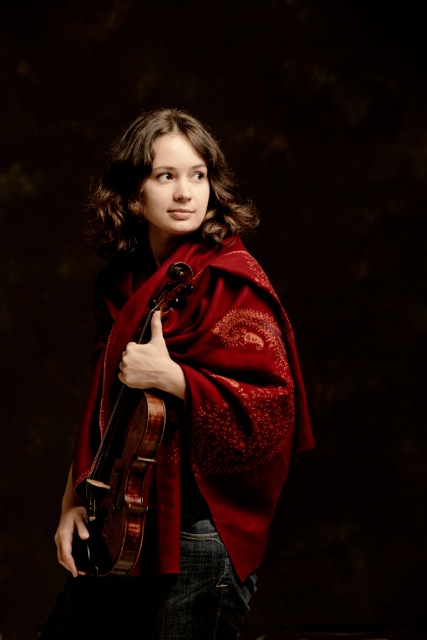
patricia_kopatchinskaja_4_28c29_marco_borggreve

London Philharmonic Orchestra, London Philharmonic Choir, Thierry Fischer, Neville Creed, Patricia Kopatchinskaja (violin), William Davies (treble)

Royal Festival Hall, 24th March 2018

Igor Stravinsky

  • Symphony of Psalms
  • Violin Concerto in D
  • Credo, Ave Maria, Pater Noster

Leonard Bernstein

  • Chichester Psalms

I have banged on before about the virtues of Moldovan-Austrian-Swiss, (forget national borders people), violinist Patricia Kopatchinskaja before, slam-dunking Berg or crossing musical boundaries with cellist pal Sol Gabetta (Kopatchinskaja and Gabetta at the Wigmore Hall review ****). She was at it again, this time with the Stravinsky Violin Concerto, alongside the London Philharmonic Orchestra under the baton of Thierry Fischer a relatively late replacement for Andres Orozco-Estrada.

This was another in the South Bank’s Stravinsky exploration kicking off with Igor’s Symphony of Psalms. Three parts, with Latin settings of psalms 39 (verses 13 and 14), 40 (verses 2,3 and 4) and 150, played without a break, and constructed as a Prelude, a Double Fugue and Symphonic Allegro. Inventive enough for you? Well just to keep you on your toes IS boots out the clarinets, violins and violas from the accompaniment to his four part choir, (kids preferred by IS for the upper two parts but I reckon women, as here, is better). He adds in not one, but two, pianos and a harp to augment his already hefty woodwind, brass (a tuba, lovely), percussion and the big strings.

The first part then is like some mutant Russian/Byzantine/Baroque/Neo-Classical jazzy chorale with ostinatos broken by thick E minor chords. That is the joy of his counterpoint. Then the fugue in C minor kicks off in the woodwind, all heavenly-mysterio, then the chorus kicks in with the second fugue, then we swirl around in heaven with some Mahlerian horns bubbling away in the background until we get some rounding homophonic pronouncements at the end. The final section starts off all stark, austere and hairshirt, like the end not the start, until the propulsive allegro kicks in with a trumpet-harp motive. There is a chordal tune, a bunch of exuberant triplets echoed by the chorus and a striking running tune for horns and pianos. The slow beginning is repeated, with more warmth, and then revisited in the final Haydn-esque coda as we rise up to the stars. There are Allejujas all over the shop. This is the longest section as it incorporates the whole of Psalm 150 and it is remarkably uplifting.

The piece was written, for the Boston Symphony Orchestra, in December 1930. It could only have been written at that time, by that one man, and yet …. so much of it echoes down, and forward through, the centuries. I know how daft that sounds but it is, even by Igor’s standard’s, remarkable music. Now you would normally reckon that the London Symphony Chorus rules the big choral roost in the capital. On this showing you’d be wrong. The London Philharmonic Choir under Neville Creed were on scintillating form. Bravo.

If singing this marvellous work were not enough, (though I appreciate how much work they put in ahead of it), the choir were treated to a sit down and Ms Kopatchinskaja’s astonishing fiddling. Now she certainly has a singular, and confident, performing style. Bare feet, big gown, lots of hopping and skipping about, hair tossing, it is pretty difficult to take your eyes off her. Fortunately Pat Kop, (yep, that’s her own branding), delivers a sound to match the charismatic gypsy schtick. The first movement Toccata is a souped up slab of florid Baroque, the middle two Arias exactly that, the first an upbeat shakedown, the second balladic if you will, and the final movement, Capriccio, lands us back in the heyday of early C18 Venetian virtuosity. The LPO and Mr Fischer were more than a match for their soloist keeping up, and once or twice, spurring on our self-assured diva. IS asked for a big orchestra, though again with constrained strings, but wisely never let it loose collectively, allowing the violin to always shine.. This suited Pat Kop who just about stayed the right side of insistent.

Remember when IS sent this score out to the world in 1931 his dedicatee violinist ,Samuel Dushkin, was a little intimidated by the “unplayable” wide spread three note chords which kicks off each movement. IS told him not to panic, it was a piece of cake. Once again Igor, a piano player not a violinist remember, was right and the received wisdom of the expert was wrong. He writes one violin concerto and no composer since has escaped its influence, in terms of how to relate violin to orchestra. And yet that very concerto is suffused with history. Pat Kop though wrestled with the Baroque to ensure that none of Stravinsky’s sly humour was lost.

Big, bold stuff from a soloist and and orchestra who have mastered the work. The encore was Pat Kop’s own party piece cadenza which draws on material from the Concerto, nods to Bach and ropes in Pieter Schoeman, the LPO’s leader, to act as counterpoint. Her discography shows she isn’t going to be bounced into just churning out the classics.

The Choir then took centre stage, from the rear as it were, with performances of three choral pieces that IS wrote in France after he returned to the Orthodox faith. He was a profoundly religious chap, for all his musical revolutions, and these settings, of the Lord’s Prayer, the Creed and the prayer to the Virgin Mary. Initially set in Church Slavonic he revisited them in later years and transposed them in to Latin texts. The Credo is chanted in devotional harmony, the Pater Noster in similar meditative fashion with a syllable to each note, with the Ave Maria sing-song-y making more extensive use of melisma. IS offered no markings so the choir and its leader have plenty of expressive headroom.

I was pretty sure I wasn’t going to be persuaded by the Chichester Psalms. I wasn’t. I just don’t get on with all that flash Harry (Lenny), sub-West Side Story, Mahlerian heart-tugging. Sorry. Young treble William Davies, understandably initially nervous, stepped up in the middle movement, well done, and the crowd seemed very pleased with the piece so what do I know.

Overall then a fine evening’s entertainment and well done to Mr Fischer and Mr Creed for guiding everyone through it. And sign me up to the Pat Kop fan club.


From the House of the Dead at the Royal Opera House review ****

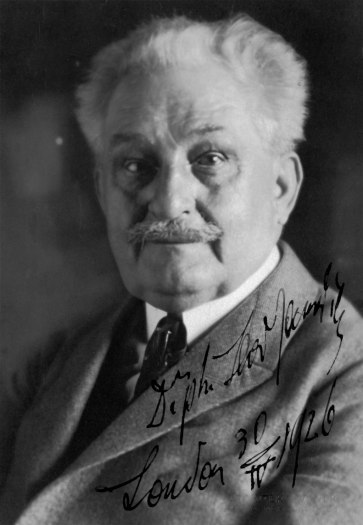
1024px-leos_janc3a1cek_28192629

From the House of the Dead

Royal Opera House, 22nd March 2018

Now this is it what opera is all about. Not just some portly punters, (though a couple of the chaps here were carrying as much timber as me), parking themselves mid-stage and belting out their arias. No here we get a concept, and some, a detailed design to back it up, lashings of action and even more acting, maybe too much, and a score which fits the prose of the libretto. I see it has wound up a few die-hards who would probably be happier with some Puccini-esque love mush but this is the real deal for me.

Now Janacek famously never made his life easy when it came to picking the subject matter for his operas. Infanticide, forest animals, adultery and suicide, the delusion of eternal life, a warrior matriarchy, a meta tragic opera. What a bout a feel-good rom-com eh Leos? Anyway From the House of the Dead is drawn from Dostoevsky’s eponymous novel which Janacek translated and adapted in his own libretto and is set in a Siberian labour camp. It has only one assigned female character, a prostitute, though one of the prisoners is normally a soprano, though not here. There is no narrative arc. It is largely episodic and expositional with the main characters steeping out of the ensemble to describe the crimes that led to their incarceration. There is a play within a play which takes up most of the second act. The music is pretty intense, lots of that special Janacek ostinato rhythm, with not much in the way of quiet reflection. There is no ending or resolution to speak of.

It was Janacek’s last opera and was pretty much complete on his death. But a couple of his students decided it wasn’t and that he can’t possibly have meant what he had left on the page or that an unresolved ending was appropriate so they “enhanced” the score significantly and changed the ending. Sounds like Hollywood today. Anyway all this gloss has been cleared out to produce a score much closer to Janacek’s original intentions., here further refined by John Tyrell’s critical edition. Intentions that require a vast orchestra, here spilling out into the side of the stalls. Chains anyone? The Orchestra of the ROH under the baton of Mark Wigglesworth sounded fantastic. I can’t imagine a better conductor of Janacek’s operas.

This though was all about the director though. Krzysztof Warlikowski doesn’t hold back. The overture, which lays out Janacek’s main ideas, which are subject to subtle variations throughout the three acts, is accompanied by a video projection of French philosopher, and winder-up-in chief -of-reactionary-conservatives, Michel Foucault, theorising on the nature of power, punishment and control in the modern prison system. The curtain rises to a solitary basketball player and a brutal modern prison yard. The athlete turns out to be “Eagle” standing in for the bird that represents freedom in a classic staging. Novel huh? A glass box acts as the governor’s office and, later, as the stage for the play within a play. Throughout the whole ensemble is in movement, offering multiple perspectives on the stories. From my perch in the back of the gods it wasn’t always easy to know who was singing but no matter. I’ll gladly swap a bit of narrative confusion for all this visual content. All thanks to designer Malgorzata Szczesniak.

And it isn’t that tricky to work out what’s going on. Gorjancikov, (I’ll refrain from full names or we’ll be here all day), played by the extraordinary Willard White, now in his 70s, pitches up. He’s a political prisoner and toff so the governor (Alexander Vassiliev), as you do, has him beaten up. Skuratov (Ladislav Elgr) talks about his life in Moscow. Luka (Stefan Margita, who was very impressive) tells how he and a crew killed a prison officer. Gorjancikov befriends young Aljeja (Pascal Charbonneau) and teaches him to read and write. Skuratov prefaces the play within a play by telling how he killed the bloke his girlfriend was forced to marry. The two plays are performed in bawdy fashion. The Prostitute (Allison Cook) gets involved. There is a bit of a dust up. Sapkin (Peter Hoare) describes his interrogation, Siskov (Johan Reuter, another excellent performance, though the tattoos help convince) tells of how he killed his wife because she was still in love with the village w*anker Filka, who, sharp intake, turns out to be Luka, who has, second sharp intake, just dropped dead. Antonic (Graham Clark) says he should still be forgiven, the moral of Janacek’s tale. Everyone, however “evil” can be forgiven, we all have the “spark of God” apparently. Gorjancikov is released. The end.

So, as you can see, not much in the way of plot. Yet the stories, which are elaborated through the play within a play structure, are compelling and the atmosphere of tension, claustrophobia, frustration and violence, and yes a bit of confusion, travelled right up to the back of the amphitheatre. The performances of the cast, inside all this action, are powerful enough to bring life to the characters; best of the bunch is Nicky Spence as Nikita who really can act and sing simultaneously. These are men who have done wrong, really wrong, but Mr Warlikowksi, in his dramatic staging, tellingly makes the point that they are victims, of their own warped masculinity if nothing else, as well, who need help not punishment to the point of death. And he does this by sidestepping the religiosity of the source material.

Loved it. More of Mr Warlikowski and Ms Szczesniak artistic partnership please.


Carducci Quartet at St John’s Smith Square review ****


The Carducci Quartet

St John’s Smith Square, 23rd March 2018

This was the second time I had heard the Carduccis perform the first five Philip Glass string quartets, following their performance at Kings Place as part of the marvellous Minimalism Unwrapped year long festival in 2015. They are, along with the Smith Quartet, (whose recording I have), and the Kronos Quartet, the experts in these works. The First Quartet dates from 1966, the next four from 1983, 1985, 1989 and 1991 respectively. Glass has composed a further three quartets in recent years, including one a couple of months ago, as well as a couple of other works for this ensemble drawn from music for films. I need to hear them.

Mind you there are an awful lot of Philip Glass compositions that I have yet to hear. I suspect I won’t. No matter. You’ve heard one, you’ve heard them all. Of course that isn’t true but if you know your Glass you will know what I mean. I do find his chamber and piano music more intriguing than some of the larger scale works and, because I think the string quartet is the sine non qua of Western art music, these babies are my faves. There is more contrast, and therefore drama, than in the larger scale works though it is all relative.

The First Quartet was composed when Glass was in Paris studying under Nadia Boulanger, mixing with arty types and rejecting modernist composers, the likes of Xenakis, Boulez and Stockhausen, not because he couldn’t get on with their vibe but because he wanted to take a different course. He alighted on repetition and rhythm via Ravi Shankar and Indian classical music. Given that this was pretty much his first attempt at this new style it really is an impressive piece. There is still a degree of dissonance and apparent atonality which relates to modernism but the little cells of music in its two untitled movements, and the contrapuntal effects, are recognisably Glassian.

The Second Quartet, titled Company, was commissioned to accompany a monologue written by the master Samuel Beckett. The first and third, and second and fourth, movements are related and the soundworld is the classic harmonic progressions we know and, most of the time, love. The Third Quartet is drawn from the soundtrack that Glass composed for Paul Schrader’s film Mishima, about the eponymous Japanese novelist, though Glass had the quartet in mind throughout. There are six movements in total and they relate to the passages in the film, filmed in black and white, which flashback to Mishima’s childhood. They are varied in colour, playing with metrical accents and harmonic ideas.

The Fourth Quartet is a tribute to artist Brian Buczak and consists of three movements. This is a much more substantial piece than its predecessors and has pronounced elements of the Romantic referring, as it does, to the quartets of Schubert and Dvorak. The first movement moves away from familiar Glass territory into more complex polytonality, there is a yearning lyricism in the slower second movement and the third movement runs close to a chorale. This is surprisingly moving stuff.

The Fifth Quartet again titled Mishima also packs more of an emotional punch than you might expect from a cursory listen to Glass’s music. The very short first movement’s material appears again in the later four movements but we immediately know, with its pizzicato passages and long,melancholic phrases, that this is going to be a bit different. The second movement takes us back to more familiar Glass territory with triadic ostinatos for the lower strings, but even here the surface melodies reveal syncopations and unexpected shifts in phrasing. The pace hots ups a bit in the third movement, with a familiar motoric call and response, but the same elements recur before a shift into minor mode and the train slows down to a stop. The fourth movement starts slower, with a repeated swirl which accelerates, is subjected to some dissonant reworking, before slowing again. The last movement contains a much broader canvas of soaring lines and intricate figurations, interrupted by the slower themes from the first movement, before ending with a single pizzicato line. You would guess that this was “minimalist” but you might think it came from today’s generation and not from Glass himself.

Now I get why revivals of Glass operas can reliably pack out the ENO, terrific singing (especially choral), though not necessarily in an accessible language, a colourful production, a story, (though not much of one), but musically these are built up of big slabs of repetition. In contrast the string quartets never outstay their welcome and, in this particular case, you can see the best possible advocates perform them for not much more than a tenner, in the ever atmospheric SJSS. So it was a shame to see it less than half full.

So come on all you young’uns. If you can reclaim the opera house from us pensioner types you can do the same to the SJSS which, I have to admit, probably needs a dose of diverse blood.


BBC Symphony Orchestra and Vilde Frang at the Barbican Hall review ****

vilde_frang_wikipedia

BBC Symphony Orchestra, Sakari Oramo, Vilde Frang (violin)

Barbican Hall, 21st March 2018

  • Anna Clyne – This Midnight Hour
  • Benjamin Britten – Violin Concerto, Op 15
  • Ludwig van Beethoven – Symphony No 6 in F major “Pastoral”, Op 68

The Violin Concerto is one of those Britten pieces that takes a bit of time to get used to. It was written in 1939 so contains plenty of the youthful flashiness, and debts to Stravinsky, which characterise early BB, but with a more serious intent which reflects his admiration for Alban Berg, whose own Violin Concerto, was the last in a frustratingly thin oeuvre. BB attended the posthumous premiere of Berg’s masterpiece in 1936, in Barcelona in the shadow of the forthcoming Spanish Civil War, as well as two further performances later in the year. Understandably he was mightily impressed.

BB’s own concerto was premiered in New York in March 1940 by the Philharmonic under John Barbirolli, given that he and Peter Pears were stuck there following the outbreak of war. The British premiere was in April 1941 in BB’s absence. Despite BB’s revisions in 1950, 1954 and 1965, which brings a little more of the late Britten’s soundworld to the violin part, the piece has historically been more admired than loved, but it has developed a bit more of a following in recent years.

Which means that some of today’s finest violinists have taken up the BB VC cause. These include Janine Jansen who played the piece with the LSO last year under Semyon Bychkov in this hall last year. This is not a concerto full of showy virtuosity, the soloist works on the ideas with the orchestra, but it does require a formidable technique. Ms Jansen certainly has that but the performance overall was a bit more athletic and weighty than I might have liked (though maybe that was the influence of the Mahler on the bill).

In contrast Vilde Frang, who has also recently recorded the piece, seemed a little bit more delicate, most obviously in the pianissimo sections, and the double stopping, of which there is a surfeit in the Scherzo, more Baroqueish than Modernist. This lighter, though still enthralling touch, made the final coda, constructed in BB’s favourite Passacaglia form, even more irresolute. a good thing in my book. The first movement, in sonata form, opens with a little rumble on the timps, then the bassoon takes up the tune, and then the rest of the orchestra, returning to it ostinato through the movement, whilst the violin moves in and out with its uneasy, song-like lament. The second theme is also martial in intent; there is a link to Shostakovich, but with more elegance and less hectoring. This theme is taken up by the violin, not the orchestra, in the recapitulation which ends with an unsteady coda. The second movement scherzo is spiky and Prokofievian in feel, with a very sinister transition to a tutti before ending with a cadenza, based on the first movement tunes, in which Ms Frang excelled. The ground bass which underpins the variations in the final movement is a bit wobbly in terms of tone, at one point D major triumphs, ending with a simple chant, over which the violin dances around, never quite closing out.

I think it is the uncertain tone, literally and metaphorically, that makes the BB VC seem like harder work than it actually is. Played like this though it is up there with the very best of BB’s works which require a full orchestra, the contemporary Sinfonia da Requiem and the War Requiem. It is a lot less knotty that the Cello Symphony that’s for sure. Having said that BB’s textures always work better for me in the pieces for smaller orchestras. I went back to the benchmark recording I have, the ECO under BB himself with Mark Lubotsky as soloist. Maybe I was just in a good mood at the concert but I reckon Ms Frang and Sakari Oramo gave them a pretty good run for their money, especially in the opening movement, which seemed to get to the point more quickly.

The BB VC was preceded by the London premiere of a 12 minute work written by Anna Clynne, British born now working in NYC. It was written for the Orchestre National d’Ille de France where she was resident composer. It is resolutely tonal and packs a hell of a punch. It is pretty sexy stuff too, as was her intention, based, as it is, on Baudelaire’s poe Harmonie du soir and one line from a poem by a chap called Jimenez about a nude lady running through the night. She packs a lot into the piece, kicking off with a rushing theme low down in the bass and cellos, moving to some sparkling woodwind, a slab of Brucknerian grandeur and then a Ravel like sharp waltz, before the whole thing seems to whirr around again. Apparently Ms Clyne notates her score with mood markings, intimate, melting, ominous, feverish, ferocious, aggressive, skittish, beautiful, eerie, which is easily comprehended. I have got much better at taking in contemporary compositions at the first, (and often only), outing, but this piece doesn’t require too much concentration, so immediate is its impact. Seems like the audience agreed judging by the reaction and deserved applause when Ms Clyne came out of the audience.

Which meant that, unusually, Beethoven took the back seat. Absolutely nothing wrong with Mr Oramo and the BBCSO’s take on the Pastoral but there wasn’t too much to get the pulse racing. The detail was there but the pacing was relaxed and the orchestra didn’t seem as engaged as when they are getting their teeth into unfamiliar repertoire or having to convince the big crowds at the Proms. Brooks babbled, birds sand, peasants partied, lambs gambolled, the storm came and went, but Mr Oramo didn’t seem to find the genuinely symphonic in the way others have. Still it’s Beethoven so pipe down Tourist and be happy with your lot.


SWR Symphony Orchestra Stuttgart at Cadogan Hall review ****

roger_norrington_conducting_at_rehearsal_28cropped29

SWR Symphony Orchestra Stuttgart, Sir Roger Norrington, Francesco Piemontesi (piano)

Cadogan Hall, 16th March 2018

Ludwig van Beethoven

  • The Creatures of Prometheus Overture, Op 43
  • Piano Concerto No 3 in C minor, Op 37
  • Symphony No 3 in E flat major “Eroica”, Op 55

I guess the fashion for all Beethoven programmes began with LvB himself. Perhaps one of you clever musicologist types can tell me if this continued through the C19 and C20. In any event it is commonplace now. Makes sense really. Why would you want to dilute the maestro’s perfect work with the burblings of lesser mortals.

That master of Beethoven performance, Sir Roger Norrington, knows that and programmed accordingly as he brought the SWR Symphony Orchestra Stuttgart to the Cadogan Hall as part of the Zurich International Orchestra Series, Sir Roger was made Conductor Emeritus of the Stuttgart Radio Symphony Orchestra, which merged with the SWR Symphony Orchestra Baden-Baden and Freiburg in 2016, having led them from 1998 until 2011. This means that a fair few of this orchestra know him and his methods very well and it shows. And this is a fine orchestra make no mistake.

For those that don’t know Sir Roger made his name at the Kent Opera, and then his own London Classical Players, at the vanguard of historically informed performance. Minimal vibrato, strings not allowed to overwhelm the woodwind and strict adherence to the composer’s metronome marks, characterise his exquisite performances of Beethoven. That happens to be the way I like my Beethoven too. Not that syrupy, wobbly stodge filtered through the Romanticism of the second half of the C19 and the bombastic conducting of the first half of the C20. That means picking up the pace and pumping up the rhythm. His long association with the Stuttgart orchestra, and peers in Salzburg and Zurich, means that this is a modern orchestra fully in tune with his approach, able to deliver accurate “pure tone”. Mind you the fact that he still guest conducts at the ripe old age of 84 (this was his birthday – many happy returns) with some of the world’s most famous orchestras shows just how far the “right” way of playing has seeped into the mainstream for Beethoven and other Classical composers.

Now I am not going to lie. I can take or leave the Prometheus Overture. Beethoven churned out a fair few, 11 to be exact, Overtures for money, to accompany theatrical performances, with 4 linked to his only opera Fidelio and its first incarnation Leonore. Some get more of an airing than others, (anyone ever heard the Zur Namensfeier Overture?), and the general consensus is that a fair few are decidely ropey. The Creatures of Prometheus is Beethoven’s only ballet composed in 1801. I am not big on the ballet so I don’t know if this gets a regular airing but the Overture holds its own in the concert hall in part because it contains material that was later recycled into, yep, the Eroica Symphony and the Eroica Variations for piano. Delivered here with a bit of oomph which makes me a little less dismissive of this piece.

Our soloist for the PC3 was Swiss Francesco Piemontesi, protege of Alfred Brendel, who I confess was a new name for me. He has worked with this orchestra and Sir Roger before though and it showed. His piano was turned in, just like in 1800, with Sir Roger and his stool, (no score, no baton obvs), behind this which made for a different experience. In the Eroica we had the brass and wind players standing, outside the antiphonal strings and the double basses growling away at the back with the timp. Just another sign of Sir Roger rethinking the familiar. Anyway Mr Piemontesi was compelling especially in the faster, outer two movements. The pace at which the conductor takes this movements, and this layout, served him well and lent an interesting “slippery” quality to the concerto which was exciting. The Largo was maybe a bit too long on the power and short on the poetry but not annoyingly so. Encored with a bit of Brahms which furthered showcased his easygoing style.

The PC 3 was a great leap forward for Beethoven, (though maybe not quite as much as the Eroica), composed at the same time as that interesting but still “nice” Symphony No 2 and when he was still twiddling about with (admittedly still perfect) chamber pieces. Here is all that massive musical imagination bursting out, though still with some structural debt to Haydn and Mozart and specifically the latter’s C minor concerto No 24. The contrast with the weirdy E major in the slow movement is what makes you sit up and take notice.

The Eroica was similarly taken at a fair lick, even in the second movement funeral march. Crispy punchy strings acted as the perfect foil for woodwind detail and the horns especially in the scherzo and the trio. Is this Beethoven’s greatest work? Not sure, I still prefer Symphony No 7, but it doesn’t matter how many times you hear it still punches you in head, heart and gut. It is long yes, but the orchestral forces, as this orchestral layout reminds us, are no greater than normal for the time, just an extra horn. Yet from the off, in the first movement, LvB conjures up all manner of dissonances, surprises, syncopations and stresses to create drama and energy. Pop in a new tune halfway through like never before. Let the horn jump in too early. A timpani that cracks like wood on wood. Yet, in all this expectant momentum, even a non-musical person like the Tourist never loses the line, and when the resolutions come, its blessed relief. Even if it is just the woodwind really as we still have three more movements to come. I just can’t see how this mighty first movement makes sense played too slowly and without repeat.

A funeral march which basically defines all orchestral funeral marches, all grave and ominous, and then the switch to C major from minor for that jaunty episode telling us whoever died didn’t do so in vain. Always have to stop myself jumping up and saluting. Then after the second wave of death and glory the squeaky violins. Fade out. Under starters orders and we are off with the horsey scherzo with that lollop into 4/4. Another one of those brilliantly perfect ideas that no-one before would ever contemplate. Straight into the intro of the final movement with its opening tease, through about 6 symphonies inside one movement, until, bosh, the best ending to any LvB symphony.

This is a piece of cake for Sir Roger. Thomas Ades’s Eroica last year in the Barbican, as part of the cycle with the Britten Sinfonia, followed a similar template in terms of pace, power and animation but you definitely felt you had been in the ring for the full twelve rounds after that. Here Sir Roger was still able to unfurrow the brows of music and performers as it were, to leave me skipping off with a smile not a scowl. (Had to leave early to catch a train so missed the Mozart encore – doh).

As it happens the SO has seen Sir Rodger conduct on a couple of occasions, maybe 50% of her entire classical musical education. Still no reaction. If he can’t persuade her no-one can.

A diary clash prevents me from hearing Sir Rodger’s next outing with the OAE at the newly restored Queen Elizabeth Hall on 11th April. All Mozart. Mind you it’s sold out. No surprise there.