OAE at the Royal Festival Hall review

Orchestra of the Age of Enlightenment, Roger Norrington (conductor)

Royal Festival Hall, 28th January 2020

Beethoven – Symphonies Nos 2 and 3

The Tourist has signed up for a lot of Beethoven this year. And already enjoyed many performances from many different ensembles with many different interpretations. Most of the central piano, chamber, string quartet, choral and orchestral repertoire is getting an outing, even some of the lesser known works. LvB has 138 Opus number attributions, (some with multiple parts), but once you strip out the early chamber music, the songs, (where his facility was less assured), some choral misfires, the interminable rewrites of Fidelio and piano ephemera, less than half of these get a regular airing. And that is before the various chamber, piano, miniatures, dances, vocal, choral and so on works not assigned an Opus number (WoO, Anh, Unv, Hess and Bia, to represent the various musicologist’s classifications), as well as fragments, ideas and intentions.

Not much of this, if any, will see the light of day even in this momentous year but the one thing we won’t run short of is the symphonies. (I know, I know. Covid-19 may have something to say about that but what can I do.) What is heartening to see is that the less performed symphonies, though this is a relative call as they are not too hard to find even in non-anniversary years, are cropping up frequently.

The debt to Haydn in No 1 is not concealed but there is already much of Beethoven here, sforzandi accents, tonal shifts and more wind, 2 each of flutes, oboes, clarinets and bassoons. It starts with a musical “joke”, though not a belly laugh to be fair, a series of chords in the “wrong” key, obeys sonata form throughout but chooses to expand and contract sections more wilfully than Papa Haydn and asks for faster tempi than predecessors. It is easy on the ear, definitively Classical but still recognisably Beethoven

A quick word on No 8 which has also not been given its due historically. In F major and relatively short, it is undeniably upbeat, but full of interesting ideas, consistent with the shock, awe and invention of its three predecessors, almost a retrospective before the final symphonic roll of the dice that was to come. The climax comes early in the first movement, the second is a metronomic slow movement played fast, the third is a kind of yokel’s minuet from three decades previous and the rondo finale is as remarkable as anything our man ever wrote.

No 4 is just wildly under-appreciated. From the comic ghostly hover at the opening through the look-at-me bop, complete with wind jam, the first movement is up there with his best, and doesn’t go on too long. The second is a squeezebox, slowed-down rondo, which shows just how much LvB could do with, ostensibly, so little. In the third movement LvB again takes the minuet form, speeds it up into a zig-zaggy scherzo, which thrice wraps around a hesitant trio. The perpetuum mobile finale is a fast, but not too fast, race to the finish line, as “unbuttoned” to use Beethoven’s own phrase as the madcap end of the 7th. I guess the problem is that doesn’t really go in for the deep, thick, heroic stuff of 3 and 5 but there is still something hyper and uneasy through the whole of the symphony, and a lot of ideas.

So to No 2. In the hands of Sir Rog and the OAE. Who played it a few years ago in this very hall, when I was still trying to convert the SO to the joys of LvB. (She famously whipped out a novel on that occasion, snuck-ed into the programme). It impressed then and did so again.

It dates from LvB’s time in Heiligenstadt in 1802, (though the first sketches date from 1800), and premiered in Vienna in 1803. Like the other, lesser even numbered, it just needs a good listen to, though it isn’t, I admit, quite as convincing as 4 and 8. The first movement, post its opening ta-da, exhausts its first theme, the second movement, larghetto, is one of LvB’s longest slow movements, very lovely, but a bit syrupy. The scherzo, is exactly that, a joke, a drunken dance. The finale has some exquisite string writing but doesn’t quite offer enough serious yin to the comedy yang of the preceding movements. In short the whole is a bit too jolly compared to what was to come. Surprising given just how much pain the old boy was in.

As with the Eroica Sir Rog wants us to have a good time, encouraging between movement applause and given he commands the OAE to get a move on, this works for No 2 if less for No 3. This briskness, and Sir Rog’s animated conducting, even from his trademark swivel chair, he is 86 after all, does occasionally mean a loss of focus but it does spread the joy. And whilst the tuned up wind, the absence of vibrato, the quivery brass, the thwack of the timpani, the sheer pace, may now no longer surprise, he and his HIP peers have been at this for near four decades now, it still remind us exactly why No 3 changed the direction of music. Fresh out of the box.

You Stupid Darkness! at the Southwark Playhouse review *****

You Stupid Darkness!

Southwark Playhouse, 28th January 2020

With a whimper not a bang. That’s how the world ends in Sam Steiner’s new play. Though, given where we are now, (and as many reviews of this play seem to demand), you might be forgiven for thinking our selfish species will want to engineer something more dramatic for the end of days. Except, of course, it won’t be the end of days. It will just be the end of us. An incredibly adaptable species that wasn’t half as clever as it thought it was, after a miniscule time on Earth engineered its own extinction, whilst, unforgivably, though there is nothing to forgive, taking most of the rest of the planet’s life with it.

We never know what exactly what is going on outside the room in which our four volunteers, Frances, Angie, Joey and Angie, come every Tuesday night to Brightline to offer comfort to strangers, Samaritans style, on the phone. But it isn’t good, the weather is awful, infrastructure is failing and the team turn up in gas masks. Everything is plainly not going to be OK, keeping calm and carrying on is the default, not the resolute, choice. The phones may still be working, donuts (and this would matter to me) are still on sale, daily routines are still being followed, but, if you are familiar with the analogy, the water temperature is increasing and the frog is being boiled.

Turns out that our four characters each face their own personal misfortunes and, despite their temperamental differences, turn to each other, as well as their callers, for solace. Frances (Jenni Maitland) leads the team, is the eternal optimist, dispensing management mumbo-jumbo, but, pregnant in an increasingly sterile world, petrified at what the future holds for her unborn child. Tense Joey (Andrew Finnigan) is wise beyond his years, Jon (Andy Rush), the fatalistic foil to Frances’s buoyancy, is trapped in a failing relationship and fragile Angie (some scene stealing from Lydia Larsen, until she exits for much of the second half, we don’t find out why), empathises with callers by opening up herself.

Sam Steiner wisely forces no grand narrative or formal experiment on his play. There is not much in the way of plot. Nothing very dramatic happens. There is no great resolution or even much of an ending beyond the backers of the helpline pulling their funding. The comedy, and pathos, flows naturally from the conversation. Amy Jane Cook’s set is similarly low-key. Lights turn off. Kettles fuse. Posters fall off walls. Paintwork is peeling. Dominic Kennedy’s sound design also limits gesture and director James Grieve is unafraid of the pause. This unhurried approach pays dividends though means that the energy of the production, like the lights (Peter Small), occasionally dips, and it wasn’t to everyone’s taste on a less than half full Tuesday matinee but it suited me (and judging by the laughter a handful of others). And, if as I suspect, Mr Steiner’s aim was to find optimism in the bleak mundane, he indutiably succeeded.

I now wish I has seen Sam Steiner’s last play, also realised through Paines Plough, King Kanye about a white woman who wakes up one day to discover she is Kanye West, and, prior to that, Lemons, Lemons, Lemons, Lemons, Lemons, in which the conceit is that language itself is rationed. I an a sucker for concept and imagination and Mr Steiner seems to have the gift. And he can right dialogue to match. I will watch his future career with interest.

The Sugar Syndrome at the Orange Tree Theatre review ****

The Sugar Syndrome

Orange Tree Theatre, 27th January 2020

With last year’s A Very Expensive Poison at the Old Vic, The Effect from 2012, (about to be revived at the fancy newish Boulevard), and ENRON from 2010, as well as Secret Diary of a Cal Girl and, most recently, the utterly brilliant Succession, Lucy Prebble has desrevedly become one of our most feted writers for stage and screen. The Sugar Syndrome dates from 2003 and was her first full length play, winning awards and getting an airing at the Royal Court directed by one Marianne Elliott, who has similarly gone on to bigger and better things.

It may not be a perfect play, the two central characters, 17 year old Dani, who is has left hospital after treatment for an eating disorder, and Tim, in his thirties, and being monitored after a spell in prison for sex offences, are exaggerated, and defined largely by their behaviours. Their meeting, after Dani poses as a young boy in a chat room, and subsequent friendship, with Dani seeking psychological equivalence and Tim rapidly opening up, is uncomfortable and doesn’t quite ring true. On the other hand it does allow Ms Prebble to explore questions around on-line personae, (well before many others – this was still the MySpace era with Zuckerberg only just about to kick off at Harvard), addiction, self-harm, paedophilia and relationship, and her extraordinary ear for memorable dialogue is as plain here as it is in the later texts.

Debutante Jessica Rhodes goes all in with Dani, a fearless, physically expressive performance. Dani’s worldly-wise exterior is paper-thin, whereas John Hollingworth is asked to hold back in his portrayal of the guilt-ridden Tim. We will see Jessica Rhodes again soon of that I have no doubt. Alexandra Gilbreath is Jan, Dani’s Mum, who truly doesn’t understand her, and Ali Barouti is Lewis, the older boyfriend that Dani also meets on-line and who she strings along, and whose jealously catalyses the disturbing, if not surprising, conclusion. Oscar Toeman’s direction, alongside Rebecca Brower’s set and Elliott Griggs’s lighting design, creates a sharp delineation between the on-line and real worlds. This, and the performances, help to focus Ms Prebble’s slightly over-plotted narrative.

Even it’s faults, this is still an arresting play for a 22 year old to have written and I was a little surprised to see that the OT could claim is as the first major revival.

Igor Levit plays Shostakovich 24 Preludes and Fugues at the Barbican review *****

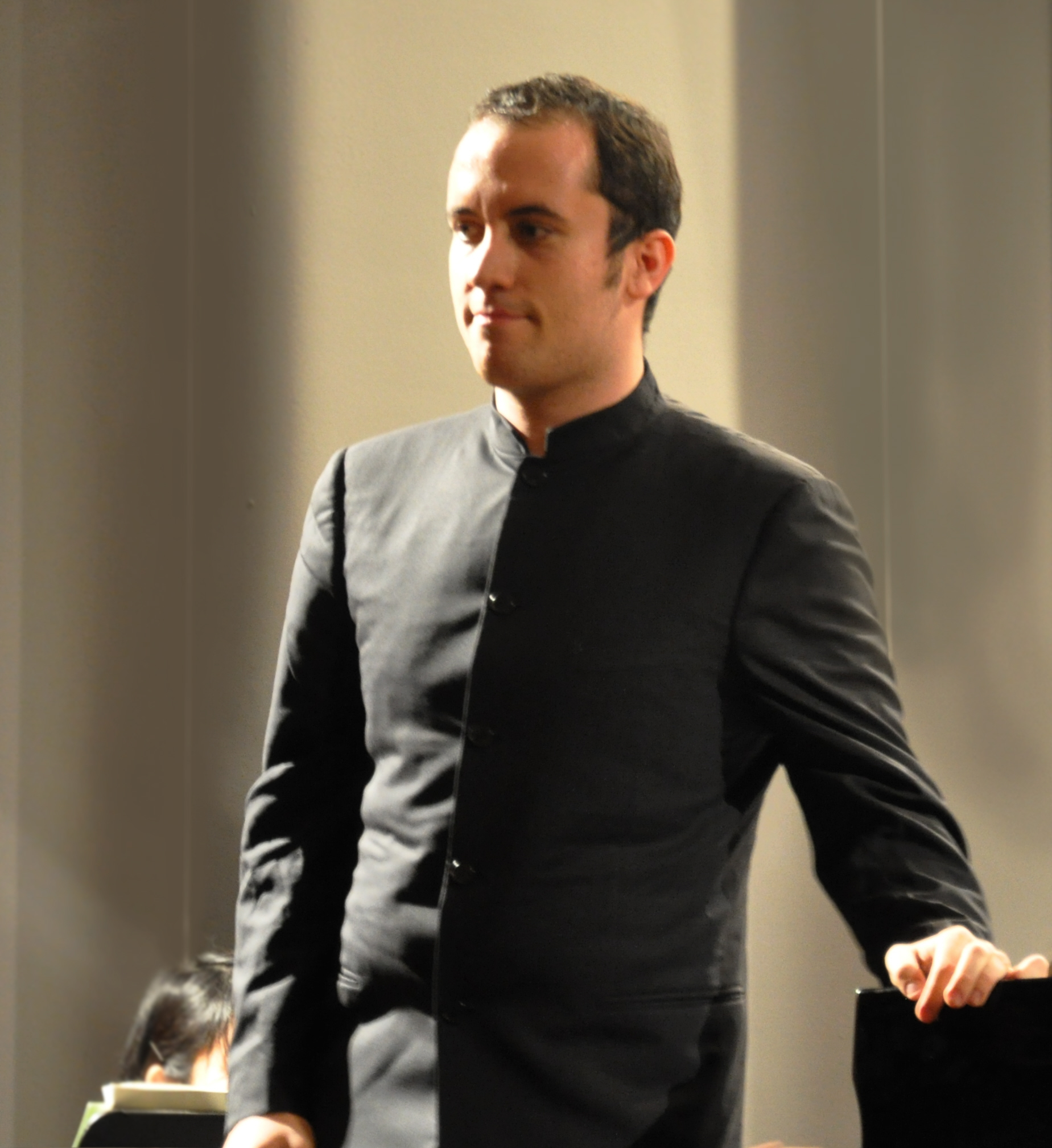
Igor Levit

Barbican Hall, 26th January 2020

Dmitri Shostakovich – 24 Preludes and Fugues, Op 87

If you going to be inspired by anyone to write a monumental piano piece than JS Bach is a good place to start, specifically his Well Tempered Clavier collection of 48 Preludes and Fugues. Like Bach DSCH created a purely musical structure, with no explicit or implicit narrative or meaning. Unlike Bach he did not adhere to a strict arrangement of parallel major/minors pairs ascending the chromatic scale, though all the keys of the scale are represented as both free-form prelude (like Chopin’s Op 28) and strucured fugue, and follow the logic of the circle of fifths (again like Chopin). However these vary in mood, pace, length and complexity, some barely a minute long, others like the rolling no 16 fugue (easily confused by me for a prelude) runs to 10 minutes, some, like fugue no 9 for just two voices, whilst no 13 is a dazzling five. DSCH refers to, and quotes from, JSB at various points (as well as other Baroque tropes) to amplify the debt, and, of course, this wouldn’t be DSCH if he didn’t quote himself at times.

The work was composed in winter 1950/51 after DSCH had attended a Bach musical festival in Leipzig where he judged the piano competition won by his compatriot the 26 yo Tatiana Nikolayeva. Inspired and impressed DSCH dedicated 24 P&F to her and she premiered the work publicly in Leningrad in 1952. Prior to this DSCH had to get it through the Union of Composers who predictably managed to find fault, thinking it glum and morbid, viewing the fugue as a Western, archaic form and objecting to the dissonance in many of the episodes. Still there was now only a year or so to go before Stalin died and the pressure on DSCH started to lift.

The benchmark recording, from Hyperion, is by Ms Nikolayeva herself, who, even after she was able to travel to the West, pretty much exclusively focussed on Bach and DSCH, with a bit of Beethoven thrown in. On fact it was the very last piece she played just before her death in 1992. She recorded the work in its entirety on three other occasions and others had since had a pop at it, Ashkenazy, Donohoe, Konstantin Scherbakov, even Keith Jarrett, but, because of its length, demands and style, many have also avoided it, or just recorded a selection (Richter and old Dmitri himself though plainly not because he hadn’t mastered it!). I had be looking to acquire the recent recording by Alexander Melnikov for whom I have an inordinate amount of time, but, after this astonishing interpretation from Igor Levit I might wait to see if he commits piano to recording studio.

There are those who diss DSCH’s P&F as just sketches for his larger scale works, yeah like which composer doesn’t have an overarching sound, or as just pastiche Bach. Plainly bollocks and maybe reflecting the fact that it hasn’t been oft recorded and requires a deal of effort and concentration from performer. Like I say the extracts I have heard Mr Melnikov play impressed but hearing the whole thing, near three hours even before a couple of intervals, was extraordinary. IL has a penchant for big, structured, piano works, Bach’s Goldberg Variations, Ronald Stevenson’s 80 minute uninterrupted Passacaglia on DSCH, yep dedicated to you know who, and I was confident from hearing his way with Beethoven that I would likely enjoy this. But even so I was massively surprised by just how much detail and emotion he brought out in the music, to se alongside its obvious intellect, power and character.

Mr Levit has a big fan club amongst those that know and it isn’t difficult to see why. Hunched over the keyboard, all coiled intensity, fingers flashing, pounding keys, limiting use of the pedals, (though the stage floor took a n occasional pounding) which made the polyphony at times even more remarkable, building and then resolving tension, the architecture of each P&F articulated but without losing sight of the details. From the tranquil C major opening through to the triumphant, with caveat, D major final pairing, I was knackered by the end so goodness how drained IL felt. It must have taken a few glasses of Margaux to come down from that.

I don’t hold with this standing ovation nonsense for anything seen on stage. This time though no question. For exceptional artistry as well as phenomenal stamina.

Christ on the Mount of Olives: LSO at the Barbican review ****

London Symphony Orchestra, Sir Simon Rattle (conductor), Lisa Batiashvili (violin), Elsa Dreisig (soprano), Pavol Breslik (tenor), David Soar (bass), London Symphony Chorus, Simon Halsey (chorus director)

Barbican Hall, 19th January 2020

  • Berg – Violin Concerto
  • Beethoven – Christ on the Mount of Olives, Op 85

After a somewhat disappointing take on the Seventh Symphony paired with Berg’s Seven Early Songs just a few days previously, and, given the reputation of oratorio Christ on the Mount of Olives as a somewhat lesser work from the pen of our Ludwig, the Tourist approached this concert with some trepidation. I have heard the piece but don’t own a recording and cannot claim to know it at all. Well, turns out it’s a belter. Fair enough its not the Missa Solemnis or the Mass in C major (which I happen to prefer), and there are a few routine, by Beethoven’s standards, passages but there are some sublime musical ideas and plenty of drama. Maybe not quite up there with Haydn’s oratorios but running closer than you might think.

LvB started writing Christus am Ölberge, to give it its German title, in 1802 just after he had written the harrowing Heiligenstadt Testament, and was first performed in 1803, though not published until 1811.The libretto comes from poet Franz Xaver Huber, and, in a very human way, deals with the agony of Christ in the Garden of Gethsemane prior to his arrest. The tenor takes the role of Jesus, the bass Peter and the soprano a seraph. Even after Christian Schreiber was enlisted to make significant changes to the libretto LvB wasn’t happy with the text, and opinion then and since has tended to look down on the overall tone and structure of the oratorio, with the exception of the gut busting Welten signen choral finale.

The piece suited Sir Simon’s sense of the dramatic and his ability to shape individual sections. Some of the solo and choral parts are really sensational, and, with the LSO seeming to relish the novelty, the orchestral writing was similarly striking. It kicks off with a call to action from the trombones before Pavel Breslik’s vivid tenor sets out Christ’s plaintive plea to God. This was followed by Elsa Dreisig’s lovely soprano, truly angelic, and then the chorus stiffening his resolve. David Soar’s bass in truth doesn’t get much of a look in and the chorus, as soldiers, disciples and the like only really get going in the second half of the story. But, when the LSO Chorus is finally unleashed, all 145 of them, the effect was magical.

Whilst I get why Sir Si whats to showcase as much Berg as he can, him being a fave composer of his, and the Violin Concerto is, similarly a tempting morsel, actually full four course meal with the two movements each divided into two sections, the prelude, then scherzo, the cadenza and finally chorale variations. Indeed when Sir Si was still in Berlin he came over a couple of years back to take it on with the LSO, though then with the peerless Isabelle Faust on the fiddle. That was a triumph as soloist and orchestra made sense of Berg’s most compelling exercise in reconciling romantic diatonicism with twelve note serialism. Here orchestra, conductor and soloist, Lisa Batiashvili, weren’t always quite on the same page, though it was impossible to fault Ms B’s articulate playing which went easy on the vibrato and always sensed the sharp dance that underpin’s Bartok’s tunes.

P.S. Anyone who is anyone in the Western art canon has had a stab at Christ in the Mount of Olives so plenty of choice for the pic above. Though I would give you some Goya though, just because I am, what with all this global misery, going through a bit of a Goya phase right now.

Accademia Bizantina at Milton Court review *****

Accademia Bizantina, Ottavio Dantone (director)

Milton Court Concert Hall, 19th January 2020

Bach the Craftsman: The Art of Fugue

In which, as part of a Bach weekend curated by harpsichordist Mahan Esfahani, Ottavio Dantone and his troupe of crack HIP strings play the Art of Fugue. I should probably stop there as there isn’t anything to add really. It is the genius of JSB applied to the musical form that most reveals his genius, the fugue. A theme, the “subject” is heard in one “voice”, then repeated in imitation at different pitches in subsequent lines, before being developed, then returning to the subject in the tonic key. In this case served up 16 ways with a handful of canons thrown in at the end for good measure. With the greatest …… ending in artistic history.

To be played on harpsichord (for the very skilled and very brave), piano, quartet, or as here, expanded strings alongside harpsichord and diddy organ, 13 souls in total. Take your pick, though you would be hard pressed to top this version, which allows everyone line to be head and creates some surprising sonorities. AB were founded in the glorious city of Ravenna, M. Dantone joined in 1989, becoming music director in 1996, and they are amongst the foremost performers of Italian Baroque operas. My regular readers will know that I am a big fan of the rock’n’roll approach these Italian outfits take to their Baroque forebears. To hear them treat Bach’s prayer, for that is what it is, in the same way was simply thrilling. Ottavio Dantone is plainly a genius.

No better way to spend a Sunday afternoon.

Rembrandt’s Light at the Dulwich Picture Gallery (and others) review *****

Rembrandt’s Light

Dulwich Picture Gallery, 17th January 2020

The Tourist has been a bit remiss in keeping up the records on art exhibitions over the last few months so in addition to the above he will offer a few thoughts on other visits.

Rembrandt‘s Light first. The DPG exhibition space is bijou. Just four rooms. Which means you have to time your visit to get a good look. Left this late in the run but not too late but was still worried it might be busy. No need to worry. Late in the day worked.

It’s Rembrandt. With a twist as the rooms imagine the kind of light that the old, (and young with plenty of early/mid work on show,) boy was trying to capture. Like some sort of modern designer/cinematographer. Hence the drafting in of one Peter Suschitzy, a cinematographer on shite like Star Wars to light the show. Daft idea no? Still doesn’t matter. It’s Rembrandt. And by cobbling together loans from the great Rembrandt collections, including the likes of the Louvre and the Rijksmuseum, these 35 often still breathtaking paintings, and a fair few drawings and prints, show just what RHvR could create from one light source and often simple subjects.

So if you ignore all the stupid effects and dispense with an audio guide, (why do I need to listen to someone chirruping on when I should be looking and seeing, information can come later, or before), you’ll be reet. No need to filter these marvels through contemporary reception. If a punter wants to turn art into a flat, lifeless, colourless thumbprint on a phone let ’em I say. Though why they feel the need is a mystery to me. But if you want the hair-raising thrill of imaging just how RHvR fight multiple ways to shine a light on darkness, metaphorically as well as figuratively, then stand and stare.

The portraits at the end, (though I was floored by the Portrait of Catrina Hooghsaet from a private collection – lucky bastard), some of which will be very familiar to Londoners, and the earlier works (and School of) are a little less diverting. However the core of the exhibition, either side of the fake candlelight octagon, (and excluding the mess the concept made of Christ and Mary Magdalene at the Tomb from the Queen’s collection), play a blinder, largely with more intimate works than the blockbusters left at home in Amsterdam. The Flight into Egypt (see above), The Denial of St Peter, The Presentation in the Temple, the studio room etchings and drawings, many just student exercises, Philomen and Baucis, The Entombment, present drama where the biblical sources barely matter. Who’s that there lurking in the darkness? What’s going on in their minds? What happens next?

But mostly you wonder how this complicated man could churn out this sublime stuff for money and why pretty much no-one frankly has been able to match him since.

What else then? In reverse order.

The Bridget Riley retrospective (****) at the over-lit Hayward gallery was proof that less is more when it comes to the impact of the work of the eye-boggling Op Art pioneer. I much preferred the early, monochrome dotty and “folding” checkerboard works, recently revisited with the latest, (she is still had at work aged 88), limited colour palette but was also quite partial to the candy stripes and parallelograms. The Goldsmiths student drawings and life studies, and the later, private, portraits, were new to me but the plans and sketches felt like padding. I might have preferred a little more information on the how and why of her work; the response to nature and her lifelong fascination with how we perceive and see, though the debt to Georges Seurat was acknowledged. And maybe a little bit of science: after all experimental neuroscience and psychology now offer explanations for her magic which weren’t really there in the 1960s when she found her practice. Having said that the way she messes with eyes and brain, rightly, continues to delight pretty much any and every punter who encounters her work. Perhaps explaining her popularity; this was her third retrospective in this very space.

Lucien Freud‘s Self-Portraits (****) at the Royal Academy highlighted both the honesty and the cruelty the great painter brought to his depictions of the human form. The early work reveals the egoist presenting a front to the world – plainly this was a geezer who loved himself. The game-changing addition of Cremnitz white to his palette to create the full fat flesh in which he revealed. The room of often disturbing portraits of friends and family where he lurks in the background, often in reflection. Through to the final, famous, aged nude self portrait where finally he turns his unflinching eye truly back on himself. Seems to me he channeled a fair bit of Grandad Sigmund’s nonsensical methods and conclusions into his work. There is confrontation in every painting: artist and subject, subject and observer and, thereby, artist and observer, this latter being the relationship that most intrigues. It seems he wants to exert control over us but ultimately he cannot, in the same way that however hard he looks, (his sittings were notoriously punishing), he cannot truly capture what he sees.

I like to think that Anselm Kiefer would be the life and soul of the party, a witty raconteur, putting everyone at ease. If you are familiar with his work you might see this as optimistic. AK is the artistic conscience of Germany, now 74, but still constantly returning to its past and particularly the horrors of Nazism and the Holocaust. The monumental scale of his works, the materials, straw, ash, clay, lead and shellac, the objects, names, signatures, myths and symbols, the themes of decay and destruction, the absence of humanity, all point to his provocation and engagement with his birth country’s history. And, in this latest exhibition at the White Cube Bermondsey, Superstrings, Runes, The Norns, Gordian Knot (****), apparently the devastation that we have wrought on the earth itself. The blasted landscapes are thick with paints, emulsions, acrylics, oils and, of course, shellac, then overlaid with wire, twigs and branches, as well as metal runes, axes and, another AK constant, burnt books. The vitrines which make up superstrings are full to bursting with coiled tubes overlaid with equations in AK’s trademark script. As scary, as sinister and as insistent as all his previous work.

Kathe Kollwitz was an artist who confronted war, as well as poverty and the role of women, not as abstract history but as immediate reality. The small, but perfectly formed, Portrait of an Artist (*****) exhibition at the British Museum (after a UK tour), showcased 48 of her most important prints, woodcuts and lithographs, drawn primarily from the BM archives and elsewhere. Self portraits, premonitions of war, maternal grief, working class protest, all subjects stir powerful emotion but also mastery of line and form.

Elsewhere, Bomberg and the Old Masters at the National Gallery had minimal new to me works on show by IMHO the best British artist of the C20, Leonardo: Experience a Masterpiece at the NG was a joke, I have no idea why anyone would like William Blake‘s (Tate Britain) childish illustrations and Nam June Paik‘s (Tate Modern) admittedly prescient artistic investigation into technology from the 1960s onwards left me nonplussed. The Clash collection of memorabilia at the London Museum was, like so many of these music surveys, just pointless nostalgia.

We (BD and I) didn’t really devote enough time to Olafur Eliasson: In Real Life (****) at Tate Modern, it was pretty busy, but message and invention overwhelm, even if it all feels just a bit too Instagram slick. I dragged the family around Kew Gardens one evening in September last year to see Dale Chihully‘s (****) beautiful organic glass sculpture. I was mightily impressed, SO, BD and LD less so. Bloody annoying traipse around the west end of the park when all the action was concentrated around the Palm House.

Which just leaves the massive Antony Gormley (*****) retrospective at the Royal Academy. I know, I know. There is nothing subtle about AG’s work or “brand” but it is undeniably effective, even if its meanings are often frustratingly unspecific. Coming at the end of an already dark November day, to peer at the utterly flat, and silent, expanse of briney water which filled one room, called Host, was worth the entrance fee alone. It triggers something in collective memory and experience though fuck knows what he is trying to say with it. Same with Iron Baby nestling in the courtyard. Thrusted iron shell men modelled on AG himself, famous from multiple public art installations globally, coming at you from all angles, defying gravity. AG’s body reduced to arrangements of cubes. The imprint in toast. A bunch of rubbish drawings and body imprints. A complex coil of aluminium tube, 8km in total filling one room and a mega-skein of horizontal and vertical steel poles, enclosing, of course, a figure in an empty cube, in another. A metal tunnel that the Tourist was never going to enter in a month of Sundays. Sculpture as engineering to signal an eternal, and inoffensive, spirituality. AG as Everyman. Easy enough to pick holes in but just, er, WOW.

Horn Calls: Philharmonia Orchestra at the Royal Festival Hall review *****

Philharmonia Orchestra, Esa-Pekka Salonen (conductor), Richard Watkins (horn), Allan Clayton (tenor)

Royal Festival Hall, 16th January 2020

  • Carl Maria von Weber – Overture Der Freischütz
  • Mark-Anthony Turnage – Horn Concerto (Towards Alba)
  • Benjamin Britten – Serenade for tenor, horn & strings
  • Richard Strauss – Till Eulenspiegels lustige Streiche

Broke the golden rule. It is bad enough that I inflict this shite upon you and join all the other narcissists clogging up the Interweb and generally adding to the carbon burden. But I had resolved not to comment on anything that I had not sat all the way through. Notes for my own consumption but never yours. Here though I felt compelled to announce just how marvellous a concert this was. Despite walking out after the Britten Serenade and thereby avoiding the Strauss. Which, as it happens, I have heard live a couple of times and loathed. Another bloke in the lift on the way down adopted the same strategy. Why sully the perfect?

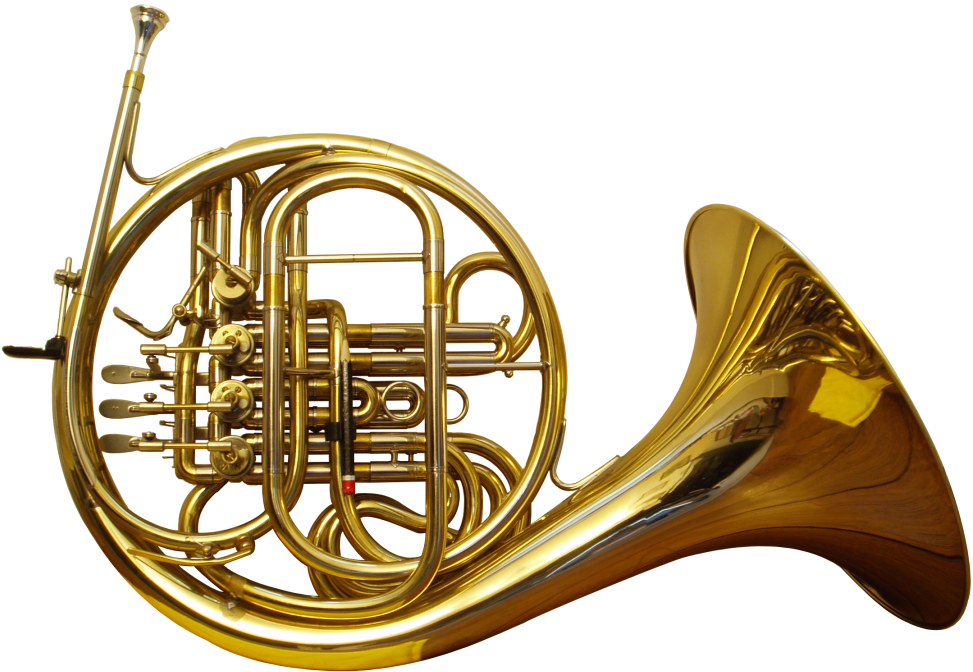
For I cannot imagine much better that this take on one of BB’s most sublime, and rightly popular, compositions. Comparable with the composers own versions surely. I might have guessed that Allan Clayton’s tenor is the perfect instrument for the work but how good is that Richard Watkins. He used to be principal horn for the PO, so he was surrounded by plenty of mates and presumably was attuned to Esa-Pekka’s no messing, forceful take on the work, even if he left before the Finnish maestro came to London. (Apparently E-P S, to add to his many talents, is a dab hand himself on the horn). He now works as a soloist fronting the London Winds and is a member of the Nash Ensemble. Every note was delivered exactly as I imagined BB composed it for the mercurial talent of Dennis Brain, the orchestra’s first principal player. The horn, let’s face it, when it enters its expanded harmonic world, is about the most thrilling, note for note, instrument in the orchestra. Obvs you can have too much of a good thing, but not here.

Which makes Mark-A T’s achievement in this world premiere of his own Horn Concerto that much more remarkable. He has always created contemporary classic music of real immediacy, but here, commissioned by Richard Watkins himself, he channels the German romantic horn tradition, of which Weber was a part, through the horn tributes of the English composing generation prior to him, Tippett, Colin Matthews, Oliver Knussen, and of course Britten himself, whilst still keeping his trademark jazzy syncopations and Stravinskian rhythms. BB’s piece, doh, is a paean to the night, setting those exquisite English texts through the ages, to faultless musical ideas, concentrated and not as flashy as some of his stuff. M-A T, in contrast, is all about the sunrise and the coming day. Alba in olde English meant “a call to the end of the night and beginning of the day”.

The so titled brief opening movement has lots of chirpy orchestral lines bouncing off the horn but, never thickens or overwhelms. The slow second movement is inspired by a late Larkin poem, Aubade, a morning serenade, in which the fear of mortality engendered by sleepless nights is banished by the light and the normality of the working day. The horn is the lyrical and bluesy expressive voice set against some beautiful, lower resister, string writing, punctuated with sustained low pedal points. The finale is also drawn from a poem, John Donne’s The Sun Rising, exactly the poet you want to mirror BB’s own choices, and does exactly what it says on the tin. M-A T offers up dense, chromatic, contrapuntal chords over which the horn soars.

Can’t remember the Weber and, like I say, no interest in the Strauss. But this was sublime and I expect Towards Alba to provide plenty of work for Mr Watkins, and others, in years to come. A fitting tribute maybe to another brilliant exponent of the French horn, Australian Barry Tuckwell, who sadly passed away on this very evening. I see Messrs Watkins and Clayton have recorded BB’s Serenade with the Aldeburgh Strings. Time to buy I think and set alongside BB’s own recording which featured Mr Tuckwell on peerless form and Peter Pears, later on his career, was marginally less the mannered English toff.

The Strange Tale of Charlie Chaplin and Stan Laurel at Wilton’s Music Hall review ****

The Strange Tale of Charlie Chaplin and Stan Laurel

Wilton’s Music Hall, 16th January 2020

I was much taken with one of Told By An Idiot’s previous productions Napoleon Disrobed, which featured its co-founder and AD Paul Hunter alongside Ayesha Antoine, whose career unsurprisingly has gone fro strength to strength after she starting out in soaps, and was directed by the shape-shifting wonder that is Kathryn Hunter. For TSTOCCAS Paul Hunter similarly spins a yarn from an alternative history, this time inspired by the chance, and brief, meeting between Charlie Chaplin and Stan Laurel in 1910 on a passenger ship bound for New York as part of Fred Karno’s music hall troupe. Subsequently for two years Stan acted as Charlie’s understudy, though he, Chaplin, barely acknowledged this.

In homage to the silent movie era the action is largely silent, with on stage piano accompaniment from Sara Alexander, (to a score from talented jazz composer Zoe Rahman which even manages to squeeze in a hip-hop routine), who is also roped in to the action as Charlie’s Mum, alongside the diminutive Amalia Vitale who plans Charlie, Jerome Marsh-Reid who plays a lanky Stan, as well as a few supporting roles, Nick Haverson who plays impressario Fred Karno as well as Oliver Hardy, Charlie’s Dad and others. Ionna Curelea’s set, an ingenious children’s playground ship/theatre/hotel that works vertically as much as it does horizontally and fills the Wilton’s stage, is the backdrop for a jaw-dropping display of perfectly choreographed physical theatre. Much credit to physical comedy consultant, master of mime Jos Hauben, and dance choreographer Nuna Sandy. OK so the time, past, future and present jumbled up, and character shifts, even with video (Dom Baker) and lighting (Aideen Malone) cues, are a little tricky to follow but I guess that Paul Hunter, who also directs, has reasoned that the visual comic entertainment is enough to draw us in until the narrative becomes clear. In this he is right.

PH’s mission is to create fantasy out of fact, though with less profound consequences than, say, a certain numpty POTUS, which explains the central scene where Chaplin accidentally bops Stan on the head with a frying pan and disposes of the body overboard, which provides some of the most impressive of many pratfalls and slapstick(s). The more poignant side of early comedy is not left untouched notably in the scenes detailing Charlie’s Victorian London childhood, complete with drunken parents and midnight flits. When even the stamina of three actors plus pianist is not enough to fill the drama an audience member is roped in for piano duty. And, in maybe the funniest episode, Amalia Vitale, who nails Chaplin’s mannerisms, persuades another punter to join her on stage for a swim. All secured through charm alone and without saying a word.

90 minutes is probably as long as the cast can physically deliver and the show might benefit from excising a handful of ideas and scenes but if you really want to see sustained theatrical invention, every mime trick in the book is rolled out, and have more than a chuckle or two, (and thereby distract from multiple Ends of the World angst), then this is I can heartily recommend. I see the tour continues to Northampton and Exeter at the end of this month.

LSO: Beethoven and Berg at the Barbican review ***

London Symphony Orchestra, Sir Simon Rattle (conductor), Dorothea Röschmann (soprano)

Barbican Hall, 15th January 2020

  • Berg – Seven Early Songs
  • Beethoven – Symphony No 7

One of these Half Six Fix early start capers that Sir Si has introduced, a capital idea. A pairing of Berg with Beethoven. Sir Si being a long term fan of the unfecund Austrian, the combination of serialist structure with gushy Romantic expression, seeming to have a particular appeal for him. And, this being the big 2-5-0 for LvB, the conductor and the LSO were, and still are, going to be putting in a few shifts when it comes to the symphonies.

However I don’t think I am alone in thinking that the Scouse Gandalf is less than secure in his handling of Beethoven. Back in the day, with the CBSO, and the Philharmonia, he shone a light on composers as diverse as Britten, Elgar, Mahler, Ravel, Sibelius, Stravinsky, Szymanowsk, Turnage, Vaughan Williams, as well as the Second Viennese chaps, a master of orchestral colour, even if overall structure sometimes eluded him. In Berlin though, I guess in part responding to age and demand, the likes of Brahms, Bruckner and Mahler, were added to the repertoire, and have featured heavily since the return to London. As far as I know though his only recorded take on the Beethoven symphonies is the cycle with the Vienna Philharmonic, which awkwardly juxtaposes their super-bright, hyper-operatic sound with the lessons of period performance, and, mostly, adherence to Ludwig’s metronome markings. Let’s just say it isn’t the best cycle I own. (That would still be Harnoncourt and the COE, which I can say, without any hint of hyperbole, is life changing).

On the subject of hyperbole I have claimed before on these pages that the Seventh Symphony is the greatest. By the greatest composer of all time. Thus it is the greatest symphony ever written. And the symphony is the supreme musical form. Ergo this is the greatest piece of music ever written. At least in Western art music. Of that I have heard. Which isn’t that much. And there might be days when, say, The Wedding Present’s Take Me or Joy Division’s She’s Lost Control or the Fall’s Gut of the Quantifier might take the accolade. So I wouldn’t listen to me.

Anyway this was as I feared, a slight disappointment. Sir Simon kept the pace up in the second movement Allegretto, pulling out the cello/viola counterpoint line, but somehow losing the pathos, and in a rousing Allegro finale, with Nigel Thomas battering his timpani, he seemed to me to lose the thread a little in the long rise and fall introduction to the opening Poco sustenuto. It all tried just a bit too hard to get down on it. Like your Dad on the dance floor. Good but not outstanding.

And the Seven Early Songs is basically Wagner/Strauss in disguise. As I had suspected. So despite the undoubted skills of both band and, especially, soprano Dorothea Röschmann, it therefore had zero chance of engaging me. Sorry.