Red at the Wyndham’s Theatre review *****

SONY DSC

Red

Wyndham’s Theatre, 21st June 2018

The original production of John Logan’s play Red at the Donmar Warehouse in 2009 with Alfred Molina and Eddie Redmayne passed me by. More fool me. So I was looking forward to catching this revival directed by Michael Grandage, (who directed the original), with Alfred Enoch now playing fictional assistant Ken alongside Alfred Molina once again as Mark Rothko. It went directly to Broadway after the Donmar, and has popped up over 30 locations since, but this was the first revival in the UK.

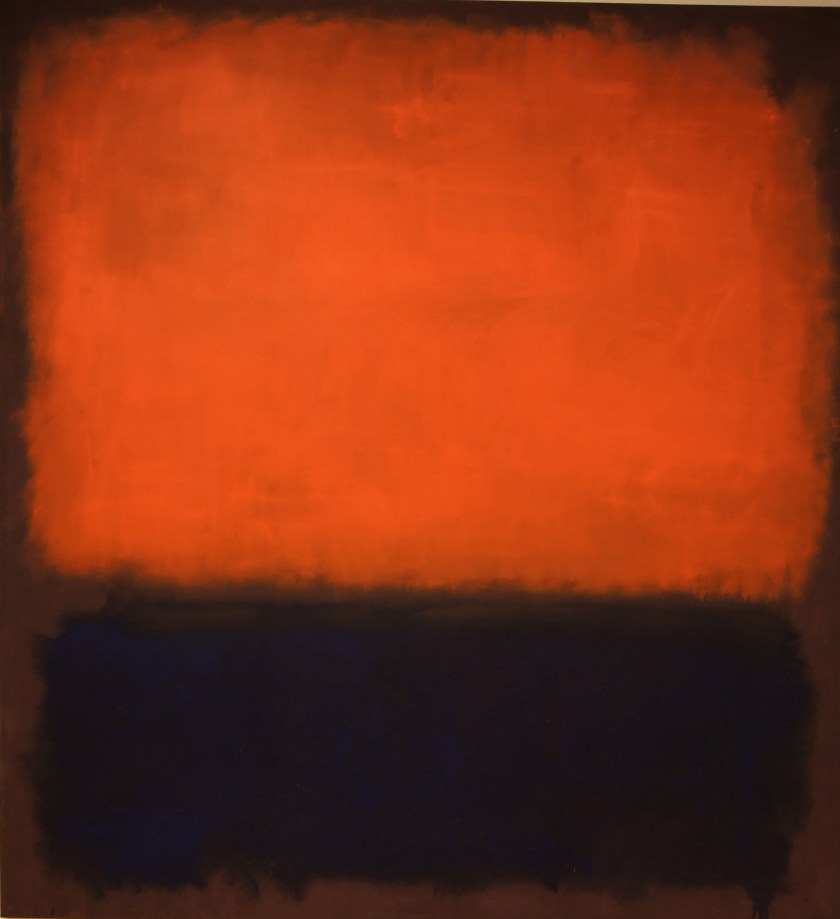
Red isn’t a complicated set up. Ken pitches up to “interview” for the job. Rothko takes a shine to him. Their relationship develops. It is really just a device to explore the nature of art and artists in general, as well as specific, terms. Rothko wasn’t a jolly chap by all accounts but he thought long and hard, perhaps a little too long and hard, about what he did. The play focusses on the months in 1959 when Rothko had taken on the commission to create a series of panels, like a Renaissance great, to hang in the restaurant of the Four Season hotel in the Seagram building in New York, a commission he eventually refused to complete.

I have been fortunate/unfortunate enough to eat a couple of times in the restaurant. It is a cathedral to late C20 neo-liberal capitalism. It doesn’t need any paintings. It is certainly not a place for quiet contemplation. Apparently Rothko was partly inspired by the vestibule of Michelangelo’s Laurentian Library in Florence on a visit to Europe in 1959, another “f*ck you” little people, we’re the elite” OTT mausoleum. Apparently on an earlier trip in 1950 he was bowled over by Fra Angelico’s supreme frescoes at San Marco. I know which I prefer.

The set from Michael Grandage’s regular collaborator, Christopher Oram, complemented by the masterly lighting of Neil Austin, is a triumph. It imagines the studio in the Bowery where Rothko created the Seagram murals with representations of some of the 40 or so canvases/studies that Rothko created, three different series, in dark reds and browns, to meet the commission. We are afforded an insight into Rothko’s materials and (secret) process; in one marvellous scene we see real physicality as Molina and Enoch prepare a canvas with a wash. The activity provides a counterfoil to the initially one-sided, but increasingly argumentative, as Ken’s confidence grows, dialogue examining Rothko’s own frustrations with the Seagram commission itself and with the reaction of society to his own art.

Rothko was born Markus Yakovlevich Rothkowitz in 1903 in Latvia of Russian-jewish descent and came to America with his family in 1913. His father died shortly afterwards and Rothko questioned his religion. He was brought up in Portland, Oregon and initially set out to be a union organiser given his strong socialist beliefs. Fiercely intelligent, he gained a scholarship to Yale but dropped out, moved to New York and became an artist and enrolled at a design school where he was taught by Arshile Gorky and Max Weber. Initially he was influenced by German Expressionism, turning out some well regarded early work, though needing to teach at the Brooklyn Jewish to supplement his income. In the early 1930’s he entered a circle of artists, (including Alfred Gottlieb and Barnett Newman), who surrounded Milton Avery and took trips to paint in Massachusetts. In 1934 he had his first solo show which revealed his skill with deep colour, founded a movement called The Ten, exhibited in Paris and New York and worked with the Works Progress Administration alongside the likes of Pollock and de Kooning.

Rothko’s singular way with colour was emerging in his figurative work but he also experimented with surrealism and paintings drawn from mythology. The influence of Europe was still strong even as the modernists in the US took aim against the specifically “American” art of the inter war years.  He separated from wife Edith for a short period in 1937 and took up US citizenship in 1938 and changed his name, fearing the wave of anti semitism might lead to deportation.

Rothko’s tireless search for an intellectual, cultural and philosophical framework for his art eventually led him to that other tormented soul Nietzsche, notably the Birth of Tragedy, which spurred a series of works drawn from Classical and Judaeo-Christian mythology. Following a less than successful exhibition at Macy’s department store in 1942 Rothko penned the following which about sums up the direction he was about to take. “We favor the simple expression of the complex thought. We are for the large shape because it has the impact of the unequivocal. We wish to reassert the picture plane. We are for flat forms because they destroy illusion and reveal truth.”

After separating from his wife again and a period of depression Rothko went to California and struck up a friendship with Clyfford Still who would become a clear influence on his work. I have a deep suspicion of much US Abstract Expressionism but Clyfford Still’s monumental slabs of bright colour, punctuated by jagged lines, and drawn from the landscape of his native North Dakota, are arresting and extremely beautiful. A return to New York, and another not entirely successful exhibition at the Guggenheim, saw Rothko move closer to pure abstraction which properly appeared from 1946 in the so called “multiform” paintings; blocks of colour devoid of human form, landscape or symbol. More essays, an obsession with Henri Matisse’s Red Studio and finally, in 1949, an exhibition of works which defined the Rothko style from there on in,  and now a cornerstone of modern Western art. The two or three blocks of complementary, coalescing, contrasting colours flickering and shifting with the light, though initially the tones were often quite bright; greens, blues alongside yellows and oranges.

Rothko’s popularity, and the value of his work, spiralled but he became increasingly protective of his art, and one might argue, overly grandiose in his claims for it. He asked viewers to examine the works from up close to intensify the “spiritual experience”. The colours got darker maybe mirroring the increasing darkness in the artist’s own pysche Cliche or not Rothko certainly walked the talk of the tortured artist, as did Pollock in his own way. His politics left him uneasy with the trappings of commercial success (Fortune magazine singled out his work for “investment), though he still reportedly liked the money. He got lumped in with his Abstract Expressionist peers, much to his chagrin, fell out with Barnett Newman and Clyfford Still, who accused him of being a sell out, went through loads of assistants and became a father with second wife Mell. As his fame grew so did his alienation. Here was an artist who might have been happier to work in cloistered obscurity. Or would he?

That is were Red the play picks up the story. Now if I tell you that vast swathes of the potted bio above are referenced in the play, largely by Rothko himself, you will probably realise that you are in for a bit of a lecture here. However, by having Rothko pour it all out to Ken, himself an aspiring artist, though he never plucks up the courage to show his work to Rothko, it doesn’t feel ponderously didactic. It probably helps if you have a rough idea of what Rothko was about, and a smattering of art history, but it is by no means essential. the play stands as terrific entertainment even without that.

Which frankly in large part is down to Alfred Molina’s amazing performance. He just is Mark Rothko. I say this secure in the knowledge that I have no idea what Mr Rothko was like but, thanks to the illusion of theatre, I, and I would be willing to guess all the audiences that have seen this, believe that this is Rothko. Which means all of the references to his own life and art, to the history of art and to the relationship between art, society and economy, fall naturally out of the discussions with Ken. Above all you accept that MR didn’t go in for small talk, (which reminds me there is no little humour on show to leaven proceedings), and, for all his intellectual certainty there was something something lacking emotionally. in the man. An intellectual prize fighter, spoiling for a fight, but desperate for attention. Apollo and Dionysius. Which explains why he lets Ken stick around for a bit.

Rothko went on to even greater fame after pulling the plug on the Seagram murals, (some of which now hang in the special room at the centre of Tate Modern). Other mural projects followed culminating in the slightly preposterous conceit of the Rothko Chapel in Texas. However he was overtaken by Pop Art in the 1960’s, a movement he despised, but which is, in the play, championed by Ken.

A heart condition, fags, booze, bad diet, separation from second wife, smaller paintings and a Marat style suicide and an argument over his estate. There is probably another play here. 836 paintings, spread around public and private collections, including in his Latvian birthplace, books, posters, postcards, snapchats, there are few artists whose work is so well known. I always want to sneer and walk away whenever I see a late Rothko, (I haven’t seen enough of his earlier incarnations to make a judgment), but I never can. They cast a spell and, cliche alert again, invite contemplation. Such is the power of colour, paint, form and tone and Rothko’s special technique.

The play lasts just 90 minutes yet the Wyndham’s and MGC folk are asking you to shelve out full West End prices. Is this good value? I’ll leave you to decide but it is a superb play and better than most anything else in the West End right now. A Russian oligarch paid near US$ 200m for a 1951 Rothko painting a few years back. Presumably he thought he got value for money. Mind you he is the same fellow he recently sold the ropey Leonardo for US$ 450m and appears to have been conned by his dealer. Look him up. Quite a character.
The Flight of the Conchords at the O2 Arena review ****

flight_of_the_conchords

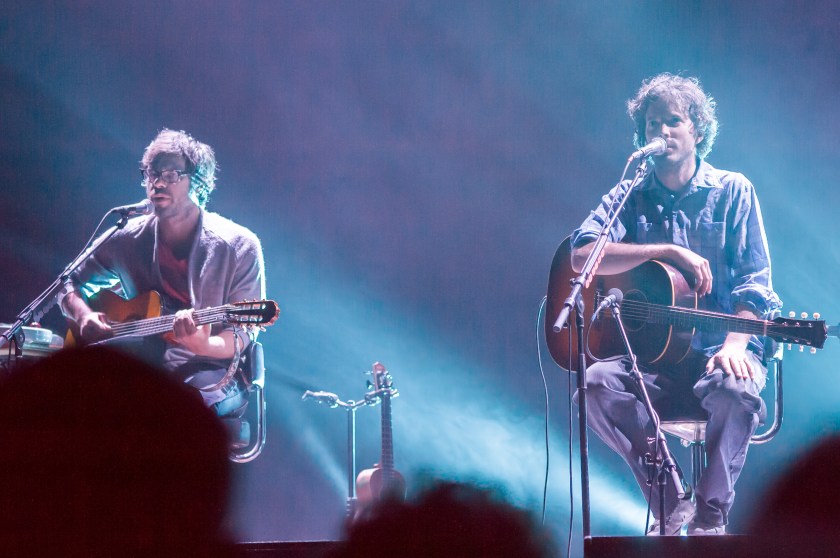
The Flight of the Conchords

The O2 Arena, 20th June 2018

Father and Son
Deana and Ian
The Most Beautiful Girl (in the Room)
Inner City Pressure
Bowie
Chips and Dips
Albi The Racist Dragon
1353 (Woo a Lady)
The Ballad of Stana
Bus Driver’s Song
Mutha’uckas / Hurt Feelings
The Seagull
Back on the Road
Carol Brown
Shady Rachel
Robots

Dairy products, meat, wood, locations for hobbits and rugby teams. New Zealand’s most valuable exports? Nope. The Flight of the Conchords, surely. Only joking. New Zealand has an extraordinarily rich cultural life from what I can see and landscapes of immense beauty, Sadly I suspect I will never get there.

So for the moment I will have to be content with Bret and Jermaine. Originally we intended to go en famille. BD’s loss, (poncing around at some uni bash), was MS’s gain. LD might not quite have the compulsion of the rest of us but has had enough exposure to the classic tunes to mean that it was pretty easy for her to get into the swing of the evening.

Over the last few years I have been constantly surprised by how few of my friends and acquaintances have caught the Conchords bug and, indeed, how many have never even heard of the boys. Clearly though filling this many large venues, (and the pre-tour at the Soho Theatre), even after the accident to Bret’s hand, suggests there are plenty of fans 10 years after the original HBO show and 15 years after storming the Edinburgh Fringe.

No need to preach to the converted then. You were probably there. On the night we went the boys took their time coming on, and by virtue of my miserliness, and a big of bad luck on the open for the original dates, we were about as far away as it was possible to be in the O2 which, as everyone knows, is A VERY BAD IDEA. But I figured we’d be so happy anyway that it wouldn’t matter too much if we relied on the screen to see the boys.

Of course they were brilliant (including Nigel on cello aka the New Zealand Symphony Orchestra). Of course the banter, less knowing and much looser than of old, was hilarious. Of course the classics were a joy even when they ballsed them up (deliberately?). But the best thing about the whole evening were the new songs. Especially the meta The Seagull, piano ballad Father and Son, country rock The Ballad of Stana and the hilarious madrigal 1353 (Woo A Lady). The reviews let us know what was coming but a song that might have been written especially for MS was the highlight of our evening.

There is not much point going on. If you don’t know “the fourth most popular folk parody duo in New Zealand”, or if you’ve had a look and don’t get it, then no matter. Your loss. For some of us this is still about as funny as funny gets.


Isabelle Faust and Kristian Bezuidenhout at St Luke’s Old St review *****

finsbury_st_lukes_1

Isabelle Faust (violin), Kristian Bezuidenhout (harpsichord)

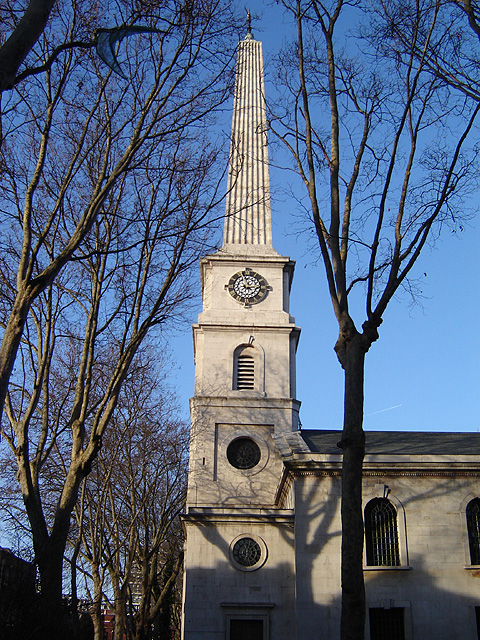
LSO St Luke’s Old St

JS Bach

  • Sonata no 3 for violin and harpsichord in E major BWV 1016
  • Partita no 2 for solo violin in D minor BWV 1004
  • Sonata no 1 for violin and harpsichord in B minor BWV 1014
  • Toccata for harpsichord in D minor BWV 913
  • Sonata no 6 for violin and harpsichord in G major BWV 1019

The second instalment in Isabelle Faust and Kristian Bezuidenhout’s rendition of the six JSB violin sonatas BMV 1014-1019 following on from the Wigmore Hall in April. (Isabelle Faust and Kristian Bezuidenhout at Wigmore Hall review ****). Once again they allowed themselves a solo each, but this time some more JSB, in keeping with the Bach Weekend theme, which also celebrated the 75th birthday of the venerable Sir John Eliot Gardiner.

This time I was joined by Bach groupie MSBD. Early start. 11am on a Saturday. I wish every day started this way though.

At times JSB is truly sublime. More so that any other composer. You might find it in the cantatas, others in the masses or passions, or maybe the keyboard, instrumental ensemble works or the cello suites. Not for one moment could I disagree with you but, for me, the apotheosis of JSB’s genius lies in the violin sonatas and partitas, solo and accompanied. Great art induces a state of rapture. Not the nonsense exclusive coach trip into the sky that some befuddled Christians cling on to, but the state of grace, individual or collective, that you can feel inside your whole being when dancing in a club, or breathless and motionless in the theatre, or when your ear sends pure sound to your brain at a concert or when you get lost in a painting. It doesn’t happen much, just as well as that might overwhelm, but it is part of what makes life worth living. I appreciate that this might be a terribly old-fashioned way to think about art but I dare you to tell me I am wrong.

Anyway it happened here. In the final movement of the Partita. The immense Ciaconna. Amongst Bach’s finest creations as the programme says. They’re not wrong. It gets me most times but here, OMG, Isabelle Faust, her violin, St Luke’s, my ears, my brain, the audience, and of course, old JSB all came together as one. This old buffer did his best to hold back a tear. It is so simple, just a basic four bar pattern, (apparently “the harmonisation of a descending tetrachord” – thanks again programme notes). But JSB is able to do so much with it including a huge mood shift about two thirds of the way in. This is when you might just believe that JSB reconciles himself to the early death of first wife Maria – he was to meet Anna just a year later.

The accompanied sonatas came close to their solo cousins. I have banged on before about just how expressive Isabelle Faust is when it comes Baroque violin. She’s pretty handy too when it comes to the rest of the canon. Listen to her recordings of the Beethoven, Bartok and Berg concertos if you don’t believe me. She can even persuade me with her historically-informed interpretations of that Mozart chap. But Bach is where she enters a different realm. She applies an astringent, almost abstract, rigour which just blows me away. And KB, who has a gentler conversation with his harpsichord, is the perfect accompanist. IF doesn’t muck it up with unnecessary and unwarranted vibrato, and both the left and right hand lines for KB are clear and not jangly. This leaves plenty of room for the sonatas to breathe and, in the superb space that is St Luke’s, with the sun streaming in from outside ….. well you can see where I’m coming from.

JSB continued to revisit and buff up the six sonatas throughout his life. Maybe that’s why the old boy perfected his art here. In the early decades of the C18 the trio texture was considered the compositional ideal for chamber music, creating a perfect synthesis of linear counterpoint, full-sounding harmony and cantabile melody, (thanks once more programme notes). Put this trio principle into the hands of the man who got closer to the ideal of perfect harmony than anyone else in the history of Western music, with the melodies driven by the finest of instruments the violin, then obvs it was going to work. JSB created trio works for flute, viola da gamba (which I like) and organ but they don’t come close.

Listen to No 1, BMW 1014. It kicks off with a 5 part texture with double stopping and a 3 part effect on the harpsichord. The two quick movements, (the first 5 sonatas stick to the old skool sonate di chiesa four movement set up with No 6 breaking free into 5 movements), have each of the three lines chipping in together, the perfect realisation of the trio principle with the third movement switching to violin and harpsichord right hand weaving around a left hand bass. No 3 BMW 1016 kicks off with a slow movement where both players can show off their skills, followed by a bouncy fugue, a powerful lament in C sharp minor before rounding off with an extraordinary gallop where the violinist can really show off. No 6 BMW 1019, is very different, with a central solo harpsichord movement flanked by two jolly giant Allegro opener/closers (real faves) and two slow, simple (-ish) shuffles in a kind of canonic form.

Other than the aforementioned divine Ciaconna the Partita No 2 consists of 4 dance movements, an Allemanda, a Corrente, a Sarabanda (which foreshadows the Ciaconna) and a Giga. We have Leopold, Prince of Anhalt-Kothen’s Calvinism to thank for JSB’s discovery of all things boogie as he wasn’t confined to elaborate Church music in the Prince’s employment. (We also have the genius Antonio Vivaldi to thank for the twin graces of rhythm and repetition that underpin JSB’s unique ear for inventive sonority).

Other than the Sarabanda thsee dance movements are all monophonic in structure so easy to understand and have a dominant rhythm from which the violin goes off on ever more exciting harmonic excursions. It was a massive hit when first published and performed and remains so to this day. It really is very easy to see (and hear) why. You do not need to have any interest or understanding of classical music to get this. You just need ears and a pulse. So whatever your musical bag, I implore you to listen to it. IT WILL MAKE YOUR LIFE BETTER. I promise.

KB had a little less time to shine though not by much as he picked the most extensive of the six toccatas, BMW 910-916. The D minor 913 was composed when JSB was just 20 as he went AWOL from his job and walked the 450kms to Lubeck to hear Dieterich Buxtehude play. So next time you complain about how tricky it is to get to the Barbican think on JSB’s devotion. It opens with a typical Baroque improvisation, (typical for others that is), followed by a couple of JSB trademark fugues linked by a bridge which shifts tempo and ending with a tierce de Picardie, a major chord at the end of a minor key piece, which JSB was partial too. After the Partita and the first two sonatas this harpsichord piece shifted the mood before the final, jolliest, No 6 sonata. Smart programming and smart playing, (I only know these toccatas from the never surpassed Glen Gould on piano).

So there you have it. This will definitely be a top 10 2018 concert for me and I am pretty sure for MSBD, though I have lined up a few more for his delectation. And I wonder if, by the end of my musical education, I end up realising that no-one topped Bach. It is beginning to feel that way.


Venetian Baroque: Academy of Ancient Music at St Luke’s Old St review ****

venetia_-_porcacchi_tomaso_-_1620

Academy of Ancient Music, Bojan Cicic (violin), Persephone Gibbs (violin), Sarah McMahon (cello), Alistair Ross (harpsichord), William Cater (theorbo)

LSO St Luke’s Old St, 15th June 2018

  • Dario Castello – Sonatas No 10 a 3 Book Two, No 1 a 2 Book One, Sonata No 1 for violin (Book Two), Sonata No 2 for violin (Book Two), Sonata No 12 a 3 (Book Two)
  • Tarquinio Merula – Ciaconna
  • Michelangelo Rossi – Toccata No 7 for harpsichord
  • Giovanni Girolamo Kapsberger – Toccata and Ballo for theorbo
  • Francesco Tunrini – Sonata a 3 “il Corisino”

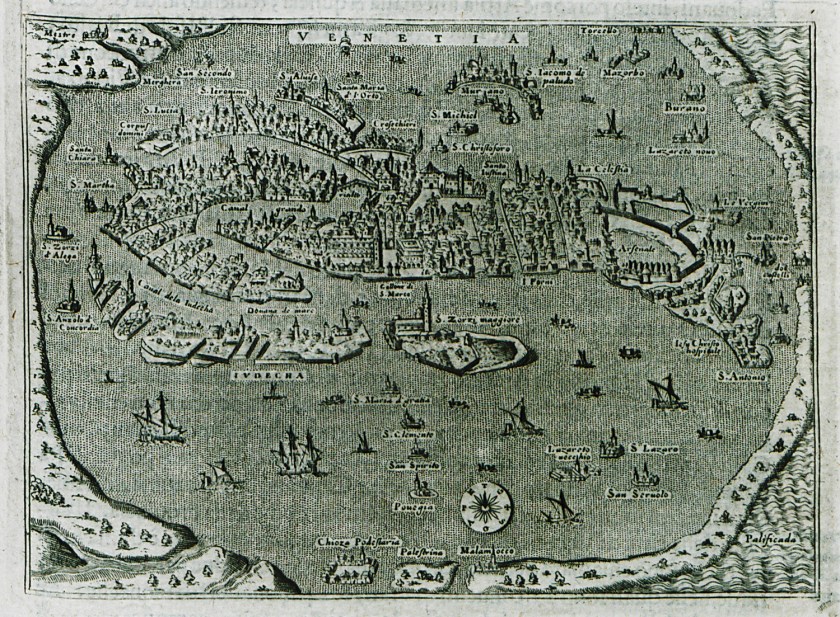
Venice in the early C17 was the hot place for music in the West. The Republic might have begun its long slow decline, having picked fights with the Ottoman Empire and the Vatican, amongst others, but there were plenty of punters who had made big bucks and were looking to spend it. It was certainly a big-time, sexy, funky, party town. Carnival was big business. Public opera, with that genius Claudio Monteverdi in the vanguard, was taking hold. New instrumental ensembles were being tried out. Exquisite brass was set alongside double and triple, or more, choirs in churches, following on from Gabrieli’s innovations in the previous century. (Even the guards telling the snaking hordes of tourists in St Mark’s Basilica to shut up sound musical thanks to the stunning acoustic). The best performers, composers and instrument makers gathered there.

This was the music members of the AAM sought to highlight in this BBC lunchtime concert, built around the sonatas of Dario Castello, which, to an extent, defined the form. He was born around 1590 and died around 1658, though his best known work comes from the 1620s. He was the leader of a wind ensemble, cornetts, sackbutts, shawns, bagpipes and so on, and might have had a job in St Mark’s. His two books of sonate concertate comprise 29 pieces, (five were played here), that alternate retro polyphonic sections with cutting edge, (by 1620s standards), expressive recitative, the stile concitato,  a la Monteverdi. Instruments are specified, including continuo, musicians are expected to be on their game. This simultaneous looking backwards and forwards is what makes this music fascinating if not entirely satisfying.

In addition to the Castello we had a chaconne, a simple bass riff with increasingly inventive variations, dead easy for the Baroque initiate to grasp, from one Tarquinio Merula, a harpsichord Toccata from Michelangelo Rossi, an unusual Toccata and Ballo for theorbo from Giovanni Girolamo Kapsberger and a concluding trio sonata from Francesco Turini.

Merula never worked in Venice, (he had positions in Cremona and Bergamo)  but he knew the drill. He was an argumentative chap by reputation but he helped set the tone for the dance vibes of the later Baroque. Rossi came from Genoa, worked in Rome, wrote madrigals and operas, and, despite being a violinist, a book of 20 toccatas, which embrace some dramatic chromaticism and choppy tonality as here. Now you don’t often see a theorbo solo even if you are a paid up member of the Baroque club. The theorbo is that giant-sized lute that the player rests, like a loving parent, on his/her knee. GG Kasperger came to Rome by way of Vienna and was, in terms of theorbo virtuosity, the Charlie Mingus of his day. Turini was also born outside of Italy and published madrigals including some early instrumental sonatas.

I probably don’t need to tell you how very fine the members of the AAM were in this very rarely performed repertoire. Their excitement in exploring the, shall we say, backwaters, of the Venetian School was palpable. Bojan Cicic, as leader of the AAM, has appeared a few times before on this blog, as has Alistair Ross on the harpsichord. William Cater was as eloquent in his explanation of the theorbo piece as he was in its playing, but I was particularly taken by Persephone Gibbs’s playing in the second solo violin sonata of Castello. Great first name. Even better surname. And she leads a Baroque orchestra based in Devon. No relation though. She has talent after all.


Monet and Architecture at the National Gallery review *****

RouenCathedral_Monet_1894

Monet and Architecture

National Gallery, 14th June 2018

I am not the biggest fan of Monet’s later, post-Giverny work. Loved the actual garden, the white suits, the pipe, the spectacular beard, the repetition and the joy. But the colours make me queasy and the smudginess is disorientating. I know that is what his eye could see but it still unsettles me. And then there is that general “pretty-pretty” thing about Impressionism, and the way it is has been confiscated by the cultural imagination, that puts my back up.

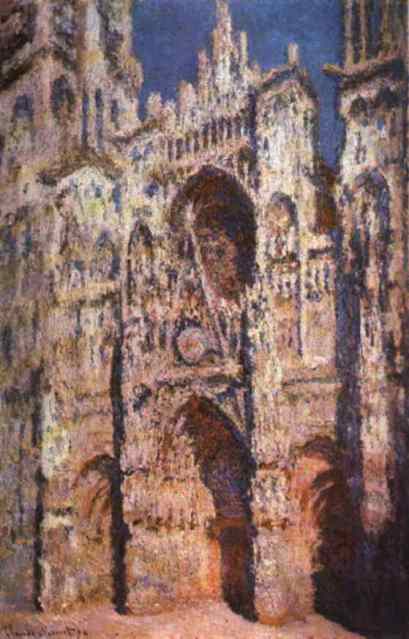
The earlier stuff though does the business and pop a building in, or some other expression of the built environment, and I am a buyer. It offered up another set of shapes, beyond the natural, for our Claude to explore, and provided anchors for the eye. And later on, in Rouen, or London, or Venice, new textures. And when you see room upon room of paintings of such beauty it is, cliche-alert, breath-taking. This exhibition is an aesthetic delight. No need to think about context, concept, history, method, material, technique, message, or anything else for that matter. Let there be light as some other important old fella with a big white beard might have said.

That’s it. Just go. And be happy. I’ve nothing else to say.

Beast film review *****

jersey-1707238_1920

Beast, 14th June 2018

I can be pretty certain I am going to thoroughly enjoy a film in a cinema. I can go when pretty much no-one else is there, to a showing near the end of a run, which satisfies my misanthropy and intolerance of distraction, and I can rely on the combination of known critics, cast and directors, to near guarantee success. And, unlike the theatre or a concert, the very “static’ nature of film, there is only one possible performance, further pre-empts disappointment.

The only real question then is just how good is the film going to be and is it in with a chance of entering my mental best ever lists. Beast is superb and most definitely does. Any concerns that I had that this might drift a little too far into genre territory plot-wise were entirely unfounded. In fact it effortlessly slips and slides between genres to promote a satisfying sense of discomfort, if that makes sense.

This is director Michael Pearce’s feature film debut. He is plainly an immense talent and it is no wonder this got financed. Gripping story, superb performances, beautifully shot and a clear, but not simplistic message, about the impact of “outsiders” on a “settled” community. Above all though it has bucket-loads of utterly believable suspense. A genuine thriller but without daft McGuffins or false motivations. If you are a scion of the ubiquitous crash, bang, wallop school of Hollywood blockbusters this probably isn’t for you. But, rest assured, neither is it anywhere near the cinema of pretentious, European navel-gazing that is my usual menu de jour.

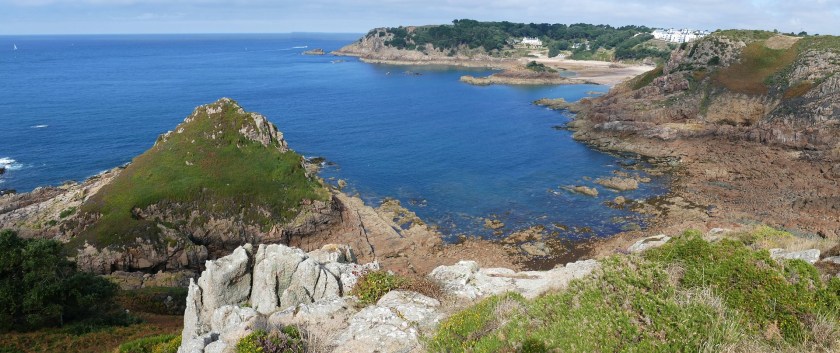
Moll is a tour guide in her 20’s trapped in a stiflingly bourgeois middle class family on the island of Jersey. Mum Hilary is the worst kind of snob, Dad is incapacitated with Alzheimer’s and needs constant care, smug brother Harrison leaves tween daughter to the care of Mum and Moll, immaculate sister Polly is a social climber now boastfully pregnant. It opens at Moll’s birthday party where she is the very definition of “putting a brave face on it”. Time to turn to the drink, walk out, pop some pills, go to a club, find with a bloke, stay out all night and have a quick shag behind the old gun battery by the beach. Except that said bloke tries to coerce her. Enter the handsome, if slightly rough-looking stranger, Pascal, who sees off the creepy bloke at gunpoint. Couple up with the stranger much to the disgust of family. Secure freedom …. but at a price …. as Moll and Pascal chase each other, and are chased, down the “did-they, didn’t-they” rabbit hole.

In many ways this is not an entirely fresh plot, though in C19 novels, both classic and/or melodramatic, and plays of old, it often involved married, or about to be married, women seeking to escape into the arms of an enigmatic, or worse, outsider. This, though, couldn’t be more contemporary, by laying on top the investigation of a crime, like the best murder mysteries, (though this is no Bergerac, people), and through the dissection of class and xenophobia. Johnny is a local, boasting he can trace his lineage back to Norman times. He may be lying. Moll’s family are presumably monied incomers. Migrant workers come to pick potatoes are vilified. Jersey looks lovely but feels parochial. Bubbling underneath though is something very primal. Michael Pearce grew up in a Jersey which remembered being terrorised by a serial rapist and paedophile in the 1960s, Edward Paisnel, which provided the spark, but wisely no more, for his wily screenplay.

As if this wasn’t enough we are also made to continuously question the nature of Moll and Pascal’s passion and just how much Moll knows or wants to know about Pascal. Both have dark secrets and unpredictable outbursts. The final collision, played out in close-up at a scenic beachside restaurant, is a belter.

Now you can see from the sound of all of this, that, with all that they have to convey, only the very best of actors was going to be up to the task of playing Mol and Pascal. Step up Jessie Buckley and Johnny Flynn. Now I know my regular reader will find this hard to believe, given my oft-repeated distaste for musicals, but I actually found myself watching a couple of episodes of I’D Do Anything on the telly all those years ago, the brain-child of the slightly odd Andrew Lloyd-Webber. Our Jessie was robbed at the end but anyone with any sense could see what an immense talent she was. That is why I watched despite myself. She then, smartly, pitched up in the acclaimed Menier CF revival of A Little Night Music, trained at RADA, went on to a Globe Tempest, a Grandage Henry V and the Branagh Winter’s Tale with Sir Ken himself and Dame Judi. On TV she has done a Rosamund Pilcher adaptation, the BBC War and Peace (a marvel), Tom Hardy’s bonkers, but addictive, Taboo, The Last Post and, latterly, Marian Halcombe in the recent brilliant BBC Woman in White. On every outing she has been outstanding in my book even when up against the best of British acting talent.

And then there’s Johnny Flynn. It looks to me, that alongside his modern folk musical career, Mr Flynn does pretty much whatever he likes when it comes to acting. Serendipity, and latterly extreme admiration, has meant I have seen most every performance Mr Flynn has committed to the stage. His Curtis in Edward Hall’s intelligent take on Taming of the Shrew for Propellor, Lee in the West End Jerusalem, the Globe Richard III and Twelfth Night (again alongside Mark Rylance), Bruce Norris’s The Low Road at the Royal Court and as, (the not dissimilar to Pascal), Mooney in McDonagn’s masterpiece Hangmen. Like Jessie, even when surrounded by outstanding actors, he shines. And he just oozes charm. Vagabond, itinerant, drifter, rake, roue, mountebank, inveigler, Take your pick. He was born to play them right down to the straggly beard. You can smell him in Beast from the back of the cinema.

Put these two together and it is mesmerising. No need for any over the top theatrical flammery and no need to suspend any disbelief when it comes to romance. It is a wonder the two of them take even a few hours to get it on such is the intensity, and depth, of the passion they portray. You root for them, a latter day Bonny and Clyde, as they stick two fingers up to family and conformity even as their malignancy is revealed. Oh, and as if that wasn’t enough, across a string of excellent supporting performance, Geraldine James as haughty Mum Hilary is superb, oppressively trying to control Moll, in part because she fears her. A word too for Trystan Gravelle as oleaginous Cliff, the police officer looking at the murders and failed wooer of Moll.

I know this is going to sound daft but the best comparison I can make is to Hitchcock. The call back to timeless fables, the slight air of oneiric unreality, (Moll even has a couple of living nightmares), the psychological insight, the mauling of hypocrisy, the intensity of performance and, obviously, the mastery of suspense. No funny business from the camera, though there are some banally beautifully composed interiors and exteriors from cinematographer Benjamin Kracun, in full natural light belying the darkness at the heart of the plot, but certainly the same way with plot and story.