
Joanna MacGregor at the Wigmore Hall review ****

Joanna MacGregor (piano)

Wigmore Hall, 11th November 2019

Birds, Grounds, Chaconnes

  • Jean-Philippe Rameau (1683-1764) – Le rappel des oiseaux
  • François Couperin (1668-1733) – Les fauvétes plaintives
  • Olivier Messiaen (1908-1992) – Le merle noir
  • Jean-Philippe Rameau – La poule
  • Leoš Janáček (1854-1928) – On an Overgrown Path X. The barn owl has not flown away
  • Sir Harrison Birtwistle (b. 1934) – Oockooing Bird
  • Hossein Alizâdeh (b. 1951) – Call of the Birds
  • Henry Purcell (c.1659-1695) – Ground in C minor ZD221
  • Philip Glass (b. 1937) – Koyaanisqatsi Prophecies
  • William Byrd (c.1540-1623) – My Ladye Nevells Booke First Pavane
  • Philip Glass – Trilogy Sonata Knee Play No. 4 from Einstein on the Beach
  • Johann Pachelbel (1653-1706) – Ciacona in F minor

I am guessing Johanna McGregor started out interrogating her extensive repertoire for an hour of solo piano pieces connected with birds, then thought, sod it, why doubt I chuck some Purcell, Byrd and Glass into the mix and end with Pachelbel. Good call. This genuinely was a delight from start to finish. Not a single wasted note, even from the composer, Hossein Alizadeh, whose work I had never heard.

Whilst Ms MacGregor dips into the Romantic repertoire, notably Chopin, it is the C20 and Baroque (especially Bach) for which she is most well known. Suits me. If pushed I would say I preferred the Couperin to the Rameau when it came to the battle, though both are so elegant there was no hint of aggression, between the French Baroque masters. The Rameau comes from a suite and is comprised of two related halves. Same structure in the Couperin, which represents warblers, and the second Rameau, hens pecking away in a courtyard that Respighi went on to pinch.

It was the Messaien that enthralled me. This is the second piece from Le Petite esquisses d’oiseaux, and represents the humble blackbird. Bright chords offset its calls and movement in four changing sections. I need a recording. Let’s see what Santa brings.

The cry of the owl is a warning in Czech and other folklore and here its scary screech here precedes a fading chorale, all beefed up with Janacek’s arpeggios and ostinatos.

The Birtwistle was written when he was just 15 and shows he was already heading off into his own world, albeit here still framed in jolly Satie-ism, and maybe, though he had never heard him, Messaien himself.

Iranian musician Hossein Alizâdeh wrote his Call of the Birds for a lute-like instrument, the shurangiz, and a duduk, similar to an oboe. Ms MacGregor has created her own arrangement of its rhythmic drive. I liked it, like a Middle Eastern jig.

Purcell’s C minor ground is an exemplar of the form, the rising arpeggio of the bass line, seven bars long, in the left hand with a “catch” tune suject to variation in the right, before the bass dies. All over in three minutes like a perfect pop song. The Byrd, a Pavane from the divine Lady Nevell’s Book, one of the first written keyboard collections, is a similar structure, a ground with harmony on top, but way more ornamented. He really was a clever fellow and with a surname to match the theme of the first half.

The first Glass is the typical cycle with in a cycle oscillation of PG’s piano work but was originally scored for chamber ensemble and chorus, coming at the end of the art film by Godfrey Reggio that was a big mainstream hit. The five knee plays connect sections of Glass’s opera Einstein on the Beach, at five hours long, it needs some breaks, and originally was performed by violin and voices, (where it works better).

The gentle Pachelbel chaconne, a stepwise structure subject to 21 variations, was followed with a more upbeat encore, a Handel Passacaglia, that fitted the bill.

One hour, one instrument. So much to enjoy.
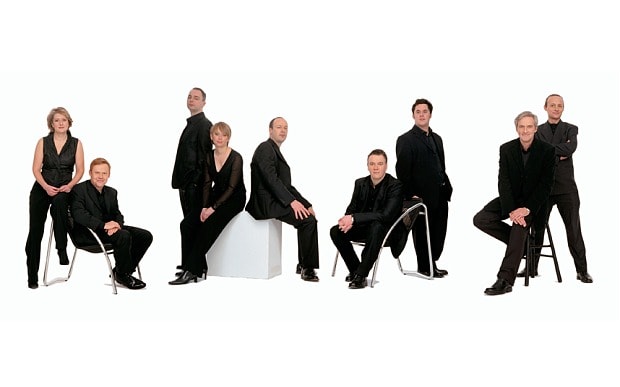
The Cardinal’s Musick at Wigmore Hall review ****

cardinalls_3132548b

The Cardinal’s Musick, Andrew Carwood (director)

Wigmore Hall, 4th December 2017

  • Giovanni Pierluigi da Palestrina (c.1525-1594) – Missa Hodie Christus natus est
  • Anon – Gaudete, Hail Mary full of grace, Quem Pastores, Salutation Carol
  • Jacob Handl (1550-1591) – Mirabile mysterium
  • Richard Pygott (c.1485-1549) – Quid petis O fili
  • Tomás Luis De Victoria (1548-1611) – Ecce Dominus veniet
  • John Dunstable (c.1390-1453) – Speciosa facta est
  • William Byrd (c.1540-1623) – Lullaby, my sweet little baby
  • Hieronymus Praetorius (1560-1629) – Magnificat quinti toni

In the immortal words of the now septuagenarian, Noddy Holder, “It’s Christmassssssssssss”. And what better way to kick it all off than an evening in the company of Andrew Carwood and The Cardinal’s Musick. Here was a programme that spanned a couple of centuries, various important centres of Renaissance music, Spain, Germany and England, Latin and local, liturgical and secular, motet, mass, carol and lullaby. I confess that despite repeated exposure, reading and learning I am still a bit stumped on how all the religious stuff fits together, but, no matter, this was just a lovely evening of choral music.

Andrew Carwood is a terrific host. Pretty funny too. No suggestion that he should give up his day jobs as scholar, director here, chief music honcho at St Paul’s and general provider of music at all important State occasions, for a life on the comedy circuit, but his introductions to the pieces are droll as well as informative. The CM, as in their recent concert at St John’s Smith Square informed by Armistice Day (The Cardinall’s Musick at St John’s Square review ****), which I also attended, make a simply lovely sound.

There was literally nothing here I had heard before (actually not quite true, see below) but no matter, I enjoyed it all. However, I always expect to uncover something new and interesting, and here it was the Jacob Handl motet, with its extraordinary chromaticism, and the Advent motet of Victoria, tip top polyphony. The Palestrina mass and motet, with its mixed split choirs (SSAB and ATTB) is a jolly affair, made jollier by interspersing with the four carols, including Gaudete, which I own in a recording by, of all people, Steeleye Span. Yep, a musical eclectic, that’s me. You will know it. I was a bit less enamoured of the Pygott lullaby with its baby babbles (I kid you not) but the Byrd equivalent was typically dark and unlikely to send you to sleep pacified. The Dunstable, a piece of Virgin Mary fandom, was the earliest in the programme, very short but very, very sweet. The Magnificat from the extravagantly named German composer Hieronymous Praetorius, went on a little bit but was still full of gesture as it flipped from Latin to German.

Like Bouncing Back this was “lovely stuff”. Anyway the tree is up, shopping’s done, SO has kicked off with the cards so time to get wrapping.


The Cardinall’s Musick at St John’s Square review ****

The Cardinall’s Musick // Andrew Marwood - London Wednesday 5

The Cardinall’s Musick, War and Peace

St John’s Smith Square, 19th November 2017

  • William Byrd – Kyrie from Mass for five voices
  • William Byrd – Ad Dominum cum tribularer
  • Benjamin Britten – Advance Democracy
  • James MacMillan – When you see the millions of the mouthless dead
  • Orlando Gibbons – O Lord in thy wrath
  • James MacMillan – A Child’s prayer
  • William Byrd – Agnus Dei from Mass for five voices
  • William Byrd – Kyrie from Mass for four voices
  • Philippe de Monte – Super flumina Babylonis
  • William Byrd – Quomodo cantabimus
  • James MacMillan – Emitte lucem tuam
  • Arvo Pärt – Da pacem
  • James MacMillan – Christus vincit
  • William Byrd – Agnus Dei from Mass for four voices
  • William Byrd – Peccavi super numerum

Sitting in Thomas Archer’s fine Baroque masterpiece church, rapt audience, listening to one of the UK’s finest ensemble interpreters of C16 and C17 British vocal music, here singing a diverse set of texts from composers past and present framed by extracts from William Byrd’s finest works, the Masses for four and five voices. And all to remember the fallen of past conflicts.

The Britten piece is packed with drama and I see nothing wrong with the pungent warning against Fascism in the text. As ever with the James MacMillan’s work the directness and invention wins you over but I have to say A child’s prayer, written in memory of the victims of Dunblane, pulls you right up with its repeated dirge of “Welcome”. Even by Part’s standards Da pacem is sparse but still so powerful. The biggest surprise of this excellent evening however was the Philippe de Monte motet which apparently stuck a chord with the nominally recusant Byrd. And the concluding five part Byrd motet, Peccavi super mumerum, which was new to me, left me pinned to my seat.

Don’t go through your life without William Byrd. I should probably stop there. So I will.