
Cave at the Printworks review ****

background-black-and-white-cave-366313

Cave

The Printworks, Surrey Quays, 23rd June 2018

Cave is the second collaboration between composer Tansy Davies and librettist Nick Drake. Their last work, Between Worlds, which took as its subject the Twin Towers on 9/11, was superb. It was an immensely moving and sensitive elegy which focussed on the last conversations with loved ones of just five victims trapped together on one floor watched over by a benign Shaman or spirit, superbly directed by Deborah Warner. The audience I saw it with was floored (even if a couple of jaded critics were a bit sniffy).

I have since heard a few of Ms Davies’s very fine works including the premiere of her Concerto for four horns, entitled Forest. She has a way of finding the right shape, sound or phrase to match the intent and mood of her music, without ever serving up the obvious or banal. There is a rhythmic underpinning which I think reflects her familiarity with popular music genres, especially funk and post-rock. Her music can be muscular, industrial if you will, but, equally, she is capable of great lyricism. In more recent commissions she has been afforded the opportunity to work at a larger scale, but there is still a chamber like intimacy to her work, even when it is belting out in full on forte. In short she has the gift, and, even if contemporary classical music isn’t your bag, in fact maybe especially if contemporary classical music isn’t you bag, I defy you not to hear it.

She is also pretty keen on conveying a message in her music. As is librettist Nick Drake. Cave is set in a world disfigured by ecological catastrophe. A man (Mark Padmore) stumbles into a cave. He probably nibbles on some crazy mushrooms. He remembers his daughter Hannah, played and sung by Elaine Mitchener, and, when young, played by Akilah Mantock at my performance. Her spirits fills the cave. That is pretty much the long and the short of it. There are seven scenes in total beginning with the entry of the audience into The Lost River which runs through the cave.

The Printworks in Surrey Quays used to be where the Evening Standard was printed in the pre-digital era. It is a cavernous industrial space, as I discovered on my pre-prandial hike to the loo just ahead of the opening of the opera, which plays host to a variety of events, united in there “alternative” vibe. Perfect for this work. The audience was lined up along both sides of a very narrow, very long space in Mike Britton’s set, covered with, I think, wood bark. and with the seven members of the London Sinfonietta at one end and vast plastic hanging “doors” at the other. It was largely left to the marvellous lighting of Jack Knowles, who despite looking about 5 years old, has a massively impressive list of credits behind him, to conjure up the required magic, along with a sound design from, usual culprits, Sound Intermedia, as well as the electronics of Tansy Davies and Rolf Wallin.

Even with the principals moving up and down the space there were times when the “action” was a bit “laterally compromised”, especially for those of us pig-headed enough to go right along to the end where the ensemble was positioned. On the other hand this perch did afford a perfect insight into all the moving parts of the score, and, at one key point, the vocal pyrotechnics of Elaine Mitchener. She is not your opera mezzo diva. Thank goodness. Usually to be found in repertoire which is even more boundary-pushing than this, she has an extraordinary range of expression. I was spell-bound. For those of us who are regular listeners to Bach, Britten and Baroque, Mark Padmore needs no introduction at all. Here his singing was predictably exquisite. He also put in an acting shift as the Man plagued by his memories and a world that has literally fallen apart around him. I also suspect this won’t be the last I see of the precocious ten year old Akilah Mantock – no fear at all in what must have seemed a slightly odd role when she went to the audition.

Mr Drake’s other job is a poet. No kidding. The second scene, the Echoes, starts out with the Man hearing Hannah’s voice before he goes into an astonishing quasi aria describing his journey into the cave. This is when we see the connection that Ms Davies and Mr Drake intended to make to some of the very first human impacts on the earth. Apparently they went for a trip to have a peek at cave paintings in Niaux in the Pyrenees, which proved a crucial inspiration. I am not surprised, this is where art and nature recognisably first collided.

Scene three, the Cave of Birds, has the Man describing the onset of ecological catastrophe, and some sort of vision, scene four, The Mirror Cracks, is a “rave of agony” as the Man recalls losing Hannah, who “responds” by singing the last part of his “song” backwards. The Tree of Shadows starts with the Man and Hannah remembering a past holiday and then Hannah going a bit preachy as she describes how she wants to save the world from the havoc wrought by the generations which preceded her. A powerful instrumental interlude (with electronics I think) follows, The Storm, which then gives way to a lullaby shared by the two principals which shows off their superb singing. The final scene The River sees the man leaving the cave, presumably to die, but probably healed.

This is an epic myth, or more exactly a parable, and, in that, I was reminded of Britten’s Church Parables, which I don’t think were a direct inspiration, but, for me, have a similar vibe. The scoring is sparse, under the expert baton of Geoffrey Paterson, with most of the colour coming from the winds and brass, the clarinet/bass clarinet of Timothy Lines, contra bassoon of John Orford and horn of Michael Thompson, contrasted with the prominent harp of Helen Tunstall, set against a sort of continuo from Jonathan Morton’s violin and Enno Senft’s double bass. Elaine Mitchener gets to give a hefty whack to a drum at one point and, as I have said, electronics and some other sound effects (plenty of echo) play a major part. Overall you have no difficulty in musically distinguishing the scenes, there are some breathtaking sounds here and no little drama. I was not entirely convinced about the articulation between music, words and message but that probably says more about my pessimism than the creative talent on show here. It is certainly not the fault of director Lucy Bailey.

I don’t want to get more frightened of, and helpless about, the world around me as I get older, but it seems to be happening nonetheless. It certainly does feel like we humans are accelerating towards our inevitable extinction event despite the apparent gift of consciousness. Mother Earth will get over us I suppose. Anyway it is good that Tansy Davies and Nick Drake are not engulfed by this sort of negativity and prepared to make an ambitious stand of sorts in their art. It is also good that they are not cynical about all things “spiritual”. As this piece is sub-titled, courtesy of modern day environmental shaman and prodigious psychedelic drug-taker Terence McKenna, “Nature loves courage”.

At the end, Ms Davies was zipping by to thank the performers. I briefly thanked her. No doubt she thought I was a nutter so apologies but I felt compelled to offer up my appreciation. Thank you.



Colin Currie Group at Kings Place review ****

colin-currie-group_3_credit-chris-_web-billboard-2000x1125

Colin Currie Group

Kings Place, 20th January 2018

Steve Reich

  • Music for Pieces of Wood
  • New York Counterpoint
  • Mallet Quartet
  • Drumming Part 1
  • Vermont Counterpoint
  • Quartet (2013)

So off to Kings Place for another immersion into the sound world of Steve Reich guided by his finest living advocates (probably), the Colin Currie Group. Having seen the CC Group perform Reich a couple of times in the past couple of years, (at the RFH), I consider myself something of a groupie. I was honoured this time to be accompanied by not one, but two, potential converts to the live, minimalist music cause in the shape of MSBD and MSBDB. And, to emphasise, you really do need to hear this live for the full effect.

I won’t bore you with another hagiography extolling the virtues of Mr Reich. Take a look here if you want that (Steve Reich’s Drumming and Tehillim at the Royal Festival Hall review *****). Suffice to say I urge anyone to give his music a whirl and see what you think. I won’t hold it against you if all that repetition sends you to sleep. Me, I am fascinated by it. Out of apparent rhythmic simplicity emerges music of shimmering and unsettling intensity.

On the subject of repetition in music I promised myself I would not use this blog to eulogise the now departed Mark E Smith. Let’s just say RIP. Hands down the most important creative force in my lifetime.

Anyway this gig kicked off with Music for Pieces of Wood written in 1973. Which is exactly that. Though these are not any old offcuts having been specially selected for their pitches, A, B, C, sharp D sharp and another D sharp an octave higher, and timbre. It is built entirely on patterns of beats and rests over three lengths 6/4, 4/4 then 3/4. That’s it. As so often with Mr Reich the apparent simplicity though belies its careful planning and the subtlety of outcome. There is no place to hide for the players here.

New York Counterpoint from 1985 sees a clarinettist, here Timothy Lines, pre-record ten different parts, including for bass clarinet, which is prominent in the last movement, against which he plays a final, eleventh line, live. Vermont Counterpoint from 1982, here performed by flautist Rowland Sutherland, employs a similar, though to my ear more complex, technique for flute, alto flute and piccolo, across 10 pre-recorded parts and one solo line using each instrument. In both cases, despite the discipline employed in terms of relationships of rhythm, tempo and meter, the effect is of often “melodic” and ambiguous counterpoint, with more than a whiff of Stravinsky’s neo-classical chamber works. Maybe at times in both pieces the solo line could have been brought forward a little “in the mix” but I was persuaded.

Mallet Quartet is a more recent piece from 2009 scored for two vibraphones and two five octave marimbas extending down to cello C apparently. Once again three movements, fast/slow/fast, with some fancy changes of mallets. The marimbas create the rhythmic backdrop linked by a canon structure in the fast movements, with the vibraphones providing the melodies, again largely in canon. In the slow movement it all gets pared back however, and the effect from the vibraphones is of a far more atonal world which I am not sure would be to everyone’s taste and is a fair way from “typical” Reich.

Back on track though with the iconic Drumming, or at least the first of the four movements. This is divided into four clear parts and is for four pairs of tuned bongos. (This makes me think once again of MES with his quip that The Fall was him and your granny on bongoes. Now if your granny could only play bongoes like this ……). Anyway this is quintessential Reich, building from one beat to twelve beats, alternated with rests, and then with the rests replaced with beats until the cycle is completed, and then reversed. This pattern is repeated in the other three movements with the different instruments, and it was a shame not to hear this (see review above), especially the spellbinding third movement with glockenspiels (and whistling !) and the thrilling final movement, where the whole lot gets chucked in. There is so much in the sound created that is it is impossible to believe the structure is so simple. This is Reich at his most hypnotic, made more so in this performance by the strobic effect of the movement of the sticks in the “fastest” passages. MSBD loved it so much he nodded off apparently – trust me that is a compliment. When Reich, (and other minimalist music), succeeds your mind and body can “drain away” leaving just the rhythm. Far out. Sorry for this hippy gibberish but it’s true.

Which brings me to Quartet from 2013. This piece, scored for two pianos and two percussion, which is the building block for many of Reich;s earlier works, shows what he is now up to. This is melodically much more complex than the previous works on show, with multiple key changes, breaks and pauses, frequent gentle dissonance, and shifts into new ideas. In fact more like most contemporary classical music. Fast/slow/fast once again, but the slow movement contains harmonic variety which you won’t find elsewhere in Reich’s compositions, though once or twice it veers towards doodling. Don’t worry, there is still rhythm at the core but this takes the players up a further notch in terms of level of concentration. Which is why is was written for, and dedicated to, this ensemble. I was much taken with it and will need to add it to the list of recordings of Reich’s music I need to lay my hands on. (I see there is one about to be released, And CCG are releasing their own recording of Drumming which will surely be a treat).

Loved it and so did the audience. Kings Place acoustic is terrific, warm and offering up waves of sound, so I doubt I will hear a better treatment of these works.

Next up CCG will play Reich;s Tehillim, based on psalms and reflecting his Jewish heritage, and which uses voices and wide instrumentation to drive melodic invention. Still Reich but this is more minimalism meets Baroque. Annoyingly the BBCSO also takes on Berio’s Sinfonia in this concert but I will be pandering to my new found fascination with Ligeti at the South Bank. Seems like the Barbican and the South Bank are going head to head in competition for the geeks.


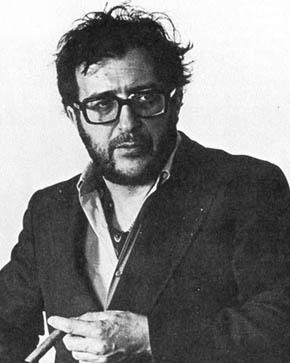
Luciano Berio: London Sinfonietta at Kings Place review *****

luciano_berio

Luciano Berio: Theatre of the World

London Sinfonietta, Kings Place Choir, Jonathan Cross (presenter), John Woolrich (curator)

Kings Place, 4th November

  • Lucy Schaufer – mezzo-soprano
    Michael Cox – flute
    Darragh Morgan – violin
    Paul Silverthorne – viola
    Timothy Lines – clarinet
    Lucy Wakeford – harp
  • Young violinists from Waltham Forest Music Service and the Kurumba Youth Orchestra
    London Sinfonietta

Luciano Berio

  • Lepi Yuro
  • E si fussi pisci for solo viola and for choir
  • Duetti: Aldo
  • Naturale
  • Duetti: Various
  • Divertimento
  • Chamber Music for clarinet, cello, harp and mezzo-soprano
  • Sequenza II for harp
  • Autre fois
  • Lied for clarinet
  • Air arr John Woolrich
  • Berceuse for Gyorgy Kurtag
  • Sequenza I for flute
  • Musica Leggera
  • O King
  • Chants Parallelles

Many years ago, maybe 30 or so, I heard a piece by Luciano Berio in a mixed programme at the Barbican. The ticket was free, courtesy of FF, and I cannot, for the life of me, remember the other pieces, the performers or the name of the Berio work. But I remember being completely blown away by the music, making a firm mental note that it was by Berio and that I should explore his music further.

Of course I didn’t. Modern classical music was just too tricky to grasp and I had a life to get on with. But there must have been the germ of something there. Now that I am older, and maybe wiser, I am beginning to understand that this was not a one-off novelty experience. There was something about Berio’s music that had left a mark. There seem to a handful of other modernist classical composers who similarly create a connection for me and I am still working my way through other candidates. Outside of the minimalists and a handful of contemporary names, Berio, along with Iannis Xenakis, Gyorgy Ligeti and Krzysztof Penderecki are the chaps that float my boat. There may be more.

So I am actively seeking out performances, live and recorded, of these lads. Heaven knows why they stand out but I think I am drawn to the fact that they all seem to engage with the musical past in some way, they pump up the rhythm, they can create extraordinary sound worlds (if you can’t hum it best to get wowed I find) and they favour dramatic and dynamic contrasts. No doubt if you know what you are talking about when it comes to music you would be able to offer me more comprehensive explanations (feel free to do so – I would be very grateful). There is still a lot of modern and contemporary classical music that leaves me absolutely baffled so there must be something going on in my head with these particular composers.

Here was a marvellous opportunity to enjoy a variety of Berio’s small scale output as part of the Turning Points series at Kings Place curated by British composer John Woolrich with the London Sinfonietta, who excel in modern works and premiered many of Berio’s pieces in the 1970s and 1980s. Now Mr Berio didn’t seem to suffer from any form of “composer’s block”. Prolific doesn’t begin to describe it. He composed for all manner of instrumental forces, including electronics and tape, and was particularly adept with the human voice, as well as strings, piano and flute Their are many large scale works, Coro and Sinfonia are maybe the most well known, but there is also a wide range of chamber and solo pieces which left Mr Woolrich with a serious curating challenge. One which I think he responded to with aplomb.

If there is one thing that characterises Berio’s oeuvre it is the way he incorporates the music of the past into the music of his present (the second half of the C20 to be exact). The references can be direct in terms of source material, (he arranged the work of diverse composers from Monteverdi to Mahler), or indirect in terms of fragments, quotes and styles. He saw this as transcription rather than collage but the effect, for the non-musical listener like me, is like a comfort blanket which anchors the “avant-grade” in the familiar.

Folk music played a large part in his framework and this concert kicked off with Lepi Yuro, a classic Croatian folk song scored here for viola. That was followed by a famous Sicilian folk song, E si fussi pisci, set first for solo viola and then, in its more usual format, for mixed chorus, with some suitably fishy impersonations at its conclusion. This choral arrangement was one of the very last pieces Berio composed. Nothing challenging here at all.

We then moved on to one of Berio’s short 34 duetti (1983) for two violins. These were originally written as teaching pieces to introduce the techniques of contemporary music to students, with one half of the duet given a much higher level of technical difficulty than its partner. Each was dedicated to a performer. composer or musicologist and, through time, they increased in sophistication as Berio took a playful view on the history of violin composition and just what it was possible to do with the instrument. The first piece was dedicated to Aldo Bennici, one of Berio’s favourite champions and a multiple dedicatee. After Naturale we were treated to ten more of the Duetti with Darragh Morgan, the LS’s lead violin, charmingly accompanied by young members of the Waltham Forest Music Service and Kurumba Youth Orchestra. Bartok, Stravinsky, Boulez and Berio’s Italian contemporary and sidekick in his electronic adventures, Bruno Maderna, were all name-checked.

Naturale from 1985 takes a recording of a raw and passionate Sicilian folk singer, Peppino Celano, belting out street vendor cries, (if you get the chance listen to Berio’s Cries of London for six unaccompanied voices which is just amazing), and frames it with an extremely expressive viola playing material transcribed from folk songs as well various percussion effects from marimba, rototoms and tam-tam. It is a extremely affecting and the most substantial piece on show in the programme. 

Next up was Divertimento, an early piece from 1946 (revised in the mid 1980s) composed for string trio, before he went to the US and discovered serialism, and which pays homage to Stravinsky and Bartok. This was followed by the first of the two Sequenzas on show, this being No II for harp with No I for solo flute following later on in the programme. Berio’s 18 Sequenzas are amongst the most well known and performed of his compositions and are staples of the solo repertoire for the instruments they showcase. In each case they exploit, with Berio’s trademark humour and musical knowledge, the full gamut of playing possibility with extended techniques piled up high. Watching Lucky Wakeford thumping the side of her harp or picking up the very highest registers was a joy. Berio wanted to show just what was possible beyond pretty glissando for the harp and he surely does. This was also true for the more commonly encountered Sequenza for flute played by Michael Cox which was another highlight of the evening.

Autre fois from 1971, scored for harp, flute and clarinet, is a miniature subtitled Berceuse Canonique pour Igor Stravinsky, which tells you pretty much everything you need to know about its mood and structure. This was followed by Lied for solo clarinet (here played by Timothy Lines) which, as the title suggests, sounds like a mournful song. The orchestral version of Air dates from 1969 but the following year it was recast for soprano and piano quartet. Our mezzo-soprano for this evening was Lucy Shaufer who was in fine voice. Remember Mr Berio’s works for voice comprise some of the finest contemporary pieces for mezzo-soprano given his muse was the American Cathy Berberian whom he married in 1950 and whose professional partnership extended well beyond their divorce in 1964. 

Air was followed by Berceuse per Gyorgy Kurtag, another short piece written in 1998 and dedicated to the redoubtable Hungarian master of the very small. This was followed by Musica Leggara (1974) for flute, viola and cello, (and I gather a tambourine if required), dedicated to a certain Godfreddo Petrassi, which is a spiky canon and not I think the “light music” of the title. Another joke maybe. The concert ended with  one of Mr Berio’s most famous vocal pieces, O King, written in 1968 for mezzo soprano and here strings and woodwinds. This was later incorporated into Sinfonia, possibly Berio’s most influential work. This was written to commemorate the death of Martin Luther King and, as you might expect, packs a powerful emotional punch as the civil rights leader’s name gradually emerges from the soprano’s voice line, If you could pick one work that gets to the heart of Berio’s music this might be it.

i was, annoyingly unable to stick around for the post concert discussion, (I know this sort of thing smacks of obsessive nerdiness but you can learn a lot), but the insight into Berio from the interviews showing in the other Hall at Kings Place was very welcome. He didn’t sound like he was the easiest chap to get on with but the reminisces did show just how broad were his influences and how much he influenced. His role as a teacher and mentor and his fascination with the business of making music, with sound itself, was also emphasised.

And we got to listen to Chants Paralleles, one of his ground-breaking electronic works from 1975. Now a lot of this sort of thing is just so much electronic bubble and squeak in my very limited experience but once again, somehow, Berio makes it vital and intriguing.

There you have it. I am a fan. Give him a whirl. You never know you might like it

And hats off to Kings Place for these Turning Points events. There is a bit of cheesy novelty involved in some of them but this can be overlooked given the learning on offer. The concert on 24th March 2018, from the London Sinfonietta again, which brings together some classic chamber works from the early C20, and links this to space-time and Einstein, (if every playwright on the London stage seems to be intent on shoehorning in brain-bending science, why not music?), looks interesting. As does the OAE’s contrasting of Haydn’s first and last symphonies on the 12th May.

I don’t suppose the bigwigs at the Wigmore Hall are quaking in their boots but Kings Place has emerged as a worthy foil to the grand old dame of Wigmore Street.