

Alys, Always at the Bridge Theatre review ****

Books HD

Alys, Always

Bridge Theatre, 25th February 2019

Said it before and I’ll say it again. You have to be careful with adaptations of novels and/or films on stage. There may be enough in character and plot to justify the transfer but there may not always, (no pun intended), be enough in the form of drama, spectacle and movement to make it a resounding success. So it proved here. There is plenty to enjoy here, and Nicholas Hytner’s direction wrings as much colour as its possible out of the material, especially against the backdrop of a crisp design concept from Bob Crowley, and it is, no doubt, a good story, but as theatre, well not quite.

I don’t know the Harriet Lane novel from 2012 on which Lucinda Coxon, (whose work for stage and screen I have also contrived to miss bar The Crimson Petal and the White adaptation), has created the text. But I can see the temptation. It would make a terrific mini-series. As would, I suspect, Her, Ms Lane’s second novel from the sound of it. Harriet Lane began as a journalist herself, I remember her Guardian column, before becoming a novelist when her eyesight was unfortunately imperilled.

Frances Thorpe is a humble millennial sub-editor cum factotum for a Sunday supplement, the Questioner, who, by a twist of fate, finds her life and career catapulted into a new, gilded league. How she plays the circumstances is the nub of the tale. Gold-digging schemer or realistic opportunist? Becky S, Brideshead, Ripley (without the sociopathic tendencies), Eve Harrington, Holly Golightly, those who find, or position, themselves amongst their “betters” are a cultural staple and these are only the most interesting ones. And, as it happens, in one of those serendipitous coincidences which punctuate the life of the idle Cultur-tarian, the Tourist has subsequently seen two of these iconic parvenus in the guise of stage versions of The Talented Mr Ripley and All About Eve. (More to follow, informed, as these comments are, by the far greater literary intelligence of the SO, my carer for all these entertainments).

The tale of Frances is more subtle than many of these comparators, being more contemporary, set in the rarefied world of publishing, but there isn’t too much that will come as a surprise here. Psychological thriller? That is probably a bit of a stretch. Wry comedy of manners? In parts yes, there is plenty to laugh at, but this doesn’t go all out to skewer the manners, pretensions and behaviour of its characters. We need Frances to present a conundrum, difficult to pin down, but not a total blank, and we do need the dimensions of her character to be explored. Which, by and large, they are not.

Frances’s journey is sufficiently supple though to require a convincing lead performance and, in Joanne Froggatt, (made famous by Downton Abbey I gather), that is what it gets. Whilst the narrative of put upon mouse at work rising to the top and dumping on former colleagues along the way is a little cumbersome it is, in parts, a treat. The relationship that develops with Alys’s family and specifically her grieving husband, Laurence Kyte, (not giving much away here you can’t read elsewhere), also provides an opportunity for some sparkling dialogue. However Robert Glenister has to work awfully hard to bring the overweening, prize winning author to life and the knife-edge of Frances’s conflicted motives starts to blunt in the later two-hander scenes.

Leah Gayer as vacuous daughter Polly has a lot more fun. This is her stage debut. She’ll be back. Polly verges on “poor little rich girl” cliche but Ms Gayer somehow manages to elicit some sympathy for the position her character finds herself in. Her brother Teddy (Sam Woolf) is initially on to Frances but fizzles out thereafter. Sylvestra Le Touzel has a lot of fun with Mary, Frances’s long-serving, frayed boss, as does Simon Manyonda as her condescending, partying colleague, Oliver. The rest of the cast don’t get much opportunity to delve beneath the lines with the exception of Joanna David as Charlotte, the family friend who alone seems to penetrate Frances’s feelings and actions.

If directing is all about moving actors from A to B then there is n0-one better than Mr Hytner, who creates forward momentum and some suspense, from what are quite static scenes. The set, with its thrust stage, sliding room configuration and generous use of video (Luke Halls), is likewise silky smooth. As is sound (Gareth Fry) and lighting (Jon Clark). But the impeccable presentation is part of the problem. The play’s two acts clock in at just over two hours but it doesn’t outstay its welcome nor feel rushed. I was intrigued and entertained but never really challenged. Nor was Frances. Her progress is untroubled by doubt, from self, the other protagonists or audience. I remember only one knowing aside from Frances and one killer line from Charlotte.

I gather the book is altogether darker and Frances a far sharper piece of work, and less reliable narrator, than we see here. Translating that tone, that voice, to stage is always challenging. By taking the safe route Mr Hytner, in the first play he has directed written by a woman, will deservedly get bums on the superb Bridge seats, which is after all his purpose, but I hope his next outing, a new Dream will be something more memorable. Mind you it’s Shakespeare so he is off to a head start. After all when it comes to stage tales of self-advancers big Will served up the very best. Richard III. Now that’s how to do it.

Hogarth’s Progress at the Rose Kingston review ***

william_hogarth_-_self-portrait_-_google_art_project

Hogarth’s Progress: The Art of Success and The Taste of the Town

Rose Theatre Kingston, 21st October 2018

South West London was a popular place for the cultural, liberal, metropolitan elite in the first half of the C18. It still is. Hogarth, Horace Walpole, David Garrick, Henry Fielding, Alexander Pope, Henrietta Howard (the King’s mistress no less), Lord Burlington, Richard Steele, Paul Whitehead, Lady Mary Montagu, John Beard, Kitty Clive, Peg Woffington, James Thomson, John Moody, GF Handel (for one summer), Stephen Duck, John Stuart, Thomas Twining, Augustin Heckel. Oh, and early on in the period, no less than the Queen herself, Anne, at Hampton Court, following in the footsteps of William and Mary. Royalty and the Thames is what made it desirable,

OK so I can’t pretend I had heard of all of these luminaries but some of the big names, Walpole, Garrick and Fielding, play a big part in Nick Dear’s brace of plays about one of the area’s most famous residents, Hogarth himself. The first play, The Art of Success, premiered at the RSC way back in 1986, with Michael Kitchen and Niamh Cusack starring (seen last year on this very stage in the marvellous adaptation of Elena Ferrante’s Neapolitan Novels (My Brilliant Friend at the Rose Theatre Kingston review ****). This tells the story of Hogarth’s early years carousing his way through Georgian London with Henry Fielding and their mates, Frank and Oliver. The new, companion, piece, The Taste of the Town, revisits Hogarth, now in Chiswick, at the end of his life (1697-1764). His house is now supported by the Hogarth Trust, owned and run by LB Hounslow and can be visited most afternoons. Worth a peak especially if you take in he neo-Palladian beauty that is the recently refurbished Chiswick House just round the corner. And, once in your life, you have to see the flamboyant spectacle that is Strawberry Hill House. This is why interior designers are best avoided.

Now for those who aren’t familiar with William Hogarth, he was a painter, printmaker, social critic and cartoonist in the first half of the C18. This period saw a huge increase in the wealth of Britain, (in full union with Scotland from 1707), built on trade, specifically trade in people, specifically slavery. With this came the rise of the liberal Whigs who took power from the Tories in 1715 and drew their support from the new industrial and merchant classes. It was a period of vigorous political debate. At least it was if you were rich. If you were poor …. well you were still f*cked over as always. Anyway Hogarth and his mates were dead centre in this cultural maelstrom, specifically in criticism of the great and good. Journals, newspapers, pamphlets, clubs, all mushroomed. And these boys were bad to the bone.

Hogarth himself came from a less privileged background, enough to get an apprenticeship as an engraver, but precarious enough to see his teacher Dad have spels in the debtors prison. This is where his satirical edge was sharpened. His morality tale “comic strips”, such as A Harlot’s Progress and A Rake’s Progress, were dead popular at the time and have remained so ever since, and sort of defined the entire genre. Yet he was also a renowned painter, largely society portraiture that being the mode at the time, and the tension between his “popular” and his “high” art is one of the themes that Nick Dear explores in the plays.

Dear also doesn’t hold back on portraying the seedier side of Georgian life. The Art of Success kicks off with Hogarth (Bryan Dick), Fielding (Jack Derges), Frank (Ben Deery) and Oliver (Ian Hallard) lashed up after a meeting of the Beefsteak Club and contemplating their next move, which is going to involve sex for money I am afraid. There is a lot of this sort of thing going on in the first play set in the 1730s. Indeed Hogarth’s relationship with prostitute Louisa (Emma Cunniffe), and its discovery by his wife Jane (Ruby Bentall) forms a major part of the plot of this play, such as it is. Alongside his encounter with murderess Sarah Sprackling (Jasmine Jones) who was the subject of The Harlot’s Progress and who seeks to wrest control of her image back from Hogarth after he draws her in prison. This question of who “owns” a representation in art, the observer or the observed, is another central theme of the play.

In the hands of Antony Banks as director, alongside period costumes and a striking, if s;lightly unwieldy, set from Andrew D Edwards, some fine video work from Douglas O’Connell, lighting from James Whiteside, sound from Max Pappenheim and music from Olly Fox, scene after scene unfolds with distinctive verisimilitude. The Queen, Caroline of Brunswick (Susannah Harker complete with comedy German accent) gets a look in, and reveals herself ken to get inside Hogarth’s britches, as does Prime Minister Robert Walpole (Mark Umbers) who reveals himself keen to see a liaison between Sarah and Jane (it’s a long story). Walpole indeed cuts a deal with Hogarth to push through the copyright deal that WH craves to stop his work being ripped off. Yet, alongside Fielding he rails against the political censorship that Walpole introduced to the theatre, a process that persisted until 1968.

This personality parade though gives an inkling into the plays’ problems. The comedy smut becomes a little wary after a while and the crowbarring into the script of biographical and historical fact after fact leaves little room for any change of pace or tone. There is the vulgar, which is fun, or there is the art history lecture, which is a little less so, once you know what is coming. The repellent power of men over women in the Georgian booms out through both plays but to no great end, as the strands are never pulled together..

The second play with Hogarth now retired to Chiswick, and railing against rivals like Sir Joshua Reynolds feels even slighter in some ways. Hogarth is now played by Keith Allen. One word. Irascible. Perfect casting. Jane Hogarth, now played by Susannah Harker, puts up with his grumpiness and abuse, but is a little tired of the suburban life. Hogarth and his mother-in-law, Lady Thornhill, the majestic Sylvestra Le Touzel initially in full on Lady Bracknell mode, do little to disguise there dislike. Things perk up for Hogarth however when old chum, near neighbour and charming egoist David Garrick (Mark Umbers) comes to call and the two go on a road trip. Of sorts. On foot. Down the Thames. Drink intervenes and Hogarth swans off to visit another local celeb, the ostentatious Horace Walpole (Ian Hallard, who seems to be having a lot of fun) who has dissed Hogarth’s painting skills in his stab at classicism Sigismunda (which is. to be honest, pretty limp). They argue, they make up. More misadventure etc, etc.

It’s not that I didn’t appreciate the history lesson. I really did. It’s not that I wasn’t impressed by the acting, notably Bryan Dick, (who impressed in Great Apes and Two Noble Kinsmen recently on stage and as Joe Orton on the box), and Keith Allen, as the main event. And many of the scenes are, of themselves, striking and entertaining. It’s just that the plot, and the arguments it seeks to explore, seem to have been welded together from the events and the personae that are portrayed, and the bawdy and the pedagogic never quite gel.

There is a book, which we seem to have acquired, which you can find in most National Trust shops. Scenes From Georgian Life by Margaret Wiles. It is a collection of period caricatures and cartoons, including some from Hogarth. From the tamer end of his oeuvre for sure. We wouldn’t want to upset the gentle, middle classes. Nick Dear’s two sketch plays are muckier and cleverer but ultimately not that much more impactful.

The Prime of Miss Jean Brodie at the Donmar Warehouse review ****

24795636677_646fd86a04_o

The Prime of Miss Jean Brodie

Donmar Warehouse, 19th July 2018

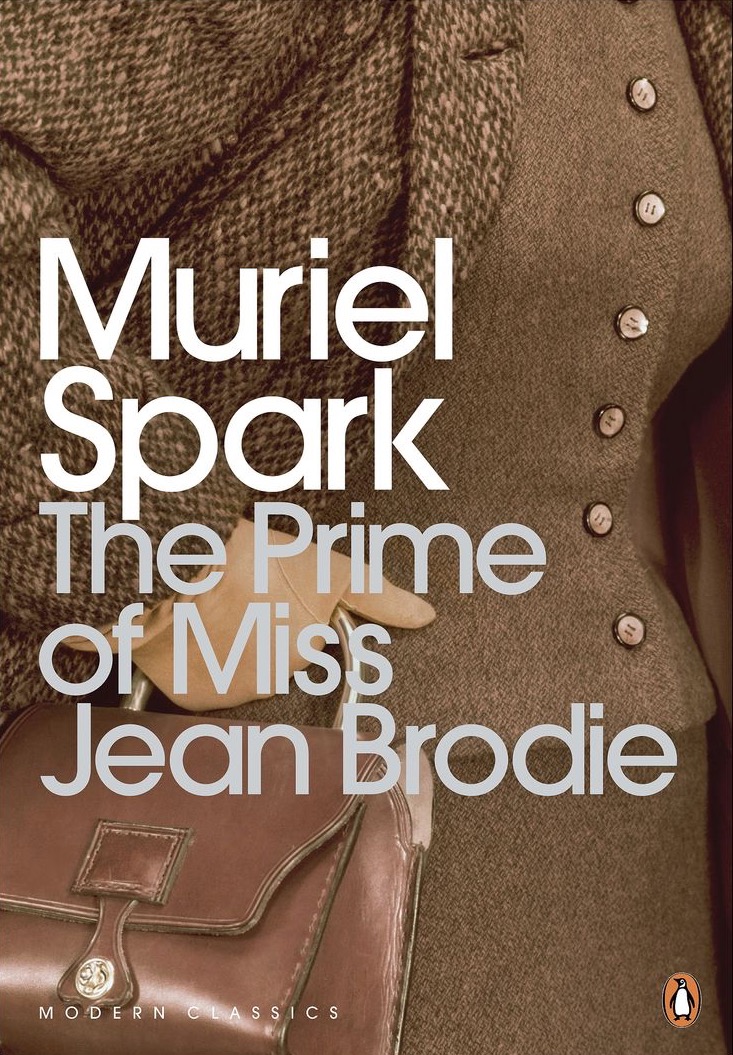
The SO obviously is a big fan of Muriel Spark’s novel. We are both big fans of Ronald Neame’s film version, (only the other day I revisited this director’s magnificently cheesy The Poseidon Adventure), though let’s face it that is largely because Maggie Smith delivers a technicolour Maggie Smith performance. No less than David Harrower, (Knives in Hens, Dark Earth, Blackbird and some classic adaptions), was turning book into text here and Polly Findlay was directing. We have actors of the talent of Angus Wright, Sylvestra Le Touzel and Edward MacLiam and I was particularly keen to see Rona Morison again, who was so good in Orca at the Southwark Playhouse in 2016).

But, more than all of this, the big draw was Lia Williams in the title role. I believe Ms Williams is one of our finest stage actors, most recently seen in the Almeida’s Mary Stuart and Oresteia, (alongside Angus Wright as it happens), and, earlier in her career, Oleanna and Skylight. She is also a mean Pinterite, (if that is the word), and I am looking forward to her directing the opening salvo of plays in the upcoming Pinter season alongside Jamie Lloyd.

Now I had not remembered, from the film, just how ambiguously complex a character Ms Brodie is. An inspiration to the girls, (with Grace Saif, Emma Hindle, Nicola Coughlan, she who brilliantly told a twat of a critic where to get off in his insulting review, and Helena Wilson, all superb alongside Rona Morison’s Sandy), who genuinely wants to help then break free of stifling convention, but also manipulative, desperate, unfulfilled with a nasty undercurrent of fascist sympathy. David Harrower’s adaptation makes all this plain, without any need for histrionics, artfully augmented by Polly Findlay’s methodical direction and Lizzie Clachlan’s pared back design. His subtle inclusion of sub-plots involving Nicola Coughlan’s Joyce Emily, who is spurned by Sandy (and belittled by Miss JB) and goes to fight in the Spanish Civil War, and the framing device of Sandy’s book, worked for me.

Angus Wright as the long suffering, and increasingly frustrated music teacher Mr Lowther, and Edward MacLiam as the more volcanic, and damaged art teacher Teddy Lloyd, were admirable foils to Lia William’s Brodie as they vied for her complex affections. Miss Brodie affects to the aesthetic but real human connection seems to scare her. She provokes rebellion but is actually intellectually conservative. Maybe the guilt of Sandy, as the pupil who betrays Miss Brodie and enters a convent as penitence, (which we see in flash forwards through interviews with Kit Young’s journalist), was a little too forward in Mr Harrower’s adaptation, you know she is Miss Brodie’s nemesis from the off, but it does draw out the darkness in Miss JB’s psyche.

Lia Williams is up against some pretty stiff competition when it comes to theatrical Brodies even if we put Dame Maggie to one side. Vanessa Redgrave, Fiona Shaw and Patricia Hodge, as well as Geraldine McEwan on the telly, have all had a stab. I can’t comment on any of these performances but I can’t imagine they were any better at capturing Miss JB’s dichotomies than this.

With a bit of luck this will end up a run out in the West End. If so I heartily recommend you see it.