
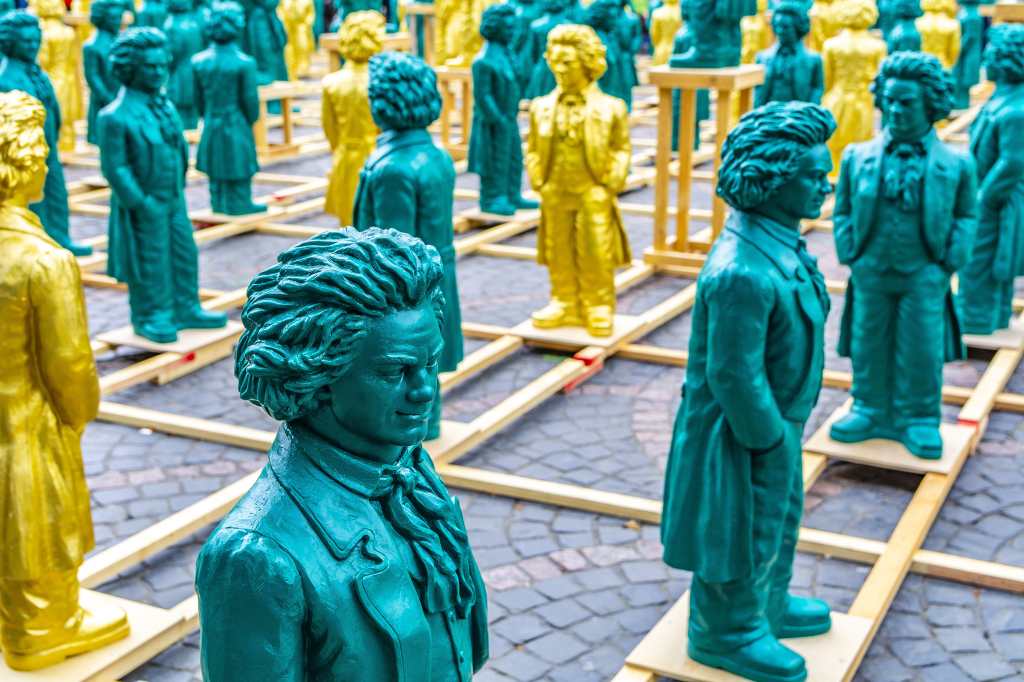
Beethoven Weekender
“This could be the closest thing to heaven …. “. No not the Tears for Fears dirge from 2004 but one of the many fine singles from the vastly under-rated, and alas short-lived, Kane Gang from 1984. The KG, along with the magnificent Prefab Sprout, and the rather less remembered and post-punky Daintees, at least in my mind, were the apogee of the early 80s British pop/blue eyed soul bands hailing from the North East’s Kitchenware Records in the 1980s. Rich melodies, lush production, and often orchestration, skilled song-writing.. What has this got to do with Beethoven I hear you cry. Well nothing actually. It is just this was the song that popped into my head as I enjoyed a fine fry up for lunch courtesy of Fast Break on Day 1 of the Barbican Beethoven Weekender in early February. Plainly I was in a good mood.
Obviously the celebration of the 250th year since Beethoven’s birth has now been put on hold during these troubled times. (The Tourist had intended to take in Bonn on his Spring train break). Once again I apologise for rabbiting on about a classical music gig from many weeks ago when there is so much more of import going on around us. However I was able to attend a smattering of Beethoven programmes prior to the lockdown taking effect but frankly nothing came close to this offering from the Barbican. All the symphonies, courtesy of some of the UK’s finest orchestras based outside London, interspersed with other, well thought through and informative contributions featuring bits and pieces of LvB’s piano, quartet and violin chamber works, alongside some other, moreorless quirky, responses made up this excellent Festival. And all for just £45. That’s right. The greatest music ever written, (in the Western art canon at least), spread over two full days with change from a bullseye.
I was very taken with the exhibits, ear trumpets, the great man’s violin, the Warhol print, drawn from the Beethoven Haus collection in Bonn, with the Beethoven Bites contributions from various young composers and performers, many drawn from the ranks of the Guildhall School, and Matthew Herbert’s deconstruction/ reconstruction of the Ninth, especially Together, which takes 30 or so recordings of the third movement and plays them simultaneously to the same time frame. This shows how performance can differ, not just in tempo, but also in tuning, pitch, recording technique, dynamics.
Christopher Park’s readings of various of the Bagatelles at St Luke’s Old Street was surprisingly involving, despite the always interesting interruptions by Gerald McBurney reading eye witness accounts of LvB’s playing (and scheming). Daniel Sepec is the only musician (I think) entrusted with playing Beethoven’s own fiddle, and he was joined in Milton Court by Tobias Schabenberger (fortepiano), Taj Murray (violin) and Silke Avenhaus (piano) for extracts from early violin sonatas and the Kreutzer. The Beeb’s Sara Mohr-Pietsch paid tribute to George Bridgewater, the Afro-European musician who inspired LvB’s greatest sonata and was its original dedicatee. And the marvellous Carducci Quartet, in the Pit, were joined by uber-luvvie Simon Callow for intense extracts from various string quartets interspersed with letters from LvB, to family, to collaborators, and, of course, his Immortal Beloved. Now Mr Callow is rightly renowned for his ability to put us through the emotional wringer, but, from my perch very close to him, I can confirm the old boy shed a real tear or two. Terrific.
Still it’s the Symphonies that put the meat on the bones of this celebration and I can report that we were treated to performances of the highest quality, all brought together with enthusiastic wisdom from uber Beethoven fan-boy John Suchet. I won’t babble on about the works themselves or the detail of the performances. All I can say is that I need to get out, of London, more. Although, based on the stunning interpretation of the Fifth and Sixth from Vasily Petrenko and the Royal Liverpool Philharmonic *****, Liverpool’s (and Oslo’s) loss will be London’s gain when the young(ish) Russian comes permanently to the Royal Philharmonic. I expected much and wasn’t disappointed. If there is a better way to spend a Saturday morning then you had better tell me.
Lars Vogt and the Royal Northern Sinfonia **** (finally there is a connection with Newcastle) put everything and more into the Seventh and Eighth, and jst about edged Mirga Gražinytė-Tyla and the City of Birmingham Orchestra’s **** more thoughtful takes on the Second and Fourth. But this may reflect my preference for Seven and Eight in the pecking order. The programme notes certainly don’t imply that Ms Gražinytė-Tyla thought that she was in any way getting the short straw with Two and Four and the performances were testament to this. I think I am right in saying that she has shaken off you know what. A good reason to explore some of the good stuff the CBSO has posted up to take us through the coming weeks/months, including the documentary about their gifted musical director prodigy.
In fact the riches that the world’s orchestras have offered up in the past few weeks have to be seen and heard to be believed. The Concertgebouw probably takes the biscuit, I have started working my way through the Ivan Fischer Beethoven cycle, but take a look too at the offers from the Berlin Philharmonie, the LSO, the LPO, Wigmore Hall, the BRSO and, my favourite so far, the Monteverdi Orchestra and Choir. And, at this rate, no one will ever enter an opera house again. Just kidding but there is a lot to see for free right now. Though not for free as all us privileged types should be financially supporting our cultural institutions right now, as well, of course as those in the front line, and less fortunate than ourselves.
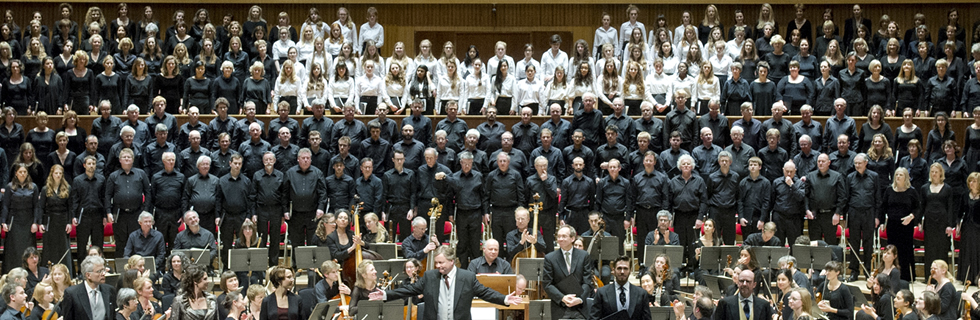
Anyway Kirill Karabits and the Bournemouth Symphony Orchestra *** were quite able to match the RCO in their performance of the Eroica, which got a little muddled in the development of the opening Allegro con brio and in some of the variations in the Finale, though their interpretation of the First more than passed muster. I have to say though that the least convincing interpretation in the cycle was the closing Ninth from the Halle Orchestra under Sir Mark Elder ***. Sopranos Elizabeth Watts and Sarah Castle were bulldozed a little, the balance between orchestra and chorus didn’t feel right and the tempi overall were too measured for me especially in the slow movement. Still it’s the Choral, it capped an amazing couple of days and I still went home happily humming the Ode to Joy.
Something to hang on to until this is all over.
PS. The programme notes to accompany the Weekender are excellent BTW. To the point essays on Beethoven’s various disappointments in life (family, love and deafness), his idealist politics, his cultural impact and some wham bam notes on the symphonies.
 At Home He Feels Like A Tourist