
Orphee at ENO review ***

Orphee

English National Opera, 27th November 2019

The Mask of Orpheus. Extraordinary music, fine singing, showy production. Orpheus and Eurydice. Fine music, mostly, superb singing, faulty production. So how would the Tourist fair in his third encounter with the Orpheus myth in the ENO season. Well since you ask. Best production of the three by far courtesy of Netia Jones, who also oversaw costume and video, and Lizzie Clachlan’s multi-faceted set. Mind you I knew just how good Ms Jones’s ideas can be, heavy though they are on monochrome video visuals, thanks to her memorable take on Britten’s Curlew River in 2013. Singing, well singing-through, since the libretto is a pretty straight, (here closely translated into English by the versatile Ms Jones and Emma Jenkins), lift from the Cocteau 1950 film script, that was more than up to the task notably from Nicholas Lester as our eponymous hero, coloratura Jennifer France as the baddie Princess and, unsurprisingly, Nicky Spence as the ominous chauffeur Heurtebise. Music faultlessly executed by the ENO orchestra as usual under the baton of Geoffrey Paterson, though it is near two hours of Philip Glass with all the good and bad that implies.

So why wasn’t I bowled over. Well I think that comes down to the source material. Jean Cocteau was a wilful fellow, with talent to burn across media, even when off his tits on opium, but he did have his bugbears and did not see any problem with excess self-love. His film is Art with a big A, about love, death and jealously like its source, but also about how the Artist operates in a realm far beyond that occupied by us ordinary mortals. Indeed Orphee here is a misunderstood poet who seeks immortality. With the help of a lot of mirrors. Cocteau thought he was special and was determined to show us. More Narcissus and Thanatos than Orpheus maybe, though with more than a whiff of grumpy old man misogyny. Mind you Cocteau himself came in for a lot of criticism from the artistic elite, notably the Surrealists, which was often tinged with homophobia. The most obvious inspiration for his aesthetic in the film is surely Man Ray.

The film is a mix of dream and naturalism set in 1950s Paris. A drunken night out ends with younger poet rival to Orphee, Cegeste (Anthony Gregory) mown down by a couple of motor bikes after a fight. The mysterious Princess steps in to help, but instead abducts Orphee to a chateau, where she, her lackeys and the reanimated (!) Cegeste disappear. No problem as Heurtebise returns Orphee to his hone where the coppers, wife put upon Eurydice (Sarah Tynan) and feminist friend Aglaonice (Rachael Lloyd) are wondering what he has been up to. Heurtebise moves in and falls for the pregnant Eurydice. Orphee gets obsessed with the radio which may be talking to him via some ropey poetry, Eurydice is murdered by the Princess’s lackeys and Heurtebise and Orphee make a trip to the Underworld. A dodgy Court says he can take Orphee back, subject to the usual condition, when he declares he no longer fancies Death/The Princess. Eurydice fatally looks at hubby in the car mirror and so back to square one, with Orphee joining her after getting shot at the bar where all this shenanigans kicked off. Back to the Underworld to have memories wiped for O & E with Death/Princess and Heurtebise checking in for good.

Worth knowing all this and brushing up on the synopsis though even so I confess to losing the thread a few times through the 18 scenes. And to not fully appreciating the point of the many “framing” extras that Ms Jones introduces. No matter. Glass’s score contains just enough variation to demarcate the shifts in the odd narrative and in character, (this was still well before Glass drifted into auto-pilot mode), and visually the production is a treat with Netia Jones emulating Cocteau’s own mix of lo and hi (for the time) cinematographic technique to provide an equally striking impression. Cocteau made it up as he went along. Ms Jones, along with Lucy Carter (lighting) and Danielle Agami (choreography), and unlike some other directors at the ENO recently, takes a far more methodical approach, which, deliberately mirrors the film (with direct video quotes), and its “making of” successor, Le Testament d’Orphee, whilst still remembering to be an opera. As I think Glass envisaged even if he wrote for French not English and maybe with a smaller stage in mind.

Philip Glass long harboured an ambition to convert Cocteau’s vision into opera after spending 1954 in a hedonistic whirl in Paris. (He returned in the mid 1960s to study under Nadia Boulanger). It was composed in 1991 just after his wife, artist Candy Jernigan, died unexpectedly from liver cancer. He went on to compose two further operas based on Cocteau’s films, La Belle et la Bete (1994) and Les Enfants Terribles (1996).

The Women of Whitechapel at the ENO review *****

Jack the Ripper: The Women of Whitechapel

English National Opera, 3rd April 2019

Composer Iain Bell and his librettist Emma Jenkins wanted to call this just The Women of Whitechapel. Some marketing types at the ENO decided it needed to be prefixed with the title of the infamous murderer, charitably I suppose to let the potential audience know its subject. Worse, to continue the tiresome obsession with perpetrator and not victims. For this opera is specifically written about the women who were murdered. The murderer does not appear. Shame then that the creator’s original intentions could not have been fully honoured. Mind you I see that some bozo US deathcore band has appropriated the grotesque misogynistic fixation at the heart of this story by calling themselves Whitechapel. The band are in their 30s. Grow up lads.

I was predisposed to this new opera from the start. And I was extremely impressed with the end result. I see some proper reviewers who, to be fair, know their opera unlike the Tourist, think the opera is lacking in dramatic impact. I disagree. Yes there is no central single heroine to latch on to, there is no narrative arc towards some sort of tragedy or redemption, there are a fair few characters, the overall feel of the piece is dark and it is made up of a procession of set pieces. But that reflects the story of the five women that Mr Bell and Ms Jenkins wanted to tell, (based on scrupulous research where possible as well as some leaps of imagination). For me it was very powerful and very involving throughout.

I also accept that some of Iain Bell’s music and the way in which Daniel Kramer directed many of the scenes verged, on occasion, towards Les Mis style caricature, though this is no bad thing in terms of the immediacy of impact. However the more obvious inspiration might be Britten, Peter Grimes for the tone of the piece, and Death in Venice for the musical colouring. Worthy template. Mr Bell does not have BB’s compositional facility but the mix of solo and ensemble pieces, the set pieces with chorus, the unusual instrumentation, (the eerie elastic tone of the cimbalom to signify the presence of the murderer for example), the shifting in and out of tonal and more dissonant, atonal music, all conjure up a similar atmosphere.

The opera is centred on the last of the known victims, Mary Kelly, superbly sung and realised by Natalya Romaniw. Mr Bell and Ms Jenkins have created roles specifically for the mature voices of some ENO big stars, namely Marie McLaughlin (Annie Chapman), Janis Kelly (Polly Nicholls), Susan Bullock (Liz Stride) and Lesley Garrett (Catherine Eddowes), as well as the redoubtable Josephine Barstow as Maud, the proprieter of the doss house where the women are forced to live. The illustrious cast is further enhanced by the presence of Alan Opie as the aloof Pathologist who carries out the autopsies on the women’s bodies, Robert Hayward as the compromised Chief of Police and Paul Sheehan as the intimidated Coroner. From the current ENO vintage Nicky Spence provides a lighter touch as Sergeant Strong, James Cleverton is a Photographer with dubious intentions, William Morgan a rather underwritten, reformist Writer and Alex Otterburn is Squibby a local butcher’s boy. On the evening I attended Sophia Elton also stood out as Mary’s voiceless daughter Magpie.

Soutra Gilmour has conjured up another striking set, though it is sombre and dark, (and a bit Goth), in line with the mood of the piece, which is sufficiently versatile to persuade as doss-house, pub, street, mortuary and funeral procession for the coup de theatre of the, slightly over-long, ending (in which Paul Anderson’s lighting design, literally, really shines). Martyn Brabbins’s enthusiasm for the score and the commitment of the ENO Orchestra was never in doubt even in the slightly padded passages.

I think the opera makes its points about the callous way that the patriarchal society of the day treats these poor women – the murderer is simply an extension of the more “respectable” men that abuse them – the solace and support they take from each other and their overwhelming fear as the threat mounts. On its own this work cannot counter a century of writing out the victims as the expense of the sick fascination with the male perpetrator, (turn on your TV any night of the week to see that is still par for the course), but it is a brave, ambitious and engrossing attempt to do so and to provide a valid three hours of musical theatre. The symbolism, the Minotaur metaphor, the male chorus poking through the windows of the doss-house, the final ascension, is thought through and adds texture to the naturalism of previous scenes. The more poetic passages in Emma Jenkins’s libretto similarly contrast with the vernacular episodes.

I read a fair few reviews in thinking about this. They were all written by blokes. There were, with few exceptions, wrong about this. Presumably they would have been happier seeing yet another production of that scrupulously unmanipulative tale of female agency Madama Butterfly.

From the House of the Dead at the Royal Opera House review ****

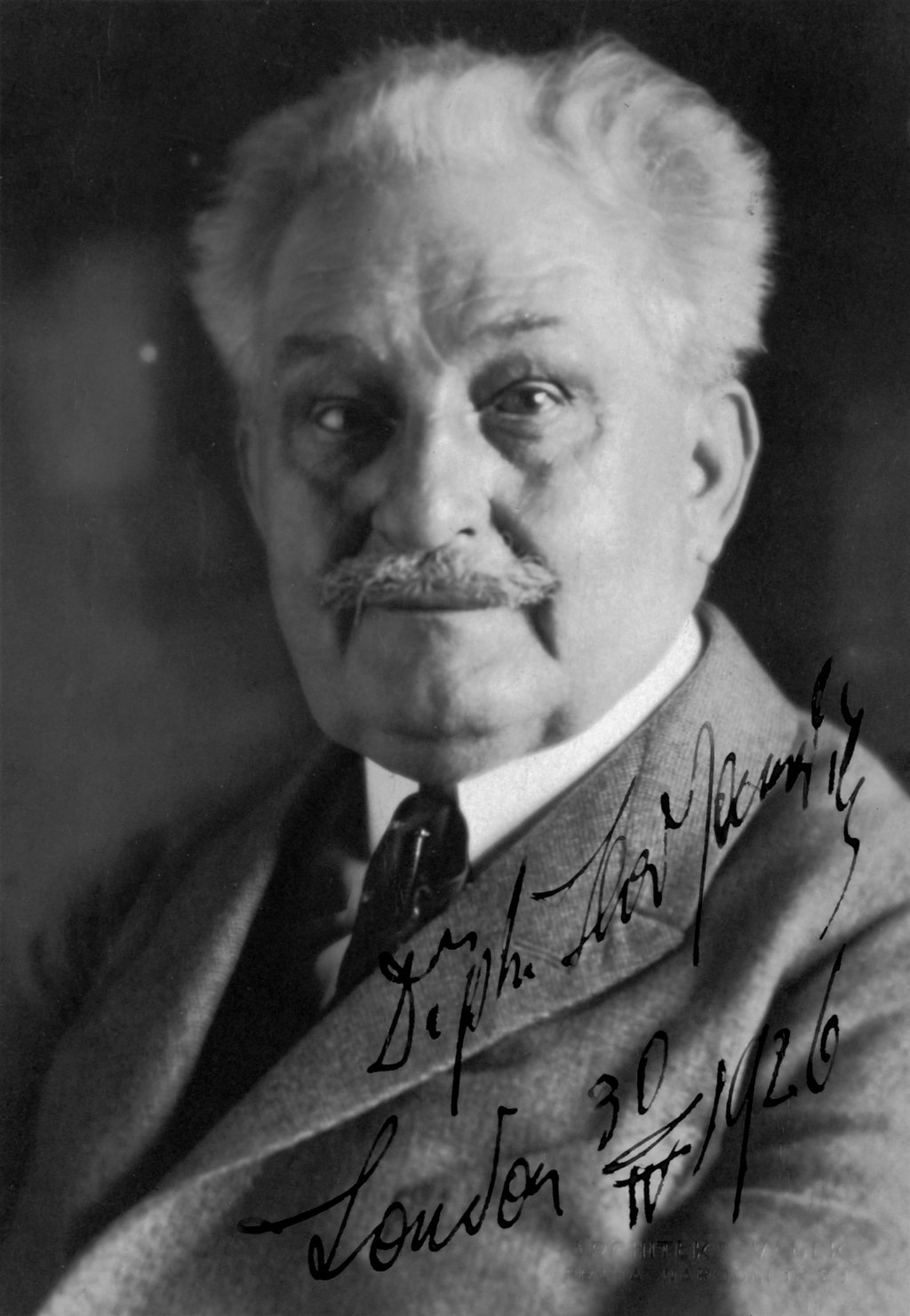
1024px-leos_janc3a1cek_28192629

From the House of the Dead

Royal Opera House, 22nd March 2018

Now this is it what opera is all about. Not just some portly punters, (though a couple of the chaps here were carrying as much timber as me), parking themselves mid-stage and belting out their arias. No here we get a concept, and some, a detailed design to back it up, lashings of action and even more acting, maybe too much, and a score which fits the prose of the libretto. I see it has wound up a few die-hards who would probably be happier with some Puccini-esque love mush but this is the real deal for me.

Now Janacek famously never made his life easy when it came to picking the subject matter for his operas. Infanticide, forest animals, adultery and suicide, the delusion of eternal life, a warrior matriarchy, a meta tragic opera. What a bout a feel-good rom-com eh Leos? Anyway From the House of the Dead is drawn from Dostoevsky’s eponymous novel which Janacek translated and adapted in his own libretto and is set in a Siberian labour camp. It has only one assigned female character, a prostitute, though one of the prisoners is normally a soprano, though not here. There is no narrative arc. It is largely episodic and expositional with the main characters steeping out of the ensemble to describe the crimes that led to their incarceration. There is a play within a play which takes up most of the second act. The music is pretty intense, lots of that special Janacek ostinato rhythm, with not much in the way of quiet reflection. There is no ending or resolution to speak of.

It was Janacek’s last opera and was pretty much complete on his death. But a couple of his students decided it wasn’t and that he can’t possibly have meant what he had left on the page or that an unresolved ending was appropriate so they “enhanced” the score significantly and changed the ending. Sounds like Hollywood today. Anyway all this gloss has been cleared out to produce a score much closer to Janacek’s original intentions., here further refined by John Tyrell’s critical edition. Intentions that require a vast orchestra, here spilling out into the side of the stalls. Chains anyone? The Orchestra of the ROH under the baton of Mark Wigglesworth sounded fantastic. I can’t imagine a better conductor of Janacek’s operas.

This though was all about the director though. Krzysztof Warlikowski doesn’t hold back. The overture, which lays out Janacek’s main ideas, which are subject to subtle variations throughout the three acts, is accompanied by a video projection of French philosopher, and winder-up-in chief -of-reactionary-conservatives, Michel Foucault, theorising on the nature of power, punishment and control in the modern prison system. The curtain rises to a solitary basketball player and a brutal modern prison yard. The athlete turns out to be “Eagle” standing in for the bird that represents freedom in a classic staging. Novel huh? A glass box acts as the governor’s office and, later, as the stage for the play within a play. Throughout the whole ensemble is in movement, offering multiple perspectives on the stories. From my perch in the back of the gods it wasn’t always easy to know who was singing but no matter. I’ll gladly swap a bit of narrative confusion for all this visual content. All thanks to designer Malgorzata Szczesniak.

And it isn’t that tricky to work out what’s going on. Gorjancikov, (I’ll refrain from full names or we’ll be here all day), played by the extraordinary Willard White, now in his 70s, pitches up. He’s a political prisoner and toff so the governor (Alexander Vassiliev), as you do, has him beaten up. Skuratov (Ladislav Elgr) talks about his life in Moscow. Luka (Stefan Margita, who was very impressive) tells how he and a crew killed a prison officer. Gorjancikov befriends young Aljeja (Pascal Charbonneau) and teaches him to read and write. Skuratov prefaces the play within a play by telling how he killed the bloke his girlfriend was forced to marry. The two plays are performed in bawdy fashion. The Prostitute (Allison Cook) gets involved. There is a bit of a dust up. Sapkin (Peter Hoare) describes his interrogation, Siskov (Johan Reuter, another excellent performance, though the tattoos help convince) tells of how he killed his wife because she was still in love with the village w*anker Filka, who, sharp intake, turns out to be Luka, who has, second sharp intake, just dropped dead. Antonic (Graham Clark) says he should still be forgiven, the moral of Janacek’s tale. Everyone, however “evil” can be forgiven, we all have the “spark of God” apparently. Gorjancikov is released. The end.

So, as you can see, not much in the way of plot. Yet the stories, which are elaborated through the play within a play structure, are compelling and the atmosphere of tension, claustrophobia, frustration and violence, and yes a bit of confusion, travelled right up to the back of the amphitheatre. The performances of the cast, inside all this action, are powerful enough to bring life to the characters; best of the bunch is Nicky Spence as Nikita who really can act and sing simultaneously. These are men who have done wrong, really wrong, but Mr Warlikowksi, in his dramatic staging, tellingly makes the point that they are victims, of their own warped masculinity if nothing else, as well, who need help not punishment to the point of death. And he does this by sidestepping the religiosity of the source material.

Loved it. More of Mr Warlikowski and Ms Szczesniak artistic partnership please.