
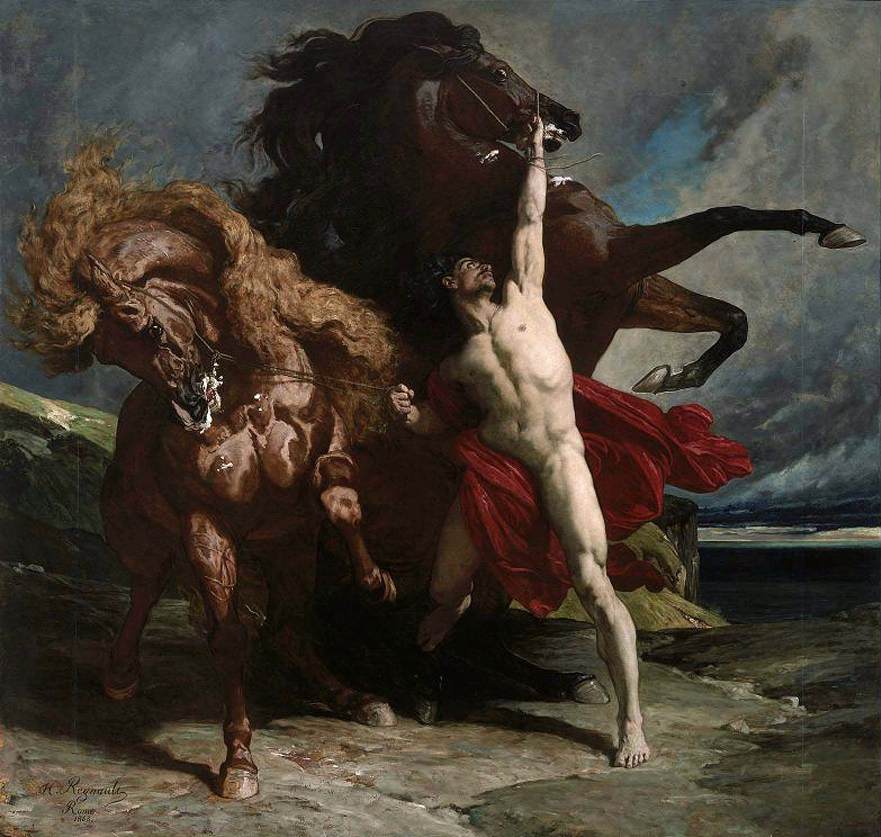
Equus
Theatre Royal Stratford East, 7th March 2019
Never seen Peter Shaffer’s Equus on stage before. Seen the film version which is a bit dry IMHO. So I was very happy to see that TRSE, in conjunction with the most excellent English Touring Theatre, were taking it on, joining the other productions in, what has turned into, an outstanding inaugural year for TRSE AD Nadia Fall. And we still have Pilot Theatre’s Noughts and Crosses, the Lenny Henry King Hedley II and the Noye’s Fludde Britten opera in collaboration with ENO, to come.
This production turned into the mid-point of the Tourist’s own little theatrical mini-season fortnight of complex and ambiguous theatrical transgression to include Ladykiller, Cyprus Avenue, Medea, Berberian Sound Studio, The Talented Mr Ripley, All About Eve and Richard III. No heroes here in the original sense of tragedy but all souls tormented by internal conflicts and “irrational” impulses. Obviously we have a fascination with behaviours that break norms but ambivalence can prove the most common flexible of structures on which to construct a drama. Moral certainty and clarity of motive rarely provides for good theatre. Conflict and uncertain resolution usually does.
Peter Shaffer, who died in 2016, authored many plays but his three most famous ones centre on the relationship between two very different characters, the clash of reason and instinct. Amadeus, as you no doubt know, is a fictionalised account of Salieri’s jealousy of Mozart whilst The Royal Hunt of the Sun brings together the King of the Incas, Atahuallpa, and Francisco Pizarro. (Black Comedy, which, along with RHOTS, I would dearly love to see, is a farce though it too starts with big idea, the reversal of lighting on stage). Equus, from 1973, tells the story of a psychiatrist who attempts to treat a young man who has a pathological religious fascination with horses. It is based on a real life crime PS came across in Suffolk where a 17 year old blinded six horses.
In this ETT production Zubin Varla, (who I was much taken with in the Young Vic Measure for Measure opposite Romola Garai, as well as in the Gate’s The Island and in the Orange Tree’s Poison, amongst others), plays the child psychiatrist Martin Dysart who is inveighed by old friend and magistrate Heather Salomon (Ruth Lass) to take on the case of Alan Strang, (relative newcomer Ethan Kai of whom more later), the young man who has attacked the horses, (the case having already been outlined in Dysart’s opening monologue). Dysart himself is dissatisfied with his life and work and with treatments that seek to “normalise” his patients.
Strang initially refuses to engage with Dysart, singing ad jingles, (nostalgic for us oldies in the audience, bemusing for the school kids – yep Equus is an A level text ). Eventually though Dysart breaks through and, after interviewing Strang’s conflicted, repressed parents Frank (Robert Fitch) and Dora (Syreeta Kumar), and describing his own recurring dream involving ritual sacrifice, starts to piece together how Alan’s convoluted obsession with Christian iconography, sex and horses came into being. After that it starts to get properly disturbing as Alan manages to get a job at a stable run by Harry Dalton (Keith Gilmore) via his putative girlfriend Jill Mason, (Norah Lopez Holden in another uninhibited performance to match her Desdemona in the excellent STF Othello). You can guess the rest. Well you can try to at leat.
Mr Shaffer doesn’t make it easy for cast, director or audience. This play is packed with powerful scenes, multiple locations (hospital, beach, home, shop, stables, porn cinema), philosophical musings (from Dysart), intricate dialogue, tantalising themes and complex characters. Easy to see why it was made into a film. But play it is and it is the theatre where the story and its message will, in the right hands, be most successful. And unquestionably these are the right hands. Georgia Lowe’s plain white curtained box of a set means the scenes are played out with the minimum of props, basically a bed for the hospital showdowns. The spectacle, and trust me there is plenty even before the final, overwhelming “blinding” scene, comes from Jessica Hung Han Yun’s no holds barred lighting, (who also excelled at the Gate and in Yellow Earth’s Forgotten recently), and Giles Thomas’s similarly thrilling sound design.
That isn’t the half of it though. The real prize goes to movement director Shelley Maxwell and to Ira Mandela Siobhan’s and Keith Gilmore’s “horse” interpretations. All the cast apart from the two principals, double up as horses at various points, but it is these two who literally do the heavy lifting. Their strength when carrying “riders” and the way their bodies imitate the motion of the horses is astonishing. It also makes sense of the deep, emotional erotic attraction that Alan feels for the animals. Apparently the original stage directions call for the “horse” actors to wear masks and tracksuits. By rejecting this in favouring of human muscle and expression mimicking horse the power of Alan’s strange passion, a homo-erotic displacement, filtered through a hodge-podge of classical allusion, is amplified.
This is a play of powerful ideas, sexual attraction, religious and personal theology, institutional constraints, the dichotomy of the Apollonian and Dionysian ways of living, which do not require literal manifestation. I can’t imagine a creative interpretation of the play that could top this. On top of this though is the smart move to play up Dysart’s own confusion and conflicts, his empty marriage, his rejection of consumerism, his questioning of the tenets of his profession, his attraction to Heather who can sense his unravelling. I am not sure the text implies that Dysart regrets “healing” Alan. Zubin Varla’s Martin certainly does. Never did ZV come anywhere close to the ponderous: read Dysart’s monologue’s on the page and see how tricky that must be.
Ned Bennett has already garnered awards for his work on An Octoroon, Pomona (both Orange Tree productions, yeh) and Yen. With this he has established himself as a master of visceral theatre. It is going to be fun seeing where he goes next. The trickier end of Shakespeare maybe one day? As it will be with Ethan Kai. The last major production of Equus saw Harry Potter in the form of Daniel Radcliffe flash his bum on stage but he was already famous. I see Mr Kai is best known to date for a role in Emmerdale. With all due respect to all you Emmerdale nuts Equus suggests he can do better.
 At Home He Feels Like A Tourist