Death in Venice at the Royal Opera House *****

Death in Venice

Royal Opera House, 3rd December 2019

Fresh from the superlative semi-staged version of Peter Grimes from Ed Gardner, the Bergen PO and assorted chums and straight into this. A top drawer new version of Death in Venice from David McVicar. I have fond memories of seeing Deborah Warner’s production of DIV at the ENO with, guess who, Edward Gardner on conducting duty, which also bewitched the SO, (who has also been persuaded by The Turn of the Screw and, though she may not know it, is going to be a fan of Britten opera).

Now I am partial to BB and his operas. As you can see from recent viewings documented hereabouts. They are up there with the best of British cultural expression, indeed the best from anywhere. But that doesn’t me they are all perfect or that creatives can’t fall down when tackling them. Paul Bunyan is a bit bonkers, (the recent ENO outing wisely went with the flow), the Rape of Lucretia has a pretentious and inappropriately Christian libretto from Ronald Duncan, you need to be in the right mood for the Church Parables, I have never seen Owen Wingrave live or in the TV original and Gloriana is, well, just a bit crap. Even the musically bullet-proof, Grimes, TTOTS, A Midsummer Night’s Dream, need sympathetic performers and directors. Billy Budd is always a tricky customer. The comedies/children’s operas are too generous to fail other than in the eyes and ears of the flinty-hearted.

Some say Death in Venice is also a trick(s)y opera though I have never really understood why .(Maybe it’s because it isn’t a simple, straight A to B, with obstacles, misogynistic love story). Here David McVicar got the Edwardian look and feel spot on. DIV is a set, costume and lighting designer’s wet dream and Vicki Mortimer and Paule Constable duly delivered to create exquisite, cinematic, vertical and horizontal tableaux across the 17 scenes with maximum efficiency and impact. The water of the lagoon ever present in the backdrop. With no f*cking around with interpretation. Visconti and Mann would be purring in their graves, (or suing for plagiarism), so precise was the realisation. Even the gondola looked real. And that was with two fellas pushing it. Lynne Page similarly brought just enough to the table with the choreography of the dance scenes. Realistic with just enough grace and artistry especially from our lovely, knowing teenage Tadzio (Leo Dixon) and his irate chum Jaschiu (Olly Bell).

But the real triumph was not having our van Aschenbach go too full-on, homo-erotic, pretentious, unhinged, tortured artist too early. He really is a bit of a ninnyhammer getting all lathered up with the young boys, the culture, the heat, the plague, the offuscazione, all those words, all that useless beauty, that Apollonian/Dionysian dialectic, all that bloody philosophising. (Honestly Gustav, don’t beat yourself up mate). He is though a clever cookie, in control mentally and physically until the lurgy properly strikes, and he can eloquently verbalise. At length. Immense length. In Myfanwy Piper’s appropriately mannered libretto. Brought to life by the beautiful voice of Mark Padmore. Who can act. Even to the back of the stalls.

This isn’t quite a one-man show. The support of Gerald Finley as Traveller/Fop/Gondolier/Manager/Barber/Player/Voice of Dionysius made this very special. Has there ever been a more inspired piece of operatic doubling (and not just in the service of cheap laughs and flimsy plotting) or a more talented singer/actor to pull it off? And, as if that wasn’t enough we get the sweet counter-tenor of Tim Mead interjecting as hunky tourist Apollo. And the never-ending stream of “extras” including the likes of Elizabeth McGorian as the Lady of the Pearls and, get this, Rebecca Evans as the Strawberry Seller.

But the ever present, tireless Mr Padmore is what made this special as we go deep inside von Aschenbach’s head. An operatic Hamlet. What is real and what is imagined? Messrs McVicar and Padmore don’t tell, giving the creepy Don’t Look Now Venice a wide berth, but do largely make sense of GvA’s meanderings and even make him seem human rather than the vessel for Thomas Mann’s symbolism and aestheticism. Not that it matters. BB’s music is so clever, haunting, sparse, ascetic, with the repetitions, motifs, and the gamelan shimmers, that it tells the story, conjures up place and inhabits character all by itself. Even at the end, like GvA consumed by his own mortality, BB was turning out perfection with that poignant passacaglia, (a link back to the Doric Quartet’s muscular performance of BB’s final quartet a couple of weeks previous), and Richard Farnes and the ROH orchestra know exactly what is required of them. This score then is the truly beautiful.

25 years since the ROH last staged DIV but I’d be surprised if it doesn’t come back soonest. So go see what I mean. And pay up for a decent perch as, by ROH standards, Britten comes cheap. All the toffs seemingly never tiring of OTT Italian C19 flim-flammery or worse still Wagnerian guff.

I see I have a couple more outings with Gustav van Aschenbach later in the year. Ivo van Hove and Ramsay Naar will be bringing ITA’s interpretation over to the Barbican in April with music from Nico Muhly and the great Greg Hicks will be serving up his solo turn at the Arcola in June. I expect they will be quite different.
Bach St John Passion: OAE at the Royal Festival Hall review ****

Orchestra of the Age of Enlightenment, Simon Rattle (conductor), Peter Sellars (director), Choir of the Enlightenment

Royal Festival Hall, 2nd April 2019

JS Bach – St John Passion

  • Camilla Tilling (soprano)
  • Christine Rice (mezzo-soprano)
  • Andrew Staples (tenor)
  • Mark Padmore (tenor, Evangelist)
  • Roderick Williams (baritone, Jesus)
  • George Nigl (baritone)

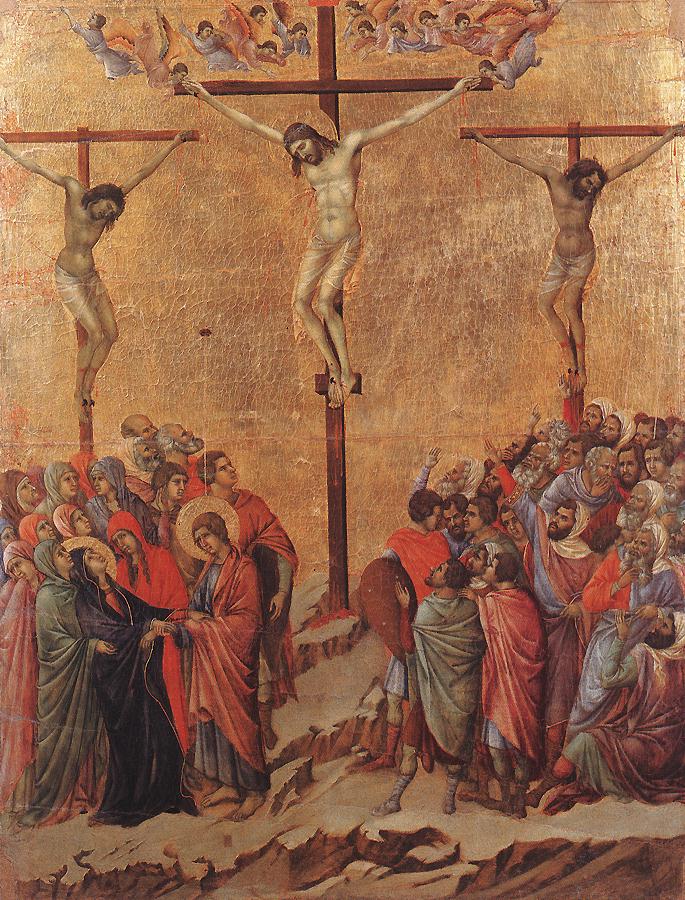
The Tourist, along with chum for the night TMBOAD, was recently blindsided, in a good way, by the staging of Britten’s War Requiem at the ENO which was far more theatrical than he had anticipated. Well blow me if if didn’t happen again with this St John Passion. I had not really clocked the presence of Peter Sellars on the list of creatives so had only anticipated a semi-staged version, a bit of movement, some subtle lighting, that sort of thing. However, from the moment we saw the OAE lined up on one side of the stage, it was clear something more was on the cards. What we didn’t expect was a full blown, punch to the gut emotional, acted out Passion, complete with modern dress costumes, (red and blue for the Marys, monochrome for the rest), occasional props, an immensely atmospheric lighting design courtesy of Ben Zamora, musical solos from memory, (my favourite was Simone Jandl and her viola d’amore and Katharine Spreckelsen and her oboe da caccia), and even walk-on contributions from Sir Simon Rattle himself.

The St John Passion is a powerful work of act even without the dramatisation, reflecting the subject, (even for those of us who have no faith), and the direct, even simple, way that JSB chose to set it. I can imagine that there will be those who would prefer, in theory, to be left to focus on the music, the voices and the text, but I would defy them not to be bowled over by the extra dimension that Peter Sellars staging brings to the work. This is not the first large scale Bach vocal work that the Tourist and BUD have shared in recent years, we have a B Minor Mass and a Christmas Oratorio under our belt, and the Tourist has a number of independent Bachian choral sojourns on top of this. The Tourist may have waited until his middle ages before he “got” Bach but now he consumes with the zeal of the convert.

Now as it happens Bach himself was reproached by some in the 1720s and beyond for the theatricality of his Passion settings and the fact that he revised them on multiple occasions in later years partly reflected this as well as a more realistic approach to the logistics of the piece and to tighten it up musically. So those who might initially object to this Sellars/Rattle ritualised version as liturgically inappropriate or offensive are in “good” company. There will have been a time after all when staging the Passion in the concert hall rather than the Church will have provoked the ire of some.

Whilst there are some belting chorus parts and chorales in the SJP the thing that really strikes me is the starkness of the settings with minimal instrumental accompaniment to many of the arias and with much use of recitative, and not just from The Evangelist’s narration. A lot of the first two parts is told from the perspective of those around Christ, and, assuming this translation is accurate, the text is very immediate and shorn of ornamentation. JSB cleverly creates a symmetrical structure, centred on the chorale Durch dein Gefangnis, as Pilate seeks to release Jesus, either side of which is the same pattern of choruses, some fugal, solos and chorales but in reverse order. This creates a musical order and narrative structure which informs the “drama”. It is not, as Sir Simon observes in the programme, a very melodic piece even if it does have some very arresting, and surprisingly experimental, musical passages. In short, with these forces, six soloists, a choir of 32 and the OAE numbering 30, it very much has the feel of opera, putting aside its subject. It certainly has emotional clout.

So easy to see why Sir Simon and Peter Sellars long cherished the idea of staging it in this way, finally realised in 2014 in Berlin when Sir Simon was head honcho at the Berlin Phil. The soloists here, led by the very deliberate Mark Padmore, who is pretty much the go too Evangelist, and the superb Roderick Williams as a visibly suffering Jesus, as well as Camilla Tilling, Christine Rice, Andrew Staples and George Nigl, were on top form and all can act as well as sing and the chorus brought real drama to their turns. The fact that the latter four soloists take multiple “roles” creates a texture and an audience empathy that a straight concert hall performance can lack. Contemporary resonance abounds with George Nigl’s equivocating politician Pilate yielding to the “will of the people” and the blindfolding and torture of Christus under investigation.

OK so occasionally some of Mr Sellar’s choreographic tropes grated a little, the hand gestures, the just-so re-creations of classic Renaissance paintings, the singing from prone positions, the pauses to get everyone in the right place, and the sur-titles, whilst a necessary part of the staging, were a bit too curt at times, and, whilst I don’t know where to take the interval the second half, as is usual, is a bit long compared to the first. Overall though this definitely ticked the box for BUD and myself.

Mind you we are, contrary to all appearances a couple of avowed modernists where it comes to our dramatic preferences. And so, I am willing to bet, are the vast majority of punters. Two hours plus of Bach and the story of Christ’s death may not float the boat of many outside us classical music buffs but I doubt there could be a better way to spread the word. Which ultimately is why the old fella wrote this masterpiece in the first place.

Cave at the Printworks review ****

background-black-and-white-cave-366313

Cave

The Printworks, Surrey Quays, 23rd June 2018

Cave is the second collaboration between composer Tansy Davies and librettist Nick Drake. Their last work, Between Worlds, which took as its subject the Twin Towers on 9/11, was superb. It was an immensely moving and sensitive elegy which focussed on the last conversations with loved ones of just five victims trapped together on one floor watched over by a benign Shaman or spirit, superbly directed by Deborah Warner. The audience I saw it with was floored (even if a couple of jaded critics were a bit sniffy).

I have since heard a few of Ms Davies’s very fine works including the premiere of her Concerto for four horns, entitled Forest. She has a way of finding the right shape, sound or phrase to match the intent and mood of her music, without ever serving up the obvious or banal. There is a rhythmic underpinning which I think reflects her familiarity with popular music genres, especially funk and post-rock. Her music can be muscular, industrial if you will, but, equally, she is capable of great lyricism. In more recent commissions she has been afforded the opportunity to work at a larger scale, but there is still a chamber like intimacy to her work, even when it is belting out in full on forte. In short she has the gift, and, even if contemporary classical music isn’t your bag, in fact maybe especially if contemporary classical music isn’t you bag, I defy you not to hear it.

She is also pretty keen on conveying a message in her music. As is librettist Nick Drake. Cave is set in a world disfigured by ecological catastrophe. A man (Mark Padmore) stumbles into a cave. He probably nibbles on some crazy mushrooms. He remembers his daughter Hannah, played and sung by Elaine Mitchener, and, when young, played by Akilah Mantock at my performance. Her spirits fills the cave. That is pretty much the long and the short of it. There are seven scenes in total beginning with the entry of the audience into The Lost River which runs through the cave.

The Printworks in Surrey Quays used to be where the Evening Standard was printed in the pre-digital era. It is a cavernous industrial space, as I discovered on my pre-prandial hike to the loo just ahead of the opening of the opera, which plays host to a variety of events, united in there “alternative” vibe. Perfect for this work. The audience was lined up along both sides of a very narrow, very long space in Mike Britton’s set, covered with, I think, wood bark. and with the seven members of the London Sinfonietta at one end and vast plastic hanging “doors” at the other. It was largely left to the marvellous lighting of Jack Knowles, who despite looking about 5 years old, has a massively impressive list of credits behind him, to conjure up the required magic, along with a sound design from, usual culprits, Sound Intermedia, as well as the electronics of Tansy Davies and Rolf Wallin.

Even with the principals moving up and down the space there were times when the “action” was a bit “laterally compromised”, especially for those of us pig-headed enough to go right along to the end where the ensemble was positioned. On the other hand this perch did afford a perfect insight into all the moving parts of the score, and, at one key point, the vocal pyrotechnics of Elaine Mitchener. She is not your opera mezzo diva. Thank goodness. Usually to be found in repertoire which is even more boundary-pushing than this, she has an extraordinary range of expression. I was spell-bound. For those of us who are regular listeners to Bach, Britten and Baroque, Mark Padmore needs no introduction at all. Here his singing was predictably exquisite. He also put in an acting shift as the Man plagued by his memories and a world that has literally fallen apart around him. I also suspect this won’t be the last I see of the precocious ten year old Akilah Mantock – no fear at all in what must have seemed a slightly odd role when she went to the audition.

Mr Drake’s other job is a poet. No kidding. The second scene, the Echoes, starts out with the Man hearing Hannah’s voice before he goes into an astonishing quasi aria describing his journey into the cave. This is when we see the connection that Ms Davies and Mr Drake intended to make to some of the very first human impacts on the earth. Apparently they went for a trip to have a peek at cave paintings in Niaux in the Pyrenees, which proved a crucial inspiration. I am not surprised, this is where art and nature recognisably first collided.

Scene three, the Cave of Birds, has the Man describing the onset of ecological catastrophe, and some sort of vision, scene four, The Mirror Cracks, is a “rave of agony” as the Man recalls losing Hannah, who “responds” by singing the last part of his “song” backwards. The Tree of Shadows starts with the Man and Hannah remembering a past holiday and then Hannah going a bit preachy as she describes how she wants to save the world from the havoc wrought by the generations which preceded her. A powerful instrumental interlude (with electronics I think) follows, The Storm, which then gives way to a lullaby shared by the two principals which shows off their superb singing. The final scene The River sees the man leaving the cave, presumably to die, but probably healed.

This is an epic myth, or more exactly a parable, and, in that, I was reminded of Britten’s Church Parables, which I don’t think were a direct inspiration, but, for me, have a similar vibe. The scoring is sparse, under the expert baton of Geoffrey Paterson, with most of the colour coming from the winds and brass, the clarinet/bass clarinet of Timothy Lines, contra bassoon of John Orford and horn of Michael Thompson, contrasted with the prominent harp of Helen Tunstall, set against a sort of continuo from Jonathan Morton’s violin and Enno Senft’s double bass. Elaine Mitchener gets to give a hefty whack to a drum at one point and, as I have said, electronics and some other sound effects (plenty of echo) play a major part. Overall you have no difficulty in musically distinguishing the scenes, there are some breathtaking sounds here and no little drama. I was not entirely convinced about the articulation between music, words and message but that probably says more about my pessimism than the creative talent on show here. It is certainly not the fault of director Lucy Bailey.

I don’t want to get more frightened of, and helpless about, the world around me as I get older, but it seems to be happening nonetheless. It certainly does feel like we humans are accelerating towards our inevitable extinction event despite the apparent gift of consciousness. Mother Earth will get over us I suppose. Anyway it is good that Tansy Davies and Nick Drake are not engulfed by this sort of negativity and prepared to make an ambitious stand of sorts in their art. It is also good that they are not cynical about all things “spiritual”. As this piece is sub-titled, courtesy of modern day environmental shaman and prodigious psychedelic drug-taker Terence McKenna, “Nature loves courage”.

At the end, Ms Davies was zipping by to thank the performers. I briefly thanked her. No doubt she thought I was a nutter so apologies but I felt compelled to offer up my appreciation. Thank you.


Bach’s St John Passion at the Barbican Hall review ****

b925c46a-59cb-47dd-9764-aef8ab7a9fee

Britten Sinfonia, Britten Sinfonia Voices

Barbican Hall, 14th April 2017

Britten Sinfonia
Mark Padmore – Evangelist/director
Jacqueline Shave –  leader/director
Simon Russell Beale – speaker
Britten Sinfonia Voices

JS Bach – St John’s Passion

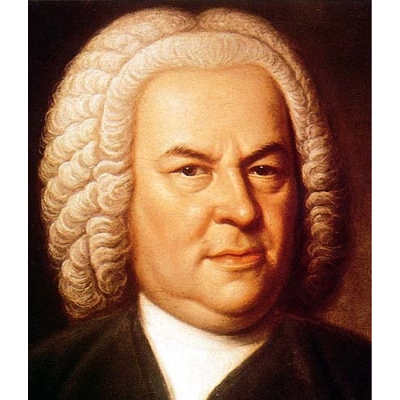
They were a glum looking bunch these great classical composers weren’t they? It is alright for us with our endless, carefully composed, beaming selfies but these poor b*ggers only had one shot at pictorial immortality normally and relied on some hack artist to deliver it. Of course, the real reason they all look grumpy is obviously because it is so tricky to paint a smile. But I find it interesting that a combination of the “genius” theory of artistic accomplishment together with these received pictorial representations so often leads us into divining the temperament of the man (for alas it was always a man) from his music.

Anyway JS does look a bit stern in this picture. I guess he was a pious chap but then that might largely have come with the job. In contrast the St John Passion to me is anything but stern and pious. It is a dramatic story, well told, with no let up in pace (the bigger St Matthew Passion is not necessarily better in my view for clocking in at 3 hours vs the 2 hours here). JSB mixes up the recitative and chorus, the solo arias, the chorales and the musical accompaniment to marvellous effect here.

Now this performance was delivered, as I understand it, with the forces intended by JSB, so a couple of everything, first violins, second violins, violas, cellos, flutes and oboes, augmented by double bass, cor anglais, bassoon, organ continuo and oboe d’amore and viola da gamba. Thus a mix of modern and period instruments. Each of the vocal parts was a single line sung by eleven members of Britten Sinfonia Voices, including its director Eamonn Dougan, alongside Mark Padmore, who is, rightly, considered a pre-eminent singer of the Evangelist role, and whose vision this performance was.

However, I have to say that the Barbican Hall is not the cosiest venue for such an enterprise, which impacted a couple of the arias, and, just occasionally, swallowed Mr Padmore’s recitative. and ensured that some of the more vibrant chorales were a bit murky.

Laid on top of the piece were a couple of readings from the mighty Simon Russell-Beale, of Psalm 22 and an incredibly moving Ash Wednesday by TS Eliot. I doubt there is a man on earth who is better at thundering out this sort of stuff whilst making it look easy – just marvellous – though I guess it will have wound up the purists. And the piece ended, as apparently it did in JSB’s day in Leipzig, with a restorative motet by a chap called Jacob Handl.

Overall then I enjoyed this performance, though my attention did wander a bit. I am persuaded by this stripped back approach with mostly modern instruments when compared to the big guns approach which I have experienced for this, and the St Matthew Passion in the past, but I wonder if a smaller hall and a definitive leader on stage might have just helped clarify things a little.

Still this is just minor grumbling. At the end of the day it is still a beautiful piece of music whichever way you cut it, notably in the chorales at the top of each Part and the run of arias post the Crucifixion. I am looking forward to the next Bach workout.