Horn Calls: Philharmonia Orchestra at the Royal Festival Hall review *****

Philharmonia Orchestra, Esa-Pekka Salonen (conductor), Richard Watkins (horn), Allan Clayton (tenor)

Royal Festival Hall, 16th January 2020

  • Carl Maria von Weber – Overture Der Freischütz
  • Mark-Anthony Turnage – Horn Concerto (Towards Alba)
  • Benjamin Britten – Serenade for tenor, horn & strings
  • Richard Strauss – Till Eulenspiegels lustige Streiche

Broke the golden rule. It is bad enough that I inflict this shite upon you and join all the other narcissists clogging up the Interweb and generally adding to the carbon burden. But I had resolved not to comment on anything that I had not sat all the way through. Notes for my own consumption but never yours. Here though I felt compelled to announce just how marvellous a concert this was. Despite walking out after the Britten Serenade and thereby avoiding the Strauss. Which, as it happens, I have heard live a couple of times and loathed. Another bloke in the lift on the way down adopted the same strategy. Why sully the perfect?

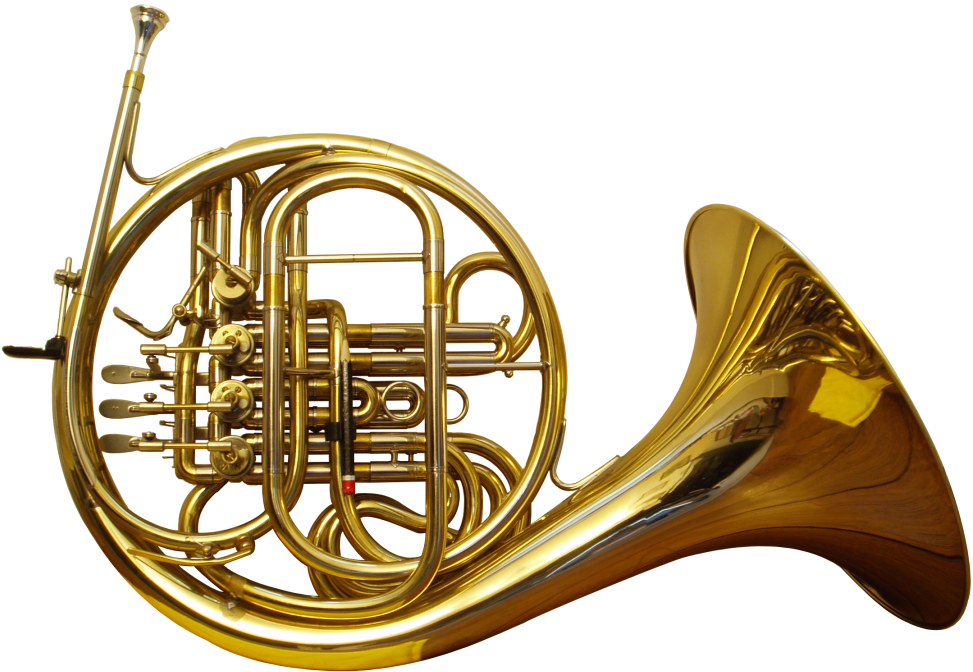
For I cannot imagine much better that this take on one of BB’s most sublime, and rightly popular, compositions. Comparable with the composers own versions surely. I might have guessed that Allan Clayton’s tenor is the perfect instrument for the work but how good is that Richard Watkins. He used to be principal horn for the PO, so he was surrounded by plenty of mates and presumably was attuned to Esa-Pekka’s no messing, forceful take on the work, even if he left before the Finnish maestro came to London. (Apparently E-P S, to add to his many talents, is a dab hand himself on the horn). He now works as a soloist fronting the London Winds and is a member of the Nash Ensemble. Every note was delivered exactly as I imagined BB composed it for the mercurial talent of Dennis Brain, the orchestra’s first principal player. The horn, let’s face it, when it enters its expanded harmonic world, is about the most thrilling, note for note, instrument in the orchestra. Obvs you can have too much of a good thing, but not here.

Which makes Mark-A T’s achievement in this world premiere of his own Horn Concerto that much more remarkable. He has always created contemporary classic music of real immediacy, but here, commissioned by Richard Watkins himself, he channels the German romantic horn tradition, of which Weber was a part, through the horn tributes of the English composing generation prior to him, Tippett, Colin Matthews, Oliver Knussen, and of course Britten himself, whilst still keeping his trademark jazzy syncopations and Stravinskian rhythms. BB’s piece, doh, is a paean to the night, setting those exquisite English texts through the ages, to faultless musical ideas, concentrated and not as flashy as some of his stuff. M-A T, in contrast, is all about the sunrise and the coming day. Alba in olde English meant “a call to the end of the night and beginning of the day”.

The so titled brief opening movement has lots of chirpy orchestral lines bouncing off the horn but, never thickens or overwhelms. The slow second movement is inspired by a late Larkin poem, Aubade, a morning serenade, in which the fear of mortality engendered by sleepless nights is banished by the light and the normality of the working day. The horn is the lyrical and bluesy expressive voice set against some beautiful, lower resister, string writing, punctuated with sustained low pedal points. The finale is also drawn from a poem, John Donne’s The Sun Rising, exactly the poet you want to mirror BB’s own choices, and does exactly what it says on the tin. M-A T offers up dense, chromatic, contrapuntal chords over which the horn soars.

Can’t remember the Weber and, like I say, no interest in the Strauss. But this was sublime and I expect Towards Alba to provide plenty of work for Mr Watkins, and others, in years to come. A fitting tribute maybe to another brilliant exponent of the French horn, Australian Barry Tuckwell, who sadly passed away on this very evening. I see Messrs Watkins and Clayton have recorded BB’s Serenade with the Aldeburgh Strings. Time to buy I think and set alongside BB’s own recording which featured Mr Tuckwell on peerless form and Peter Pears, later on his career, was marginally less the mannered English toff.

My top ten concerts and opera of 2018

Just a list so I don’t forget.

1. A Midsummer Night’s Dream – English National Opera – 4th March

Not quite a war-horse of a production but Robert Carsen’s version of Britten’s Shakespearean opera looks, sounds and, well, is just wonderful.

2. Ligeti in Wonderland – South Bank – 11th, 12th and 13th May

Gyorgy Ligeti. Now bitten and no longer shy. If there is one second half of the C20 “modernist” composer every classical music buff should embrace Ligeti is that man.

3. Beethoven Cycle and Gerard Barry – Britten Sinfonia, Thomas Ades – Barbican – 22nd and 24th May

This is how Beethoven should sound. Do not miss the last instalments in the cycle this May.

4. Isabelle Faust, Kristian Bezuidenhout (harpsichord) – JS Bach
Sonatas and Partitas – Wigmore Hall and LSO St Luke’s – 9th April and 16th June

And this is how JSB should sound.

5. Opera – The Turn of the Screw – ENO – Open Air Theatre Regents Park – 29th June

Even the parakeets came in on cue in this magical, and disturbing, evening.

6. Greek – Grimeborn – The Kantanti Ensemble – Arcola Theatre – 13th August

Mark-Anthony Turnage’s breakthrough opera is still a thrill.

7. The Silver Tassie – BBCSO – Barbican Hall – 10th November

And this was a graphic reminder of why his mature masterpiece must be revived on an opera house stage.

8. BBC Prom 68 – Berlin Philharmoniker, Kirill Petrenko – Beethoven Symphony No 7 – Royal Albert Hall – 2nd September

Crikey. I only went for this. If Mr Petrenko keeps going on like this he might just become the greatest ever.

9. Brodsky Quartet – In Time of War – Kings Place – 18th November

A stunning Shostakovich 8th Quartet and then George Crumb’s jaw-dropping Black Angels.

10. Venice Baroque Orchestra, Avi Avital (mandolin) – Vivaldi (mostly) – Wigmore Hall – 22nd December

As rock’n’roll as the Wigmore is ever going to get.

The Silver Tassie at the Barbican review *****

The Silver Tassie

Barbican Hall, 10th November 2018

  • Mark-Anthony Turnage (composer)
  • Amanda Holden (libretto)
  • Ashley Riches – Harry
  • Sally Matthews – Susie
  • Brindley Sherratt – The Croucher
  • Claire Booth – Mrs Foran
  • Marcus Farnsworth – Teddy
  • Alexander Robin Baker – Barney
  • Louise Alder – Jessie
  • Susan Bickley – Mrs Heegan
  • Mark le Brocq – Sylvester
  • Anthony Gregory – Dr Maxwell/Staff Officer
  • Andre Rupp – Corporal
  • Finchley Children’s Music Group
  • BBC Singers
  • BBC Symphony Orchestra
  • Ryan Wrigglesworth – conductor
  • Kenneth Richardson – stage director

B*gger. B*gger. B*gger. B*gger. B*gger. I never saw Mark-Anthony Turnage’s second full scale opera when it was first performed in early 2000 at the ENO. On the basis of this semi-staged performance from the BBCSO as part of the In Remembrance weekend this was a terrible omission on my part for it is an extraordinary work both musically, and, given the strength of Amanda Holden’s libretto, dramatically. It is intensely powerful and moving even without a full set and staging. It beggars belief that it has not been revived since 2002, (and that it missed out on a run in Dallas thanks to political sensitivities). 

It is constructed as a symphony in four acts, Home, War, Hospital and Dance. Harry Heegan is about to return to the family flat after a football match with his best mate Barney and girlfriend Jessie. Mum and Dad are intensely proud of their son who is about to head off to the war. Next door neighbour Susie joins the party, banging on about God. Mrs Foran from upstairs also turns up escaping abusive husband Teddy. The Silver Tassie, a cup with much significance appears, the men go to war full of optimism. The War act is primarily choral preceded by the mythic Croucher, representing, I think, the war dead and intoning Old Testament-ish doom. An officer complains at the doctors in the Red Cross station. A football game is delayed as the battle begins. The story then switches to the Hospital where an angry Harry is now paralysed, Teddy blinded and Jessie, who refuses to see Harry, is now coupled up with Barney, who saved Harry’s life. The final act sees Harry and Teddy spit out their pain and bitterness at those who still have their futures at the communal dance. 

The opera is based on Sean O’Casey’s eponymous plan and it is therefore we who have to thank for the gripping drama. Whilst it is never made explicit, O’Casey intended that the Heegan family, and the rest of the community, should hail from the East Wall, a working class district of Dublin, adding further pungency to the message of the play (and opera) because, at that time, Ireland was still part of the UK and the republican movement was divided on whether the country should be involved in the war. So as some young men like Harry, Barney and Teddy headed off to war others prepared for insurrection at home. 

O’Casey’s play was rejected by WB Yeats, then head honcho at the Abbey Theatre in Dublin, when it was submitted in 1928, reflecting its political sensitivity. This was after the success of his first three major plays, The Shadow of a Gunman, Juno and the Paycock and The Plough and the Stars. So it premiered at the Apollo in London’s West End. There have been a fair few plays which rail at the futility of war and its consequences on the individuals who fight in it, but I doubt many match the raw power of The Silver Tassie. 

So Amanda Holden, (to be clear not the airhead judge on BGT), and M-AT had something monumental to work with. Even so, and in no way intending to downplay Ms Holden’s contribution which provides M-AT with multiple opportunities to show off his trademark stylistic jagged juxtapositions, it is the score that takes the breath away. M-AT had already shown his dramatic flair in his first opera Greek, and his compositional skill with orchestral pieces such as Three Screaming Popes, Momentum, Drowned Out, Dispelling the Fears and Silent Cities, especially when it came to percussion and brass, but The Silver Tassie is on another level.

The symphonic structure is inspired by mentor Hans Werner Henze’s The Bassarids, with the first act setting out the main ideas and themes, the second the Adagio slow movement, brought to life by the large scale choral scenes (echoing the more Expressionist feel of the act in SO’C’s play), the third a Scherzo and the last act a “dance” finale with “off stage” band. This structure offers rhythmic backbone and plenty of tunes derived from song, (including Robert Burns’s own Silver Tassie), and dance, as well as repeated motifs, which make it easy to follow and show off MA-T’s uncanny ability to capture the emotional interior of the characters. There are episodes of rich orchestral colour but there are also plenty of more economic orchestration.  The score should give the singers plenty of space, but just to make sure the cast were miked, (though M-AT, a couple of rows in front of me, needed to dash up to the sound desk to get the balance right early on).  The second and fourth acts are up there with the best I have ever heard on an opera stage. Even allowing for the fact that this wasn’t an opera stage. 

Sometimes this semi-staging lark can leave singers looking a little awkward unsure of how much to commit to performance versus voice. Costuming can also, sometimes, appear incongruous. Not here though, at east once the first act go going. There were some outstanding vocal performances, notably for me from Sally Matthews and Claire Booth, and Marcus Farnsworth as Teddy was very persuasive. But baritone Ashley Riches as Harry, even from my two perches (side stalls first half, back of circle second), was bloody marvellous not just in his singing but also in the way, pre and post wheelchair, he projected Harry’s exuberance and then his pain into the whole auditorium. 

Now I have nothing to compare it to but, given just how amazing this was, I have to assume that Ryan Wrigglesworth and the BBCSO, and the BBC Singers and Finchley Children’s Music Group (complete with ensemble writhing) got as close as possible to the heart of the music. 

You can listen to it for a couple more weeks on BBC Radio Opera on 3. Do yourself a favour and do so. 

And can I beg the ENO to find a way and time to revive this. With Mr Wrigglesworth on the podium. I will chip in a few quid if it helps. 

Britten’s Spring Symphony from the LSO at the Barbican review ***

spring-awakening-1197602_1920

LSO, LSO Chorus, Tiffin Choirs, Sir Simon Rattle, Philip Cobb (trumpet), Gabor Tarkovi (trumpet), Elizabeth Watts, (soprano) Alice Coote (mezzo-soprano), Allan Clayton (tenor)

Barbican Hall, 17th September 2018

  • Harrison Birtwhistle – Donum Simoni MMXVIII
  • Gustav Holst – Egdon Heath
  • Mark-Anthony Turnage – Dispelling the Fears
  • Benjamin Britten – Spring Symphony

Now here was an object lesson in not doing one’s homework. Benjamin Britten’s music was my first introduction to the classical world and remains one of my all time fave composers, (mind you the list is pretty short). However, I am not persuaded by all of his work, including, I remembered just that tiniest bit too late, the Spring Symphony. So always check that the piece you think you are going to hear is exactly that at the time of booking and always, especially if it is a work of substance as here, listen to it before attending. Both rules ignored on this occasion in the most spectacularly cavalier fashion.

Still it was the LSO. Under the baton of Sir Simon with the LSO Chorus and the combined Tiffin Choirs, Girls’, Boys’ and Children’s. (BD sadly, saddled with tone deaf parents, was never a contender for the first of these crews). And, in the Spring Symphony, three excellent soloists, two of who I knew, Alice Coote and Elizabeth Watts, and one only by reputation, Allan Clayton. All the voices were superb, there are some tricky vocal pyrotechnics required in certain of the poetic settings, and the logistical challenges of getting everyone on stage (or just in front) were adroitly handled. At points the Barbican Hall stage was stuffed to the gills. Sir Simon really does need that bigger stage.

The Spring Symphony was commissioned by Russian emigre conductor Serge Koussevitsky, who had earlier sponsored BB’s breakthrough Peter Grimes. As so often, writing it took a lot out of BB, three years from start to finish, on and off. He originally intended to set Latin texts against a symphonic backdrop but, as was BB’s wont, he persuaded himself that English poetry would be bettered suited. When BB sets canonic English poetry on a smaller scale the results can be astonishing, Les Illuminations, the Serenade, the Nocturne, Phaedra and, I reckon, the Cantata misericordium. And obviously the War Requiem shows he was a dab hand with large scale forces. But the Spring Symphony doesn’t quite hang together IMHO, choruses and orchestra sometimes at odds with each other.

It is (just about) discernibly a symphonic structure, a la Mahler, the first part made up of five sections (Spenser, Nashe, Peele, Clare and Milton, with various ideas laid out, the second a slow movement with three settings (Herrick, Vaughan and Auden), the third a scherzo again with three poems (Barnfield, Peele and Blake) set to music and the rousing finale, setting Francis Beaumont and John Fletcher’s Elizabethan paean to the month of May, London, to thee I do present. There is lots of invention, texture and tone throughout, BB avoids throwing the kitchen sink at everything, with many passages of light orchestration, and percussion, harp, certain woodwind and brass, especially trumpets, (a theme throughout the programme), all get a good look in. Since all the poems reference Spring, doh, there are plenty of Spring-ey tunes, but also some darker material; this was a message of hope in the aftermath of War but BB recognised not all was rosy in the European garden. It just isn’t an entirely satisfying whole for me.

Sir Simon has always been a dab hand with BB, even from his days with the CBSO, though this was at the more portentious end of his interpretative spectrum. Still everyone really does seem to be having fun at the LSO and the Chorus now that he as at the helm. So maybe I need to cheer up, raise my game and work a bit harder on this particular piece.

The concert opened with a new brass fanfare from Sir Harrison Birtwhistle, a gift to Sir Simon. It was, literally a blast, with a laugh at the end from the sole tuba. This was followed by an excellent reading of Holst’s Egdon Heath. I have always liked Old Gustav’s second most famous orchestral piece after you know what, (which the BBCSO is trotting out soon accompanied by Prof Brian Cox – interesting). That heady mix of Englishness, Ravellian orchestration and a hint of Eastern mysticism draws you in but it takes a conductor of Sir Simon’s insight to really persuade. It is a bit scary, even from the off, with the growling double basses, I for one wouldn’t want to go anywhere near Hardy’s heath based on this music. An elusive string melody is set alongside a sad processional in the brass and some meandering oboe. It never really lands anywhere despite the echoes of a dance, a simple stepwise, siciliano, and it can appear to go on a bit. Not here though.

Dispelling the Fears written by Mark-Antony Turnage in 1995 creates an atmosphere of urban, rather than rural, unease, led by the two trumpets of the LSO’s principal Philip Cobb and the Berlin Philhamonic’s Gabor Tarkovi. The two played pretty close together for much of the piece, creating some stunning harmonies, especially lower down the register, against the usual MAT cloth of Stravinsky, jazz, a whiff of blues, some earlyish Schoenberg. It is quite furtive, never really breaking out, with constant dissonance emerging from clashing semi-tones. There are a few passages of relative peace but mostly it prods and pokes. Like most of MAT’s work it really works though you are not always initially sure why.

So there we go. The LSO and Sir Simon once again showing off the Best of British. With the slight caveat that this may not actually be the best of the best British composer (with apologies to Purcell and Byrd).

Greek at the Arcola Theatre review *****

4720781800_20e6175e64_b

Greek

Grimeborn, Arcola Theatre, 13th August 2018

It is a shame Steven Berkoff’s plays don’t get performed more often. They do, like the stage, film and TV villains he has memorably played, (there he is above doing the menacing thing), sometimes lapse into “in yer face” cliche, but at their best they are thrilling theatre. The verse plays, notably East, West and Decadence, are the most exciting, and Greek, which transports Sophocles’s Oedipus Rex to East End London in the 1980s, was inspired. A few nips and tucks to make it fit but moreorless the same brilliant story. I love it, see here for the latest incarnation (Oedipus at Amsterdam Stadsschouwburg review ****). Aristotle thought it was the greatest story ever told and he, being the cleverest bloke that ever lived, knew a thing or two.

More inspired still though was when young Essex lad. Mark-Anthony Turnage, just 28, announced himself to the world with an opera version of Berkoff’s already “musical” play. His mentor Hans Werner Henze suggested the Munich Biennale commission him, and Jonathan Moore helped him with the libretto and directed the premiere. And Mr Moore, no less, was back to direct this production. I was lucky enough to see the first revival in 1990 at the ENO and, I tell you, it blew my socks off. I knew it was possible for opera to be the best of art forms when I was a young’un but I had also been disappointed by some allegedly top notch productions of classics by the likes of Verdi, Puccini and, even, God forgive me, Wagner. I was bored witless by much of this nonsense. But Greek, as one of the first contemporary operas I saw, made me realise that it is the theatre that matters and not the singing. Not saying that when the singing, music and drama all come together I can’t be moved by “classic” opera, especially Mozart and Monteverdi, just that it is a lot easier when the stories stack up and mean something to me and the music isn’t just a bunch of whistling tunes all loosely stitched together.

Of course some buffs might not accept that Greek is an opera at all, more musical theatre in the manner of Brecht and Weill at their best. I see their point. Indeed M-AT, probably more to wind us all up, termed it an anti-opera. Anyway who cares. Greek was a punch in the gut and food for the brain first time round for sure. Mr Turnage, with his rock and jazz inflections, and his adoration of Stravinsky especially, and the likes of Britten and Berg, as well as teacher Oliver Knussen, knows how to compose for the theatre. I knew nothing about the source of his latest outing Coraline (Coraline at the Barbican Theatre review ****) so had no baggage and, whilst if might not be up to Greek and to his version of The Silver Tassie, I thoroughly enjoyed it.

No need to trot you through the story here in detail I assume. By having the lead, here named Eddie, living a life of frustration in Thatcher’s Britain, Berkoff and Turnage have a contemporary alternative for the plague afflicting Thebes. Mr Moore wisely sticks with the 1980s, no need to invoke “Austerity/Brexit” Britain, that would be crass, which designer Baska Wesolowska, through set and multiple costume changes, neatly evokes. Class relations, cultural impoverishment, addiction, the patriarchy, hopelessness are all revealed but never bog down the story.

The differences between “foundling” Eddy and his heavy drinking Mum and Dad, and Sister, are highlighted by their over the top, “gor-blimey, Eastender, chav, working class” dialogue (no arias here folks) and movements. Eddy is angry and frustrated with them so, after having his fortune told, understandably f*cks off to meet, then marry Wife/real Mum, after an ill-fated altercation with her first hubby in a caff. There’s a fair bit of cursing and violence and the still marvellous riot, Sphinx and “mad” scenes, where M-AT’s brilliantly percussive score is at its best. It is funny and aggressive by turns, is deliberately cartoonish, has some great tunes and musical, (and music-hall), echoes and it belts through the story. And there’s a twist as you might have guessed.

Edmund Danon was a perfect Eddy if you ask me. M-AT asks for a high baritone and that is what Mr Danon provides. Every word was clear as a bell and boy did he get round the Arcola space. As did baritone Richard Morrison as Dad (as well as the, in so many ways, unfortunate Cafe owner and the Police Chief). For choice I preferred the mezzo voice of Laura Woods as Wife, as well as sister Doreen, Sphinx I and Waitress I, over the purer soprano of Philippa Boyle as Mum, Sphinx II and Waitress II.

Greek is now a staple of the operatic circuit as it can reliably pull in younger punters to even the grandest of opera houses, (the ROH got on the bandwagon in 2011). Its physicality, irreverence, punky aesthetic and social commentary can appear a little quaint now, especially if it is “over-produced” in a big space. Which, once again shows why Grimeborn, and the Arcola, is the perfect setting for works like this. With the Kantanti Ensemble, founded by conductor Lee Reynolds to showcase the best young musicians in the South East, under the baton of Tim Anderson, by turns belting out, and reining in, the score, the toes of the audience at risk of crushing from the four performers bounding around the Arcola main stage, and with the original director in charge, this production stripped Greek back to where is should be. Another Grimeborn triumph.

I genuinely urge you to try and see this once in your life. Especially if you think opera is for w*ankers. You will be blown away without any need to reassess that, largely reasonable, preconception.

Coraline at the Barbican Theatre review ****

coraline

Coraline

Barbican Theatre, 7th April 2018

Was I the only person in the audience who knew nothing about Neil Gaiman’s 2003 cult children’s fantasy novella from whence came Mark-Anthony Turnage’s opera Coraline? It certainly felt like it. To be fair the provenance had dawned on me some time before the performance, but when I booked my perch it was the composer which drew me in not the subject. I guess if I had known more I might not have taken the plunge for fear of feeling a bit odd amongst this very youthful, in parts, audience. I am glad ignorance prevailed for I can report that this was a very fine entertainment indeed.

Music first. It isn’t MAT’s most inventive composition that is true though there are more than enough surprises to hold the attention of the musicophile. What it does do is fit Rory Mullarkey’s bracingly direct libretto, and Mr Gaiman’s pleasingly dark fable like the proverbial glove. It is through-composed, retaining MAT’s trademark spiky, jazzy, Stravinskian, often dissonant, tonality, with very little accommodation to its intended audience. Yet the musical ideas are plain enough even to the untutored ear (including mine). Our ageing actresses singing across the melody in their big number, their waltzes shifting to tangoes as we jump the house “divide”, the mouse orchestra, the close harmonies when ghosts are abroad and the way the Mother’s music darkens as we move from Good to Bad. Sian Edwards is an outstanding advocate of smaller scale new opera music, (she conducted the premiere of MAT’s debut opera Greek). The  Britten Sinfonia are about the best advocates of new music in this country. Put them together and the results are unsurprisingly sublime, bringing life to the score even when it flagged a touch. And Britten, whose Noye’s Fludde might be the best opera involving children because it, er, involves a lot of children, feels like he was an influence here.

Coraline, sung on this occasion by Robyn Allegra Parton, is a bolshie tween, who has just moved in to a new home with overbearing Mum, Kitty Whately, and kindly, inventor Dad, Alexander Robin Baker. The neighbours, Mr Bobo (Harry Nicoll), and the Misses Spink (Gillian Keith) and Forcible (Frances McCafferty), are a bit odd to say the least. The former directs a mouse orchestra and the latter were one time, fruity thespians. The front room of the flat has a door; Coraline walks through it to discover …. a mirror image of the room and parents with sown-up eyes, and another mother bent on evil. You can guess the rest even if you don’t know it. And even if you can’t guess there are plenty of people who could tell you.

If I am honest the couple of hours ex-interval running time could have been squeezed down to 90 minutes straight through, though I guess this might have tested the patience of some of the younger members of the audience. I have to say the youngsters were impeccably behaved throughout, reflecting the quality of what they were seeing and hearing, and putting to shame many an older audience what with their coughs, fidgeting, phone screens and snacking. Having just wrestled with a couple of excitable nephew/nieces the prior weekend I can appreciate just how well-behaved this audience was.

I can see why Rory Mullarkey felt the need to labour the story with excess exposition to ensure everyone knew where we were, but there was the odd time when the recitative might have been condensed. This too might have focussed the ear more on the best of MAT’s invention, and the fine stagecraft marshalled under Aletta Collin’s direction. The magic in particular was a tad underwhelming. On the other hand Giles Cadle’s claustrophobic revolving set, at the front of the otherwise blacked-out cavernous Barbican Theatre stage, was a marvel

The cast though was terrific, especially Robyn Allegra Parton as our heroine, who has a lot of singing to get through, and Kitty Whately as Bad Mum/Good Mum. Apparently Ms Whately had a bit of a sore throat for this performance. Only just about audible and it certainly did not inhibit her performance in any way. I recently saw her Sesto in Giulio Cesare, where she also stood out. Even with my ropey ears I heard most every line, which I can’t always claim is the case when the RSC treads the boards here.

Now this is a fair distance from Mr Turnage’s shocking breakthrough opera Greek, based on Stephen Berkhoff’s play, in turn drawn from Sophocles’s tragedy, Oedipus Rex. To this day that remains one of the finest pieces of musical theatre I have ever witnessed, at the ENO in 1990. His last full length opera, Anna Nicole, wasn’t too kid friendly either. I have never seen The Silver Tassie, based on Sean O’Casey’s anti-war play, though there is a concert performance in the diary.

I see MAT has indicated he may call it a day on opera after some critical muppets have had a pop at the score for Coraline, berating its relative simplicity. That would be a great shame IMHO. There is no doubt the audience was thoroughly bowled over by MAT’s family opera, even if these critics, who presumably never were, or never had, kids, are too blinkered to appreciate its appeal.

I don’t doubt a fair few of these critics get off on the gross, uber-mensch, toddler fantasies of racist, anti-semite Richard Wagner. Hmmmm…..