
The Intelligence Park at the Linbury Theatre review ***

The Intelligence Park

Linbury Theatre Royal Opera House, 2nd October 2019

I have no-one else to blame for this. Having now heard a smattering of his larger scale works thanks in large part to Thomas Ades’s advocacy in his Beethoven cycle with the Britten Sinfonia, having invested in a CD of his chamber works and having thoroughly enjoyed the semi-staged version of his opera The Importance of Being Earnest at the Barbican a few yeas ago, I would certainly count myself a fan of Gerald Barry’s bracing, spikily rhythmic composition.

There were plenty of knowledgeable commentators however, including the composer himself, who warned that this, his first opera from 1990, is not the most transparent of entertainments. Though it was lauded on its first showing at the Almeida, largely for the music I gather, its plot is convoluted, the libretto from Barry’s Irish countryman, and Joycean scholar, Vincent Deane is florid, bordering on the impenetrable, and the aural intensity unyielding. Barry delights in music that bears no necessary connection with character, action or phrasing. 90 minutes, even with interval, is probably as much as even the most sympathetic of listeners can take.

And yet, out of this assault on the senses, comes something which is, well if not enjoyable, is certainly remarkable. The story, whilst admittedly needing more than a nudge from the programme synopsis, is no dafter than most opera buffa, complete with a knowing meta quality which I suspect would have appealed to C18 audiences. Something that Haydn would have attempted. Though also with an underpinning of Handelian serioso that the setting of this opera, and its successor, The Triumph of Beauty and Deceit, (how’s that for a late C18 opera catch all title), implies. Even so GB has said “as to what The Intelligence Park is about, I have no fixed idea” though there may have been with tip of tongue in cheek.

It is Dublin. 1753. Composer Robert Paradies (bass-baritone Michel De Souza) is struggling to complete his opera on the romantic tryst between warrior Wattle and enchantress Daub. Best mate D’Esperaudieu (Adrian Dwyer) pitches up to remind him of his impending marriage to Jerusha Cramer (Rhian Lois) which is required if he is to inherit Daddy’s riches. The boys pitch up to a party at Sir Joshua Cramer’s (Stephen Richardson) townhouse. Jerusha starts singing but is interrupted by her teacher, visiting castrato Serafina (Patrick Terry) who is in attendance with his bessie Faranesi (soprano Stephanie Marshall). Paradies falls for Serafina and falls out with D’Esperaudieu.

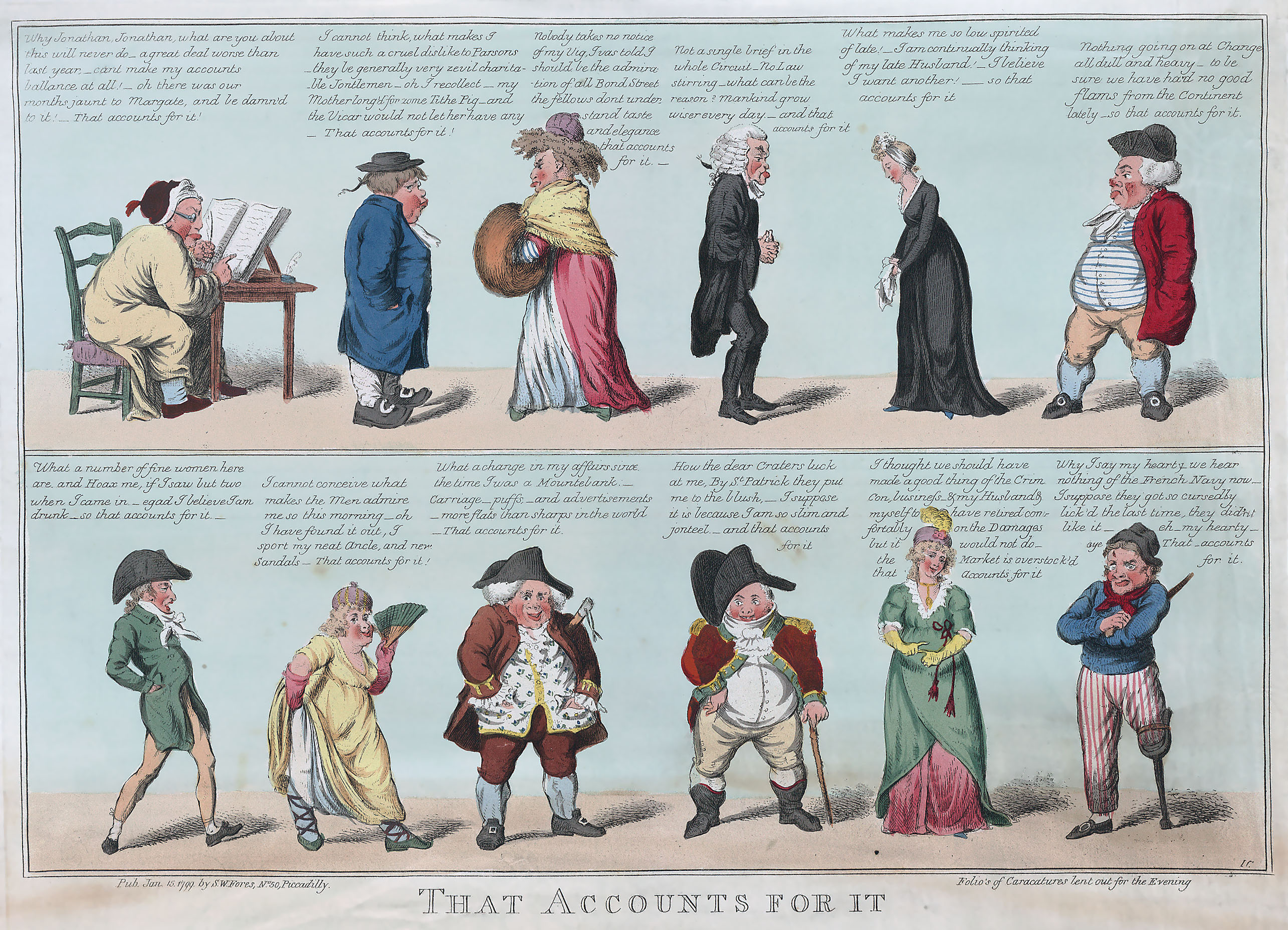
Then it gets properly weird as the Wattle and Daub characters, complete with puppet heads (!), pitch into the real proceedings and we find out Jerusha also has the hots for Serafina. Fantasies, arguments, elopements, a series of comic (sort of) vignettes, revenge, a banquet and death all pile up as art and life collide. Though frankly, even as I had secured a better viewing perch, (a few punters gave up at the interval), it all got a bit confusing post interval. No matter. The tropes of classical opera, (and Georgian comedy), were all on show, no doubt there were allusions and quotations that went right over my head, which Nigel Lowery’s ironic, cartoonish Baroque vision, as set and costume designer, director and lighting designer, sought to play up. Think Hogarth on acid.

I also gave up on the subtitles. Not because I could make out what the cast were singing. That was impossible. Not because of any failing on their part. To a man and woman they were tremendous given the singing, acting and, critically, concentrations demands made upon them by GB’s score. Take Stephen Richardson’s bass part which keeps flipping from its lowest register into falsetto, sometimes mid line. (Hats off to repetiteur Ashley Beauchamp who certainly earned his fee). No the fact is, after a while trying to take in Mr Deane’s densely connotative text, it just became too much to take in alongside the music and the visuals. In my experience contemporary opera can veer towards the sombre and static. Not here. This is intensely theatrical.

So you are probably thinking, based on the above, that this was all a bit shit and only really shows the Tourist up as the pseud he is. Well no actually. Just because I can’t cover all the bases in terms of plot, character, message, text doesn’t make this a bad opera. The story is deliberately confusing and the music deliberately unsettling and that is what makes it interesting and intriguing. Being challenged by art is all part of the deal and opera is pretty binary when it comes to comfort or challenge. If you want the former then Handel or Mozart will probably float your boat, and I admit, often mine too. But sometimes exposing yourself, as here, to their evil twin can be bracing. Remember the first time you heard the Sex Pistols? Same thing.

Barry has described The Intelligence Park as being set an an “unsettling diagonal”, a fair description. TIOBE, and Alice’s Adventures Underground which will appear next year on the main ROH stage courtesy of WNO, in part because we know what we are looking at (even through the looking glass) and because they are funnier, (deadpan humour is a big part of GB’s shtick), are easier fare to digest but GB’s musical language is still a long way from most of his historical, and contemporary, peers. Opera, however daft or reactionary the plot, insists that the participants really mean what they are singing. Emotions run high, feelings are big and bold. GB undercuts, though doesn’t subvert, all of that with his music normally going out of its way to upset the expected code. Shifting time signatures. Voices careering across the register. High notes when there should be low and low when they should be high. Stopping mid line. Repetition but of the wrong word at the wrong time. Exaggeration at points of banality or curious indifference at points where emotions should be highest. Unusual accentuation as GB terms it. The plot may be linear. The music is not. There is steady pulse and rhythm often at a fairly brisk lick, with one beautiful lyrical passage excepted, and there is plenty of noise when required. But none of the “divine” interplay of music, libretto and emotion that Mozart and da Ponte conjured up. These obsessive characters are not in control of the music, they are being attacked by it.

This relentless energy and manic aggression is tiring and sometimes frustrating but it is undeniably thrilling and there are so many brilliant, unpredictable musical ideas that it is better to go with it than set your will against it. After all, whilst there may be dissonance, there is harmony, lots of it, just not always pretty. Needless to say the London Sinfonietta took the score in their stride, they thrive on stuff far more challenging than this, but it takes a conductor of guts to take this on. Jessica Cottis is rapidly becoming the opera conductor of choice for challenging new and recent opera and here she wisely promoted vigour and animation over precision.

After the six performances, (same number as for next year’s sold out Fidelio – go figure), at the Linbury this Music Theatre Wales/Royal Opera co-production went on to Cardiff, Manchester and Birmingham. So bravo to them for reviving this, bravo to everyone involved to bring it to fruition despite its challenges and, why not, bravo to all us who listened to it.
English Chamber Orchestra at Cadogan Hall review *****

English Chamber Orchestra, Jessica Cottis (conductor), Ben Johnson (tenor), Ben Goldscheider (horn)

Cadogan Hall, 16th March 2019

  • Ravel – Le Tombeau de Couperin
  • Britten – Serenade for Tenor, Horn and Strings, Op.31
  • Purcell/Britten – Suite of Six Songs from Orpheus Britannicus
  • Stravinsky – Pulcinella Suite

I love Britten’s Serenade, first performed in 1943. It might be one of my favourite ever pieces of classical music, up there with Beethoven’s Seventh Symphony, Bach’s Violin Sonatas and, I am not ashamed to admit, The Four Seasons. I am not alone. There was a delightful senior in the lift at Cadogan Hall who concurred. But it needs a tenor and, especially, horn player, of the highest rank, to pull it off. The ECO of course has it in its genes, Benjamin Britten having been its first patron and founding musical influence.

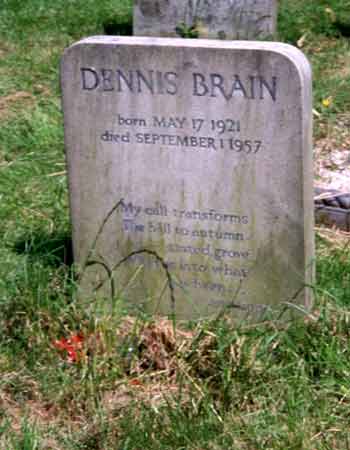
Now there are many fine recordings, (I assume based on the artists involved), but as ever in Britten’s music the best bet is to have the great man conducting and, in this, if not in all, cases, Peter Pears, singing. I can see why the experts reckon the recordings with the mercurial Dennis Brain, for whom the part was written, on horn are definitive, but the first, from 1942 a year after the piece premiered, is a bit period scratchy for my liking, emotional as it is, and the second, a decade later, falls a bit short musically. Dennis Brain might just have been the greatest horn player of the C20 coming from, and there can’t be too many of these, a veritable dynasty of horn players. He died far too young, in rock’n’roll style, by wrapping his sports car round a tree. If he had lived longer who knows what the next generation of modernist composers, the likes of Ligeti and Berio, might have conjured up for him.

As for the Serenade though I actually prefer the later Britten/Pears recording on Decca with the LSO and Barry Tuckwell on horn. More musical, and Pears less comedy toff sounding, even if the horn is a tad less mysterious. I also love the second Bostridge with the BPO and Rattle and their principal horn Czech Radek Baborak. After all Ian Bostridge is surely better than Pears in most of Britten’s supreme vocal music. On that note make sure not to miss his Madwoman in Curlew River with the Britten Sinfonia at Milton Court next March. The staging in 2013 for Britten’s centenary, directed by Netia Jones at St Giles Crippplegate, with players from the BS, and IB in the same role, was extraordinary. One of the best “opera” experiences of the Tourist’s life.

So tenor Ben Johnson and Ben Goldscheider on horn had a lot to live up to. And by and large they did. The Serenade is not performed as often as it should be IMHO which perhaps reflects the combination of small string ensemble, a skilled horn player and a dramatic tenor. Ben Johnson certainly has the flair for the dramatic, he was an ENO Harewood artist, and his clear, if not overwhelming voice, fitted the piece and hall well. Ben Goldscheider, a BBC Young Musician finalist, who is now studying with the aforementioned Radek Baborak, left a deeper impression, adept in the more virtuoso passages and capturing the mystery and thrill of the more striking passages, even if the more lyrical settings lacked a little emotion.

The six movements, (book-ended by solo Prologue and Epilogue for the horn eschewing valves to create natural harmonics), comprise settings of poems by Charles Cotton (Pastoral), Tennyson (Nocturne), Blake (Elegy), a C15 Anonymous Dirge, Ben Jonson (Hymn) and Keats (Sonnet). Serenade literally means “an evening piece” and the poems combine to take us through nightfall from dusk to midnight. The dark heart of the work is the Black “O rose thou art sick” and the scary, pounding march of the Dirge that follows, “This ae night”, but the tunes and, typically with Britten, the atmospheres, by turns haunting, comforting, placid, dancing, of the outer settings, are exquisitely rendered. As usual Britten uses all sorts of clever and arresting techniques, the lilting string chords in the Pastoral, the echoing horn in the Nocturne, the semitone infection in the Elegy shifting the key from major to minor, the vocal repetition in the Dirge against the sinister string Fugue, the hunting horn in the Rondo hymn straight out of Mozart’s playbook and the string sustains in the Sonnet as we drift off to sleep, (not literally of course, and in any event, BG’s off stage Epilogue reprise would soon wake you up).

I see that Australian-British conductor Jessica Cottis played the French horn and trumpet in her youth which perhaps explains her confident way with the Serenade. I intend no offence but, physically, there isn’t much to Ms Cottis, I estimate 3 of her to 1 Tourist. She has a heck of a presence on the podium though. The ECO numbers on the night may only have maxed out in the Stravinsky, but Jessica Cottis teased out plenty of energy and power when required in this and in the rather more phlegmatic Ravel. I see she has had a couple of recent chamber operatic gigs with the Royal Opera House for Mamzer and The Monstrous Child and has appeared as a regular guest conductor after roles as Assistant at the BBC Scottish SO and Sydney SO under Ashkenazy. On the strength of these interpretations if I where looking for fresh musical leadership I would give her a job.

My last exposure to Le tombeau de Couperin was from Angela Hewitt in the solo piano version at the RFH with MSBD and MSBDD. No review on these pages as, thanks to collective misunderstanding, we managed to miss the star turn, Bach’s Partita No 4, which was, to saw the least, bloody annoying. Still the Ravel was superb and MSBDD was particularly chuffed, this being one of his favourite pieces. Now Ravel was a dab hand at lushly orchestrating other composers’ piano works but for his own he was a little more restrained. That isn’t to say that LTDC isn’t brimful of “colour”, that being the standard word to describe Ravel’s gorgeous ideas, just that you can feel the sombre tones which come from the work’s inspiration as a memorial to the close friends Ravel had lost in the Great War. This version of LTDC takes four of the piano’s six movements: the Prelude, where the traces of harpsichord ornamentation, this was after all inspired by the Baroque harpsichord genius Francois Couperin, is most apparent in strings and oboe; the Forlane, a Venetian dance which the Pope at the time had tried to re-introduce to replace the smutty tango, (is there no end to Catholic sex guilt), but which Ravel spices up with some dissonant notes; a courtly Menuet that goes a bit Scottish jig and ends up with a bit of that Ravelian jazz vibe; and finally a Rigaudon which is a medieval Provencal dance with central processional. The whole piece gives woodwind and, especially, brass a good workout which the respective members of the ECO seemed to thoroughly enjoy. I don’t have a recording of this. Clearly I should.

Apparently Henry Purcell composed over 250 songs and vocal works in his short 36 year life with three volumes being published posthumously as Orpheus Britannicus. BB, like so many subsequent British composers, loved HP, as would anyone in their right mind. Indeed they have a lot in common: inventive harmony, matchless word painting and transparent and direct melody in their music for voice. BB, along with Michael Tippett, was instrumental in bringing the near forgotten HP back into the mainstream, in part through settings of songs from the OB volumes. HP had only provided figured bass lines as accompaniment to the vocal parts but that is all BB needed, along with his preferred chamber orchestral forces, to bring the songs to life. Peter Pears, in editing the vocal lines, foregoes any frilly ornamentation and together the lads created some cracking numbers, modest in sound even if the lyrics are a bit British bulldog patriotic. It doesn’t look like they crop up on the Last Night of the Proms. They should. I see that BB himself writing about his and PP’s arrangements hoped to capture “something of that mixture of clarity, brilliance, tenderness and strangeness which shines out in all of Purcell’s music“. Could just as easily have been his own manifesto.

Having literally changed the course of music with those ballets Stravinsky, and Diaghilev as the promoter needed to come up with a new trick after the War. Diaghilev, in yet another inspired move, presented IS with a collection of music by Giovanni Battista Pergolesi, he of the Stabat Mater, (and some criminally ignored operas and unrecorded orchestral pieces), and a book of stories about the stock commedia dell’arte character Pulcinella, or wife-beater and all round yob Mr Punch to us Brits. (BTW Pergolesi, like Purcell died way too young, though he only managed to get to the very rock’n’roll age of 26). From this IS conjured up the ballet Pulcinella which premiered in Paris in 1920 conducted by maestro Ernst Ansermet with choreography by Leonid Massine and designs by some bloke named Pablo Picasso. And so began IS’s neo-classical phase. Oh yessss.

The suite, written in 1922 and subsequently revised, (as IS was wont to do). is scored for chamber orchestra like the full ballet but the vocal parts are dumped and the material is condensed into 8 movements. I have recordings of the full ballet from Abbado and the LSO and Marriner and the ASMF, (unsurprisingly, given its genesis, Baroque specialists love having a go at this). In this performance Jessica Cottis and the ECO trod a nice line between the kind of crisp, HIP influenced, neo-classical Stravinsky now commonplace and the older, lusher, vibrato-ey style, though it didn’t quite make enough off the off-kilter chords and bouncy rhythms, after all most of the movements are based on dances. This is core repertoire for the ECO and it shows.

Next up from the ECO at Cadogan Hall on April 16th a brighter affair, the Mendelssohn VC with some Schubert, Suk and the cinematic Bartok Divertimento, led by the, er, ECO leader Stephanie Gonley and then. on May 22nd, some Mozart, Beethoven and Stravinsky’s Concerto in D, from the other end of his neo-classical period. Looking forward to the former concert but will miss the latter. Clashes with the Stockhausen Donnerstag aus Licht. What have I let myself in for.