
Orphee at ENO review ***

Orphee

English National Opera, 27th November 2019

The Mask of Orpheus. Extraordinary music, fine singing, showy production. Orpheus and Eurydice. Fine music, mostly, superb singing, faulty production. So how would the Tourist fair in his third encounter with the Orpheus myth in the ENO season. Well since you ask. Best production of the three by far courtesy of Netia Jones, who also oversaw costume and video, and Lizzie Clachlan’s multi-faceted set. Mind you I knew just how good Ms Jones’s ideas can be, heavy though they are on monochrome video visuals, thanks to her memorable take on Britten’s Curlew River in 2013. Singing, well singing-through, since the libretto is a pretty straight, (here closely translated into English by the versatile Ms Jones and Emma Jenkins), lift from the Cocteau 1950 film script, that was more than up to the task notably from Nicholas Lester as our eponymous hero, coloratura Jennifer France as the baddie Princess and, unsurprisingly, Nicky Spence as the ominous chauffeur Heurtebise. Music faultlessly executed by the ENO orchestra as usual under the baton of Geoffrey Paterson, though it is near two hours of Philip Glass with all the good and bad that implies.

So why wasn’t I bowled over. Well I think that comes down to the source material. Jean Cocteau was a wilful fellow, with talent to burn across media, even when off his tits on opium, but he did have his bugbears and did not see any problem with excess self-love. His film is Art with a big A, about love, death and jealously like its source, but also about how the Artist operates in a realm far beyond that occupied by us ordinary mortals. Indeed Orphee here is a misunderstood poet who seeks immortality. With the help of a lot of mirrors. Cocteau thought he was special and was determined to show us. More Narcissus and Thanatos than Orpheus maybe, though with more than a whiff of grumpy old man misogyny. Mind you Cocteau himself came in for a lot of criticism from the artistic elite, notably the Surrealists, which was often tinged with homophobia. The most obvious inspiration for his aesthetic in the film is surely Man Ray.

The film is a mix of dream and naturalism set in 1950s Paris. A drunken night out ends with younger poet rival to Orphee, Cegeste (Anthony Gregory) mown down by a couple of motor bikes after a fight. The mysterious Princess steps in to help, but instead abducts Orphee to a chateau, where she, her lackeys and the reanimated (!) Cegeste disappear. No problem as Heurtebise returns Orphee to his hone where the coppers, wife put upon Eurydice (Sarah Tynan) and feminist friend Aglaonice (Rachael Lloyd) are wondering what he has been up to. Heurtebise moves in and falls for the pregnant Eurydice. Orphee gets obsessed with the radio which may be talking to him via some ropey poetry, Eurydice is murdered by the Princess’s lackeys and Heurtebise and Orphee make a trip to the Underworld. A dodgy Court says he can take Orphee back, subject to the usual condition, when he declares he no longer fancies Death/The Princess. Eurydice fatally looks at hubby in the car mirror and so back to square one, with Orphee joining her after getting shot at the bar where all this shenanigans kicked off. Back to the Underworld to have memories wiped for O & E with Death/Princess and Heurtebise checking in for good.

Worth knowing all this and brushing up on the synopsis though even so I confess to losing the thread a few times through the 18 scenes. And to not fully appreciating the point of the many “framing” extras that Ms Jones introduces. No matter. Glass’s score contains just enough variation to demarcate the shifts in the odd narrative and in character, (this was still well before Glass drifted into auto-pilot mode), and visually the production is a treat with Netia Jones emulating Cocteau’s own mix of lo and hi (for the time) cinematographic technique to provide an equally striking impression. Cocteau made it up as he went along. Ms Jones, along with Lucy Carter (lighting) and Danielle Agami (choreography), and unlike some other directors at the ENO recently, takes a far more methodical approach, which, deliberately mirrors the film (with direct video quotes), and its “making of” successor, Le Testament d’Orphee, whilst still remembering to be an opera. As I think Glass envisaged even if he wrote for French not English and maybe with a smaller stage in mind.

Philip Glass long harboured an ambition to convert Cocteau’s vision into opera after spending 1954 in a hedonistic whirl in Paris. (He returned in the mid 1960s to study under Nadia Boulanger). It was composed in 1991 just after his wife, artist Candy Jernigan, died unexpectedly from liver cancer. He went on to compose two further operas based on Cocteau’s films, La Belle et la Bete (1994) and Les Enfants Terribles (1996).
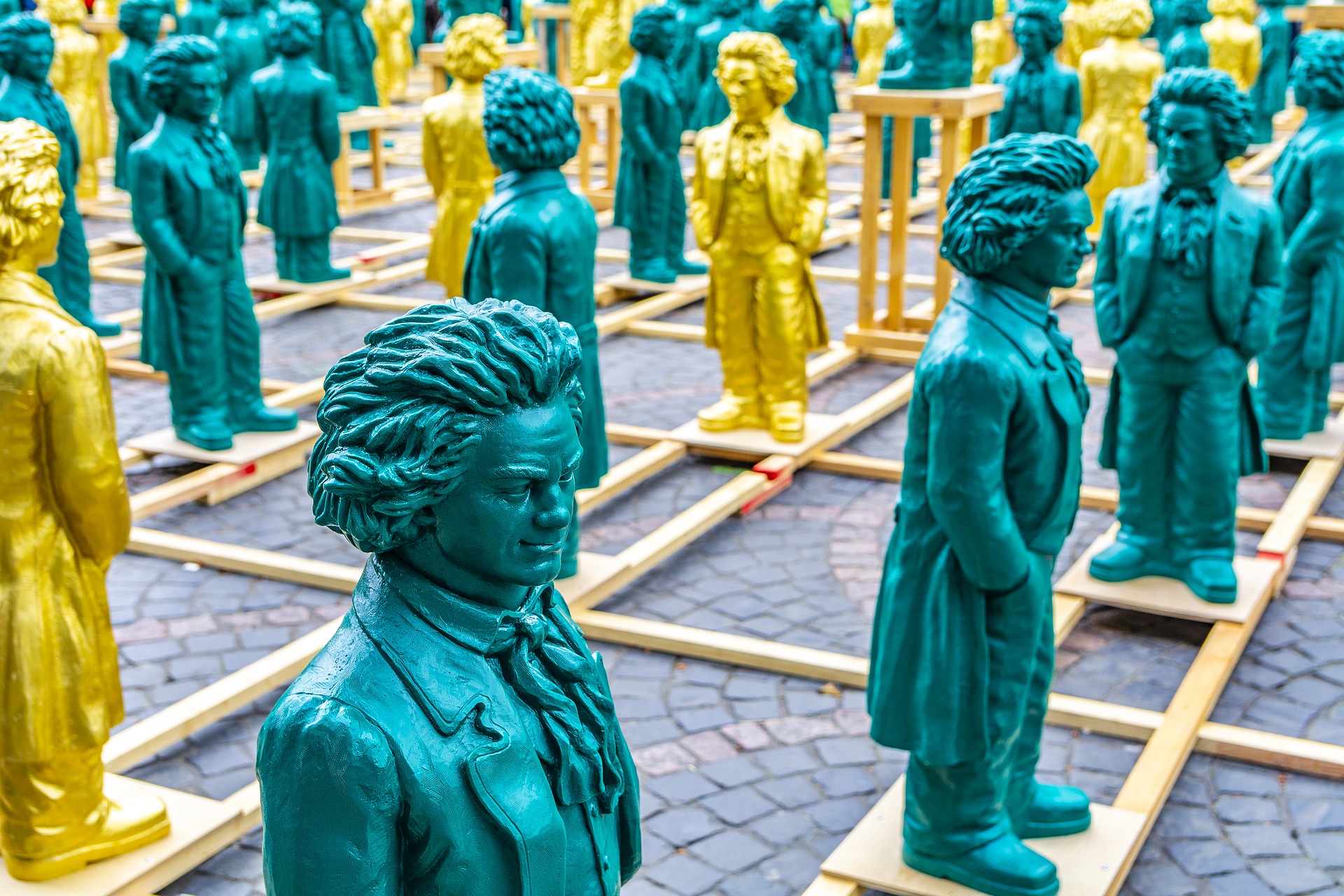
Britten Sinfonia Beethoven cycle at the Barbican Hall review *****

Britten Sinfonia, Thomas Ades (conductor),

Barbican Hall, 21st and 26th May 2019

  • Lawrence Power (viola)
  • Eamonn Dougan (director)
  • Jennifer France (soprano)
  • Christianne Stotjin (alto)
  • Ed Lyon (tenor)
  • Matthew Rose (bass)
  • Britten Sinfonia Voices
  • Choir of Royal Holloway
  • Beethoven – Symphony No 7 in A majpor, Op 92
  • Gerald Barry – Viola Concerto
  • Beethoven – Symphony No 8 in F major, Op 93
  • Gerald Barry – The Eternal Recurrence 
  • Beethoven – Symphony No 9 in D minor, Op 125

I have banged on before about just how revelatory Thomas Ades’ Beethoven cycle with the Britten Sinfonia has been. Well it seems that, for the final couple of concerts, the rest of the world, (well OK a few Beethoven nuts in London, Norwich and Saffron Walden) has caught up. A near full house for the Choral and a much better turnout for 7 and 8 than in previous installments.

The combination of, largely, modern instruments by an orchestra of solo and chamber specialists, (and now my favourite British ensemble), who have completely bought into the lessons of HIP under the baton of, again for my money, Britain’s greatest living composer, have produced Beethoven symphonies that surely reproduce the thrill of their first performance. Appropriate forces, minimal vibrato, tempos that believe Beethoven, textures exposed and perfectly combined. I have bloody loved the first four concerts and was really looking forward to the final pairing.

I wasn’t disappointed. The best Ninth I have ever heard. Ever. Soloists perfectly balanced and all as clear as a bell over the sympathetic accompaniment. And the choirs were immense. You don’t need a cast of thousands. How on earth Mr Ades and Eamonn Dougan managed to make the voices sound this perfect in this acoustic was a miracle. And everything Mr Ades drew out of the previous three movements before the finale was perfect.

Best Eighth I have ever heard live too though here the competition is, I admit, somewhat slighter. I will be honest and just say I never knew it was so good. It is short, it is jolly, with no slow movement, but it is full of intriguing, if brief, ideas. I finally got it. The Seventh wasn’t quite up to the same standard with the opening Vivace with all those abrupt early key changes not quite dropping into place and with the stop/start of the Allegretto funeral march maybe too pronounced. Minor quibbles. Still amazing.

The Barry Viola Concerto takes the flexing and stretching of a musical exercise with a simple melody and subjects it to all manner of variations. It ended with Lawrence Power whistling. It is, like all of Barry’s music in the series, immediately arresting, just a little bit unsettling, rhythmically muscular and very funny. Terrific.

The Eternal Recurrence which proceeded the Choral is equally unexpected. Extracts from Nietzche’s Also sprach Zarathustra are delivered in a string of high notes by the soprano, here the fearless Jennifer France, in an a parlando, actorly style which is designed to mimic speech and not to sound “sing-y”. It’s a bit nuts and undercuts the text in a slightly sarcastic way, a bit like, some would say,Beethoven does with Schiller in the Ode to Joy. It reminded me of Barry’s The Conquest of Ireland which was paired with the Pastoral earlier on in this cycle.

I gather Gerard Barry uses a similar technique in his opera The Bitter Tears of Petra von Kant, (based on the Fassbinder film). That is now firmly near the top of my opera “to see” list but for the moment I am very pleased to see that both The Intelligence Park and Alice’s Adventures Underground are coming up at the Royal Opera House. Thanks to Thomas Ades I think I can safely say I am now a fan of Gerard Barry. And the old fella has style and is generous to the performers of his music as we see when he takes his bow at each of these performances.

I won’t go rabbiting on about the musical structure or context of the Beethoven symphonies. You will know them. And if you don’t then frankly you are only living half a life. Beethoven wrote the greatest music ever written. If you don’t believe me then why not start next year when a recording of this cycle will be released and when there will be wall to wall live Beethoven performances to celebrate 250 years since his birth. Here’s a list of the best of them in London. They’ll be more.

  • 6th January, 6th February, 27th February, 19th March, 2nd April – Kings Place – Brodsky Quartet – Late Beethoven String Quartets
  • 19th January – Barbican Hall – LSO, Sir Simon Rattle – Berg Violin Concerto, Beethoven Christ on the Mount of Olives.
  • 1st and 2nd February – Barbican – Beethoven weekender – All of the Beethoven symphonies from various UK orchestras and much much more – all for £45
  • 6th February – Barbican Hall – Evgeny Kissin – Piano Sonatas 8, 17 and 21
  • 12th February – Barbican Hall – LSO. Sir Simon Rattle – Symphony No 9
  • 20th February, 4th November – Kings Place – Rachel Podger, Christopher Glynn – Beethoven Violin Sonatas
  • 1st to 17th March – Royal Opera House – Beethoven Fidelio
  • 15th March – Royal Festival Hall, PO, Esa-Pekka Salonen – 1808 Reconstructed – Beethoven Symphonies 5 and 6, Piano Concerto No 4, Extracts from Mass in C, Choral Fantasy and more
  • 4th April – LPO, Vladimir Jurowski – The Undiscovered Beethoven – inc. The Cantata for the Death of Emperor Joseph II
  • 8th April – Barbican Hall – Anne-Sophie Mutter, Lambert Orkis – Beethoven Violin Sonatas 5, 7 and 9
  • 11th to 16th May – Barbican Hall – Orchestre Révolutionnaire et Romantique, Sir John Eliot Gardiner – the entire Symphony cycle.
  • 22nd November – Kings Place – Peter Wispelwey, Alasdair Beaton – Beethoven complete Cello Sonatas