
A Taste of Honey at Richmond Theatre review ***

A Taste Of Honey

Richmond Theatre, 9th October 2019

Not quite sure I know how a production such as this is taken under the wing of the National Theatre, and let’s face it it’s none of my business anyway. But I do think I can work out why this particular tour, which has taken in in some fair sized commercial theatres came to pass. This production of A Taste of Honey, with Lesley Sharp and Kate O’Flynn in the leads, was a qualified success in 2014 on the South Bank. But the NT needs to be more, er, National. So spread the cost and risk so that the NT provides the brand and product and the theatres stump up the cash. Take a renowned play, though probably better known as a film, with historical appeal and contemporary relevance, and wait for the curious punters to roll in. Let Bijan Sheibani, who has since had a monster hit with Barber Shop Chronicles, (which, in another of the coincidences that continue to punctuate the Tourist’s cultural adventures, I saw for the first time literally the next day), show his best. And cast big TV and musicals star Jodie Prenger as the brassy Helen, alongside relative newcomer, Gemma Dobson as punchy daughter Josephine.

Shelagh Delaney famously wrote A Taste of Honey, the archetypal kitchen sink drama, when she was just 19. It would be pretty unusual for a working class woman to announce herself as a writer for theatre in this way in 2019. To do so in 1958 was, literally, a miracle. For which Joan Littlewood and the Theatre Workshop, who first staged it at the Theatre Royal Stratford, were rightly grateful. Whilst she never quite went on to repeat the success of this mix of rich characterisation, sincere dialogue and dramatic allusion in her subsequent work, (the harsh reviews for her second play The Lion in Love stopped her from writing for the stage for the next 20 years), her place in theatrical history. Her ambition was fuelled after seeing a production of Terence Rattigan’s Variations on a Theme and thinking she could do better. She was right. But in a world dominated by grammar school boys, she was never entirely at home, despite her fierce intelligence.

ATOH is still remarkable for its absence of judgement, its focus on two irreverent women, its atmosphere and its poetry. Helen and Josephine rub along, and rub up against each other, in their dingy Salford flat. Helen escapes with booze and dickhead blokes, namely one-eyed spiv Peter (Tom Varey). Teenager Josephine escapes through a fling with Nigerian sailor Jimmie (Durone Stokes). Pregnant she then turns to her gay, arty student best friend Geoffrey (another talented newcomer Stuart Thompson) for tea, sympathy and bitching.

If you don’t the story it is pretty easy to guess, its novelty, and scandal, having worn off with repeated replication. No matter it is still brilliantly executed. Or at least it would be in this production if it wasn’t for the endless and unnecessary scene changes, the very busy set from Hildegard Bechtler ,which just didn’t fit properly into the Richmond stage, the fussy lighting of Paul Anderson, and the jazz interludes from the three piece band of David O’Brien, Alex Davis and George Bird, awkwardly wedged on stage, with music from Benjamin Kwasi Burrell and on stage singing. In moderation all of these elements would work but it was all just a bit too much distraction for a text that doesn’t need and, towards the end, does, whisper it, run out of steam a bit.

Whilst I am at it Jodie Prenger and Tom Varey also verge a little too much on the side of over expression which leaves the determined yet vulnerable Gemma Dobson as the best of the five strong cast.

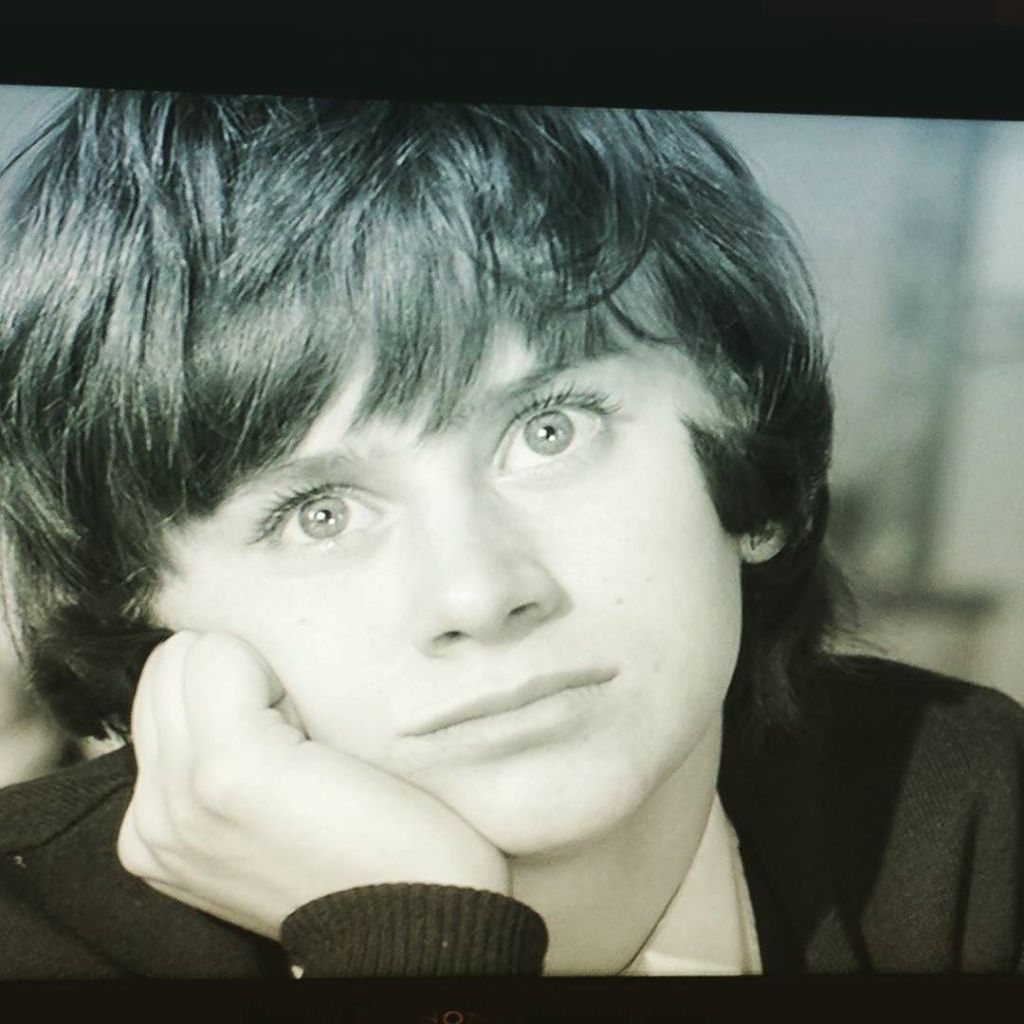
I am very glad that I got to see this important slice of theatrical history and I think it will do well when it comes to London at the end of the tour at the Trafalgar Studios. But if we want a better idea of why it is, even through the prism of sixty years of social change, (for the better of course), such vital drama, then Tony Richardson’s film is a better bet. I see Rita Tushingham (there she is above), whose debut role as Josephine was lauded nearly as much as Shelagh Delaney’s screenplay, is starring in Edgar Wright’s upcoming horror film alongside other legends Diana Rigg, (any way else out there fantasising about Lady Oleanna turning up at their Christmas lunch), and Terence Stamp. I wonder why. Looking forward to that.

Plenty at the Chichester Festival Theatre review ****

Plenty

Chichester Festival Theatre, 27th June 2019

Sir David Hare has written a fair few plays. Important plays. As well as TV screenplays and film scripts. I’ve only seen a handful but it’s not difficult to work out why the old boy is so important. Even if some would suggest he has gone off the boil a bit in recent years. Maybe that’s true though for me there was still much to admire in his last two plays I’m Not Running and his adaptation of The Red Barn, and in the TV drama Collateral. Is he Britain’s greatest living playwright? I think Mr Stoppard’s admirers would have something to say about that and, for me, Caryl Churchill, trumps them both.

So to this revival of Plenty. It wasn’t Sir David’s first success in the theatre. Slag from 1970, performed at the Royal Court, was the breakthrough with Knuckle, Brassneck, (written in collaboration with Howard Brenton as was 1985’s Pravda, a truly great play which is still lodged in my mind), and, especially, Fanshen, the Joint Stock workshopped production about land reform in revolutionary China, all attracting considerable attention. But Plenty stands as one o the clearest expositions of his talent. At least so I was told by those in the know. So I leapt at the chance to nip down to Chichester to see this new production. Especially as the CFT had handed the keys over to a talented, but not big name, cast (with maybe one obvious exception) and creative team.

Mind you director Kate Hewitt had already shown her gifts to the good people of Chichester in last year’s revival of Mike Bartlett’s Cock in the Minerva and again, at the Young Vic, with Jesus Hopped the A Train. Designer Georgia Lowe also worked on Cock and has come up with some grand designs for recent ETT productions and An Octoroon which the Tourist has enjoyed. For Plenty she has produced a lean but richly toned representation with further depth courtesy of Lee Curran’s lighting, Giles Thomas’s sound and Nina Dunn’s backgrounds and close up live video. There are a lot of scene changes in Plenty as the action flips from 1943 to 1956 and 1962. Every scene looks the part in this production and none of these changes get in the way of the story.

The title was inspired by the idea that post war Britain would be a land of “plenty”, an idea that Sir David has always been keen to contend. In Plenty he does this through the life of Susan Traherne, a heroine in the wartime Special Operations Executive whose life after the war is blighted by disappointment and regret. As the wife of a repressed career diplomat, Raymond Brock, she cannot replicate the rush of her secret missions behind enemy lines and, as depression sets in, she in turn drags down her husband. Their childlessness being the most crushing outcome both literally and metaphorically. Apparently 75% of the women engaged by the SOE divorced soon after the war. Susan’s own decline is intended to mirror that of post war Britain with Raymond’s postings and specifically his actions alongside boss Sir Leonard Darwin at the time of the Suez Crisis creating a brilliant counterpoint.

This is what Sir David does. Mixes the political and the personal. The way in which an individual’s life is intertwined with the, here, upper class, repressed British society into which they are thrust. Fair to say he is not the only dramatist who has ploughed this particular furrow. But he is amongst the best. Because he has the gift for the gab. Lines spill effortlessly out of the mouths of his characters. Any exposition, and with all these big themes lurking in the not-so background, a lot of ground needs to be covered, flows naturally in the dialogue. OK so maybe they get to the big picture arguments a bit too rapidly but then again in Plenty, as in his other plays, his people actually live in the big picture.

But this never detracts from the interior journey of the main protagonists. Here Susan and Raymond. Sir David may be a Chekhov groupie like so many of his illustrious peers but Susan Traherne might have stepped straight out of the pages of an Ibsen classic. In reverse trajectory. And with a nod to Rattigan’s Hester in The Deep Blue Sea which CFT also revived earlier in the year. Same class, same period, (though TDBS is set over one day compared to the 20 years of Plenty), same frustrations. This is a woman trying to revive the agency of her past life whilst surrounded by men determined, for reasons moreorless deliberate, to thwart her.

You have probably surmised that Susan Traherne is a gift of a part but it takes an actor of rare skill to do justice to it. Rachael Stirling is just such an actor. (Mind you if your Mum is Diana Ring I guess you wee genetically predisposed to be brilliant on stage). She refrains from laying on too thickly ST’s descent into depression and, maybe, psychosis, and handles the shifting time frames with ease. The bitter sarcasm she levels at, most memorably, the dinner party guests at the height of the Suez crisis and, then again, in 1962 at Raymond’s bosses at the FCO, is not entirely absent even at the outset when she meets “Codename Lazar” (Rupert Young) and “A Frenchman” (Raphael Desprez) in occupied France. She’s brutally honest in a social and political milieu that doesn’t want to listen. Which is what makes the play so popular with us lefty, liberal types though in far too subtle a way to register with the gammons, then and now. As it happens I am not sure I share Sir David’s implied pessimism about the direction of GB’s travel since the war. There have been periods of ascent over the past decades, but I do think this is usually despite, not thanks to, the c*cks who are generally in the box seats.

Rory Keenan never loses sight of the fact that Raymond Brock is a bit of a dick imprisoned by his own values and upbringing but he still offers emotional support above and beyond for the woman he loves. Yolanda Kettle offers light(-ish) relief as ST’s life long chum Alice Park, an archetypal toff playing at the bohemian, but with a freedom ST years for, and Antony Calf and Nick Sampson also shine as the two knighted diplomat, the latter more sceptical of the Establishment system than the former.

“State of the Nation” and, for want of a better phrase, the dramatisation of institutional structures, is what we have paid Sir David Hare to deliver over the last five decades. Too many lightly sketched characters? Too many targets for his ire? Or too preoccupied with fighting the battles of previous years? A sometimes uncomfortable shoehorning of the personal into the political. All maybe true but this ain’t easy and, with line after line, Is David shows us why he is as good as it gets with this sort of stuff. And Plenty is about as good as it gets as an example of his sort of stuff.