
Captain Corelli’s Mandolin at the Rose Kingston review *****

Captain Corelli’s Mandolin

Rose Theatre Kingston, 12th May 2019

WELL F*CK ME. LITERALLY AS I WAS ABOUT TO PUBLISH THIS POST I SEE THAT THE PRODUCTION HAS SECURED A RUN AT THE HAROLD PINTER THEATRE IN JULY AND AUGUST. EXACTLY WHAT I HOPED FOR. YEAH !!!!!!!

Never read the book. Never seen the film. Had no inclination. Assumed it was some soppy love story which would bring no value to my joyless, ascetic life.

Then I saw that Melly Still was directing and that Rona Munro (The James Plays) had adapted Louis de Bernieres’ blockbuster novel. And I am honour bound to support my local theatre which is about to have its funding hacked away by the philistine local council. Whom I support. Doesn’t stop it being anything less than a twattish decision though. Maybe it was a bit ambitious, and vain, to create such a big theatre space here in the first place, but, in the circumstances, and with no AD on the books, the Rose has done a grand job in producing new theatre of the highest quality in recent years.

Grrrrrh. Anyway Melly Still’s last outing here was the adaptation of Elena Ferrante’s My Brilliant Friend. Again a book, (actually a quartet of books), about which I had, (and still have), no knowledge. It was a triumph. She is an Associate Artist at the Rose now. Hence this production of CCM in conjunction with the Birmingham Rep. Hopefully in spite of the above news there will be more opportunities for her to display her talent in many future years. Both of these productions took well loved books, sharpened their focus, highlighted their messages and turned them into exciting, physical dramas using a barrage of theatrical technique.

Now I recognise that this approach risks annoying the super-fan who wants every scene to be played out in full and every character interaction to be carefully drawn. On the other hand all this razzmatazz stagecraft, movement (George Siena, I need to watch out for him), set and costume (Mayou Trikerioti, like George she is Greek, smart call), lighting (Malcolm Rippeth), video (Dom Baker), and, especially, composition (Harry Blake) and sound (Jon Nicholls and Dan Hunt), might leave some of the audience breathless. But that is what makes this production so thrilling.

For me though this is what story-telling is all about. A book is a book and a stage is a stage. If, as here, you have a big story to tell, that crosses time, place and people, then this is as glorious an example of how to make it work within the constraints of the latter as you are ever likely to see. It’s the onset of WWII on the island of Cephalonia. Learned widower Dr Iannis (Joseph Long) lives with his daughter Pelagia (newcomer Madison Clare) who gets engaged to local lad Mandras (Ashley Gayle). But war begins and he goes off to fight. Italian Carlo (Ryan Donaldson) watches his love Francesco (Fred Fergus) die at the hands of the Greeks in Albania. The Italian and German forces pitch up in the village led by the surprisingly, in the circumstances, happy chappy Antonio Corelli (Alex Mugnaioni) who is billeted in the Iannis home. Mandras returns, injured, but Pelagia falls out of love with him. Italy switch sides …. and then …. well it really kicks off.

Love. And War. Doesn’t get much bigger than that. So no surprise that I was carried along by the story. But what I didn’t bargain for, apart from the genius of the staging, (again I will refrain from highlighting any of the exquisite details – they just keep coming), is the way the play examined the specific history of the impact of the war on Greece. On occupier and occupied. And the way music, which pours out of this production, is deployed as the antithesis of the carnage of war. As well as what I had expected. What war does to individuals. And what form love can take.

No programmes left at the Rose, (since, eventually, this filled the house), so I can’t be sure if I had seen any of the cast before but most were new to me. No point picking out any individuals. The whole point is that this is an ensemble. Of cast and creatives. Mind you if you don’t fall for Luisa Guerriero’s character I can only assume you are made of stone. And the sound that is spun out from Eve Polycarpou’s voice is devastating.

Apparently Mr de Bernieres is very happy with the result and sees it as faithful to the intention of his novel. (In contrast, I read, to the film which went off the rails big time). I am not surprised. I loved it. I see that some of the proper reviewers felt that the central love story underwhelmed in comparison to the spectacle of the historical context. Not for me. I can report lump in throat, though I am a lachrymose old bluffer.

Hopefully the Rose and Ms Still can alight next time on a text that will pull in the punters from far and wide as well as titillate the local punters to create something that can be flogged in the West End. Mind you if I were a big shot WE producer I would take this on in a shot. As it stands it has the rest of its run at Birmingham Rep, then the King’s Theatre, Edinburgh and finally the Theatre Royal, Glasgow. Do go and see it.
Julius Caesar at the Bridge Theatre *****

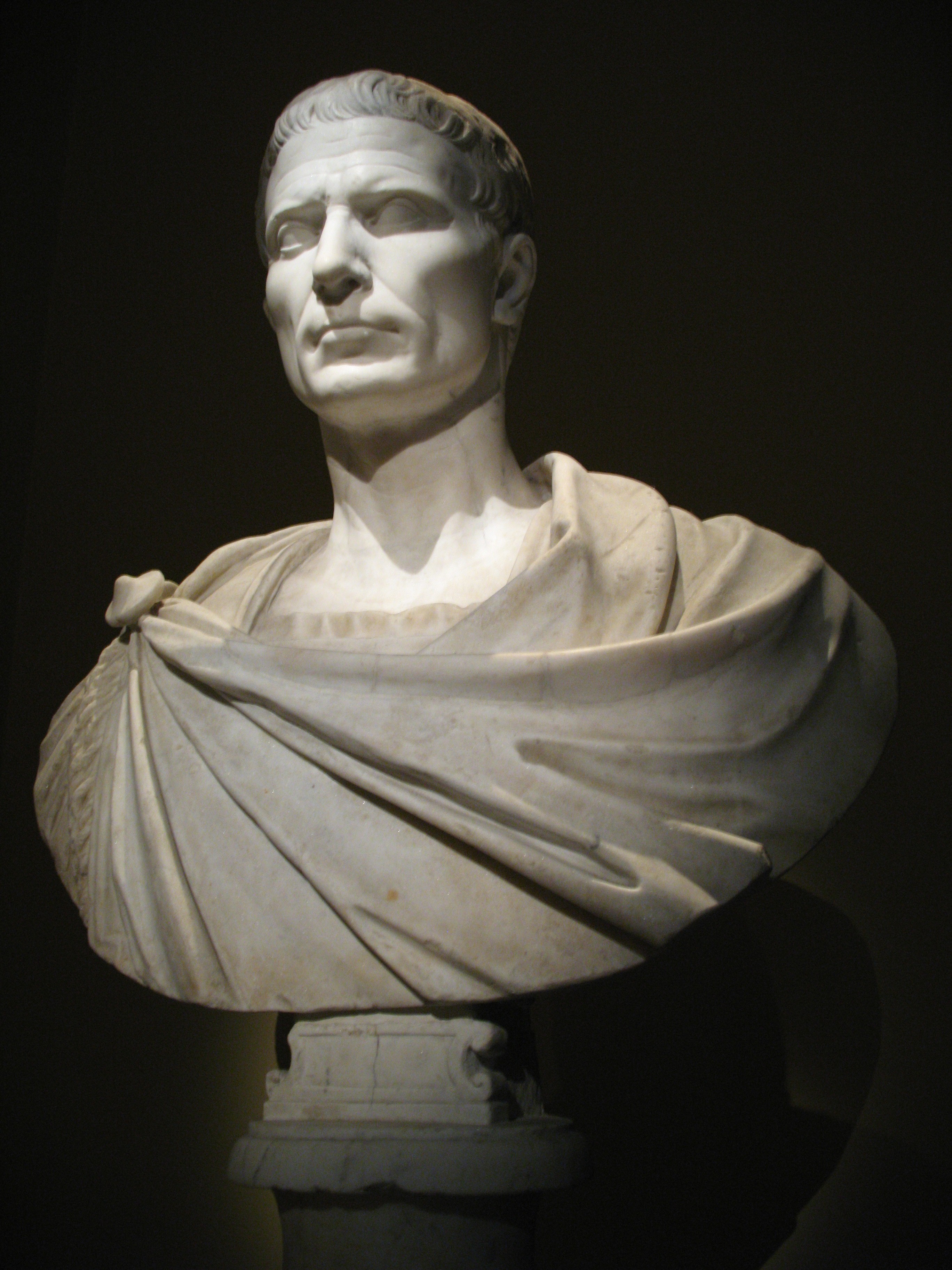
0092_-_Wien_-_Kunsthistorisches_Museum_-_Gaius_Julius_Caesar

Julius Caesar

Bridge Theatre, 28th February 2018

I had really, really been looking forward to this. Julius Caesar is one of my favourite Shakespeare plays. Contemporary relevance of course, but Shakespeare always has relevance. My appetite whetted by the excellent RSC production I saw at the Barbican last month, (Julius Caesar at the Barbican Theatre review ****) and by Phyllida Lloyd’s heady all-female interpretation at the Donmar Kings Cross in 2016. Nicholas Hytner in the director’s chair and Ben Whishaw, David Morrissey, Michelle Fairley and David Calder in the four lead roles.

So a little bit of snow wasn’t going to stop me getting there, and dragging the SO along with me. It didn’t disappoint. Best play I have seen so far this year, along with John at the NT: admittedly we are only a couple of months in, with the NT Macbeth having just opened and, I haven’t yet seen Network at the NT. Still this is a cracker. There are plenty of tickets left in the run, though the cheaper seats have largely gone, (it is hard to believe there is a bad seat anywhere in the Bridge), but it is well worth 50 quid or, if you are a fit young’un snap up a promenade ticket and be part of the action.

The transformation into a promenade space from the straight on staging of Young Marx shows just how marvellous the Bridge space is. The promenaders are shepherded around the pit by stewards, a metaphor for the manipulation of the populus as effective as it is obvious. Bunny Christie’s production design is equally blunt but effective, with a series of plinths rising from the floor as and when scenes change. A massive shout out to production manager Kate West, company stage manager Hetti Curtis and the rest of the team at work for this performance and behind the scenes. To make this intricate production succeed, whilst actually enhancing its dynamism, takes real skill. Watch and see, especially, the floor transformed into a battlefield for the final scenes. The stage management team were rewarded with well deserved applause at the end. Bravo.

Even before Caesar (David Calder) appears in front of the crowd with Mark Anthony (David Morrissey) in tow, we have a treat in storm with a some pumped up rock’n’roll for Lupercal courtesy of a street band made up of Abraham Popoola, Fred Fergus, Zachary Hunt and Kit Young. I already have a high regard for Mr Popoola, having seen his vigorous Tobacco Factory Othello alongside Norah Lopez Holden’s Desdemona and Mark Lockyer’s Iago at Wilton’s Music Hall. (Othello at Wilton’s Music Hall review ****). Turns out he can sing a bit too and he puts in a stint as a plotter in the form of a taciturn Trebonius. Fred Fergus doubles up as a slow-witted Lucius and gets a right kicking as Cinna, in that simple but so effective mistaken identity scene. Kit Young is a crafty Octavius.

David Calder’s Caesar ticks all the right boxes: proud, conceited, vainglorious. Here is a man used to getting his own way. His eventual dismissal of Calpurnia’s (an under-utilised Wendy Kweh) qualms about his visit to the Senate is insouciant but still reveals a hint of underlying unease. Our conspirators are a thoughtful bunch. Michelle Fairley as Cassius is neither bluntly straightforward in her entreaties to Brutus not bitter in her abhorrence of Caesar and what he is turning into. Instead she is logical, using force of argument to persuade Brutus to lead the coup. Books, glasses, a desk and Ben Whishaw’s innate demeanour make him a contemplative, but still determined, Brutus. You can easily see why his belief in his own rectitude might come across as priggish arrogance to the crowd. He seems to be going through the motions in his justification speech. Mind you I can see why he might underestimate David Morrissey’s Mark Antony. He comes across as a duplicitous chancer, making up as he goes along. I don’t recall being as struck by his mendaciousness before in the scene with Octavius at the beginning of the battle when he brusquely withdraws the pay-out to the people in Caesar’s will.

I reckon a woman playing Cassius, (and indeed women playing other of the conspirators), will, and should, become the norm. It creates a shift in the dynamic between Cassius and Brutus which can be profitably mined, both in the early conspiracy scenes and in the bust-up and reconciliation ahead of the battle. I am not sure whether the distance I sensed between Brutus and Portia, (Leaphia Darko who I hope to see in a much bigger role), was intended but it created an interesting ingredient. Every Casca should be as pointedly sardonic as the scene-stealing Adjoa Andoh. I know Ms Andoh has had an illustrious stage career but I couldn’t help thinking, for example, how much better the recent RSC production of Antony and Cleopatra would have been with her in the driving seat. The rest of the cast, Mark Penfold as Lepidus, Ligarius and the Soothsayer, Nick Sampson as Cinna, Leila Farzad as the reluctant Decius Brutus, Hannah Stokely as Mellellus Cimber, Sid Sagar and Rose Ede were all on top form.

Nick Hytner directed the first Shakespeare productions that ever made any sense to me; his RSC productions of King Lear and The Tempest with the incomparable John Wood. This was when I first “got Shakespeare”.. He is the master of modern dress, “contemporary” Shakespeare. Early on at the NT he created a Henry V with Adrian Lester which was the antithesis of jingoistic. All the surveillance stuff in Hamlet that Robert Icke loaded up on at the Almeida. Look no further than Hytner’s 2010 version with a bookish Rory Kinnear as the Dane. His Othello at the NT with, surprise, surprise, Adrian Lester and Rory Kinnear, is possibly the best Shakespeare production I have ever seen. His Timon of Athens with Simon Russell Beale kicked into a cocked hat any notion that this is a difficult, unbalanced play.

His visual language is so complete that, even if you don’t catch every line. (let’s face it that is going to happen with Will S, one reason why you can never see too many productions), you still comprehend pretty much everything in front of you. He takes a view for sure, but always in the service of the universal themes that the plays wrestle with. Every single detail is thought through. For anyone who thinks Shakespeare is not for them, Mr Hytner will change your mind.. It helps that his key collaborators in this production, Bruno Poet (lighting), Christine Cunningham (costume), Nick Powell (music), Kate Waters (fight) and, especially here, Paul Arditti (sound) are so expert in bringing his vision to life.

The Trumpian allusions are not overplayed. No need to. We can see the attraction of Caesar to the crowd, but we also see why the conspirators are so alarmed by his lazy demagoguery. The vacuum that is created after the assassination, a visual twist here, is palpable, as the patronising elitist Brutus and the pragmatic Cassius haven’t thought through what happens next. Sounds familiar eh. Which leaves a yawning gap for the opportunist Mark Antony to unleash those war dogs. The failure of the “liberal’ response to populism hangs heavy in the air.

Finally here is my plea to Mr Hytner. Whilst I absolutely get that Messrs Shakespeare, Bean, Bennett, Hodge and McDonagh are, incontrovertibly, the best of writing collaborators, and I see he has the scoop on Nina Raine’s new play, please can you have another crack at Ben Jonson or Marlowe. Maybe you can make sense out of Bartholomew Fair and pull the punters in. There’s a challenge.

P.S. I note that another play that deals with the had-wringing liberal response to populism, albeit in a very, very different way, Roland Schimmelpfennig’s Winter Solstice, still has a few more legs of its tour left, Plymouth, Edinburgh and Scarborough. Highly recommended.