

Two Trains Running at the Royal and Derngate review ***

Two Trains Running

Royal and Derngate Northampton, 12th September 2019

Another instalment in August Wilson’s Pittsburgh cycle though, four in, the Tourist still has some way to go. Two Trains Running premiered in 1990 and is set in the turbulent 1960s – remember each of the ten play series covers one of the decades of the C20 and all bar one (Ma Rainey’s Black Bottom) are set in the Hill District of Pittsburgh.

All the action in TTR, well words really, for August Wilson’s plays prize dialogue and character over plot, both their strength and their weakness, takes place in 1969 in the neighbourhood diner owned and run by Memphis Lee (Andrew French). The 1960’s saw the economic decline of the Hill District, once a byword for prosperity and cultural relevance in Black America, accelerate, prompting intervention from the Pittsburgh Urban Development Authority. Vast swathes of the neighbourhood were demolished to be replaced by a white elephant Civic Arena and failed public housing projects. Many residents were displaced and the redevelopment became an object lesson in how not to do “urban renewal“. Memphis’s business has seen better days but now he is holding out for the price he thinks it is worth from the City authorities, not just for the money but also to take a stand for the overlooked and disparaged community. He dreams of returning to his Southern roots from where he and so many others were compelled to escape in earlier, darker, decades. Frankie Bradshaw’s set captures this transition with the beautifully detailed diner sporting a hole in its roof above which is suspended a massive wrecking ball.

Memphis is assisted by cook and waitress Risa (Anita-Joy Uwajeh) who constantly has to push back against her boss’s criticism and the sexist comments and assumptions of the regulars. These include the assured West (Geoff Aymer), the local undertaker whose business is thriving, hustler Wolf (Ray Emmet Brown), who uses the diner’s phone to run a numbers racket, and the stoic Holloway, an unemployed painter and decorator, (Leon Herbert). Most poignant though is Hambone, (the excellent Derek Ezenagu), brought low by his obsession with getting fairly paid by the white butcher customer for work he did twenty years ago. The outside world relentlessly encroaches upon the lives of the company, first when the animated ex-con Sterling (Michael Salami) returns to the Hill looking for work and for Risa, and as the rallies, protesting racial injustice, increase in intensity.

Impossible to fault all the performances or the careful direction of Nancy Medina, who was similarly adept with Dael Orlandersmith’s Yellowman at the Young Vic and, I gather, Inua Ellams’s The Half God of Rainfall at the Kiln. Easy to see why she has won both the Peter Hall Directors Award and the Genesis Future Director Award. The lighting and sound design from other young talents Amy Mae and Ed Lewis was equally accomplished. Which means the somewhat discursive nature of events of stage is down to August Wilson alone. That is not to say that the lyrical dialogue, what and how the characters say, isn’t pitch perfect. Just that there is rather to much of it. Too many layers if you will. This is true of the other plays in the cycle I believe but here the contrast of individual reversals with societal transformation is just a little too carefully wrought.

As a production it matches the high standards previously set by English Touring Theatre. As a play maybe not quite as convincing as the others in the cycle I have seen. Still very keen to see further instalments however and given the resonance of the parts that AW wrote for black actors I expect I won’t be waiting too much longer for just such an opportunity.
Sweat at the Donmar Warehouse review *****

Sweat

Donmar Warehouse, 24th January 2019

Who is the greatest living playwright (in the English language). Caryl Churchill. Obviously. Who is, in the opinion of the Tourist, probably the most talented playwright under 40 in Britain today. Ella Hickson. What was the best original play the Tourist saw last year. John by Annie Baker. And the best play so far this year. Sweat by Lynn Nottage.

So far this year the Tourist has seen 19 plays (well 18 and a half to be exact of which more in a future post. Actually it is quite a bit more than that but I have condensed the Pinter at Pinter season ). Too many. Certainly but such is the life of the friendless, privileged layabout.

Only 4 by women though. Not good enough. Either by me or the industry. Last year, (I shall refrain from the total number – it is embarrassing), just 25% of the plays of the plays I saw were by women. If I take just new plays (not classics or revivals) the ratio edges towards 40%. Not great but getting better.

Before I get started I note that Sweat is transferring to the Gielgud Theatre from 7th June for 6 weeks or so. If you haven’t seen it don’t hesitate.

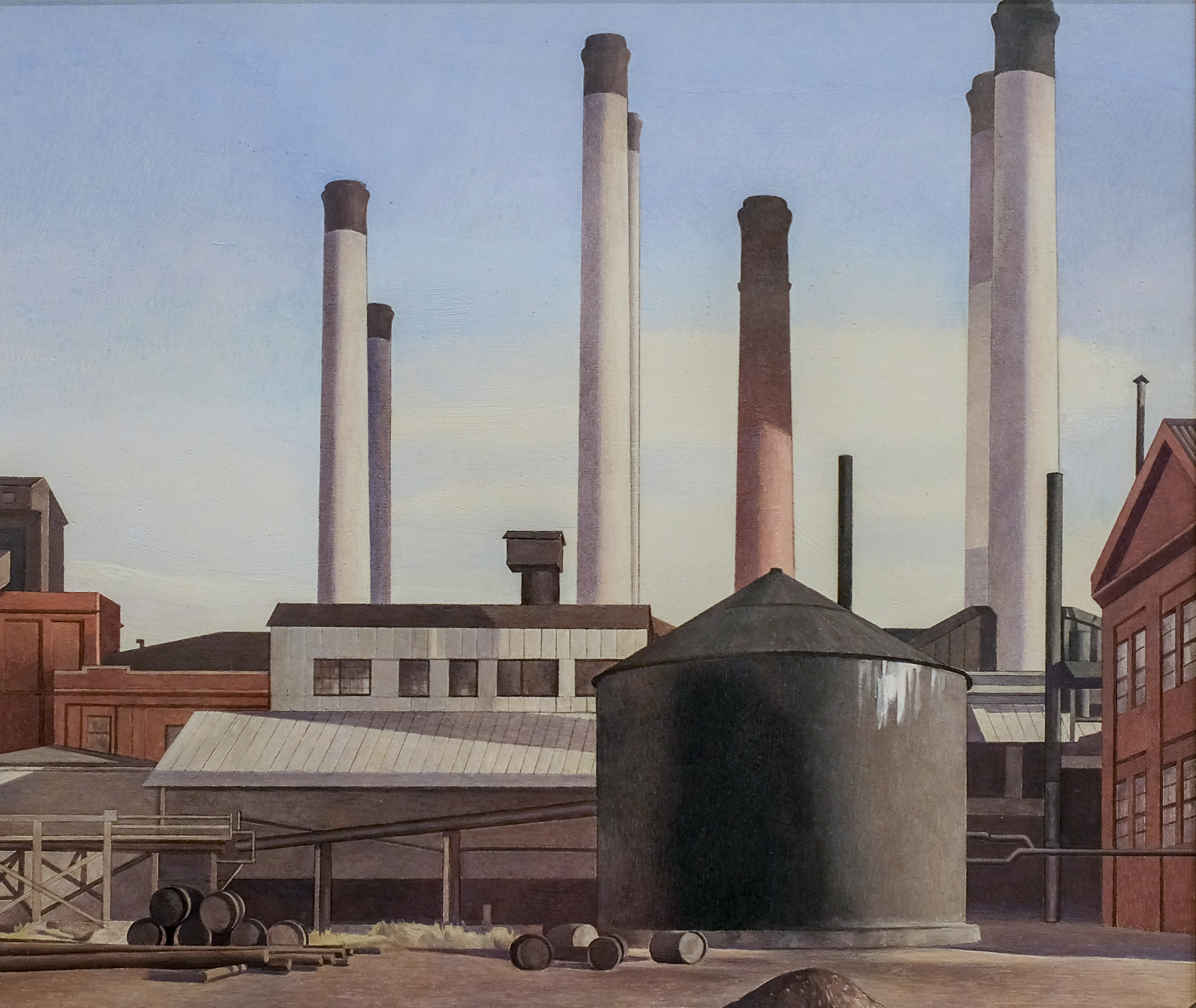
Sweat is set largely in a bar in a de-industrialising town in the rust belt of the American North East. Lynn Nottage and her team spent over two years interviewing residents of Reading, Pennsylvania in preparation for writing the play. Now, as I know from having seen another Pulitzer Prize winning entertainment, Julia Wolfe’s oratorio Anthracite Fields, Reading was, in its heyday through the second half of the C19 and first few decades of the C20, a powerhouse of US industry built on iron and then steel, its proximity to coalfields and on the railway. Its fall was precipitous however and it became, by the time of the 2011 census, one of the poorest cities in the entire country, though it is now being reinvented as a centre for cycling nationally.

Ms Nottage’s play is set in 2000, though it begins in 2008, with the release of Jason (Patrick Gibson) from prison into the hands of probation officer Evan (Sule Rimi who has, thankfully, popped up on numerous occasions for my viewing pleasure). Jason is “reunited” with once friend Chris (Osy Ikhile). Neither is in a good place. We then flash back to see how we got to that place. Jason’s mum Cynthia (Claire Perkins), Chris’s mum Tracey (Martha Plimpton) and Jessie (Leanne Best) are celebrating in the bar managed by Stan (Stuart McQuarrie) and where Hispanic-American Oscar (Sebastian Viveros) is employed. Cynthia is estranged from husband Brucie (Wil Johnson) who has spiralled downwards after being shut out from the factory during a strike some years ago. All three, tough, women are also employed at the local steel-works, as are the boys, (though Chris wants another life), and as was Stan until an industrial accident, and it is against this back-drop that the story unfolds.

Now you might be thinking, uh-oh, this is going to be one of those terribly worthy political plays where a finger-pointing, hand-wringing lesson about economic and social injustice sucks the life out of the drama and leaves you with conscience enhanced but ever so slightly bored. Well nothing could be further from the truth. The relationships between the characters, and the extraordinary, often moving, dialogue, that describes them is perfectly pitched. The play is flawlessly plotted, structured and executed. The fact that Lynn Nottage is able to locate this within a broader economic and social context (blimey, she even nails the mixed blessings of NAFTA), to conjure up time and place (and history) and to explore fault-lines along racial, class and gender divides, without getting in the way of the personal drama, is what makes this such a complete work of theatre. This is fiction, with no trace of verbatim, but the process of its creation, the people that Ms Nottage talked too, make it very real.

There is nothing redemptive or uplifting here but that is the reality of the damage that the economic dislocation and industrial change has brought to the region and by implication, those left behind in the US and across the Western world. The play opened in New York in 2016 just before Trump’s election. It could not be more relevant. The shattering of the American Dream is hardly a novel subject for drama but Sweat brings home the causes and consequences of the shift away from heavy industry and manufacturing, from managed capitalism, through financial capitalism into the information age. Ms Nottage has said that “we are a nation that has lost our narrative”, which sums up the disillusionment, rage and frustration which is now being vented by those that have lost out and, for whom, the dignity of labour has been upended and faith shattered in a system which was supposed to protect them. Setting the play in an all-American bar, rather than the workplace itself, is a masterstroke, for this is an arena in which the tensions can truly erupt.

Even a play this perfect still needs cast and creatives to deliver. Indeed any flaw in delivery would probably be more visible. Fortunately we are in the secure hands of director Lynette Linton, assistant at the Donmar and now in the hot seat at the Bush. Frankie Bradshaw’s set is wonderful as the bar descends, altar-like, inside a framework of steel girders, supported by Oliver Fenwick’s lighting design and George Dennis’s sound. The cast is uniformly exemplary, another triumph for dialect coach Charmian Hoare, (though this Brit is no expert), with Claire Perkins particularly excellent as the striving Cynthia and Martha Plimpton just, and for once the vernacular is justified, awesome.

Best of all Lynn Nottage didn’t just helicopter in to extract her story and then move on (as it happens now to a work around the life of Michael Jackson – crikey!). No, she and the team, went back to show the play and to engage in many ways with the community across multiple projects. Drama matters. The Greeks knew that. Hard to see how it could matter more than with Sweat.