
Stravinsky, Debussy and Shostakovich: LPO and Leif Ove Andsnes at the Royal Festival Hall review ****

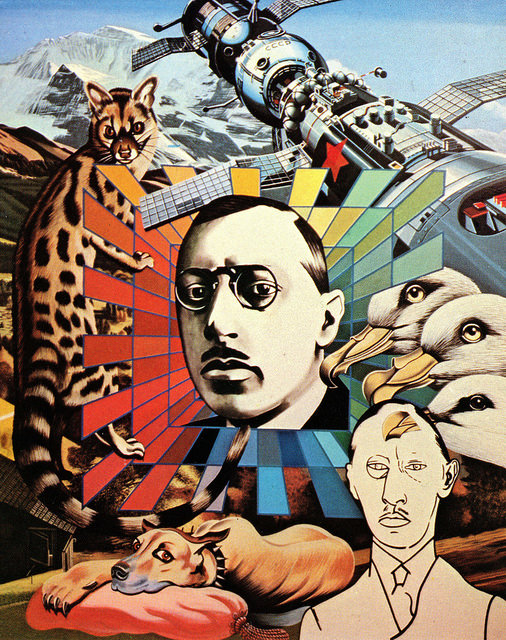
16794762330_2b22b89018_z

London Philharmonic Orchestra, Vladimir Jurowski, Leif Ove Andsnes (piano)

Royal Festival Hall, 18th April 2018

  • Stravinsky – Symphony in C,
  • Stravinsky – Tango arr. for orchestra
  • Debussy – Fantaisie for piano and orchestra
  • Shostakovich – Symphony No 6 in B minor, Op 54

I am pretty confident that no-one reads the reviews of classical music concerts posted here, not should they, since I know so very little about the music I hear, and what I do learn is ruthlessly plagiarised. But if you do stumble across this “content” by accident it really helps if you like Igor Stravinsky and Dmitry Shostakovich. A combination of my taste and that of those responsible for programming in the finest London venues means there is a lot of these two fellas on show here. More than I had realised.

This was another instalment of the Stravinsky Changing Faces festival at the South Bank, this time from the LPO under Vladimir Jurowski’s baton rather than one of their guest conductors.

Before I get to this a shout out for the free concert in the Hall just before this from members of the LPO Foyle Future First programme. This has been created to nurture talented young musicians who aspire to a career in the orchestra. They kicked off with a bouncy rendition of Stravinsky’s “Dumbarton Oaks” Concerto, then tackled some short pieces by Elliott Carter, Luciano Berio, Edison Denisov as well as Stravinsky’s own Epitaphium, a commemoration piece for flute, clarinet and harp, which acted as the inspiration for the other pieces which, in their turn, commemorate IS. The last piece was the more substantial Furst Igor, Strawinsky by Mauricio Kagel, drawn from Borodin’s opera Prince Igor and showcasing the dramatic singing talents of young bass Timothy Edlin, and some startling percussion effects.

I chanced upon this concert. On the basis of this I will endeavour to seek out any future offerings as should you if you are in the vicinity.

On to the main event. The Symphony in C was first performed in 1940 in Chicago conducted by IS himself. The first two movements, a Haydnesque shuffle with prominent oboe, here taken briskly, and a concertante with strings sandwiched by woodwind, were written in Paris, at the same tine as IS lost his daughter, first wife and mother. No grief on show though in this effervescent neo-classicism. The last two movements were composed after IS had moved to the US and comprise a scherzo with nods to IS’s early works and a slower conclusion focussed on woodwind. The trumpet of, I think, principal Paul Berniston, also got a good workout. Like everything Stravinsky wrote, the more times you listen to it the more you are astounded by how easy it all seemed to come to him, whatever form or style he was writing in, and however “academic” the music. This IMHO is about the best Neo-classical piece ever written.

The proceeding tango for chamber orchestra was originally a piano piece, as revealed by Leif Ove Andsnes later on in his encore. Even the stuff IS churned out for money, like this, is captivating, with strings, guitar, woodwinds and more brass than you might expect. Mr Andsnes is a confident fellow, I’ve heard him play a couple of times before, and have enjoyed his interpretations of Beethoven, the Nordics and Chopin, without being utterly convinced, I regard Debussy as a bit of an occupational hazard, as it often, as here, crops up in the programmes that appeal to me. All that swirling impressionism and general diddling about doesn’t really do it for me I am afraid. The piano being the chief instrumental purveyor of the diddling about tendency for composers so inclined, I wasn’t looking forward to this.

Once again my idiotic prejudices were confounded. The Fantaisie was written in 1890 as part of a prize young Claude secured but only the first movement was performed, leading CD to huffily withdraw it. Every time it was scheduled for performance thereafter, after revisions, he missed his deadlines, so that the original published score only appeared in 1919. The revisions were finally published in 1968. Leif OA has made a signature dish from this later version which is what we heard here. The first movement introduces the theme which turns up in the final allegro, there is a bit of the “exploratory” stuff which worries me but it settles into a tune by the end. The slow movement is grandly Romantic and in F sharp major. I shouldn’t like this but I did. Maybe I have a thing for this key. This moves into the the quicker, colourful finale which is underpinned by a repeated bass figure, and that, dear reader, is why I liked it. Probably because it doesn’t sound much like Debussy.

I don’t know how much rehearsal the orchestra got with the soloists. I am guessing it was limited since the programme implied we were getting the original 1919 version suggesting a bit of miscommunication. It didn’t matter. The more I hear the LPO with VJ at the helm the more I admire their unruffled ability to support, but never, overwhelm the soloist.

There is nothing diddly about Shostakovich’s 6th. After getting back in the Politburo’s good books with the 5th he went and upset the apple cart again with this bizarrely “unbalanced” though not “formalistic” symphony. 18 minutes or so of B minor largo slow movement with one of those never ending intros followed by a funeral march second theme, which is then repeated, but in a very subdued, passive way with solo flute from Juliette Bausor, ending with the briefest of recapitulation of the first themes. Then a scherzo, with trio accent, and strident climax, straight out of the DSCH copybook and a closing rondo, with contrasting waltz, that only needs a few clowns to gallop on stage to be complete and even has the enigmatic William Tell Overture which punctuates his last Symphony No 15. No fourth movement, all done in half an hour, audience always a bit taken aback, then relieved that it’s all over. And that’s the contingent, here thankfully large, who love this stuff. The best parties don’t go on too long. Who knows what it all means.

There is a lot of opportunity for pianissimo in the first movement, with most of the orchestra resting most of the time, and VJ and the LPO were keen to show what they could do. The extended second theme of the Largo was as close to eerie Shostakovichian, chair-pinning, perfection as you could ever want to hear,  and the closing presto faultless. Bish, bosh. It might still be on I Player if you’re interested.
Twentieth Century Masters: LSO at the Barbican review ****

orig_59afd6d959fea7-94052844

London Symphony Orchestra, Simon Rattle, Isabelle Faust

Barbican Hall, 14th January 2018

  • Janacek – Overture: From the House of the Dead
  • Elliott Carter – Instances
  • Berg – Violin Concerto
  • Bartok – Concerto for Orchestra

Back to the Barbican for another round with Sir Simon Rattle and the LSO, though this was more familiar ground (for me) compared to the previous outing (Rameau to Mahler: LSO at the Barbican review ***) a few days earlier. And back to my more usual perch. Once again the Hall was pretty much full to the rafters, and, encouragingly, it looked liked a very youthful audience. (Or I am ageing more rapidly than I thought). Anyway, on the subject of age, the thread here was orchestral works written near the end of their lives by these four very different composers. All of which gave a chance for the whole orchestra to shine.

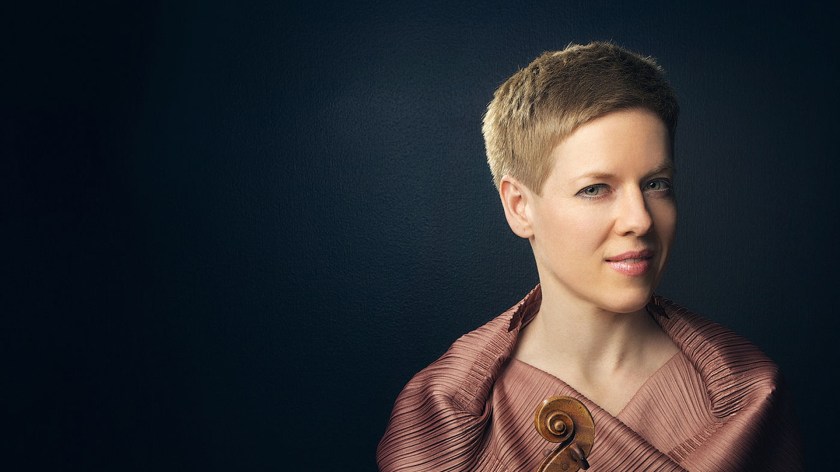
Now the main draw for me here was Isabelle Faust. I think she is probably the best current violinist in the world. Mind you, as is my wont, I have gone all hyperbolic in this claim with little evidence to back this up. So, more exactly, the best violinist I have heard in the past couple of years, based on recordings and her Bach outing last year at the Wigmore Hall (Akademie fur Alte Musik Berlin at the Wigmore Hall review *****).

As it happens I saw a fine rendition of the Berg Violin Concerto performed by another favourite violinist in the elfin form of Patricia Kopatchinskaja last year at the RFH with the LPO under the baton of Vladimir Jurowski. And I recently invested in the benchmark Levine/Mutter recording, (even though I am not entirely convinced by Ms Mutter). Now I am not going to pretend that listening to Berg comes easily to me, but even I can hear that there is a rich depth in his works from the combination of passion, intelligence, serial technique and romanticism, that rewards persistence. I rashly signed up for a performance of Wozzeck at the Frankfurt Oper a couple of years ago in German with German sub-titles (FYI I don’t speak German). Unforgivably I bought the cheapest ticket up in the gods. It is a wonderful auditorium but I could only see half the stage. That was still enough to be transfixed by an outstanding production. But most of all it meant I had no choice but to get lost in the score. Stunning. Add to this the Lulu in 2016 at the ENO directed by William Kentridge, which I confess was beyond me in parts, but was visually spectacular, and I am now well on the road to Bergian conversion. Mind you, what with his long(ish) musical education under Schoenberg, the proscription of his music under the Nazis and his early death, aged 50, after a bizarre insect biting incident, there isn’t too much composition to get your head around.

Now this Violin Concerto isn’t like others in the canon. It’s tricky for sure, and asks a lot of the soloist, but it isn’t showy. Orchestra and soloist have to mesh together. It is pretty much the last piece Berg wrote and is dedicated to the memory of Manon Gropius, the daughter of Alma (Mahler’s widow) and Walter Gropius (Bauhaus founder), who died from polio at 18. Apparently she was a captivating young woman in the manner of her mother.

The two movements are each split into two parts and with the waltz emerging from the material set out in the first movement, and the chorale emerging from the more rhythmic, almost cadenza, in the second movement. This the tempo is reversed in each. I can sort of pick out the established musical structures from within the twelve tone architecture but couldn’t tell you exactly what was going on. Suffice to say this is a dark, brooding, self-absorbed piece for the violinist and Ms Faust seemed to capture this utterly. She seemed lost in music, caught in a trap, to paraphrase Philly’s finest sisters, There are times when the whole edifice becomes just that bit self indulgent but this is where Sir SR’s insistence on picking out the orchestral instrumentation pays dividends. I hadn’t realised how detailed are the parts for harp, clarinet, viola, flute and trumpet were in this piece. I do now.

Which brings me to the Bartok Concerto for Orchestra. Now this is a piece written with the express intention of letting everyone in the band have a solo, like some prog-rock group in its 1970s pomp, It is an obvious, but still inspired, choice to present to an audience in a first season, and, I would hazard a guess, if you are engaged in a bit of musical team-building. I have Rattle’s first, (I think), stab at this when he was a younger at the CBSO, (though the bargain basement Solti/Chicago Symphony Orchestra version tops it). Anyway Sir Simon knows his way around it, and it brilliantly matches his predilection for coloration and deliberation.

I am not going to lie. It blew my socks off. There is just so much to listen to here. The first movement strings and brass, coming out of the undergrowth, with the woodwind, led by a solo oboe, getting their turn in the spotlight. The wonderful second movement scherzo with its contrasting intervals, an eerie disco. Next up an Elegia, exactly as it says, with the strings swirling around and up to be met by bold brass chords and a piccolo sticking its little nose in. The second scherzo quotes, mocks and, ultimately, compliments Shostakovich with tuba and harps getting involved, and the final movement works in classic Bartok folky stuff with a gallop to a rousing chorale at the conclusion.

I reckon we won’t have seen the last of this piece, or of Bartok, from Sir Simon and the LSO and it can probably get even better from here. Hopefully too we will see him rework some of his other C20 repertoire. Some more Stravinsky for sure, but I’d loved to hear his latest takes on Britten’s music for orchestra and, please, some, no all, of the Nielsen symphonies.

Anyway the other two pieces in this concert were tried and trusted composers for Sir Simon, Janacek’s Overture From the House of the Dead didn’t quite get the pulse racing in the way the Bartok did, but still suggested what the LSO is heading towards. (I see the House of the Dead will see a new production at the Royal Opera House in the forthcoming season. That has contemporary relevance written all over it). Sir Simon has always championed Elliott Carter and I can see why. This was another of those short, but inventive, comedy pieces that Carter was turning out in his musically fecund 90s and even into his 100s, but it has a strangely, moving ending.

Can’t wait to see what the Scouse Gandalf will programme with his band for the forthcoming season. Hopefully not too much Mahler, Bruckner, Sibelius please.