
The Mask of Orpheus at the ENO review ****

The Mask of Orpheus

English National Opera, 25th October 2019

No idea where we were in the story for much of the getting on for four hours with with the two intervals. Not helped by Peter Zinovieff’s impenetrable libretto, sung and spoken, the bloated rock star gets lost in early 80’s WAG Club setting courtesy of Lizzie Clachlan’s set and frock-maker Daniel Lismore’s preposterous spangly costumes, the tripartite two singer, one acrobat/dancer, Myth/Hero/Human, casting for our hero, heroine and baddie, and the wilful directing of Daniel Kramer, where spectacle trumps sense.

Who gives a fuck though when you have a score like this. With an ENO orchestra at the top of its game lovingly conducted by Martyn Brabbins, (who has history with this work), and James Henshaw, (yep it takes two). Up to now the Tourist’s exposure to Sir Harrison Birtwhistle has been fleeting. A few chamber pieces. None of the orchestral works bar the latest Donum Simoni MMXVIII, and certainly none of the operas. And, let’s face it, you are not going to sit down and listen to recordings. Nope the full on Sir Harry experience requires a live opera in performance.

Now I get it. As a contrast I don’t know where Xenakis’s music comes from, and I am conscious that I am probably just taking on board all the cultural baggage attached to its interpretation, but it definitely isn’t of this world, (though of course it is, it still being just notes on a page) . Whereas Sir HB’s tunes, for all that “elemental”, “earthy”, “massive”, “mythic”, “ritualistic”, “visceral”, and the like, that is applied to described most definitely does come from this planet, underneath our feet for sure, as many intuit, but also from within our selves. Which made its pairing with the Orpheus myth kind of inevitable. For all the racket that the brass, wind, percussion and electronica, entirely stringless, (well bar plucked like electric guitars and mandolin), that make up the score conjure up, this still very, well, human. The brass and wind is the flow, the percussion the accent.

Right poncey pseud-ery over. I could read the excellent ENO programme over and over, plough through the learned reviews, do the rounds on Wiki, but frankly it would get me no closer to the truth of what I heard and saw. Just impossible to take it all in. You know the story. O&E get it on, marry, snakebite, death, offer to O to go underground …. but don’t whatever you do Mr music man look ba….. oh shit, you did. Various endings depending on who you believe. All four are given a work-out here. In various other permutations and combinations of the whole story . 126 different elements in total. A prologue and epilogue. Act I – 3 scenes, 2 Passing Clouds and an Allegorical Flower. Act II – 17 Arches and the Second Flower. Act III – 8 Episodes and the Final Cloud.

Unstructured time. Flash-backs, flash-forwards, flash-arounds, flash-simultaneity. Contradiction and ambiguity. The antithesis of linear story-telling. With the aforementioned O&E, and the not so blessed cheesemaker randy Aristaeus, done three ways. So if the words don’t grab you, (and they very rarely will though the repetitions and exclamations will start to bite), you can turn to the songs, or the mime, or the dance, or the bath/barbecue/dentist chair/chrysalis/sexy time/funeral parlour/bobbly skin fellas/bee video effects (you can probably work out that I may not quite have fully grasped the messages), or the aerial silks, or the OTT costumes complete with, I forget, billions of Swarovski crystals.

And the cast and creatives really work hard. Matthew Smith and Alfa Marks as the very fit, in both senses, Hero O&E dancers. Tenor Daniel Norman and mezzo Clare Barnett-Jones as the Myth Orpheus/Hades and Myth Eurydice/Persephone respectively, who had the mother of all costume changes and the sweet mezzo tone of Marta Fontanals-Simmons as Woman Eurydice. James Cleverton, Simon Bailey and Leo Hedman as respectively The Man, The Myth/Charon and The Hero Aristaeus. And Claron McFadden as the Oracle, and Hecate, who marshals the crew who make up the three way judges, priests, women and furies.

But for balls out, (well not quite), on stage all night, haring round the stage, holding everything together whilst appearing, as the part demanded, pissed, the star of the show is Peter Hoare. I don’t know if he gets paid anymore for this role compared to his more normal C20 repertoire, but he should. Mind you I see he started off as a percussionist before taking up singing. Which I guess, deep down, makes him connected to the music in a way that maybe others aren’t. Even when said percussion, which Sir Harry explores in every conceivable combination, is drowning him out despite amplification. (Oh and do remember by the time we get to Act III some of the text isn’t even in English anyway).

When all else fails though, as it often did, I just closed by eyes and drowned in the sound. Three is the magic number. Orpheus remember makes sweet music. But when the going gets tough, arch after arch, the music gets bigger and louder with a literally earth shattering 40 minute climax at the end of Act II. The sampled harp chords which create the electronic interludes composed by Barry Anderson at IRCAM. The synthesised voice of Apollo. The scraps of, I hesitate to say, melody that are repeated again and again. Orpheus’s memories. Restless rhythms. The pulses, the marches, the clunks, the shimmers, the drones. The massive, monumental structures. The raw immediacy. Never heard anything like it and when surrendered to whatever it is, ignoring all the guff on or above the stage, I swear I have never felt anything like it.

I gather the original production, on this very stage in 1986, and only now revived, went for a more mythic, indeterminate Greek vibe, with singer, mime and puppet per the score and with masks. I think I might have got on better with this but frankly I can’t blame the much maligned and now departing Daniel Kramer for chucking the camp, surreal kitchen sink at this. If, budget-wise, you’ve got it, then you might as well flaunt it. Maybe it was all clear in his head but I doubt it. David Pountney, the director of the original, had the good grace to say he had no idea what it was all about.

Once in a lifetime experience. In which case I wouldn’t mind another life. Or many lives. For that is what it would take to wrap your ears around it. In the absence of that the memory will suffice and maybe I should relent and try the benchmark (only) recording from the BBCSO under Martyn Brabbins and Andrew Davies. In fact YOLO and its Christmas so I will.
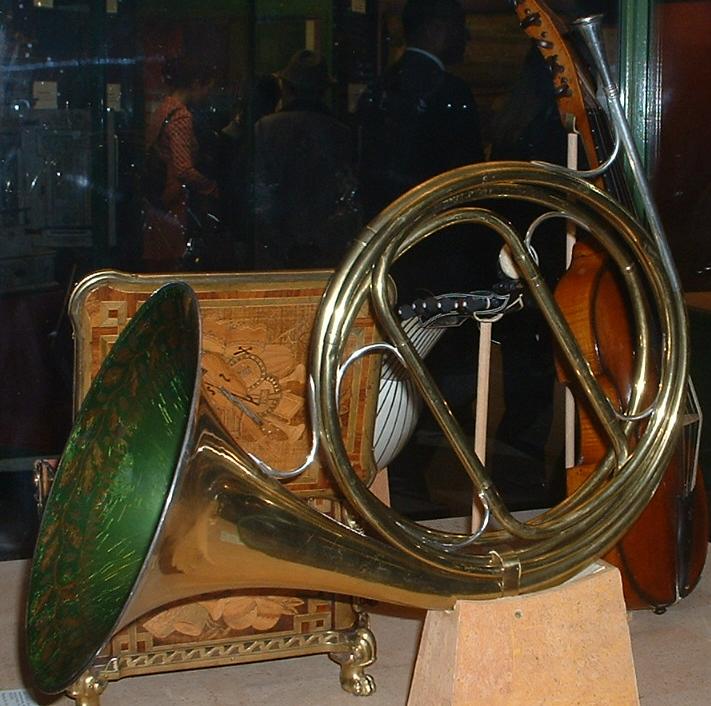
Mozart and Beethoven chamber music for winds at the Wigmore Hall review ****

Alexander Melnikov (piano), Alfredo Bernardini (oboe), Lorenzo Coppola (clarinet), Javier Zafra (bassoon), Teunis van der Zwart (horn)

Wigmore Hall, 31st March 2019

  • Wolfgang Amadeus Mozart – Adagio in B minor K540
  • Wolfgang Amadeus Mozart – Quintet in E flat for piano and winds K452
  • Ludwig van Beethoven – Horn Sonata in F Op. 17
  • Ludwig van Beethoven – Quintet in E flat for piano and winds Op. 16

A wind supergroup. I’ll resist the temptation to make a puerile joke. Still that’s what was on stage on this evening at the Wigmore. To play a couple of chamber music classics from the, er, Classical period. Whilst Beethoven went on to bigger and better things the Op 16 Wind Quintet is a piece of beauty and not insignificant innovation which owes a lot to its Mozartian predecessor but, especially in this direct comparison. also markedly departs from it. As for Mozart’s K452, well Wolfgang himself, at the time, 1784, reckoned it was the best thing he had ever written and who are we to argue. The evening was rounded off with Mozart’s K540 Adagio for piano, one of the most most poignant pieces he ever wrote, and Beethoven’s (only) virtuoso Horn Sonata.

Alexander Melnikov is probably as good as it will ever get, (maybe even than DSCH himself who was a bit of a ragged pianist by all accounts), when it comes to Shostakovich’s mighty Preludes and Fugues and his partnership with Isabelle Faust in the Beethoven violin sonatas is something I would pay good money to hear live. Annoyingly his next visit to the Wigmore with Ms Faust, and Jean-Guihen Queyras on cello, to play the Beethoven piano trios clashes with an even bigger gig; Philippe Herreweghe and the Collegium Vocale Gent taking on the Bach B minor Mass. (I also see the the CVG are touring Glass’s Einstein on the Beach. Now that would be, to use the modern parlance, a thing). I am hoping to see Mr Melnikov accompanying American soprano Claron McFadden in December when they take on some tricksy modern vocal repertoire including some Cathy Berberian staples.

As it happens Mr Melnikov’s fellow band members, all being experts in the HIP field, have close associations with the CVG, especially horn player Teunis van der Zwart. For this concert was unavowedly historically informed. Mr van der Zwart teaches in Holland, Javier Safra in Brussels, Lorenzo Coppola in Barcelona and Alfredo Bernardini in Salzburg, but they are all involved with top rank European period music ensembles and all studied in Holland as far as I can see, this being, with Belgium, the centre of the universe when it comes to HIP teaching and performance. The Tourist can never leave London but if he did that is probably where he would head.

AM set the scene with the Mozart Adagio, the only self-contained work by Mozart in the “melancholic” key of B minor, on his fortepiano. The initial phrases are pretty simple, and, on a fortepiano with its lack of sustain, it is a little underwhelming at first. But, as the second subject emerges, with the constant crossing of left had to right, things hot up and the fortepiano sound, with the twinklier higher notes and buzzy low notes, starts to properly emerge. In the development section Mozart piles up the pathos, first with an ascending harmonic sequence and then, descending, ending in a quick switch to B major, an unexpected twist after all that woe-is-me stuff. I don’t normally get too worked up by Mozart’s solo piano pieces, but this certainly did the trick. There is no doubt that, if you are used to hearing a piece on a modern piano, the fortepiano, with its distinct lack of oomph and narrow range, can be a disappointing alternative but with Mozart it works. My theory is that it turns “too many notes” into “just the right amount”, though to be fair this is not over-burdened with notes in the first place.

The rest of the ensemble then trooped on for the Mozart Quintet which again turned out to be a perfect illustration of why to makes sense to play music on the instruments it was designed for. Assuming the musicians are up to the task, which they were here. I doubt that this will ever become a favourite of mine, compared say to the late symphonies, some of the string quartets and the wind concertos and string/wind quintets, but this was very persuasive, highlighting the way in which WAM passed the phrases backwards and forwards between winds and keyboard, and, on these instruments, giving us a bit of rough to remove the complacent air that tends to creep into Mozart on modern instruments. The first movement starts off slow and the subsequent Allegro doesn’t get up to much, a gentle skip, but this allows the ear to get a taste for the sound, (I know, mixed metaphors), before the much more varied slow second movement where WAM takes us to some very interesting sounding places tonally led by clarinet and horn. This I liked. Just a hint of unease. The closing Rondo is much jollier, as the quickstep interplay between piano and wind becomes more elaborate.

Now the programme, (some excellent notes by Misha Donat), tells me that LvB wrote his horn sonata for one Giovanni Punto who was considered, in 1800, to be one of the greatest virtuoso soloists of the day. He was born Johann Wenzel Stich, in the service of one Count Wenzel Joseph von Thun, (reminding us that for most of human history even the ostensibly free were nothing of the sort), but, after learning his trade in Prague, Munich and Dresden, decided to skip away from his “employer” and take on a new identity to evade capture. I am guessing then that Count Thun wasn’t invited to the premiere of the piece where no less than LvB was the pianist.

The Allegro opening contains a number of remarkable innovations to show off Herr/Signore Punto’s technique, hand-stopping, (altering the pitch by sticking the hand in the bell end – quiet at the back please), a descent into the lowest of low chords in tandem with the keyboard, (the same pitch as a cello’s open C string – that buzzy, growly sound), and a passage of rapid arpeggios which I am guessing are beyond the capability of all but the best horn players. The middle movement is not some drawn out Largo, (that wouldn’t really work on the horn), but serves as an intro to the concluding Rondo and also highlights a dotted motif that permeates the whole sonata. LvB went on to utilise this structure, to greater effect, in later works, piano sonatas but also in the symphonies. One reason why Beethoven’s music, above all others, makes sense.

Whilst Mozart’s Quintet may have been an influence on Beethoven’s equivalent I am not sure, even with the help of the experts, that I can discern this in more than the general shape, notably the gentle, slow intro into the Allegro first movement and some of the more dramatic statements in the development. The horn comes out well in this movement and the keyboard gets the chance to show off one of those massive octave, (four and a half here), leaps that LvB was so beloved of. There is another one of those little repeated dotted rhythms here as well. The central rondo shape, marked cantabile – singsong to you and me – with theme and accompaniment, allows all four wind players to show off, with increasing ornamentation, leaving the piano to take the final turn. The actual Rondo finale has a bouncy quality stemming from its 6/8 “hunting” theme and, with its runs on the keyboard and rapid exchanges between the instruments, this could easily be mistaken for Wolfgang.

A fine programme then delivered by experts in their fields highlighting two of the finest pieces of chamber music ever written for these instruments. I would be very happy if they went on to record this programme. Over to you fellas.