
The Antipodes at the National Theatre review ****

The Antipodes

National Theatre Dorfman, 23rd November 2019

I’ll tell you what. That Annie Baker backs herself. Here is another long play, near 2 hours straight through, where, visually, nothing much happens, bar a properly weird interlude, and dense with word. And this time it is a story about stories, Yep that’s right. The meta of meta. Six assorted punters (five men and just one woman) are ranged around a glass, conference style table telling each other stories in an attempt to create a story. Mediated by their distracted passive aggressive boss Sandy (the ever wonderful Conleth Hill), with occasional interruptions from his chipper assistant Sarah (Imogen Doel) to take food orders, excuse Sandy’s absences and chivvy the crew, and the voice of mogul “Max” (Andrew Woodall) who is bankrolling the enterprise. And with a note taker, Brian (Bill Milner), who eventually, memorably, gets stuck in.

It looks and feels like a scriptwriter’s meeting but its real purpose is never fully revealed and the rules of engagement are vague. Just see what happens seems to be Sandy’s instruction and from this all sorts of stuff pours out, from personal disclosures and confessionals, jokes, classical myth and allusion, gods, monsters, religious dualism, stories about stories, right through to various creation myths. It is affecting, thoughtful, funny, intriguing. Chloe Lamford’s set, complete with Perrier overload, Natasha Chiver’s garish lighting, Tom Gibbons’s sound, Sasha Milavic Davies’s movement (much use of swivel chairs), all echo the hyper-reality, or do I mean hyper-banality, of Annie Baker’s text, which gradually shifts the apparently mundane into the realms of the extraordinary. No surprise that Ms Lamford and Ms Baker co-direct.

It doesn’t quite scale the heights of profundity that it sets out to achieve, or the genuine grace of predecessor John, and it probably stole 20 minutes of my life more than it should have, but you still couldn’t fault its ambition and verve. In trying our patience, and venturing into the Freudian “uncanny”, it gets right under your skin even if it doesn’t shed too much fresh light on the creation of collective, and self, narrative. But it does cover all the bases, maybe too many, as concept overwhelms even this committed execution. Though with actors of this quality, Fisayo Akinade, Matt Bardock, Arthur Darvill, Hadley Fraser, Stuart McQuarrie and Sinead Matthews as the writers), individual character emerges out of the ensemble.

I guess the point was that whilst the urge to share our truth and humanity, and bring meaning to pointless existence, through stories remains undimmed, our capacity to do so might be fading, (especially as chaos in the outside world seeped into the ill-judged ending). Or maybe not. The vagueness of purpose is all part of the attraction in Annie Baker’s practice, so best just to go with the intractable flow and don’t pull too hard on the individual, intellectual, threads. It won’t be one of my top 10 2019 theatrical events but was still a story that could not be missed.
Genesis Inc at the Hampstead Theatre review **

sperm-956480_1920

Genesis Inc.

Hampstead Theatre Upstairs, 25th June 2018

Sometimes less is more. A lesson that writer Jemma Kennedy and director Laurie Sansom here chose to, if not ignore, certainly bypass. Made even more frustrating because, at the kernel of this play, and in its execution, are some very good ideas. I applaud the ambition of the creative team at the Hampstead Theatre under Edward Hall, and the variety of the offerings, but it does mean that, just occasionally, there is a misfire amongst the hits and the deserved West End transfers. Some of my favourite productions over the last couple of years, (Gloria, Prism, The Firm, Dry Powder, The Phlebotomist and Describe the Night), have shown at the HT, both Upstairs and Downstairs, and often I have enjoyed them more than the critics. Sadly Genesis Inc. was not one of them.

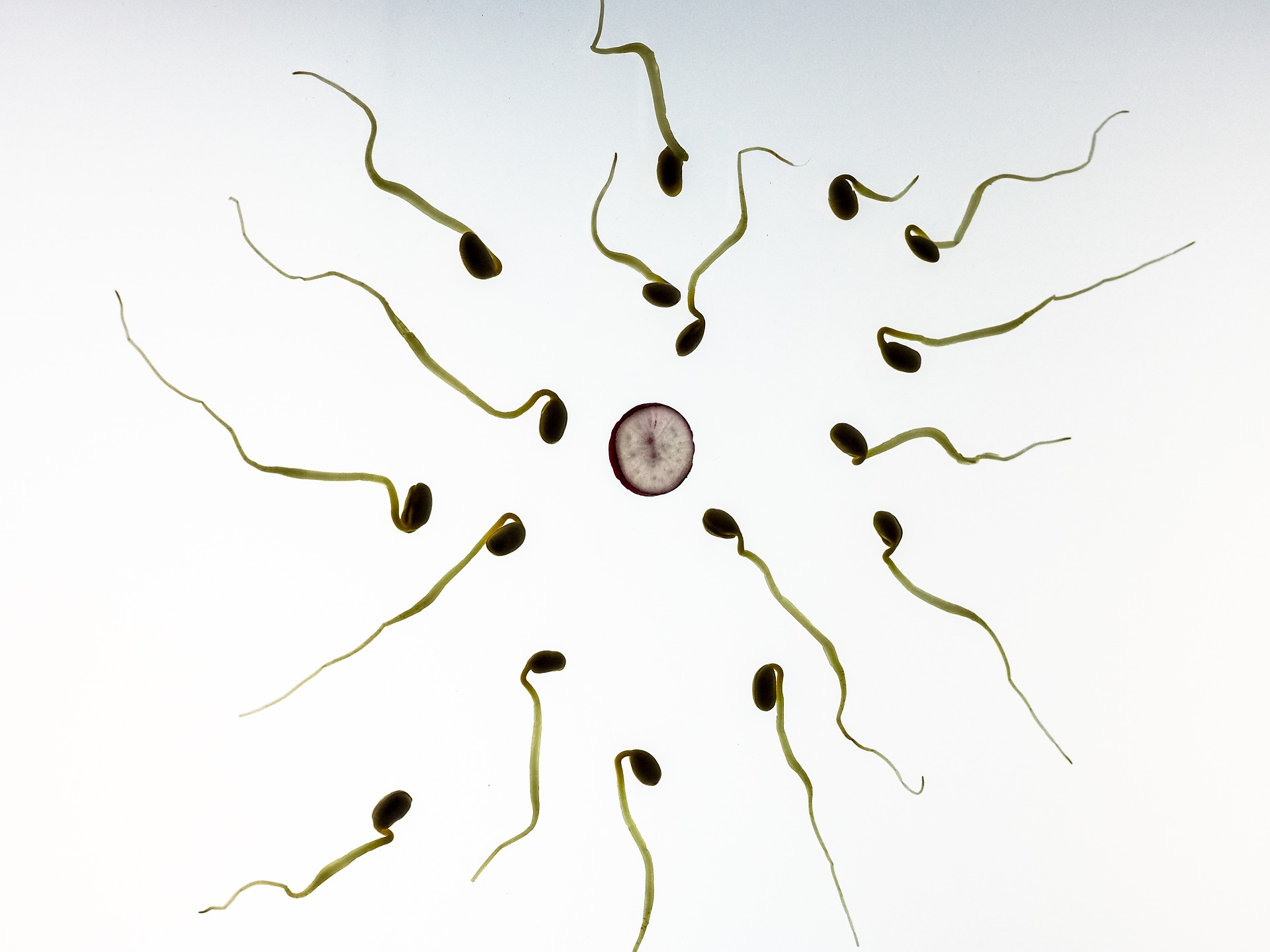
Jemma Kennedy, who is also a screenwriter, has based her first major commission for the stage, (I believe), on her own experience of IVF treatment. She has also chosen to write a comedy. So far, so good. There is a vital personal and political story to be told about the commercialisation of reproduction and fertility in an ageing capitalist society and the dilemmas this creates. She has well-structured arguments to present, and, with distressed couple Jeff (Oliver Alvin-Wilson) and Serena (Rita Arya), and prospective single parent banker Bridget (Laura Howard), sympathetic, and sufficiently complex, characters to present those arguments. Harry Enfield plays Dr Marshall, the medical entrepreneur behind the fertility clinic that the three of them turn to. There are some pointed exchanges, sharp observation and some very funny lines,

But Ms Kennedy cannot then resist the temptation to add complication through additional characters and formal invention. And this is where the play goes awry. Bridget has a gay, impecunious, teacher friend/housemate/ex, Miles, played by Arthur Darvill who does a musical turn and falls for the priest, Father Scales (Arthur Wilson), at the school he rocks up in. He needs money to get on the property ladder so decides to sell his sperm for a few quid. Serena’s Mum, and dead Great-GrandMum, (played by Shobu Kapoor), poke their noses in. There is a sub-plot involving a social worker and salt of the earth victim of domestic violence played by the wonderful Claire Perkins, who also plays the childless alpha-female boss at the investment bank she works in. They, of course, get to IPO Dr Marshall’s clinic. Karl Marx and Susan Sontag are wheeled in. There is even a biblical scene involving Old Testament Abraham, wife Sarah, (90 years old when she conceived if you believe the big book), concubine Hagar and son Ishmael, and even, as you can probably guess by now, God himself. And maybe more startling, Serena’s ovary and vagina get to say a few words

All this is thrown in to allow Jemma Kennedy to make important points about the way in which women and their fertility has been treated through history and how the patriarchy and capitalism have degraded reproduction. This scattergun approach, taking aim at so many different targets, leads to some odd tonal shifts though, especially in the fantasy scenes, and especially at the end, and results in a distractingly complex set from Jess Curtis and some awkward on stage prop-shifting and costume-changing, (there are 42 named roles!).

It was a more than a little frustrating because there was so much in the basic premise, the satire of the moral framework which supports this unsavoury industry, which seems to trade on hope through unsubstantiated claims. Ms Kennedy is a smart enough writer I think to have made some of her points, and still got the laughs, within the context of the narrower personal stories. Harry Enfield is still an awkward stage presence, as he was in Once In A Lifetime at the Young Vic, but here his charm, alongside comic SA accent, masking a more ruthless commercial streak, seemed to work. Kirsty Besterman, as his officious assistant and sales jockey, had some choice lines. The stress that the IVF treatment put on the relationship between Jeff and Serena was well observed as was Bridget’s struggle to balance her desire for a child, by freezing her eggs, with career and demand for a relationship. Arthur Darvill has an unsteady naivety which matched his character and gamely rose to the challenges he was posed.

I can certainly see why the idea of stripping out the sub-plots and fantasy sequences would not have been an option for Ms Kennedy or director Laurie Sansom. The ambition to emulate the dense intellectual and theatrical experience of say an Angels in America, (cited by Edward Hall in the programme), is laudable but it didn’t really come off. And, by over-egging the pudding, I was left dissatisfied with the whole. Intrigued yes, entertained at times, made to think for sure, but just that bit uncomfortable that everyone involved was straining too hard to pull this off.