
Leave Taking at the Bush Theatre review *****

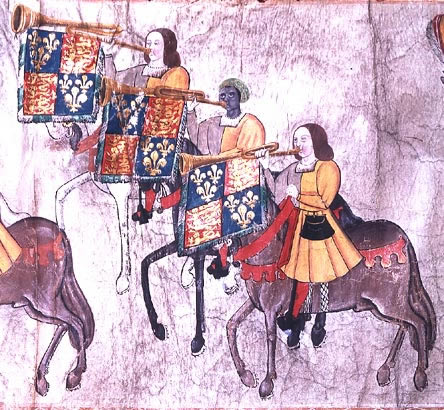
black_trumpeter_at_henry_viii27s_tournament

Leave Taking

Bush Theatre, 13th June 2018

I confess I had never heard of Winsome Pinnock’s 1987 play Leave Taking until this season’s announcement for the Bush. Shocking for someone who considers themselves to be a theatre obsessive. I still have so much to learn.

Still theatre is always the best way to confront ignorance and so it proved here. Leave Taking deals, amongst many other things, with the Black British experience, and specifically the experience of those whose heritage is rooted in Jamaica. In that regard it foreshadowed, and inspired, Natasha Gordon’s excellent Nine Night at the National Theatre recently (Nine Night at the National Theatre review *****) and, like Nine Night, it used comedy to telling effect to entertain and to make its points about the dissonant experiences of first, and subsequent, generation British-Jamaicans. Unlike Nine Night however, it was not overstuffed with plot-lines and the story was confined to, effectively, one family. It might just be, therefore, a stronger play. Definitely a must see – if not this time at the next revival, for there will surely be one.

(BTW Nine Night is transferring to Trafalgar Studios for December and January and must be seen if you haven’t already).

Also before I start warbling on about the Leave Taking I would also highlight the excellent BBC documentary Black and British: A Forgotten History. I guess it will pop up on I Player one day. If so take a look. You will learn a lot. Black Britons have been part of our shared history since Roman times. The picture above, featuring a black trumpeter is from an illuminated manuscript from 1511.

Enid (Sarah Niles), having emigrated from Jamaica, is a single parent living in North London with her daughters, the studious Viv (Nicholle Cherrie) and the restless Del (Seraphina Beh). Brod (Wil Johnson), Enid’s brother-in-law, (her husband abandoned his family long ago), is a frequent visitor. The play opens with Enid taking the girls to see Mai (Adjoa Andoh), the local Obeah Woman, in her somewhat untidy flat. Enid is looking for help with Del who she fears may get into trouble. Mai isn’t much interested in helping but does make a connection with Del. Brod pays a visit to the family flat and talks of the old days in Jamaica. Del returns from a night out. Brod and Enid have a history. Enid talks a call from her sister whose pleas for financial help annoy Enid. Viv tells her mum she doesn’t want to go to university. Del leaves home and moves in with Mai. Enid comes to see Mai. Brod gets drunk and goes to Mai’s place. Del and Mai have a heart-to-heart. Enid comes round.

Now I admit that it all sounds fairly uneventful when described in such stark terms. Nothing could be further from the truth. There are few plays that I have ever seen that get right inside all of its characters, and not just the main protagonists, with such accuracy, using such volitional dialogue. That is not to say that the dialogue isn’t very rich, and very funny, just that Winsome Pinnock had no need to “force” anything out of the mouths of the five characters to tell her story and make her arguments. The eight scenes are so entirely realistic, and naturalistic, that when director Madani Younis felt the urge to play around a bit, with a bit of dripping water and stage puddles, the audience was, rightly, nonplussed. No need for metaphor when the writing speaks for itself.

However fine the play is, it still needed a cast to match and everyone here was on sparkling form. I adore seeing Adjoa Andoh on stage. In Nick Hytner’s recent Julius Caesar at the Bridge she near stole the show, against formidable competition, as a painfully, sardonic Casca. In her hands, Mai was prickly, found of her stout, and her powers uncertain, but her implacable inner strength offered Enid, and Viv, in very different ways, succour. Wil Johnson, with his nostalgic reminiscences of his early years in Jamaica, showed how Brod had never reconciled himself to his new home and offered a clear, and moving, reason why he stayed.

Seraphina Beh was excellent before on this very stage in James Fritz’s Parliament Square (Parliament Square at the Bush Theatre review *****) and she repeated the trick here revealing the self-doubt that lay beneath Dels rebellious exterior. Nicholle Cherrie had less overt opportunity to flesh out Viv, (since Leave Taking is drawn in part from Winsome Pinnock’s own North London upbringing I assume this is the character closest to her young self), but still showed us the frustration that can stunt the older, sensible, more bookish sibling.

However Enid is the plum part here and Sarah Niles grabbed it with both hands. I don’t think Enid has buried her heritage, just been forced to sidestep it whilst she gets on with the tough business of bringing up two children, by herself, in a country that was, and is, ambivalent about her presence. In the first couple of productions of Leave Taking at Liverpool Everyman and the Lyric Hammersmith Enid was played by Ellen Thomas. You might know her from her numerous TV, especially soap opera, roles. She is a first-rate stage actor as well, as her performance in Bonnie Greer’s uneven take on The Cherry Orchard at Theatre Royal Stratford a couple of years ago. I would like to have seen her play Edith. It is not as if the theatrical canon is overrun with roles for strong, black, mature women. Indeed the NT revival of Leave Taking in 1995 (the last before this apparently) was the first play by a back woman on our national stage and the first time a black women writer and director worked together there. It is getting better I guess but given the power of this play, and Nine Night, I for one would like to see a lot more.

You would think that honesty was an easy quality for a playwright and a play to conjure up. You’d be wrong. It’s all an illusion, a story, so showing real people grappling with real life in such an eloquent, witty and emotionally powerful way, and with no formal shenanigans, is only rarely delivered in my experience. This play is as fresh and relevant as the day it was written and definitely ranks as a “modern classic” in my book.
 

Julius Caesar at the Bridge Theatre *****

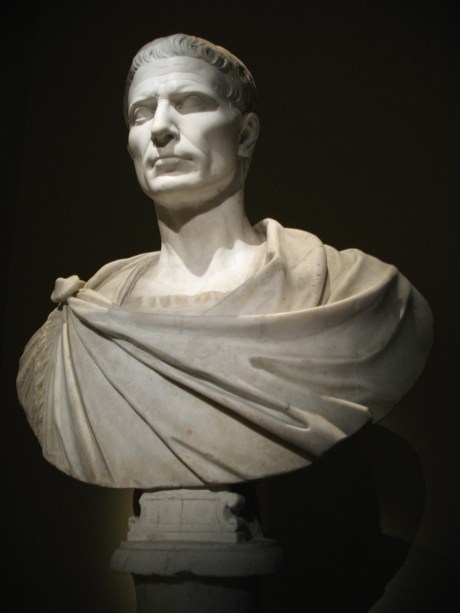
0092_-_Wien_-_Kunsthistorisches_Museum_-_Gaius_Julius_Caesar

Julius Caesar

Bridge Theatre, 28th February 2018

I had really, really been looking forward to this. Julius Caesar is one of my favourite Shakespeare plays. Contemporary relevance of course, but Shakespeare always has relevance. My appetite whetted by the excellent RSC production I saw at the Barbican last month, (Julius Caesar at the Barbican Theatre review ****) and by Phyllida Lloyd’s heady all-female interpretation at the Donmar Kings Cross in 2016. Nicholas Hytner in the director’s chair and Ben Whishaw, David Morrissey, Michelle Fairley and David Calder in the four lead roles.

So a little bit of snow wasn’t going to stop me getting there, and dragging the SO along with me. It didn’t disappoint. Best play I have seen so far this year, along with John at the NT: admittedly we are only a couple of months in, with the NT Macbeth having just opened and, I haven’t yet seen Network at the NT. Still this is a cracker. There are plenty of tickets left in the run, though the cheaper seats have largely gone, (it is hard to believe there is a bad seat anywhere in the Bridge), but it is well worth 50 quid or, if you are a fit young’un snap up a promenade ticket and be part of the action.

The transformation into a promenade space from the straight on staging of Young Marx shows just how marvellous the Bridge space is. The promenaders are shepherded around the pit by stewards, a metaphor for the manipulation of the populus as effective as it is obvious. Bunny Christie’s production design is equally blunt but effective, with a series of plinths rising from the floor as and when scenes change. A massive shout out to production manager Kate West, company stage manager Hetti Curtis and the rest of the team at work for this performance and behind the scenes. To make this intricate production succeed, whilst actually enhancing its dynamism, takes real skill. Watch and see, especially, the floor transformed into a battlefield for the final scenes. The stage management team were rewarded with well deserved applause at the end. Bravo.

Even before Caesar (David Calder) appears in front of the crowd with Mark Anthony (David Morrissey) in tow, we have a treat in storm with a some pumped up rock’n’roll for Lupercal courtesy of a street band made up of Abraham Popoola, Fred Fergus, Zachary Hunt and Kit Young. I already have a high regard for Mr Popoola, having seen his vigorous Tobacco Factory Othello alongside Norah Lopez Holden’s Desdemona and Mark Lockyer’s Iago at Wilton’s Music Hall. (Othello at Wilton’s Music Hall review ****). Turns out he can sing a bit too and he puts in a stint as a plotter in the form of a taciturn Trebonius. Fred Fergus doubles up as a slow-witted Lucius and gets a right kicking as Cinna, in that simple but so effective mistaken identity scene. Kit Young is a crafty Octavius.

David Calder’s Caesar ticks all the right boxes: proud, conceited, vainglorious. Here is a man used to getting his own way. His eventual dismissal of Calpurnia’s (an under-utilised Wendy Kweh) qualms about his visit to the Senate is insouciant but still reveals a hint of underlying unease. Our conspirators are a thoughtful bunch. Michelle Fairley as Cassius is neither bluntly straightforward in her entreaties to Brutus not bitter in her abhorrence of Caesar and what he is turning into. Instead she is logical, using force of argument to persuade Brutus to lead the coup. Books, glasses, a desk and Ben Whishaw’s innate demeanour make him a contemplative, but still determined, Brutus. You can easily see why his belief in his own rectitude might come across as priggish arrogance to the crowd. He seems to be going through the motions in his justification speech. Mind you I can see why he might underestimate David Morrissey’s Mark Antony. He comes across as a duplicitous chancer, making up as he goes along. I don’t recall being as struck by his mendaciousness before in the scene with Octavius at the beginning of the battle when he brusquely withdraws the pay-out to the people in Caesar’s will.

I reckon a woman playing Cassius, (and indeed women playing other of the conspirators), will, and should, become the norm. It creates a shift in the dynamic between Cassius and Brutus which can be profitably mined, both in the early conspiracy scenes and in the bust-up and reconciliation ahead of the battle. I am not sure whether the distance I sensed between Brutus and Portia, (Leaphia Darko who I hope to see in a much bigger role), was intended but it created an interesting ingredient. Every Casca should be as pointedly sardonic as the scene-stealing Adjoa Andoh. I know Ms Andoh has had an illustrious stage career but I couldn’t help thinking, for example, how much better the recent RSC production of Antony and Cleopatra would have been with her in the driving seat. The rest of the cast, Mark Penfold as Lepidus, Ligarius and the Soothsayer, Nick Sampson as Cinna, Leila Farzad as the reluctant Decius Brutus, Hannah Stokely as Mellellus Cimber, Sid Sagar and Rose Ede were all on top form.

Nick Hytner directed the first Shakespeare productions that ever made any sense to me; his RSC productions of King Lear and The Tempest with the incomparable John Wood. This was when I first “got Shakespeare”.. He is the master of modern dress, “contemporary” Shakespeare. Early on at the NT he created a Henry V with Adrian Lester which was the antithesis of jingoistic. All the surveillance stuff in Hamlet that Robert Icke loaded up on at the Almeida. Look no further than Hytner’s 2010 version with a bookish Rory Kinnear as the Dane. His Othello at the NT with, surprise, surprise, Adrian Lester and Rory Kinnear, is possibly the best Shakespeare production I have ever seen. His Timon of Athens with Simon Russell Beale kicked into a cocked hat any notion that this is a difficult, unbalanced play.

His visual language is so complete that, even if you don’t catch every line. (let’s face it that is going to happen with Will S, one reason why you can never see too many productions), you still comprehend pretty much everything in front of you. He takes a view for sure, but always in the service of the universal themes that the plays wrestle with. Every single detail is thought through. For anyone who thinks Shakespeare is not for them, Mr Hytner will change your mind.. It helps that his key collaborators in this production, Bruno Poet (lighting), Christine Cunningham (costume), Nick Powell (music), Kate Waters (fight) and, especially here, Paul Arditti (sound) are so expert in bringing his vision to life.

The Trumpian allusions are not overplayed. No need to. We can see the attraction of Caesar to the crowd, but we also see why the conspirators are so alarmed by his lazy demagoguery. The vacuum that is created after the assassination, a visual twist here, is palpable, as the patronising elitist Brutus and the pragmatic Cassius haven’t thought through what happens next. Sounds familiar eh. Which leaves a yawning gap for the opportunist Mark Antony to unleash those war dogs. The failure of the “liberal’ response to populism hangs heavy in the air.

Finally here is my plea to Mr Hytner. Whilst I absolutely get that Messrs Shakespeare, Bean, Bennett, Hodge and McDonagh are, incontrovertibly, the best of writing collaborators, and I see he has the scoop on Nina Raine’s new play, please can you have another crack at Ben Jonson or Marlowe. Maybe you can make sense out of Bartholomew Fair and pull the punters in. There’s a challenge.

P.S. I note that another play that deals with the had-wringing liberal response to populism, albeit in a very, very different way, Roland Schimmelpfennig’s Winter Solstice, still has a few more legs of its tour left, Plymouth, Edinburgh and Scarborough. Highly recommended.