Bach and Telemann: Academy of Ancient Music at Milton Court review *****

maxresdefault

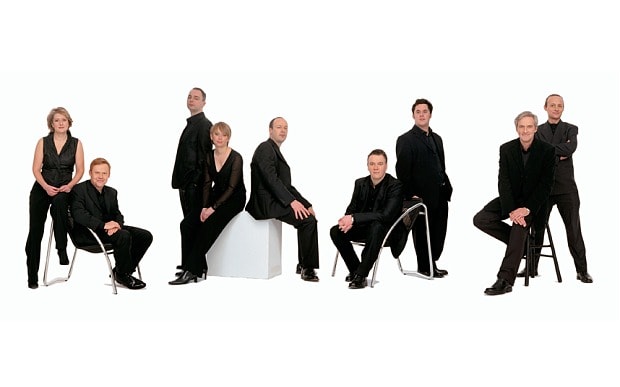
Academy of Ancient Music, Bojan Cicic (director and violin), Rachel Brown (flute and recorder), Rachel Beckett (recorder), Alistair Ross (harpsichord) 

Bach and Telemann: Reversed Fortunes, Milton Court Concert Hall, 7th December 2017

I see I am now close to being a Academy of Ancient Music groupie. Not in a sinister way, that would be very strange. Just that I seem to pitch up to most of their London concerts. Unsurprising given their repertoire I suppose. And what a joy it always is to hear them play. This was no different. And I had a new chum in MSBD to join me.

Now the theme here was to contrast the contrasting fortunes of a certain Johann Sebastian Bach and Georg Philipp Telemann. They were mates in the 1720s, 30s and 40s, with GPT becoming CPE Bach’s godfather, and both successively securing the reputation of the Collegium in Leipzig. Back in the day though Telemann (pictured above), with his suave, easy listening modelled on his French contemporaries, was by far the more popular composer, with JSB and his knotty, brainy counterpoint, and strong Lutheran faith, some way behind. As we all know JSB’s music languished for centuries, now some might say his is the daddy of all Western art music. Meanwhile whilst Telemann maintains a cherished place in the baroque world of the Baroque enthusiast, he is not much performed beyond this.

The influence of Vivaldi’s vast concerto output was much greater on JSB, and is clearly visible in the Brandenburg’s especially when played one to a part as here. In particular in the Fifth with its single tutti violin, though it is the solo harpsichord cadenza, the first ever of its type, that is the most memorable part of the concerto. Alistair Ross didn’t hold back once the harpsichord emerged from the string ritornello and his rubato was unleashed. A bit showier than Steven Devine in the last BC5 I heard in SJSS with the OAE. However, I think the Brandenburg 4 here with Rachel Brown and Rachel Beckett on the recorders was the highlight. Once the two Rachels got into the swing of it there was no stopping them, propped up by Bojan Cicic masterful violin playing, and by the end those recorders produced as sweet a sound as you could imagine (not always the case for the period recorder).

Having said that I think the most satisfying piece of the evening was the Telemann Concerto for flute and recorder. He wasn’t the only one to pair the “old” and the “new” wind instruments, Quantz was on to this, but he clearly mastered it. Written in 1712, the Concerto has some very attractive galant homophonic playing from the two instruments looking forward to the Classical. Elsewhere the soloists chase the lines from one to the other against very attractive dances, including nods to the eastern European folk tunes that he studied. The French influence on GPT is more apparent in the Overture suite, (he wrote over two hundred of these), with its simple dance rhythms and story based on Don Quixote. There is plenty of easy on the ear comic effect, (listen out for donkeys), and lots of colour. It is all so pleasant (though if I was critical maybe a tad too pleasant).

So another fine concert from the AAM who really seemed to be enjoying themselves. As I think did MSBD. In fact I know he did as he said so. I shall miss the AAM Messiah in the Barbican Hall and their intriguing Haydn and Dussek programme in April, but will be back here for the 15th February Pergolesi, Corelli and Handel gig, and for the 31st May concert in the Hall with Nicola Benedetti. Unmissable I reckon.
Parliament Square at the Bush Theatre review *****

parliament-square

Parliament Square

Bush Theatre, 6th December 2017

As a few slightly unkind people have pointed out most of the “reviews” I somewhat sadly post on this “blog” are worse than useless as, more often than not, they appear after the event. Fair criticism but I can’t be toddling off to everything in the first week and I judge that most plays at least are best seen about two thirds of the way through. If they have flaws by then, they can be corrected where possible, or parts excised if really necessary. Cast can get the full measure of character and interaction, timings, pauses and rhythm honed. So I reckon I will get more for my money. So yah boo to you.

In this case though I am doing you a favour. Parliament Square runs until 6th January having first appeared at the Royal Exchange, Manchester, there are plenty of tickets left and full price is just twenty quid. The main space at the Bush is airy, comfy and sightlines are terrific. Oh and it is a mightily good play, with an excellent cast, skilfully directed by emerging talent Jude Christian. It has an absorbing central concept, just how far will an individual go to protest against injustice, is formally inventive, each of the three sections has some sort of clever conceit, and it is very well written by James Fritz. It is probably fair to say that the ending is a little too calculated. On the other hand the first section, in large part thanks to exceptional performances from Esther Smith and Lois Chimimba, is as exhilarating a piece of theatre as I have seen this year.

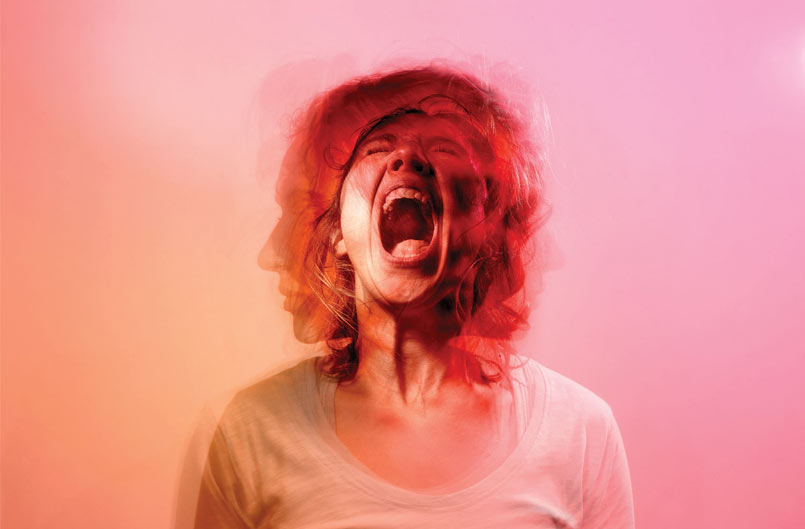
The play won the Judges Award for Playwriting in the Bruntwood Prize in 2015 and, like other plays I have seen which have been recognised here, it has that spark of invigorating originality from the outset which characterises the best new writing. Kat (Esther Smith) gets up one morning, skips work, leaves her husband and young daughter behind, gets the train to London, and commits a premeditated, dramatic, act of self sacrifice. Through the first act, Fifteen Seconds, she is, literally, coached by her conscience in the form of Lois Chimimba, (last seen by me in the unfairly maligned Common, in Peter Pan and in the excellent Diary of A Madman at the Gate). Lois Chimimba also doubles up as Jo, Kat’s sullen teenage daughter in the final act, Fifteen Years. I expect she, and Esther Smith, will go on to bigger, (and maybe even better), things as they are both superb actors.

Kat “fails” in her protest thanks to an intervention by Catherine, another excellent performance from Seraphina Beh. In the second act, Fifteen Steps, we see Kat, vividly and painfully, reconstructing her life and explaining why she did what she did to husband (a perplexed Damola Adelaja), mother (a bluntly perceptive Joanne Howarth) and health professionals (a sympathetic doctor in Jamie Zubairi and demanding physiotherapist in Kelly Hotten) as well as, eventually, to Catherine herself. The rest you can see for yourself.

James Fritz’s writing is very spare but very accurate. We never get to know exactly what Kat is protesting against but it doesn’t matter. We do get to contemplate why someone might choose this idealistic course to try to make a difference, why some might be inspired and some revulsed and why some might see this as futile and selfish. Jude Christian’s direction, (along with Fly Davis’s design, lighting from Jack Knowles, sound from Ben and Max Ringham and movement from Jennifer Jackson), is perfectly matched to the text. There is nothing extraneous here but the required ambiguity about the wisdom of such action is brilliantly conveyed.

James Fritz’s previous plays (The Fall, Comment is Free, Ross and Rachel and Four Minutes and Twelve Seconds) have garnered significant acclaim. I can see why. This is great theatre, well executed. You will come out likely annoyed by some of the behaviour of the characters, but, that is kind of the point given the subject. I think you will admire both writing and acting though. So get along to the Bush. Now.

The Cardinal’s Musick at Wigmore Hall review ****

cardinalls_3132548b

The Cardinal’s Musick, Andrew Carwood (director)

Wigmore Hall, 4th December 2017

  • Giovanni Pierluigi da Palestrina (c.1525-1594) – Missa Hodie Christus natus est
  • Anon – Gaudete, Hail Mary full of grace, Quem Pastores, Salutation Carol
  • Jacob Handl (1550-1591) – Mirabile mysterium
  • Richard Pygott (c.1485-1549) – Quid petis O fili
  • Tomás Luis De Victoria (1548-1611) – Ecce Dominus veniet
  • John Dunstable (c.1390-1453) – Speciosa facta est
  • William Byrd (c.1540-1623) – Lullaby, my sweet little baby
  • Hieronymus Praetorius (1560-1629) – Magnificat quinti toni

In the immortal words of the now septuagenarian, Noddy Holder, “It’s Christmassssssssssss”. And what better way to kick it all off than an evening in the company of Andrew Carwood and The Cardinal’s Musick. Here was a programme that spanned a couple of centuries, various important centres of Renaissance music, Spain, Germany and England, Latin and local, liturgical and secular, motet, mass, carol and lullaby. I confess that despite repeated exposure, reading and learning I am still a bit stumped on how all the religious stuff fits together, but, no matter, this was just a lovely evening of choral music.

Andrew Carwood is a terrific host. Pretty funny too. No suggestion that he should give up his day jobs as scholar, director here, chief music honcho at St Paul’s and general provider of music at all important State occasions, for a life on the comedy circuit, but his introductions to the pieces are droll as well as informative. The CM, as in their recent concert at St John’s Smith Square informed by Armistice Day (The Cardinall’s Musick at St John’s Square review ****), which I also attended, make a simply lovely sound.

There was literally nothing here I had heard before (actually not quite true, see below) but no matter, I enjoyed it all. However, I always expect to uncover something new and interesting, and here it was the Jacob Handl motet, with its extraordinary chromaticism, and the Advent motet of Victoria, tip top polyphony. The Palestrina mass and motet, with its mixed split choirs (SSAB and ATTB) is a jolly affair, made jollier by interspersing with the four carols, including Gaudete, which I own in a recording by, of all people, Steeleye Span. Yep, a musical eclectic, that’s me. You will know it. I was a bit less enamoured of the Pygott lullaby with its baby babbles (I kid you not) but the Byrd equivalent was typically dark and unlikely to send you to sleep pacified. The Dunstable, a piece of Virgin Mary fandom, was the earliest in the programme, very short but very, very sweet. The Magnificat from the extravagantly named German composer Hieronymous Praetorius, went on a little bit but was still full of gesture as it flipped from Latin to German.

Like Bouncing Back this was “lovely stuff”. Anyway the tree is up, shopping’s done, SO has kicked off with the cards so time to get wrapping.


Marnie at English National Opera review *****

cw-21794-medium

Marnie

English National Opera, The Coliseum, 3rd December 2017

I really don’t understand why the serious broadsheet reaction to Nico Muhly’s new opera has been so lukewarm. They generally seem to have admired the score, commended the ENO Orchestra’s playing under new Director Martyn Brabbins, praised many of the performers and, largely, looked favourably on the designs of Julian Crouch and 59 Productions (set and projection), Arianne Philips (costume), Kevin Adams (lighting) and choreography of Lynne Page. The criticism, as far as I can see, centres on the “histrionic” plot, though others think the story insufficiently tense, Nicholas Wright’s lean libretto, the unsympathetic characters, the structural stylisations and the absence of “memorable” arias.

Well I profoundly disagree with these criticisms. The operatic canon is littered with plots that are significantly more overblown than Marnie, yes the libretto is direct and lacks poetry, but this is a story of an unhappy woman who manipulates and is manipulated because of what happened to her, so the language seemed entirely appropriate to me. The libretto, together with the dramaturgical and visual rendering and the musical motifs, (each character has its own instrument, a shrill or seductive oboe for Marnie, disturbing trombones for Mark Rutland, a sordid trumpet for Terry), all made for a very clear and complete production. I don’t really understand why so many commentators look to empathise or sympathise with dramatic characters or demand redemption or recompense. Several flawed sh*ts on a stage does it for me.

Finally for me opera usually fails, (as it so often does, though when it succeeds it can be the very best of art forms), because the singing takes over. Sounds perverse I know but when the voice of the fat lady is all the punters care about, to the detriment of plot, acting, movement, staging, ideas, drama, then I am out the door (not literally of course). This is probably why I seem to get on with the best of contemporary opera, and why I can leave, for example, Puccini to the buffs. Stories that make sense, music that matches the action, stuff to make you think. Nico Muhly’s music isn’t challenging, (though it is not entirely tonal), and does occasionally lapse into John Adamesque “romantic minimalist running on the spot”, but pretty soon a captivating new idea or sound pops up. This constant flow of musical phrases mirrors the constant flux of Marnie’s subconscious. His choral writing, (and the chorus here gets lots of action, and Greek style commentary), is sublime, up there with, well maybe not quite, Britten.

Messrs Muhly and Wright, at the suggestion of director Michael Mayer, have taken Winston Graham’s 1961 novel, which is written in the first person, as their source rather than Hitchcock’s 1964 film starring Tippi Hedren and Sean Connery. The latter relocates the story to the US, ramps up the saturated colours, echoes German expressionist films and has a vivid score courtesy of Bernard Hermann. This was the last time Hitchcock worked with Hermann, and with cinematographer Robert Burks, and the last of his disturbing “Hitchcock blonde” movies. So love it or hate it, it is, by the standards of today’s Hollywood, it is heady stuff. It is also in places quite different from the plot of the book.

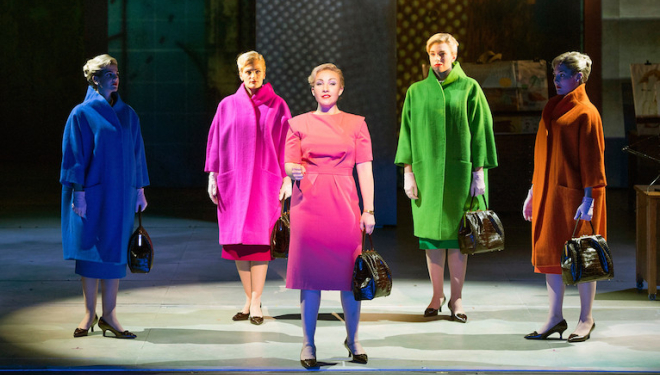
I thought the setting in Home Counties Britain in the 1950’s and the closer adherence to the plot of the book, (with some tweaks, Terry is now Mark Rutland’s brother and Marnie’s phobia of the colour red is no longer explicit), made for a more interesting and less melodramatic story, without entirely losing the stylised “psychological terror” of the film. Hitchcock generates tension and unease through the way he directs and films as much as the plot itself. The opera was, perhaps, less able to generate this tension, (and cannot hope to draw out all of the dense action in the book), but it did make a better fist of showing why Marnie’s childhood traumas drove her to lie and steal. In particular the four altar ego Marnies which surrounded her at key moments, singing in close harmony, provided not only stunning visual images but also made flesh her inner turmoils. Similarly the eight male dancers, besuited and in natty trilbies provided an intriguing and restrained (most of the time) representation of Marnie’s fear of sex. Most importantly the ambiguity of the novel’s, and opera’s, ending is far more fitting.

American mezzo-soprano Sasha Cooke as Marnie was cooly convincing, not only in terms of her singing, but also her acting, no need for any exaggerated, writhing around and screeching which is the operatic default button for “unhinged woman seductress”. Canadian Daniel Okulitch pulled off the remarkable feat of making Mark’s voice, as well as his character, become more disturbing as the scenes unfolded and his desire for Marnie escalated. Countertenor James Laing as Terry was my particular favourite however, a voice of immense clarity, a character of reptilian sleaze. Lesley Garrett as Mrs Rutland understandably owns the stage in every scenes she appears in. I could pretty much hear every word of every performer making this one of those rare occasions when sur-titles might be redundant.

Marnie is off to New York and the Met next and I reckon it will find other homes. For me this was up there with Thomas Ades’s The Exterminating Angel and George Benjamin’s Written on Skin in terms of contemporary operas that have thoroughly enveloped me. Marnie though, thanks to Mr Muhly’s musical immediacy and the equivocation of the story, is more approachable and interesting. If you have never been to a contemporary opera start here. Indeed if you have never been to an opera before start here. I bet you watch films with modernist scores, you might well like the theatre, and you will have heard people singing before. Those are the only qualifications you will need to enjoy this.


The Red Lion at Trafalgar Studios review ****

the-red-lion-01

The Red Lion

Trafalgar Studios 2, 1st December 2017

Patrick Marber is a talented chap. Directing, adapting, writing screenplays, comedy material. Yet he is at his best when he writes original plays, or maybe even, as in this case, where he remakes his own texts. (Having said that his screenplay for Notes on a Scandal might be his finest work. Zoe Heller’s novel, Judi Dench, Cate Blanchett, Bill Nighy, Richard Eyre directing, a Philip Glass screenplay. Did the producers have pictures of the SO and I when they were discussing their ideal target demographic for this film?)

I didn’t get to see this at the National in 2015 so was delighted to see this relatively rapid revival, courtesy of Newcastle’s Live Theatre, turn up at the smaller space at Trafalgar Studios. I have to confess I am not the biggest fan of the TS generally, too many imprecise productions relying on cast name recognition to pull in the punters, too pricey and not the comfiest seating. Whilst the seating in TS2, at least where I was, is challenging, the value equation here was sound. It will be interesting to see what happens when the spaces are revamped as is the plan.

So, not knowing the play from first time round, I cannot be sure what Mr Marber has refined here to get it down to 90 minutes or so (from the original 150) but, whatever it was, it seems to have worked based on a quick perusal of the proper reviews this time vs last time. The TS2 stage, with a design by Patrick Connellan, certainly looks the part, a small, dank changing room, kitted out (literally) in perfect detail, you can practically smell the sweat, the grass, the mud, the liniment (actually you really can smell this), the aftershave. Those in the front row are in danger of being picked for next Saturday’s game they are that close. Patrick Marber based the play on his experiences as a director and saviour, with others, of non league Lewes FC, but anyone who has ever played the game at pretty much any level will know this place.

What Marber is able to do here, I gather more successfully than the original, is to use football as a metaphor for life, as so many writers have down in the past, but to avoid the cliche and melodrama that has cursed so many similar of these endeavours. The dialogue is still alive to the rhythms of football, and to the banality of its expression, and there is ruthless dissection of the ugly underbelly of the “beautiful” game. I am always struck by the romantic yet resigned mythologising, the “sporting ideal’ if you like, that some, otherwise rational, men of my acquaintance reserve for their football obsessions. The notion that this is just a very poorly managed branch of the entertainment industry, prone to the worst excesses of capitalist venality and institutional malfunction, just seems to pass them by.

Marber probes these failings but also, as his wont, explores the complexity of male interaction. Trust and loyalty, hopes and dreams, betrayals and deceptions, bravado and vulnerability, all are displayed. Each of the three characters, Stephen Tompkinson’s desperate manager Kidd, John Bowler’s weary retainer Yates and Dean Bone’s talented youngster Jordan, are all flawed in some way, and have misplaced their moral compasses in the pursuit of footballing glory. All of them need to make grubby compromises in order to survive in the world they inhabit. Like I said metaphors abound.

Stephen Tompkinson always seems to bring out the emotional frailties of the men he plays and this is no exception. Kidd is living alone, divorced, broke. He is also a cynical bully, albeit weak and toothless. Football is all he has. It is the last minute of extra time and he needs a break. Jordan’s skill might just provide it. Jordan though harbours a secret beneath his apparent integrity. Dean Bone is on the ball from the opening whistle, asking what’s in it for him. Yates wants a piece of the glory, his own life having collapsed until the club offered a lifeline. He once lifted the trophies, now all he does is clean them. John Bowler’s lines benefit most I suspect from the relocation to the North East in this production. His body may be broken, but his mind, and his words, are sharp enough. Soon enough all three sense an opportunity,  but all three are doomed to see it slide away, but cannot accept the blame for this lies within.

This may sound like an arduous slog. It is anything but. The moral tragedy is leavened with plenty of humour and, under the sure touch of director Max Roberts, the play rattles along to its conclusion (which may actually have been just a touch too rushed).

So a tightly orchestrated production of a now tightly drawn script with much to say about football, masculinity and life. Let us hope that Mr Marber can find another subject which spurs him to write another original play in the not too distant future. His talent requires it.


The Retreat at the Park Theatre review ***

168d153c-d478-842d-44a382b322622a70

The Retreat

Park Theatre, 30th November 2017

So here is another offering from the Park which, whilst offering a very entertaining night out, didn’t quite deliver a whole commensurate with the sum of its parts. And very fine parts they were too. Sam Bain, with writing partner Jesse Armstrong, is the comic mind behind Peep Show, Fresh Meat and Babylon and the inexplicably “only a pilot, never commissioned” Bad Sugar, which was co-conceived with Julia Davis, Sharon Horgan and Olivia Colman. I’ll say that again for anyone whose job it is to get this stuff on the telly and who is reading this. Bad Sugar is a very funny comedy with three of our greatest comic actresses which has not been turned into a series. Why?

Mr Bain was also involved in Chris Morris’s Four Lions. So we know he can write comedy. And Kathy Burke has a string of lauded directorial credits, (next up she will be taking on Lady Windermere’s Fan at the Vaudeville Theatre), to match her acting roles. She is also clearly a fabulous person. Designer Paul Wills has come up with a convincing set that reflects the details of the setting, a one roomed hut in the Scottish Highlands. And the cast, Samuel Anderson as sanctimonious, hypocrite Luke, Adam Deacon as boisterous, brother Tony and Yasmine Akram as Tara all put in spirited performances.

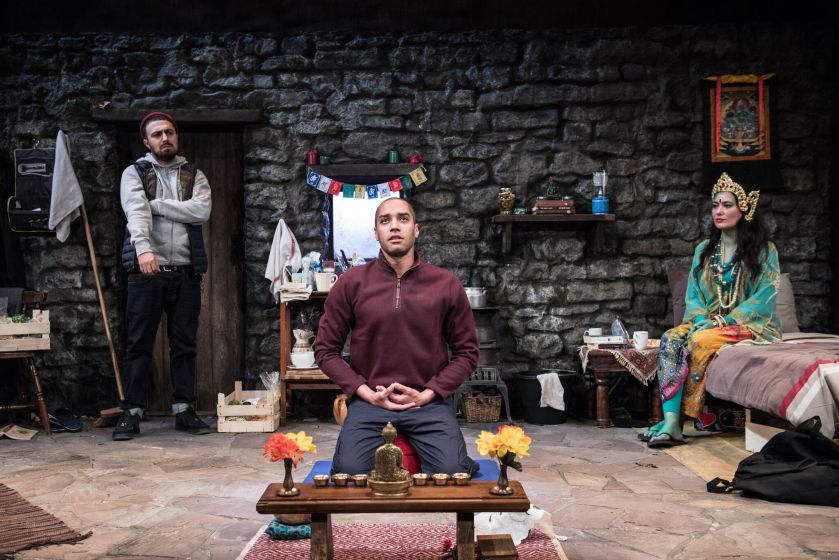
Luke is some sort of financial whizz-kid, (with very rare exceptions most playwrights have a very vague idea of how the world of finance works), who is burnt out and, having been pushed out of the firm he founded, and dumped by his wife, goes to find himself, and detox, in a Buddhist retreat. This is run by Tara, who begins as a green painted, wide eyed space cadet but gradually comes back to earth, (observe her Hunter wellies), as the reality of her financial predicament is revealed. In fairly short order Tony turns up. He lives with Luke in London, is estranged from partner and child, has a dead end delivery job, likes his drugs and relies on Luke to keep him afloat. He wants Luke back. Luke wants to sell the London flat and support the retreat. Tony is understandably dead set against this course of action. Cue some gentle prodding of the dichotomy between spiritualism and materialism and a very believable, and funny, account of fraternal interdependence.

For it is, in parts, very funny. Adam Deacon in particular, is gifted with a whole string of one liners as the foil to the more serious, uptight Samuel Anderson. The problem is these gags end up taking over much of the drama. The “Tony as an arse” joke tail ends up wagging the “modern life is unfulfilling” plot dog as it were. Which is a bit of a shame because the ideas that sit behind the play are actually quite interesting and it does manage to seriously engage with Buddhist ideas, whilst satirising the narcissism that underpins the contemporary quest for “mindfulness”. Sam Bain’s day job as a sit-com writer is clearly visible in The Retreat, for both good and bad. I also felt that Yasmine Akram’s Tara was a little underwritten, which left her having to rely too much on arch expressions and eye rolling astonishment to react to the male characters and to reveal her true motives.

Still, if you just relax and stop playing the amateur theatre critic, there was much to enjoy here. I am not sure there was much that Kathy Burke could do to divert the one-liner torrent even if she had wanted to. The SO, BUD and KCK all came along and, once again, we all agreed that the evening was a success and that the Park continues to exude a special, friendly atmosphere. So relax, don’t moan, don’t expect too much, live in the moment and stop fretting about what might have been.

Impressionists in London at Tate Britain review ***

impressionism-at-tate-britain-review-october-2017

The EY Exhibition: Impressionists in London: French Artists in Exile 1870-1914

Tate Modern, 30th November 2017

Would I pay £17.70, the full adult price to see this. Hmm. Maybe. Different story if you are a member, (as you should be if you can afford it), but, if not, I’d say you would be much better spending your corn on the Rachel Whiteread retrospective upstairs. Given the fact that it was pretty busy on the Thursday afternoon when I waltzed in, I think I can safely say that the verdict of the public is less circumspect than mine (unless they were all members of course).

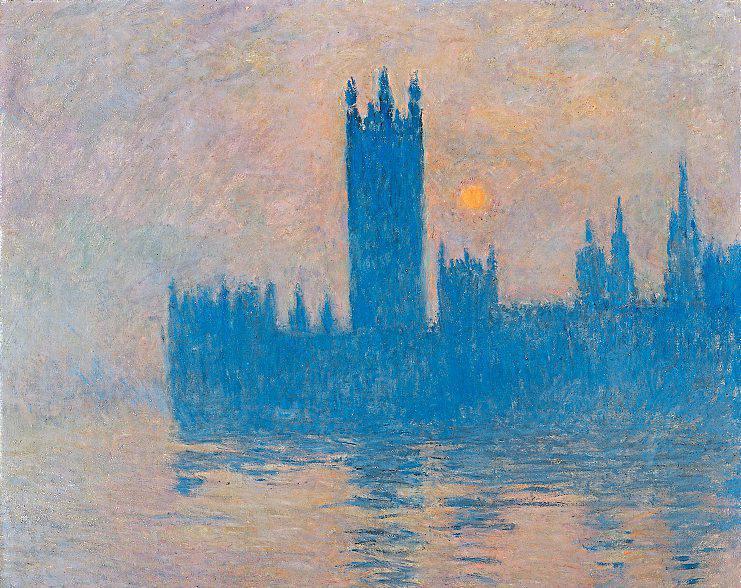
The big draw are the paintings of the Thames by Monet in the penultimate room which come from 1899 to 1901 when he took up residence each winter in the Savoy. In total Monet painted over a hundred views in the series, 37 of which appeared in a famous exhibition in 1904 in Paris. Drawn from various collections and with his famous view of the Houses of Parliament predominating, you don’t need me to tell you how marvellous they are. Any Monet series seen together is a thing of wonder, and these in particular are dear to my heart since I know the vantage point a few floors up in St Thomas’s rather better than I would like to. Is that enough though?

Well it all kicks off pretty well. The curators begin with a fascinating insight into the artistic response to the “terrible year” of 1871 which saw Paris devastated following the loss to Prussia in the war, the fall of the Second Empire, the three month siege and the brutal suppression by the French army of the Paris Commune. There is a Corot painting of Paris on fire with an Angel of Death departing high overhead and some powerful, and familiar, Manet drawings. The rest of the art here certainly shows what the artists who crossed the channel were escaping from. This was a time when the Brits welcomed foreigners with open arms. (catch a boat down the river and see a fine play, Young Marx, about another person who pitched up here and then enriched world culture). In fact London has been pretty much doing that throughout its existence so I doubt a bunch of ignorant pensioners in the shires will stop it.

Anyway a network was created when dealer Paul Durand-Ruel set up shop, and he embraced the young Monet, who spent a year here, (before his return at the end of the century), on the advice of Charles-Francois Daubigny (who isn’t a bad artist as it happens). Mind you I am not sure Mrs Monet enjoyed London judging by the face on display in her portrait. The slightly older Camille Pissarro popped up in Sarf London and Alfred Sisley joined the crew in Kensington, (proving that the French have always opted for the smartest bits of London). As we all know Pissarro and Sisley could paint, so Room 2 is a delight, though most of the works are familiar from permanent London collections. Anyway so far so good.

And then we get “James” Tissot. Now he may have been taking the p*ss out of genteel High Victorian Britain but, even if he was, it doesn’t make the paintings any more interesting. Stagey, bright and long on frocks I just can’t get on with them and there are an awful lot of them. Even so they make sense in the context of the story that its being told, so they certainly add to the exhibition, and, mockery or homage, they say a lot about the upper class Brits when they ruled the world. His friendship with the editor of Vanity Fair, Thomas Gibson Bowles provided the introduction to Society, (Tissot produced caricatures for the magazine), and Tissot ended up shacked up with his lover in St John’s Wood, which seems a posh thing to do.

What follows, rooms devoted to Alphonse Legros, who mixed with that rum pre-Raphaelite posse, Jules Dalou, Edouard Lanteri and worst of all Jean-Baptiste Carpeaux, is just not my cup of tea at all. These fellows were French emigres for sure, and part of the London artistic community, and very highly regarded by all accounts, but their painting and sculpture just looks like sentimental Victorian, faux-classical kitsch to me. It pads out the exhibition for sure, and there were plenty of punters who seemed to be lapping it up, and ignoring my admittedly inaudible snorts of derision. I admit I am an almighty cultural snob but it just didn’t seem to me that these chaps fitted the Impressionist billing, at least as I understand it.

We then had a mixed return to form centred on the Impressionists take on peculiar British sports and the outdoor places where they played them and took the air. Cricket and rowing understandably fascinated our Gallic chums. Again though it is Sisley and especially Pissarro who do the business with Tissot lagging behind. Especially admirable was Pissarro’s stout refusal to paint any part of Hampton Court Palace when he lived round the corner, even as he documented all the spaces around it. Given its majesty this took a pigheaded commitment to the “everyday life” tenets of Impressionism.

My eye in this room though was drawn to the best picture in the exhibition, Monet’s Leicester Square at Midnight from 1903, normally housed at the Musee Granet in Aix-en-Provence. Hello. If some-one told you this was painted decades later you would have believed them. I know the weather in London is, and was sh*te, compared to the South of France, but there was no need for Monet to depict this quite so graphically. Like the first and second generation Camden Town painters this is murk, night, light, rain and fog but also pure, beautiful and very colourful paint. More Expressionist than Impressionist?

This leads into a room full of fine paintings, of fog, the Thames and Westminster, as a starter before the Monet entree, with works from our friend Pissarro and three of Whistler’s nocturnes. The latter are undeniably atmospheric, with a definite thematic and stylistic link to his French contemporaries, but again you can see these any day of the week upstairs. After the Monet room, the curators have somewhat bizarrely tacked on some of Derain’s Fauvist views of London, specifically Charing Cross Bridge. I have never been entirely convinced by his paintings but they are arresting, he was French, he was inspired by Monet. Yet obviously they are not Impressionistic, nor was he in exile.

So there it is. Influences, precedents and antecedents of course matter in an overview of this sort. The sub-title of the exhibition indicates that it covers French artists in exile from 1870 to 1914. Which is exactly what it is. There is a clear, if somewhat cliched, insight into Victorian London. And there are some truly stunning paintings. But there is also some frightful, in my opinion, padding, and this detracts from the whole. If you like Monet though …..

Yellowman at the Young Vic review ****

christopher_colquhoun_eugene_nicola_hughes_alma_in_yellowman_at_the_young_vic_c_tatenda_nyamande-7053

Yellowman

Young Vic Theatre, 29th November 2017

From what I can see American playwrights don’t like to arse about too much with the play, either in terms of dramatic form or the subject, the family history in one form or another. Why not, given the history of American gifts to the theatrical world, and if that’s what the punters want. From this apparent straightjacket have emerged some cracking plays, from the C20 masters as well as in recent years. It would seem that a recommendation from the journos and academics which make up the Pulitzer judging panel is as good as recommendation as any as to what to see. And that basically is all I had to go on prior to booking Yellowman.

Dael Orlandersmith’s two hander was a Pulitzer finalist from 2002 which tells the story of Eugene and Alma, from childhood into adulthood, from rural South Carolina to New York and back again, through the 1960s, 1970s and 1980s. Most importantly, as the Yellowman of the title, Eugene is tall and light skinned, like his grandfather and mother Thelma, though not his father Robert, whilst Alma is large and dark skinned like her mother Ophelia. The actors play all the male and female characters (including Alton and Wyce, Eugene’s friends), with rapid, though sharply delineated, shifts between these characters.

The relationship between Eugene and Alma moves from simple childhood friendship, through mutual dependence, to teenage love then sex, engagement and pregnancy. This, on its own, would be enough to enjoy given the quality of the writing, but over the 100 minutes or so we get an incisive dissection of “blackness”, beauty, gender, domestic violence, generational division and abuse, inheritance, poverty and class. Very, very occasionally. Ms Orlandersmith’s writing lapses into saccharine cliche, but more often that not, this serves a colouristic purpose and can be forgiven. The deliberate repetition reinforces the deep-rooted identity conflicts that lie at the heart of the play and ensures the six characters as well as the two principals truly come to life.

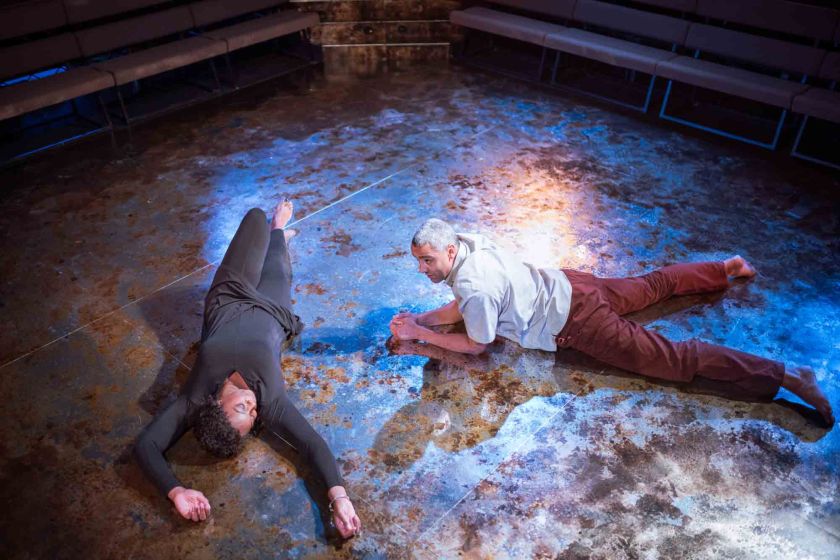
About from a mottled, mirror floor and some subtle but effective lighting from Nao Nagai, the Clare studio space in the Young Vic had nothing else to work with for the two actors, bar script and audience. So they needed to be good, very good. They were. Christopher Colquhoun, (a long way from Weatherfield), brought an awkwardness and innocence to Eugene which heightened the tensions in key scenes with Alma, his father, Wyce and, latterly, grandfather. Nicola Hughes, if anything, was even more striking, turning Alma into a woman of power and dignity who rises above the self-hate others would have her internalise, and eliciting pity for Ophelia. One of the fiercest performances I have seen this year. I would dearly love to see her in more “straight” drama roles beyond the musicals she is renowned for.

It is easy to see why Yellowman has been so frequently revived since its premiere and why the talented young director Nancy Medina would choose to take it on. Its setting may be specific in terms, of time, place and community, but its insights are universal and the humanity of its love story is palpable. Yet this, if I am honest can be found elsewhere on screen, stage or page. What makes this really, really special for me is Ms Orlandersmith’s gift for dialogue and image. The five sections of the play are distinct by chronology, but is the skill with which the author paints in the detail that made going to see this one of the best decisions I have made this year. And all for £15.

Murder on the Orient Express film review ****

murder-on-the-orient-express

Murder on the Orient Express, 27th November 2017

Stage or film, acting, managing, directing or producing, Sir Kenneth Branagh always makes sure he is right at the centre of things. Always has done. I bet he even pops out to Starbucks when it is his turn to get the lattes in. He probably even organises the on-set Secret Santa. And why not. He is bloody good at what he does and he can get things done. I confess not everything he does is entertainment gold but you can’t argue with his record. In his last eponymous season at the Garrick, (move over Davey boy), in 2015 his Leontes was immense and his physical comedy in The Painkiller belied his 55 years. And you can take your pick of his proselytising Shakespeare leads, stage or screen, (we could do with a real life version his Henry V right now I reckon). The man loves Shakespeare so as far as I am concerned he can do no wrong. The thing is that Sir Ken is an almighty show-off, which, let’s face it, is no bad thing for an actor to be.

So why shouldn’t he have some fun with Agatha C’s arguably most ingenious whodunnit. Yes it has been done to death (tee, hee), and we all know how it ends, but who cares when it is this much fun. With a couple of exceptions, (Johnny Depp, quelle surprise, as pantomime villain, and, to a lesser extent, Michelle Pfeiffer, as a cougarish, femme fatale), the stellar cast he has assembled doesn’t have a lot of opportunity to start chewing the scenery, but it is good to have them along for the ride. And Branagh himself is so mannered as Poirot, complete with risible accent, ludicrous moustache, immaculate suit and, especially at the end, bouts of preposterous philosophising, that it makes up for the under-utilisation elsewhere. Penelope Cruz gets to do buttoned up, doom laden Catholic, (Spanish obviously not the character’s original Swedish though that might have been a fun accent), William Dafoe, a BOGOF routine, with a sinister, racist Austrian before reverting to type, Judi Dench a haughty, mittel-European grunt, Derek Jacobi an Ealing-style, gor-blimey butler and Daisy Ridley an incredulous toff. The talents of, in particular, Manuel Garcia-Rolfo and Olivia Colman get less of an airing, which is a shame, but blame AC for serving up her Last Supper of suspects (a motif that is mined by KB).

Sir Ken takes a similarly selfish approach to his directorial duties coming over all Orson Welles and Wes Anderson, with his mix of angles and shots, and his exquisite set and costume staging for the “action”. He shoves in a prologue in Cairo which I adored. to show just how clever Poirot is, like a vintage OCD Belgian Bond. The camera drones get a good workout and if you like trains, which I do, you are in for a treat. It might distract a bit from the “suspense” but when you know the outcome so what? It is shot on handsome 65mm which adds to the old skool feel. 

It seems once again that Sir Ken’s confidence, which rubs off on everyone around him, has paid off. Despite the muted critical response the box office receipts are rolling in to add to the unsubtle product placement. So we will be getting a Death on the Nile, and I predict, some time ahead of Christmas 2021, an And Then There Were None. Agents of the thespian great and good, get on the phone to Sir Ken now.

Miss Julie at the Jermyn Street Theatre review ***

46a5b8be00000578-5112853-image-a-52_1511489566004

Miss Julie

Jermyn Street Theatre, 27th November 2017

Grinding my way through the classics of naturalistic drama. Actually not grinding, that makes it sound like too much of a slog, but I can’t pretend it is all unalloyed joy. Turns out that Chekhov is likely the man for me and Ibsen works only intermittently. This was my first Miss Julie, so early days for Sweden’s finest, but based on this, and a past The Father and Creditors, I don’t think I am going to be his greatest fan. I am conscious that the critics across the spectrum lapped this up, and I can’t fault the acting, direction or staging, so any misgivings must lie in the play or possibly the adaption, here newly minted by Howard Brenton. I won’t have the latter though, since a) Howard Brenton is the gold standard in other adaptions, b) he is at pains to tell us in the text that he wanted to stay as close to the original based on the literal translation from Agnes Broome, and c) his play Pravda was the thing that turned me on to the theatre.

Now it strikes me that, for a claustrophobic play set solely in the kitchen of a Swedish manor house, want you want is a claustrophobic theatre and a set which captures said kitchen. Which is precisely what you get from Louie Whitemore. In immense detail. With kidneys frying on the stove. Director Tom Littler, now in the hot-seat at JST, is happy to let Izabella Urbanowicz who plays cook Kristin prepare and cook the meal before James Sheldon’s valet Jean bounds in after having dropped into the Midsummer’s party we can hear going on in the background (courtesy of Max Pappenheim’s sound design). So a confident start. A bit of gentle banter about Miss Julie’s erratic behaviour and some gentle exchanges between the couple and we’re all set for the arrival of the eponymous flirt. I think Izabella Urbanowicz nailed Kristin’s cautious conservatism, (we see it later with references to her faith), and her utilitarian approach to her choice of husband to be. James Sheldon in contrast exuded a kind of boyish restlessness that served him well in the dialogue with each of the women. There was affection between the servant couple, no doubt, but also, I sensed a slight distance.

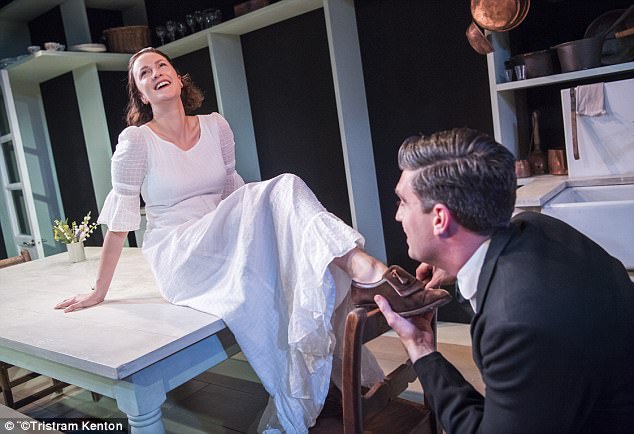
So all looking good for Charlotte Hamblin’s white-dressed Miss Julie to set the ball rolling towards the sex, anger, imagined disgrace and disappointment which follows. I gather Ms Hamblin is famous for being some-one in Downton Abbey, so this upstairs/downstairs stuff was presumably a breeze for her. I have seen a few bios which include everyone’s favourite period drama, and it has so far proved to be a mark of quality for the stage performance. Which therefore makes it mystifying as to why Downton Abbey itself is so unbelievably bad. Anyway Ms Hamblin was suitably bored, sexy, desperate and rash and Mr Sheldon was suitably horny, angry, boorish and rash to make the attraction very believable. She gets to lash out at the way she is shackled by class and status. So does he. But we are also acutely aware from the off that the distance between is not as great as it seems and, at the societal level, is starting to close. So it’s all there.

My marginal unease comes as we move into the “what are we going to do now” bit. Miss Julie’s collapse into nervous panic and Jean’s swinging mixture of motives are all part of the fun I guess but it tested my patience and I started to drift away from proceedings. Passion can veer from love to hate in an instance, and passion across class barriers is never going to end well for one, or the other or both. AS however seems to want to have his cake and eat it, then whip out another cake and have another go, as the couple ride their emotional rollercoaster. Miss Julie is the victim in this production but that only serves to heighten Strindberg’s not so buried misogyny.

As you can see I am confused and need to think a bit more about this. Must try harder. At the end of the day though I can’t pretend I was gripped throughout and, if this production is as adept as the critics have said, then I may have to conclude that AS is out of my limited reach. Never mind, there’s lots more theatre to explore.